
When Rapid Action Meets Needed Rest Reading Knight of Swords 8 of Wands and 4 of Swords
This article teaches how to read the three-card combination Knight of Swords + 8 of Wands + 4 of Swords. It anchors interpretation in Rider–Waite–Smith imagery and traditional meanings, explains how Swords and Wands interact, shows how the 4 of Swords can alter momentum, and gives step-by-step reading methods, contextual examples (relationship, career, emotional/practical), reversed possibilities, common mistakes, and reflection prompts for learners.
Read the cards together
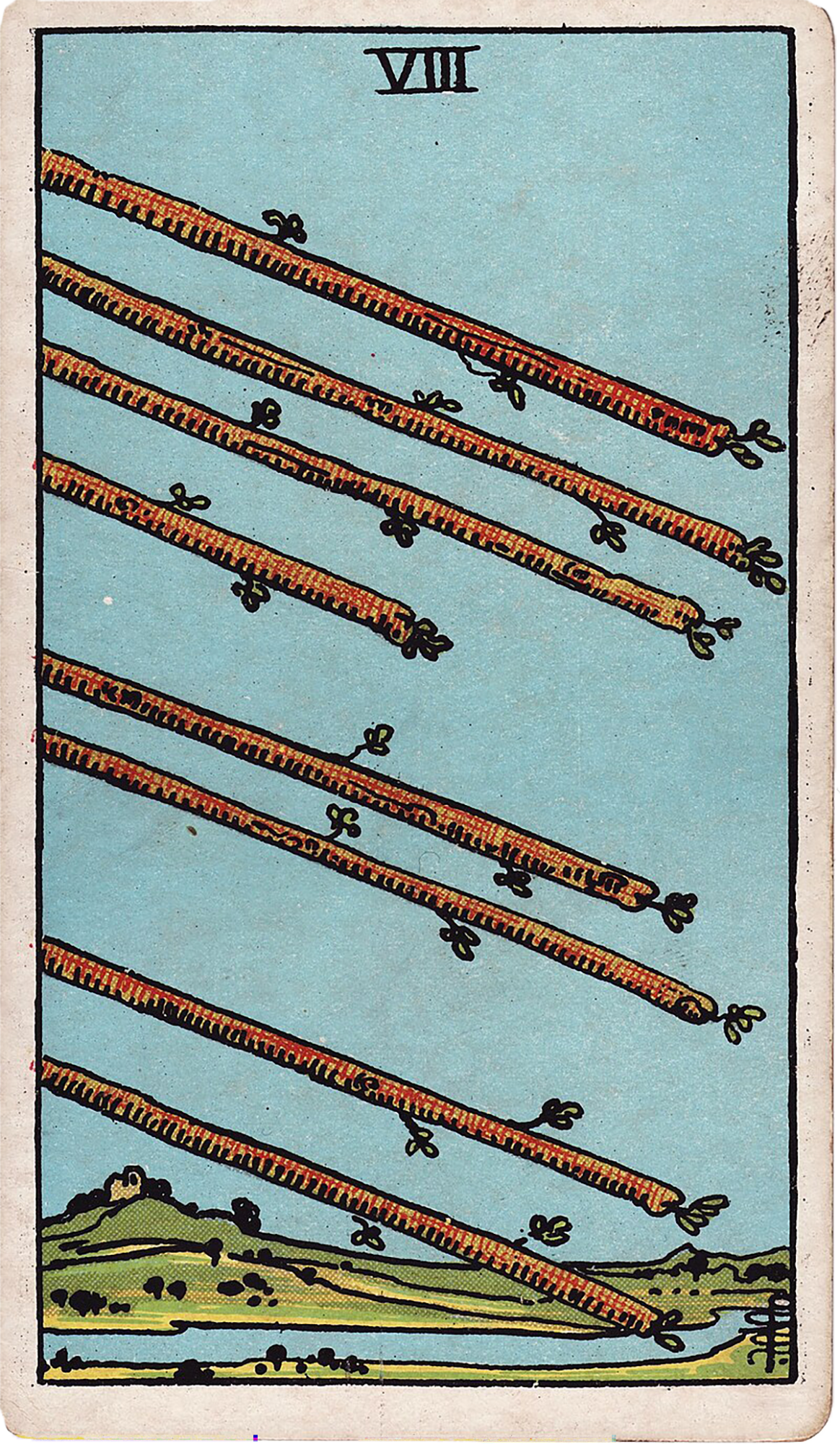 8 of Wands
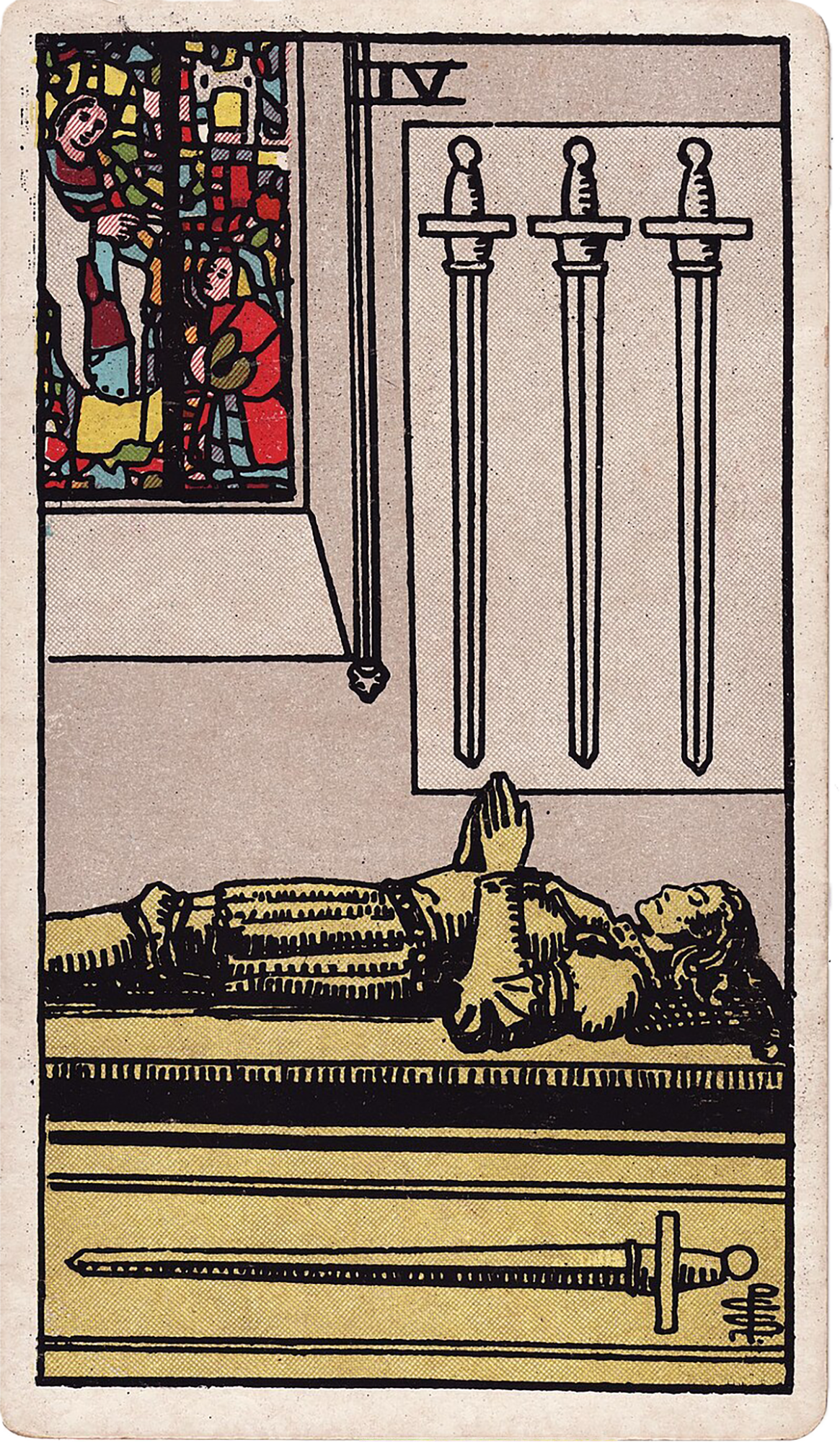 4 of Swords
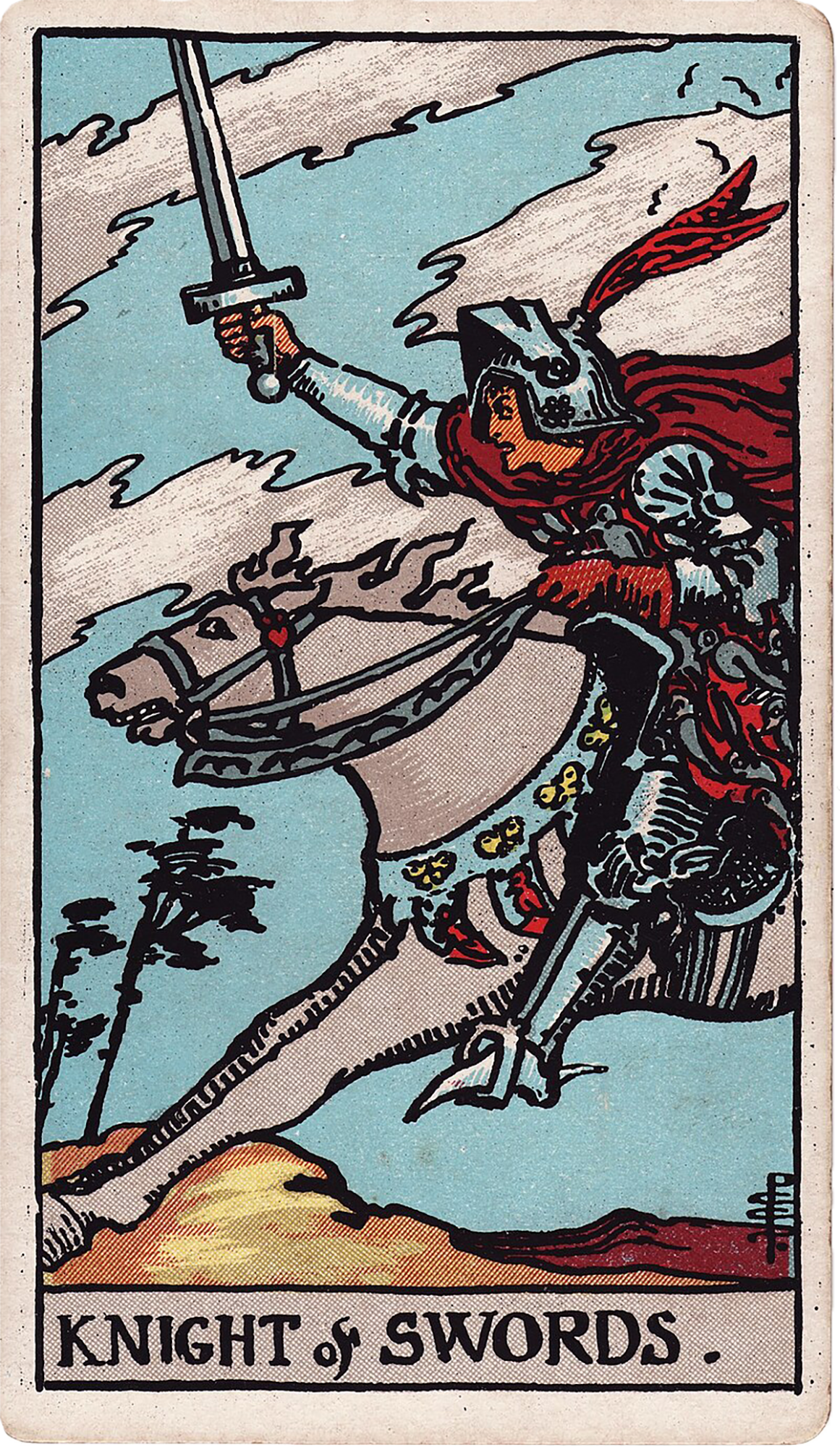 Knight of Swords
Introduction: framing the combination
You have three very clear energies in front of you: the supplied Knight of Swords image, the supplied 8 of Wands image, and the supplied 4 of Swords image. The first two are about speed: Knight of Swords (a Swords court card) brings decisive, sharp, fast-moving mental action; 8 of Wands (a Wands pip) brings momentum, travel, communications and energy aligning toward a destination. They naturally accelerate a situation. The 4 of Swords (a Swords pip) is a counterpoint: deliberate pause, recovery, and the need for mental restoration. This triad sets up a lesson in balance between immediate action and necessary recovery. In a reading, these cards rarely act as separate, isolated signals. Instead they modify one another. The Knight and the 8 can push toward headlong motion; the 4 asks for withdrawal, integration, or a strategic pause. The skill for learners is to move from reading single-card meaning to reading how the images and suits reshape each other.
Visual anchors and Rider–Waite–Smith symbolism
Anchor every interpretation to what you can see in the supplied images. The Knight of Swords image shows a charging armored rider on a galloping horse, sword raised high, cloak flying and a determined, almost storm-driven expression. That visual says urgency, mental force, and a readiness to cut through obstacles. The 8 of Wands image depicts eight wooden staves or wands moving through a clear sky over a river and distant buildings—an image of trajectory, unimpeded progress, and travel or messages crossing space. The 4 of Swords image depicts a recumbent figure—armor set aside, hands clasped as if in prayer or rest—inside a quiet stone space, three swords mounted overhead and one placed beneath; stained-glass imagery suggests sanctuary and recuperation. Use these visuals when you speak to querants: point to the Knight's raised sword when describing a person or energy ready to act, to the 8 of Wands' flight when describing incoming information or momentum, and to the 4 of Swords' peaceful tomb when recommending recovery or time out. Rider–Waite–Smith details help you translate imagery into practical advice: armor and sword = armor of ideas and the power to enforce them; flying wands = trajectory and speed; stone sanctuary = the need to bracket activity for restoration.
Basic card functions and suit interaction
Before combining cards, keep each card's core functions in mind. Knight of Swords: a Swords court that personifies swift thought, argument, urgent decision-making, and assertive communication. 8 of Wands: rapid movement in the realm of Wands—action, ambition, creative thrust, and events moving toward completion. 4 of Swords: mental rest, integration, recovery, strategic withdrawal. When Wands' kinetic energy meets Swords' incisive intellect, you get a dynamic where thought drives action or action forces rapid cognitive reorientation. The combination of a court card (Knight) and an active pip (8) usually intensifies agency: someone (or some mode) is not only moving but forcing movement with intention. The 4 of Swords does not negate these dynamics; it modifies them. As a Swords card, it is especially potent in mental or communicative contexts: it can mean stop, step back, reflect, or put the sword down to consider consequences. Read the combination as a short narrative: who is pushing (Knight), what is in motion (8), and what the system needs (4).
How the cards modify one another: dynamics and direction
Consider three fundamental ways cards modify one another: intensification, redirection, and containment. Intensification: the Knight of Swords plus 8 of Wands ramps up speed—think a person who not only intends to act quickly but who also has external momentum (messages, travel, or events) supporting that rush. Redirection: the Wands' trajectory (8 of Wands) can steer the Knight's mental aggression toward a specific target; the Knight's force can turn the 8s' momentum into a deliberate campaign rather than random speed. Containment: the 4 of Swords can act as a brake, buffer, or instruction—either intervening before harm from reckless speed occurs, or showing that enforced pause is part of the process (for example, fast action followed by mandated rest). Where the 4 appears relative to the other cards in a spread matters. If the 4 of Swords is last, it can be the outcome: after rapid action, recovery is required. If the 4 is central, it governs the pacing and may indicate 'pause now.' If the 4 is first, it may be the current state to leave before the Knight and 8 generate motion. Pay attention to body language in the artwork: the Knight's forward motion contrasts with the repose of the 4; the eight airborne wands emphasize that momentum crosses space quickly.
Technique: avoiding one-card-at-a-time reading
Many learners fall into the trap of interpreting each card in isolation and then stapling those sentences together. That produces a list rather than a synthesis. Instead, build your reading with these steps: 1) Identify each card's visual and suit signal in the images (what field of life it primarily addresses). 2) Ask relational questions: How does the Knight's posture and direction relate to the 8 wands' trajectory in the image? Are they aligned, opposed, or offset? 3) Consider suit dialogue: Swords (Knight and 4) bracket Wands (8). That suggests a mental frame (Swords) setting terms around action (Wands). 4) Create a short narrative: who initiates, what moves, and what must happen for healthy resolution. 5) Test this narrative with contextual queries (relationship, career, health) and with the querent's lived details. Keep asking 'why now' and 'what needs to change' rather than treating cards as static definitions. Use the RWS imagery to ground metaphors—the Knight charging across a landscape is not the same as the 8 wands in calm flight; their interaction suggests directed urgency, not random haste.
Contextual readings: relationship dynamics
Relationship questions are a classic place where this combination appears. Read the Knight of Swords image as a person or attitude: someone who speaks quickly, makes rapid decisions about the partnership, or pushes for clarity and action. The 8 of Wands suggests communication, messages, or events arriving quickly—an influx of texts, a sudden trip, or rapid developments changing the situation. The 4 of Swords asks for pause: rest, regrouping or boundary-setting. Possible narrative variations: a) Initiative-then-rest: The Knight initiates a breakup, proposal, or confrontation; the 8 of Wands shows the cascade of responses—rapid texts, friends' reactions, logistics; the 4 of Swords advises a period of recovery where both parties should stop reacting and reflect. b) Rushed decisions with risk: The Knight plus 8 can mean one partner pushes for immediate change; the 4 warns that quick action without integration will cause emotional burnout or resentful fallout. c) Practical advice: When you read this spread for a couple, suggest procedural pauses (time-bound breathing space, agreed cooling-off period, delayed big decisions) rather than forbidding action. The 4 of Swords image can be invoked: 'The card asks you to set your sword down for a moment and give the mind space to settle.'
Contextual readings: career and projects
In work contexts the Knight of Swords + 8 of Wands is classic for a rush to execute: someone (or a department) pushes a project with both will (Wands) and forceful messaging or decisions (Swords). The 8 of Wands' river and destination imagery implies external deadlines, incoming communications and a project that suddenly accelerates. The 4 of Swords warns of burnout, errors from moving too quickly, or the need to plan a scheduled pause. Interpretive options: a) Tactical surge with scheduled cooldown: This is a good spread for a sprint that includes planned post-sprint review and mental recovery—use the 4 of Swords to argue for retrospectives and rest. b) Danger of cutting corners: If the querent's concern is quality, read the Knight+8 combination as 'we can get this done fast' and the 4 as 'but if you don't pause you will sacrifice mental clarity and produce avoidable mistakes.' c) Managerial language: For leaders, frame advice around process: set explicit communications channels (because of the 8 of Wands), define decision rights (because of the Knight), and enforce downtime for the team (because of the 4).
Contextual readings: emotional and practical life
Emotionally, this trio maps the pattern of impulsive thought (Knight), sudden shifts or information (8 of Wands), and the need to repair or integrate experience (4 of Swords). Practically it can show someone making a fast judgment, receiving news, and then needing to withdraw to process. Reversed possibilities (useful here): Knight reversed could indicate recklessness or tunnel vision; 8 reversed could indicate delays or confused messages; 4 reversed might show forced inactivity or avoidance. Use reversals to nuance the combination: Knight reversed plus 8 upright plus 4 upright might read as 'the person is likely to act recklessly; momentum exists to push them forward; the healthy move is to insist on a pause.' Or 8 reversed with upright Knight and 4 may show internal impatience rather than external movement—energy felt but not manifest. Pay attention to symptoms the querent describes—insomnia, agitation, repetitive messaging—that echo the imagery of the Knight's rushing horse or the 4 of Swords' stillness, and tailor the reading to practical next steps (breathing exercises, journaling, scheduled breaks).
Timing, sequence, and placement technique
Because these cards speak strongly about tempo, use layout and position to encode timing. Simple three-slot layouts work well: Slot 1 — Immediate energy (Knight of Swords image); Slot 2 — Trajectory/what's coming (8 of Wands image); Slot 3 — Necessary response/outcome (4 of Swords image). Read left-to-right as a mini-story: someone is primed to act now, something is incoming or accelerating, and the healthiest outcome requires an intentional pause. If your spread uses past/present/future, note where the 4 appears. Past 4 suggests the querent has recently rested and should now re-enter activity. Future 4 suggests the need to schedule rest after an expected rush. Use counterpoint reading: if the Knight is between the 8 and 4, the querent may be the agent who must choose between continuing acceleration or initiating rest. Always ask temporal clarifiers: what must be done now, what will arrive if you act, and when will rest be possible?
Practical reading method and sample phrasing
A repeatable three-step method: 1) Visual identification: name the image you see and its immediate message ("I see the Knight charging, the wands in flight, and a figure resting in a chapel"). 2) Narrative construction: make a one-sentence story connecting them ("Someone or something is ready to move quickly; momentum is on the way; but a break is needed for integration"). 3) Actionable guidance: turn the narrative into practical options ("If you must act fast, set a timeline for review or a cooldown period; if you can delay, use the 4 of Swords time to plan and avoid reactive decisions"). Sample phrasing for querants: - Relationship: 'This spread shows a strong impulse to act and communications that will happen fast; consider a 48–72 hour pause to let things settle before making a final decision.' - Career: 'You can push this forward quickly, but schedule a team debrief and rest period afterward so quality isn't sacrificed.' - Emotional: 'Your mind feels like the Knight's horse—rushing. The 4 of Swords asks you to put the sword down and practice at least one recovery ritual before responding.' Keep language concrete: name a specific timebox, a single self-care action, or a communication plan tied to the 8 of Wands' promise of travel or messages.
Common mistakes and how to avoid them
Mistake: reading cards as a chain of isolated instructions (e.g., 'do this from card one, do that from card two'). Avoidance: always synthesize into a narrative and test it against the querent's context. Mistake: assuming speed is always positive. Avoidance: ask about consequences and integration—the 4 of Swords exists because speed can produce damage. Mistake: ignoring court-card roles. Avoidance: clarify whether the Knight represents the querent, another person, or an attitude. Mistake: literalizing imagery (e.g., assuming travel because of wands in the picture) without checking context. Avoidance: ask clarifiers: 'Do you expect to travel or is the motion symbolic (emails, decisions)?' Mistake: failing to use reversals as nuance rather than negation. Avoidance: interpret reversals as process friction or misuse of energy—ask where momentum is stuck or misapplied. Finally, don't forget to check bodily cues: the Knight's adrenaline, the 4 of Swords' exhaustion—ask querants about sleep, appetite, or racing thoughts to anchor the reading in lived experience.
Examples: three sample readings
Example 1 — Relationship: Querent: 'My partner wants to move in together quickly.' Draw: Knight of Swords (position: who is pushing), 8 of Wands (position: what will happen), 4 of Swords (position: advice). Reading: The Knight image suggests your partner's energy is direct and urgent—they may push for an immediate decision. The 8 of Wands' image says messages and logistics will arrive fast (packing, lease, friends' reactions). The 4 of Swords advises you to create a formal pause: propose a two-week planning period and a meeting to address concerns before signing anything. This protects you from the Knight's rush and uses the 8's necessary momentum constructively. Example 2 — Career: Querent: 'We have a sudden deadline extension and I'm being asked to lead.' Draw: 8 of Wands (current project launch), Knight of Swords (your role), 4 of Swords (outcome). Reading: The 8 image shows the project will move quickly; the Knight image suggests you'll be called to make fast decisive calls. The 4 of Swords warns that this sprint needs a scheduled post-project rest and quality review; negotiate the time and resources now so team burnout doesn't follow. Example 3 — Emotional process: Querent: 'I'm overwhelmed by a flood of news.' Draw: Knight of Swords (state of mind), 4 of Swords (what is needed), 8 of Wands (what will happen if you ignore the 4). Reading: The Knight's image captures your racing thoughts. The 4 of Swords says you need deliberate recuperation (quiet, journaling). If you ignore that, the 8 of Wands suggests you'll still get slammed with more messages and events, making the cycle worse. Here, the 4 is preventative.
Synthesis and final teaching points
When you read Knight of Swords + 8 of Wands + 4 of Swords together you are working with a triad about tempo: initiation (Knight), trajectory (8), and integration (4). The Rider–Waite–Smith imagery helps you turn abstract warnings into concrete practices—point to the Knight's raised sword when recommending clear boundaries; to the 8 wands' flight when recommending communication plans or logistics; to the 4 of Swords' recumbent figure when recommending rest and recovery protocols. Always ask clarifying questions before giving definitive 'do this' prescriptions. Use placement and sequence to determine when rest should occur: before action (4 first), during (4 central), or after (4 last). In practice, suggest time-boxed actions and recovery rituals rather than forbidding action. The healthiest readings transform the Knight and 8's productive speed into a sprint-with-recovery, not a headlong charge without consequences.
Conclusion and how to practice this combination
To practice: lay out the three cards in different positions (who/what/need; now/soon/outcome; past/present/future) and create short narratives from the images. Test those narratives against real-life situations—small decisions, emails, or plans—and note whether the 4 of Swords' intervention produces better outcomes when recommended. Keep a journal: write one-sentence readings and three action items tied to the imagery (e.g., 'set 24-hour pause; agree on communication channel; schedule 48-hour recovery' ) and follow up. Over time you will gain sensitivity to how the Knight's assertive mental energy changes when paired with Wands momentum and a Swords-sanctioned pause. Teach yourself to prefer precise, actionable guidance over dramatic prophecy: the cards are tools for better decisions, especially when speed meets a need for rest.
Practice questions
• Which image in these three cards feels most immediate to you when you look at them, and why?
• When you have acted quickly in the past, what costs showed up later that the 4 of Swords would have prevented?
• How do you distinguish between a healthy sprint with planned recovery and reckless haste in a reading?
• If the Knight of Swords represents a person in your life, how does their communication style interact with the rapid events suggested by the 8 of Wands?
• What practical, time-bound recovery ritual could you suggest to a querent when you see this combination?
• How would your interpretation change if one of these cards were reversed? What clarifying questions would you ask?
• Which card would you place in a 'who/what/need' three-card spread and why?
• How can you use the RWS imagery to make advice more concrete and less abstract for querants?
Comments
Sign in to comment.
Continue learning
Interpreting the Dance of Justice and The Devil: Balancing Morality and Temptation in Tarot Readings
The combination of Justice and The Devil in tarot presents a profound exploration of morality, temptation, and personal accountability. This article unpacks how these cards influen...
Harnessing the Power of The Magician and Ace of Wands: Igniting Creativity and Manifestation in Tarot Readings
The combination of The Magician and the Ace of Wands in tarot readings offers a potent blend of creative energy and manifestation power. This article delves into the ways these car...
Understanding the Synergy Between The Empress and The Emperor in Tarot Card Combinations
This article delves into the intricate synergy between The Empress and The Emperor cards in Tarot, focusing on how their combined energies modify and enrich readings across various...
Decoding Transformation and Renewal with Death and The Star in Tarot Combinations
This article delves into the card combination of Death and The Star, two powerful Major Arcana cards from the Rider-Waite-Smith deck. It explores how their imagery and meanings int...
Balancing Ambition and Compassion with The Emperor and Queen of Cups in Tarot Combinations
This article delves into the nuanced Tarot card combination of The Emperor and Queen of Cups, emphasizing how their energies complement and challenge each other. By analyzing their...
Finding Emotional Healing and Renewal with The Star and The Moon Tarot Combination
This article examines the rich interplay between The Star and The Moon tarot cards when they appear together in a reading. Using the traditional Rider-Waite-Smith symbolism and the...
Unlocking Emotional Wisdom with The High Priestess and The Queen of Cups in Tarot Combinations
This article delves into the card combination of The High Priestess and The Queen of Cups, emphasizing their shared themes of intuition, emotional depth, and receptivity. By examin...
Unlocking Emotional Resilience with Strength and The Star in Tarot Combinations
This article delves into the Tarot card combination of Strength and The Star, revealing how their interplay highlights pathways to emotional resilience. Anchored in the Rider-Waite...
Unveiling Emotional Strength with Strength and The Queen of Cups in Tarot Combinations
This article delves into the dynamic Tarot combination of Strength and The Queen of Cups, emphasizing how these cards together illuminate emotional strength, compassionate boundari...
Unlocking Emotional Transformation with Death and The Moon Tarot Combination
This article explores the rich and complex interaction between the Death and The Moon tarot cards within the Rider-Waite-Smith tradition, focusing on their combined potential to un...