
Learning Tarot by Connecting Cards to Your Personal Stories
Discover how linking Tarot cards to your own life experiences helps you understand card meanings deeply and read with more confidence. This beginner-friendly guide shows practical ways to create personal card stories and practice intuitive Tarot reading effectively.
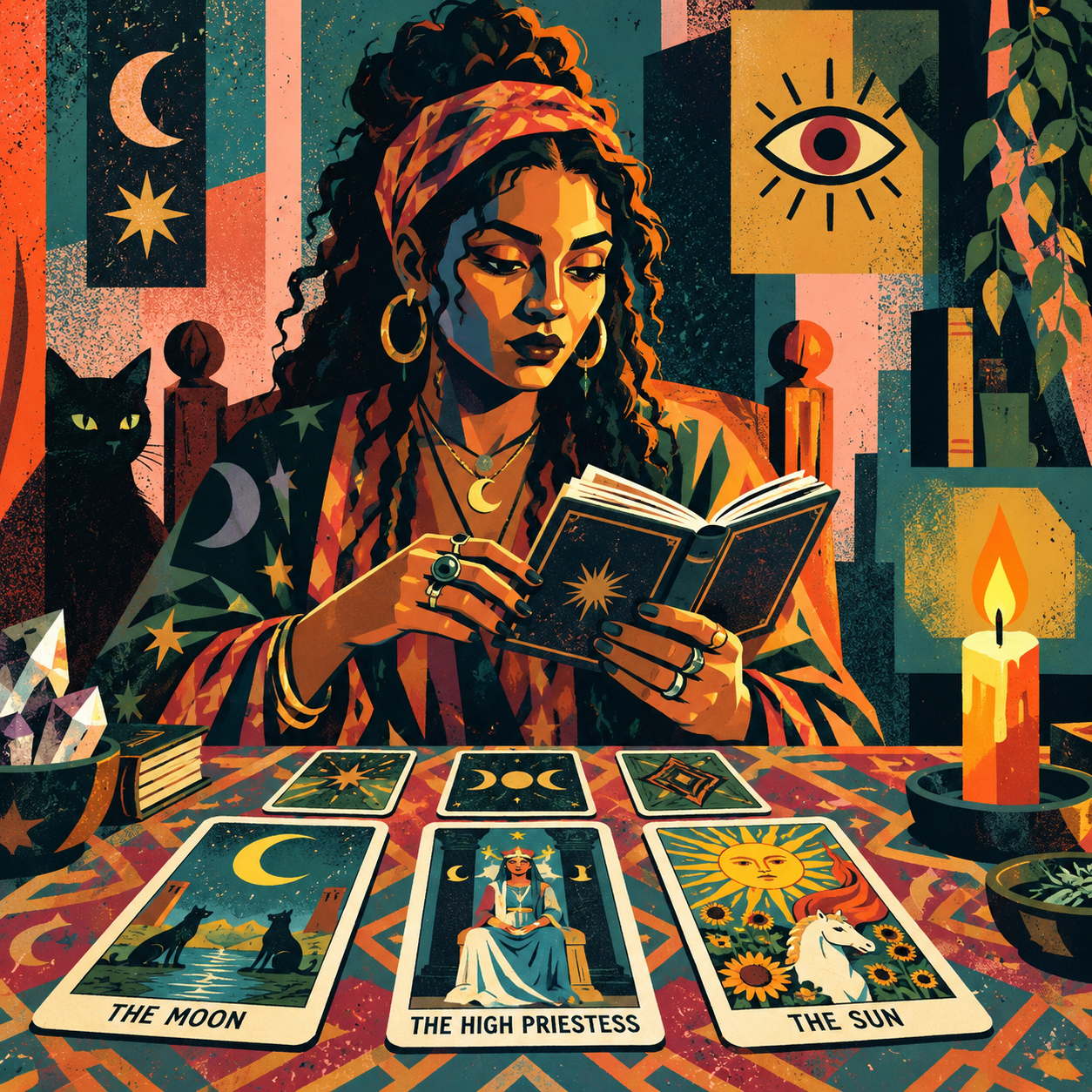
For many beginners, Tarot cards can seem like mysterious symbols with meanings that feel distant or hard to grasp. One helpful approach to learning Tarot is to connect the cards to your own personal stories and experiences. When you relate a card’s meaning to something you have felt or encountered, the meanings become clearer, more vivid, and easier to remember.
In this post, we will explore how to make meaningful connections between Tarot cards and your life, how to practice this method with simple examples, and how this personalized approach can boost your ability to read cards confidently.
Why Connect Tarot Cards to Personal Stories
Each Tarot card has traditional meanings, but these meanings will become more intuitive and practical when you associate them with moments or feelings you know from your own life. These personal connections transform abstract ideas into relatable experiences, making the cards easier to interpret during readings.
For example, the Four of Cups traditionally suggests boredom, dissatisfaction, or missing opportunities. If you link this card to a time you felt uninterested or stuck despite good options around you, the card’s message will resonate more powerfully and stay with you when you see it again.
How to Start Creating Card Stories
Begin by choosing a card you want to learn. Look at the card’s imagery and think about its traditional meanings. Then, ask yourself if there’s a personal memory, situation, or feeling that matches those ideas.
Write down your story. It could be a simple note like, “This card feels like the time I avoided a party when I was feeling lonely but didn’t want to say no.” Or, “This card reminds me of when I hesitated to accept a job because I feared change.”
These personal stories become a reference that helps you understand the card more deeply beyond dictionary definitions. Over time, you will build a rich collection of personal references tied to cards.
Practicing Connections with Basic Spreads
To practice, try a three-card spread focused on a recent experience. For example, use the spread for understanding feelings about a decision you made. Interpret each card by linking it to how you felt or acted during that experience.
For instance, if the spread shows The Chariot, Two of Swords, and King of Cups, you might connect The Chariot with your determination to move forward, Two of Swords with the confusion you felt before deciding, and King of Cups with the emotional control you maintained.
This practice turns cards into a story you know personally, helping you gain insight and reinforcing your learning.
Tips for Building Your Personal Tarot Dictionary
Keep a Tarot journal where you record your card stories along with traditional meanings. Review your notes regularly to strengthen your connection. When reading for others, try to invite them to share their own stories related to the cards, turning the reading into a collaborative narrative.
Remember, the goal is not to ignore traditional meanings but to blend them with your lived experiences. This balance makes your Tarot practice unique and meaningful.
Conclusion
Connecting Tarot cards to your personal stories is a gentle and effective way to learn Tarot. It helps you move from memorizing meanings to truly understanding what the cards convey in a real, lived context. Whether you are learning for yourself or reading for others, building these personal links will deepen your practice and boost your confidence.
Start today by picking one card and writing down what personal experience it brings to mind. Over time, this will enrich your Tarot journey and make the cards come alive in a new way.
Comments
Comments appear after approval.
Log in to comment