
How to interpret Tarot cards intuitively using story questions
Discover how asking simple story questions can help beginner Tarot readers connect card meanings naturally and create clear readings. Learn an easy method to deepen your understanding of card combinations and practice with examples.
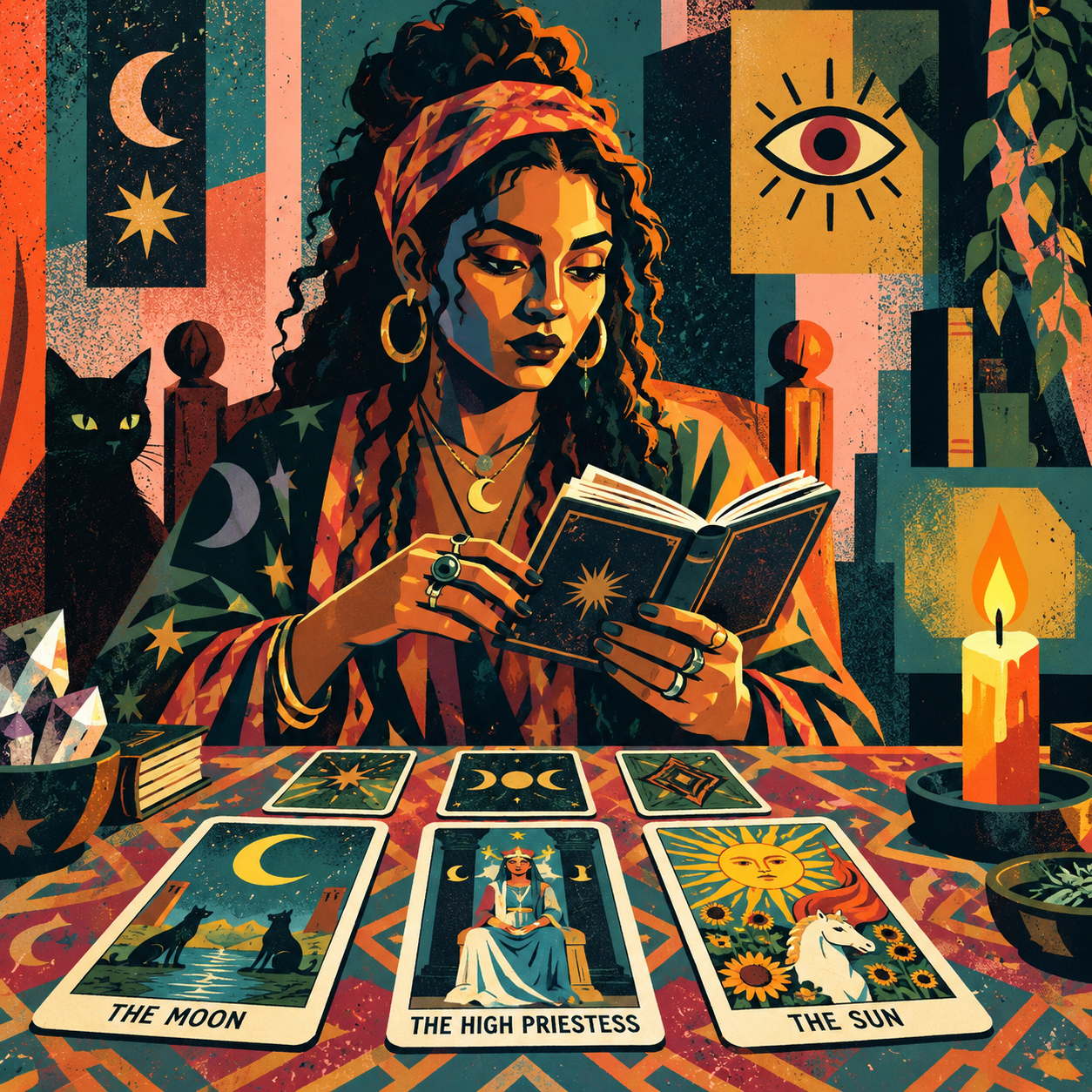
Many beginners feel overwhelmed when trying to interpret Tarot cards because it often seems like they must memorize detailed meanings or complex symbolism. A helpful approach to start reading Tarot more intuitively is to use story questions. By asking simple questions about the cards as if you are telling a story, you can find natural, clear meanings that connect the cards together. This method is easy to learn and very practical for new readers aiming to build confidence and insight.
What are story questions in Tarot reading?
Story questions are straightforward prompts you ask yourself about the cards in your spread to understand how they relate and what message they convey. Instead of focusing on memorizing dictionary-style card meanings, you invite the cards to tell a story by answering questions such as who, what, why, where, and how. This makes the reading feel more like a conversation and less like a test.
Examples of story questions to try:
- Who is involved or affected by this card?
- What is the main situation or issue?
- How does this card show the feelings or motivations of the people?
- Why is this card important right now?
- What can be learned or changed from this card?
Using these kinds of questions helps you build a narrative that links the cards together instead of interpreting them individually or in isolation.
Applying story questions in a simple three-card spread
The three-card spread is a perfect way to practice this approach because it is easy to manage and covers a clear timeline or set of factors. You can use the positions as past, present, and future or situation, action, and outcome. Once you lay out your cards, use story questions to explore each position.
For example, imagine you draw The Fool, The Lovers, and The Chariot.
Ask yourself:
- Who is the main character? The Fool suggests someone at a fresh start or new beginning, often representing the querent.
- What is the current challenge? The Lovers can point to a decision about relationships or choices that affect the heart.
- How can the situation move forward? The Chariot shows determination and control, suggesting that focused effort will help overcome obstacles.
By answering these questions in your own words, you create a meaningful story that flows naturally. This helps avoid confusion from trying to memorize every card meaning and instead builds confidence in your personal interpretation.
Tips for practicing story questions with Tarot cards
Start with small spreads of two or three cards until you feel comfortable linking their meanings together. When you pull a card, take a moment to look at the imagery and ask what the card is showing in terms of people, emotions, or events. Use your questions to deepen your connection to the card instead of rushing to a textbook definition.
Journaling your story answers can also help you track your progress and notice patterns in your interpretations. Over time, you will find the cards speak more clearly and your readings become more fluid and personal.
Why this method works well for beginners
This intuitive storytelling approach removes pressure to memorize and instead encourages curiosity and dialogue with the cards. It supports learning in a gentle way that honors your unique perspective. Instead of guessing if you are 'right,' you build trust in your reading by focusing on meaningful connections and practical insights that apply to real-life situations.
Give this method a try in your next Tarot session. Ask story questions, listen to the cards, and watch your confidence and enjoyment grow as you interpret Tarot with clarity and ease.
Comments
Comments appear after approval.
Log in to comment