
A Practice Plan to Calibrate Your Tarot Intuition with Mini Experiments
This article gives a structured, evidence-minded practice plan of mini experiments designed to sharpen tarot intuition and interpretive skill. Using the supplied images of The High Priestess, Ace of Swords, and Page of Pentacles as anchors, you will learn simple daily drills, a three-card Calibration Trio method, ways to quantify and journal your results, common mistakes to avoid, and advanced variations for deeper practice. The plan balances intuitive listening with disciplined observation so learners can track progress, reduce bias, and build reliable reading habits.
Cards explored in this article
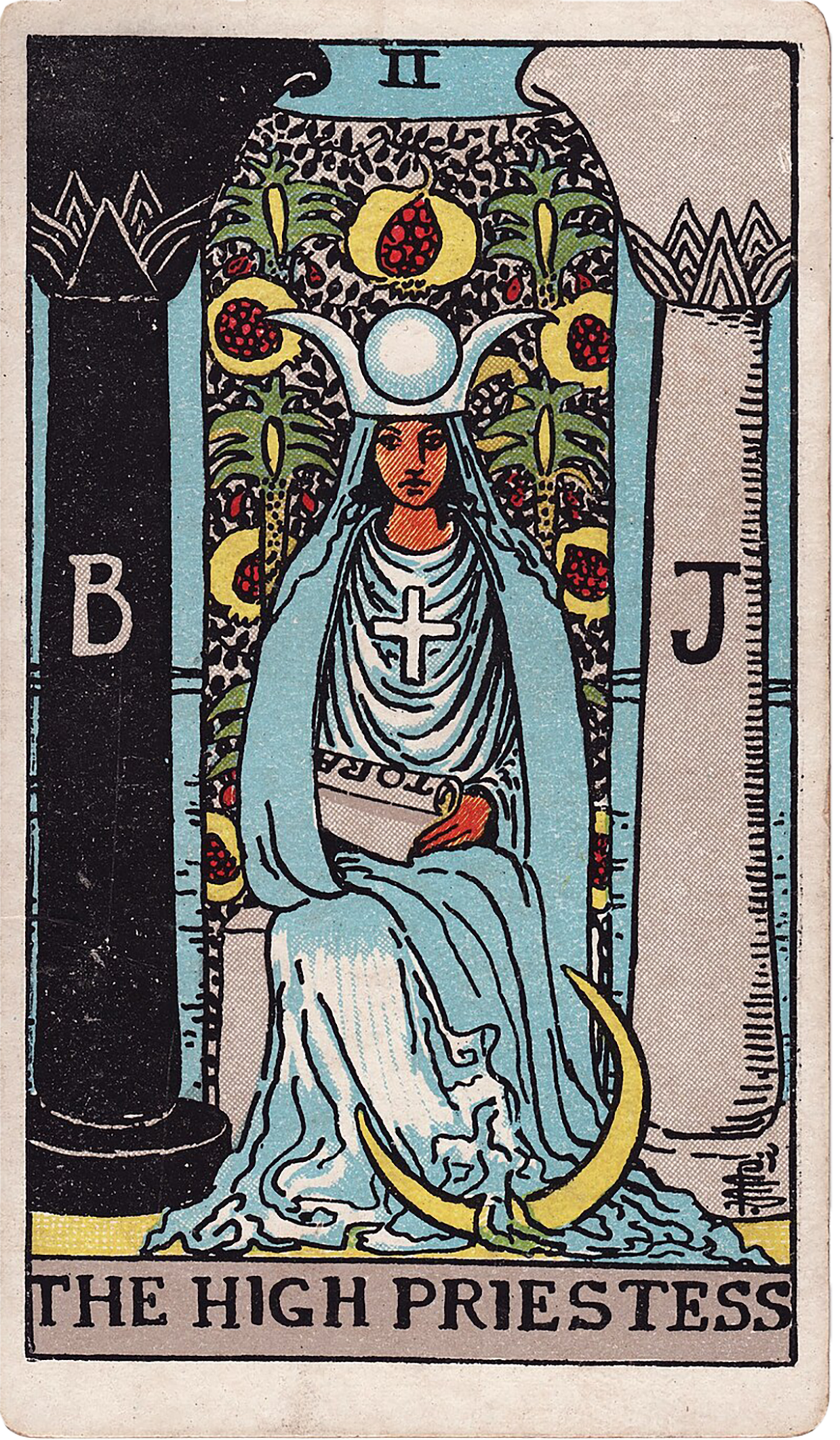 The High Priestess
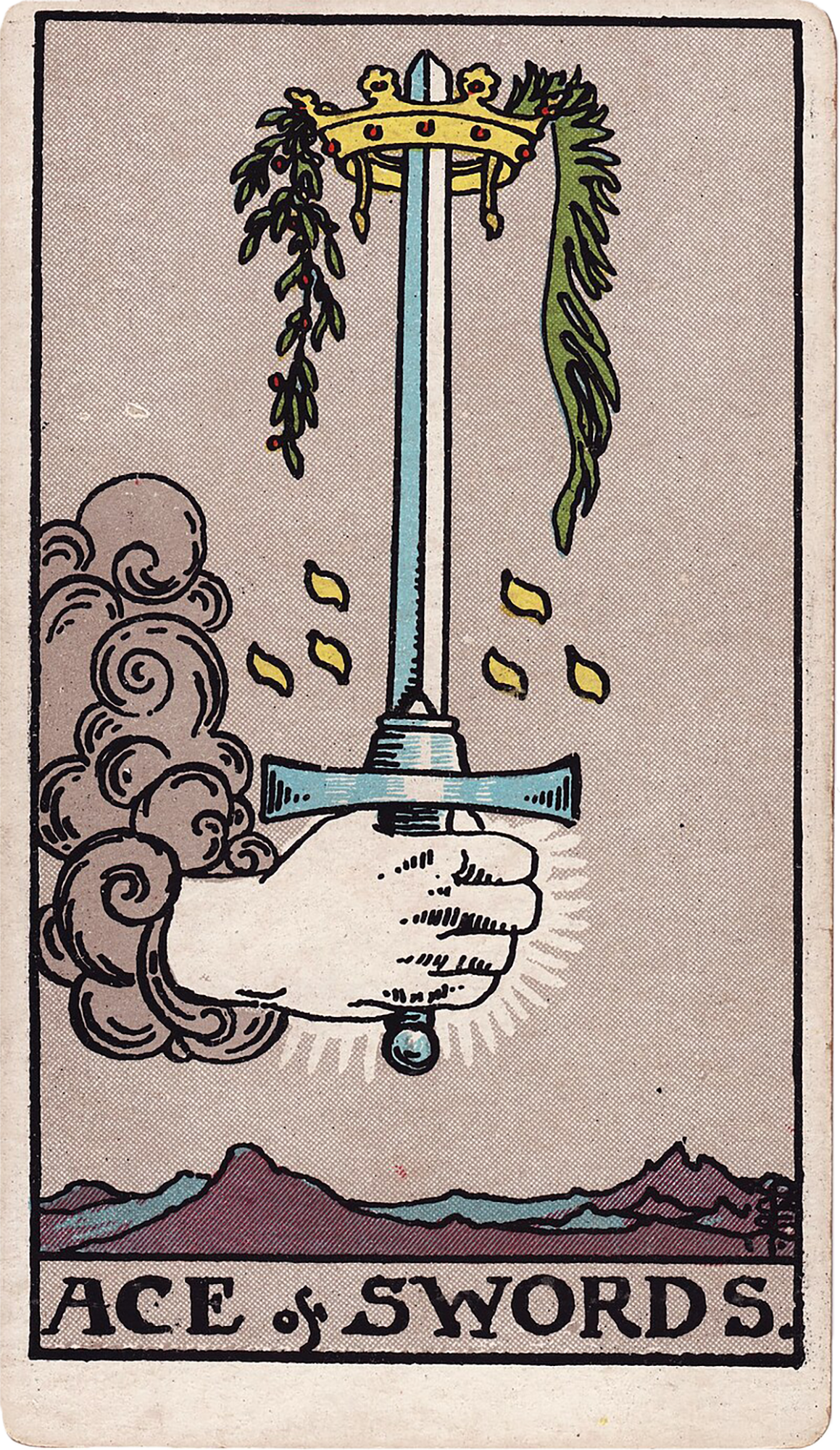 Ace of Swords
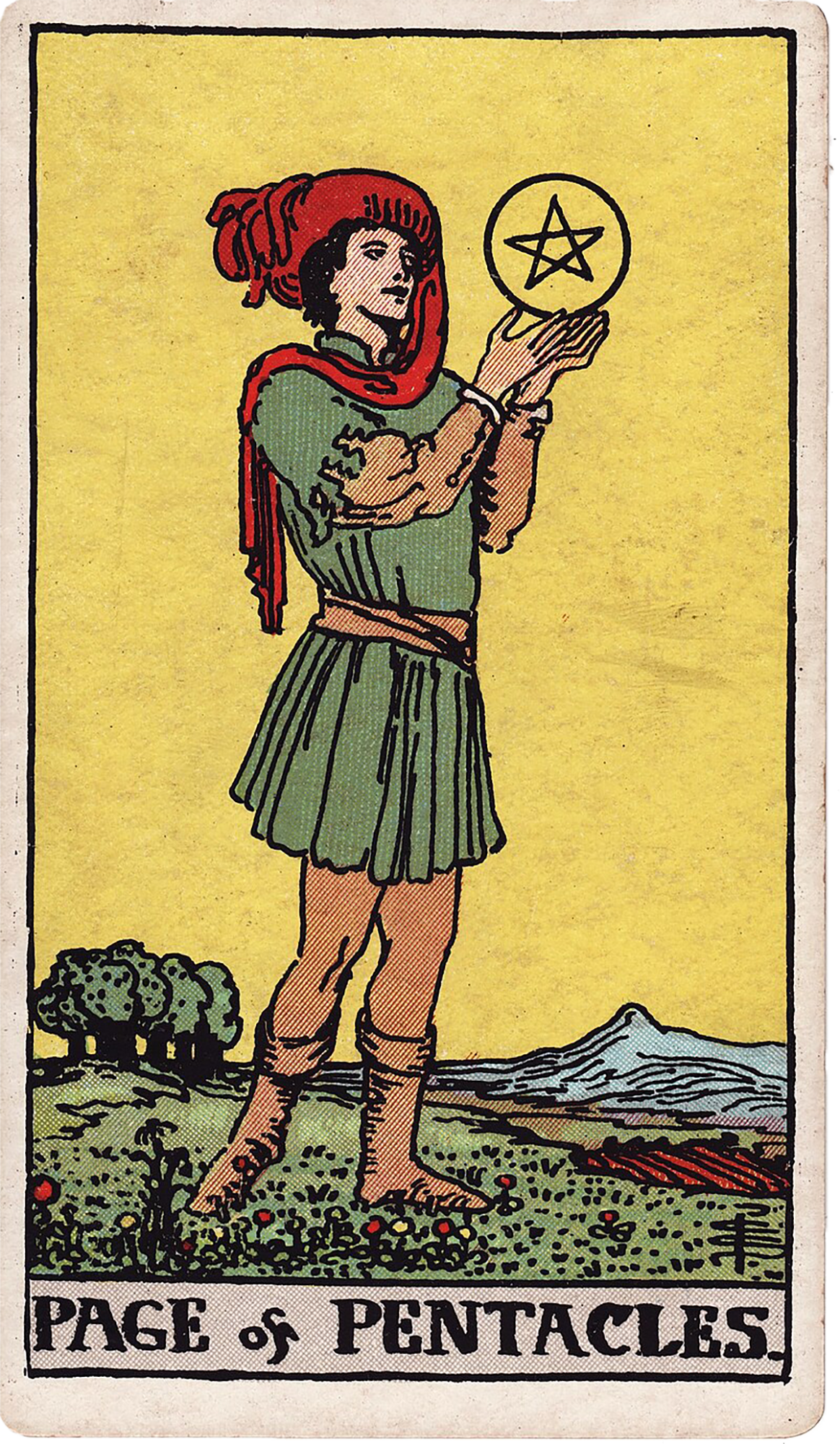 Page of Pentacles
Introduction and why mini experiments work
Tarot intuition is a skill that blends sensory attention, symbolic knowledge, memory, emotional calibration, and disciplined testing. Mini experiments are short, repeatable exercises that isolate one variable (for example: first impressions, symbolic association, or outcome prediction) so you can practice deliberately and measure progress. Unlike ad hoc readings—where memory and feedback can be vague—structured experiments create a feedback loop: set a hypothesis, record impressions and confidence, take a measurable action or wait for a predetermined outcome, then evaluate. For visual and symbolic learning, using actual card imagery helps anchor observations. In this article the supplied card images—The High Priestess, Ace of Swords, and Page of Pentacles—serve both as training stimuli and recurring checkpoints. Each card represents a distinct domain to practice: inner listening and secrecy (High Priestess), clarity and truth-telling (Ace of Swords), and disciplined learning and material beginnings (Page of Pentacles). By rotating short experiments around these three archetypes, you can develop a rounded calibration of intuition that is both imaginative and rigorous.
Set up: materials, mindset, and basic record-keeping
Materials: a single deck (preferably Rider–Waite–Smith for consistent imagery), a notebook (or digital tracker), a pen, a timer, and the three supplied card images in sight. Optional: a second person for blind-feedback experiments. Mindset: treat each trial as a neutral observation, not a test of self-worth. Expect variance; aim for steady improvement, not instant certainty. Basic record-keeping fields: date/time, experiment type, card(s) drawn or shown (image name), initial impressions (words, images, sensations), confidence score (0–100%), the explicit prediction or hypothesis, outcome and timeframe, and short comments about what changed. Keep entries concise so you will sustain the habit. Use a consistent time window for outcomes (e.g., 24 hours, 7 days, 30 days) depending on the type of experiment.
Reading the supplied cards as practice anchors
Before running experiments, spend a session deliberately studying the three supplied cards and their Rider–Waite symbolism. These are your recurrent anchors for exercises; the clearer your visual and symbolic memory, the stronger your intuition will become. The High Priestess: visually you will see a seated woman between two pillars with a veil behind her patterned with pomegranates, a crescent moon at her feet, and a partially hidden scroll. In practice she points to attention beneath surface appearances, listening to deeper material and trusting quieter discernment. Use her to train subtle noticing (what's hinted at, what is withheld). Ace of Swords: a hand emerges from a cloud holding a single upright sword crowned with a laurel and small crown motif. This image trains decisive clarity—cutting through confusion, noticing sudden mental focus or truth. Page of Pentacles: a youth studies a pentacle held carefully, standing in a cultivated field; this trains beginner energy, study habits, practical attention to detail and the methodical start of new skills. Spend a short session for each card noting at least five concrete visual details (color, posture, surrounding objects), two probable narrative themes (from the imagery), and one bodily sensation the image evokes. These will become the vocabulary you use during experiments.
Basic mini experiments for beginners
Run short, low-risk drills that isolate a single skill and take 5–20 minutes. 1) One-card perception drill (The High Priestess focus): Shuffle and look only at the image of The High Priestess you were given. For 60 seconds, list the first ten impressions that come—words, images, body sensations. Record them without editing. Later, compare your notes to the supplied upright and reversed meanings: where did you notice listening, secrecy, or passive avoidance? Repeat daily for seven days, scoring whether you felt 'accurate' about the card's atmosphere (yes/no) and your confidence. 2) Clarity flash (Ace of Swords focus): Look at the Ace of Swords image for 30 seconds. Now write a one-sentence proposition you think the card would advise (a pragmatic 'next step' phrased like a sentence). Example: "State one clear boundary this week." Wait 24–72 hours—if you used the proposition to act, note the outcome. If you didn't act, record why. This trains matching a sharp image to a crisp action tendency. 3) Task seed (Page of Pentacles focus): Use the Page image to design a single tiny skill task (study 15 minutes, practice one repetition). Predict whether you'll complete it in the next 24 hours with a confidence rating. Execute and score. The habit of short commitments sharpens observation and follow-through.
The Calibration Trio method: a repeatable three-card experiment
This is a compact, reproducible method that uses all three supplied cards to test different facets of intuition in one session. Setup: sit comfortably with the three supplied images arranged left-to-right: The High Priestess, Ace of Swords, Page of Pentacles. Step 1 — Quiet sensing (2 minutes): Close your eyes and breathe. Open your eyes to the High Priestess. For 60 seconds, note sensations and three words. Record them quickly. Step 2 — Sharp statement (1 minute): Look at the Ace of Swords and write the clearest one-line interpretation that could be used as advice or a prediction. Keep it concrete and measurable (who, what, when if possible). Step 3 — Tiny commitment (1 minute): Look at the Page of Pentacles and design a single, verifiable task you will do in the next 48 hours related to the Ace statement (example: "I will send the draft email by Tuesday evening"). Step 4 — Confidence and prediction (30 seconds): For each card write a confidence score (0–100%) about the relevance of your impression to the coming 48 hours. Step 5 — Execute and evaluate: Carry out the Page task. After your chosen outcome window, record whether the Ace statement proved helpful or accurate, and whether the High Priestess impressions were reflected in events or inner changes. Repeat the Trio daily or three times a week for at least four weeks. Over time you will observe patterns: are you overconfident about the High Priestess impressions? Do Ace-derived statements work better when your confidence is lower or higher? The Trio helps you compare listening, clarity, and follow-through systematically.
Scoring, metrics, and building a calibration curve
To measure progress make three simple metrics per trial: Accuracy (binary or scaled), Calibration (match between confidence and actual accuracy), and Latency (how long until outcome occurred). Accuracy: for yes/no predictions use 1/0. For qualitative predictions use a 0–2 scale (missed/partially hit/clear hit). Calibration: record your confidence (0–100) and compute mean confidence minus actual accuracy over batches of 20 trials. If your average confidence is 70% but your accuracy is 40%, you are overconfident. Latency: note whether your predicted timeframe was accurate. Plot these metrics in a simple spreadsheet. Over weeks you should see either rising accuracy or better alignment between confidence and outcomes. Use moving averages (10–20 trial windows) for smoother trends. Also track which card's experiments show faster improvement: perhaps Page-driven tasks will improve first because they are concrete; High Priestess impressions may require longer practice to align because they concern subtle, private signals.
Examples of applied experiments combining the cards
Example 1 — "Listening to a conversation" (High Priestess + Ace of Swords): Hypothesis: the High Priestess will indicate what is unspoken; the Ace will indicate the clearest observation you should state. Procedure: before a scheduled conversation, study the High Priestess for 60 seconds and note what feels unsaid. Look at the Ace and write one clear sentence you might offer if the unsaid material appears. During the conversation, use your sense of the unsaid to listen and, if warranted, present the Ace sentence. Outcome: afterwards rate whether your observation matched anything that was actually unspoken and whether the Ace statement helped clarify the exchange. Example 2 — "Learning a short skill" (Page of Pentacles + High Priestess): Hypothesis: Page will suggest the exact tiny practice; High Priestess will show inner resistances. Procedure: choose a 15-minute practice suggested by the Page image. Before practicing, consult the High Priestess image to note what internal voice or anxiety might sabotage consistency. After the practice period rate adherence and whether awareness of the High Priestess worry helped you continue. Example 3 — "Deciding to speak up at work" (Ace of Swords + Page of Pentacles): Use Ace to craft a decisive line you could say; use Page to define a short rehearsal (five minutes of practice, or writing a bullet list). Predict whether delivering the line will have the intended immediate impact (e.g., "Manager clarifies next steps"). Record the result.
Advanced variations and controls
Once comfortable, introduce controls to reduce bias and increase signal clarity. 1) Blind-reader tests: Have a partner pick a small, verifiable event (send an email, choose one of three doors, reply/not reply within 48 hours) and note it privately. You draw the Trio and make predictions; partner reveals outcome after the window. This reduces self-fulfilling prophecy. 2) Randomized anchor exposures: Instead of always showing the same High Priestess image, shuffle between different deck versions or photos to test robustness of impressions tied to specific imagery. 3) Reverse inference control: Record initial impressions and then immediately consult the supplied upright/reversed meanings to see whether your language simply repeats the printed text or is genuinely novel. 4) Confidence calibration training: In half your trials, deliberately understate your confidence by 20% and observe whether this changes your decision to act; in the other half, be candid. Track whether behavioral outcomes differ with altered confidence. 5) Time-lagged predictions: Make a prediction about an outcome in 30 days and test your patience and long-term accuracy. Advanced learners can also perform inter-rater comparisons: share the same Trio impressions with several readers who haven't seen the images and compare how often similar themes arise naturally versus being suggested by the image.
Common mistakes and how to avoid them
Mistake: relying on after-the-fact fitting (retrofitting). Avoid by writing precise predictions before outcomes and using binary or scaled scoring. Mistake: confusing wishful thinking with intuition. Avoid by using blind controls or third-party verification for outcomes that benefit you. Mistake: over-relying on supplied card meanings and failing to notice novel imagery-based signals. Avoid by forcing a two-step process: initial uncued impressions, then card-meaning consultation. Mistake: inconsistent recording. Avoid by keeping a very simple, repeatable logging format. Mistake: failing to give experiments time. Some patterns (High Priestess subtle cues) may need weeks of data to show reliability—expect gradual change. Mistake: treating a reversal as 'bad' without nuance. Use the supplied reversal logic: reversal flags distortion, delay, or private/internal processes; design your experiment to test which applies (e.g., shorter time windows to see if it's a delay).
Interpreting results and refining your technique
When you analyze logs, look for specific patterns: which card-based experiments yield the clearest feedback? Does the Page of Pentacles-driven task completion rate improve first because it is concrete? Do High Priestess impressions match inner moods more than external events? Use those observations to refine experiment design. If you are overconfident, recalibrate by lowering confidence or increasing blind controls. If your accuracy is laudably high in one domain (e.g., clarity from Ace of Swords), treat that as a strength to leverage—use Ace-derived statements to make clearer decisions while continuing to train listening (High Priestess) and execution (Page). When a reversal appears in practice (you feel blocked or secretive after seeing The High Priestess reversed), design an experiment specifically to test whether the block is internal (journaling about fears) or external (are others withholding information?). Similarly, Ace reversed may warrant experiments testing whether your 'truths' are being weaponized: practice phrasing the same content with different tones and measure reception.
A practical six-week practice schedule
Weeks 1–2: Foundation. Daily one-card perception drills: rotate High Priestess, Ace of Swords, Page of Pentacles. Keep entries short. Weeks 3–4: Calibration Trio. Do the Trio method three times per week, plus one blind control per week. Track metrics. Weeks 5–6: Deepen and vary. Introduce advanced controls (a blind partner, randomized images), two long-window predictions (7–30 days), and inter-rater comparisons if possible. Weekly review: every Sunday review your spreadsheet, compute accuracy and calibration for the week, and note one specific behavior to adjust (e.g., "lower confidence on High Priestess impressions by 10%"). Keep the plan flexible: if a card domain consistently shows slow progress, allocate more practice time there.
Ethics, limits, and the learner's attitude
Tarot experiments train skill, not guaranteed prediction. Use them ethically: avoid making claims that could harm others, and do not use experiment-derived statements to manipulate or coerce. Respect privacy when using blind partners. Remember the learner's attitude: curiosity, humility, and patience produce better learning than urgency. Treat errors as data and avoid sensationalizing 'hits'.
Conclusion and next steps
Calibrating tarot intuition is a process of disciplined attention, reliable recording, and iterative refinement. Using the supplied High Priestess, Ace of Swords, and Page of Pentacles images provides a focused set of archetypal exercises: listening beneath the surface, making clear mental cuts, and committing to practical learning. Mini experiments shorten the feedback loop so you can see what works, notice bias, and build confidence in a measurable way. Start small, keep records tidy, and let your practice expand from reliable micro-successes. After six weeks you will have clear data on strengths and weaknesses and can design longer-term, personalized training plans.
Practice questions
• When you look at The High Priestess image for 60 seconds, what are the first five words or sensations you notice? How often do they later relate to private or unspoken information?
• How precise are your Ace of Swords one-line propositions? Over ten trials, what proportion would you rate as a clear hit, partial hit, or miss?
• Using the Page of Pentacles tasks, what percentage of planned micro-tasks do you complete within the stated timeframe? Does this change when you write an accompanying High Priestess note about internal obstacles?
• Are you consistently overconfident or underconfident? Compare your average confidence score to your actual accuracy across 20 trials.
• Which control reduced your hindsight bias most effectively (blind partner, randomized images, or delayed outcome windows)?
Comments
Sign in to comment.
Continue learning
Harnessing the Power of The Magician and Ace of Wands: Igniting Creativity and Manifestation in Tarot Readings
The combination of The Magician and the Ace of Wands in tarot readings offers a potent blend of creative energy and manifestation power. This article delves into the ways these car...
Advanced Techniques for Combining The Moon and The Star to Enhance Intuition in Tarot Readings
This article explores advanced techniques to combine the symbolism and energy of The Moon and The Star Tarot cards to enhance intuition during Tarot readings. Drawing from traditio...
Enhancing Clarity in Complex Choices with the Five Card Cross Tarot Spread
The Five Card Cross Tarot Spread is a practical tool designed to clarify complex choices by breaking down the decision into manageable parts. This article explores each position in...
Tracing the Origins and Evolution of The Fool Card in Tarot History
The Fool card holds a foundational place in tarot tradition, symbolizing beginnings, openness, and the embrace of uncertainty. This article traces its origins from early European d...
Understanding The Hermit Card in Solitude Reflection and Guidance
This article offers an in-depth exploration of The Hermit tarot card as a single-card reading in different contexts such as love, career, money, advice, challenge, person, outcome,...
Unlocking the Creative Flow with The Magician and The Empress in Tarot Combinations
This article delves into the powerful synergy between The Magician and The Empress in Tarot combinations, focusing on how their combined symbolism unlocks creative flow across vari...
Using the Seven Card Horseshoe Spread to Uncover Career Growth and Opportunity
This article presents an in-depth guide to the Seven Card Horseshoe Tarot Spread with a focus on career growth and opportunity. Using the cards The Fool, The Magician, The Empress,...
Understanding the Many Facets of The Moon in Emotional and Intuitive Tarot Readings
The Moon card in the Tarot deck embodies themes of intuition, uncertainty, dreams, and emotional complexity. This article offers a comprehensive exploration of The Moon’s upright a...
Unlocking Advanced Intuition Techniques Using The High Priestess The Moon and The Hermit
This article examines advanced intuition development in tarot reading by focusing on The High Priestess, The Moon, and The Hermit cards. It offers practical techniques for beginner...
Mastering Intuition with The High Priestess The Hermit and The Moon in Tarot Readings
This article delves into mastering intuition through three powerful Tarot cards: The High Priestess, The Hermit, and The Moon. It guides readers from beginner to advanced reading t...