
Ace of Swords Meaning in Love Career and Legal Situations
This VoxFati Tarot Library lesson teaches how to read the Ace of Swords as a single-card focal reading across love, career, money and legal situations. Anchored to the supplied Ace of Swords imagery and the provided upright and reversed descriptions, the article explains Rider-Waite-Smith symbolism, offers concrete example readings, describes a step-by-step practical method, lists common mistakes, and gives interpretation logic so learners can translate clear insight or mental confusion into usable advice.
Cards explored in this article
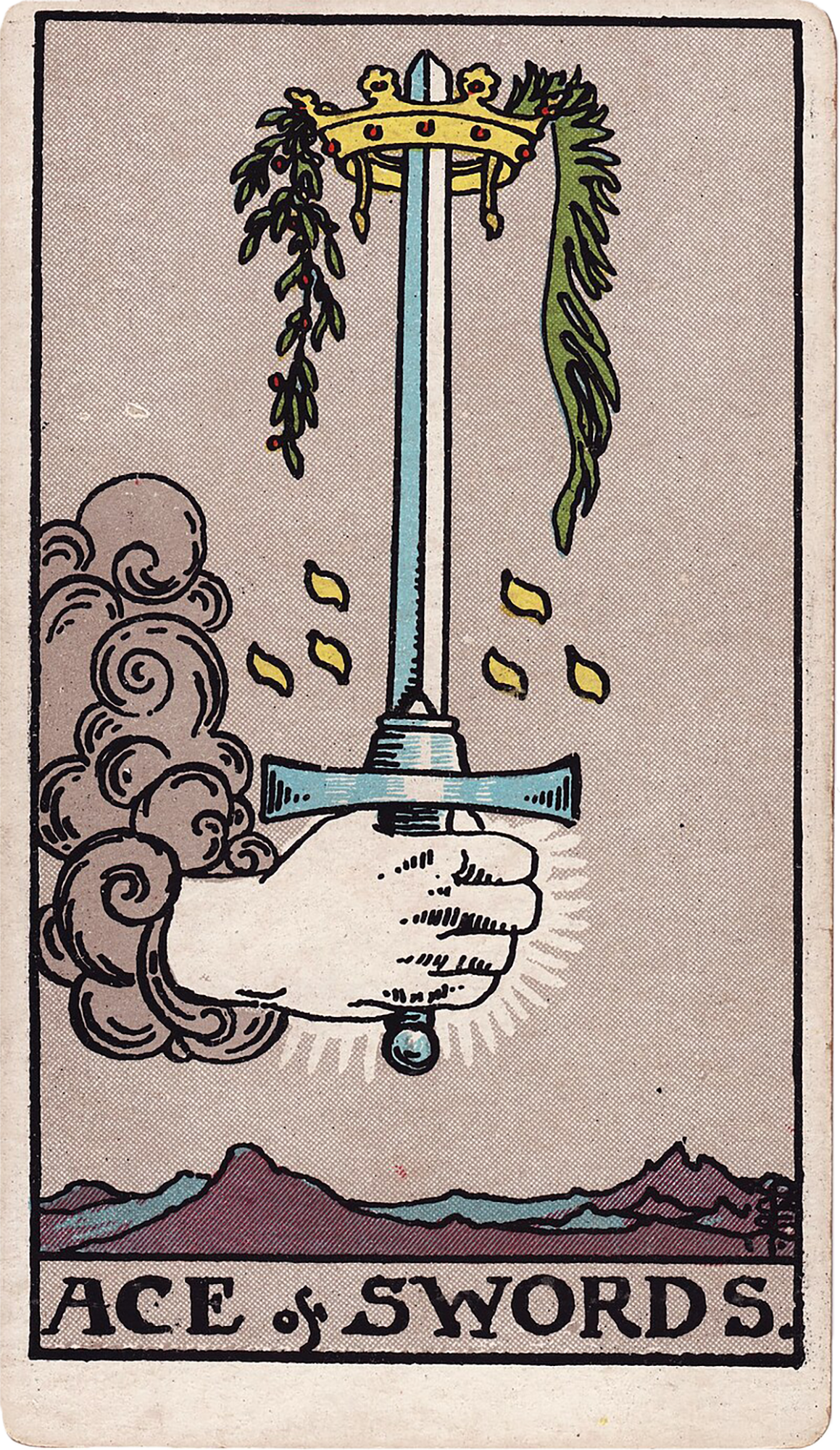 Ace of Swords
Introduction to the single-card Ace of Swords lesson
This lesson focuses only on the supplied Ace of Swords card and its two faces: the upright meaning and the reversed meaning given in the card context. Use this as a single-card, context-driven teaching: the Ace of Swords invites clarity, decisive speech and intellectual breakthroughs when upright, and draws attention to harshness, confusion or misused logic when reversed. Because we are working with a single-card context, every reading begins by asking: what part of the querent's situation needs clarification or a firmer decision right now? Keep in mind that this is a learning exercise for readers, not a deterministic forecast.
What the supplied Ace of Swords imagery shows and why it matters
Look at the supplied Ace of Swords image closely. In Rider-Waite-Smith tradition the card typically shows a hand emerging from a cloud, gripping a single upright, double-edged sword surmounted by a crown wreathed in laurel. The hand from the cloud suggests a sudden offering or opportunity that comes from outside ordinary routines: insight offered rather than earned by slow process. The double-edged sword symbolizes truth and consequence: words and ideas cut both ways and have impacts you might not expect. The crown and laurel indicate victory, recognition or the official quality of the idea — it can be authoritative. The landscape behind the sword is often spare: hills and sky that point to potential and the work needed to realize that potential. These visual cues help you answer practical questions: who is offering clarity, what form does it take, and what consequences follow if the querent uses it?
Core upright and reversed meanings to keep on-hand
Use the supplied card context as your baseline. Upright: "Upright, Ace of Swords highlights a clear insight, decisive conversation or intellectual breakthrough that cuts through confusion. The card is practical: it asks for a response that fits the present stage rather than an abstract ideal. Consider where this pattern is already visible and what action would strengthen its constructive side." Reversed: "Reversed, Ace of Swords draws attention toward harshness, confusion, misused logic, premature judgment or a truth used as a weapon rather than a tool for understanding. The reversal may show too much of the card's usual energy, too little of it, or a situation where the lesson is understood intellectually but not yet lived consistently." Repeat these lines in your head when you encounter the card: they frame the interpretive axis of clarity vs. misuse of clarity.
How swords' symbolism modifies meaning in different contexts
Swords rule thought, communication, decisions, conflict and the consequences of mental habits. Apply that domain to the context you're reading: in relationships swords will show conversations, boundaries and truths; in career they point to strategy, contracts, interviews and professional decisions; in legal or contractual matters swords emphasize evidence, argumentation and clarity of documentation. Remember the Ace's emphasis on beginnings: this is not necessarily the whole story but the opening energy — a conversation that starts something, an idea that needs to be tested, or a moment of legal clarity that sets a process in motion.
Practical single-card method for context readings
Follow these steps for reliable, learner-friendly single-card readings. 1) Clarify the question: ask the querent to state a specific, bounded question (e.g., "Should I speak to my partner about this now?" or "Will this contract clause cause trouble?"). 2) Note orientation: upright or reversed exactly as supplied in the image. 3) Visual scan: describe the hand-from-cloud, the sword, the crown and the landscape out loud. Anchor your interpretation to those images. 4) Apply the upright/reversed template: read the supplied upright or reversed definition and ask "Where in this situation does that show up?" 5) Translate to action: move from metaphor to practical steps—who needs to say what, when, and how; what documents or evidence are necessary; what phrase or tone will open rather than close a conversation. 6) Check for balance: because Swords are mental, ask whether emotions or ethics have been overlooked; recommend integration if needed. 7) Offer cautious outcome language: emphasize potential and required work rather than certainty. This stepwise method helps learners go from image to grounded advice without inventing unrelated meanings.
Ace of Swords in love relationships
Upright in love: The supplied upright text—"clear insight, decisive conversation or intellectual breakthrough that cuts through confusion"—applies to different relationship stages. - Single/dating: an idea or piece of information may clarify compatibility quickly. Practically: arrange a conversation that tests values or expectations rather than guessing. Example: if you sense someone isn't ready for commitment, bring it up calmly; the Ace promises clarity even if the news is uncomfortable. - Committed partnerships: the card indicates a needed conversation or boundary-setting that will resolve fog. It calls for concise, honest speech: "I need X" rather than vague complaints. The hand-from-cloud signals that the opportunity to clear things may feel sudden; be prepared. - Family situations: when family dynamics are tangled, the Ace suggests naming the issue (money, caretaking, roles) and inviting a rational, structured discussion. The crown and laurel suggest a resolution that restores respect if handled well. Reversed in love: The supplied reversal warns of "harshness, confusion, misused logic". In relationships this often looks like weaponized honesty (cutting remarks about flaws), premature conclusions about fidelity or motives, or slick rationalizing that avoids feeling. Practical guidance: slow down, reframe statements as feelings rather than accusations, and test your facts before declaring a verdict. If the reversal shows internal confusion ("the issue is occurring internally"), recommend journaling or therapy to sort thought from projection before addressing the partner.
Ace of Swords in career and workplace contexts
Upright in career: The Ace often signals a clear strategy, a decisive meeting, or the moment to negotiate. Use the imagery: the hand offers a sword crowned with laurel—an opportunity for recognition or a decisive promotion if you can argue your case cleanly. Practically: prepare bullet-point evidence, anticipate counterarguments, and request a meeting rather than relying on passive hope. If you're choosing between offers, the Ace suggests the cleaner, clearer path or the job that lets you use your reasoning skills. Reversed in career: Expect misapplied logic (blaming rather than diagnosing), office politics where truth is used as power, or confusion about requirements. It can also warn about hasty decisions—accepting or rejecting an offer without checking details. If the Ace appears reversed for a contract negotiation or disciplinary situation, document everything and seek clarification: the reversal implies either too much bite (harsh HR language) or too much fog (unclear expectations).
Ace of Swords in legal and contractual matters
Because Swords align with argument, evidence and clarity, the Ace is one of the most relevant cards for legal or contractual questions. Upright: Expect a clear legal advantage or a critical piece of evidence that cuts through ambiguity. The supplied upright text stresses a practical, present-stage response: act on the new clarity. Practically: if you receive a decisive document, read it carefully, consult an attorney, and respond formally. The crown imagery suggests a favorable official acknowledgment if you present facts clearly. Reversed: Watch for weaponized truth (accusations used strategically), misapplied legal reasoning, or confusing paperwork. The reversal may indicate internal confusion about your position or that the opposing side is using logic to intimidate. Tactics: slow down, file formal responses within deadlines, insist on written clarifications, and avoid reacting emotionally in ways that weaken your factual record.
Ace of Swords and money or contracts
In money matters the Ace of Swords asks: where do you need precise numbers and clear agreements? Upright: A loan, budget or contract clause will be clarified. The card calls for documentation and direct negotiation. The laurel-crown implies success for those who prepare their case: receipts, itemized budgets, and concise proposals. Reversed: Beware of confusing fine print or argue-driven sellers who use aggressive logic to coerce. The reversal flags rushed financial decisions or rationalizations that justify risky behavior. Practical step: read contracts line-by-line, get a second opinion, and avoid signing under pressure.
Interpreting the Ace of Swords as advice versus challenge
When the Ace appears as advice, use the supplied upright language as a procedural prompt: speak clearly, collect facts, and take decisive action appropriate to the present stage of the issue. Advice form: "State the facts plainly, set a concrete next step, and schedule the follow-up." When the Ace appears as a challenge, the reversal's text is the diagnostic: identify where clarity has been misused or where logic has become harsh. Challenge form: "Where are we confusing toughness with truth? What part of this situation is being justified by clever arguments rather than ethical practice?" Distinguish advice from challenge by asking whether the querent has the tools to act: if yes, the card is likely instructive; if no, it is diagnostic of what blocks are present.
Reading the Ace of Swords as a person
If you ask "who is this person?", the Ace of Swords points to a communicator, an analyst, or someone who brings decisive messages. Upright: an honest, articulate person who may be a mediator, lawyer, teacher, or a friend who tells you the truth plainly. Reversed: that same person may be sharp-tongued, cold, or inclined to use facts as weapons. Because the card's supplied reversal notes that it can represent issues happening internally, sometimes this person is the querent's own inner voice—critical, impatient, or prematurely judgmental. In readings about family dynamics, check whether the Ace points to the family member who will raise the difficult truth or to the querent who must practice clearer boundaries.
Outcome and timing when the Ace appears
As an outcome the Ace of Swords promises a breakthrough: a conversation or piece of analysis that resolves confusion and points to a next step. Upright outcome: expect the decisive moment to occur soon if the querent takes practical steps (schedule the talk, gather documents). The imagery—hand from a cloud—suggests the moment may arrive unexpectedly but will be usable if prepared. Reversed outcome: the breakthrough is blocked by miscommunication, or it occurs in a harmful form (a public argument instead of a private clarification). Timing note: Aces often denote beginnings rather than complete resolution; treat the Ace outcome as the start of a process whose later cards (in multi-card work) would show consequence and resolution.
Spiritual reflection and inner work with the Ace of Swords
Spiritually, the Ace of Swords asks you to examine the quality of your inner clarity. Upright: practice discernment—distinguish insight from ego-driven rationalization. The crown and laurel imply that true clarity leads to ethical victory, not merely rhetorical dominance. Reversed: the card warns of spiritual arrogance—using 'truth' to justify harm or refusing to sit with uncertainty. Exercises: journaling prompts that separate facts from interpretations (list observed facts, then list your inferences), mindfulness practices that notice thought without acting on it, and dialogic exercises where you role-play a calm, precise conversation. The supplied reversal's line about intellectual understanding not yet lived is crucial: turn thought into consistent, compassionate action.
Examples of single-card readings (with scripts)
Example 1 — Love, upright: Querent asks about speaking to a partner about moving in. Pull: Ace of Swords upright. Script: "This card says a clear conversation will cut through your uncertainty. Prepare three concrete points you need to cover—timeline, finances, and boundaries—and schedule a quiet time to talk. The hand from the cloud suggests the opportunity will come from outside your usual routine; plan the meeting rather than waiting for a 'right moment.'" Example 2 — Career, reversed: Querent worries about a sudden demotion rumor. Pull: Ace of Swords reversed. Script: "The reversal points to confusion and possible misused logic—maybe rumors are being framed as facts. Document your performance, request written reasons for changes, and avoid public emotional reactions. This may be more about office politics than your work, so insist on clarity in writing." Example 3 — Legal, upright: Querent asks if new evidence will help their case. Pull: Ace of Swords upright. Script: "Yes; the card suggests a decisive piece of information or a clear argument will benefit you. Present the evidence to counsel and ask for a specific motion or filing that uses it. The crown suggests a favorable official acknowledgement if handled properly."
Common mistakes learners make with the Ace of Swords
1) Equating Swords with aggression: Swords are about truth and thought, not automatic hostility. The Ace can be gentle when used constructively. 2) Over-interpreting the 'sudden' hand: a sudden moment may be the opportunity to act rather than a guaranteed easy fix. 3) Treating reversal as 'bad' only: the reversal diagnoses where mental patterns are stuck; it is diagnostic and actionable. 4) Ignoring bodily or emotional data: because Swords are mental, readers sometimes neglect how emotions will shape the outcome. Always ask how the querent feels and how that affects delivery. 5) For legal readings, promising outcomes: the Ace can indicate clarity in evidence or argument, but not a guaranteed verdict. Encourage procedure and documentation.
How to practice and train with this single-card lesson
Practice these drills: - Imagery description: spend five minutes describing the supplied Ace of Swords image in detail without interpretation; then map each element to a practical meaning. - Two-minute consults: pull the Ace for simple prompts across contexts and practice translating the upright or reversed text into one precise action step. - Reversal discernment: when you see the reversal, write three ways the same clarity could be misused and three ways to correct course. - Integrate emotions: for every reading, add one line about how the querent's feelings will shape the impact of a truth spoken. Record sessions and note how close your practical advice predicted the real-world next step; refine phrasing to make suggestions actionable (e.g., "set a meeting by Friday" rather than "talk soon").
Summary and interpretive logic checklist
When you read the Ace of Swords as a single-card answer, run this checklist: 1) Orientation: upright or reversed? 2) Imagery anchor: who (hand), what (sword), symbol (crown/laurel), setting (cloud/landscape)? 3) Domain: thought, speech, decision, evidence—how does that map to the question context? 4) Action step: what one concrete thing can the querent do right now to embody the card's constructive side or to remediate the reversal? 5) Emotion check: does the querent have the emotional readiness to deliver or receive this truth? If not, recommend preparatory work. 6) Documentation/ethics: if legal or career-related, emphasize written records and professional consultation. Using this logic keeps readings practical, accurate and visually connected to the supplied Ace of Swords imagery.
Practice questions
• Which part of the Ace of Swords image feels most relevant to my question: the hand offering, the upright sword, the crown or the sparse landscape?
• If the Ace is upright, what is one concrete, time-boxed action I can take to instantiate the clarity it promises?
• If the Ace is reversed, where am I misusing clear arguments or rushing to judgment, and what small practice can slow and reframe my response?
• How will my emotional state affect how a truth is heard in this situation, and what can I do to prepare emotionally before speaking?
• In a legal or contractual context, what specific documents or pieces of evidence would convert the Ace's intellectual advantage into a formal win?
Comments
Sign in to comment.
Continue learning
Harnessing the Power of The Magician and Ace of Wands: Igniting Creativity and Manifestation in Tarot Readings
The combination of The Magician and the Ace of Wands in tarot readings offers a potent blend of creative energy and manifestation power. This article delves into the ways these car...
Advanced Techniques for Combining The Moon and The Star to Enhance Intuition in Tarot Readings
This article explores advanced techniques to combine the symbolism and energy of The Moon and The Star Tarot cards to enhance intuition during Tarot readings. Drawing from traditio...
Enhancing Clarity in Complex Choices with the Five Card Cross Tarot Spread
The Five Card Cross Tarot Spread is a practical tool designed to clarify complex choices by breaking down the decision into manageable parts. This article explores each position in...
Tracing the Origins and Evolution of The Fool Card in Tarot History
The Fool card holds a foundational place in tarot tradition, symbolizing beginnings, openness, and the embrace of uncertainty. This article traces its origins from early European d...
Understanding The Hermit Card in Solitude Reflection and Guidance
This article offers an in-depth exploration of The Hermit tarot card as a single-card reading in different contexts such as love, career, money, advice, challenge, person, outcome,...
Unlocking the Creative Flow with The Magician and The Empress in Tarot Combinations
This article delves into the powerful synergy between The Magician and The Empress in Tarot combinations, focusing on how their combined symbolism unlocks creative flow across vari...
Using the Seven Card Horseshoe Spread to Uncover Career Growth and Opportunity
This article presents an in-depth guide to the Seven Card Horseshoe Tarot Spread with a focus on career growth and opportunity. Using the cards The Fool, The Magician, The Empress,...
Understanding the Many Facets of The Moon in Emotional and Intuitive Tarot Readings
The Moon card in the Tarot deck embodies themes of intuition, uncertainty, dreams, and emotional complexity. This article offers a comprehensive exploration of The Moon’s upright a...
Unlocking Advanced Intuition Techniques Using The High Priestess The Moon and The Hermit
This article examines advanced intuition development in tarot reading by focusing on The High Priestess, The Moon, and The Hermit cards. It offers practical techniques for beginner...
Mastering Intuition with The High Priestess The Hermit and The Moon in Tarot Readings
This article delves into mastering intuition through three powerful Tarot cards: The High Priestess, The Hermit, and The Moon. It guides readers from beginner to advanced reading t...