
Ace of Wands for Initiating Creativity Career and Passion Projects
This VoxFati Tarot Library lesson uses the supplied Ace of Wands (upright and reversed) as a focused teaching tool about initiation, creative impulse, and first actions. Centered on the card's Rider–Waite–Smith imagery and the supplied upright and reversed descriptions, the article walks learners through symbolism, reading technique, and how the same card shifts meaning in love, career, money, advice, challenge, person, outcome, and spiritual reflection contexts. Practical examples, common mistakes, and step-by-step exercises teach how to translate the Ace of Wands' spark into disciplined next moves rather than vague inspiration.
Cards explored in this article
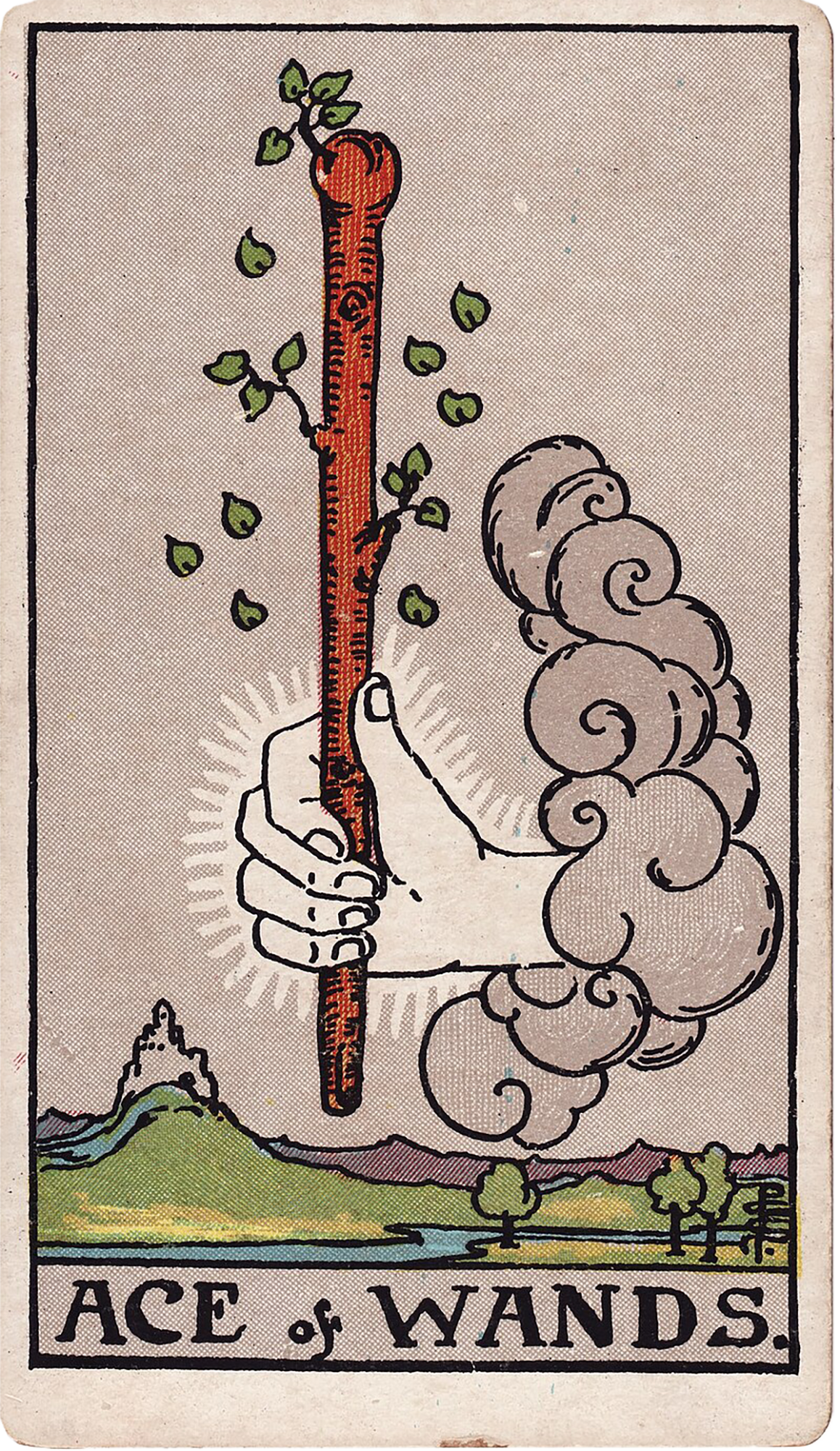 Ace of Wands
Introduction and how to use this lesson
This article is a single-card study focused on the supplied Ace of Wands card images and the supplied upright and reversed meanings. Treat the card as a prompt for action: when it appears, the question is not only "what will happen?" but "what first thing can be done now?" Use this lesson to learn technique and interpretation logic rather than to make deterministic predictions. Throughout, I repeatedly anchor explanations to the Ace of Wands imagery commonly used in the Rider–Waite–Smith tradition and to the supplied upright and reversed descriptions to keep the teaching visually and practically connected to the exact cards you see.
Core symbolism to observe in the supplied Ace of Wands images
Study the supplied Ace of Wands closely. Key visual elements to note (Rider–Waite–Smith symbolism): - The hand emerging from a cloud: an opportunity or impulse appearing from the unknown, a gift or invitation that isn't entirely of the querent's doing. It signals that the energy arriving is fresh and somewhat external in origin. - The single wand with new shoots or leaves: a concentrated source of potential — growth is nascent, not yet mature. The sprouts are literal signs of budding creativity and life. - The landscape below (plains, mountains, river, or trees depending on the specific image): a terrain of possibility. Mountains show ambition and obstacles; rivers or fertile land suggest resources and future fruitfulness if action is taken. - The sleeve or cuff on the hand: human agency. The card asks for a human response to the raw potential. When you read, describe what you see to the querent (or to your journal). Naming visual details clarifies whether the card's energy feels external, internal, fragile, or robust, which guides what type of first action is appropriate.
Anchoring to the supplied upright and reversed texts
The supplied upright description states: "Upright, Ace of Wands highlights a new impulse that wants expression; the card asks for a first action before enthusiasm fades. The card is practical: it asks for a response that fits the present stage rather than an abstract ideal. Consider where this pattern is already visible and what action would strengthen its constructive side... In many spreads, the upright card shows that the situation can be handled through the skills associated with Wands: motivation, creativity, ambition, initiative, identity and the way energy is directed. It can still contain effort or discomfort, but it usually makes the core task easier to name. Use the surrounding cards to see whether this energy is beginning, developing, reaching pressure, or moving toward resolution." The supplied reversed description states: "Reversed, Ace of Wands draws attention toward blocked inspiration, premature action, scattered excitement or waiting for perfect certainty before beginning. The reversal may show too much of the card's usual energy, too little of it, or a situation where the lesson is understood intellectually but not yet lived consistently. It can also indicate that the issue is occurring internally and is not obvious to other people... Rather than treating the reversed card as the opposite of the upright meaning, examine where the process has become stuck. Ask what needs to be simplified, acknowledged, practiced, released, or communicated before the healthier expression of Wands can return." Keep these supplied texts visible while you practice. They are the backbone of the interpretations below.
Reading technique for single-card lessons: questions and procedure
Single-card readings are concentrated and action-oriented. Use the following procedure with the supplied Ace of Wands: 1) Frame a precise question. Examples that fit this card: "What first action will move my project forward?", "What impulse needs expression now in my career?", "How can I kickstart my creative practice this week?" 2) Describe the image out loud or in writing. Note whether the hand, wand, leaves, and landscape feel strong, delicate, distant, or immediate. 3) Read upright or reversed through the supplied texts. If upright, ask: what practical, stage-appropriate response would preserve momentum? If reversed, ask: where is inspiration blocked, or where is action premature? 4) Turn the meaning into a concrete first step (one sentence) and a 1–3 step micro-plan. The Ace of Wands specifically asks for first action — keep the plan small enough to complete in 24–72 hours. 5) Follow up. After executing the micro-step, either redraw a card or journal results. The Ace of Wands energy is iterative; it rewards short feedback loops. Technique tips: when the card is reversed, avoid interpreting it as "no action." Often the correct response is a different kind of small action: clearing a blockage, simplifying, or practicing rather than pushing harder.
Interpretation logic: deciding the scale and type of action
The supplied upright description emphasizes practicality: the action should "fit the present stage rather than an abstract ideal." To decide scale and type: - Look at the image's cues for fragility vs robustness (small sprout vs many leaves, dry plains vs fertile river). A fragile sprout calls for protection and an experiment; a sturdy wand supports a bolder step. - Use language and tone in your question: if the querent asks about launching a business, the first action is likely administrative or experimental (a minimum viable prototype, a single pitch, a 1-week schedule). If the querent asks about a daily creative practice, the first action is habit-focused (10 minutes a day). - When reversed, differentiate between energetic excess and stuckness. Excess means to channel or refine; stuckness means to remove obstacles or practice basic skills. Always convert the card's symbolism into a tangible behavior with timebound criteria (what, when, how measured).
Ace of Wands in love and relationships
Upright: The supplied Ace of Wands upright signals a fresh romantic impulse or the spark of attraction. Visually, the hand offering the wand can represent an invitation — a flirtation, a new conversation, or a desire to start a project together (e.g., moving in, planning a trip). The practical question becomes: what small invitation or gesture will test this spark? Examples: asking for a date, proposing a shared creative activity, starting an honest conversation about desires. Reversed: With the supplied reversed text in mind, the card can point to blocked passion, impatience, or wanting the "perfect" moment before acting. It might mean excitement that fizzles because nothing is attempted, or actions taken too early that frighten the other person. The reading move is to identify whether the hesitation is fear or perfectionism and to try a low-risk action: a short message, a small boundary, or a short shared activity that confirms whether the spark is mutual. Reading tip: Ask whether the energy is mutual (external spark) or internal (one person’s sudden desire not yet recognized by the other). The Ace of Wands asks for an initiation scaled to emotional safety.
Ace of Wands in career, creative work, and passion projects
Upright: The supplied upright description positions the Ace of Wands as ideal for career or creative starts. In these contexts it often announces a project idea, a new role, or a shift in professional identity that wants testing. Interpret the card as permission to try a prototype, apply for one job, pitch one idea, or schedule a trial period. Use imagery: the wand's sprout suggests starting small and protecting early growth. Example: You feel a pull to launch a podcast. The Ace of Wands upright suggests recording one pilot episode or outlining five episode ideas this week rather than trying to build a perfect brand from the start. Reversed: The supplied reversed text points to blocked inspiration, scattered excitement, or premature action. In career contexts this might show as jumping into many projects at once, burning energy on too many directions, or waiting for perfect conditions. The remedy is triage: pick one smallest possible experiment, or practice the skills (recording, editing, networking) before committing to launch. If reversed energy is "too much," channel it into a focused sprint; if it is "too little," diagnose the internal blocks and practice small wins. Reading tip: Convert the card’s call for "first action" into a measurable experiment: publish one blog post, send one application, complete one creative sprint. The Ace rewards iteration.
Ace of Wands for money and practical resources
Upright: Financially, the supplied Ace of Wands upright can represent a new income source emerging from creativity or initiative — a side-hustle, a paid commission, or a small grant. The practical reading: what small, low-cost action can begin income generation? Examples: create a one-page offering, list one product, ask one client for work, or research one funding opportunity. The card suggests momentum if you act. Reversed: The supplied reversed description warns about premature financial decisions, scattered investments, or waiting for a perfect guarantee. It can mean money stuck because you haven't taken a practical step, or money squandered through impulsive projects with no follow-through. When reversed, map out the least risky test that costs little: a fee-based pilot with a cap, a brief market test, or reserving a budget for skill development rather than launching multiple offerings simultaneously. Practical note: Because the Ace of Wands emphasizes starting small, avoid major financial commitments until you've validated with one or two micro-tests.
Advice and challenge readings with the supplied Ace of Wands
Advice reading (upright): "Do one thing now that aligns with your excitement." Transform the card into a concrete command: "Email this collaborator," "write a 300-word outline," or "book 90 minutes to experiment." The image of a hand offering the wand is literally an invitation — accept it by doing one practical thing. Challenge reading (reversed): See where inspiration is blocked or where action is premature. The supplied reversed text suggests examining whether the problem is too much scattered energy or insufficient rootedness. Ask: is the challenge external (timing, resources) or internal (fear, perfectionism)? Then choose a clearing action: simplify goals, practice fundamentals, or create a short consistency ritual. Method: In both modes, translate the card’s energy into a single, testable action plus one contingency: "If X happens, do Y." This keeps initiation aligned with reality and prevents runaway enthusiasm.
Reading the Ace of Wands as a person or persona
When the supplied Ace of Wands represents a person, read it as a role or presence: someone who brings new ideas, invitations, or catalytic energy into the querent's life. Upright, this person is enthusiastic, initiative-taking, and often a connector who offers opportunities. Reversed, the person may be inconsistent, overwhelming, or unreliable — someone who starts projects but doesn't finish, or who generates pressure without steady follow-through. Interpretation practice: Describe the person’s behavior, not only traits. For example: "They called with a new idea and asked you to collaborate; they want to meet but haven't set a time." When reversed, ask whether this person is causing a blockage (e.g., always suggesting new plans but never organizing them) and what boundary or small test would clarify their reliability.
Outcome and timing when the Ace of Wands appears
Outcome readings with the supplied card are action-focused. Upright, the likely outcome is movement — a beginning that can lead to growth if followed with appropriate steps. Because the Ace of Wands is about potential rather than completed projects, outcome expectation should be modest: a pilot, a relationship spark, or a short-term opportunity that creates options. Timing: The Ace urges immediate short-term action: the "first action before enthusiasm fades." Use tight windows (24–72 hours to take the first step, a week for the first experiment) and reassess quickly. Reversed outcomes: The reversal can indicate delay or misdirected effort. The outcome may be that nothing substantial changes until a blockage is cleared or the direction is simplified. The practical suggestion is to set a small deadline for the clearing action and then reassess.
Spiritual reflection and inner work with the Ace of Wands
Spiritually, the supplied Ace of Wands can be a prompt to align will with values and identity. Upright, the card asks: "What creative impulse reflects your true self, and how can you honor it practically?" The wand's sprout is a metaphor for soul-purpose emerging into action. The spiritual practice is to commit small consistent expressions of that purpose. Reversed, the card asks you to examine inner blocks: fear of judgment, perfectionism, or confusion about identity. The recommended spiritual work is simplifying practices: short daily rituals, grounding exercises, or journaling about the smallest meaningful step. The reversal often signals that the discipline of small acts is the spiritual work required.
Common mistakes learners make and how to avoid them
1) Mistaking an impulse for a plan: The Ace of Wands asks for a first action, not a finished project. Convert feeling into a testable move. 2) Overreacting to reversal as "bad news": Reversed often describes process problems, not doom. Ask "where is it stuck?" and look for small unblocking steps. 3) Ignoring scale: launching a business is not the same as doing one prototype. Choose the micro-action appropriate to the querent's resources. 4) Reading image details too literally: Use imagery as metaphor for energy type and scale, not as a checklist of events. 5) Skipping follow-up: The Ace of Wands thrives on iteration. Without follow-up, initial sparks die. Avoid these errors by always translating a reading into a concrete micro-plan, setting a short deadline, and scheduling a follow-up evaluation.
Practice exercises and sample mini-readings
Exercises for learners: 1) Daily single-card experiment: Pull the supplied Ace of Wands each morning for a week with the question "What is one concrete thing I can do today to express my creative impulse?" Write the action and reflect each evening. 2) Two-question pair: Pull the card for "What first action do I take?" then physically flip the card for "What blocks this action?" (Use the supplied reversed meaning for the second response.) This helps learners see action vs blockage. 3) Micro-plan template: From the card, create a plan: Action (what), Time (when), Measure (how you will know it worked), Next step if positive, Next step if negative. Sample reading (career upright): "The Ace of Wands appears upright. The imagery shows a fresh sprout — start with a single pilot. Action: record one 10-minute demo and send to one potential collaborator by Friday." Sample reading (career reversed): "The Ace of Wands reversed suggests scattered projects. Action: choose one project and list three criteria for proceeding. If it meets two, do a 2-hour focused sprint this week; if not, archive it."
Bringing it together: interpretive checklist
Before finalizing any reading with the supplied Ace of Wands, run this checklist: - Did I describe the imagery and link it to the querent’s situation? - Did I use the supplied upright/reversed texts to frame options for action vs blockage? - Is the recommended step practical and timebound (24–72 hours for first action)? - Did I convert inspiration into a measurable experiment rather than a vague promise? - Is there a follow-up method (journal, redraw, calendar reminder)? This disciplined conversion from symbol to micro-action is the signature strength of reading the Ace of Wands effectively.
Conclusion
The supplied Ace of Wands is a single-card laboratory for practicing initiation: it asks you to notice the impulse, name a practical first step, and then test that step quickly. Upright it energizes starting, and reversed it shows where initiation needs refinement or clearing. Anchor your readings to the card's Rider–Waite–Smith imagery — the hand, the sprout, the landscape — and always translate the card’s language into a small, timed experiment. Over time this approach trains readers and querents to turn inspiration into reliable progress.
Practice questions
• When I look at the supplied Ace of Wands image, which visual element feels most urgent and why?
• What is one smallest possible action I can take in the next 48 hours to test a creative impulse?
• If this card appears reversed for my current project, is the blockage more internal (fear, perfectionism) or external (resources, timing)?
• How would I describe a successful outcome from a one-week experiment inspired by this card?
• What habit could ensure that small 'first actions' accumulate into sustained progress?
• If someone else offered you the wand shown in the image, what would accepting it require from you?
• How does translating the card’s energy into a micro-plan change your emotional response to the impulse?
• What follow-up method will you use to evaluate the result of the first action (journal, redraw, metrics)?
Comments
Sign in to comment.
Continue learning
Harnessing the Power of The Magician and Ace of Wands: Igniting Creativity and Manifestation in Tarot Readings
The combination of The Magician and the Ace of Wands in tarot readings offers a potent blend of creative energy and manifestation power. This article delves into the ways these car...
Unlocking the Creative Synergy of The Magician The Empress and Ace of Wands in Tarot Combinations
This article delves into the dynamic interplay of The Magician, The Empress, and Ace of Wands when they appear together in tarot readings. It explores how these cards collectively...
Unveiling Personal Power Through The Magician Strength and Ace of Wands
This article delves into the dynamic interplay of The Magician, Strength, and Ace of Wands tarot cards, exploring how their combined symbolism illuminates personal power across var...
Exploring the Symbolism and Elemental Correspondences of the Four Tarot Suits for Deeper Understanding
This article offers an in-depth exploration of the symbolism and elemental correspondences of the four tarot suits—Wands, Cups, Swords, and Pentacles—anchored by the imagery and me...
Using the Five Card Cross Spread to Overcome Career Burnout and Reignite Passion
This article guides learners through the Five Card Cross spread applied to overcoming career burnout and reigniting passion. Featuring a worked example using The Emperor, The Chari...
Mastering the Art of Combining The Magician The Empress and Ace of Wands for Creative Manifestation
This article explores the combined reading of The Magician, The Empress, and Ace of Wands Tarot cards, focusing on their synergy for creative manifestation. Through detailed analys...
Exploring the Symbolic Language and Elemental Meanings of the Suit of Wands in Tarot
The Suit of Wands in Tarot represents dynamic energy, creative force, and the drive for identity and ambition. Rooted in the elemental symbolism of fire, Wands cards articulate mot...
Unlocking Creative Synergy with The Magician The High Priestess and Ace of Wands
This article examines the powerful combination of The Magician, The High Priestess, and Ace of Wands within Tarot readings. By exploring their symbolic interplay, readers learn how...
Exploring the Symbolic Meanings and Elemental Correspondences of the Suit of Wands in Tarot
The Suit of Wands in Tarot embodies dynamic energy, creativity, and ambition, rooted in the elemental force of fire. This article delves deeply into the symbolism and elemental cor...
Mastering the Art of Combining The Magician The High Priestess and Ace of Wands for Advanced Tarot Readings
This article delves into the advanced skill of synthesizing The Magician, The High Priestess, and Ace of Wands within Tarot spreads. By grounding the discussion in the Rider-Waite-...