
Break Old Patterns and Build New Habits with the Five Card Cross Spread
This article teaches the Five Card Cross spread as a practical tool to identify why a family or household pattern repeats, what energy started it, how it is likely to develop, what mental blocks are in the way, and which concrete practice will help change it. Using the supplied cards in order—The Hanged Man (Present), Ace of Wands (Past), 9 of Wands (Future), 8 of Swords (Challenge), and 8 of Pentacles (Advice)—we walk through imagery-based interpretation, card-to-card relationships, step-by-step reading technique, common mistakes, exercises, and a reproducible method for learners who want to use tarot as a practical habit-change aid rather than fortune telling.
Five Card Cross
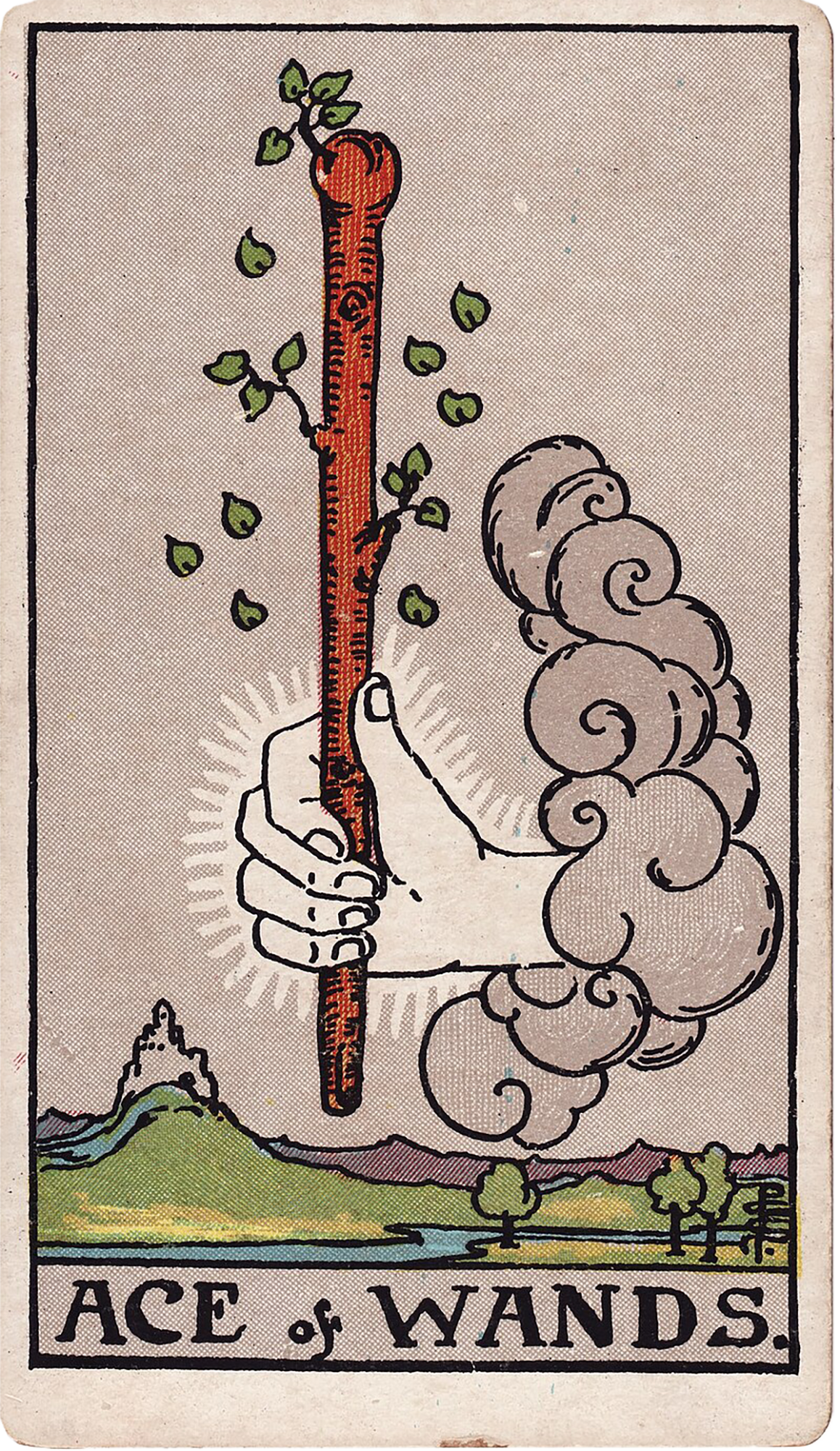 PresentAce of Wands
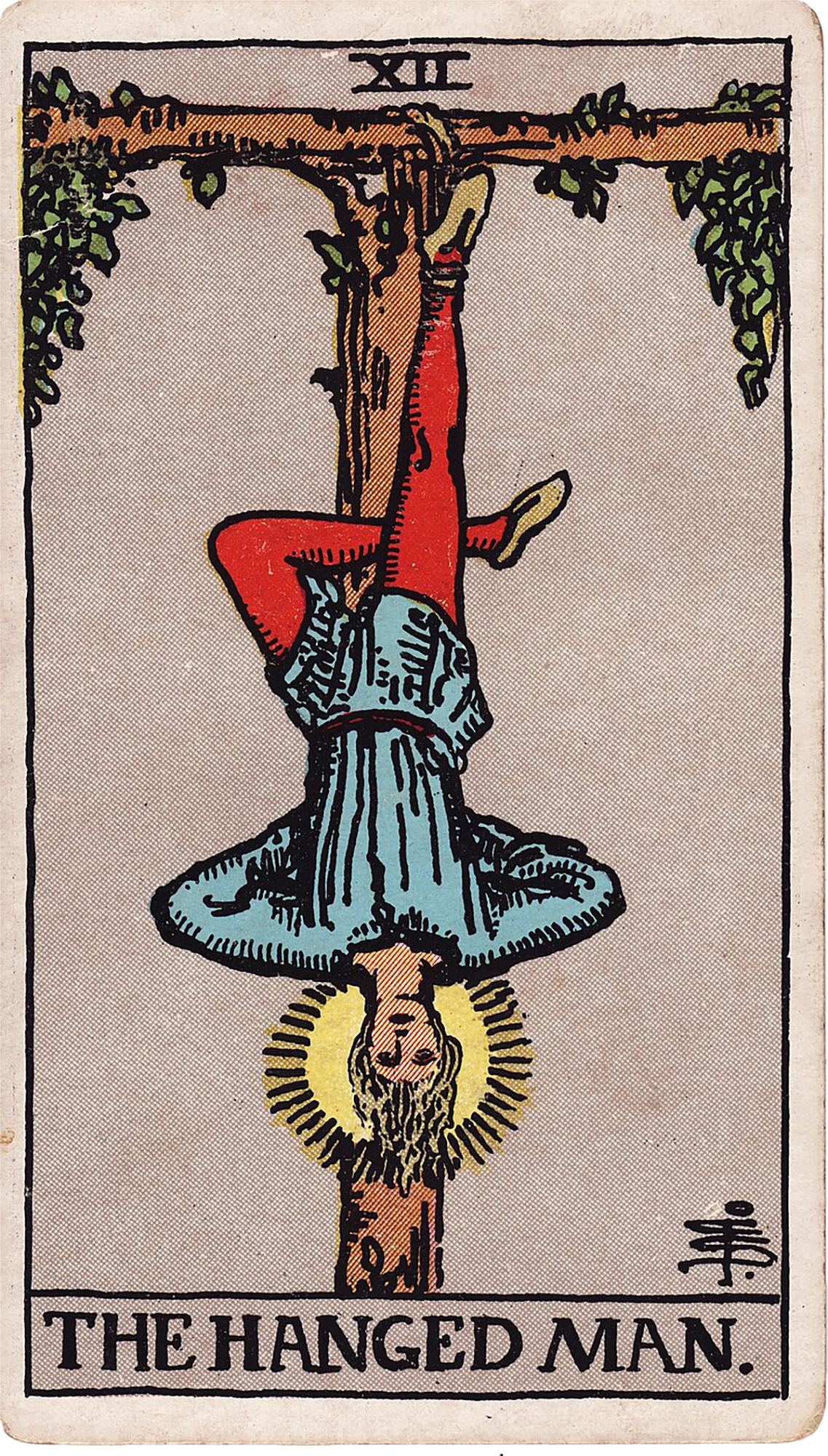 PastThe Hanged Man
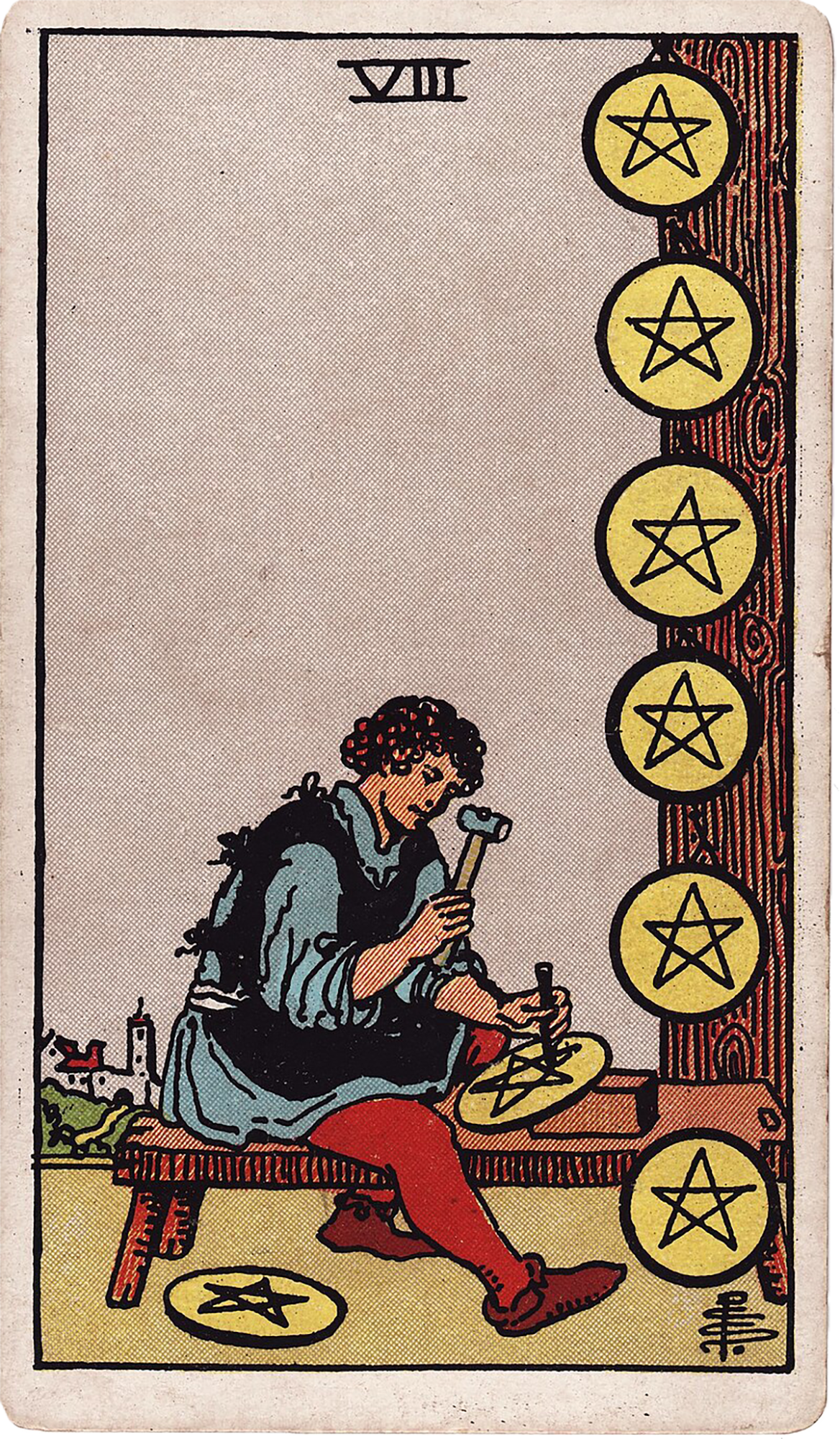 Future8 of Pentacles
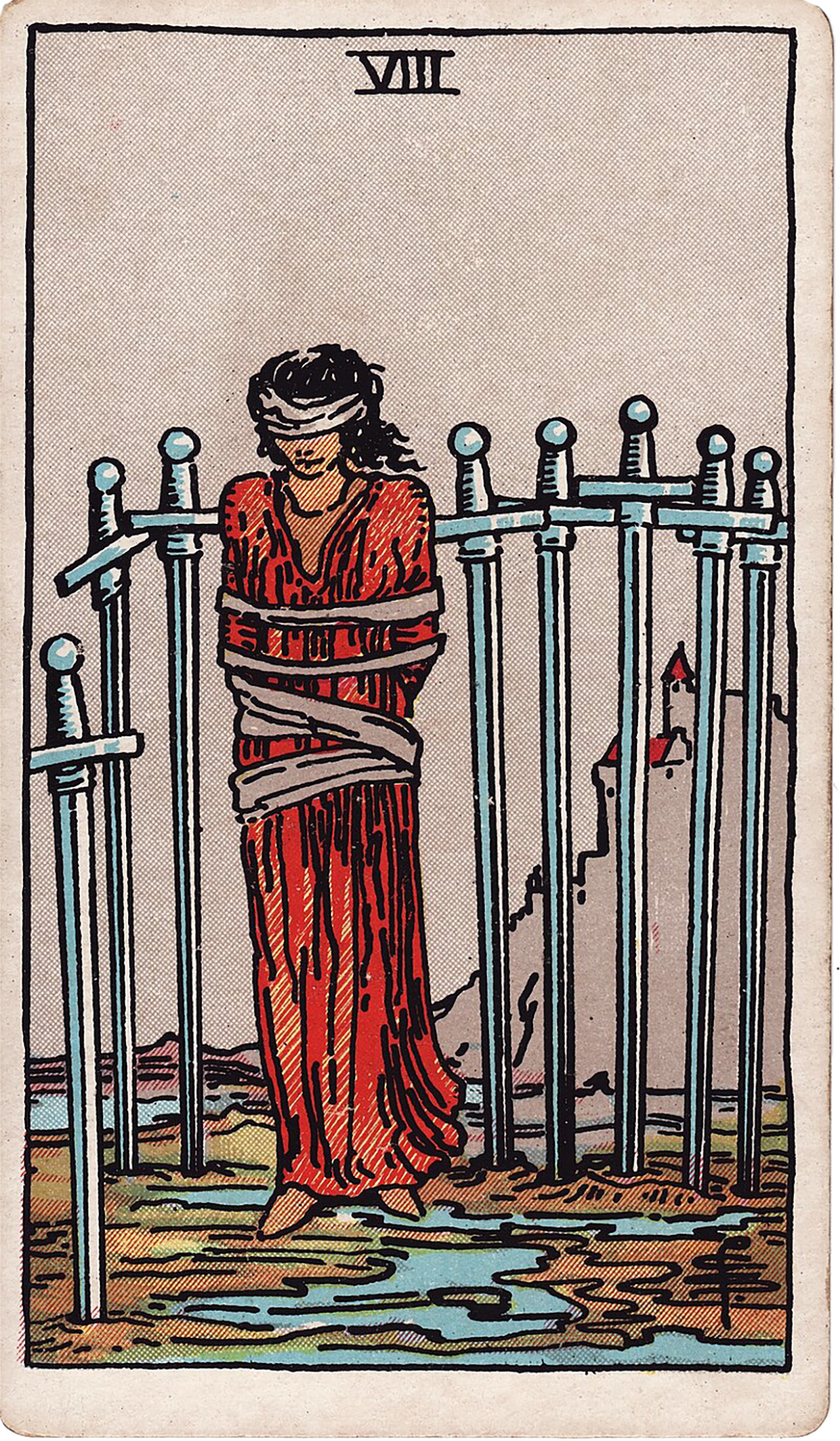 Challenge8 of Swords
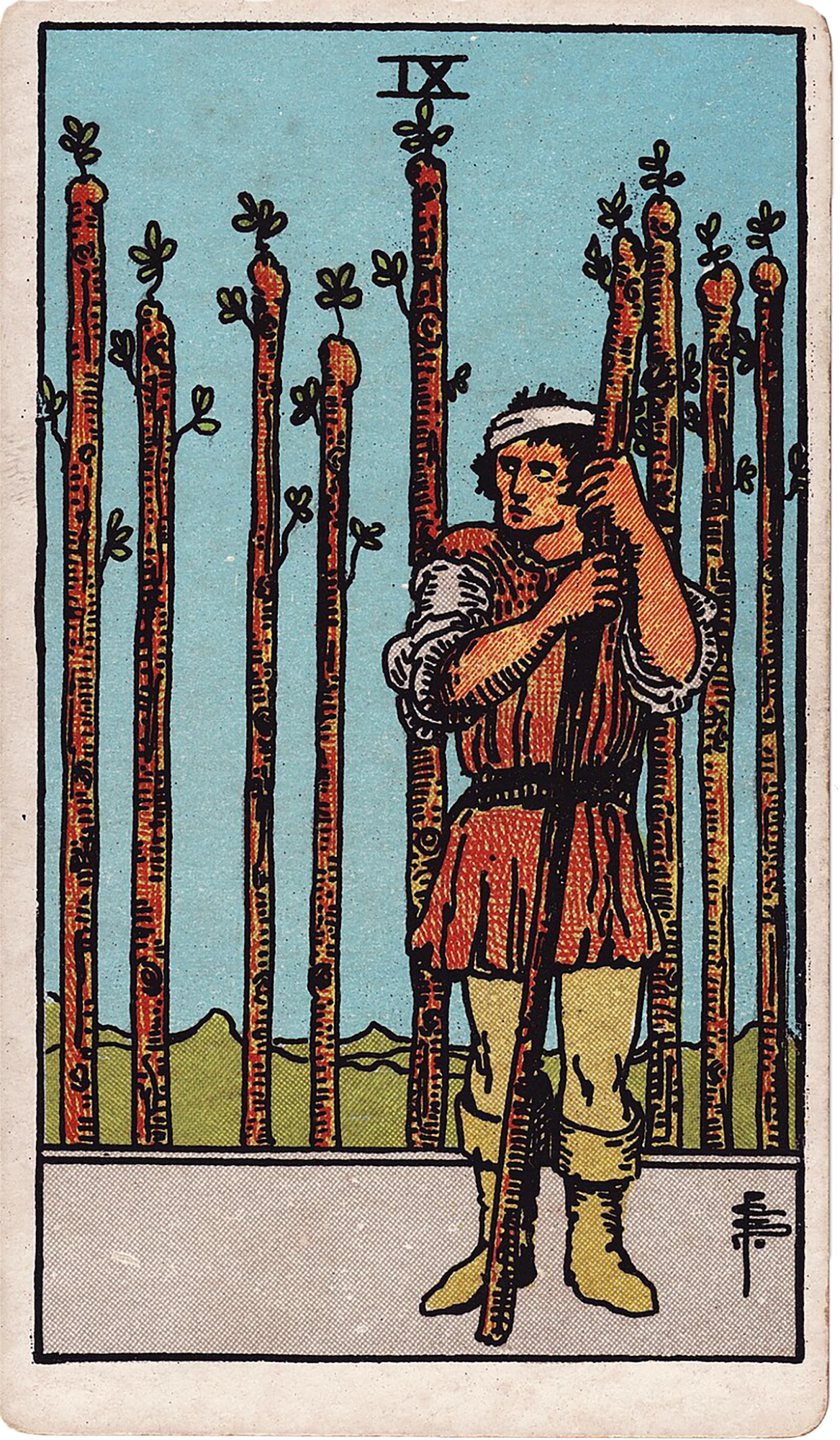 Advice9 of Wands
Introduction: Why a Five Card Cross is useful for habits and family patterns
The Five Card Cross is compact but rich: it maps current reality, origin, trajectory, the main mental or emotional obstacle, and direct advice. For family and practical spreads—changing a household routine, stopping a reactive parenting cycle, or building a new shared habit—the layout gives a clear sequence you can act on. In this worked example you will see the exact cards that will be shown visually to the reader: The Hanged Man, Ace of Wands, 9 of Wands, 8 of Swords, and 8 of Pentacles. We will keep returning to their Rider-Waite-Smith imagery (the suspended figure of The Hanged Man, the sprouting wand in Ace of Wands, the guarded stance of the 9 of Wands, the bound figure of the 8 of Swords, and the focused apprentice in 8 of Pentacles) so learners can connect interpretation to picture and symbol. The goal is practical: not prophecy, but clear steps you can test in real life.
Layout, labels and how these five positions work
Set the cards in a cross: one center card (Present), one left of it (Past), one right of it (Future), one above it (Challenge), and one below it (Advice). Use this exact order for reading the supplied cards: - Present: The Hanged Man - Past: Ace of Wands - Future: 9 of Wands - Challenge (above): 8 of Swords - Advice (below): 8 of Pentacles Each position has a practical question to guide interpretation: - Present asks: What is the current quality of the pattern and how is it experienced now? (The Hanged Man) - Past asks: What started the pattern or gave it momentum? (Ace of Wands) - Future asks: If current dynamics continue, where will the pattern go? (9 of Wands) - Challenge asks: What mental or situational obstacle must be faced to change the pattern? (8 of Swords) - Advice asks: What concrete practice or habit will most reliably shift the pattern? (8 of Pentacles) When you do your own reading, place the cards physically in this cross and read them in the order above. Anchor your answers to the picture and the card’s core meaning before you add story. That keeps the reading grounded and teachable.
Position-by-position reading with the supplied cards
Present — The Hanged Man (center) Image and basic meaning: The Rider-Waite Hanged Man is a figure suspended by one foot, head near the ground, haloed. Upright, The Hanged Man emphasizes deliberate pause, release of control, and taking a new perspective. Practically, it signals that the central issue is visible enough to engage, and that the next step is to choose a proportionate action rather than rush. Applied to habit/pattern work: In the present position The Hanged Man shows you are in a stop-and-reflect phase. For a family pattern—say repeated evening arguments about chores—it often means the cycle has become visible: people see the trigger, but are not changing the response. This card asks: Where can you stop doing the automatic thing for one moment, and test a different response? The halo suggests an openness to new meaning if you allow the pause to be constructive rather than passive. Past — Ace of Wands (left) Image and basic meaning: The Ace of Wands shows a hand emerging from clouds holding a budding wand. Upright, it represents a new impulse, creative spark, or first action that wanted expression. It's about initiative and where energy first concentrated. Applied to habit/pattern work: The Ace of Wands in the past position explains how the pattern began: an enthusiastic start, an attempt to initiate something new, or a single impulsive act that set the loop in motion. For a family example, this could be the one parent deciding to change bedtime or the excitement of starting a new household project that later became a point of friction. Recognizing this origin helps you separate the initial constructive impulse from the later defensive habit. Future — 9 of Wands (right) Image and basic meaning: The 9 of Wands shows a figure standing with a bandaged head, leaning on one wand, with a row of eight upright wands behind. Upright, it signals endurance, guardedness, and the need to protect what matters without remaining permanently defensive. Applied to habit/pattern work: As the future card the 9 of Wands warns that if current dynamics continue you will enter a phase of cautious persistence. Progress will be possible, but the emotional tone may be wary or exhausted. Practically, you may succeed in holding a new boundary or habit for a while but do so under tension—ready for another fight. The card asks you to plan how to protect change without turning every interaction into defense. Challenge — 8 of Swords (above) Image and basic meaning: The 8 of Swords depicts a blindfolded, bound figure surrounded by swords, standing in a marsh. Upright, it highlights feeling trapped by circumstances, beliefs, or mental habits; the bindings are loose enough to suggest choice exists. Applied to habit/pattern work: In the challenge position the 8 of Swords points to internalized thought patterns that enforce the old habit. It asks: where do family members feel powerless, convinced that there is no other option? The card suggests the obstacle is cognitive—stories like "we're not the kind of family that eats together" or "that's just how they are"—which must be interrogated and reframed before sustainable change can take place. Advice — 8 of Pentacles (below) Image and basic meaning: The 8 of Pentacles shows an apprentice at a bench repeating a craft—pentacles neatly arranged—focused on skill-building. Upright, it calls for deliberate practice, repetition, attention to process, and incremental improvement. Applied to habit/pattern work: As the advice, 8 of Pentacles is practical and encouraging: change will come from small, repeated efforts rather than one big speech. Create micro-habits, checkpoints, and a learning mindset. The image of hands shaping work reminds you to pay attention to technique and accept imperfection while improving steadily.
Card-to-card relationships and how imagery connects the story
Interpreting cards in isolation misses most of the actionable guidance. A reader must look at how the cards talk to each other. Hanged Man (Present) ← Ace of Wands (Past) - Relationship: The Hanged Man reframes the Ace of Wands. The past impulse (Ace of Wands) started the pattern with energy and intention; the present pause (Hanged Man) asks the querent to extract the useful part of that impulse and set aside the automatic reactivity that followed. - Visual cue: Imagine the budding wand held in a hand versus the suspended figure’s contemplative posture. The spark still exists, but it needs reorientation. Hanged Man (Present) → 9 of Wands (Future) - Relationship: If the pause becomes avoidance, the Hanged Man can unintentionally lead to the guarded endurance of the 9 of Wands. The suspended posture can become chronic if action is indefinitely postponed. - Practical point: Use the pause to plan a proportionate first move so you don’t arrive at exhausted defensiveness. Ace of Wands (Past) → 9 of Wands (Future) - Relationship: This is a classic arc from initiation to endurance. The initial spark that was not structured into sustainable practice can leave you tired and watchful. The visual of the fresh bud and later the battered defender suggests the need to sequence vigor into skills. 8 of Swords (Challenge) in relation to other cards - With Hanged Man: The Hanged Man’s lesson (perspective) will be undermined if the 8 of Swords’ mental constraints are not addressed. A pause that only confirms ‘‘I can’t’’ keeps you stuck. - With Ace of Wands: The bound/ blindfolded figure of the 8 of Swords can obscure the original impulse, causing you to doubt the value of the idea that started the pattern. - With 9 of Wands: Mental scripts (8S) feed the hypervigilance or burnout (9W) by keeping you in a defensive posture. 8 of Pentacles (Advice) linking to all - With Hanged Man: The Hanged Man teaches you to look differently; the 8 of Pentacles translates that new perspective into repeated practice. Visually, the suspended figure's halo becomes a learned skill if you work at it. - With Ace of Wands: The 8 of Pentacles prevents the Ace’s energy from dissipating by turning impulse into habit—bite-sized steps that honor the original spark. - With 9 of Wands and 8 of Swords: Skillful, consistent practice reduces both defensive exhaustion and the sense of helplessness. The apprentice’s bench is the antidote: small reliable tasks that build confidence and reduce mental entrapment.
A step-by-step reading method you can reproduce
Materials: deck, clean surface large enough for a cross, notebook, timer (optional). 1) Intention: State a practical question like "What helps my household shift from repeated friction around mealtime to a stable dinner routine?" Keep it action-oriented. 2) Shuffle and cut: Shuffle while thinking of the situation, then cut into three piles and reassemble, or let a family member choose one. Focus on feeling rather than forcing a narrative. 3) Lay the five-card cross: Place the first card center (Present), second to the left (Past), third to the right (Future), fourth above (Challenge), fifth below (Advice). Use the exact order with the supplied cards: The Hanged Man center, Ace of Wands left, 9 of Wands right, 8 of Swords top, 8 of Pentacles bottom. 4) Describe imagery first: Before you interpret, note concrete visual details on each card—colors, figures’ posture, objects like the wand, swords, pentacles, the haloed head of The Hanged Man, the bandage on the 9 of Wands. Write simple notes. 5) State the short practical meaning of each position using the imagery. Anchor each interpretation to the card’s core: pause (Hanged Man), initial spark (Ace of Wands), endurance/guardedness (9 of Wands), mental entrapment (8 of Swords), practice and craft (8 of Pentacles). 6) Map the dynamics: Draw arrows on paper to show how Past → Present → Future flow, and how the Challenge overlays the flow while Advice supports the center. 7) Extract actions: Turn each card into one or two concrete actions. Example: From Hanged Man — schedule a deliberate 5-minute pause before responding at dinner; from Ace of Wands — salvage the original positive intention and articulate it as a simple micro-goal; from 9 of Wands — build a specific protective boundary like a 10-minute cool-down ritual so defensiveness doesn’t escalate; from 8 of Swords — write and test alternative beliefs; from 8 of Pentacles — design a 2-week repeating practice with measurable mini-goals. 8) Turn insights into experiments: Choose one small action to test in the next 48 hours. Track it in your notebook and re-read the spread after the trial. 9) Close with reflection: Note what felt true and what surprised you. Avoid deciding that the spread ‘‘dictates’’ the outcome.
A practical example applied to a family habit (worked sample)
Situation: Repeated late-night arguments in a family over homework and chores. Question: How do we change the pattern so evenings are calmer and responsibilities are met? Reading (using the supplied cards): - Present — The Hanged Man: The family is at a natural pause. Everyone recognizes the problem and has stopped ignoring it, but reactions are habitual. The card says: Use the pause to observe rather than escalate. Concretely: institute a 3-minute family check-in before arguing. - Past — Ace of Wands: The pattern may have begun with a well-intentioned attempt: perhaps one parent created a new chore system or a child wanted independence. That spark became friction as expectations weren’t negotiated. Concretely: acknowledge the good intention and name it aloud to remind everyone of the shared goal. - Future — 9 of Wands: If nothing changes, the household will enter a defensive phase: repeated enforcement, tired resentment, and a sense of ‘‘we’re always protecting this system.’’ Concretely: plan a boundary that reduces wear—e.g., a timed homework window and a fixed consequence that is minimal but consistent. - Challenge — 8 of Swords: The primary blockade is a shared belief like ‘‘They’ll never do it’’ or ‘‘We can’t do family meetings.’’ This mental story must be tested. Concretely: write down current beliefs and create an alternative statement you can test for a week ("We can learn a new routine together"). - Advice — 8 of Pentacles: The solution is work and repetition: small, consistent rituals (10 minutes of guided homework time, 5 minutes of tidy-up) practiced daily. Concretely: create a checklist and a simple reward for completion for two weeks, then review. Outcome plan: Salvage the Ace of Wands energy by naming the original good impulse. Use The Hanged Man pause before escalation. Defend the progress without becoming rigid (9 of Wands) by making rules simple. Challenge the 8 of Swords stories by testing them. Use 8 of Pentacles’ skill-building to embed new processes through deliberate repetition.
Common mistakes and how to avoid them
1) Over-interpreting a single image: Anchor to the card’s basic meaning and the position’s question first, then expand. Don’t invent a complex narrative from one stray detail. 2) Treating the Hanged Man pause as forever: The Hanged Man indicates a useful pause; it is not an instruction to avoid action indefinitely. Translate the pause into a proportionate first step. 3) Ignoring relationship dynamics between cards: Always read how two or three cards answer different parts of the same question (origin, block, skill) rather than reading them as isolated predictions. 4) Confusing productive caution (9 of Wands upright) with defeat: The 9 of Wands can be protective rather than pathological. Ask "what needs protecting?" and "is the protection sustainable?" 5) Missing the practical: The presence of 8 of Pentacles should trigger a habit-building protocol, not an abstract moralizing about effort. Sketch an actual practice plan and measurable micro-goals. 6) Neglecting reversals nuance: In some readings a card may come reversed. Reversed meanings in the supplied card context indicate blockage, exaggeration, or internalization (e.g., Ace of Wands reversed = blocked inspiration). If a card appears reversed in your reading, read the reversal as a specific nuance: where the upright quality is blocked or distorted, and ask how to correct it.
Practice exercises to build your skill
1) Imagery anchoring drill: For each of the five supplied cards, spend five minutes writing three concrete actions the card suggests for household life (one sentence each). This trains translation from symbol to practice. 2) Three-day micro-experiment: Use the spread to design a 3-day test of one micro-habit (inspired by 8 of Pentacles). Document feelings each night and whether the 9 of Wands defensiveness decreased. 3) Reframing exercise: When you identify an 8 of Swords thought, write the evidence for and against it, then write a testable alternative belief. Try the alternative for one week and track results. 4) Pause-and-plan ritual: When The Hanged Man appears, practice a literal pause: a family bell or timer for three deep breaths before responding during conflict. Note whether it reduces reactivity. 5) Convert Ace of Wands energy: Each time you see the spark of starting something new, write a two-step plan that includes immediate small action and the first practice from 8 of Pentacles so momentum isn’t lost.
How to integrate readings into family habit work responsibly
Treat the tarot spread as a coaching session, not verdict. Use it to generate experiments, not to assign blame. Keep language neutral and process-focused: "The spread suggests we test a three-minute pause before dinner to see if it reduces friction" rather than "The cards say you are wrong." Involve all stakeholders: let family members see the cards, describe their own visual reactions, and co-design the micro-habits inspired by the 8 of Pentacles. Re-read the spread after your first testing period and compare results. Over time the deck becomes a design tool to refine what works rather than a final arbiter.
Closing integration and next steps
This Five Card Cross reading with The Hanged Man, Ace of Wands, 9 of Wands, 8 of Swords, and 8 of Pentacles gives a practical arc: recognize the pause you’re in, honor the original impulse, plan to avoid defensive burnout, interrogate limiting beliefs, and design a regimen of practice. The Rider-Waite imagery is a ready classroom: suspend reactivity like The Hanged Man, remember the budding promise of the Ace of Wands, protect without turning everything into a fight like the 9 of Wands, unbind limiting thoughts like the 8 of Swords, and work with steady craft like the 8 of Pentacles. Use the step-by-step method above to reproduce the spread, and treat the advice as an experiment you can iterate. Tarot teaches pattern recognition and disciplined testing—both essential for turning a repeating family loop into a sustainable, humane habit.
Practice questions
• Which part of the spread felt most like a literal description of your current household pattern: the pause of The Hanged Man, the original spark of Ace of Wands, the guarded endurance of 9 of Wands, the mental bindings of 8 of Swords, or the steady practice of 8 of Pentacles?
• What small, repeatable action inspired by the 8 of Pentacles could you commit to for two weeks?
• What specific belief from the 8 of Swords can you test and how will you measure whether it shifts?
• How can the Ace of Wands’ original positive impulse be reframed as a realistic micro-goal rather than an all-or-nothing ideal?
• If the Hanged Man’s pause became avoidance, what is a proportionate first step you could take to prevent arriving at the guarded stance of the 9 of Wands?
• Which image on the cards (the halo, the budding wand, the bandage, the blindfold, the apprentice’s hands) would you show to a family member to start a conversation about change, and why?
• How will you track progress so that 8 of Pentacles-style practice becomes visible and rewarding rather than monotonous?
• After one trial period, what question will you ask the cards next to refine the plan?
Comments
Sign in to comment.
Continue learning
Harnessing the Power of The Magician and Ace of Wands: Igniting Creativity and Manifestation in Tarot Readings
The combination of The Magician and the Ace of Wands in tarot readings offers a potent blend of creative energy and manifestation power. This article delves into the ways these car...
Unlocking the Creative Synergy of The Magician The Empress and Ace of Wands in Tarot Combinations
This article delves into the dynamic interplay of The Magician, The Empress, and Ace of Wands when they appear together in tarot readings. It explores how these cards collectively...
Unveiling Personal Power Through The Magician Strength and Ace of Wands
This article delves into the dynamic interplay of The Magician, Strength, and Ace of Wands tarot cards, exploring how their combined symbolism illuminates personal power across var...
Exploring the Symbolism and Elemental Correspondences of the Four Tarot Suits for Deeper Understanding
This article offers an in-depth exploration of the symbolism and elemental correspondences of the four tarot suits—Wands, Cups, Swords, and Pentacles—anchored by the imagery and me...
Using the Five Card Cross Spread to Overcome Career Burnout and Reignite Passion
This article guides learners through the Five Card Cross spread applied to overcoming career burnout and reigniting passion. Featuring a worked example using The Emperor, The Chari...
Mastering the Art of Combining The Magician The Empress and Ace of Wands for Creative Manifestation
This article explores the combined reading of The Magician, The Empress, and Ace of Wands Tarot cards, focusing on their synergy for creative manifestation. Through detailed analys...
Exploring the Symbolic Language and Elemental Meanings of the Suit of Wands in Tarot
The Suit of Wands in Tarot represents dynamic energy, creative force, and the drive for identity and ambition. Rooted in the elemental symbolism of fire, Wands cards articulate mot...
Unlocking Creative Synergy with The Magician The High Priestess and Ace of Wands
This article examines the powerful combination of The Magician, The High Priestess, and Ace of Wands within Tarot readings. By exploring their symbolic interplay, readers learn how...
Exploring the Symbolic Meanings and Elemental Correspondences of the Suit of Wands in Tarot
The Suit of Wands in Tarot embodies dynamic energy, creativity, and ambition, rooted in the elemental force of fire. This article delves deeply into the symbolism and elemental cor...
Mastering the Art of Combining The Magician The High Priestess and Ace of Wands for Advanced Tarot Readings
This article delves into the advanced skill of synthesizing The Magician, The High Priestess, and Ace of Wands within Tarot spreads. By grounding the discussion in the Rider-Waite-...