
Exploring The Chariot Card for Building Personal Willpower and Achieving Goals
This article explores the multifaceted meanings of The Chariot tarot card, emphasizing its role in developing personal willpower and navigating challenges to achieve goals. Using the provided upright and reversed images of The Chariot, we analyze its symbolism and practical applications across various contexts such as love, career, finance, advice, challenges, personality insights, outcomes, and spiritual reflection. Readers will gain a comprehensive understanding of how to harness the card’s lessons in real life, avoid common interpretive mistakes, and apply a structured reading technique to enhance clarity and personal growth.
Cards explored in this article
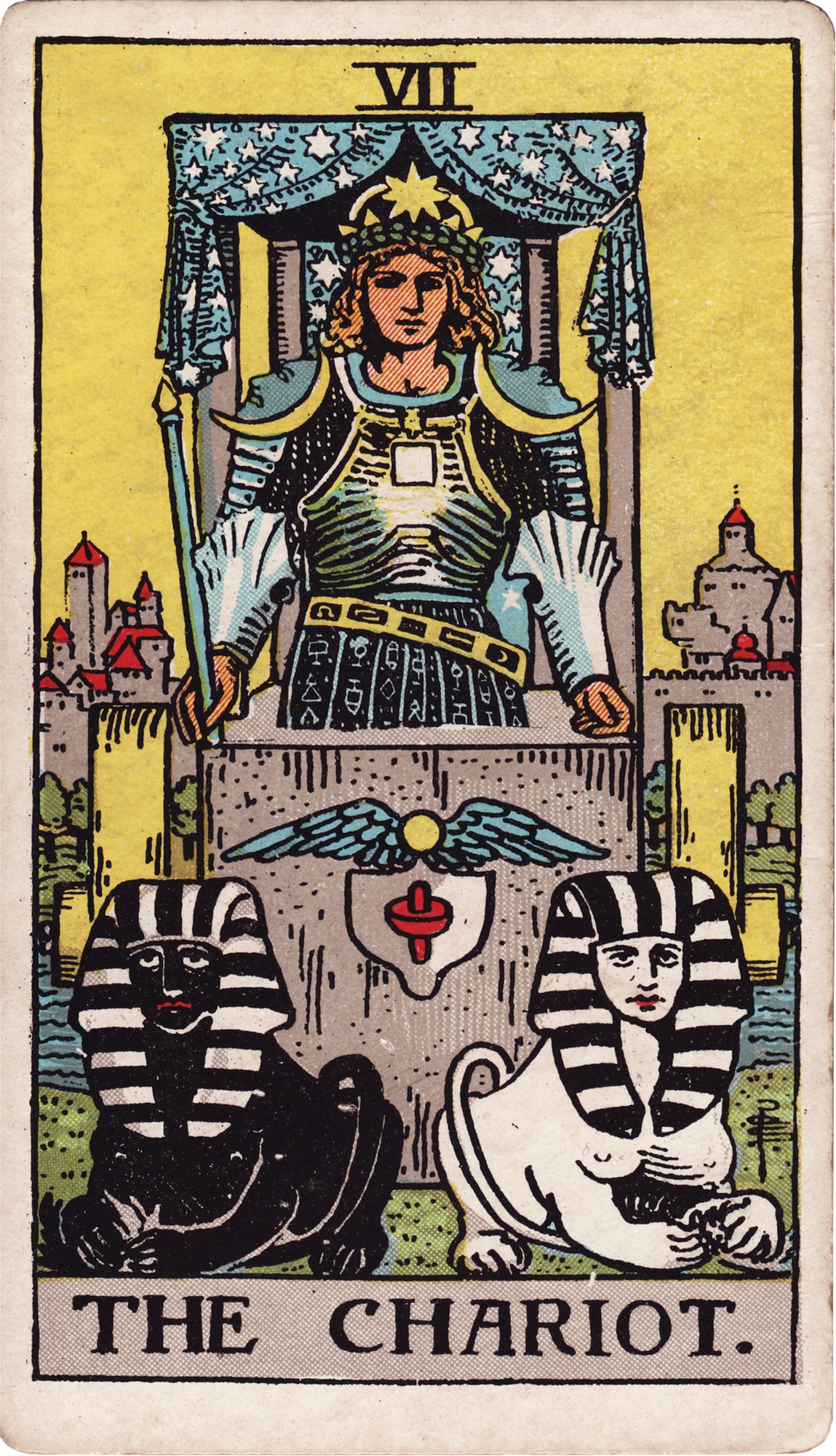 The Chariot
Introduction to The Chariot Card and Its Core Symbolism
The Chariot card in tarot, traditionally depicted as a charioteer steering a vehicle pulled by two sphinxes or horses, symbolizes the harnessing of opposing forces and the assertion of will to move forward. The Rider-Waite-Smith imagery shows the charioteer adorned in armor, holding a wand or scepter, symbolizing control, power, and victory through focused determination. The two sphinxes—one black, one white—represent dualities and internal conflicts that must be aligned for progress. This card is fundamentally about choice, direction, discipline, and the mastery of self. The upright Chariot encourages active engagement with current circumstances, deliberate decision-making, and forging ahead despite obstacles. In contrast, its reversed form warns of scattered energies, loss of direction, or premature action before inner conflicts are resolved.
Understanding The Chariot Upright: Building Willpower and Direction
When The Chariot appears upright, it signals that the querent is at a crossroads requiring a clear decision and the alignment of competing impulses to achieve a goal. The card suggests discipline, focus, and a confident assertion of personal will. Importantly, this does not guarantee easy success but highlights the inner qualities necessary to navigate difficulty. The charioteer’s armor indicates protection and readiness; the wand symbolizes control over one’s path. Practically, this card encourages working with the present moment rather than waiting for perfect conditions. The presence of the city in the background reminds us that progress involves navigating external realities and internal resolve simultaneously. The lesson is to identify the next proportional step forward and apply steady effort, using the card’s symbolism as a guide to which impulses need to be disciplined and which can be harnessed constructively.
Exploring The Chariot Reversed: Recognizing Blockages and Imbalances
The reversed Chariot often highlights a lack of direction, inner discord, or attempts to force outcomes prematurely. The energy that propels a charioteer forward is present but distorted, blocked, or misapplied. Rather than indicating disaster, the reversal is a prompt to assess where willpower is becoming scattered, overly aggressive, or misaligned. The image of the charioteer may appear less controlled, symbolizing how unresolved inner conflicts are preventing coherent action. This state can be internal psychological struggle, resistance to change, or a pause that allows for needed reflection. When this card is reversed, readers should ask: where am I forcing things? What inner polarities have I not yet reconciled? The answer often lies in returning to balance and gaining honesty about one’s real motivations before pushing forward again.
Applying The Chariot Upright and Reversed Across Contexts
The power of The Chariot card lies in its adaptability to multiple life contexts. Here we explore how its upright and reversed meanings shift in different thematic areas: Love: Upright, The Chariot encourages decisive relationship choices and disciplined emotional management, steering a partnership forward despite challenges. Reversed, it may warn of impulsive actions, unresolved conflicts, or scattered efforts to control the relationship. Career: Upright signals ambition, strategic focus, and overcoming obstacles through willpower. It advises working with current resources and maintaining clear boundaries. Reversed suggests burnout, loss of professional direction, or pushing too hard without planning. Money: The upright card promotes disciplined financial management and deliberate goal-setting. It encourages engagement with the present financial situation rather than wishful thinking. Reversed warns against scattered spending, forcing risky investments, or ignoring financial reality. Advice: The Chariot advises deliberate choices, boundary-setting, and honest self-assessment. It encourages identifying which impulses to harness and which to restrain, then taking the next appropriate step. Challenge: Upright, the challenge is maintaining discipline and focus; reversed, the challenge is untangling internal conflicts that sabotage progress. Person: Upright, the card may represent a determined, focused individual who channels willpower effectively. Reversed, it can indicate someone struggling with inconsistent motivation or internal resistance. Outcome: The Chariot suggests a positive outcome if willpower and focus are maintained; reversed, outcomes may be delayed or complicated by internal discord. Spiritual Reflection: Upright, The Chariot invites reflection on mastery over the self and alignment of inner dualities. Reversed, it calls for introspection on the areas where spiritual energy is blocked or misdirected.
Practical Reading Method for The Chariot Single-Card Insights
To read The Chariot effectively as a single card, start by observing the card’s imagery in detail: note the charioteer’s posture, the sphinxes’ directions, the armor, and any background elements such as the cityscape. Then determine the card’s orientation (upright or reversed) and recall the core qualities associated with each. Contextualize the card within the question or situation posed by the querent. Next, apply the card’s message through the relevant life context — love, career, money, etc. Ask targeted questions: for example, if the reading is about career, consider where discipline or scattered effort might be affecting progress. In love, reflect on whether emotional willpower or control dynamics are at play. Avoid common mistakes such as reading The Chariot solely as a ‘victory’ card without acknowledging the effort and internal alignment required. Similarly, do not interpret the reversed card as purely negative; instead, see it as a signal for constructive awareness and potential course correction. Finally, encourage the querent to identify one concrete action, boundary, or honest insight inspired by the card’s lesson to apply immediately. This pragmatic step harnesses The Chariot’s energy for personal growth and goal achievement.
Common Interpretive Pitfalls and How to Avoid Them
A frequent mistake is oversimplifying The Chariot as merely a card of victory or success, neglecting the nuanced emphasis on inner discipline and the challenge of balancing opposing forces. This leads to unrealistic expectations about outcomes. Another pitfall is interpreting the reversed Chariot as a sign of failure or catastrophe. Instead, it signals the need for realignment and honest self-reflection. It is crucial to look for clues in the reading’s context and neighboring cards (if any) to understand whether the reversed card points to resistance, a pause, or a phase of recovery. For readers new to tarot, there may be temptation to force The Chariot’s meaning to fit a desired narrative. Maintaining fidelity to the card’s symbolism and the querent’s context supports more grounded readings. Finally, neglecting to connect the card’s imagery to its interpretation reduces the depth of insight. Carefully observing the charioteer’s control, the sphinxes’ color contrast, and the cityscape enriches the understanding of willpower and direction conveyed by the card.
Conclusion and Integrating The Chariot Into Personal Growth Practices
The Chariot card serves as a powerful symbol and practical tool for cultivating personal willpower, making deliberate choices, and persisting toward goals despite challenges. By engaging deeply with its imagery and adapting its meanings across various life contexts, readers can gain clarity on how to harmonize inner drives and external demands. Whether the card appears upright or reversed, it prompts honest assessment of one’s current direction and the balancing of competing impulses. Integrating The Chariot’s lessons into daily life encourages setting clearer boundaries, choosing actions that align with conscious goals, and embracing disciplined perseverance. Tarot learners can use The Chariot as an anchor for understanding the dynamics of control, focus, and inner conflict in their readings. With practice, this card becomes a guide for navigating complexity with strength and integrity.
Practice questions
• Where in my life do I currently need clearer direction or boundaries?
• Which internal conflicts might be blocking my progress toward goals?
• How can I harness competing impulses to move forward with disciplined determination?
• In what areas am I forcing outcomes prematurely, and how might I pause for reflection?
• What is one practical next step I can take to apply The Chariot’s lessons today?
Comments
Sign in to comment.
Continue learning
Understanding the Synergy Between The Empress and The Emperor in Tarot Card Combinations
This article delves into the intricate synergy between The Empress and The Emperor cards in Tarot, focusing on how their combined energies modify and enrich readings across various...
Exploring The High Priestess in Career Relationships and Personal Growth
The High Priestess card in the tarot deck invites readers to explore intuition, hidden knowledge, and inner wisdom across various life contexts. This article examines how The High...
Using the Five Card Cross Tarot Spread to Navigate Career Changes with Confidence
The Five Card Cross Tarot Spread is a versatile and insightful tool for navigating career changes. This article guides learners through the method step-by-step using a practical ex...
Exploring The Hierophant in Modern Spiritual Practices and Personal Development
The Hierophant tarot card symbolizes structured wisdom, tradition, and the pursuit of knowledge through established systems. This article explores how The Hierophant’s upright and...
Unlocking Personal Ambition and Emotional Balance with The Chariot and Queen of Cups
The Chariot and Queen of Cups together represent a compelling combination of disciplined ambition and emotional maturity. This article guides learners through understanding how the...
Understanding The Tower in Tarot for Navigating Sudden Change and Crisis
The Tower card in Tarot symbolizes sudden, often disruptive change that destroys false foundations and compels honest reassessment. This article provides a comprehensive exploratio...
Understanding The Hanged Man in Personal Sacrifice and Spiritual Growth
The Hanged Man tarot card embodies the themes of intentional pause, surrender, and gaining new perspectives that foster personal sacrifice and spiritual growth. In this article, we...
Discovering The Hermit in Meditation and Self Reflection Practices
The Hermit tarot card, a symbol of introspection and deliberate solitude, offers profound lessons for meditation and self-reflection practices. This article unpacks its upright and...
Unlocking Emotional Balance with The Lovers and Temperance in Tarot Combinations
This article explores the dynamic interplay between The Lovers and Temperance cards in Tarot readings, focusing on how their combination unlocks emotional balance and integration....
Understanding the Court Cards of Pentacles for Practical Wisdom and Grounded Ambition
The Court Cards of Pentacles—Page, Knight, Queen, and King—offer a rich framework for understanding practical wisdom, grounded ambition, and stewardship of material resources. Anch...