
Exploring The Hierophant in Personal Belief Systems and Community Traditions
This article explores The Hierophant card as a symbol of structured wisdom, tradition, and guidance. Using the Rider-Waite-Smith imagery, we analyze how the card's upright and reversed meanings manifest in various personal and communal life areas including love, career, money, advice, challenges, identifying key personality archetypes, outcomes, and spiritual reflections. The article provides practical techniques for interpreting this card in readings, highlights common pitfalls, and suggests questions to deepen understanding when The Hierophant appears. Learners will gain tools for integrating this card’s lessons into conscious decision-making and community engagement.
Cards explored in this article
 The Hierophant
Introduction to The Hierophant in Tarot
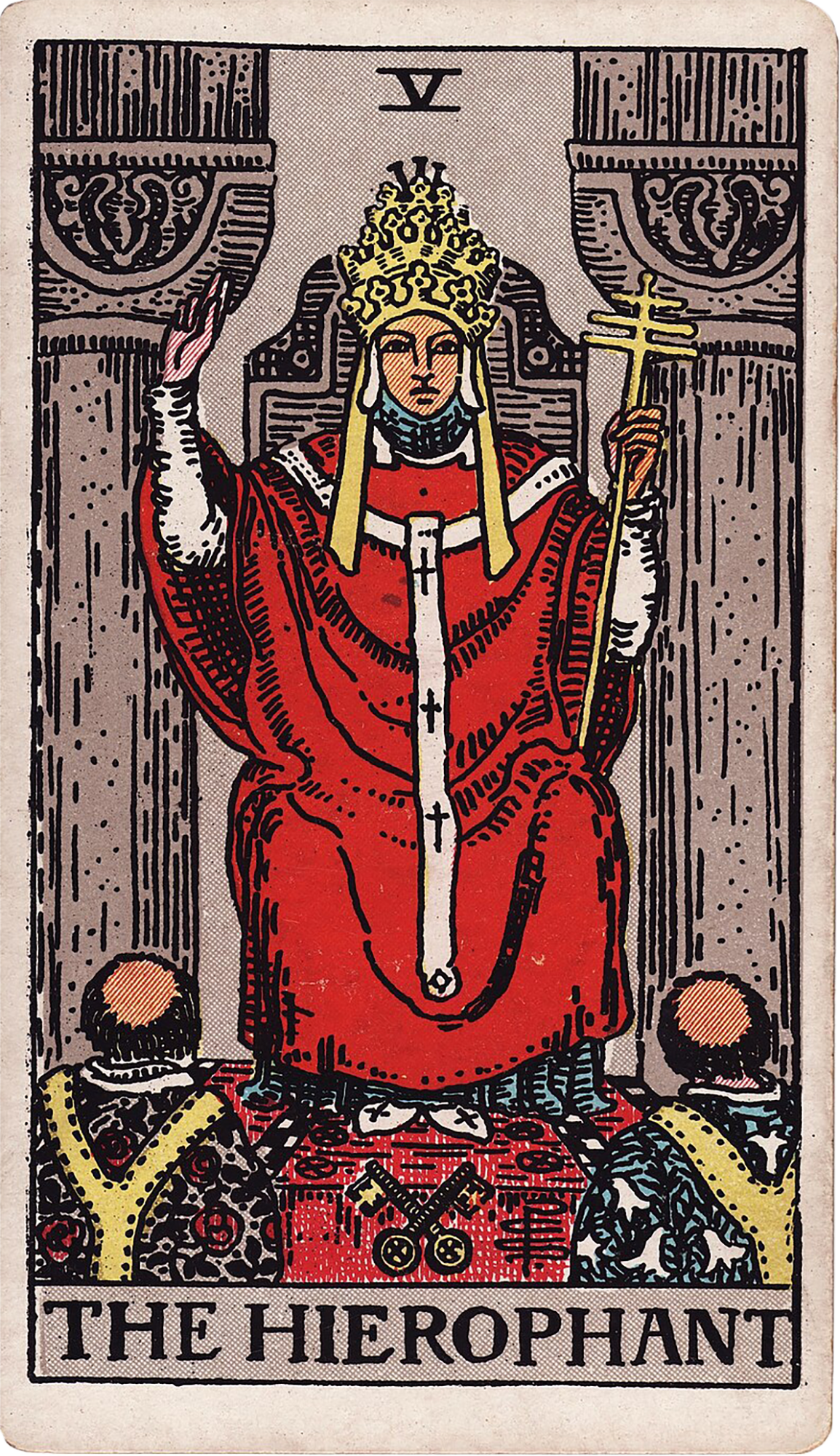
The Hierophant, traditionally numbered five in the Major Arcana, is a profound symbol within the Tarot. Depicted in the Rider-Waite-Smith deck as a seated religious figure holding a triple cross staff, he represents the bridge between divine wisdom and human understanding. His imagery emphasizes formal knowledge, ritual, tradition, and the transmission of established truths. The card invites the querent to consider where they stand relative to accepted belief systems, societal norms, or structured learning. In upright position, The Hierophant encourages engagement with existing frameworks—whether cultural, religious, or institutional—to find clarity and guidance. Reversed, the card highlights areas where these structures may be questioned, resisted, or distorted. Understanding these dual aspects allows the reader to discern how personal belief systems and community traditions influence life choices.
Techniques for Reading The Hierophant in Different Contexts
When reading The Hierophant in various contexts, it is crucial to anchor interpretation in its core symbolism: tradition, learning, authority, and conformity. Look at the details in the Rider-Waite-Smith card—his triple cross, the two crossed keys at his feet representing access to hidden knowledge, and the two acolytes signifying transmission of wisdom. Begin by identifying whether the card is upright or reversed, as this shifts the interpretative lens. Next, consider the querent's question and the surrounding cards (if any). In single-card readings, probe the card’s symbolism relative to the specific area under inquiry. Ask: Does the situation call for embracing tradition or challenging it? Is authority being respected or resisted? What established systems are in play? Avoid forcing the card into a definitive prediction. Instead, use it as a tool to highlight where structured knowledge or cultural norms may be influencing the scenario. Balance the literal symbols and traditional meanings with intuitive insight about the querent’s lived context.
The Hierophant in Love and Relationships
Upright, The Hierophant in a love context suggests a relationship grounded in shared values, traditional commitments, or formalizing bonds such as engagement or marriage. The imagery of a spiritual leader presiding over rites underscores the importance of rituals and conventions, such as family approval, cultural customs, or established relationship roles. It invites the querent to consider how their personal beliefs align with those of their partner and community. Reversed, The Hierophant warns against blind obedience to external expectations or social pressure in matters of the heart. It can indicate rebellion against traditional relationship models or dissatisfaction with empty rituals lacking genuine connection. The querent may be questioning inherited attitudes about love or experiencing tension between personal desires and societal norms. Common mistakes include interpreting this card solely as a prediction of marriage or religious ceremony without exploring deeper questions about underlying belief systems and the quality of mutual understanding.
The Hierophant in Career and Professional Life
In career readings, The Hierophant upright encourages learning from established experts, adhering to professional codes, or pursuing formal education and certifications. The card’s imagery of the authoritative figure suggests a role model or mentor whose guidance can provide clarity and structure. It also underscores navigating workplace traditions, hierarchies, and institutional rules consciously to foster success. The upright Hierophant signals that embracing accepted practices or joining a reputable organization may be beneficial. When reversed, The Hierophant indicates dissatisfaction with rigid corporate cultures or bureaucracies. It may highlight the querent’s desire to break free from conformity or question outdated systems that stifle creativity or ethical standards. The reversed position can also signify internal conflict about following versus challenging authority. A frequent error is to see The Hierophant as purely conservative, ignoring its potential to represent sincere ethical integrity or disciplined learning.
The Hierophant in Financial Matters
Financially, The Hierophant upright advises a disciplined approach grounded in established principles—such as budgeting, seeking professional advice, or investing according to tested strategies. The card’s symbolism encourages the querent to consult trusted institutions like banks, financial advisors, or regulatory frameworks. This card can signal reliance on conventional paths to security, such as pensions or insurance policies. The presence of the two keys in the card suggests unlocking stability through knowledge and adherence to proven methods. Reversed, The Hierophant may point to financial mismanagement due to ignoring advice or rebelling against prudent systems. It can indicate impulsive decisions that defy conventional wisdom or feeling trapped by restrictive financial obligations. Interpreters should avoid reading this card as a simple yes/no about wealth but rather a prompt to consider the role of tradition and expertise in financial choices.
The Hierophant as Advice and Challenge
When The Hierophant appears as advice, it suggests the querent take a step back to learn from established teachings or seek mentorship. The card encourages deliberate, honest engagement with the rules governing the situation, promoting integrity and clarity. The question to ask is where a clearer boundary or more conscious choice would move the matter forward. The upright card advises working with existing resources and visible structures rather than waiting for ideal certainty. As a challenge, especially reversed, The Hierophant highlights areas of dogma, blind conformity, or empty ritual that may be obstructing progress. The querent might be struggling with internalized beliefs or external pressures that feel stifling. This challenge calls for identifying distortions in how authority or tradition are being expressed and finding ways to restore balance.
The Hierophant as a Person
Personified, The Hierophant represents someone who embodies wisdom, tradition, and mentorship. This might be a teacher, religious leader, counselor, or elder who provides guidance rooted in established knowledge. Upright, this individual is reliable, ethical, and respected for their understanding of structured systems. They help others navigate complex belief frameworks or institutional settings. In reversed position, the person might be rigid, dogmatic, or resistant to new ideas. Alternatively, they may be a rebel who challenges orthodoxies without full understanding or balance. Understanding this archetype aids readers in recognizing how personal influences shape the querent’s situation.
The Hierophant in Outcomes and Spiritual Reflection
As an outcome, The Hierophant upright suggests the resolution will involve integration into a community, acceptance of traditional wisdom, or the establishment of a new but structured commitment. It indicates that conscious engagement with existing frameworks brings clarity and progress. Reversed, the outcome might involve questioning or breaking away from outdated patterns, signaling a period of inner reflection before full change occurs. It may suggest a need to reevaluate personal beliefs and the role of institutions in one’s life. Spiritually, The Hierophant invites reflection on how personal faith and communal traditions intertwine. The Rider-Waite-Smith card’s imagery calls attention to the balance between personal truth and collective wisdom, urging seekers to consider how rituals and doctrines shape their spiritual path.
Common Mistakes and How to Avoid Them
A key mistake when interpreting The Hierophant is over-simplification—equating the card only with religious institutions or assuming it always means conformity. The card is more nuanced, representing the broader concept of structured wisdom and the transmission of knowledge. Another error is ignoring the reversed meaning or viewing it as purely negative. Reversal often indicates a complex internal process or corrective phase rather than disaster. To avoid these pitfalls, always connect the card’s symbolic imagery to the querent’s question, consider the card’s position (upright or reversed), and reflect on what kind of traditions or systems are relevant in context. Use the card as a lens to explore the quality of engagement with belief systems rather than as a deterministic sign.
Practical Reading Method for The Hierophant
When The Hierophant appears in a single-card reading, begin by identifying the querent’s area of concern. Observe the card’s details closely—the figure’s gestures, the crossed keys, the triple cross staff, and the presence of the two acolytes—to evoke the essence of learned tradition and guided authority. Ask clarifying questions such as: Which established knowledge or system is influencing this situation? Is the querent being invited to follow these structures or to question them? Are there boundaries or rules that require conscious attention? Encourage the querent to reflect on their relationship with community traditions, mentors, or inherited belief systems. When reversed, probe for where rigidity or rebellion might be causing tension. This method encourages a balanced and insightful interpretation anchored in symbolism and lived experience.
Practice questions
• What traditions or belief systems currently influence my decisions and values?
• Where in my life do I follow established rules consciously versus out of habit?
• How do I respond to authority figures or institutional expectations?
• In what ways might I be resisting or rebelling against meaningful wisdom?
• What mentorship or guidance could I seek to help clarify my path?
• How do rituals or community practices support or hinder my growth?
• Where could clearer boundaries or deliberate choices improve my relationships or work?
Comments
Sign in to comment.
Continue learning
Exploring The High Priestess in Career Relationships and Personal Growth
The High Priestess card in the tarot deck invites readers to explore intuition, hidden knowledge, and inner wisdom across various life contexts. This article examines how The High...
The Fool in Life Transitions and New Beginnings
The Fool card embodies the spirit of beginnings, curiosity, and the leap of faith required during life transitions. This article explores The Fool’s meanings across various reading...
Understanding The Chariot Card in Personal Ambition and Overcoming Obstacles
The Chariot card represents the power of focused will, disciplined action, and choosing a clear direction amid competing impulses. Upright, it encourages decisive steps forward usi...
Understanding The Hermit in Self Discovery and Spiritual Enlightenment
The Hermit card in the Rider-Waite-Smith deck embodies themes of introspection, solitude, and spiritual wisdom. This article examines how The Hermit's upright and reversed position...
Exploring The Hierophant in Modern Spiritual Practices and Personal Development
The Hierophant tarot card symbolizes structured wisdom, tradition, and the pursuit of knowledge through established systems. This article explores how The Hierophant’s upright and...
Applying The Star Card to Foster Hope and Renewal in Personal Growth
The Star card in Tarot symbolizes hope, authenticity, and the process of steady renewal. In a single-card reading, The Star encourages embracing what is present, cultivating openne...
Understanding The Wheel of Fortune in Tarot Readings for Life Cycles and Change
The Wheel of Fortune card in Tarot is a powerful symbol of cycles, change, and the dynamics of fate and free will. This article explores the card’s upright and reversed meanings, a...
Understanding The Hermit Card in Solitude Reflection and Guidance
This article offers an in-depth exploration of The Hermit tarot card as a single-card reading in different contexts such as love, career, money, advice, challenge, person, outcome,...
Understanding The Tower in Tarot for Navigating Sudden Change and Crisis
The Tower card in Tarot symbolizes sudden, often disruptive change that destroys false foundations and compels honest reassessment. This article provides a comprehensive exploratio...
Understanding The Hanged Man in Personal Sacrifice and Spiritual Growth
The Hanged Man tarot card embodies the themes of intentional pause, surrender, and gaining new perspectives that foster personal sacrifice and spiritual growth. In this article, we...