
The Fool in Life Transitions and New Beginnings
The Fool card embodies the spirit of beginnings, curiosity, and the leap of faith required during life transitions. This article explores The Fool’s meanings across various reading contexts, emphasizing upright and reversed interpretations as a single-card focus. Learners will gain practical insight into applying Rider-Waite-Smith symbolism, avoiding common pitfalls, and tailoring readings to personal circumstances.
Cards explored in this article
 The Fool
Introduction to The Fool and Its Core Symbolism
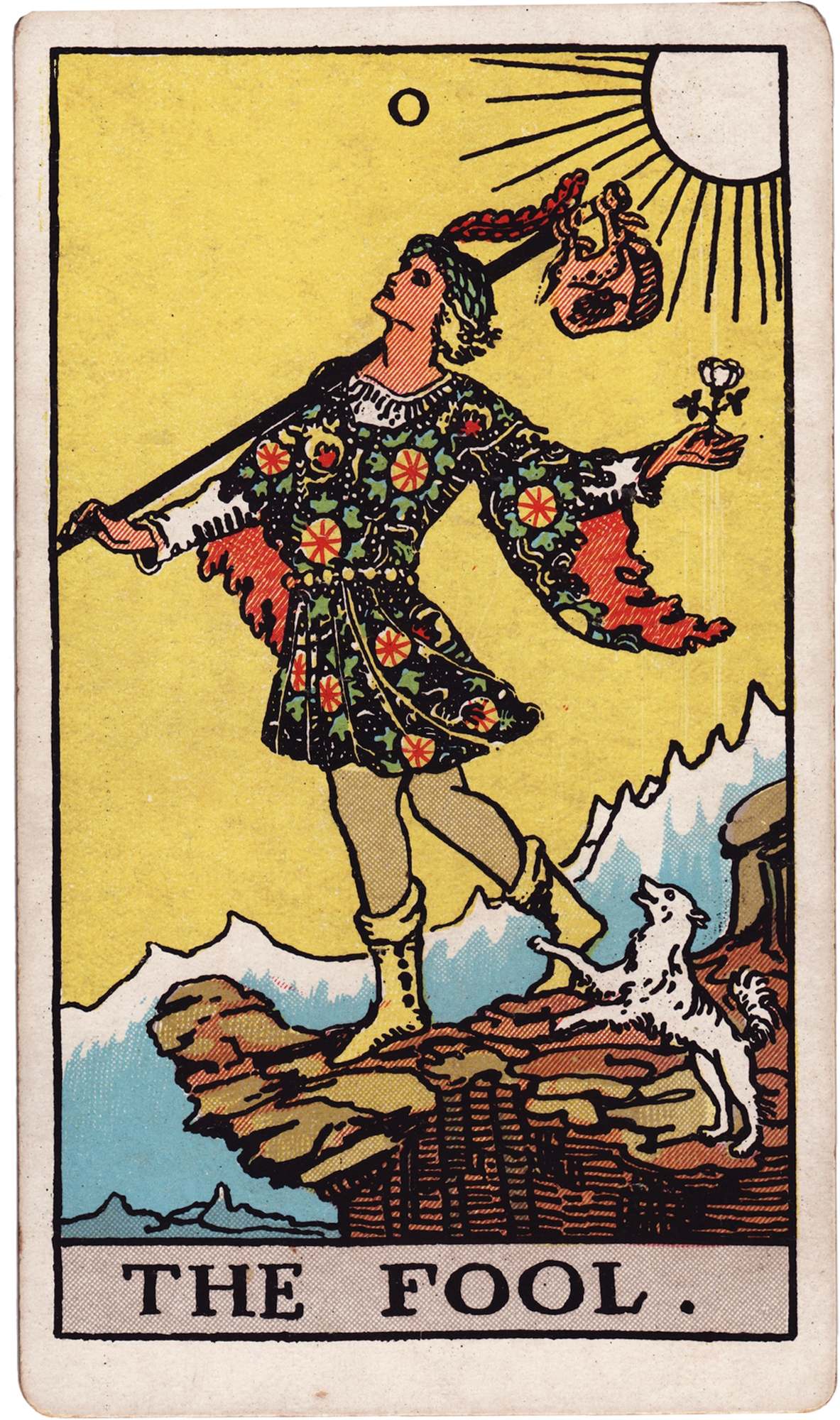
The Fool, traditionally numbered 0 in the Rider-Waite-Smith Tarot deck, represents the archetype of beginnings, innocence, and the open possibility embedded in every transition. The classic imagery shows a youthful figure standing on the edge of a cliff, often with a small white dog at his heels, a knapsack slung over his shoulder, a white rose in hand, and eyes looking up toward the sky. These symbols collectively suggest purity (the white rose), spontaneity and trust (the dog), and a willingness to embark on a journey with minimal baggage. The Fool is not naively unaware of risks but chooses to proceed with openness rather than paralysis.
Understanding Upright The Fool in Life Transitions
In its upright position, The Fool emphasizes starting before every detail is known, privileging curiosity and openness over hesitation. It invites readers to work with what is available now, signaling that sufficient clarity exists to take a next step, even if uncertainty remains. This card in upright form encourages direct responses, clearer boundaries, deeper honesty, and deliberate choices as mechanisms to move forward. Rather than predicting effortless success, The Fool highlights the constructive qualities we can bring into new phases, emphasizing conscious engagement with fresh opportunities.
Interpreting Reversed The Fool in Life Transitions
Reversed, The Fool shifts attention to potential recklessness, avoidance of consequences, or refusal to begin due to discomfort with uncertainty. Yet reversal is not inherently negative; it often indicates blockage, delay, or internalized fears obstructing the card’s upright energy. It can also mark the initial awareness of old patterns without full transformation. In life transitions, reversed The Fool invites reflection on where energy is distorted or difficult to access, suggesting the need for recalibration or caution rather than blind leaps. Nearby cards in a reading can clarify whether this indicates resistance, recovery, or a pause.
The Fool in Love Contexts
When The Fool appears in love readings upright, it encourages embracing new relationships or phases with openness and genuine curiosity. It can signal the start of a romantic journey where the usual rules or expectations are suspended to allow growth through exploration. This card advises trusting the process, letting go of past baggage, and choosing vulnerability. Conversely, reversed The Fool in love cautions against jumping into relationships without awareness, highlighting potential naivety or fear of commitment that stalls progress. The imagery of the cliff’s edge reminds us to balance enthusiasm with mindfulness about emotional risks.
The Fool in Career and Work
In career readings, upright The Fool encourages taking calculated risks, starting new projects, or shifting paths even without full certainty. It represents innovation, fresh perspectives, and the courage to leave familiar territory behind for unexplored opportunities. The card’s symbolism invites working with available resources and trusting intuition. Reversed, The Fool warns against impulsive decisions, unrealistic optimism, or procrastination due to fear of the unknown. It may also highlight the need to revisit motivations and clarify boundaries before embarking on a new professional chapter.
The Fool in Financial and Money Matters
Financially, The Fool upright suggests openness to new income streams, investments, or financial strategies that require stepping into the unknown. It advocates a measured leap of faith using what is presently accessible. Importantly, the card points to conscious engagement rather than reckless spending. When reversed, The Fool signals potential imprudence, ignoring consequences, or fear stopping necessary financial action. This reversal invites careful assessment to avoid pitfalls arising from impulsivity or avoidance of financial responsibility.
The Fool as Advice Card
As advice, The Fool instructs embracing beginnings with honesty and deliberate choice instead of paralysis or unnecessary delay. It urges readers to focus on the immediate next step and maintain openness to learning. The card asks: where can curiosity replace fear? Where might clearer boundaries or deeper honesty advance the situation? It encourages balancing enthusiasm with awareness of risks, reflected in the image of the Fool’s dog, symbolizing both protection and a call to vigilance.
The Fool as a Challenge
When The Fool appears as a challenge, it highlights the difficulty in starting or moving forward. Upright, it may reveal hesitation or over-caution preventing progress, despite readiness. Reversed, the challenge often involves recklessness, avoidance, or fear blocking new beginnings. The Fool as challenge pushes learners to recognize which distorted energy is at work, whether stubborn refusal to step forward or reckless disregard for consequences, enabling more nuanced approaches to overcoming obstacles.
The Fool as a Person Archetype
In readings describing people, The Fool depicts an individual characterized by spontaneity, optimism, innocence, and a willingness to embrace the unknown. Upright, this person embodies fresh perspectives and inspires others to take leaps of faith. Reversed, the Fool archetype may signal immaturity, irresponsibility, or fear of new experiences. The image of the carefree figure by the cliff helps readers visualize the balance between adventurous spirit and necessary caution embodied by this archetype.
The Fool as an Outcome
As an outcome card, The Fool often predicts the start of a new chapter, a fresh opportunity requiring trust in the journey ahead. Upright, it suggests that despite uncertainty, moving forward with openness will lead to growth. Reversed, the outcome may involve delays, missteps, or the need for reevaluation before progress is possible. The Fool’s imagery reminds readers that all journeys begin with a single step, encouraging patience and presence with the unfolding path.
The Fool in Spiritual Reflection
Spiritually, The Fool invites a surrender to the mystery of life’s unfolding, embracing innocence and wonder. Upright, it calls for faith and openness to higher guidance while maintaining conscious awareness. Reversed, it may indicate spiritual avoidance, fear of surrender, or reckless disregard for inner wisdom. The symbolism of the white rose and the dog serves as reminders to balance purity of intention with protective awareness. This card encourages learners to reflect on where they may resist the call to new spiritual beginnings or embrace them with naive abandon.
Practical Techniques for Reading The Fool Across Contexts
To effectively interpret The Fool, focus on the card’s visual elements: the cliff’s edge, the dog, the knapsack, the white rose, and the Fool’s gaze. These elements inform the card’s core meanings of risk balanced by innocence and protection. When reading single cards, contextualize by asking: what new beginning or transition is relevant here? Is the energy supportive, blocked, or distorted? Use the upright and reversed guidelines to ask practical questions about action, hesitation, or caution. Avoid assuming guaranteed success or disaster; instead, view The Fool as a guide to the quality of engagement with transitions.
Common Mistakes When Interpreting The Fool
A frequent error is over-romanticizing The Fool as simply positive or naïve without recognizing its complexity. Learners sometimes overlook the card’s call to conscious choice and boundary-setting, focusing only on adventure. Another mistake is viewing reversals as purely negative instead of nuanced expressions of blockage or internal tension. Additionally, failing to adapt The Fool’s meaning to the reading context leads to generic or misleading interpretations. Anchoring readings in the card’s symbolism and asking context-specific questions helps avoid these pitfalls.
Summary and Integration
The Fool card, rich in symbolism and layered meaning, offers a vital lens to understand life transitions and new beginnings across diverse contexts. Whether upright or reversed, it invites readers to explore how curiosity, openness, and conscious choice interact with fear, hesitation, or recklessness. Anchoring interpretations to the card’s Rider-Waite-Smith imagery and applying them thoughtfully in love, career, money, advice, challenges, personality, outcome, and spiritual reflections strengthens reading depth and practical relevance. Embracing The Fool’s lessons helps learners approach change with courage tempered by awareness.
Practice questions
• In what areas of my life am I embracing new beginnings with open curiosity, and where might I be hesitating?
• How do I balance enthusiasm for change with awareness of potential risks as symbolized by The Fool?
• Where might I be acting recklessly or avoiding necessary steps in my personal or professional transitions?
• What immediate, proportionate action can I take now without needing full certainty?
• How does the imagery of The Fool—cliff, dog, rose, knapsack—reflect my attitude toward current life changes?
• In what ways can deeper honesty or clearer boundaries help me embody The Fool’s positive qualities?
Comments
Sign in to comment.
Continue learning
Exploring The High Priestess in Career Relationships and Personal Growth
The High Priestess card in the tarot deck invites readers to explore intuition, hidden knowledge, and inner wisdom across various life contexts. This article examines how The High...
Understanding The Chariot Card in Personal Ambition and Overcoming Obstacles
The Chariot card represents the power of focused will, disciplined action, and choosing a clear direction amid competing impulses. Upright, it encourages decisive steps forward usi...
Understanding The Hermit in Self Discovery and Spiritual Enlightenment
The Hermit card in the Rider-Waite-Smith deck embodies themes of introspection, solitude, and spiritual wisdom. This article examines how The Hermit's upright and reversed position...
Exploring The Hierophant in Modern Spiritual Practices and Personal Development
The Hierophant tarot card symbolizes structured wisdom, tradition, and the pursuit of knowledge through established systems. This article explores how The Hierophant’s upright and...
Applying The Star Card to Foster Hope and Renewal in Personal Growth
The Star card in Tarot symbolizes hope, authenticity, and the process of steady renewal. In a single-card reading, The Star encourages embracing what is present, cultivating openne...
Understanding The Wheel of Fortune in Tarot Readings for Life Cycles and Change
The Wheel of Fortune card in Tarot is a powerful symbol of cycles, change, and the dynamics of fate and free will. This article explores the card’s upright and reversed meanings, a...
Understanding The Hermit Card in Solitude Reflection and Guidance
This article offers an in-depth exploration of The Hermit tarot card as a single-card reading in different contexts such as love, career, money, advice, challenge, person, outcome,...
Tracing the Origins and Evolution of The Fool Card in Tarot History
The Fool card holds a foundational place in tarot tradition, symbolizing beginnings, openness, and the embrace of uncertainty. This article traces its origins from early European d...
Using the Five Card Cross Spread to Make Confident Life Decisions
The Five Card Cross spread is a practical and insightful tarot layout designed to assist with complex life decisions by clarifying the situation, presenting options, uncovering hid...