
Exploring The Hierophant in Spiritual Growth Tradition and Everyday Life
The Hierophant card stands as a powerful symbol of tradition, structured wisdom, and spiritual authority in the Rider-Waite-Smith tarot deck. This article explores The Hierophant’s upright and reversed meanings and demonstrates how its interpretation shifts across diverse contexts such as love, career, financial matters, advice, challenges, personal archetypes, outcomes, and spiritual reflection. Readers will learn practical reading techniques anchored in the card's symbolism, understand common interpretative pitfalls, and discover how to use The Hierophant constructively as a guide for conscious choice and growth.
Cards explored in this article
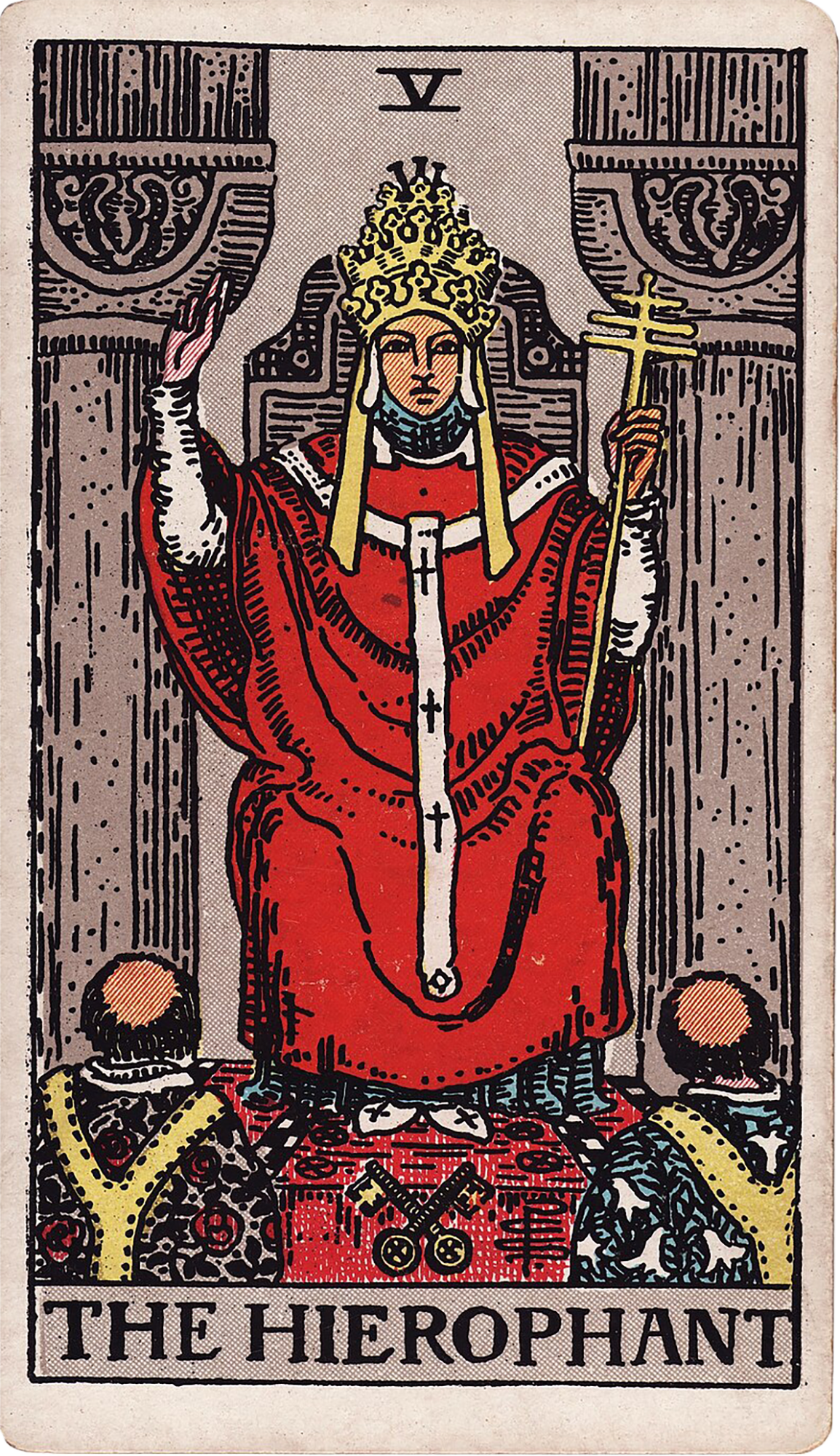 The Hierophant
Introduction to The Hierophant and Its Core Symbolism
The Hierophant, traditionally numbered V in the Major Arcana, embodies the archetype of the spiritual teacher, religious authority, or institutional guide. In the Rider-Waite-Smith image, the figure wears ceremonial robes and a triple crown, symbolizing the threefold nature of spiritual authority—heaven, earth, and the underworld. His right hand is raised in a blessing gesture, while his left holds a triple-crossed staff, reinforcing his role as a mediator of sacred knowledge. Behind him, two pillars suggest gateway thresholds of mystery and learning, while the two acolytes kneeling in front reflect the passing on of wisdom within an established framework. At its core, The Hierophant encourages respect for tested knowledge and traditions, suggesting that spiritual growth and worldly understanding often come through structured teachings and community norms. Upright, it emphasizes learning from established wisdom, seeking qualified guidance, and mastering the rules of a system before choosing to follow or transform them. Reversed, it cautions against blind conformity, dogmatic rigidity, or rebelliousness that lacks foundation.
Using The Hierophant Upright in Practical Reading Contexts
When The Hierophant appears upright in a reading, it signals an opportunity to engage with systems of knowledge, formal institutions, or mentors who can provide clarity and structure. The card’s presence suggests that an issue has reached a stage where conscious engagement with existing frameworks is possible and beneficial. For example, in a career context, The Hierophant upright may indicate a need to follow established protocols or seek professional development through traditional means like education or certification. In financial matters, it can point toward conventional financial planning or advice from trusted experts. The imagery of the card reminds readers to observe where direct responses, clearer boundaries, deeper honesty, or more deliberate choices can help move a situation forward. It encourages working with available resources, recognizing the lessons already integrated, and proceeding step-by-step rather than waiting for perfect certainty. This practical method reduces overwhelm and builds confidence through incremental progress rooted in reliable structures.
The Hierophant in Love and Relationships
In love readings, The Hierophant upright can indicate traditional values, commitment, or seeking guidance from relationship counselors or trusted elders. The two acolytes represent receptive learners, suggesting that growth in a relationship may come through shared belief systems or consciously adopting mutual practices to strengthen the bond. This card may also highlight the importance of respecting cultural or familial expectations in relationships, urging the querent to consider how established customs and ethics shape their romantic choices. It encourages honest communication about boundaries and shared values, which can deepen intimacy. However, readers should avoid assuming rigidity or conservatism in every case; instead, focus on the card’s invitation to integrate wisdom ethically and with intention.
Career and The Hierophant’s Guidance
In career contexts, The Hierophant upright points toward structure, hierarchy, and formal learning. It may suggest that the querent benefits from mentorship, professional accreditation, or aligning with organizations that uphold clear rules and ethical standards. The card’s symbolism urges patience and respect for the process of mastery rather than quick shortcuts. It may also advise navigating corporate or institutional policies carefully to progress. On a practical level, The Hierophant may encourage the querent to reflect on whether they genuinely believe in the system they are engaging with or if they need to question and reform their approach. This card’s wisdom is balanced by conscious choice: one can learn the rules deeply before deciding to follow or transform them.
Financial Interpretation and The Hierophant
When The Hierophant appears in financial readings upright, it generally advises conventional approaches to money management. This includes budgeting, consulting with financial advisors, or relying on proven methods rather than speculative or impulsive decisions. The card’s energy supports steady, ethical building of resources aligned with societal norms. It encourages transparency, clear agreements, and understanding the underlying system—such as legal contracts or regulatory frameworks—before proceeding. However, it is important for readers to recognize that The Hierophant does not guarantee ease or quick gains. Instead, it emphasizes quality, integrity, and learning from established wisdom to create sustainable financial security.
Advice and Challenge Perspectives of The Hierophant
As advice, The Hierophant upright calls for seeking knowledgeable guidance, adhering to ethical standards, and embracing disciplined learning. It encourages asking where clearer boundaries, direct communication, or deliberate choices might transform confusion or stagnation. As a challenge, the card may highlight internal resistance to established norms or discomfort with conforming. The querent might struggle with balancing personal beliefs against external expectations. The Hierophant asks the reader to examine if rejection of tradition is based on informed choice or reactive rebellion. This tension between conformity and individuality is central to the card’s spiritual teaching: growth comes from discerning what to integrate, question, or reform rather than blind acceptance or rejection.
Understanding The Hierophant as a Person Archetype
When The Hierophant represents a person in a reading, it typically describes an individual embodying wisdom, authority, or mentorship. This person may be a teacher, spiritual leader, counselor, or someone who embodies traditional values and ethical standards. This archetype is approachable but commanding respect, often serving as a guide through difficult or complex systems. The imagery of the blessing hand and triple crown suggests a balance of compassion, knowledge, and spiritual authority. Readers should consider that this archetype can manifest in varying ways depending on the querent’s worldview, from a revered mentor to a strict disciplinarian, making it essential to explore relational dynamics carefully.
Outcome and Spiritual Reflection with The Hierophant
As an outcome card, The Hierophant upright implies that the situation will benefit from structured learning, ethical engagement, and conscious integration of tradition. It suggests that by respecting established teachings and seeking qualified guidance, the querent can find clarity and stability. Spiritually, this card invites reflection on one’s relationship with authority, tradition, and community. It encourages exploring where structured wisdom supports growth and where it might limit freedom. The Hierophant’s presence asks for a deliberate choice: to embrace inherited spiritual paths or to reform them with conscious awareness. Reflecting on the card’s imagery—the pillars, triple crown, and blessing hand—can deepen understanding of how sacred knowledge is transmitted and how one might become a bridge between tradition and personal insight.
Reversed Hierophant and Its Complex Shadows
The reversed Hierophant shifts the energy toward dogmatism, empty ritual, or rebellion without understanding. Instead of constructive engagement with tradition, it highlights blocks, delays, or distortions in accessing wisdom. In readings, reversal may indicate resistance to authority, skepticism of institutions, or feeling trapped by rigid systems. It can also reveal internalized dogma that undermines authentic growth. Importantly, the reversal is not inherently negative; it may mark a psychological phase where the querent recognizes limiting patterns but has not fully transcended them. It invites careful exploration of where authority or tradition is imposed without wisdom and encourages seeking balance between external rules and inner truth. Readers should analyze surrounding cards to determine if the reversal signals resistance, recovery, excess, or a temporary pause in spiritual or personal development.
Common Mistakes and Practical Techniques in Reading The Hierophant
A frequent mistake when interpreting The Hierophant is to reduce it to mere conservatism or outdated tradition. Instead, it is vital to see the card as a nuanced symbol of structured wisdom that can be embraced, questioned, or transformed. Another pitfall is to treat the card as a predictor of external institutions only, ignoring its psychological and spiritual dimensions. The Hierophant speaks equally to inner authority, ethical clarity, and relational dynamics. Practically, readers benefit from anchoring interpretation in the card’s rich imagery: the pillars as gateways, the triple crown indicating multidimensional authority, and the blessing hand symbolizing transmission and protection. When working with this card, ask: - What traditions or teachings are influencing this situation? - Where is guidance needed or being provided? - What conscious choice about conformity or reform is present? By applying these questions, the reader can tailor The Hierophant’s message to the querent’s specific context, avoiding clichés and deepening insight.
Practice questions
• How do I personally relate to traditions and established systems in my life and spirituality?
• In what areas might I benefit from seeking qualified guidance or mentorship?
• Where am I resisting authority or dogma without fully understanding its origins?
• How can I balance respect for conventional wisdom with my need for individual expression?
• What lessons from The Hierophant’s symbolism resonate most strongly with my current situation?
Comments
Sign in to comment.
Continue learning
Understanding the Synergy Between The Empress and The Emperor in Tarot Card Combinations
This article delves into the intricate synergy between The Empress and The Emperor cards in Tarot, focusing on how their combined energies modify and enrich readings across various...
Decoding Transformation and Renewal with Death and The Star in Tarot Combinations
This article delves into the card combination of Death and The Star, two powerful Major Arcana cards from the Rider-Waite-Smith deck. It explores how their imagery and meanings int...
Understanding The Wheel of Fortune in Tarot Readings for Life Cycles and Change
The Wheel of Fortune card in Tarot is a powerful symbol of cycles, change, and the dynamics of fate and free will. This article explores the card’s upright and reversed meanings, a...
Using the Relationship Five Card Spread to Identify Communication Blocks and Improve Emotional Connection
The Relationship Five Card Spread is a focused tarot technique designed to reveal communication blocks and enhance emotional connection between partners or family members. This art...
Using the Five Card Cross Spread to Gain Insight into Relationship Dynamics
This article provides an in-depth guide to using the Five Card Cross Spread for gaining clarity on relationship dynamics, especially within family contexts. Anchored by a worked ex...
Using the Relationship Five Card Spread to Enhance Trust and Emotional Intimacy
This article presents an in-depth guide on using the Relationship Five Card Spread to foster trust and emotional intimacy within family or close relationships. By examining each po...
Understanding the Knight of Cups in Emotional Expression and Relationship Dynamics
The Knight of Cups is a richly symbolic Tarot card that represents emotional pursuit, imaginative expression, and relational dynamics. Upright, it emphasizes graceful engagement wi...
Unlocking Emotional and Intellectual Balance with The Queen of Swords and The Queen of Cups
This article delves into the dynamic interplay between the Queen of Swords and the Queen of Cups in tarot readings, focusing on their combined symbolism to unlock a balanced approa...
Exploring The Queen of Pentacles in Financial Security and Nurturing Self Worth
The Queen of Pentacles represents practical nurture, grounded competence, and resourcefulness in managing material life and self-care. This article explores how this card’s imagery...
Unlocking the Dynamics of The Devil and The Tower for Facing Life's Challenges
This article delves into the rich and complex relationship between The Devil and The Tower tarot cards as a powerful combination for navigating significant life challenges. By grou...