
Exploring the Multifaceted Meanings of the Death Card in Transformation and New Beginnings
The Death card in Tarot is often misunderstood as a purely ominous symbol; however, its true meaning centers on transformation, endings, and the fertile ground for new beginnings. This article explores the multifaceted interpretations of the Death card as depicted in the supplied Tarot images, emphasizing upright and reversed positions. By contextualizing the card across various aspects such as love, career, money, advice, challenges, persons, outcomes, and spiritual reflection, learners gain a nuanced understanding of its message. The article also offers practical techniques for integrating this card into readings, highlights common mistakes, and anchors interpretation firmly in its Rider-Waite-Smith symbolism.
Cards explored in this article
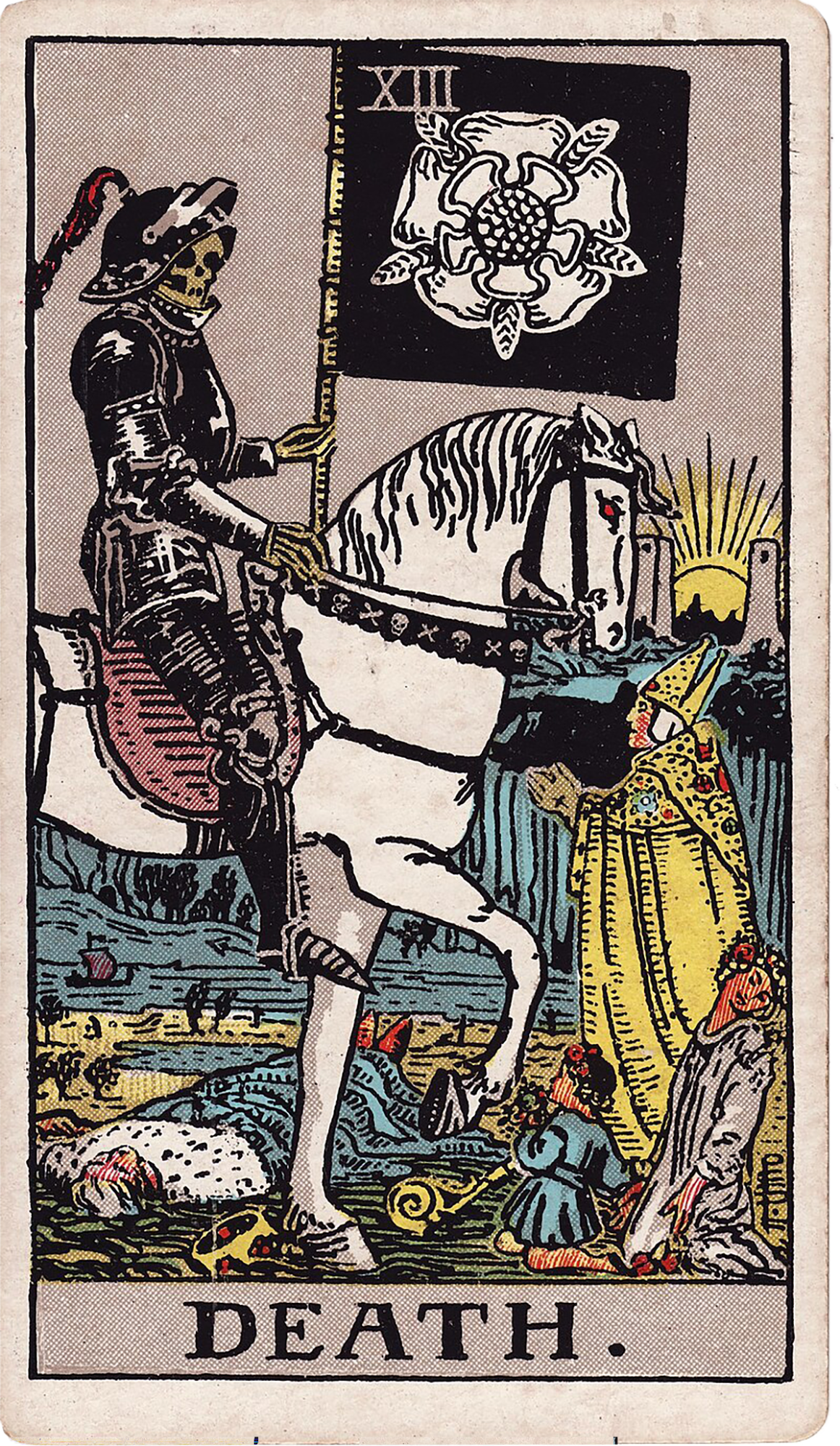 Death
Understanding the Symbolism of the Death Card Upright and Reversed
The Death card, as represented in the supplied images, is rich with symbolic elements rooted in traditional Rider-Waite-Smith iconography. Upright, it signifies the acceptance of endings, the release of that which is complete, and the ensuing space for profound transformation. The skeleton figure, often dressed in black armor, rides forward with a white rose on its banner, highlighting purity, rebirth, and the inevitability of change. The rising sun in the background epitomizes new beginnings following cycles of closure. When this card appears upright in a reading, it encourages facing reality directly, setting clear boundaries, and making conscious choices that propel growth, even if the process is difficult or uncomfortable. Practically, it suggests engaging with present circumstances rather than waiting for certainty. Conversely, the reversed Death card calls attention to resistance against change, clinging to the past, or internalized fears that stall progress. This position is not inherently negative but rather signals where transformation energy is blocked or distorted. Reversal may also reflect psychological processes becoming more private or signify the early stages of recognizing old patterns without full resolution. Observing surrounding cards is essential to clarify whether this resistance or delay is temporary or more entrenched.
Applying the Death Card Upright and Reversed in Love and Relationships
In the context of love, the upright Death card signals the necessity of ending unhealthy patterns or relationships that no longer serve growth. It invites the querent to release outdated emotional attachments and create space for authentic connection. For example, a relationship that has become stagnant or codependent could be transformed by embracing honest communication and letting go of past grievances. The card suggests that while the process can be painful, it ultimately leads to renewal and deeper intimacy. If reversed, the card may indicate fear of letting go, denial about relationship issues, or attempts to revive a connection that has fundamentally changed. This resistance can cause prolonged suffering or confusion. Readers should encourage self-reflection on where fear or attachment prevents necessary emotional evolution. Recognizing this pattern is the first transformative step.
Interpreting the Death Card in Career and Professional Contexts
When the Death card appears upright in career readings, it often reflects the conclusion of a professional phase, such as the end of a job, project, or role, freeing the individual to pursue new opportunities. The card emphasizes working constructively with the present conditions and consciously choosing next steps rather than waiting for ideal circumstances. The imagery of the skeleton’s forward movement reminds readers that career transformation, while challenging, is an essential part of growth. In a reversed position, the Death card may reveal reluctance to embrace change, clinging to outdated job roles, or fear of career transition. This hesitation can hinder progress and cause stagnation. The reader should explore what boundaries or decisions need clarification to unblock the flow of transformation.
Exploring the Death Card’s Meaning Related to Money and Finances
Financially, the upright Death card points to the end of a financial cycle, such as concluding debts, closing accounts, or moving past unproductive financial habits. It encourages releasing attachments to previous financial security models and embracing new approaches aligned with current realities. The card’s symbolism suggests deliberate, proportionate action rather than impulsive decisions. In its reversed form, the card may show resistance to changing financial habits or fear of acknowledging financial decline. It can also indicate internalized anxiety about money that prevents constructive planning. Here, the reader should help the querent identify where denial or imbalance obstructs healthy financial transformation.
Death as Advice and Challenge in Readings
As advice, the upright Death card urges the querent to accept endings honestly and courageously, setting clear boundaries and making deliberate choices to facilitate transformation. It advocates working with available resources and recognizing that discomfort is often part of genuine change. The card challenges the reader to face where stagnation or denial exist in their life. When reversed, the card as advice highlights the need to uncover hidden resistance to change and encourages gradual internal acceptance. It challenges the querent to observe where energy is distorted or misapplied, suggesting reflection on psychological or emotional blocks. In both positions, the Death card’s lesson centers on conscious engagement with transformation processes.
Representing Persons Through the Death Card Upright and Reversed
In a person-centered interpretation, the Death card upright may characterize someone who embodies transformation, acts as a catalyst for change, or encourages release of outdated patterns. This person might be a mentor, a figure who helps others confront difficult truths, or someone undergoing a profound personal evolution themselves. The card’s imagery suggests strength, clarity, and inevitability, reflecting a personality comfortable with endings and new beginnings. Conversely, reversed, the Death card might depict a person resistant to change, emotionally stuck, or clinging to past identities. This individual may struggle with denial or fear regarding transformation. Understanding this helps the reader contextualize interpersonal dynamics or internal qualities relevant to the querent’s situation.
Interpreting the Death Card in Outcome and Spiritual Reflection Contexts
As an outcome, the upright Death card promises transformation through honest acknowledgment of endings. It indicates that closure is approaching or underway, making room for growth and renewal. While this may bring initial discomfort, the card reassures that the process is necessary and constructive. The imagery of the white rose and rising sun reinforces hope and purification through change. When reversed, the outcome suggests delays or resistance to transformation, signaling that the cycle is incomplete or that psychological barriers remain. It offers an invitation to deepen internal work and reassess fears. In spiritual reflection, the Death card embodies the principle of impermanence. It encourages meditators to embrace cycles of death and rebirth within the self, releasing attachment to fixed forms or beliefs. The card’s symbolism can guide contemplative practice focused on acceptance and renewal.
Techniques for Reading the Death Card with Clarity and Depth
To read the Death card effectively, begin by examining whether it appears upright or reversed and relate this orientation to the querent’s question and context. Observe the card’s key symbolic elements—the skeleton, black armor, white rose, and rising sun—and consider how these reflect themes of endings, purity, inevitability, and new beginnings. Encourage the querent to identify which parts of their situation are complete and ready to be released and where conscious choice can enable transformation. Avoid interpreting the card as literal physical death; instead, focus on metaphorical and psychological cycles. When reversed, explore internalized resistance or blocks without defaulting to negative predictions. Cross-reference the card with any neighboring cards to clarify nuances, especially in complex spreads. Practice asking open-ended questions that guide the querent toward awareness of boundaries, honesty, and deliberate action in the face of change.
Common Mistakes and How to Avoid Them When Working with the Death Card
One common mistake is interpreting the Death card purely as a prediction of physical death, which can cause unnecessary fear and misreading. Instead, always emphasize transformation and endings in a broader sense. Another error is ignoring the reversed position’s nuances; reversal does not mean catastrophe but often signals resistance or internal work needed. Avoid assuming the card’s meaning is the same across all contexts; tailor interpretation to the specific question and area of life. Do not rush to read the card as immediately positive or negative; consider timing, surrounding cards, and the querent’s readiness for change. Finally, neglecting the card’s practical advice—working with what is available and making deliberate choices—reduces its constructive application.
Practice questions
• Where in my life am I resisting necessary endings or transformations?
• What old patterns or attachments might I need to release to make space for growth?
• How can I set clearer boundaries or make more deliberate choices in my current situation?
• In what ways does fear of change influence my decisions regarding relationships, career, or finances?
• How might embracing impermanence deepen my spiritual or personal reflection practices?
Comments
Sign in to comment.
Continue learning
Harnessing the Power of The Magician and Ace of Wands: Igniting Creativity and Manifestation in Tarot Readings
The combination of The Magician and the Ace of Wands in tarot readings offers a potent blend of creative energy and manifestation power. This article delves into the ways these car...
Advanced Techniques for Combining The Moon and The Star to Enhance Intuition in Tarot Readings
This article explores advanced techniques to combine the symbolism and energy of The Moon and The Star Tarot cards to enhance intuition during Tarot readings. Drawing from traditio...
Enhancing Clarity in Complex Choices with the Five Card Cross Tarot Spread
The Five Card Cross Tarot Spread is a practical tool designed to clarify complex choices by breaking down the decision into manageable parts. This article explores each position in...
Tracing the Origins and Evolution of The Fool Card in Tarot History
The Fool card holds a foundational place in tarot tradition, symbolizing beginnings, openness, and the embrace of uncertainty. This article traces its origins from early European d...
Understanding The Hermit Card in Solitude Reflection and Guidance
This article offers an in-depth exploration of The Hermit tarot card as a single-card reading in different contexts such as love, career, money, advice, challenge, person, outcome,...
Unlocking the Creative Flow with The Magician and The Empress in Tarot Combinations
This article delves into the powerful synergy between The Magician and The Empress in Tarot combinations, focusing on how their combined symbolism unlocks creative flow across vari...
Using the Seven Card Horseshoe Spread to Uncover Career Growth and Opportunity
This article presents an in-depth guide to the Seven Card Horseshoe Tarot Spread with a focus on career growth and opportunity. Using the cards The Fool, The Magician, The Empress,...
Understanding the Many Facets of The Moon in Emotional and Intuitive Tarot Readings
The Moon card in the Tarot deck embodies themes of intuition, uncertainty, dreams, and emotional complexity. This article offers a comprehensive exploration of The Moon’s upright a...
Unlocking Advanced Intuition Techniques Using The High Priestess The Moon and The Hermit
This article examines advanced intuition development in tarot reading by focusing on The High Priestess, The Moon, and The Hermit cards. It offers practical techniques for beginner...
Mastering Intuition with The High Priestess The Hermit and The Moon in Tarot Readings
This article delves into mastering intuition through three powerful Tarot cards: The High Priestess, The Hermit, and The Moon. It guides readers from beginner to advanced reading t...