
Exploring the Multifaceted Role of The Hierophant in Tradition Spirituality and Modern Life
The Hierophant card, rich in symbolism and tradition, embodies the transmission of established wisdom and structured guidance within the Rider-Waite-Smith tarot system. This article explores how The Hierophant reveals different dimensions when interpreted across various contexts such as love, career, finance, advice, challenges, personality insight, outcomes, and spiritual reflections. By closely examining the upright and reversed positions of The Hierophant as depicted in the supplied card image, learners gain practical techniques for nuanced readings. We emphasize the importance of discerning the quality of learning, adherence, or rebellion signaled by the card, encouraging readers to apply the card's lessons consciously rather than predict passively. This approach fosters a deeper engagement with the card’s archetype, supporting growth through both conformity and questioning.
Cards explored in this article
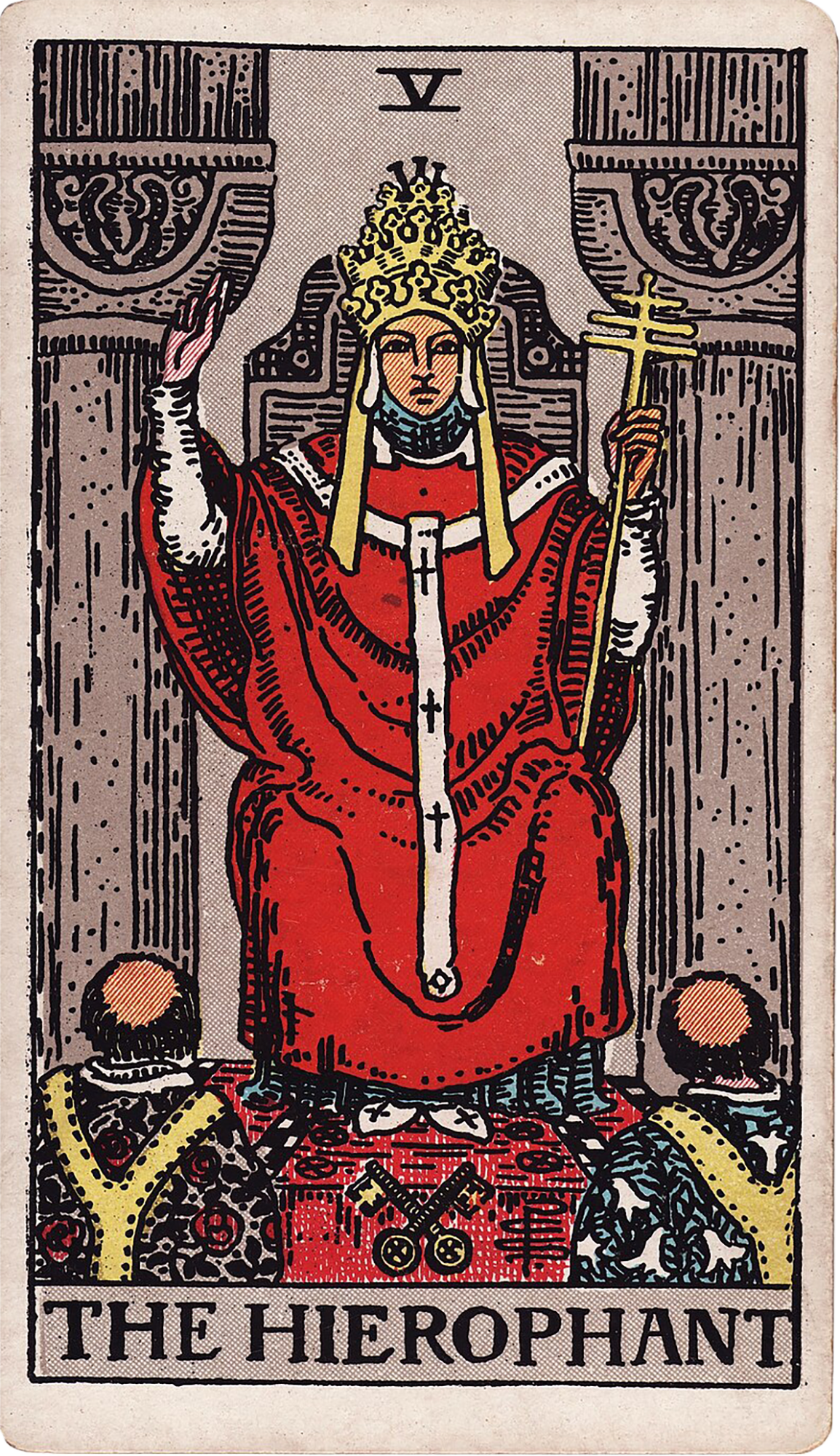 The Hierophant
Introduction to The Hierophant in Tarot Symbolism and Tradition
The Hierophant card, traditionally numbered V in the Major Arcana, is a powerful symbol of spiritual authority, structured knowledge, and cultural tradition. In the Rider-Waite-Smith deck, the imagery of The Hierophant seated between two pillars, adorned with religious vestments and holding a triple cross, reflects deep connections to institutionalized wisdom and teaching. The card invites the querent to consider established systems, formal learning, and the importance of ethical frameworks. This card's meaning often revolves around tradition, ritual, and the passage of sacred knowledge, presenting both the potential for stable guidance and the risk of dogmatic rigidity.
Upright The Hierophant Meaning and Practical Application
When upright, The Hierophant emphasizes learning from established wisdom, seeking qualified guidance, and understanding the rules of a system before engaging with it. This is a card of convention, respect for tradition, and deliberate choice within structured parameters. It does not promise ease, but rather highlights the quality of engagement necessary to progress. The imagery—such as the two acolytes receiving a blessing—demonstrates the role of mentorship and formal initiation. In practical readings, upright Hierophant encourages the querent to work with what is available now, suggesting that clarity and opportunity have manifested sufficiently for conscious action. The card asks the reader to look for where honesty, boundaries, or clear responses can move the situation forward within existing frameworks.
Reversed The Hierophant Meaning and Deeper Insight
Reversed, The Hierophant often points to dogma, blind conformity, or rebellion without understanding. This position signals when the upright qualities are blocked, delayed, or exaggerated. The reversed card does not inherently indicate negativity but invites deeper questions about where the energy is distorted or inaccessible. The imagery of the card, when mentally inverted, can represent a challenge to established authority or a turning inward to question inherited beliefs. Reversal can indicate private psychological processes or the beginning stages of transformation where old patterns are recognized but not yet fully released. The presence of neighboring cards can clarify whether this is a resistance to tradition, a recovery process, or an excessive adherence to rituals lacking meaning.
Interpreting The Hierophant in Love Contexts
In love readings, The Hierophant upright may suggest a relationship grounded in traditional values, commitment, or seeking guidance about partnership roles. The card encourages openness to shared cultural or spiritual frameworks and may indicate marriage, counseling, or formalizing bonds. The imagery emphasizes stability and mutual respect within societal expectations. Conversely, reversed, The Hierophant can point to rebellion against traditional relationship norms, unconventional partnerships, or struggles with conformity within love. It may also reveal internal conflicts about expectations or dogmatic views about love that create barriers. Readers should look for cues about whether the querent is ready to question inherited beliefs about relationships or is feeling confined by them.
The Hierophant’s Role in Career and Professional Life
In career contexts, upright The Hierophant signals apprenticeship, structured progression, and respect for organizational hierarchy or professional standards. The card suggests learning from mentors or institutions and emphasizes the importance of following rules or codes of conduct. The image’s symbolism of spiritual authority parallels professional mentorship and the passing down of expertise. Reversed, it may indicate dissatisfaction with rigid corporate structures, resistance to bureaucratic demands, or feeling stifled by institutional norms. It could also highlight the need to break free from outdated methods or question authority in the workplace. Awareness of how these energies manifest can guide decisions about career paths or professional development.
Money and The Hierophant Insights
Financially, The Hierophant upright points to conservative management, advice from trusted sources, or following proven systems for stability. The card encourages patience and working within established financial frameworks like budgeting or investing with guidance. Symbolically, it supports the principle that wisdom from tradition can lead to sustainable outcomes. Reversed, it warns against blind adherence to financial dogma, scams disguised as authority, or impulsive rejection of sound advice. It may signal an internal conflict about material values or questioning inherited beliefs about money. Practically, the reversed card invites a reevaluation of financial strategies and openness to alternative approaches balanced by thoughtful consideration.
Using The Hierophant as Advice and Challenge
When The Hierophant appears as advice, it urges conscious engagement with the systems around you—whether spiritual, social, or institutional. The card suggests seeking mentors, learning established practices, and respecting boundaries. It emphasizes deliberate choice rather than passive acceptance. As a challenge, especially reversed, The Hierophant spotlights struggles with conformity, oppressive rules, or internalized dogma that limit growth. It tests the querent’s ability to discern when tradition serves them and when it must be questioned or reformed. This dual role calls for balancing respect for the past with openness to personal evolution.
The Hierophant as a Person in Readings
The Hierophant as a person archetype is often someone wise, authoritative, and grounded in tradition—such as teachers, religious leaders, counselors, or mentors. They embody structured knowledge and ethical guidance. Upright, this individual supports growth through established wisdom and clear boundaries. Reversed, the person may represent dogmatic rigidity, resistance to change, or rebelliousness against convention without clear direction. Recognizing this archetype in a querent’s environment helps clarify relational dynamics and sources of influence.
Outcome Perspectives with The Hierophant
As an outcome card, upright The Hierophant suggests resolution through adherence to principles, formal agreements, or guidance from trusted authority. The situation unfolds within a framework of clarity and structure, allowing for conscious, ethical progress. The imagery assures the querent that tradition and conscious choices facilitate growth. Reversed, the outcome may involve challenges to authority or institutions, internal conflicts about belief systems, or the need to redefine values. This outcome invites reflection rather than expecting straightforward resolution and encourages development through questioning established norms.
Spiritual Reflection and The Hierophant’s Archetype
Spiritually, The Hierophant represents the bridge between divine wisdom and human understanding—a conduit for sacred tradition and ritual. Upright, it invites seekers to engage with spiritual practices that have stood the test of time and to seek teachers who embody authentic knowledge. The card’s symbolism, such as the triple cross and the keys, highlights unlocking spiritual mysteries through structured learning. Reversed, it challenges the querent to discern authentic spirituality from empty ritual or dogma. It encourages inner questioning about inherited beliefs and supports transformation by breaking free from rigid constructs. The Hierophant’s archetype is thus central to balancing reverence for tradition with personal spiritual evolution.
Common Reader Mistakes and Practical Techniques
A common mistake is treating The Hierophant as a simple symbol of conformity or 'doing what you’re told.' Instead, it is essential to approach the card as a complex archetype offering both opportunity for learning and the challenge of discerning when tradition serves or hinders. Another error is ignoring reversal nuances and assuming reversed always means negativity; instead, consider internal psychological processes or timing. Practically, readers should anchor their interpretations by closely examining the supplied card image, noting symbols like the crossed keys, the two pillars, and the acolytes to inform context-specific meanings. Asking questions such as 'What established wisdom can be accessed here?' or 'Where is adherence to rules helping or blocking?' helps deepen readings. Consistent practice with single-card contexts builds sensitivity to the card’s multifaceted messages.
Conclusion and Integrative Understanding
The Hierophant stands as a rich, multifaceted symbol in tarot, bridging tradition, authority, and personal growth. By exploring its upright and reversed meanings across contexts like love, career, money, advice, challenge, person, outcome, and spiritual reflection, readers gain a nuanced understanding that transcends simple prediction. The card invites learners to engage actively with established wisdom, question dogma when necessary, and integrate lessons consciously. Anchoring the interpretation in the rich Rider-Waite-Smith symbolism ensures readings remain visually and conceptually grounded. Ultimately, The Hierophant teaches that growth comes from the dynamic interplay between honoring tradition and cultivating personal insight.
Practice questions
• In what areas of my life am I currently influenced by established systems or traditions?
• Where might I be following rules or dogma without fully understanding their purpose?
• How can I seek qualified guidance or mentorship to move forward consciously?
• What boundaries or clearer choices could improve my current situation?
• Are there areas where I am resisting tradition or authority without constructive alternatives?
• How do I balance respect for tradition with the need for personal growth and evolution?
Comments
Sign in to comment.
Continue learning
Understanding the Synergy Between The Empress and The Emperor in Tarot Card Combinations
This article delves into the intricate synergy between The Empress and The Emperor cards in Tarot, focusing on how their combined energies modify and enrich readings across various...
Using the Career Five Card Spread to Identify Growth Opportunities and Challenges
This article explores the Career Five Card Spread, a practical tarot method designed to spotlight growth opportunities, strengths, and obstacles within a career context. By analyzi...
Advanced Techniques for Combining The Moon and The Star to Enhance Intuition in Tarot Readings
This article explores advanced techniques to combine the symbolism and energy of The Moon and The Star Tarot cards to enhance intuition during Tarot readings. Drawing from traditio...
Unlocking Life Insights with the Celtic Cross Tarot Spread
This article offers a thorough exploration of the Celtic Cross Tarot Spread, focusing on its application within family and practical life contexts. Using a worked example featuring...
Decoding Transformation and Renewal with Death and The Star in Tarot Combinations
This article delves into the card combination of Death and The Star, two powerful Major Arcana cards from the Rider-Waite-Smith deck. It explores how their imagery and meanings int...
Enhancing Clarity in Complex Choices with the Five Card Cross Tarot Spread
The Five Card Cross Tarot Spread is a practical tool designed to clarify complex choices by breaking down the decision into manageable parts. This article explores each position in...
Using the Five Card Cross Tarot Spread to Navigate Career Changes with Confidence
The Five Card Cross Tarot Spread is a versatile and insightful tool for navigating career changes. This article guides learners through the method step-by-step using a practical ex...
Unlocking Personal Insight with the Seven Card Horseshoe Spread
The Seven Card Horseshoe Spread is a practical and insightful Tarot layout ideal for exploring personal and family dynamics. This article breaks down each position—Past, Present, H...
Finding Emotional Healing and Renewal with The Star and The Moon Tarot Combination
This article examines the rich interplay between The Star and The Moon tarot cards when they appear together in a reading. Using the traditional Rider-Waite-Smith symbolism and the...
Using the Career Five Card Spread to Uncover Professional Strengths and Opportunities
This article presents a comprehensive guide to the Career Five Card Spread, designed to help learners explore professional strengths and opportunities using five specific Tarot car...