
Exploring the Symbolism and Elemental Correspondences of the Ace of Cups for Emotional and Spiritual Beginnings
The Ace of Cups represents the opening of emotional and spiritual potentials, embodying affection, intuition, and creative feeling. This article explores the card's symbolism, elemental correspondences, and practical methods for interpretation. It highlights both upright and reversed meanings, emphasizing how the card invites readers to engage with feelings in a constructive way. Using the supplied Ace of Cups image as a foundation, the article teaches readers how to apply traditional Rider-Waite-Smith symbolism and avoid common mistakes when interpreting this vital Tarot card in various reading contexts.
Cards explored in this article
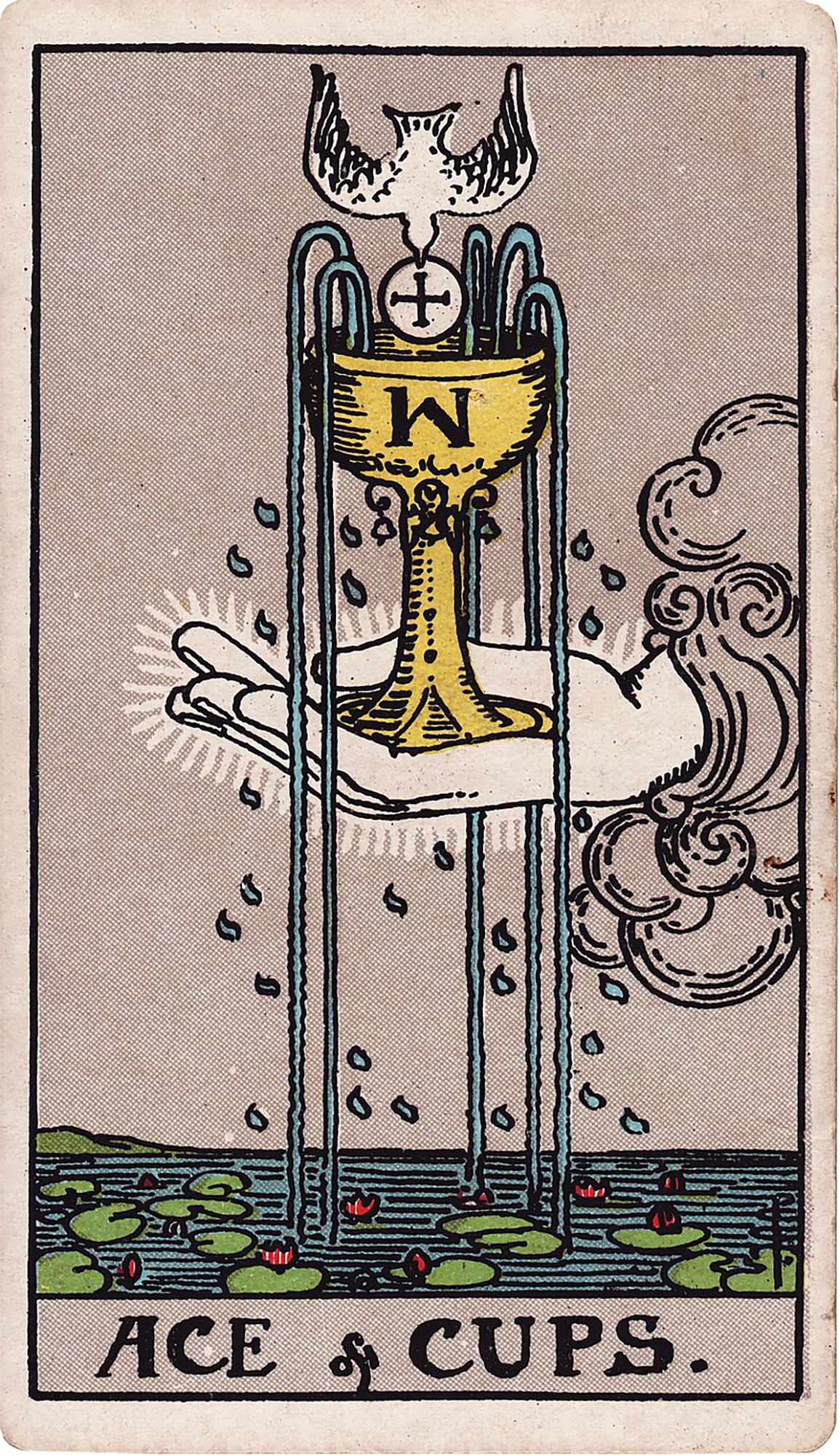 Ace of Cups
Introduction to the Ace of Cups and Its Core Symbolism
The Ace of Cups is a powerful Tarot card traditionally associated with new beginnings in the emotional and spiritual realms. Upright, it signals an opening of the emotional field characterized by affection, compassion, intuitive receptivity, and creative feeling seeking expression. The supplied Ace of Cups image visually reinforces this through the overflowing chalice, symbolizing abundance and the fertile potential of emotional life. The card invites us to notice where emotional or spiritual creativity is emerging and calls for an appropriate, grounded response instead of abstract idealism. It anchors its message in the practical realm of feelings, relationships, and intuition, making it a vital first step in journeys that involve the heart and soul.
Symbolic Elements in the Ace of Cups Imagery
Examining the supplied Ace of Cups card closely reveals multiple layers of symbolism rooted in traditional Rider-Waite-Smith imagery. The cup itself is often depicted as a chalice overflowing with clear water or another sacred liquid, symbolizing the flow of emotion and spiritual energy. The flowing liquid represents receptivity and the outpouring of feelings, suggesting abundance and renewal. The hand often shown emerging from a cloud to hold the cup signifies divine offering or spiritual intervention, indicating that this emotional opportunity is both a gift and a responsibility. Various water symbols, such as doves or lotus flowers, may appear, which represent peace, purity, and spiritual awakening. The card’s light and colors generally convey serenity and openness, inviting the querent to engage deeply with their inner emotional landscape.
Elemental Correspondences and Their Meaning
The Ace of Cups is firmly connected to the element of Water, which governs emotions, intuition, and the subconscious. Water’s qualities—fluidity, depth, cleansing, and adaptability—are central to understanding the card’s message. Water’s mutable nature reflects the evolving and sometimes unpredictable realm of emotional experience. As an elemental beginning, the Ace of Cups marks the start of a new emotional cycle or spiritual phase, signaling a time to open oneself to feelings without resistance. The fluid overflowing from the cup mirrors the dynamic movement of water, encouraging the querent to embrace emotional flow and creative impulses. Recognizing this elemental context helps practitioners interpret the card as a prompt for emotional receptivity and compassionate engagement, rather than mere intellectual understanding.
Interpreting the Upright Ace of Cups in Readings
When the Ace of Cups appears upright in a Tarot spread, it highlights an emotional or spiritual opening that requires attention and deliberate action. The card’s message is practical: identify where new feelings or intuitive insights are emerging and respond appropriately to nurture this development. For example, the card may indicate the beginning of a new relationship, a surge of creative inspiration, or the rekindling of compassion toward oneself or others. The card often signals that one’s emotional skills—such as empathy, receptivity, or memory—can be effectively employed to navigate the current situation. While the energy may involve some effort or discomfort, the Ace of Cups helps clarify the core emotional task. To deepen interpretation, readers should examine surrounding cards to determine whether this energy is just beginning, intensifying, or moving toward resolution.
Understanding the Reversed Ace of Cups and Emotional Blockages
The reversed Ace of Cups draws attention to emotional blockages, depletion, or fear of vulnerability. Rather than simply representing a negative or opposite meaning, the reversal asks the reader to explore where the emotional process has become stuck. It might indicate feelings that are present but not expressed healthily, or lessons understood intellectually but not yet integrated. The reversed card can also highlight internal struggles unknown to others, such as suppressed emotions or unprocessed pain. Rather than discouraging, the reversed position invites simplification, acknowledgment, and communication to unblock the flow of emotional energy. In practice, readers should ask what needs to be released, practiced, or shared to restore the healthy, constructive energies associated with the Cups suit.
Practical Techniques for Reading the Ace of Cups
To effectively interpret the Ace of Cups, focus on these techniques: First, observe the imagery carefully—note the overflowing cup, water symbolism, and any supporting symbols such as doves or flowers. Use these as visual anchors to explore emotional or spiritual openings. Second, contextualize the card within the spread; consider its position and neighboring cards to understand whether the energy is emerging, developing, or resolving. Third, ask open-ended questions that encourage introspection on emotional or spiritual beginnings, such as: What new feelings or inspirations are arising? Where can I cultivate compassion or intuitive receptivity? Fourth, differentiate between the upright and reversed positions by focusing less on positive/negative polarity and more on movement—whether the energy flows freely or is blocked. Avoid common mistakes by not over-intellectualizing the card or ignoring its call to practical emotional response. Finally, encourage querents to connect the card’s symbolism with their lived experiences for deeper resonance.
Common Mistakes to Avoid When Interpreting the Ace of Cups
Interpreters often make the mistake of viewing the Ace of Cups as a purely romantic or idealized card, ignoring its practical and sometimes challenging aspects. It is important not to treat the card as a simple promise of joy but to consider the work required to nurture and express emerging feelings. Another common error is equating the reversed card strictly with negativity or failure, rather than seeing it as an indicator of emotional process blockage that invites active engagement. Over-reliance on abstract idealism can cause readers to miss where the card demands grounded action. Additionally, ignoring the elemental context of Water reduces the card’s depth. Finally, failing to integrate the card’s meanings with the overall spread and querent’s situation can lead to shallow or misleading readings.
Examples of the Ace of Cups in Reading Scenarios
Consider a reading where the Ace of Cups appears upright in the context of a question about relationships. The card suggests a new emotional phase, such as the beginning of a close bond or renewed compassion. The reader might encourage the querent to identify opportunities for emotional openness and to respond with empathy and authenticity. In a reversed position during a career reading, the Ace of Cups may highlight burnout or creativity blocks; the reader might explore where fear of vulnerability or emotional depletion is affecting the querent’s work and suggest practices to reconnect with inspiration. In spiritual contexts, upright the card can mark a new intuitive awakening, whereas reversed it might indicate resistance to spiritual growth. These examples demonstrate how anchoring interpretations to the card’s imagery and elemental symbolism enhances meaningful guidance.
Integrating the Ace of Cups into Your Symbolism Studies
For learners focused on family symbolism studies, the Ace of Cups offers fertile ground for exploring how emotional beginnings shape relational dynamics. The card symbolizes not only individual feelings but also the mutual opening of hearts within family or community contexts. Its elemental ties to Water underscore the importance of fluidity, empathy, and healing in familial bonds. By studying the Ace of Cups in connection with familial themes, students can deepen their understanding of how emotional receptivity and creative feeling contribute to growth and transformation within family systems. Practically, this approach enriches Tarot practice by encouraging readers to consider broader emotional patterns and their symbolic roots when interpreting this card.
Practice questions
• In what areas of your life do you currently sense an emotional or spiritual new beginning similar to the energy of the Ace of Cups?
• How can you respond practically and compassionately to emerging feelings rather than idealizing them?
• What emotional blockages or fears of vulnerability might the reversed Ace of Cups be highlighting for you?
• How does understanding the element of Water deepen your interpretation of emotional and intuitive experiences in readings?
• What symbols in the Ace of Cups image resonate most strongly with your personal or cultural associations of emotional openness?
Comments
Sign in to comment.
Continue learning
Harnessing the Power of The Magician and Ace of Wands: Igniting Creativity and Manifestation in Tarot Readings
The combination of The Magician and the Ace of Wands in tarot readings offers a potent blend of creative energy and manifestation power. This article delves into the ways these car...
Advanced Techniques for Combining The Moon and The Star to Enhance Intuition in Tarot Readings
This article explores advanced techniques to combine the symbolism and energy of The Moon and The Star Tarot cards to enhance intuition during Tarot readings. Drawing from traditio...
Enhancing Clarity in Complex Choices with the Five Card Cross Tarot Spread
The Five Card Cross Tarot Spread is a practical tool designed to clarify complex choices by breaking down the decision into manageable parts. This article explores each position in...
Tracing the Origins and Evolution of The Fool Card in Tarot History
The Fool card holds a foundational place in tarot tradition, symbolizing beginnings, openness, and the embrace of uncertainty. This article traces its origins from early European d...
Understanding The Hermit Card in Solitude Reflection and Guidance
This article offers an in-depth exploration of The Hermit tarot card as a single-card reading in different contexts such as love, career, money, advice, challenge, person, outcome,...
Unlocking the Creative Flow with The Magician and The Empress in Tarot Combinations
This article delves into the powerful synergy between The Magician and The Empress in Tarot combinations, focusing on how their combined symbolism unlocks creative flow across vari...
Using the Seven Card Horseshoe Spread to Uncover Career Growth and Opportunity
This article presents an in-depth guide to the Seven Card Horseshoe Tarot Spread with a focus on career growth and opportunity. Using the cards The Fool, The Magician, The Empress,...
Understanding the Many Facets of The Moon in Emotional and Intuitive Tarot Readings
The Moon card in the Tarot deck embodies themes of intuition, uncertainty, dreams, and emotional complexity. This article offers a comprehensive exploration of The Moon’s upright a...
Unlocking Advanced Intuition Techniques Using The High Priestess The Moon and The Hermit
This article examines advanced intuition development in tarot reading by focusing on The High Priestess, The Moon, and The Hermit cards. It offers practical techniques for beginner...
Mastering Intuition with The High Priestess The Hermit and The Moon in Tarot Readings
This article delves into mastering intuition through three powerful Tarot cards: The High Priestess, The Hermit, and The Moon. It guides readers from beginner to advanced reading t...