
Exploring the Symbolism of The Tower Card for Understanding Sudden Change and Awakening
The Tower card stands as one of the most powerful and evocative images in the Tarot deck, symbolizing sudden upheaval, awakening, and the collapse of false structures. This article explores the detailed symbolism of The Tower card as supplied, emphasizing upright and reversed positions, connecting traditional Rider-Waite-Smith imagery with practical interpretation. Readers will learn how to approach The Tower constructively in readings, recognize common mistakes, and apply a nuanced technique that balances honesty with practical rebuilding after disruption.
Cards explored in this article
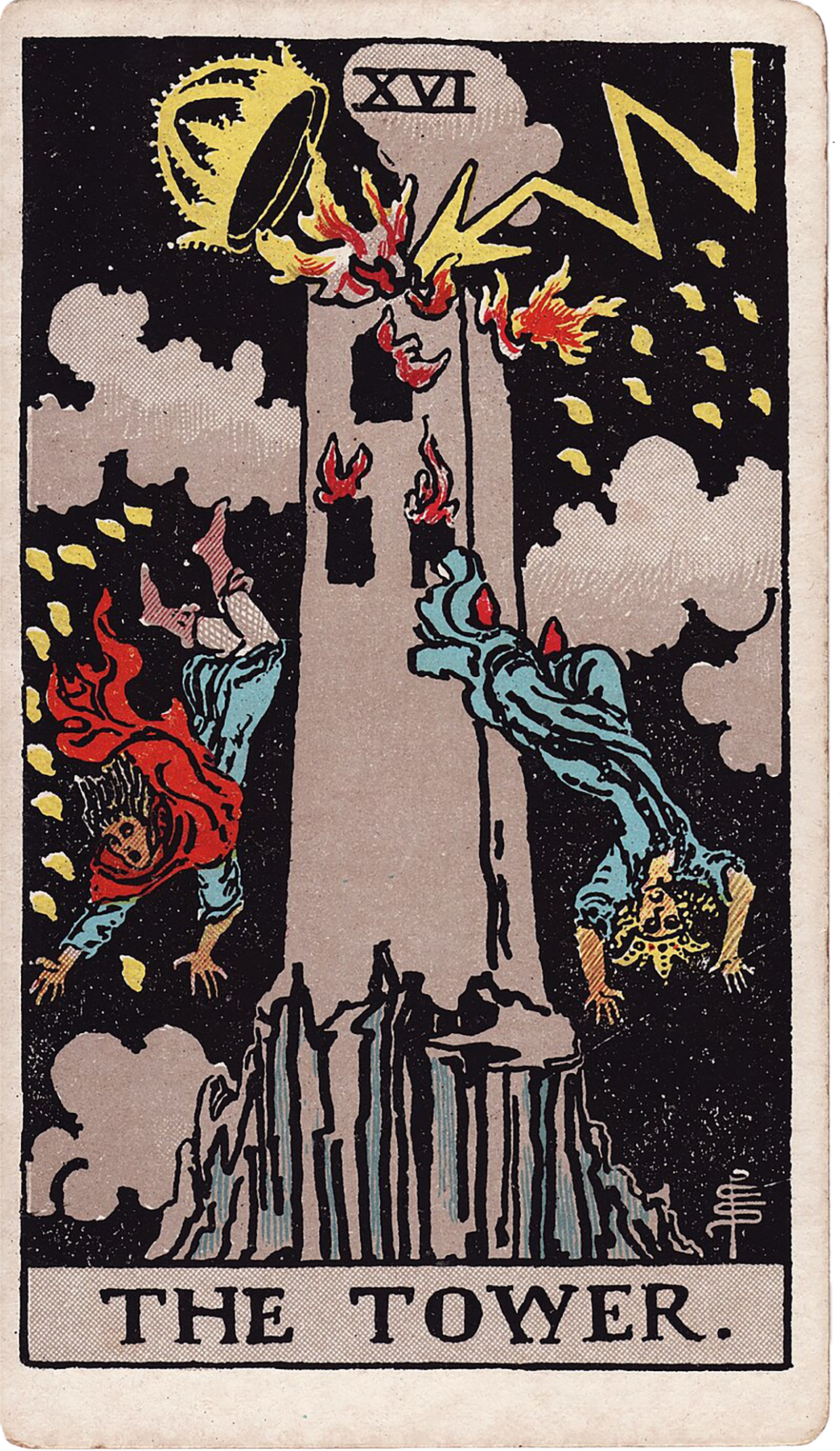 The Tower
Introduction to The Tower Card Symbolism
The Tower card is often perceived as a dramatic symbol of sudden change, upheaval, and revelation. Traditionally illustrated in the Rider-Waite-Smith deck as a tall tower struck by lightning with figures falling from it, the imagery evokes destruction but also liberation. The VoxFati Tarot Library’s supplied card elaborates on this by emphasizing the importance of responding honestly to sudden truths and allowing false structures to fall. This card does not promise ease but rather highlights a quality—the ability to engage directly and consciously with disruption to rebuild from what remains real. Understanding this foundational symbolism is essential for interpreting The Tower in any reading.
Upright The Tower Symbolism and Interpretation
When The Tower appears upright, as described in the supplied card context, it calls attention to the necessity of honest response. The lightning strike on the traditional image symbolizes a sudden, often unexpected truth or event that dismantles previously held illusions or unstable foundations. This is not merely destruction; it is an invitation to clarity and awakening. The upright card encourages the reader to ask: Where in the situation is a more direct response or a clearer boundary needed? Which false belief or artificial structure is falling away to reveal something more genuine? Practically, the upright Tower suggests engaging with the present reality rather than waiting for certainty or external validation. It often indicates that the central issue has become visible enough to consciously address. The lesson is about identifying the next appropriate step that aligns with the new reality revealed by the upheaval. For example, in a family symbolism study, The Tower might point to a sudden revelation about family dynamics that requires honest communication and setting new boundaries to rebuild trust.
Reversed The Tower Symbolism and Interpretation
The reversed position of The Tower, according to the supplied context, shifts the focus inward or toward resistance. It often highlights fear of necessary change, delayed collapse, or a repeated cycle of crises without resolution. Unlike the upright card, which emphasizes constructive engagement with upheaval, the reversed card suggests the energy of change is blocked, internalized, or distorted. In this state, the card may indicate attempts to restore or maintain a flawed structure without addressing its core issues, leading to ongoing tension. It may also signal a psychological or private crisis rather than an external one. For example, a family member may be struggling internally with change but not yet outwardly expressing it, which can stall growth. Interpreters must resist the impulse to view the reversed Tower as purely negative. Instead, the useful question is: Where is this energy becoming difficult to access or imbalanced? Neighboring cards should be examined for clues about whether the reversal points to resistance, recovery, or merely a temporary pause in transformation.
Connecting Traditional Rider-Waite-Smith Imagery to VoxFati Symbolism
The traditional Rider-Waite-Smith depiction of The Tower card is rich with symbols that complement the VoxFati interpretation. The lightning bolt represents sudden illumination and destruction of falsehoods. The crown falling from the tower’s peak symbolizes the collapse of ego or false authority, while the two figures falling signify the dramatic, sometimes traumatic nature of change. VoxFati’s emphasis on the quality of honest response and conscious rebuilding is reflected in the imagery: the fire and destruction clear the way for new growth. The card’s lesson is not about fearing disaster but about recognizing which parts of one’s mental, emotional, or situational structure are no longer sustainable. Readers should observe these visual elements in supplied card images to anchor their interpretation. The emotional intensity in the figures’ expressions and the chaos of the scene remind us to approach The Tower with respect and care in readings, acknowledging the reality of upheaval while focusing on constructive potential.
Common Mistakes When Interpreting The Tower Card
A frequent error in reading The Tower is to assume it predicts only negative or catastrophic outcomes. While the imagery may feel alarming, the card’s core teaching is about necessary change and awakening. Readers often overlook the card’s invitation to honest engagement and instead focus solely on fear or loss. Another mistake is ignoring the reversed position’s nuances. The reversal does not simply mean that the crisis is avoided; often, it indicates internal resistance or delayed transformation. Failing to consider the context and surrounding cards can lead to misinterpretation. Additionally, some readers may neglect the practical advice embedded in the upright card—to work consciously with what is available now and identify the next proportionate step. The Tower is not about reckless destruction but mindful dismantling and rebuilding. Avoid projecting doom and instead guide querents toward empowerment through honest awareness.
Practical Techniques for Reading The Tower Card
When The Tower appears in a reading, use a layered approach: 1. Observe the card’s position (upright or reversed) and recall the specific meanings outlined in the supplied context. 2. Anchor interpretation in the card’s imagery—notice lightning, the falling figures, and any symbolic elements visible in the supplied images. 3. Ask internally or aloud questions such as: What sudden truth is emerging? Where is honesty needed? What false structures are collapsing? If reversed, where is resistance or internalized fear manifesting? 4. Look at the querent’s situation or the question’s context to apply these insights concretely. For example, in family symbolism studies, consider dynamics where long-held assumptions are challenged. 5. Use neighboring cards to clarify whether the reversal indicates resistance, recovery, or a temporary pause. 6. Emphasize constructive responses—what can be rebuilt, what boundaries need clearer definition, and how to engage consciously with the change. Practicing this technique helps readers move beyond fear-based readings toward deeper understanding and empowerment.
Examples of The Tower Card in Family Symbolism Studies
In family symbolism, The Tower can represent sudden revelations about family secrets, shifts in roles, or the breakdown of dysfunctional patterns. For instance, an upright Tower might emerge when a family member speaks a previously unspoken truth, triggering upheaval but also opportunities for healing through honesty. The reversed Tower may signal resistance to acknowledging these dynamics, perhaps where family members avoid confronting painful issues. It can show repeated patterns of crisis without resolution, indicating a need for psychological work and boundary setting. By focusing on these themes, learners can use The Tower card to explore how sudden change and awakening operate within family systems. This deepens understanding of interpersonal dynamics and supports conscious transformation.
Reflection Questions to Deepen Understanding of The Tower
To engage more fully with The Tower’s symbolism, consider these questions: - Where in my life or in a situation am I avoiding a necessary but difficult truth? - What structures or beliefs might be false or unstable and need to fall away? - How can I respond honestly and constructively to sudden changes or revelations? - In what ways might I be resisting transformation, and how does that resistance manifest? - What new boundaries or choices are emerging as a result of upheaval? - How can I work consciously with what remains real to rebuild after disruption? These questions encourage personal integration of The Tower’s lessons beyond prediction.
Practice questions
• Where in my life am I avoiding a necessary but difficult truth?
• What false structures or beliefs need to be dismantled for growth?
• How can I respond honestly to sudden change or revelation?
• In what ways might I be resisting necessary transformation?
• What boundaries or conscious choices are needed after disruption?
• How can I work constructively with what remains real during upheaval?
Comments
Sign in to comment.
Continue learning
Harnessing the Power of The Magician and Ace of Wands: Igniting Creativity and Manifestation in Tarot Readings
The combination of The Magician and the Ace of Wands in tarot readings offers a potent blend of creative energy and manifestation power. This article delves into the ways these car...
Advanced Techniques for Combining The Moon and The Star to Enhance Intuition in Tarot Readings
This article explores advanced techniques to combine the symbolism and energy of The Moon and The Star Tarot cards to enhance intuition during Tarot readings. Drawing from traditio...
Enhancing Clarity in Complex Choices with the Five Card Cross Tarot Spread
The Five Card Cross Tarot Spread is a practical tool designed to clarify complex choices by breaking down the decision into manageable parts. This article explores each position in...
Tracing the Origins and Evolution of The Fool Card in Tarot History
The Fool card holds a foundational place in tarot tradition, symbolizing beginnings, openness, and the embrace of uncertainty. This article traces its origins from early European d...
Understanding The Hermit Card in Solitude Reflection and Guidance
This article offers an in-depth exploration of The Hermit tarot card as a single-card reading in different contexts such as love, career, money, advice, challenge, person, outcome,...
Unlocking the Creative Flow with The Magician and The Empress in Tarot Combinations
This article delves into the powerful synergy between The Magician and The Empress in Tarot combinations, focusing on how their combined symbolism unlocks creative flow across vari...
Using the Seven Card Horseshoe Spread to Uncover Career Growth and Opportunity
This article presents an in-depth guide to the Seven Card Horseshoe Tarot Spread with a focus on career growth and opportunity. Using the cards The Fool, The Magician, The Empress,...
Understanding the Many Facets of The Moon in Emotional and Intuitive Tarot Readings
The Moon card in the Tarot deck embodies themes of intuition, uncertainty, dreams, and emotional complexity. This article offers a comprehensive exploration of The Moon’s upright a...
Unlocking Advanced Intuition Techniques Using The High Priestess The Moon and The Hermit
This article examines advanced intuition development in tarot reading by focusing on The High Priestess, The Moon, and The Hermit cards. It offers practical techniques for beginner...
Mastering Intuition with The High Priestess The Hermit and The Moon in Tarot Readings
This article delves into mastering intuition through three powerful Tarot cards: The High Priestess, The Hermit, and The Moon. It guides readers from beginner to advanced reading t...