
How to Read the Nine of Swords in Love Work and Mental Health Readings
This VoxFati Tarot Library lesson teaches learners how to read the 9 of Swords as a single-card pull across multiple life contexts: love, work, money, advice, challenge, person, outcome and spiritual reflection. Anchored to the supplied 9 of Swords imagery and the standard upright and reversed notes, the article explains Rider‑Waite‑Smith symbolism, step-by-step practical method, sample readings (upright and reversed), how to distinguish real danger from mental amplification, common errors, and concrete next steps to offer querents. This is educational guidance for readers to use responsibly, not a guaranteed prediction.
Cards explored in this article
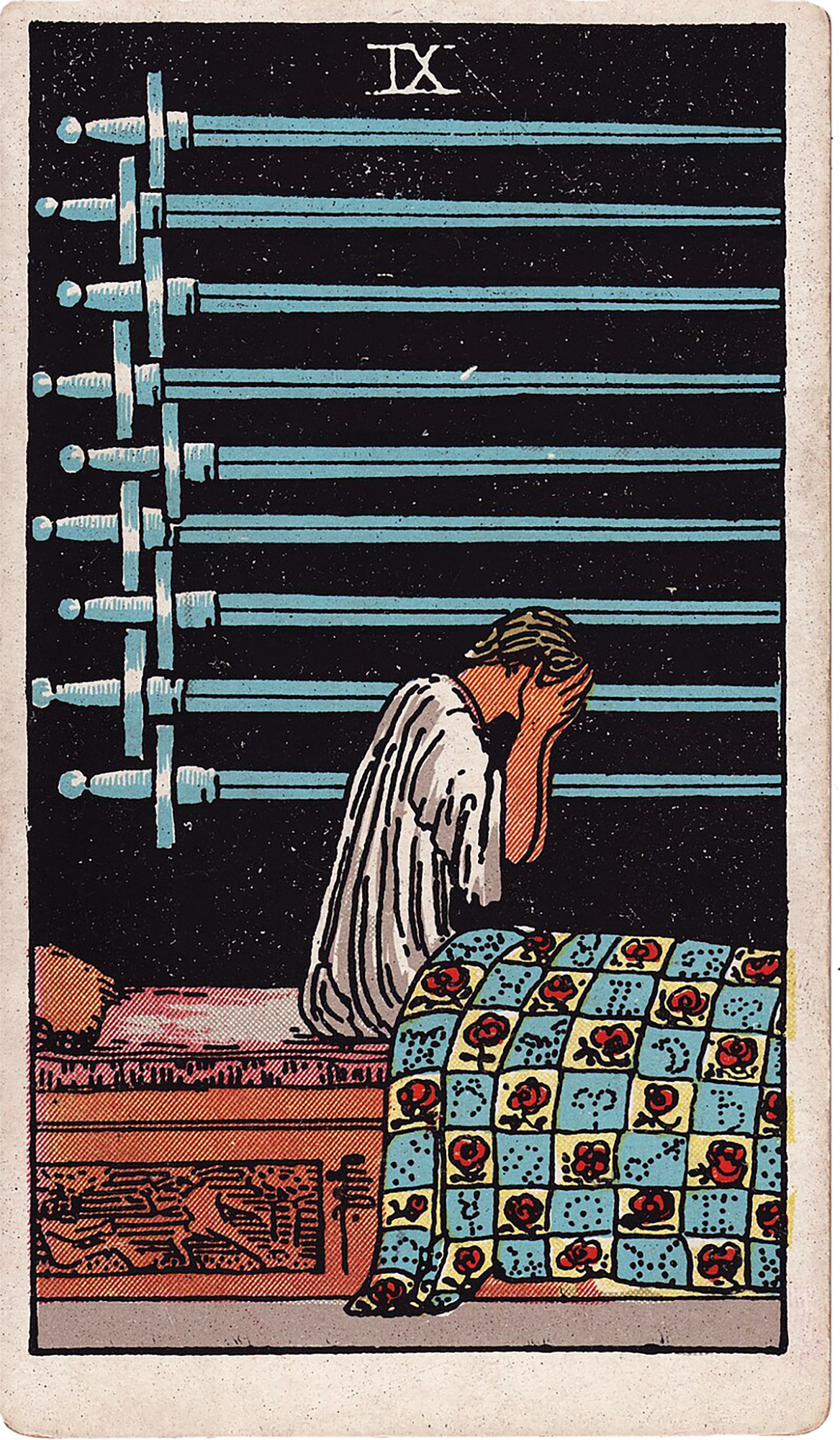 9 of Swords
Introduction and how to use this lesson
This article is a single-card lesson built around the supplied 9 of Swords. It is designed for learners who want a practical, ethically minded approach to reading this card in different contexts: love, work/career, money, advice, challenge, person, outcome and spiritual reflection. Public display will include the supplied imagery; throughout the lesson I will repeatedly refer to that exact 9 of Swords card image so your interpretation stays visually anchored. Use this lesson as a framework: when you draw the supplied 9 of Swords, follow the step-by-step reading method shown here, then adapt the examples to the querent's language and immediate situation. Remember: tarot is a tool for clarity and choice, not a deterministic script. Especially with a card like the 9 of Swords, which frequently points to anxiety and mental patterns, prioritize wellbeing, agency and responsible referral when needed.
The supplied card and its core statements
Refer to the supplied 9 of Swords and its two orientation notes: Upright, 9 of Swords highlights the mind amplifying fear during vulnerable hours; worry deserves care, evidence and support rather than automatic belief. The card is practical: it asks for a response that fits the present stage rather than an abstract ideal. Consider where this pattern is already visible and what action would strengthen its constructive side. In many spreads, the upright card shows that the situation can be handled through the skills associated with Swords: thought, communication, conflict, decisions, truth, strategy and the consequences of mental habits. It can still contain effort or discomfort, but it usually makes the core task easier to name. Use the surrounding cards to see whether this energy is beginning, developing, reaching pressure, or moving toward resolution. Reversed, 9 of Swords draws attention toward relief, seeking help, persistent anxiety, shame or recognizing that hidden worries need to be spoken and addressed. The reversal may show too much of the card's usual energy, too little of it, or a situation where the lesson is understood intellectually but not yet lived consistently. It can also indicate that the issue is occurring internally and is not obvious to other people. Rather than treating the reversed card as the opposite of the upright meaning, examine where the process has become stuck. Ask what needs to be simplified, acknowledged, practiced, released, or communicated before the healthier expression of Swords can return.
Reading the image: Rider‑Waite‑Smith symbolism to observe
When you look at the supplied 9 of Swords, slow down and list the visual details before leaping to a verdict. Key RWS details to notice and their reading pointers: - The figure seated on the bed with hands over the face: immediate signifier of mental anguish, shame, or sleeplessness. In a reading this is often the querent's inner experience — private, intense, and felt at night. - The bed itself: a place of rest that's become a stage for worry. Beds in tarot can mean rest, safety, intimacy; here that space is compromised, showing how cognition can invade rest and safety. - Nine swords vertically aligned on the wall: swords are thoughts, words, decisions and consequences. Their placement like trophies or accusations implies persistent thoughts that hang over the person. - The heavy red curtains framing the bed: red suggests passion, blood, alarm and theatricality. Curtains can imply secrecy or a stage—worries are partly a private drama. - Moonlight or a night landscape visible through a window: night and moon imagery speak to subconscious processes, illusions, cyclical emotions and fears amplified by darkness. Use these visual anchors to make specific, grounded statements. For example: 'Notice how the bed — normally a place of sleep — is now where the person sits awake; that suggests your nights are carrying the same story as your day.' Framing with imagery helps the querent feel seen and keeps your interpretation tied to the card rather than to assumptions.
Interpretation logic and the Swords skillset
The 9 of Swords is a Swords suit card: its primary domain is the mind — thought patterns, stories, decisions, communication and consequences. Numerologically, nine is an endangered completion: a process nearing its end where final tests and anxieties appear. Combine those facts to form the card's logical core: the mind is entering a pressure phase where accumulated patterns (habits, beliefs, unspoken words) are now producing distress. When you interpret, map imagery to process: swords = thoughts; night = subconscious and amplified fear; bed = rest violated by mental replay. Then, ask: where can Swords skills — naming, speaking, analyzing, strategizing and deciding — change the pattern? The supplied upright guidance already points this way: worry deserves care, evidence and support rather than automatic belief. Reading the card means turning the theatrical panic into a manageable problem statement such as 'You are rehearsing worst‑case outcomes at night; a practical step would be gathering real evidence and communicating what you can.' For reversed positions, use process logic: reversal draws attention to blockage points. Is the person refusing help, or are they telling people what they think is required but not living it? A reversal often signals that the cognitive skillset is present but stuck or misapplied; the practical question becomes: what simplifies or externalizes the worry so it can be handled?
A practical single‑card method you can use now
Follow this six‑step method when the supplied 9 of Swords appears as a single card: 1) Note orientation: upright or reversed. Use the supplied orientation texts as your first filter. 2) Describe the image to the querent: point to the bed, the nine swords, the curtains and the night. Ask the querent: 'Which of these details feels most like your experience right now?' 3) Ask two clarifying questions: 'What keeps you up at night?' and 'What would make this feel more manageable tomorrow?' These split the problem into content and action. 4) Apply evidence check: invite the querent to list what is actually known vs what is feared. (This step shifts cognitive energy from imagining to verifying.) 5) Create one practical micro‑task: a short, achievable step such as scheduling one conversation, drafting a bullet list of facts, calling a professional, or setting a 10‑minute worry period. 6) If the card is reversed, add a help check: who can bear part of this? What small admission or boundary would reduce the cognitive load? Close the reading by naming both the emotional reality and the agency: 'This card shows real distress, and here is one small thing you can do to begin rewriting the nightly story.'
Common mistakes readers make with the 9 of Swords
Be aware of these frequent errors and how to avoid them: - Treating the card as a doom omen. The 9 of Swords often describes mental suffering, not absolute fate. Anchor your language in process and options. - Ignoring context and needing clarifiers. In single‑card pulls you must ask the querent follow‑ups; otherwise you risk mistaking general anxiety for a specific threat. - Overpathologizing or giving therapy in place of referral. The card can indicate severe anxiety or depression. If a querent expresses suicidal ideation, follow appropriate safety protocols — do not rely on tarot alone. - Reading the reversed card as 'good' by default. The supplied reversed note shows nuance: it can mean relief or persistent hidden anxiety. Always probe. - Focusing only on the swords and ignoring the bed, moon and curtains. Those elements shift meaning from internal thought to sleep, secrecy, and performance. To avoid these, practice grounded phrasing, ask clarifying questions and make safety referrals when needed.
Love and relationships: upright and reversed examples
Upright reading in love: When the supplied 9 of Swords is upright in a love reading, start from the image: a person sitting awake, haunted by their thoughts while the swords hang like accusations. Translate that to relational terms: the querent is likely ruminating about the relationship — imagined betrayals, rehearsed breakups, or late‑night catastrophizing about the partner's motives. Use the Swords skillset: ask for evidence, name specific thoughts, and identify one conversation or boundary to test whether the fear maps to reality. Sample phrasing: 'This card shows the late‑night story your mind is telling about your relationship. Let's list what you know for sure and what you're imagining. What small question could you ask your partner that would test one of those fears?' Reversed reading in love: Reversed, the supplied text points to relief, seeking help, shame or hidden worry. In relationship terms this often shows someone who is starting to reveal their fears, or conversely someone whose anxiety is internalized and hidden from the partner. The reversal can also mean the pattern is stuck: the person keeps apologizing without changing the behaviors that cause the worry. Sample phrasing: 'The reversal suggests either relief is on the way because anxieties are being spoken, or that your worry is private and needs a small, brave step outward — like naming one fear to your partner or a counselor.' In both positions prioritize compassionate action: suggest communication scripts, timing for difficult conversations, and professional support if anxiety is overwhelming.
Work and career readings: upright and reversed examples
Upright in career: The supplied 9 of Swords upright often signals career worry that is cognitive rather than strictly material. The image of swords on the wall can represent critiques, internalized standards or the memory of past professional mistakes that replay at night. Ask the querent to specify what tasks or evaluations they rehearse mentally. The Swords skills useful here are strategy and truth—make a realistic task list and perform an evidence check about actual risks to the job or project. Action example: draft a prioritized checklist; prepare one factual email to clarify expectations; book a short feedback meeting. Reversed in career: Reversed, the card may point to persistent anxiety that is hidden from colleagues, or to a nascent relief because the querent is beginning to ask for support. It might also describe someone who intellectually understands what to do but cannot enact it due to shame or frozen guilt. Use accountability structures: a mentor, an agreed‑upon timeline, or a small deliverable with a deadline to break inertia. Avoid speculative catastrophizing like 'you will be fired' unless corroborated; instead focus on specific steps to reduce uncertainty.
Money and practical resources: upright and reversed examples
Upright for money: When money is the question, the supplied 9 of Swords upright frequently shows catastrophic thinking about finances — worst‑case budgeting, sleeplessness over bills, or replaying financial mistakes. Use the card's practical tilt: focus on current stage and fit the response to it. That might mean making a short, realistic budget, contacting a creditor for a payment plan, or opening a single spreadsheet to collect facts. Ask: 'What is the smallest financial step you can take this week that will reduce uncertainty?' Avoid offering unconditional reassurance; instead supply concrete actions. Reversed for money: Reversed, the card can indicate the querent is moving toward relief by seeking help, or that the anxiety is internal and concealed. It can also show that the person knows the right steps intellectually but feels shame and so avoids them. Encourage a nonjudgmental resource checklist — community supports, local agencies, a financial advisor — and normalize asking for help. Both positions call for realistic scaling: show the querent how to break a large debt or budget worry into manageable sub‑tasks.
Advice and challenge: how to translate the card into action
Advice when upright: Treat the supplied upright note as a counseling lens: 'worry deserves care, evidence and support rather than automatic belief.' Translate that into micro‑actions: set a 15‑minute worry slot, schedule one conversation, make a fact list, or begin a nightly wind‑down ritual to reduce rumination. The emphasis is on evidence and skillful communication: what can be checked, tested or spoken? Advice when reversed: When reversed, ask where the process is stuck. Is the querent refusing support? Are they saying the right words but failing to do the behaviors that reduce worry? Recommended actions include simplifying the problem, speaking one truth aloud to a trusted person, and practicing one CBT‑like tool: journaling an early morning record of nighttime fears to reframe them in daylight. Challenge framing: The challenge in either orientation is cognitive distortion: the mind is re‑heating worst‑case scenarios. Your role is to help the querent externalize and test thoughts, replace catastrophizing with stepwise planning, and direct them to clinical help when worry is severe or chronic.
Person and outcome: reading people and possible endings
Person: When the 9 of Swords describes a person, anchor your depiction in the card's image. The person is likely a worrier, someone who wakes at night with heavy thoughts, or a private figure who holds shame or guilt. They may be articulate about fears or entirely silent. Ask whether the querent recognizes these behaviors in themselves or someone close. Outcome: As an outcome card the supplied 9 of Swords does not usually indicate a final catastrophe; it indicates a phase of mental pressure that requires direct engagement. Upright, the outcome can be a naming of the problem and the beginning of practical steps; reversed, the outcome might be hidden relief, partial release, or continued internalization if actions are not taken. Use the 'stage' idea from the upright text — beginning, developing, reaching pressure, or moving toward resolution — to describe where this process is headed and what would signal movement to the next stage. Always pair outcome statements with suggested markers: 'If in two weeks you've spoken to one person and made one plan, you'll likely see sleep improve; if nothing changes, consider professional help.'
Spiritual reflection and healing practices
Spiritually, the supplied 9 of Swords is an invitation to meet the night work: the internal stories that repeat when reasoning faculties are taxed. The RWS imagery of the bed and moon invites practices that either ground or translate the content: journaling, breathwork, ritualized confession to a trusted listener, or a simple nightly practice of naming three real facts that counter the day's worst thought. Suggested healing moves: - Witnessing practice: have the querent describe the thought as if outside themselves ('There is the thought that X will happen') to create distance. - Evidence log: a two‑column list of 'Fear' vs 'Evidence' to reframe catastrophizing. - Behavioral experiments: plan one small test that checks a fear in the real world. - Community and professional referral: spiritual practices are helpful, but the card can indicate clinical anxiety. When worry affects functioning, recommend mental health support. Frame spiritual work as complementary to practical steps. The supplied upright note stresses practical responses that fit the stage; healing is about both insight and practice.
Putting it together: sample single‑card read and script
Here is a short script you can adapt when the querent draws the supplied 9 of Swords upright: 1) Look together at the image and name three things: 'I see a person awake, nine swords on the wall and a night sky.' 2) State a concise interpretation: 'This suggests your mind is rehearsing fearful stories at night.' 3) Ask two focused questions: 'What in your life has been keeping you up?' and 'What is one factual thing you can check this week to test a fear?' 4) Offer one micro‑task: 'Tonight, write down the worst thought and beside it one thing you know to be true; do this for five nights.' 5) Close with safety and referral language: 'If your worry feels overwhelming or you're having thoughts of self‑harm, tell me and we will make a safety plan or contact a professional.' If reversed, modify step 3 to probe whether the querent is hiding the worry or moving toward relief: 'Are you starting to name these worries to anyone? If not, what would make it easier?'
Practice questions
• Which visual detail on the supplied 9 of Swords feels most like my current experience and why?
• When I notice a nightly worry, what evidence can I gather this week to test it?
• What is one tiny action I can take to move from rumination to strategy?
• Who could share some of this burden so I don't carry it alone?
• If this card is reversed for me, where is the process stuck: avoidance, shame, or incomplete practice?
Comments
Sign in to comment.
Continue learning
Understanding the Synergy Between The Empress and The Emperor in Tarot Card Combinations
This article delves into the intricate synergy between The Empress and The Emperor cards in Tarot, focusing on how their combined energies modify and enrich readings across various...
Exploring The High Priestess in Career Relationships and Personal Growth
The High Priestess card in the tarot deck invites readers to explore intuition, hidden knowledge, and inner wisdom across various life contexts. This article examines how The High...
Using the Five Card Cross Tarot Spread to Navigate Career Changes with Confidence
The Five Card Cross Tarot Spread is a versatile and insightful tool for navigating career changes. This article guides learners through the method step-by-step using a practical ex...
Exploring The Hierophant in Modern Spiritual Practices and Personal Development
The Hierophant tarot card symbolizes structured wisdom, tradition, and the pursuit of knowledge through established systems. This article explores how The Hierophant’s upright and...
Unlocking Personal Ambition and Emotional Balance with The Chariot and Queen of Cups
The Chariot and Queen of Cups together represent a compelling combination of disciplined ambition and emotional maturity. This article guides learners through understanding how the...
Understanding The Tower in Tarot for Navigating Sudden Change and Crisis
The Tower card in Tarot symbolizes sudden, often disruptive change that destroys false foundations and compels honest reassessment. This article provides a comprehensive exploratio...
Understanding The Hanged Man in Personal Sacrifice and Spiritual Growth
The Hanged Man tarot card embodies the themes of intentional pause, surrender, and gaining new perspectives that foster personal sacrifice and spiritual growth. In this article, we...
Discovering The Hermit in Meditation and Self Reflection Practices
The Hermit tarot card, a symbol of introspection and deliberate solitude, offers profound lessons for meditation and self-reflection practices. This article unpacks its upright and...
Unlocking Emotional Balance with The Lovers and Temperance in Tarot Combinations
This article explores the dynamic interplay between The Lovers and Temperance cards in Tarot readings, focusing on how their combination unlocks emotional balance and integration....
Understanding the Court Cards of Pentacles for Practical Wisdom and Grounded Ambition
The Court Cards of Pentacles—Page, Knight, Queen, and King—offer a rich framework for understanding practical wisdom, grounded ambition, and stewardship of material resources. Anch...