
How Weapons Tools and Implements Change Meaning in Tarot Imagery
This article examines how weapons, tools and other implements shift the meanings of tarot cards. Using close readings of Ace of Swords, 7 of Swords and 3 of Pentacles, it explains how type, condition, orientation, user and context change an implement from symbol to story. The piece offers a repeatable technique for reading implements, examples for upright and reversed positions, common errors readers make, and exercises to develop visual-symbolic literacy. The goal is to help learners move from instinctive labels (weapon = violence, tool = work) to nuanced interpretation grounded in image, suit language and spread context.
Cards explored in this article
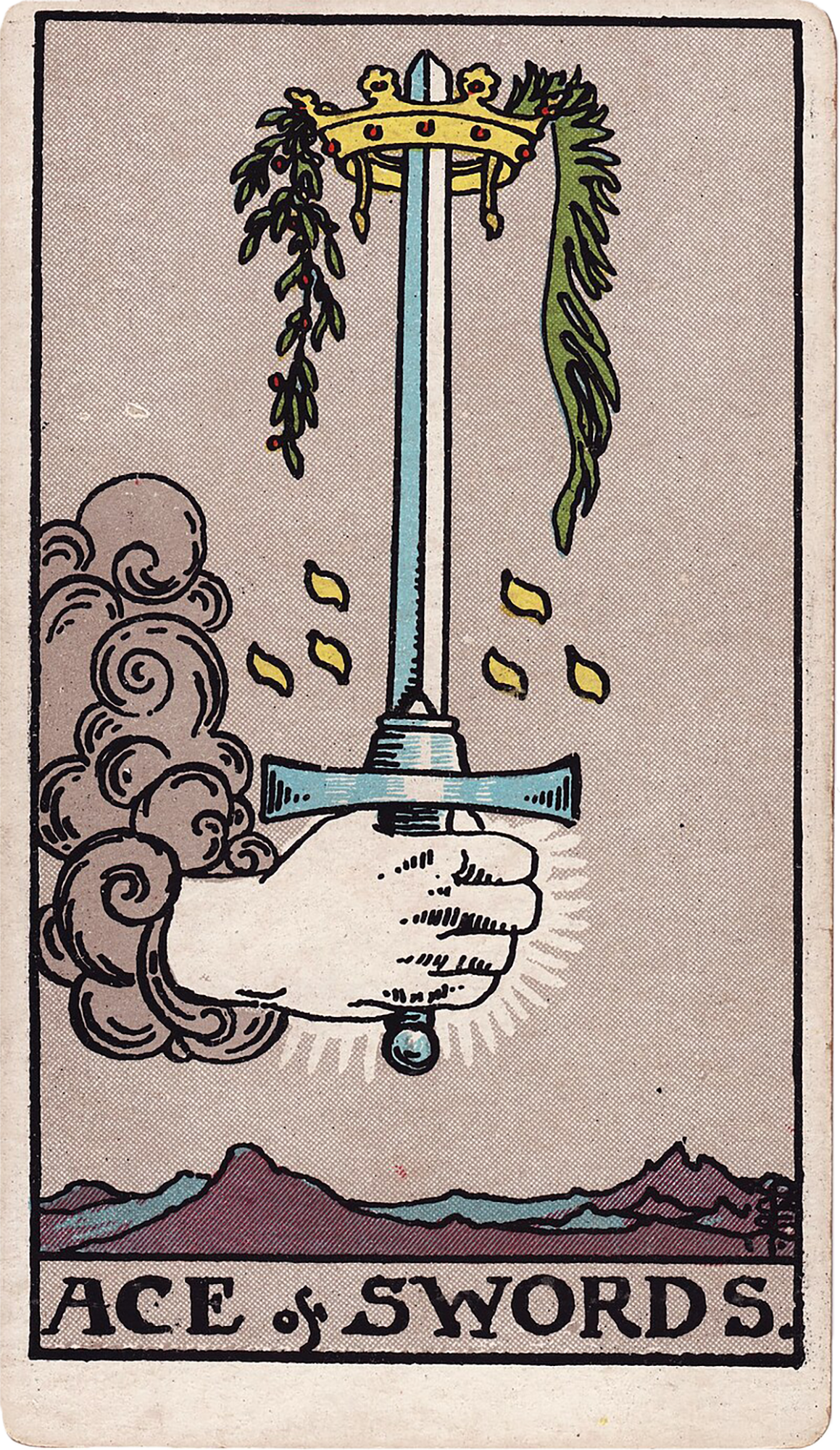 Ace of Swords
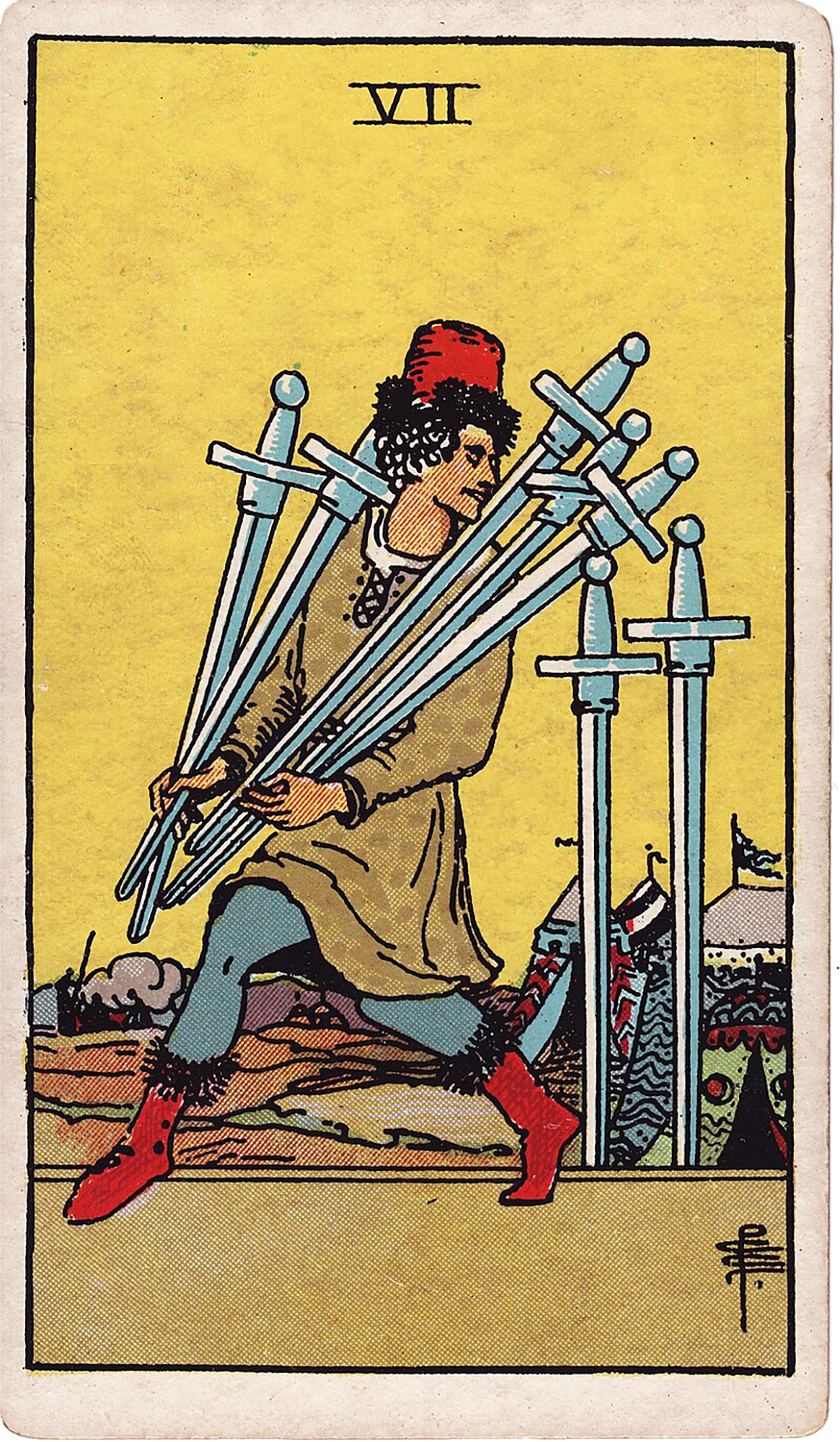 7 of Swords
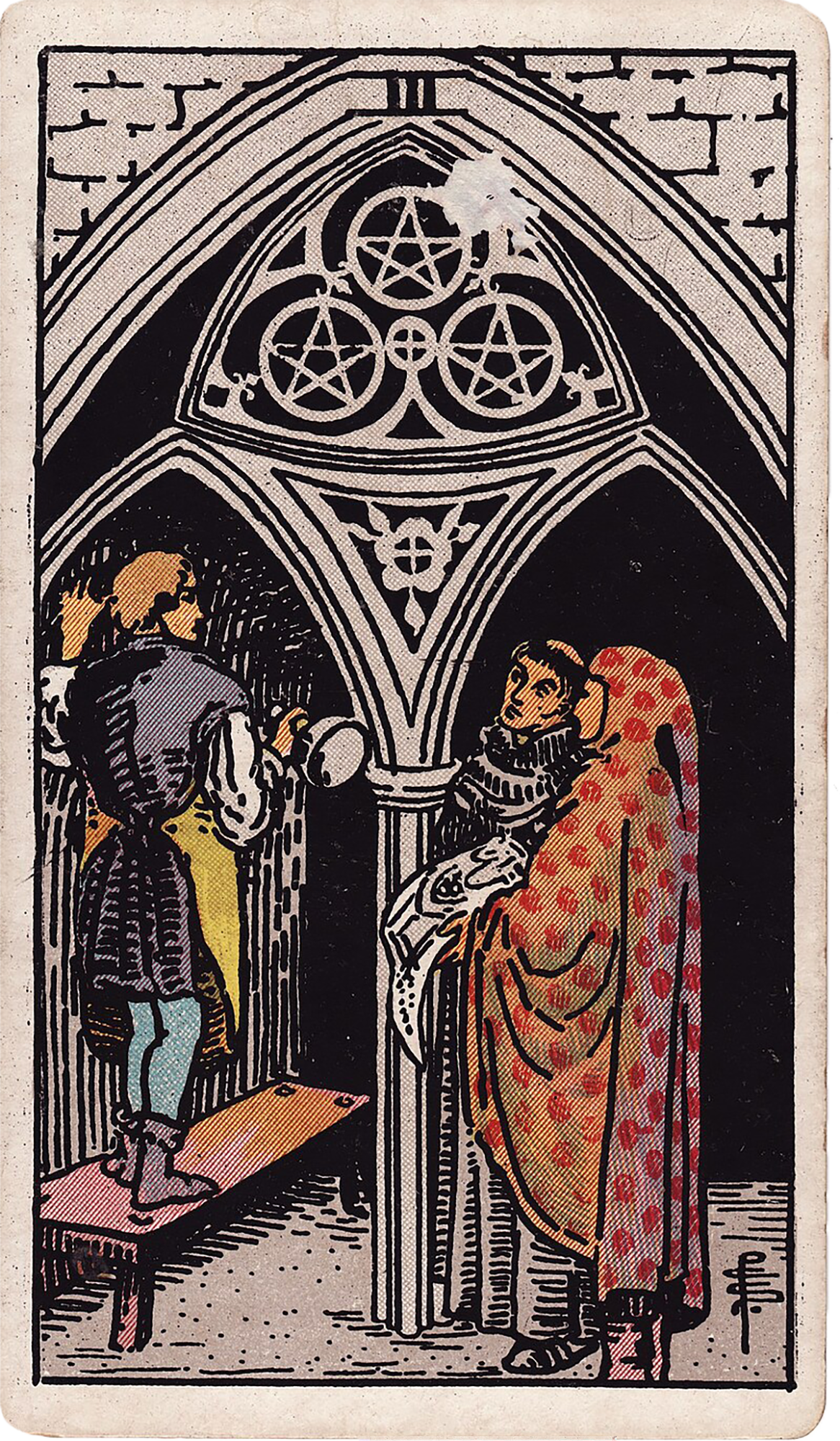 3 of Pentacles
Introduction: Why Implements Matter
Tarot is a visual language built out of objects and gestures. Implements — swords, hammers, chisels, cups, wands, coins in other decks — behave like words in a sentence: their meaning depends on how they’re used. One implement can signal danger, authority, precision or craft depending on context. For learners, the challenge is to stop treating every implement as a single fixed symbol and instead read it as a dynamic actor in the scene. This article uses three supplied cards as visual anchors: Ace of Swords, 7 of Swords and 3 of Pentacles. Each card demonstrates a different role for implements: the emblematic weapon of clarity (Ace of Swords), the stealthy instrument of strategy (7 of Swords) and the cooperative tool of craft (3 of Pentacles). By repeatedly returning to these images we will build a practical method for interpreting implements in any reading.
Core functions of weapons and tools in tarot imagery
Before we analyze images, separate implements into functional categories because a sword can be read as a weapon, a tool, a symbol or an authority device. Useful categories: 1) Offensive instruments (weapons such as swords): suggest conflict, decisiveness, cutting truth, puncturing illusions, or the mental operations of the Swords suit. 2) Cooperative or productive tools (chisels, hammers, compasses, measuring tools): point to craft, routine, teamed skill and material reality — the language of Pentacles. 3) Symbolic implements (crowns, wreaths, sceptres): carry status, victory or sanction rather than physical action. 4) Ambiguous or hybrid implements: an implement used by a figure in a way that blurs categories (a sword used ceremonially, a tool wielded furtively). The supplied cards give clear examples: Ace of Swords functions primarily as a symbol and a weapon of clarity and truth; 7 of Swords shows a weapon used in stealth and strategy; 3 of Pentacles depicts tools as cooperative craft instruments.
Reading implements as actors not props
Look at the implement’s role: who holds it, how it’s held, where it is, and whether it appears complete, broken or ornamented. An implement that is central to the composition is often the image’s verb. In Ace of Swords the sword is the visual and semantic center: it cuts through the frame and is crowned — it is an act of cutting, a decisive arrival of clarity. In 7 of Swords the swords are being carried away; their arrangement (some left behind) tells a story about strategy, risk and risk management. In 3 of Pentacles the tools are in use; hands and bodies are coordinating around a common material task, so the tools point to skill development, collaboration and standards. Practice mentally asking of every implement: What does it do in this scene? Whose agency does it express? Is it a weapon, a tool, or a symbol of status?
Detailed imagery: what to notice in Ace of Swords
Ace of Swords in the Rider-Waite-Smith tradition shows a single, upright double-edged sword held by a hand emerging from a cloud. A crown and laurel wreath surround the sword’s hilt. The Ace behaves simultaneously as a weapon and a symbolic standard. Key visual cues and their interpretive moves: - Single upright sword: focus, initiation, an idea or decision cutting through confusion. Because it is central and vertical, treat it as emergent energy rather than ongoing conflict. - Crown and wreath: status and victory on intellectual or communicative terrain; victory of truth or sanctioned judgment. - Hand from cloud: an external offer, a sudden insight or opportunity that arrives from a source outside the querent’s immediate control. - Clean, unbloodied blade: the action is conceptual and precise; the ‘cut’ is clarity rather than brute force. In readings anchor these observations to the card’s supplied upright meaning: clarity, decisive conversation, intellectual breakthrough, and practical response. If reversed, shift attention to the sword’s use as weaponized truth or confusion — harshness, misused logic or premature judgment as described in the supplied reversal notes.
Detailed imagery: what to notice in 7 of Swords
7 of Swords presents a person stealthily carrying several swords away from an encampment where two swords remain planted. This card is rich in narrative about action and intention. Notice these elements: - The furtive carrier: agency focused on individual strategy, discretion and independence. The image asks whether the secrecy is pragmatic or unethical. - Swords in motion vs. swords left behind: decisions about resource allocation, what to take and what to leave; evidence of partial success or incomplete plan. - Lack of confrontation in the scene: the person avoids open conflict; the image is about tactics and consequences more than immediate violence. - Landscape and time-of-day cues (often sparse in RWS): they often suggest escape, risk and haste. In upright position align these observations with the supplied practical meaning: strategy, acting independently, and testing the boundary between discretion and deception. In reversal shift toward exposure, confession, or the plan’s unsustainability — the imagery of being seen or failing to carry the plan through.
Detailed imagery: what to notice in 3 of Pentacles
3 of Pentacles shows three figures collaborating in a workshop or cathedral under construction; tools and architectural elements dominate. Tools in this card function as instruments of skill and cooperation. Read these features: - Multiple hands and tools: teamwork, feedback, complementary expertise. The tools are active, being employed to shape material reality. - Architectural setting: planning, long-term structures, and standards — the project nature of Pentacles. - Varied roles among figures: the presence of apprentice, craftsman and patron suggests respect for different expertise and social roles that support a shared outcome. - Tools in good repair and visible use: this is craft at work; tools point to the concrete processes that produce results. Upright this aligns with the supplied practical meaning of skill strengthened by collaboration; reversed the same implements can indicate poor teamwork, low standards or failing to accept critique. Reading the implements here is about process and social technique rather than ethical judgment.
How implements change meaning: six modifiers to apply
Implements change meaning through modifiers. Use these six factors as a checklist in every reading: 1) Type (weapon vs tool vs symbol): determines domain — conflict/ideas (weapon) vs craft/resources (tool) vs status (symbol). 2) Condition (clean, rusty, broken, ornate): suggests readiness, neglect, sabotage, or ceremonial use. 3) Orientation and motion (held upward, carried away, in use, on ground): shows intention (declarative, evasive, active, passive). 4) User identity and posture (open-handed giver, furtive thief, collaborative worker): gives moral or functional tone. 5) Context/location (battlefield, workshop, altar): frames the implement’s purpose. 6) Quantity and arrangement (single, many, scattered): indicates focus vs diffusion, success vs partial completion. Apply these consistently. Example with supplied cards: Ace of Swords is a single, upright, clean, crowned sword — Type: emblematic weapon, Condition: pristine, Orientation: vertical/declarative, User: presenting hand — together these modifiers point to sanctioned clarity. 7 of Swords shows many swords being carried away — Type: weapon used for strategy, Orientation: motion away, Quantity: multiple — modifiers that point to stealth, risk and partial success. 3 of Pentacles tools are in use by multiple people — Type: tools for craft, Condition: serviceable, Orientation: active — modifiers that emphasize process, standards and collaboration.
Technique: step-by-step method for reading implements
Make this a ritualized part of your reading. Apply these steps in order for reliable results: 1) Name the implement and suit language: label it (sword, chisel) and recall the suit’s core domains (Swords = thought, communication, conflict; Pentacles = work, resources, health). 2) Describe without judgment: list visible features (number, state, holder, position in frame). 3) Assign functional category: weapon, tool or symbol. 4) Run the six modifiers checklist (type, condition, orientation, user, context, quantity). 5) Synthesize into a short sentence that ties implement action to suit language. Example: "In Ace of Swords the weapon of thought is presented crowned — an offered, sanctioned insight that cuts confusion." 6) Test alternative readings: imagine the implement in reversed action or different hands; this helps spot stuck or rigid readings. 7) Anchor to spread context: ask how the implement’s action fits the question, timing, or surrounding cards. Use the supplied upright/reversed card notes as calibration: they supply conventional arcs (beginning, developing, pressure, resolution) which your implement reading should reference.
Examples and applied readings with the supplied cards
Use concrete examples to see the method at work. Example 1: A querent asks about an upcoming difficult conversation and Ace of Swords appears upright. Read by steps: - Name: sword; suit: Swords (communication, decisions). - Features: single, crowned, hand from cloud, clean, vertical. - Category: weapon-symbol of clarity. - Synthesis: the card signals an offered breakthrough; speak precisely and accept a practical solution rather than ideology. Tactics: prepare a clear statement and expect decisive clarification. Example 2: A querent asks about a business partner and 7 of Swords appears upright. Steps: - Name: multiple swords in motion; suit: Swords. - Features: furtive carrier, some swords left behind. - Category: weapon used for tactic. - Synthesis: someone is acting independently with a strategic plan that blurs discretion and deception. Tactics: verify intentions, secure what should not be taken, or consider whether secrecy is strategic rather than malicious. Example 3: A querent asks whether a project will succeed and 3 of Pentacles appears upright. Steps: - Name: tools, collaborative scene; suit: Pentacles. - Features: three participants, tools in use, architectural context. - Category: productive tools. - Synthesis: skill and coordination will strengthen the project; seek feedback and maintain standards. For reversed positions use supplied reversal notes: Ace of Swords reversed warns of truth used as weapon; 7 of Swords reversed suggests exposure; 3 of Pentacles reversed points to poor teamwork. Combine your implement modifiers with these supplied verbal cues to produce grounded advice.
Common mistakes when reading implements and how to avoid them
Learners often slip into a few predictable errors: 1) Over-literalism: assuming a sword always means violence. Fix: map to suit domain (thought/communication) first. 2) Single-sensor reading: noticing only the implement and ignoring the holder and context. Fix: apply the six modifiers checklist every time. 3) Static symbolism: treating symbols as immutable labels ("tool = work") rather than verbs. Fix: ask "What is this implement doing?" 4) Ignoring art history and tradition: missing RWS conventions like the hand-from-cloud as offer. Fix: learn a handful of RWS tropes and test them on images. 5) Ignoring reversals as process signals: treating reversed cards as mere opposites instead of stalled or exaggerated forms. Fix: read reversal as blockage, excess, or internalized issue per the supplied card notes. 6) Overconfident moralizing: assuming theft equals villainy instead of complexity of strategy. Fix: consider pragmatic vs ethical interpretations and let surrounding cards adjudicate. Practicing the method on many images reduces these errors.
Practical exercises to build skill
Do short, repeatable exercises: 1) Focused observations: take five minutes with each supplied card and list all implement details without interpretation. 2) Modifier mapping: for each card apply the six modifiers and write one sentence synthesis. 3) Upright/reversed swap: take the Ace of Swords and imagine it reversed; note what changes in action, who loses agency and what advice shifts. 4) Comparative pairing: place 7 of Swords and 3 of Pentacles side-by-side and list three contrasts and three possible syntheses (e.g., stealth vs teamwork; strategy vs standard). 5) Roleplay readings: give a one-card mini-reading for a peer focusing on the implement action and ask for feedback. These drills train you to read implements as dynamic, contextual signifiers rather than fixed labels.
Interpretation logic and integrating implements into a whole reading
Interpretation is a process of triangulation: implement meaning must harmonize with suit language, the querent’s question, card position and neighboring cards. Use a layered logic: 1) Surface reading: immediate image description and implement action. 2) Suit alignment: connect that action to the suit’s domains (Swords = thought/communication/decision; Pentacles = work/material stability). 3) Modifier refinement: apply the six modifiers to fine-tune valence and timing. 4) Reversal and process logic: if reversed, ask what is blocked, exaggerated, or internal. 5) Ethical/practical evaluation: propose practical next steps that follow from the implement’s action. Example of integration: if Ace of Swords appears with a question about a job, the implement’s clean, crowned presentation suggests a clear, external offer or conversation. Combine that with Pentacles reasoning about material stability — the implement points the querent toward using precise language to negotiate terms. Always translate implement reading into advice the querent can act on (speak plainly, verify intentions, accept critique, improve standards).
Conclusion: seeing implements as dynamic story-makers
Implements are not static labels; they are verbs in tarot imagery. Reading them well requires close observation, a structured checklist and a willingness to let the image’s action change your interpretation. The supplied cards — Ace of Swords, 7 of Swords and 3 of Pentacles — model three distinct implement behaviors: clarity as offered weapon, strategy as furtive weapon-in-use, and craft as cooperative tool. Practice the steps in this article until they become automatic: name, describe, category, modifiers, synthesize and anchor to suit and spread context. The result will be readings that are visually literate, practically useful and less prone to clichés.
Practice questions
• When you look at the Ace of Swords, what is the sword doing in the scene and whose agency does it express?
• In the 7 of Swords who benefits from the implement’s motion and who is left exposed by it?
• How do the tools in the 3 of Pentacles change the meaning of collaboration compared with a scene where no tools are visible?
• Which of the six modifiers (type, condition, orientation, user, context, quantity) most often changes your initial impression of an implement?
• Think of a recent reading where you labeled an implement too quickly. How would the step-by-step method change your interpretation?
• How does the presence of a crown or wreath on an implement (as in Ace of Swords) shift your advice compared with a plain implement?
• When a card with an implement appears reversed, do you tend to read it as the opposite or as a blockage/exaggeration? How does that choice affect the guidance you give?
• How would you explain the difference between a weapon used for strategy (7 of Swords) and a tool used for craft (3 of Pentacles) to a new learner?
Comments
Sign in to comment.
Continue learning
Harnessing the Power of The Magician and Ace of Wands: Igniting Creativity and Manifestation in Tarot Readings
The combination of The Magician and the Ace of Wands in tarot readings offers a potent blend of creative energy and manifestation power. This article delves into the ways these car...
Advanced Techniques for Combining The Moon and The Star to Enhance Intuition in Tarot Readings
This article explores advanced techniques to combine the symbolism and energy of The Moon and The Star Tarot cards to enhance intuition during Tarot readings. Drawing from traditio...
Enhancing Clarity in Complex Choices with the Five Card Cross Tarot Spread
The Five Card Cross Tarot Spread is a practical tool designed to clarify complex choices by breaking down the decision into manageable parts. This article explores each position in...
Tracing the Origins and Evolution of The Fool Card in Tarot History
The Fool card holds a foundational place in tarot tradition, symbolizing beginnings, openness, and the embrace of uncertainty. This article traces its origins from early European d...
Understanding The Hermit Card in Solitude Reflection and Guidance
This article offers an in-depth exploration of The Hermit tarot card as a single-card reading in different contexts such as love, career, money, advice, challenge, person, outcome,...
Unlocking the Creative Flow with The Magician and The Empress in Tarot Combinations
This article delves into the powerful synergy between The Magician and The Empress in Tarot combinations, focusing on how their combined symbolism unlocks creative flow across vari...
Using the Seven Card Horseshoe Spread to Uncover Career Growth and Opportunity
This article presents an in-depth guide to the Seven Card Horseshoe Tarot Spread with a focus on career growth and opportunity. Using the cards The Fool, The Magician, The Empress,...
Understanding the Many Facets of The Moon in Emotional and Intuitive Tarot Readings
The Moon card in the Tarot deck embodies themes of intuition, uncertainty, dreams, and emotional complexity. This article offers a comprehensive exploration of The Moon’s upright a...
Unlocking Advanced Intuition Techniques Using The High Priestess The Moon and The Hermit
This article examines advanced intuition development in tarot reading by focusing on The High Priestess, The Moon, and The Hermit cards. It offers practical techniques for beginner...
Mastering Intuition with The High Priestess The Hermit and The Moon in Tarot Readings
This article delves into mastering intuition through three powerful Tarot cards: The High Priestess, The Hermit, and The Moon. It guides readers from beginner to advanced reading t...