
Interpreting Career Reinvention with The Fool The Tower and Ace of Pentacles
This article teaches how to read the three-card combination of The Fool, The Tower, and the Ace of Pentacles as a module for career reinvention readings. It anchors interpretation in the Rider–Waite–Smith imagery — The Fool's leap, The Tower's lightning and fall, and the Ace of Pentacles' hand and pentacle — and explains how those images interact to create stories about beginnings, disruption, and material opportunity. You will learn narrative techniques (sequence, polarity, fulcrum), concrete career and relationship scenarios, how upright and reversed positions alter nuance, a step-by-step reading method, common mistakes to avoid, and exercises to develop skillful, non-simplistic interpretations.
Read the cards together
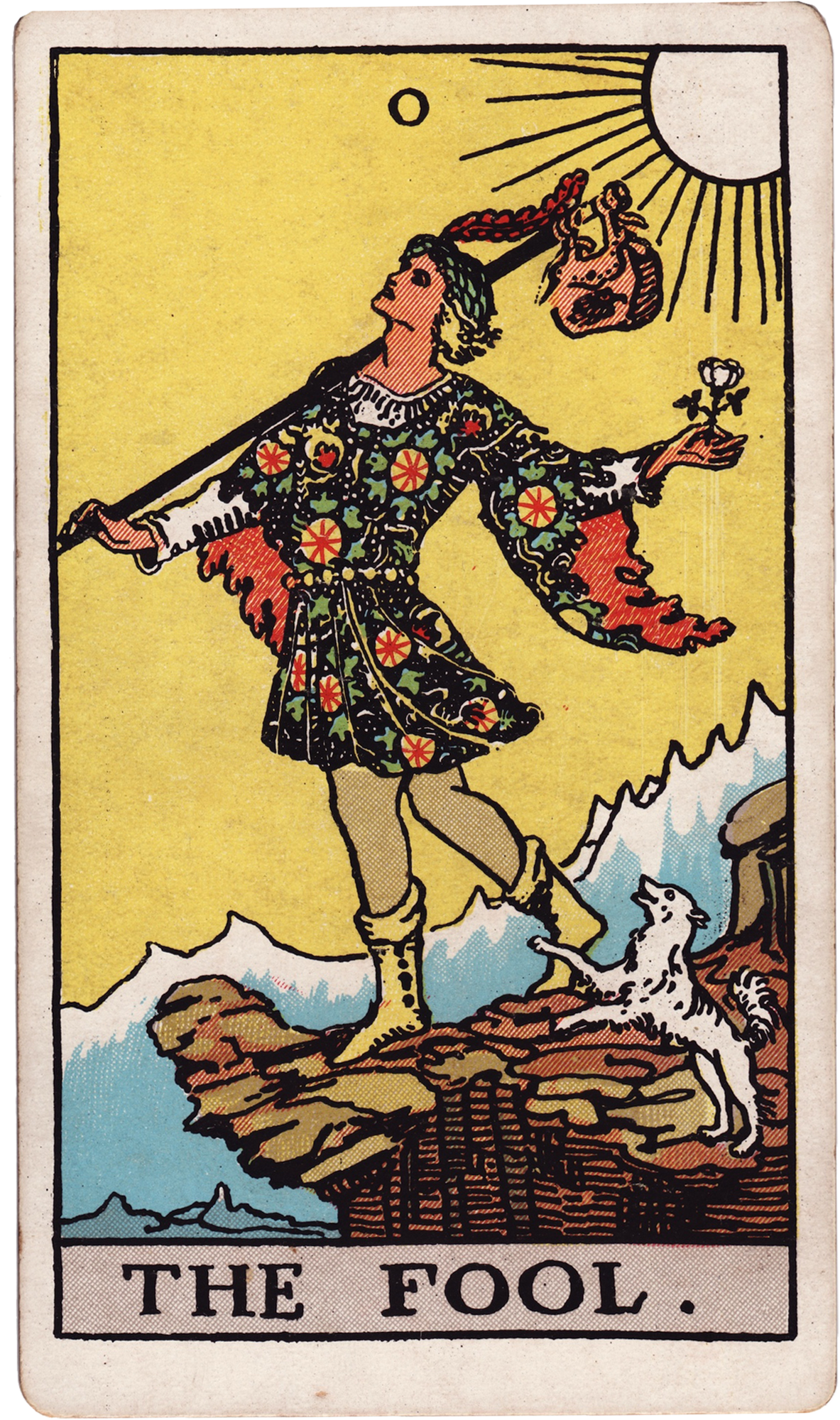 The Fool
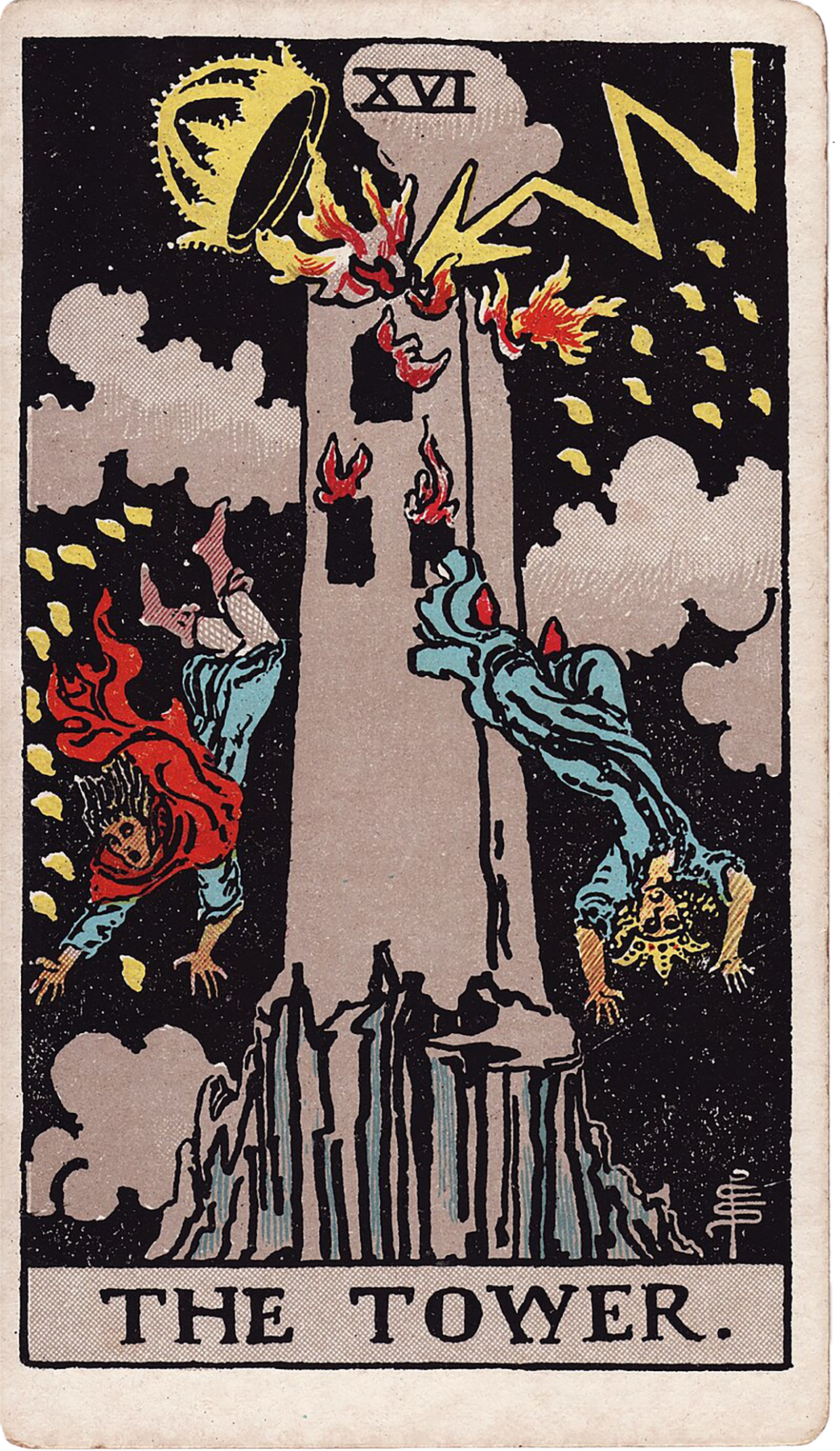 The Tower
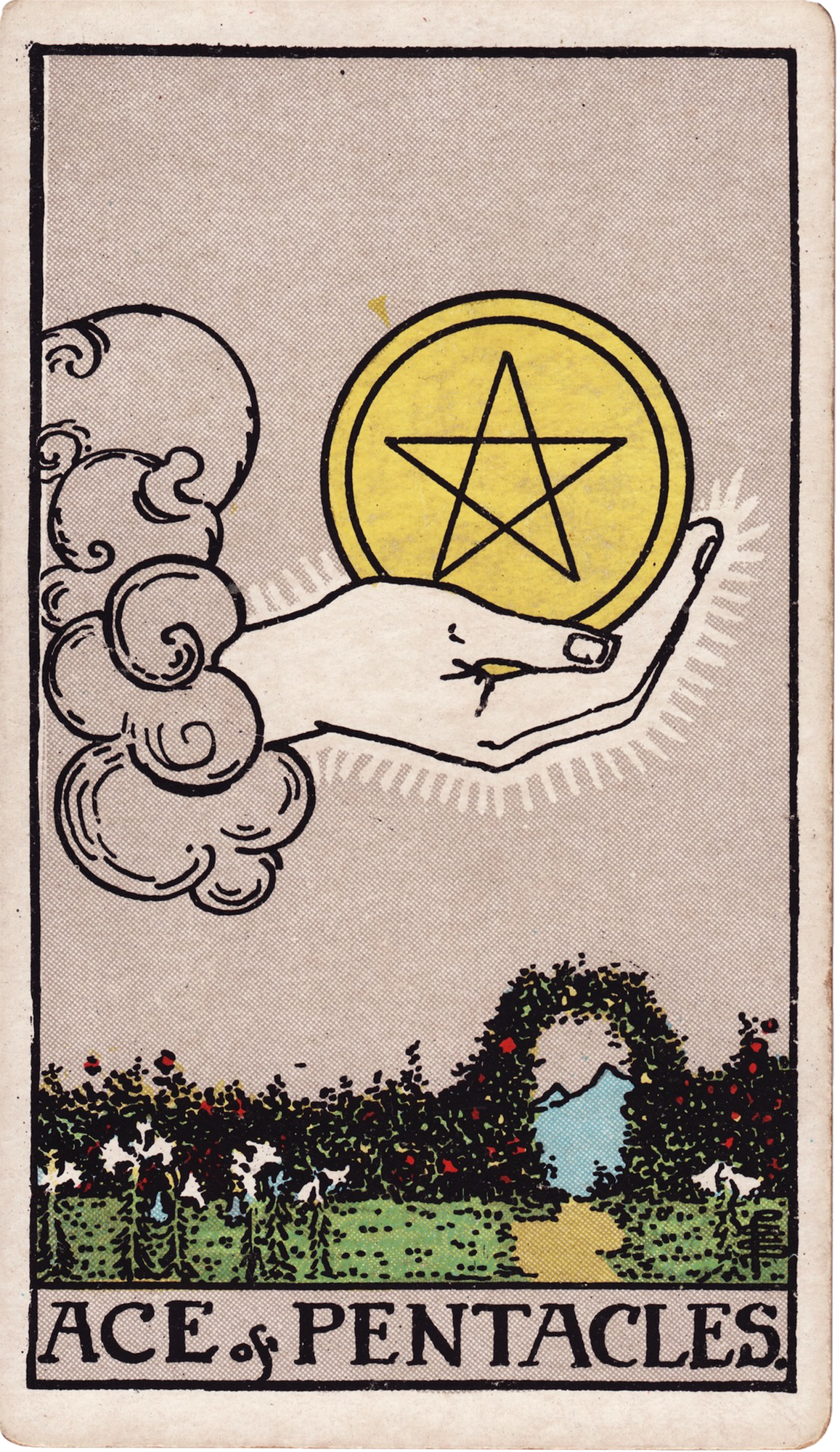 Ace of Pentacles
Why these three cards work together for career reinvention
When the displayed images of The Fool, The Tower, and the Ace of Pentacles appear together in a reading about career reinvention, you have a concentrated triad that maps a transformation arc: a leap of faith (The Fool), a breakdown or sudden truth (The Tower), and a tangible new beginning or resource (Ace of Pentacles). Each card contributes a specific register. The Fool (0) brings initiation, curiosity, and the impulse to begin before certainty is complete; visually note the cliff, the dog, the knapsack, and the white rose — these images speak to risk, companionship or instinct, personal baggage or readiness, and innocence or intention. The Tower (XVI) introduces sudden change, metaphorical lightning, flames, and falling figures and crown; it forces attention to structures that were unstable or illusory. The Ace of Pentacles (1 of Pentacles) provides a practical seed: the hand emerging from the cloud holding the pentacle above a garden or gateway promises material opportunity if cultivated. In career-focused questions this trio can describe an internal decision to change, an external or internal disruption that clears away what was false, and the material opening that becomes available if the seeker shows practical discipline.
Anchoring interpretation in Rider–Waite–Smith imagery
Always begin by looking carefully at the supplied artwork. The Fool's white rose suggests clarity of intention rather than foolish ignorance; the small dog at his heels is often read as instinct, loyalty, or warning; the knapsack on his staff contains what he carries from the past; the cliff is the literal and symbolic edge of the familiar. The Tower's jagged lightning and crown falling communicate sudden truth and the collapse of a false top-down order; the two falling figures remind readers that collapse affects bodies, relationships and identity. The Ace of Pentacles' hand coming from a cloud is a classic RWS image for opportunity presented as an external gift or new resource; the garden gate and path beyond imply potential for cultivation and long-term stability.Treat these visible details as active vocabulary. In a career question, is the dog looking back at the Fool or barking ahead? Is the Tower lightning striking the crown specifically, or the tower's foundation? Does the Ace's garden gate feel guarded or open? Those details will color whether the 'opportunity' is experimental, conditional, guarded, or freely offered.
Reading logic: sequence, fulcrum, and polarity
A three-card combination can be read in several structural ways. Useful approaches are sequence (left-to-right or time-based), fulcrum (center card as pivot), and polarity (pairings and tensions). Sequence: read from The Fool → The Tower → Ace of Pentacles as a story line: a brave or naive beginning, a disrupting event that clears the way, and then a material seed to build on. If the order is different in a spread, adapt the narrative accordingly: Tower → Fool → Ace might mean collapse prompts a daring new start leading to practical opportunity. Fulcrum: when one card is central, treat it as the core dynamic. The Tower in the center often means the reading is about necessary structural change; the Fool and Ace then describe the temperament before and the practical aftermath. Polarity: compare pairings. The Fool + Tower forms a tension between naivety/innocence and unavoidable truth; the Tower + Ace pairs catastrophe and possibility; the Fool + Ace connects daring impulse with tangible resources. Use these frameworks together rather than alone — sequence gives timeline, fulcrum shows central truth, polarity reveals friction or harmony.
Numerology and elemental hints as supporting tools
If you use numerology, notice 0 (The Fool), 16 (The Tower), and 1 (Ace). 0 suggests potential and openness; 16 is an intense breakdown that reduces to raw materials; 1 signifies new beginnings. The arithmetic arc (0 → 16 → 1) visually and symbolically compresses an arc of starting → deconstruction → restart — useful for career reinvention. Elementally, The Fool is often associated with Air or the principle of newness/spirit, The Tower with Fire or sudden change, and the Ace of Pentacles with Earth and material resources. Use those hints cautiously as tonal color rather than deterministic rules: element language helps convey whether the change is primarily mental (Fool/Air), disruptive/urgent (Tower/Fire), or practical and rooted (Ace/Earth).
How the cards modify each other: core interaction patterns
Think of the three cards as verbs rather than static labels. The Fool initiates (leap), The Tower reveals or dismantles (strike), and the Ace of Pentacles offers or grounds (provide/grow). Here are consistent interaction patterns to internalize: 1) The Fool modifies the Ace: when The Fool appears alongside an Ace of Pentacles, the reading often asks whether the seeker is willing to begin using a concrete resource even with uncertainty. Visually, the Fool's knapsack and the Ace's pentacle hand can be read as what the person brings versus what is offered. In career terms this can read as 'take a pragmatic first step into a new line of work using what you already have.' 2) The Tower modifies the Fool: The Tower can act as corrective lightning to The Fool's innocence. If The Fool is upright, and The Tower is upright, the combination can be read as a necessary wake-up: the leap will expose faulty assumptions, or the recklessness must be clarified. 3) The Tower clears the ground for the Ace: when Tower precedes or centers the sequence, its energy can destroy what blocked a material opportunity, revealing the Ace's seed. 4) The Ace stabilizes post-Tower shock: after a Tower moment there is often a need to focus on the practical. The Ace reminds the querent to identify the concrete step (a job lead, a funded pilot, a course) rather than stay in drama. 5) Reversal interplay: a reversed Ace can indicate missed opportunity; combined with an upright Fool and Tower it might suggest the seeker jumped too soon and then experienced avoidable collapse — the path to reinvention requires re-establishing foundations. Always read how one card tones down or intensifies another.
Career reinvention narratives and permutations
Below are common narrative patterns you will meet when these three cards show up in career readings. Read them as archetypal examples you can adapt to details in the querent's life. Pattern A — The Fool (upright) → The Tower (upright) → Ace of Pentacles (upright): A bold, curious decision to change (quitting, reskilling, starting a business) uncovers a painful but necessary truth (a burned contract, financial mismatch, or collapsed idea). The collapse is not the end; it clears disillusionment and reveals a new, practical opening. The advice: treat the Tower as information, not punishment. Use the Ace to plant small, disciplined steps: identify the one resource, connection, or prototype to nurture. Pattern B — The Tower (upright) → The Fool (upright) → Ace of Pentacles (upright): A crisis or sudden job loss creates opportunity; the seeker now has permission to experiment. The Fool's energy is healthy because the Tower removed an old structure. The Ace promises that one practical doorway exists — focus on training, network, or small funding that converts the experiment into a livelihood. Pattern C — The Fool (reversed) → Tower (upright) → Ace (upright): Reckless or avoidance-driven impulses create a vulnerability; the Tower's shock corrects over-optimism and forces accountability. The Ace then becomes available, but only if the seeker accepts responsibility and retools. Pattern D — Ace (reversed) with either The Fool or The Tower present: A reversed Ace warns of missed materialization. With The Fool upright and Ace reversed, the seeker may be acting on impulse without infrastructure; practical planning is required. With The Tower present and Ace reversed, the collapse may have yielded an opening that is currently blocked by scarcity thinking or poor planning; the reading invites simplification, not panic. Pattern E — All three upright but arranged with Ace first: Ace → Fool → Tower as a warning sequence might say: a tempting material offer arrives, you leap into novelty without checking structure, and a collapse follows. The reading's lesson is to test the Ace's conditions carefully before acting. In every pattern pay attention to whether the Fool's movement is brave or avoidant (use the supplied upright/reversed text), whether The Tower is a release or a punishment, and whether the Ace is a seed or a mirage.
Emotional, relationship, and practical contexts: what changes look like
Career reinvention does not happen in a vacuum. Use the cards to map collateral consequences. Emotional context: The Fool plus Tower often reflects an identity shift: the seeker must alter how they imagine themselves. The Fool's white rose and the falling figures from the Tower teach that identity and ego can be stripped as part of the process. Counsel clients to anticipate grief for the former self and curiosity for the next. Relationship context: The Fool's dog and The Tower's falling figures are visual cues about companions: who supports the leap and who is impacted by collapse? If the Ace of Pentacles appears, it may indicate a partner or network resource that can be mobilized (a collaborator, a sponsor, a client). Discuss with the querent how their reinvention will change household finances, time, or role-sharing. Practical context: Use the Ace's earthy promise to form a concrete plan: what is the first invoice, prototype, certification, or meeting? If The Tower is present, plan for a contingency fund or a temporary downshift to absorb shocks. Anchoring practical next steps to images — for instance, naming the Ace as the 'seed fund' — makes the reading actionable.
Step-by-step practical reading method
1) Clarify the question: Ask specifically whether the querent asks about timing, strategy, risk, or identity. 2) Assign positions: Decide whether the three cards will map past-present-future, challenge-action-outcome, or external-internal-advice. 3) Study the images: Spend time with each supplied image. Note directionality, gestures, weather, and small objects (the Fool's flower and knapsack, the Tower's crown, the Ace's garden gate). 4) Build a story using sequence + fulcrum: Read left-to-right for a timeline or set the middle card as the pivot. 5) Translate symbolism into verbs and tasks: The Fool = begin, scout, test; The Tower = tell truth, remove illusion, accept collapse; Ace of Pentacles = plant, apply, budget, propose. 6) Check polarity: Ask what each card is asking the querent to add and what it asks them to remove. 7) Offer two practical next steps: one small and immediate (micro-action tied to the Ace) and one structural or emotional (process work related to the Tower or Fool). 8) Use clarifiers if needed: Ask for a supporting card to clarify timing, resources, or outcome. 9) Summarize as a short narrative and a checklist: this keeps readings practical rather than fatalistic.
Examples of concise readings and interpretive language
Example 1 (left-to-right): The Fool (upright) → The Tower (upright) → Ace of Pentacles (upright). Language: 'You're poised to begin and curiosity is a strength, but be ready for a necessary shake-up that will show what was unsound. That shake-up clears the way for a concrete opening — a client, a funded trial, or a stable freelance niche — but only if you treat it as a seed that needs practical tending.' Next steps: draft a minimal viable offer; create a three-month contingency plan. Example 2 (center as fulcrum): The Tower (center) with The Fool (left) and Ace (right). Language: 'The central issue is structural: something that looked stable will not hold. Your earlier impulse to leap is visible, and now you have the chance to convert loss into a pragmatic project.' Next steps: inventory skills, identify one immediate resource from your network that maps to the Ace. Example 3 (Ace reversed): The Fool upright + Tower upright + Ace reversed. Language: 'Your impulsive move and the disruption have left a window, but the opportunity is not yet materializing — perhaps a funding source fell through or planning is incomplete. Don't force a quick fix; simplify and rebuild the foundation.' Next steps: rework the business model or ask for clear terms before committing. In all examples anchor statements to image details: 'the pentacle in the Ace is a seed — what in your life feels like a seed you can tend?'
Common mistakes and how to avoid them
Mistake 1 — Treating The Tower only as disaster: Many learners read The Tower as purely disastrous. Instead, reframe it as necessary demolition. When The Tower appears, ask: what false assumption is now visible? Mistake 2 — Using The Fool as carte blanche for risk: The Fool is not permission to be reckless. If The Fool is reversed or if the Ace is reversed, the reading requires planning. Mistake 3 — Reading each card in isolation: Resist the impulse to give three separate one-card mini-readings. Instead, tell the dynamic story. Mistake 4 — Overlooking imagery detail: The dog, the fallen crown, the garden gate are interpretive keys. Point them out aloud during a reading. Mistake 5 — Treating reversals as moral judgments: Reversed cards show a blocked or private process. Ask clarifying questions rather than assuming a reversal means failure. Avoid jargon-heavy answers; make the reading translate into practical behavior for the querent.
Practice exercises and suggested spreads
Exercise 1 — Timeline practice: Shuffle and lay these three cards in all six possible orders. For each ordering write a one-sentence headline and a two-step practical plan. Notice how meaning shifts. Exercise 2 — Role-shift: For each arrangement, answer three questions from three vantage points: a) the querent (what they must do), b) a skeptical friend (best precaution), c) a supporter (concrete encouragement). Exercise 3 — Image-detail drill: Spend five minutes describing only the visual details and then translate those images into career actions. Suggested spread: Use a three-position spread mapped as 'Impulse / Necessary Change / Practical Seed' and always end by asking the querent, 'what of this can you begin tomorrow?' This enforces the Ace's practical call to action.
Closing guidance on ethical and learner-minded practice
As a learner, hold the reading lightly. These three cards together ask you to balance curiosity with practical care and to reframe shocks as clarifying information. When practicing with clients, emphasize agency: the cards describe potentials and processes, not immutable fate. Anchor your language in the images: name the cliff, the lightning, the pentacle. Convert symbolic language into concrete tasks (budget, prototype, conversation, resume update) so the querent leaves with both insight and action. Finally, cultivate patience: the Ace of Pentacles rarely instantaneously produces security; it marks the first usable resource that becomes valuable through consistent, earthbound work.
Practice questions
• When you look at the supplied images, which visual detail feels most relevant to your current career question and why?
• If The Tower represents something in your current professional life that must fall, what practical steps (Ace-style) would help you recover?
• How does The Fool's impulse show up in your decision-making: as curiosity, avoidance, or bravado? What would a balanced version look like?
• If you were to create a three-step plan grounded in the Ace of Pentacles' promise, what would the immediate next step be and what would you do to protect it from a Tower-like shock?
• Which pairing from the three cards (Fool+Tower, Tower+Ace, Fool+Ace) gives you the clearest piece of guidance right now, and how will you act on it?
Comments
Sign in to comment.
Continue learning
Interpreting the Dance of Justice and The Devil: Balancing Morality and Temptation in Tarot Readings
The combination of Justice and The Devil in tarot presents a profound exploration of morality, temptation, and personal accountability. This article unpacks how these cards influen...
Harnessing the Power of The Magician and Ace of Wands: Igniting Creativity and Manifestation in Tarot Readings
The combination of The Magician and the Ace of Wands in tarot readings offers a potent blend of creative energy and manifestation power. This article delves into the ways these car...
Understanding the Synergy Between The Empress and The Emperor in Tarot Card Combinations
This article delves into the intricate synergy between The Empress and The Emperor cards in Tarot, focusing on how their combined energies modify and enrich readings across various...
Decoding Transformation and Renewal with Death and The Star in Tarot Combinations
This article delves into the card combination of Death and The Star, two powerful Major Arcana cards from the Rider-Waite-Smith deck. It explores how their imagery and meanings int...
Balancing Ambition and Compassion with The Emperor and Queen of Cups in Tarot Combinations
This article delves into the nuanced Tarot card combination of The Emperor and Queen of Cups, emphasizing how their energies complement and challenge each other. By analyzing their...
Finding Emotional Healing and Renewal with The Star and The Moon Tarot Combination
This article examines the rich interplay between The Star and The Moon tarot cards when they appear together in a reading. Using the traditional Rider-Waite-Smith symbolism and the...
Unlocking Emotional Wisdom with The High Priestess and The Queen of Cups in Tarot Combinations
This article delves into the card combination of The High Priestess and The Queen of Cups, emphasizing their shared themes of intuition, emotional depth, and receptivity. By examin...
Unlocking Emotional Resilience with Strength and The Star in Tarot Combinations
This article delves into the Tarot card combination of Strength and The Star, revealing how their interplay highlights pathways to emotional resilience. Anchored in the Rider-Waite...
Unveiling Emotional Strength with Strength and The Queen of Cups in Tarot Combinations
This article delves into the dynamic Tarot combination of Strength and The Queen of Cups, emphasizing how these cards together illuminate emotional strength, compassionate boundari...
Unlocking Emotional Transformation with Death and The Moon Tarot Combination
This article explores the rich and complex interaction between the Death and The Moon tarot cards within the Rider-Waite-Smith tradition, focusing on their combined potential to un...