
Interpreting Water Crossings in Tarot Rivers Boats and Departure
Water crossings—boats, ferries, riverbanks, and moonlit passages—are recurring, potent images in Rider‑Waite‑Smith based tarot practice. This article teaches learners how to read those images concretely and ethically using three supplied cards: The Moon, 8 of Cups, and 6 of Swords. It explains what to notice in the scene (water, vessel, passengers, direction, sky), how suit energy (Cups and Swords) changes the meaning of crossing, step‑by‑step technique for a three‑card 'Crossing Spread', common mistakes to avoid, and worked examples that combine upright and reversed states. Throughout, the teaching anchors to the imagery of the supplied cards so readers can practice directly with the displayed images.
Cards explored in this article
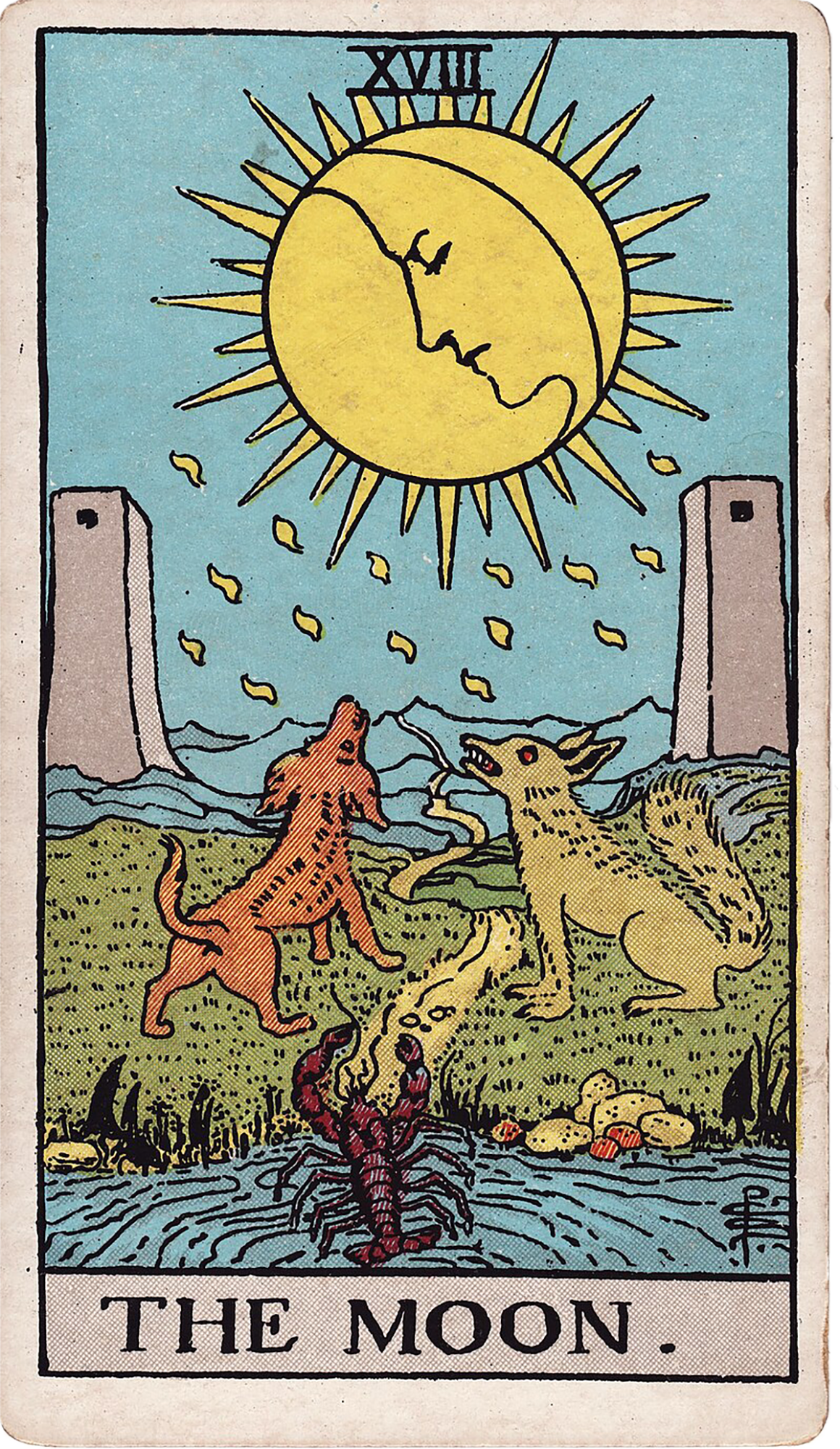 The Moon
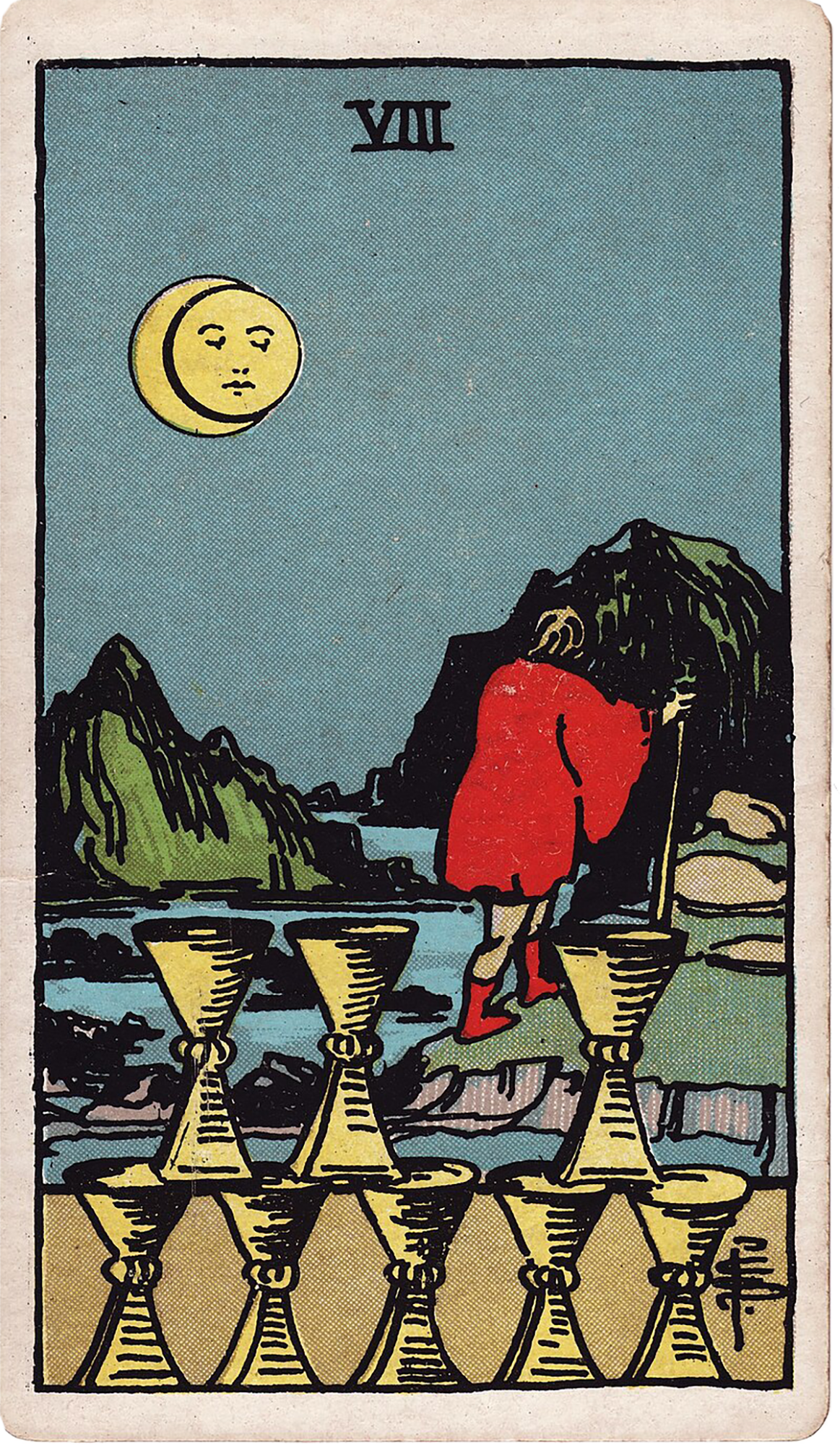 8 of Cups
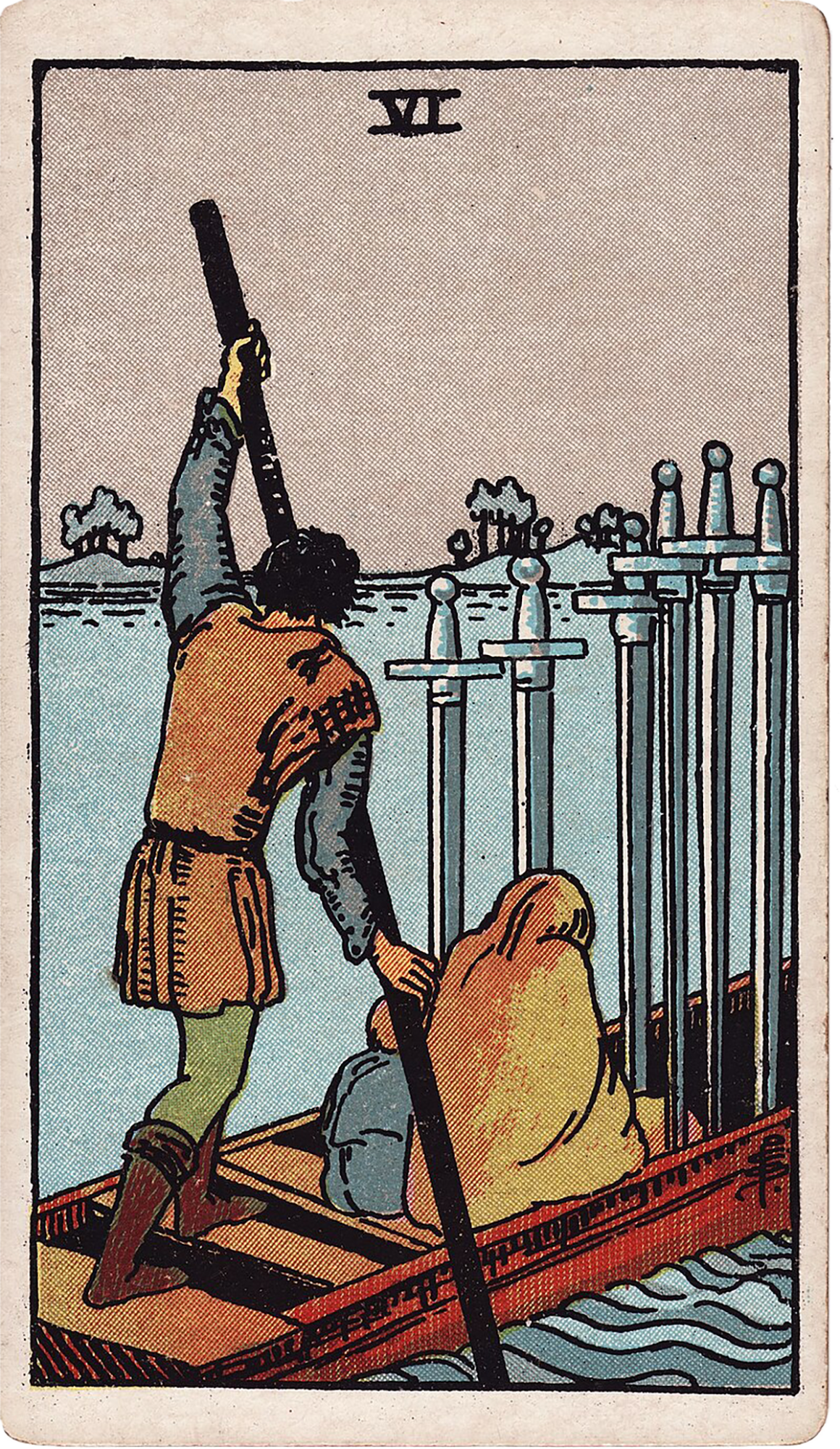 6 of Swords
Introduction: Why crossings matter in symbolism studies
Crossings—moving from one shore to another—are archetypal. In tarot, a boat, a river, or a road along the water often signals liminality: a passage between states. These images compress narrative and affect: motion plus an element (water) tied to emotion, the unconscious, and fluid conditions. In Rider‑Waite‑Smith imagery, crossings are rarely magical 'teleports'; they are processes that involve choice, support, and sometimes loss. Learning to read crossings teaches a student to move from label‑based readings to image‑based synthesis. This article uses three supplied cards—The Moon, 8 of Cups, and 6 of Swords—to show how to translate visual detail into practical interpretation and ethical guidance for querents. Each card will be described with attention to the exact imagery and the upright/reversed instructional cues supplied for practice.
Core visual vocabulary: what to notice in any crossing scene
Before interpreting, equip yourself with a checklist of visual cues and their symbolic tendencies. Work through the scene slowly and deliberately. - Water: Is it calm, choppy, dark, reflective, shallow, or open sea? Calm water often signals safe transition; turbulent water indicates ongoing emotional disturbance or risk. - Vessel: Intact or damaged? Small or large? A sturdy boat suggests resources and support for travel; a fragile vessel warns of vulnerability. - Passengers: Who is on board? A solitary traveler implies a personal inner journey; multiple people suggest shared transition or responsibility. Notice posture and cloaks: bowed heads, forward motion, and protective garments convey grief, resolve, or guardedness. - Objects in the boat: Weapons, tools, or items from a suit are meaningful. Swords in a boat bring intellectual or communicative content into the move; Cups carried away emphasize emotional motives and the handling of feeling. - Direction and shores: Are figures moving toward a distant bright shore or away from a crowded shoreline? The destination’s appearance (clear, misty, mountainous) gives clues about outcomes and obstacles. - Sky and light sources: Moonlight, sun, storms, or clear skies change the tone. The Moon implies indirect light—intuition, shadowed perception, and cycles—while clear daylight gives literal clarity. When you practice, narrate these details aloud or in writing before naming meanings. Let the image tell you a few descriptive sentences, then map those descriptors onto symbolic correspondences.
Reading The Moon image and its crossing implications
Refer to the supplied card image of The Moon and its provided contextual notes while reading. The traditional Rider‑Waite‑Smith Moon shows a full moon between two towers, a path leading from water into distance, a dog and a wolf howling, and a crustacean (a lobster or crayfish) emerging from a pool. The Moon governs nights, instinct, projection, and the materialization of the unconscious. Visual anchors to use: - The path from water into the distance: A path implies a route through uncertainty. When this path appears in a crossing context it signals that the waters you cross are connected to an inner route—intuition must be attended to; progress may be measured rather than instantaneous. - The crustacean emerging: This suggests the origin of an impulse, often primitive or preconscious material surfacing as a reason to cross. It can be a desire, fear, or remembered need that begins the movement. - The dog and wolf: The tension between tame and wild instinct reminds you to distinguish domesticated response patterns from primal drives. In a reading about departure, ask which voice is steering the decision. - Moonlight: Diffuse and deceptive light. Recognize that perceived direction might be unstable; landmarks can be illusions. Interpretive logic using the supplied upright/reversed cues: - Upright The Moon: Emphasize moving carefully through uncertainty and respecting dreams and intuition while checking projections against reality. In crossing readings, The Moon encourages testing small steps and noticing what is real vs imagined before committing to a permanent departure. - Reversed The Moon: Often points to confusion beginning to clear or to hiding from intuition. For a crossing, reversal may indicate that the querent is starting to see the illusion and could retrace steps to check facts—or that their internal signal is being ignored, leaving them at risk of moving for reasons that are not genuinely theirs. Practice prompt: Lay The Moon beside a crossing card and ask: which part of the path is visible? What is the crustacean trying to tell the querent? Are they being led by fear or by a necessary call?
Reading 8 of Cups and its emotional geography
Use the displayed 8 of Cups image: a cloaked solitary figure walking away from a neatly stacked set of cups under a moonlit sky toward higher ground. The RWS 8 of Cups is classically about leaving something emotionally meaningful that no longer satisfies. Image details to amplify meaning: - The stacked cups: They are intact and arranged — this signals that the object of leaving is not necessarily broken or lost; it has had value. The decision to leave is about sufficiency rather than worthlessness. - The cloaked walker: Cloaks suggest privacy, gravity, and deliberation. The figure often looks away from the cups, implying resolve or resignation and an inward turn. - The moon above: When combined with The Moon card in a reading, shared lunar imagery intensifies the theme of intuition, cycles, and shadow work affecting the decision. Interpretive logic from the supplied notes: - Upright 8 of Cups: Focus on initiating a search for deeper meaning and matching action to present stage. In crossing terms, this card commonly represents the moment of departure: the traveler leaves emotional ties to seek a more congruent life. It asks the reader to name what 'deeper meaning' looks like and what next deliberate step fits the querent’s current capacity. - Reversed 8 of Cups: Points to fear of leaving, returning, or drifting—internalized processes that prevent healthy departures. When reversed in a crossing, consider whether the querent is abandoning prematurely or clinging too tightly to comfort. Practice prompt: With 8 of Cups present, ask the querent which cups they are leaving and whether any are being carried within (unspoken attachments). Observe whether the departure is quiet and solitary (internal process) or potentially visible to others (public break).
Reading 6 of Swords and the mechanics of transition
The supplied 6 of Swords RWS image depicts a small boat carrying a cloaked figure and a child across calm water toward a lighter shore. Swords stand in the boat, pointing forward. This card centers on movement away from difficulty toward relative calm, often with lingering sadness. Key visual elements and their signals: - The boat and ferryman‑like quality: A boat suggests the need for conveyance—help, escort, or a decision to use intellect to manage emotion. The presence of multiple people often indicates shared responsibility or that the transition affects dependents. - Swords in the boat: Swords represent thought, communication, and decisions. Their presence in the boat implies that ideas, plans, or conflicts travel with the querent; the problem is not left behind entirely. - Distant shore: The shore appears safer and brighter; however, the relative distance signals that healing or resolution is gradual. Interpretive logic using the provided upright/reversed framing: - Upright 6 of Swords: Signals necessary movement away from difficulty where sadness may remain. It asks for appropriate mental and communicative skills. In crossing readings, this card is about practical passages arranged with thought and strategy—moving to a place where one can process pain more safely. - Reversed 6 of Swords: Draws attention to stalled movement, carrying unresolved issues into new environments, or returning to old conflict. In a crossing context this warns that the boat may be heading in circles or that passengers are not ready for arrival. Practice prompt: With 6 of Swords present, explore who is in the boat and whether the swords are being used constructively. Ask how the querent will carry necessary knowledge without letting the swords dominate the new shore.
Combining the three cards: synthesis and example readings
These three cards form a compact symbolic grammar for crossings: The Moon names the light and interior map, 8 of Cups names the emotional decision to depart, and 6 of Swords names the practical passage. Below are reading patterns learners can practice by arranging the supplied images in different orientations and positions. Technique for synthesis: 1. Anchor each card to its visual question: The Moon = 'What is unseen or guiding?', 8 of Cups = 'What is being left?', 6 of Swords = 'How is the movement arranged?' 2. Layer upright/reversed notes: Use the supplied upright/reversed cues for tone and possible blockages. 3. Test consistency: Ask whether emotional motive (Cups) and intellectual plan (Swords) are aligned or in tension, and whether The Moon’s light clarifies or obscures the motive. Worked examples: Example A — The Moon upright, 8 of Cups upright, 6 of Swords upright: - Reading: An intuition‑led, necessary emotional departure is underway and a practical passage has been arranged. The Moon tells you to keep moving carefully; the 8 of Cups confirms the leave is for deeper meaning rather than escape; 6 of Swords shows support for the journey but acknowledges lingering sorrow. Counsel: take measured steps the size you can hold, keep checking facts, and plan for ongoing emotional processing on arrival. Example B — The Moon reversed, 8 of Cups reversed, 6 of Swords reversed: - Reading: Confusion is beginning to clear, but fear of leaving and stalled transition are present. The querent might be recognizing illusions but remains stuck emotionally and practically. Counsel: clarify what is genuinely needed (not what panic or fantasy suggests), seek small experiments to test departure, and address unresolved issues before crossing so they don’t travel into the new life. Example C — The Moon upright, 8 of Cups reversed, 6 of Swords upright: - Reading: Intuition signals a need for change, and practical arrangements for movement are possible, but emotional reluctance is present. The querent may be logically ready but emotionally hesitant. Counsel: create a bridge between motivation and feeling—rituals, conversations, or concrete agreements that honor the attachment being left. Practice assignment: Pull these three cards in the order Arrival/Departure/Passage and write three short narratives (50–100 words each) describing the scene before naming the reading advice. This trains you to stay image‑first.
Practical three‑card Crossing Spread and step‑by‑step reading method
Use this simple, repeatable spread to practice applying the visual grammar with the supplied cards. Layout: left card = Departure (why leave?), middle card = Passage (how to cross?), right card = Arrival (what waits?). Place The Moon, 8 of Cups, and 6 of Swords into those positions in whatever order they appear (the student must interpret them where they fell). Reading steps: 1. Describe each card visually without naming meanings: who, what, where, and what the light is doing. 2. Add suit and celestial language: identify Cups energy (emotion, memory), Swords energy (thought, plan), and lunar influence (instinct, illusion). 3. Read upright/reversed as modifiers—not verdicts. Use the supplied upright/reversed notes to add practical cues (e.g., The Moon upright → move carefully; reversed → clarification emerging). 4. Synthesize center‑out: use the Passage card (middle) to judge logistics, then reconcile Departure (left) motive with Arrival (right) consequence. 5. Create an action step: one micro step (what the querent can do this week) and one boundary or question to hold (what not to do). Example micro‑step assembly using supplied cards (if 8 of Cups is Departure, 6 of Swords Passage, The Moon Arrival): micro‑step = inventory feelings you will carry; boundary = do not assume the destination will heal everything; question = which fear belongs to the past and which is an indicator of a real risk?
Common mistakes and how to avoid them
Learners often fall into recurring traps when reading crossings. Watch for these and apply the corrective practices below. Mistake 1: Overliteralism - Problem: Treating the boat or shore as a real event rather than symbolic process. - Fix: Always map the visual detail to psychological or situational correspondences. Ask, 'What part of life is being ferried or left behind?' rather than 'Will I travel physically?' Mistake 2: Ignoring suit dynamics - Problem: Reading a crossing as purely emotional without noting Swords’ presence, or vice versa. - Fix: Identify whether Cups are driving the departure (feelings, relationships) or Swords are structuring it (plans, conversations) and let both influence your advice. Mistake 3: Forcing narrative to fit client expectations - Problem: Imposing a story of escape or rescue because it’s comforting. - Fix: Keep to the image first. Use open questions: 'What might you be leaving that you still honor?' 'Who is helping you cross?' Mistake 4: Neglecting reversal nuance - Problem: Treating reversed cards as simply 'bad'. - Fix: Use the supplied reversal cues: reversal often flags process stuckness, internalization, or beginning clarity. Ask where help is needed rather than fear‑mongering. Mistake 5: Missing The Moon’s caution - Problem: Overpromising clarity when The Moon is present. - Fix: When The Moon appears, always include processual recommendations: verify, test with small steps, and track evidence.
Ethical concerns, client questions, and closure
Crossings often involve delicate transitions—separations, relocations, major career changes. Respect the querent’s agency and avoid prescriptive or deterministic language. Ethical practice points: - Offer choices and experiments, not edicts. Encourage the querent to test the waters (literal and metaphorical) rather than leap based solely on a reading. - If a crossing suggests risk, frame advice as harm reduction and resource‑building (safety planning, talk therapy, practical checks). - If a client is in crisis, prioritize immediate safety resources and decline to stage dramatic predictions. Suggested client questions to deepen the reading: - 'What small evidence would show this move feels aligned with your values?' - 'Which two concrete supports could help you cross more safely?' - 'What part of this departure belongs to grief, and what part to growth?' Closure: End crossing readings by naming one manageable action and one question the querent can hold in their journal. This returns the symbolic journey to everyday practice.
Bringing the practice together: drills and continued study
Regular practice builds fluency. Use these drills for the supplied card set and other images that include water. Drill 1 — Image‑First Description - Shuffle and lay The Moon, 8 of Cups, and 6 of Swords in any order. Spend three minutes describing each image out loud without interpretation. Then write a one‑sentence symbolic translation for each. Drill 2 — Opposite Orientation - Read each card once upright, then read it reversed. Compare how the same visual elements feel different when you treat the internal tone as blocked, delayed, or intensified. Drill 3 — Mini‑Narratives - Compose three 75–100 word narratives that connect the images into a single crossing story. Force yourself to include the lobster/crustacean from The Moon, the stacked cups, and the swords in the boat. Then extract practical advice for a querent from each story. Continued study suggestions: - Compare the same crossing motifs in different RWS cards in your deck and note pattern consistencies. (Keep focus on the three supplied cards for this article.) - Read case studies in counseling literature on transitions to deepen psychological parallels. Final note: Crossings are invitations to move with attention. When you combine The Moon’s warning to move carefully, 8 of Cups’ emotional leaving, and 6 of Swords’ practical passage, you have a robust toolkit for readings that respect both imagery and lived consequence.
Practice questions
• When you look at The Moon image, what specific feature (path, towers, crustacean, animals) captures your attention first, and why?
• If you had to describe what the stacked cups represent in one sentence, what would that sentence be?
• How do the swords in the boat change your sense of who is carrying what through the crossing?
• When a card in a crossing is reversed, what concrete signs in the image tell you whether the problem is internalized or externally blocked?
• How would you phrase a single micro‑step for a querent whose spread shows The Moon upright, 8 of Cups upright, and 6 of Swords upright?
• What is one question you can ask a querent to help them distinguish between fear and intuition when The Moon is present?
• Which common mistake listed in the article do you find yourself making, and what practice will you use to correct it?
• After practicing the three‑card Crossing Spread, what pattern emerged about how Cups and Swords interact in transitions?
Comments
Sign in to comment.
Continue learning
Harnessing the Power of The Magician and Ace of Wands: Igniting Creativity and Manifestation in Tarot Readings
The combination of The Magician and the Ace of Wands in tarot readings offers a potent blend of creative energy and manifestation power. This article delves into the ways these car...
Advanced Techniques for Combining The Moon and The Star to Enhance Intuition in Tarot Readings
This article explores advanced techniques to combine the symbolism and energy of The Moon and The Star Tarot cards to enhance intuition during Tarot readings. Drawing from traditio...
Enhancing Clarity in Complex Choices with the Five Card Cross Tarot Spread
The Five Card Cross Tarot Spread is a practical tool designed to clarify complex choices by breaking down the decision into manageable parts. This article explores each position in...
Tracing the Origins and Evolution of The Fool Card in Tarot History
The Fool card holds a foundational place in tarot tradition, symbolizing beginnings, openness, and the embrace of uncertainty. This article traces its origins from early European d...
Understanding The Hermit Card in Solitude Reflection and Guidance
This article offers an in-depth exploration of The Hermit tarot card as a single-card reading in different contexts such as love, career, money, advice, challenge, person, outcome,...
Unlocking the Creative Flow with The Magician and The Empress in Tarot Combinations
This article delves into the powerful synergy between The Magician and The Empress in Tarot combinations, focusing on how their combined symbolism unlocks creative flow across vari...
Using the Seven Card Horseshoe Spread to Uncover Career Growth and Opportunity
This article presents an in-depth guide to the Seven Card Horseshoe Tarot Spread with a focus on career growth and opportunity. Using the cards The Fool, The Magician, The Empress,...
Understanding the Many Facets of The Moon in Emotional and Intuitive Tarot Readings
The Moon card in the Tarot deck embodies themes of intuition, uncertainty, dreams, and emotional complexity. This article offers a comprehensive exploration of The Moon’s upright a...
Unlocking Advanced Intuition Techniques Using The High Priestess The Moon and The Hermit
This article examines advanced intuition development in tarot reading by focusing on The High Priestess, The Moon, and The Hermit cards. It offers practical techniques for beginner...
Mastering Intuition with The High Priestess The Hermit and The Moon in Tarot Readings
This article delves into mastering intuition through three powerful Tarot cards: The High Priestess, The Hermit, and The Moon. It guides readers from beginner to advanced reading t...