
Launching Practical Beginnings with The Fool Ace of Pentacles and Three of Wands
This lesson teaches how to read the trio of The Fool, Ace of Pentacles, and 3 of Wands together as a coherent narrative: an attitude to begin (The Fool), a tangible opportunity to cultivate (Ace of Pentacles), and the early stages of expansion or reach (3 of Wands). Using Rider-Waite-Smith imagery and practical synthesis techniques, learners will practice chaining card meanings, asking useful questions, avoiding one-card simplifications, and giving grounded guidance in relationship, career, and material-project contexts. The article includes step-by-step reading methods, example interpretations, common mistakes, and exercises for practice.
Read the cards together
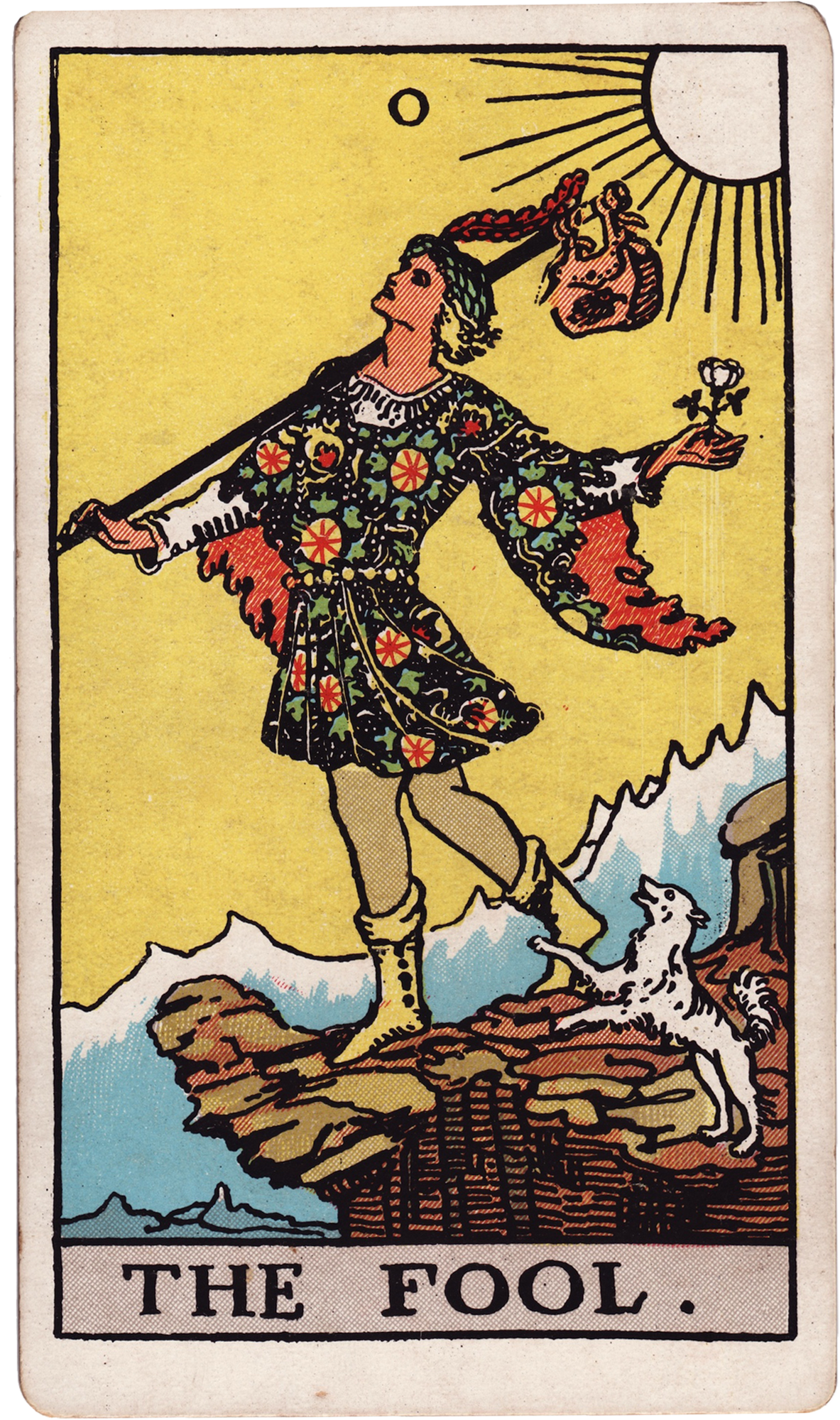 The Fool
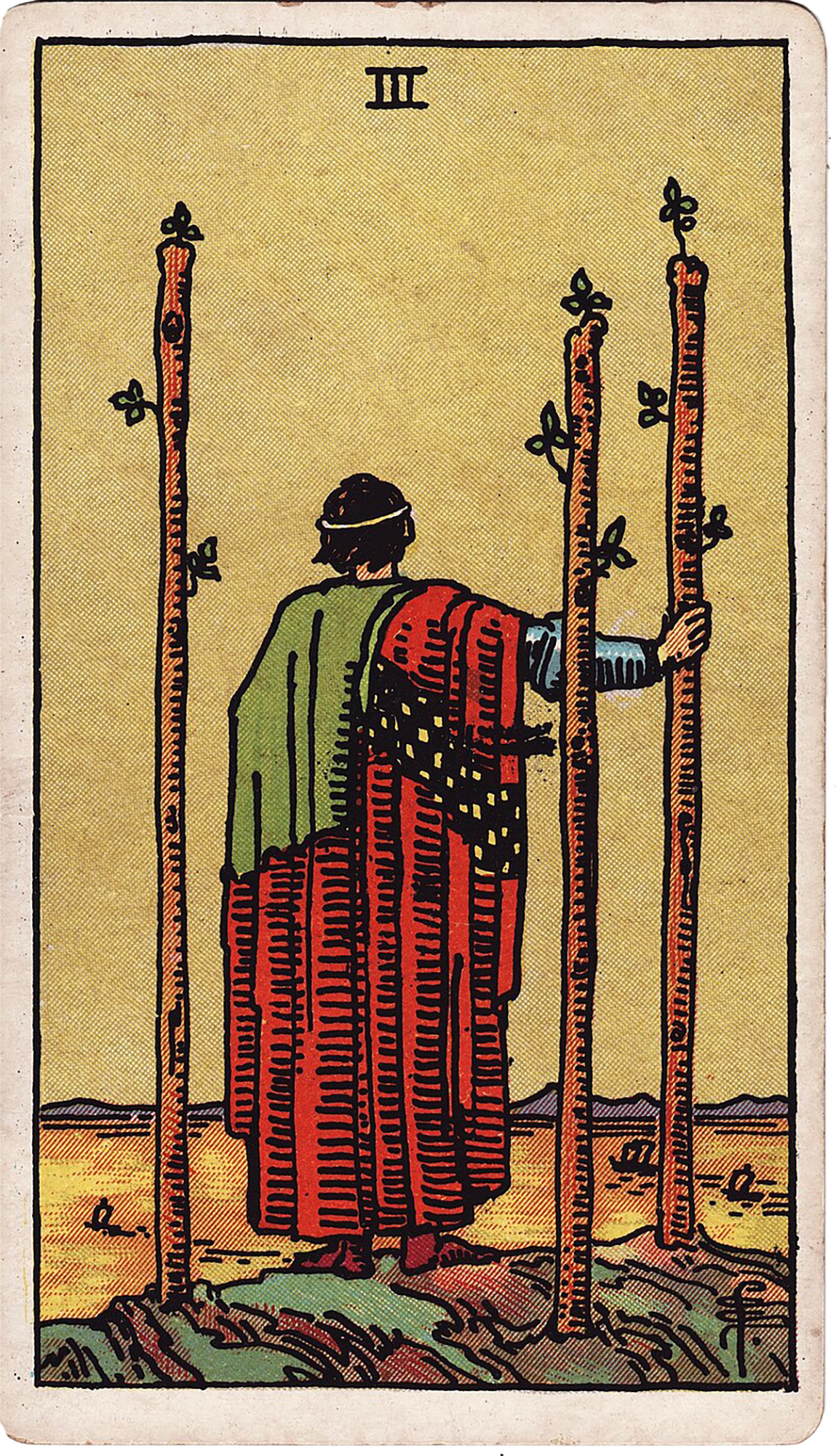 3 of Wands
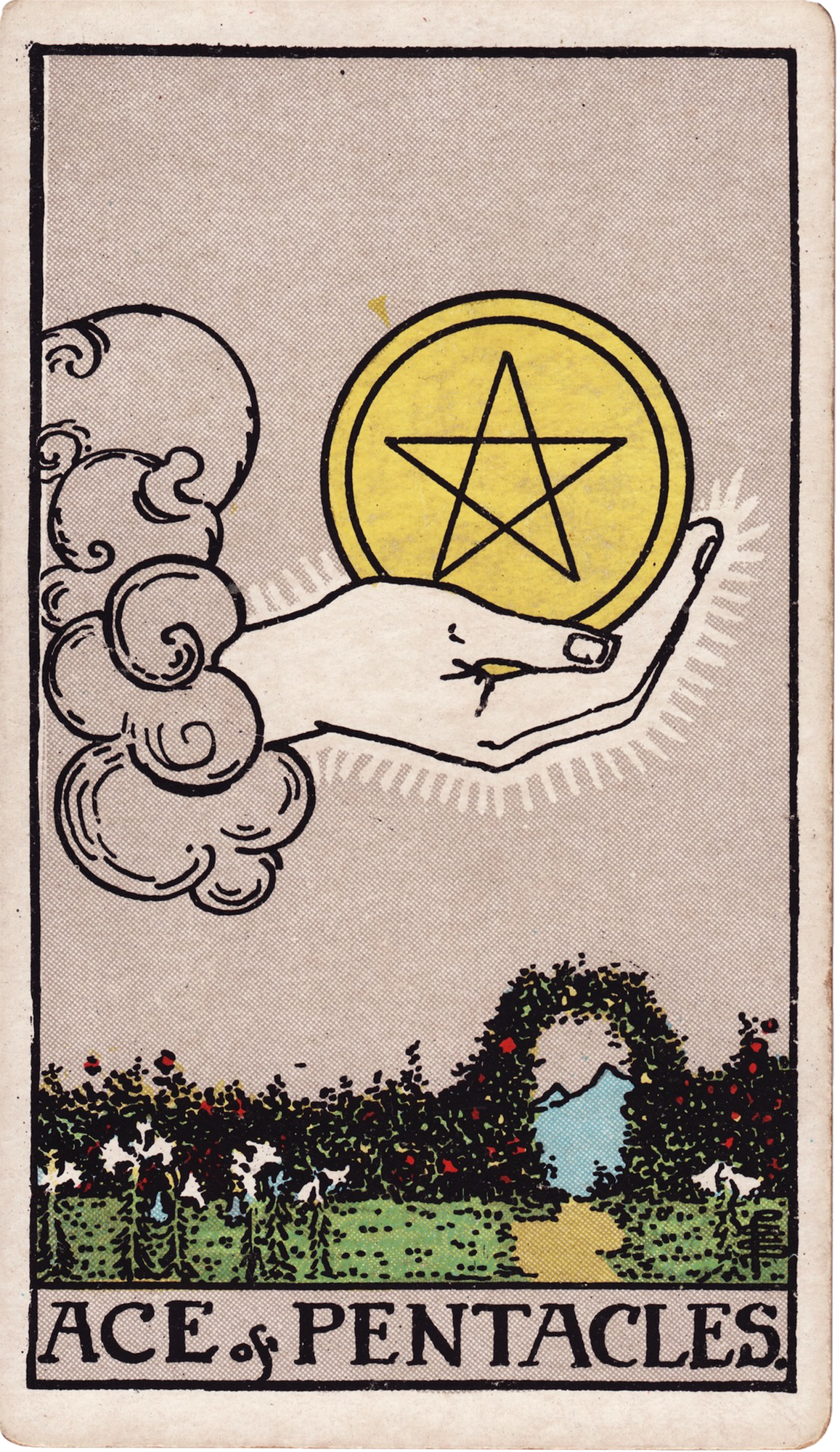 Ace of Pentacles
Introduction: Why this combination matters
When The Fool, Ace of Pentacles, and 3 of Wands appear together they form a classic ‘launch’ story: an orientation to begin, a concrete seed to work with, and the first horizon of outward planning. These three cards together are valuable for learners because they require you to balance imagination and momentum with practical care. Each card is present in the public display and its image provides visual cues you should use during interpretation. Treat this lesson as training in synthesis: not to predict certainty but to translate symbolism into disciplined questions, realistic next steps, and a map of likely dynamics. This article keeps the Rider-Waite-Smith symbolism at the center. Notice the images: The Fool’s lightness and cliff-step, the Ace of Pentacles’ single coin and gardened pathway through a stone arch, and the 3 of Wands’ figure watching ships on a horizon. Those images will be repeatedly referenced because visual detail helps you read the cards as interacting elements rather than isolated keywords.
Visual anchors and symbolic vocabulary
Before synthesizing meanings, anchor yourself in each card’s prominent imagery and what it traditionally signals. The Fool (RWS imagery and cues) - Key images: a youth stepping toward the edge, a small dog, a white rose, a bindle. The landscape is open and light. The Fool symbolizes beginning, trust, potential, curiosity, and the leap into unknown. The white rose stands for purity of intention; the dog is instinct or a faithful companion; the cliff edge emphasizes that beginnings require a decision in the absence of full information. When you look at a spread, ask: where is the querent being invited to leap, and what energy of openness is present or missing? Ace of Pentacles (RWS imagery and cues) - Key images: a single pentacle/coin held by a hand emerging from a cloud, an archway and garden or cultivated path. The Ace represents a material opportunity, a resource offered, or a concrete starting point that can grow with care—money, work, health, tools, or a practical contract. The arch and cultivated land imply potential for cultivation and long-term returns. Ask: what resource is being offered and what does it require to become sustainable? 3 of Wands (RWS imagery and cues) - Key images: a figure standing on a promontory, three staves planted behind them, ships on a wide sea. This card signals perspective, the expansion of a project beyond its point of origin, patience, and initial results that suggest broader possibilities. The watcher’s back turned to us implies planning and forward vision rather than immediate action. Ask: where is the current effort positioned relative to future reach and what preparations are necessary for expansion? Keep these images in mind as you read them together: The Fool’s leap, the Ace’s hand and garden, and the 3 of Wands’ horizon form an image sequence: intention -> resource -> outward reach.
Core combined meaning: a narrative of launching with care
Taken together in a neutral spread, The Fool + Ace of Pentacles + 3 of Wands narrate a practical launching sequence. Basic narrative: The Fool supplies the orientation to begin—the decision to step into something new even though not every detail is known. The Ace of Pentacles supplies a concrete resource or opportunity that can ground The Fool’s openness into something workable. The 3 of Wands points to the first stage of expansion: if the seed is cultivated with attention, the project shows promise beyond the initial scene and will require strategy, patience, and outreach. How they modify one another - The Fool modifies Ace of Pentacles: The Fool colors the way the gift or opportunity is accepted. A querent may accept the Ace with reckless optimism, fearful hesitation, or fresh curiosity. Ask whether the leap is naive or intentionally experimental; The Fool can encourage risk-tolerant trial-and-error that suits an Ace’s early-stage resource. - Ace of Pentacles modifies The Fool: The presence of a tangible resource tempers The Fool’s airy quality. The Ace suggests there is something real at stake—money, time, health, or a contract—so the leap is not simply romantic but has a material anchor. This combination pushes the reader to prioritize practical steps rather than pure idealism. - 3 of Wands as development/outcome: The 3 of Wands shows how The Fool’s initiative and the Ace’s resource might unfold. It asks whether there is perspective and planning to carry the beginning forward. The 3 asks you to consider logistics: communication, timing, partnerships, and whether expansion is premature. In short: The Fool gives permission to begin; the Ace supplies the ground-level resource; the 3 maps an early-stage expansion and the need for planning. The ethical reader frames this as opportunity plus responsibility rather than fate.
Contextual interpretations: relationship, career, and practical projects
This trio adapts well to multiple contexts. Below are contextual readings anchored in the images and conventional meanings; these are for learners, not deterministic predictions. Relationship context - Core reading: A relationship or new relational phase is being invited (The Fool). There may be a concrete sign of commitment, support, or practical arrival—living together, an offer to help, financial or domestic support (Ace of Pentacles). The 3 of Wands suggests this opening could have reach if you plan: meet broader social circles, consider future logistics, or prepare for gradual expansion. - What to watch: The Fool’s cliff warns against entering purely on whim—notice the white rose (intention) and the dog (instinct). Ask whether the Ace’s offer is sustainable and whether both partners have a perspective (3 of Wands) on longer-term logistics like household management, finances, or role expectations. - Practical advice to give: Trials and small experiments (short cohabitation period, shared finances trial), clarify resource responsibilities, and map a 3–6 month horizon to reassess. Career and work context - Core reading: The Fool indicates the querent is ready to start something new—pivot, launch, or take a risk. Ace of Pentacles is a concrete opportunity—job offer, client, seed funding, or a course that confers a real skill. 3 of Wands shows early-stage scaling: if the initial steps are methodical, the project could reach new markets or clients. - What to watch: Discern whether The Fool’s optimism is founded. Examine the Ace’s specifics: contract terms, resource sufficiency, or required capital. 3 of Wands asks you to plan for distribution, partnerships, or market reach. - Practical advice to give: Create a minimal viable structure: timeline, basic budget, one outreach plan (ship metaphor). Prioritize the tasks that extend reach: communication, logistics, and a measurable small launch. Emotional and practical life projects (health, skill, home) - Core reading: An inner readiness to change (The Fool) meets a practical lever—a gym membership, a medical consult, a tool, or a course (Ace of Pentacles). The 3 of Wands suggests measuring initial results and preparing for a sustained routine or broader lifestyle change. - What to watch: The Fool’s tendency to skip essentials; the Ace needs consistent tending. The 3 of Wands asks for patience—expect early signs rather than immediate transformation. - Practical advice to give: Translate enthusiasm into daily habits: specific resource allocation, scheduled follow-ups, and a 4–8 week check-in to evaluate progress.
Upright and reversed dynamics: nuance without alarm
You should discuss upright and reversed positions only where they add nuance. The three-card combination is primarily about interaction; reversals help specify how an energy might be stuck, exaggerated, or delayed. Helpful reversal readings (concise) - The Fool reversed: caution that the querent is avoiding beginning because of fear, or beginning recklessly. With an upright Ace of Pentacles, the reversal can mean the person refuses a solid offer out of fear or idealism. With a reversed Ace, The Fool reversed can point to poor timing—leap before proper resources are in place. - Ace of Pentacles reversed: the opportunity may be missed, poorly planned, or sentimentally misused. If The Fool is upright and the Ace reversed, the reading warns about illusory offers—there’s enthusiasm but the resource lacks follow-through. If 3 of Wands is upright and Ace reversed, expansion is attempted despite shaky foundation; advise consolidation before outreach. - 3 of Wands reversed: delays, overreach, or impatience. If The Fool and Ace are upright but 3 of Wands reversed, the likely issue is follow-through or realistic planning; the project needs simplified tasks and clearer timelines. Synthesis rule of thumb: a reversal shifts how the trio’s narrative operates—where upright cards point to healthy beginnings, reversals point to where the process is blocked or distorted. Always look to which card is reversed to identify the phase that is stuck: initiation (The Fool), grounding/resource (Ace), or expansion/planning (3 of Wands).
Avoiding one-card-at-a-time errors and building a narrative
One common mistake is treating each card as a discrete, standalone answer. The cards are meant to speak to one another. Here are methods to synthesize them into a coherent narrative rather than three separate sentences. 1) Directional chaining - Read the cards in sequence as movement: Attitude (The Fool) → Resource (Ace of Pentacles) → Reach (3 of Wands). Ask: how does the first card change the second, and how does the second enable or constrain the third? 2) Image integration - Use imagery as connective tissue. The Fool’s cliff suggests a decision point; the Ace’s arch invites gates and cultivation; the 3 of Wands’ ships ask about distribution. Mentally draw a path from the cliff down into the garden and out toward the sea: what steps cover that path? 3) Role assignment - Assign roles: who/what is initiating (The Fool), what is the tool/resource (Ace), what is the scale/plan (3 of Wands). This prevents overloading a single card with all meaning. 4) Tension identification - Identify tensions: optimism vs. grounding (Fool vs. Ace), ambition vs. preparation (3 of Wands vs. Ace). Name the tension in your reading and offer concrete ways to reduce it (budgeting, practice, communication). 5) Questions, not verdicts - Teach querents that the combination maps possibilities and next actions. Use questions such as: What one small test would honor both curiosity and resource? What logistical small-step moves the project toward the horizon?
Practical reading method: step-by-step technique for this combination
Use this reproducible method when these cards appear together. It keeps your interpretation practical and learner-focused. Step 1 — Visual scan (1–2 minutes) - Look at each card image. Note the dominant colors, gestures, and symbols: The Fool’s posture and dog, Ace of Pentacles’ hand and archway, 3 of Wands’ ships and horizon. Jot three image-words for each card. Step 2 — Label the function of each card in the querent’s life stage - The Fool = orientation/intent. Ace of Pentacles = resource/opportunity. 3 of Wands = initial expansion/scale. Step 3 — Map the tensions and supports - Write one line: “What supports the leap?” (Ace) and “What must be planned for growth?” (3 of Wands). If a card is reversed, label the blocked phase. Step 4 — Ask focused practical questions - Sample questions: What small, low-cost experiment honors The Fool’s curiosity and uses the Ace’s resource? Who or what must be contacted to move beyond the initial stage (3 of Wands’ ships)? Step 5 — Give a 3-step action plan - Concrete, time-bound, and measurable. Example: 1) Accept or verify the Ace resource (confirm contract/inspect funds) within 7 days; 2) Run a two-week pilot that tests one variable with The Fool’s experimental spirit; 3) Set outreach and logistics tasks for the 3 of Wands phase—one contact, one logistics check, one timeline item—scheduled within 3–6 weeks. Step 6 — Follow-up checkpoints - Suggest a 4–8 week review to reconcile The Fool’s lessons with the Ace’s requirements and 3 of Wands’ planning. Keep the language nonjudgmental: “Observe what changed” rather than “succeed/fail.”
Worked examples
Example 1 — Career pivot (upright trio) - Situation: Querent wants to leave a secure job to start a small freelance practice. - Reading: The Fool says the querent is ready to begin and has the courage to try. Ace of Pentacles shows an initial client or small contract—real money on the table that can seed the practice. 3 of Wands indicates early potential for referral or expansion beyond the immediate client if logistics and outreach are in place. - Practical plan: sign a limited contract (Ace) that allows a flexible trial (Fool), allocate a small buffer fund, and prepare one outreach step (3 of Wands)—create a simple website or one networking email within two weeks. Schedule a 6-week review. Example 2 — Relationship cohabitation (Fool reversed; Ace upright; 3 reversed) - Situation: A partner wants to move in, but the querent hesitates. - Reading: The Fool reversed shows hesitation or fear of leaping. Ace upright indicates a practical offer—shared rent or financial support. 3 of Wands reversed warns that expansion might be rushed without basic planning (roles, finances, boundaries). - Practical plan: propose a trial period (concrete dates), write down shared expenses and responsibilities, and delay any permanent decisions until the trial’s end. Use the Ace to focus on resource allocation and the 3 reversed as a signal to slow down and clarify logistics. Example 3 — Health project (Ace reversed; Fool upright; 3 upright) - Situation: Querent is excited about a new health program but resources are tight. - Reading: The Fool upright offers enthusiasm; Ace reversed signals the practical support is shaky or the chosen program may not be the right fit financially. 3 of Wands upright suggests that with the right adjustments the program could scale—but first, resources must be reconfigured. - Practical plan: identify lower-cost ways to trial the program (shorter membership, community classes), secure one tangible support (free consultation or used equipment), and map incremental goals for expansion.
Common mistakes and troubleshooting
Mistake 1 — Over-optimism without resource reality - Fix: Always treat the Ace of Pentacles as a question of sufficiency. Ask: does the resource cover the next 4–8 weeks? If not, adjust scope. Mistake 2 — Treating The Fool as irresponsible or ‘good’ only - Fix: The Fool is an orientation. Use it to design low-risk experiments, not to justify ignoring contracts or health needs. Mistake 3 — Assuming 3 of Wands means instant success - Fix: 3 of Wands denotes perspective and early reach; it rarely indicates completion. It points to planning and communication steps needed to scale. Mistake 4 — Reading cards one at a time - Fix: Use chaining and image integration. Ask how each image modifies the other and what phase each card governs. Mistake 5 — Over-relying on reversal-as-apocalypse - Fix: Reversals show where energy is stuck or misapplied. Translate reversals into precise corrective actions (simplify, practice, resource-check) rather than dramatic forecasts.
Practice exercises and further study
Exercise 1 — Two-minute visual chain - Pull these three cards and spend two minutes silently describing a single image path from The Fool to the Ace to the 3 of Wands. Write one sentence that connects them. Exercise 2 — Concrete 3-step plan - For five recent decisions, draw these three cards mentally and write a 3-step action plan that the querent could do in the next 30–45 days. Emphasize measurable actions. Exercise 3 — Reversal drill - Practice reading scenarios where each card is reversed. For each reversal, list three corrective actions. Further study suggestions - Study the Rider-Waite-Smith artwork closely; notice how posture and gaze convey forward momentum. Practice the chaining technique on other combinations that involve an Ace and a Major Arcana to see how the major arcana alters practical beginnings.
Conclusion: teaching clients to launch with eyes open
The Fool, Ace of Pentacles, and 3 of Wands together create a teaching tool: they remind querents that beginnings require both a generous orientation and down-to-earth cultivation. Your job as a reader is to translate the image narrative into a risk-calibrated, time-framed plan. Anchor your interpretations in the cards’ visuals: the cliff-step, the offered coin and arch, and the watchers looking to sea. Use chaining, practical questions, and small experiments to help querents honor curiosity while building reliable foundations. This is the combination of inspired starting and practical tending—an excellent pattern for learners who want to make tarot useful in everyday decisions.
Practice questions
• Where in my life do I feel called to begin before I have all the information, and what practical resource (actual money, time, or skill) could most effectively ground that beginning?
• When I look at The Fool’s posture and the Ace of Pentacles’ hand, which step between discovery and cultivation am I skipping?
• How would I design a two-week experiment that honors The Fool’s curiosity but limits downside using the Ace of Pentacles as a resource?
• What specific logistical or outreach steps correspond to the ships in the 3 of Wands for my current project?
• If one card in this trio were reversed, which phase (initiation, resource, expansion) would I most likely be avoiding or mismanaging?
Comments
Sign in to comment.
Continue learning
Interpreting the Dance of Justice and The Devil: Balancing Morality and Temptation in Tarot Readings
The combination of Justice and The Devil in tarot presents a profound exploration of morality, temptation, and personal accountability. This article unpacks how these cards influen...
Harnessing the Power of The Magician and Ace of Wands: Igniting Creativity and Manifestation in Tarot Readings
The combination of The Magician and the Ace of Wands in tarot readings offers a potent blend of creative energy and manifestation power. This article delves into the ways these car...
Understanding the Synergy Between The Empress and The Emperor in Tarot Card Combinations
This article delves into the intricate synergy between The Empress and The Emperor cards in Tarot, focusing on how their combined energies modify and enrich readings across various...
Decoding Transformation and Renewal with Death and The Star in Tarot Combinations
This article delves into the card combination of Death and The Star, two powerful Major Arcana cards from the Rider-Waite-Smith deck. It explores how their imagery and meanings int...
Balancing Ambition and Compassion with The Emperor and Queen of Cups in Tarot Combinations
This article delves into the nuanced Tarot card combination of The Emperor and Queen of Cups, emphasizing how their energies complement and challenge each other. By analyzing their...
Finding Emotional Healing and Renewal with The Star and The Moon Tarot Combination
This article examines the rich interplay between The Star and The Moon tarot cards when they appear together in a reading. Using the traditional Rider-Waite-Smith symbolism and the...
Unlocking Emotional Wisdom with The High Priestess and The Queen of Cups in Tarot Combinations
This article delves into the card combination of The High Priestess and The Queen of Cups, emphasizing their shared themes of intuition, emotional depth, and receptivity. By examin...
Unlocking Emotional Resilience with Strength and The Star in Tarot Combinations
This article delves into the Tarot card combination of Strength and The Star, revealing how their interplay highlights pathways to emotional resilience. Anchored in the Rider-Waite...
Unveiling Emotional Strength with Strength and The Queen of Cups in Tarot Combinations
This article delves into the dynamic Tarot combination of Strength and The Queen of Cups, emphasizing how these cards together illuminate emotional strength, compassionate boundari...
Unlocking Emotional Transformation with Death and The Moon Tarot Combination
This article explores the rich and complex interaction between the Death and The Moon tarot cards within the Rider-Waite-Smith tradition, focusing on their combined potential to un...