
Mapping Burnout Recovery with the Five Card Cross Spread
This article teaches a reproducible Five Card Cross spread to map burnout recovery. Using the supplied cards in order—Death (Present), Temperance (Past), 10 of Wands (Future), 4 of Swords (Challenge), and 9 of Swords (Advice)—we walk through placement, Rider-Waite-Smith symbolism tied to each image, detailed position meanings, how cards relate to each other, practical questions to ask, and how learners can practice and avoid common reading errors. The focus is on practical, compassionate guidance rather than prediction: reading as a method to surface choices, boundaries, and next steps in recovery.
Five Card Cross
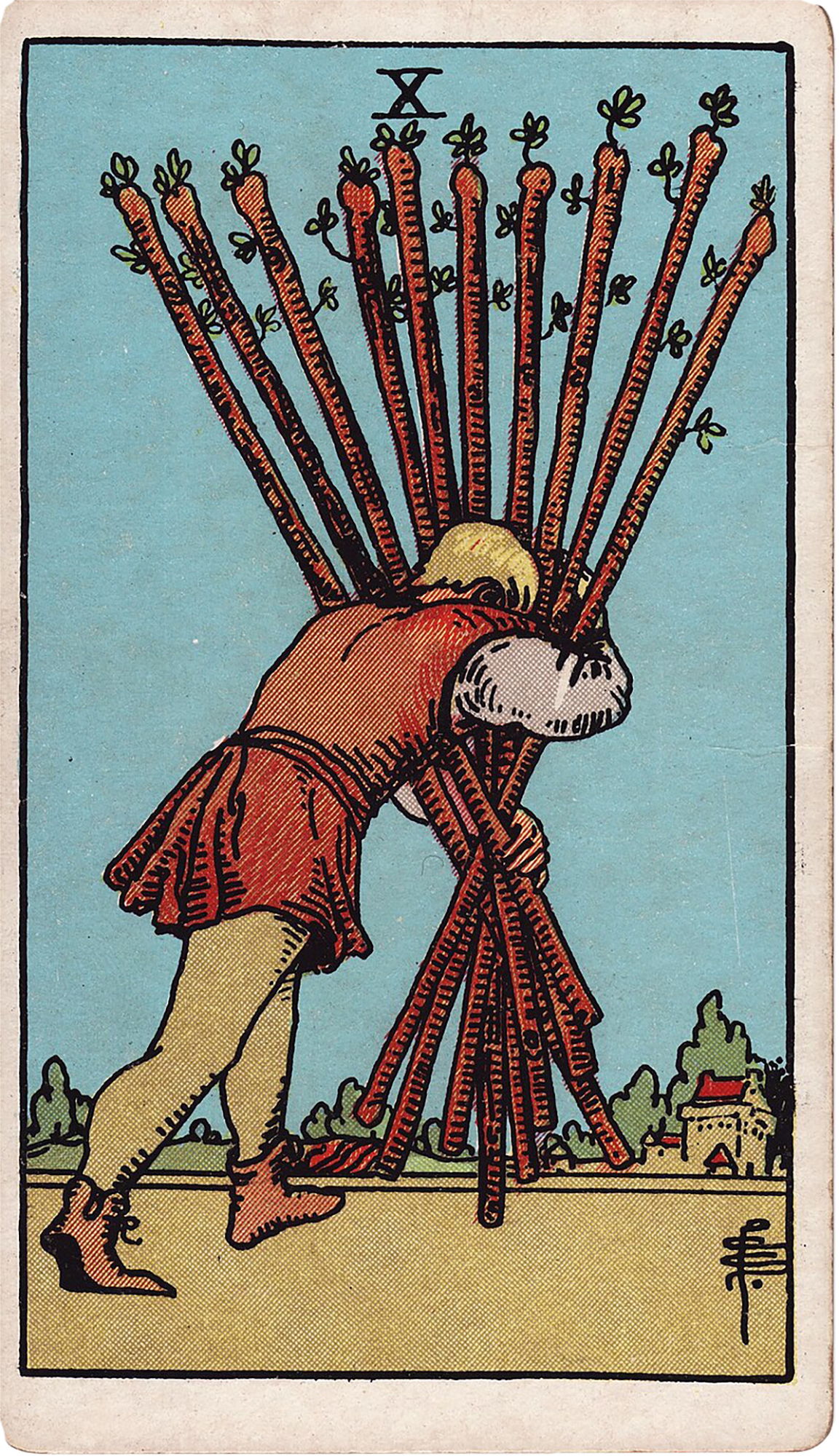 Present10 of Wands
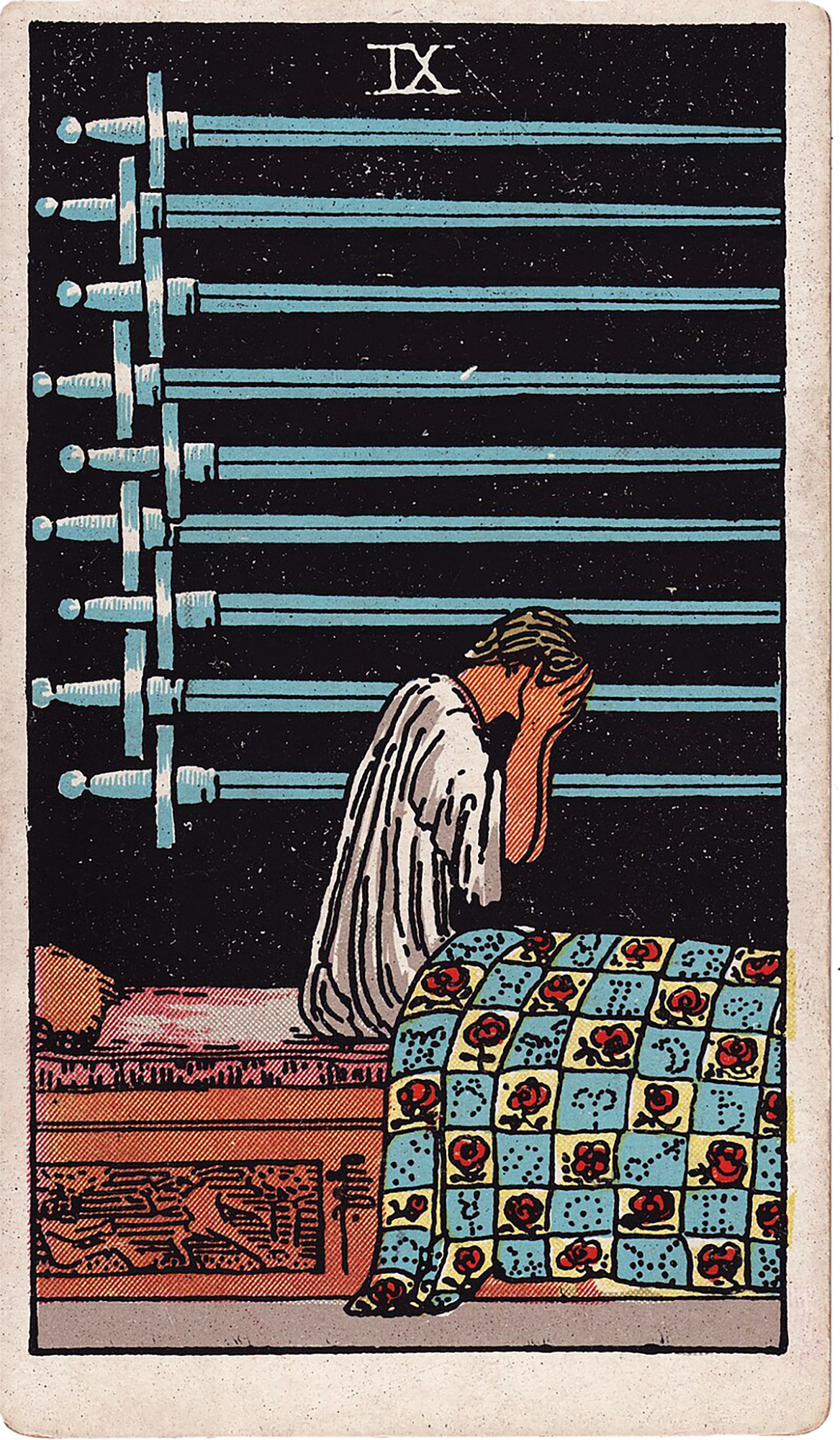 Past9 of Swords
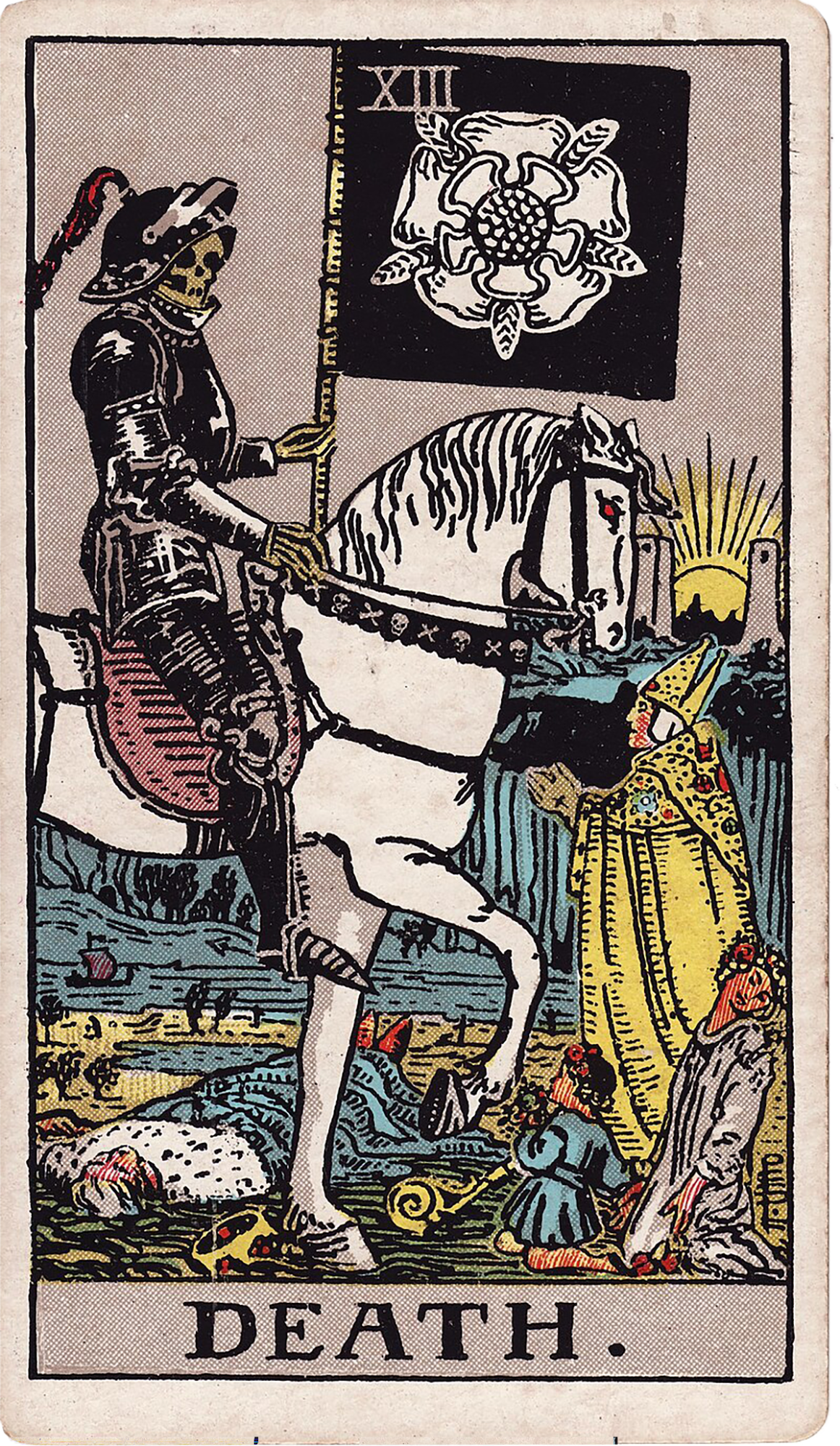 FutureDeath
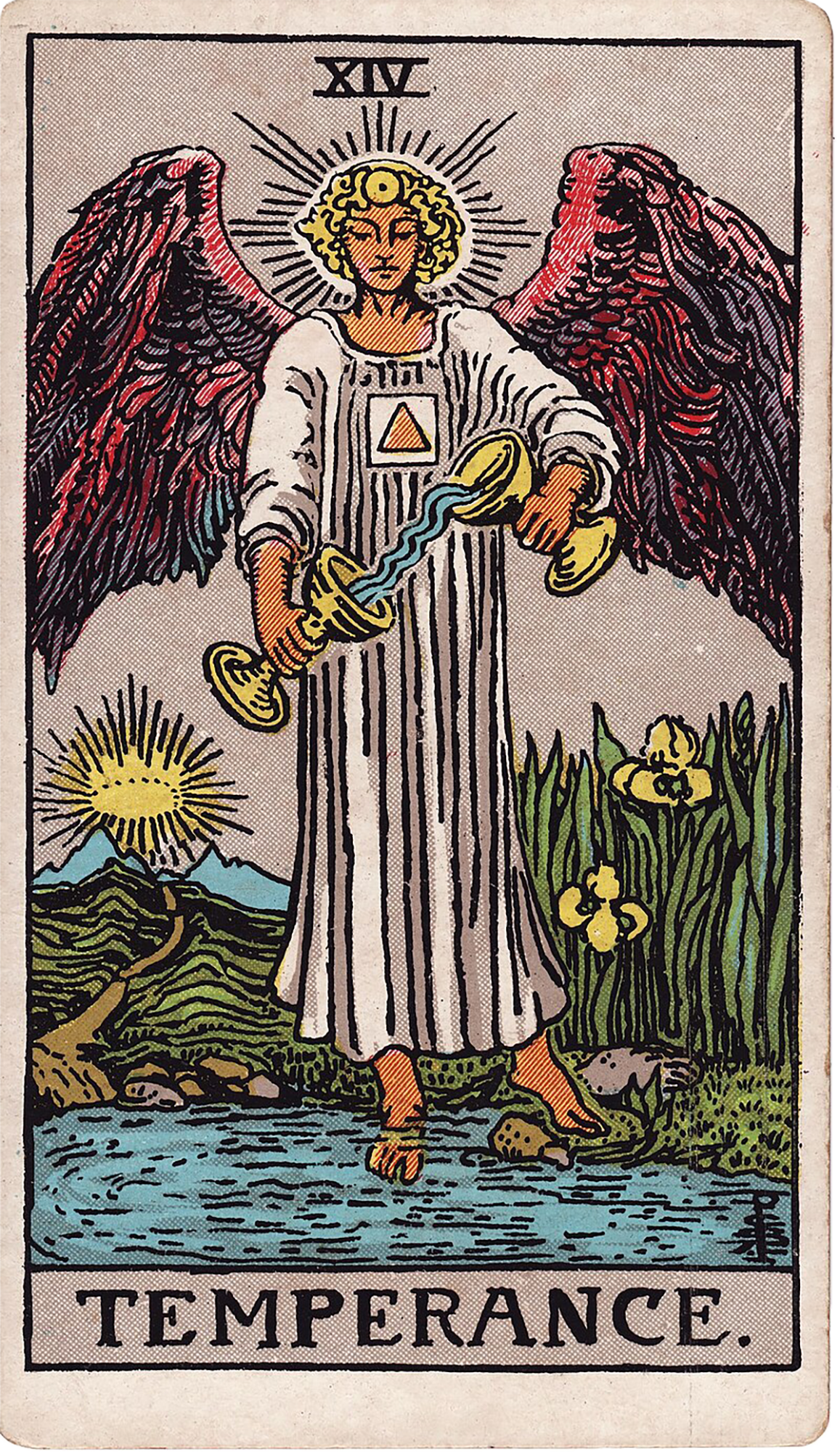 ChallengeTemperance
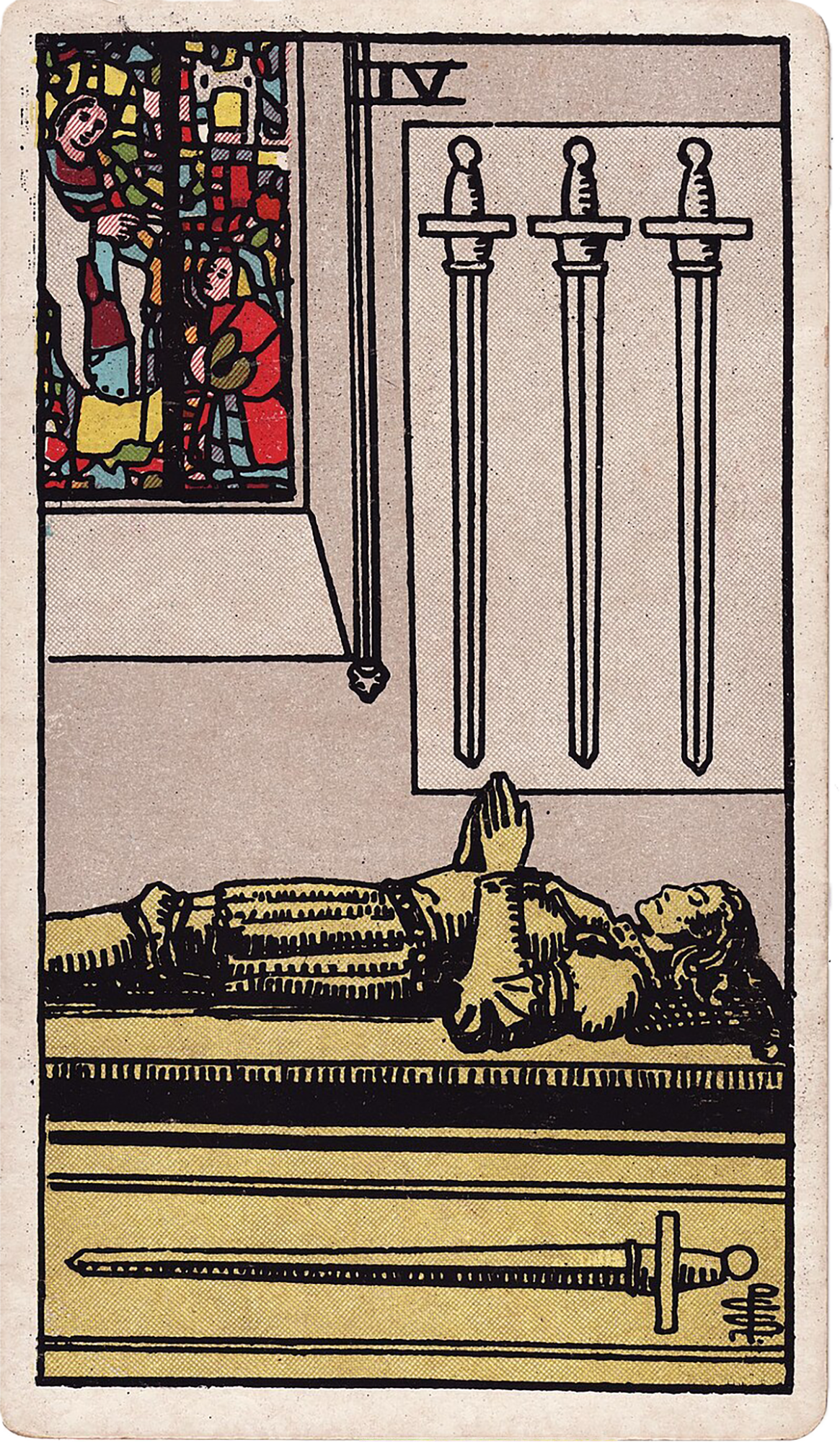 Advice4 of Swords
Introduction: Why a focused spread for burnout recovery
Burnout is both practical and symbolic: it shows up as exhaustion, narrowed priorities, creeping cynicism, and sometimes a sense that something in life must change. A targeted tarot spread can help map what is happening now, what underlies the pattern, what is likely to come if current dynamics remain in place, and what kind of barrier and advice will best support recovery. This article presents the Five Card Cross spread as a compact, actionable lens. Rather than telling fate, the spread is a structured conversation with images—especially the Rider-Waite-Smith (RWS) imagery supplied here—that highlights choices, resources and the next workable step. We use the exact cards provided in the order given and anchor interpretation repeatedly to their visual symbolism.
The Five Card Cross: layout and positional logic
Layout and positions - Center: Present — the current core energy or theme. (Here: Death.) - Left: Past — recent influences or patterns that shaped the present. (Here: Temperance.) - Right: Future — the trajectory if current dynamics continue. (Here: 10 of Wands.) - Top: Challenge — what must be faced or integrated; an obstacle. (Here: 4 of Swords.) - Bottom: Advice — practical counsel or next-step action. (Here: 9 of Swords.) Physical layout: place the cards as a cross: center card for Present, left for Past, right for Future, top for Challenge, bottom for Advice. This visual cross maps time across the horizontal axis (past → present → future) and internal work across the vertical axis (challenge above, advice below). The logic: the center shows the issue at hand; left explains how you arrived; right shows likely load or result; top names a blockage; bottom gives an accessible next step. Timing and scope: this spread works well for immediate process-oriented questions like “How can I move through current burnout?” or “What next step is most practical for recovery?” It is compact enough for short sessions but deep enough to support planning and reflection.
Card 1 Present: Death — what transformation looks like right now
Card in position: Present = Death (upright). Key RWS imagery and the upright meaning: the armored skeleton on horseback, the white rose on the flag, the falling figures and a small child or pilgrim in the scene, and the sun rising between two towers in the background. In RWS tradition these symbols point to endings that are inevitable, the dignity of necessary change, and the space that follows a cleared field. The supplied upright description emphasizes making endings real, releasing what is complete, and using clarity and deliberate choice. Interpretation for burnout recovery: Seeing Death in the Present position signals that a genuine ending is happening or needs to happen. For burnout this can mean you are at a point where an unsustainable rhythm, role, or expectation must be released rather than patched. Notice the white rose: it asks for clarity, a willingness to accept loss without romanticizing it. The rising sun suggests that transformation will open new options, but it is not instantaneous comfort—there is grief and practical fallout to manage. Questions to ask with Death present: Which task, relationship, or identity is truly finished? Where am I still trying to patch what is over? What small deliberate step helps make this ending visible and manageable right now? Practical actions anchored in the image: name the thing you are letting go of aloud or in writing; set a concrete boundary or deadline that acknowledges the ending; create a ritual that marks the transition so you do not unconsciously carry the old load forward.
Card 2 Past: Temperance — what integration preceded or failed to hold
Card in position: Past = Temperance (upright). Key RWS imagery and the upright meaning: Temperance traditionally shows an angel mixing liquid between cups, one foot on land and one in water—symbolic of integration between conscious and unconscious, moderation and skillful combination. The supplied text stresses steady integration, moderation and working with what is available now. Interpretation for burnout recovery: Temperance in the Past suggests that prior to the current crisis there was an attempt—successful to varying degrees—to balance responsibilities, modes of being, or different life spheres. Perhaps you tried to moderate workload, integrate caregiving with work, or practice self-regulation. The presence of Temperance in the past can be read in two ways: either those balancing strategies were real but became overwhelmed (the technique worked until conditions changed), or the attempt at temperance was partial—superficial moderation that did not address structural issues. Connecting Past to Present: Temperance → Death. The angel’s mixing cups points to deliberate blending and moderation, but Death in the Present declares that something in that blended arrangement must now end. Visually, imagine the water pouring between cups (Temperance) being interrupted by the skeletal horse of Death; the integration that once flowered is experiencing a necessary termination. Ask: which compromise or adaptive strategy is now exhausted? Where did subtle imbalances accumulate despite earlier skillful efforts?
Card 3 Future: 10 of Wands — the likely burden if nothing changes
Card in position: Future = 10 of Wands (upright). Key RWS imagery and upright meaning: a figure staggers under a heavy bundle of wands, head down, near the end of a journey. The card signals that responsibility has accumulated into weight; completion may be close, but the load requires organization, delegation or reduction. Interpretation for burnout recovery: With Death (Present) followed by 10 of Wands (Future), the reading shows a trajectory: if you enact necessary endings clumsily or incompletely, the immediate path can still lead to carrying an even heavier responsibility. The 10 of Wands warns against the martyr's response—trying to shoulder everything alone because endings are messy. It suggests a coming phase where tasks multiply or pressures concentrate unless you deliberately reduce or redistribute them. Practical nuance: the 10 of Wands is not purely doom; it contains the possibility of completion. The question becomes what you will do with this load. The image of the nearing destination implies that you may be close to a handing-off, a final deliverable, or a pivot—but without asking for help, the work becomes unsustainable. Connect this to the Death card: endings generate a new set of logistics and responsibilities—decide which to accept and which to release.
Card 4 Challenge: 4 of Swords — the obstacle of rest or restlessness
Card in position: Challenge = 4 of Swords (upright). Key RWS imagery and upright meaning: a recumbent figure lies in a chapel-like space, often interpreted as deliberate pause and recovery. The supplied upright meaning emphasizes recovery and deliberate pause after strain. Interpretation as Challenge: Although 4 of Swords often recommends rest, here it is placed as the Challenge above the center: the test is whether you can pause and recover. That challenge can take multiple forms. It may be external (pressure to return to work before you are ready) or internal (a restless mind that refuses to rest). In the context with Death and 10 of Wands, 4 of Swords reads as a critical pivot: to transform without collapsing into overload, you need a real recovery period. But the challenge is making that pause actual. How this shows up: you might intellectually know you need to rest (the 4 of Swords image is obvious), but practical obstacles—unfinished work (10 of Wands) or obligations—block the pause. Alternatively, restorative strategies may be offered but are being used superficially: restful routines are too short, or you return to productivity rituals that look like recovery but are not. The chapel setting asks for a protected space—physically, temporally and psychologically—where healing becomes possible.
Card 5 Advice: 9 of Swords — practical counsel about worry and seeking support
Card in position: Advice = 9 of Swords (upright). Key RWS imagery and upright meaning: a figure sits up in bed hands to face as if overwhelmed by worry or fear. The upright description here emphasizes that the mind amplifies fear during vulnerable hours and that worry deserves care, evidence and support rather than automatic belief. Interpretation as Advice: The 9 of Swords as counsel asks you to treat your worry as data, not verdict. It recommends speaking about hidden fears, seeking practical support, and distinguishing catastrophic thinking from solvable problems. In a burnout-adjacent reading it can mean: name the anxieties that keep you awake, test them against reality, and bring them into the light by asking for help—therapeutic, professional, organizational or social. Concrete steps suggested by the card image: schedule a conversation with a supervisor or colleague to renegotiate scope; book a therapy or counseling session; create a brief nightly ritual to externalize ruminations (journaling or voicemail to yourself) so worry stops circulating in private. The 9 of Swords also encourages explicit prioritization: write down the fears and for each specify evidence for and against, next small action, and who can help you with it.
Card-to-card relationships and the narrative they build
Reading card interactions is how a spread becomes a story rather than isolated statements. Here are the essential relationships in this configuration: - Temperance (Past) → Death (Present): The past involved skillful integration or attempted moderation. Death now indicates that the arrangement established by Temperance has reached its end, or the integration must be restructured. Visually, think of Temperance’s flowing cup water being redirected by the sweep of Death’s horse—an interruption of an ongoing mixing process. - Death (Present) → 10 of Wands (Future): Ending something often triggers a redistribution of responsibility. The transformation named by Death may remove some tasks but also reveal or concentrate others, creating the heavy load of the 10 of Wands. Practically: a restructuring can feel liberating but also increase immediate workload because choices must be enacted. - 4 of Swords (Challenge) in relation to both Death and 10 of Wands: The need for deliberate rest sits between ending and managing the load. If you cannot secure a real pause, the momentum set by Death can propel you into the strain depicted by 10 of Wands. The chapel-like image of the 4 of Swords asks for protected time to plan how to downshift the incoming load. - 9 of Swords (Advice) connected to all: worry and hidden anxieties influence how endings are handled and whether rest is taken. The 9 of Swords as advice calls for externalizing fears before they sabotage recovery actions. Its counsel supports making Death’s ending explicit, negotiating the logistics that would otherwise become the burden of the 10 of Wands, and allowing 4 of Swords to be a real pause rather than an imagined one. How to read sequencing: start at the center (Death) to name the theme, move left (Temperance) to understand roots, then right (10 of Wands) to see the likely trajectory, glance up (4 of Swords) to identify the blocking condition, and finish below (9 of Swords) to find immediate, practical next steps.
A worked example: reading the spread as a practical coaching session
Imagine a querent named Maya who asks "How can I recover from feeling exhausted and overwhelmed?" Step-by-step application with the supplied cards (upright): 1) Present — Death: I would say: "You are at a point where a role or rhythm is ending. This feels like a real breaking point. The image asks you to name what must finish." Ask Maya: which part of your role feels irretrievable? Can you name a concrete example to stop pretending you can do it all? Suggest: choose one obligation to redefine this week. 2) Past — Temperance: "You previously tried to balance and integrate strategies; they worked for a while but are no longer sufficient. Perhaps you were mixing priorities and hiding the cracks." Question: what strategies worked before? Which compromise enabled you to keep going? Recognize their value and their limits. 3) Future — 10 of Wands: "If we do not change tactics when ending happens, you may be facing a heavier bundle of responsibilities. The finish line may be near, but you'll carry the weight unless you delegate or simplify." Action: list three tasks that can be delegated or dropped. 4) Challenge — 4 of Swords: "You must pause, but that pause is the challenge — it will be resisted or interrupted. Protect rest uncompromisingly." Suggest: schedule two protected restoration blocks (60–90 minutes) and inform one person of that boundary. 5) Advice — 9 of Swords: "Talk about your anxieties so they stop shaping choices unconsciously. Make a worry inventory and recruit one person to reality-check it." Practical exercise: write the top three worries and for each write one small step and one person who can help. Wrap-up: narrate the arc: "An ending is required; honor the work you already did; prepare to reduce the load that naturally arises; guard rest; and speak the worries out loud so they stop driving decisions." This gives actionable steps anchored directly to the supplied cards and their images.
Technique and reproducible method for learners
Preparation - Clear intention: ask a process-oriented question such as "What will help me recover from burnout over the next month?" Avoid yes/no predictions. - Shuffle and focus: shuffle while thinking of the question and let a sense of pause guide when to stop. Draw five cards in order and lay them in the cross layout described. Reading procedure 1) Read center card aloud and note first visceral reaction—what intrudes from the imagery? Write it down. 2) Move left (Past): consider how earlier patterns set the stage. Anchor interpretation in the card’s image and details. 3) Move right (Future): ask "If nothing changes, where is this heading?" Tie the image to practical systems and likely tasks. 4) Move upward (Challenge): identify the obstacle that must be addressed to shift trajectory. 5) Move downward (Advice): extract immediate, small actions, and name one micro-step to perform within 24–72 hours. Synthesis: after noting each position, look for verbage that repeats across cards (words like ‘end’, ‘balance’, ‘load’, ‘rest’, ‘worry’) and use them to create a compact plan. Recording and follow-up - Journal the reading and create a 7-day action plan with one measurable step based on the Advice card. - Schedule a review reading or check-in after one week to see how the 10 of Wands energy is changing. Timing and boundaries - Use the spread monthly while undergoing major transitions, weekly during acute crises, or as needed when a choice point arises. Keep the reading focused on recovery processes rather than long-term fate.
Common mistakes and troubleshooting
Mistake: treating the cards as absolute prophecy. Fix: read them as language about options, patterns and possible outcomes. Ask "Which of these outcomes am I choosing?" Mistake: ignoring the imagery and defaulting to summary keywords. Fix: look closely at visual details—the white rose on Death, the flowing cups in Temperance, the near-arrival posture of the 10 of Wands figure, the chapel’s protection in 4 of Swords, the nocturnal panic of 9 of Swords. Those images supply emotional texture and concrete cues for action. Mistake: skipping the challenge card because it seems obvious. Fix: treat the Challenge as a place to design scaffolding: if the 4 of Swords says rest is needed, ask what specific barriers will prevent rest and plan to remove them. Mistake: over-interpreting anxiety from 9 of Swords as a reason to avoid action. Fix: use the 9 of Swords as an invitation to externalize worry and test it. Create small experiments to check anxious assumptions. Mistake: reading reversals without clarity. Fix: if a card appears reversed, read reversal as a modification—blocked energy, internalized quality, or slower process—and look at neighboring cards to decide between resistance and recovery. For this worked example we treated the provided cards as upright; in practice, note and anchor reversal meaning to image details and to the spread’s story.
Practice exercises and follow-up routines
Exercise 1 — Image journaling - Look at each card image and write three sentences describing what you see emotionally, physically and practically. For Death: write what the ending feels like. For Temperance: name what you tried to blend. For 10 of Wands: list burdens present. For 4 of Swords: describe what a protected pause would look like for you. For 9 of Swords: write your top three fears and one small test for each. Exercise 2 — The 24-hour test - From the Advice card pick one micro-step (e.g., a five-minute evening worry journal or a single delegation email). Complete it within 24 hours. Note effects. Repeat weekly. Exercise 3 — Role negotiation script - Using the 10 of Wands image, identify one responsibility you can delegate. Draft a short script to ask someone to take it on. Practice it out loud and then send or speak it. Follow-up: schedule a review in one week and do a brief re-shuffle using the same spread. Compare how the central theme (Death) shifts and whether the 10 of Wands pressure is lessened.
Closing integration: using the spread for compassionate action
The Five Card Cross with these particular cards maps a very human arc: you have done integration work, you are at an ending, a heavy load can arrive, rest is required and worry needs stating. The images—Death’s white rose, Temperance’s pouring cups, the bent back in 10 of Wands, the chapel of 4 of Swords and the nocturnal figure of 9 of Swords—offer precise cues for language, ritual and action. Use the spread to design a small, repeatable recovery plan: one boundary to mark the ending, one item to delegate or drop, one protected rest period, and one spoken worry you bring into the world. Read compassionately and return to the cards as a planning tool.
Practice questions
• Which ending named by Death feels hardest to accept and why?
• What in your recent past (Temperance) did you try to balance that might now need restructuring?
• When you picture the 10 of Wands bundle you carry, which three items could be set down or handed to someone?
• What concrete barrier prevents you from making the rest of 4 of Swords real, and how can you remove it this week?
• List your top three nighttime worries (9 of Swords). For each, write one small test that would either disconfirm or reduce the fear.
• What ritual or symbolic act could you use to mark the ending indicated by Death so it becomes psychologically acknowledged?
• After one week, what change in energy would you expect if you follow the Advice card? How will you measure it?
• How does the visual detail of each supplied card—color, posture, setting—change the tone of your interpretation?
Comments
Sign in to comment.
Continue learning
Mastering Decision Making with the Five Card Cross Tarot Spread
The Five Card Cross Tarot Spread is a powerful tool for deepening decision-making skills by examining the present situation, past influences, future possibilities, challenges, and...
Navigating Conflict Resolution and Inner Struggles with the Five Card Cross Tarot Spread
This article delves into the Five Card Cross Tarot Spread as a practical tool for navigating conflict resolution and inner struggles, especially within family contexts. Using the s...
Using the Career Five Card Spread to Identify Growth Opportunities and Challenges
This article explores the Career Five Card Spread, a practical tarot method designed to spotlight growth opportunities, strengths, and obstacles within a career context. By analyzi...
Unlocking Life Insights with the Celtic Cross Tarot Spread
This article offers a thorough exploration of the Celtic Cross Tarot Spread, focusing on its application within family and practical life contexts. Using a worked example featuring...
Enhancing Clarity in Complex Choices with the Five Card Cross Tarot Spread
The Five Card Cross Tarot Spread is a practical tool designed to clarify complex choices by breaking down the decision into manageable parts. This article explores each position in...
Deepening Connection and Communication Using the Relationship Five Card Spread
This article introduces the Relationship Five Card Spread as a practical tool to enhance family communication and connection. Using five specific card positions—You, The Other Pers...
Using the Five Card Cross Tarot Spread to Navigate Career Changes with Confidence
The Five Card Cross Tarot Spread is a versatile and insightful tool for navigating career changes. This article guides learners through the method step-by-step using a practical ex...
Unlocking Personal Insight with the Seven Card Horseshoe Spread
The Seven Card Horseshoe Spread is a practical and insightful Tarot layout ideal for exploring personal and family dynamics. This article breaks down each position—Past, Present, H...
Using the Career Five Card Spread to Uncover Professional Strengths and Opportunities
This article presents a comprehensive guide to the Career Five Card Spread, designed to help learners explore professional strengths and opportunities using five specific Tarot car...
Using the Career Five Card Spread to Overcome Professional Challenges with Insight
The Career Five Card Spread is a powerful tool for exploring current professional situations, identifying strengths, challenges, opportunities, and practical next steps. This artic...