
Practical Elemental Dignities for Reading Card Interactions
This article teaches a practical, repeatable method for using elemental dignities to read interactions between cards. Anchored to the Rider–Waite–Smith imagery and the supplied Ace trio (Ace of Wands, Ace of Cups, Ace of Swords), it explains how to identify elemental affinities and frictions, how to weigh upright and reversed energy, and how to translate those relationships into clear, grounded guidance. The method covers single-card context, pairings, and three-card patterns, includes worked examples using the supplied Aces, lists common mistakes, and offers drills to build fluency.
Cards explored in this article
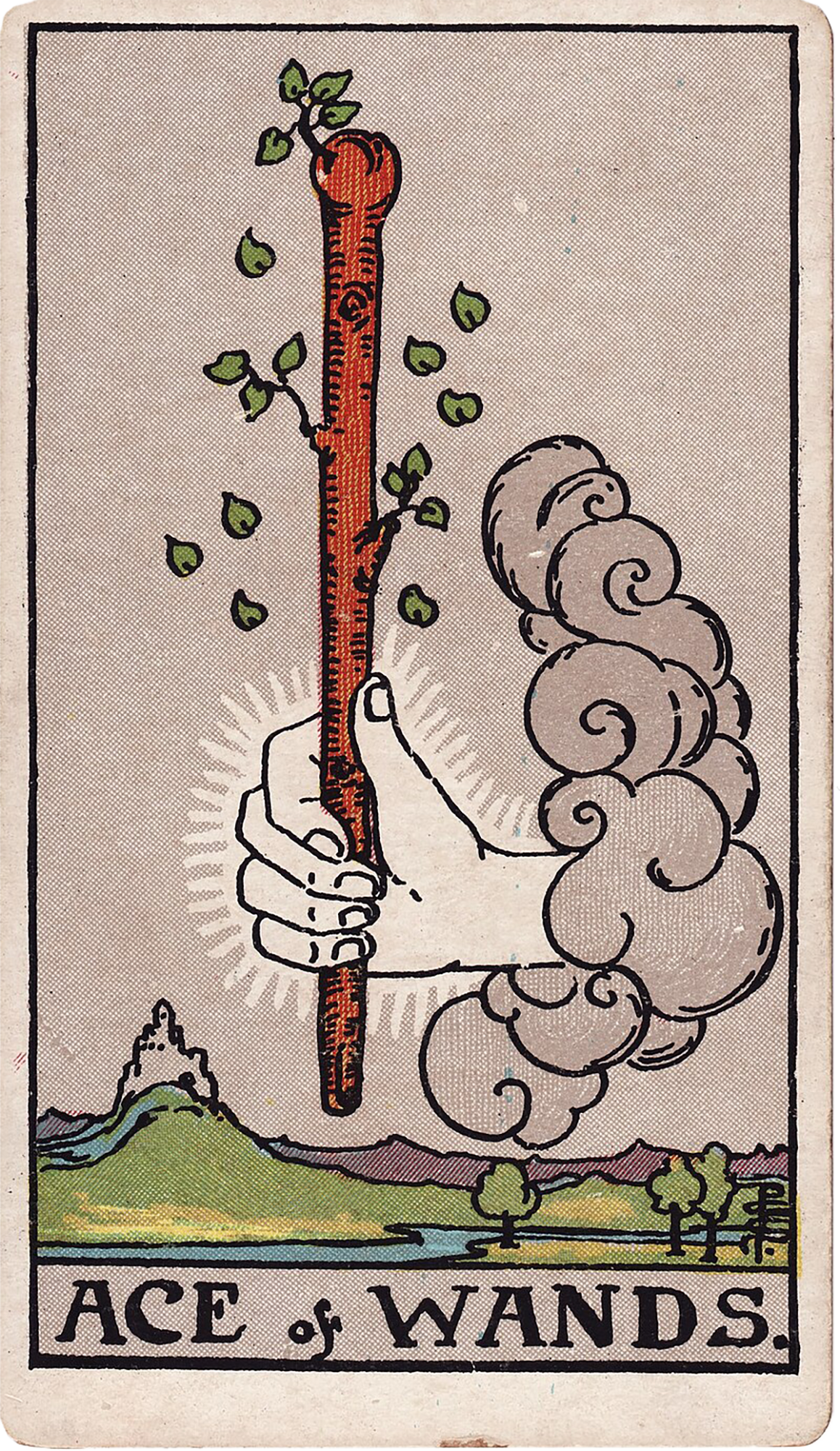 Ace of Wands
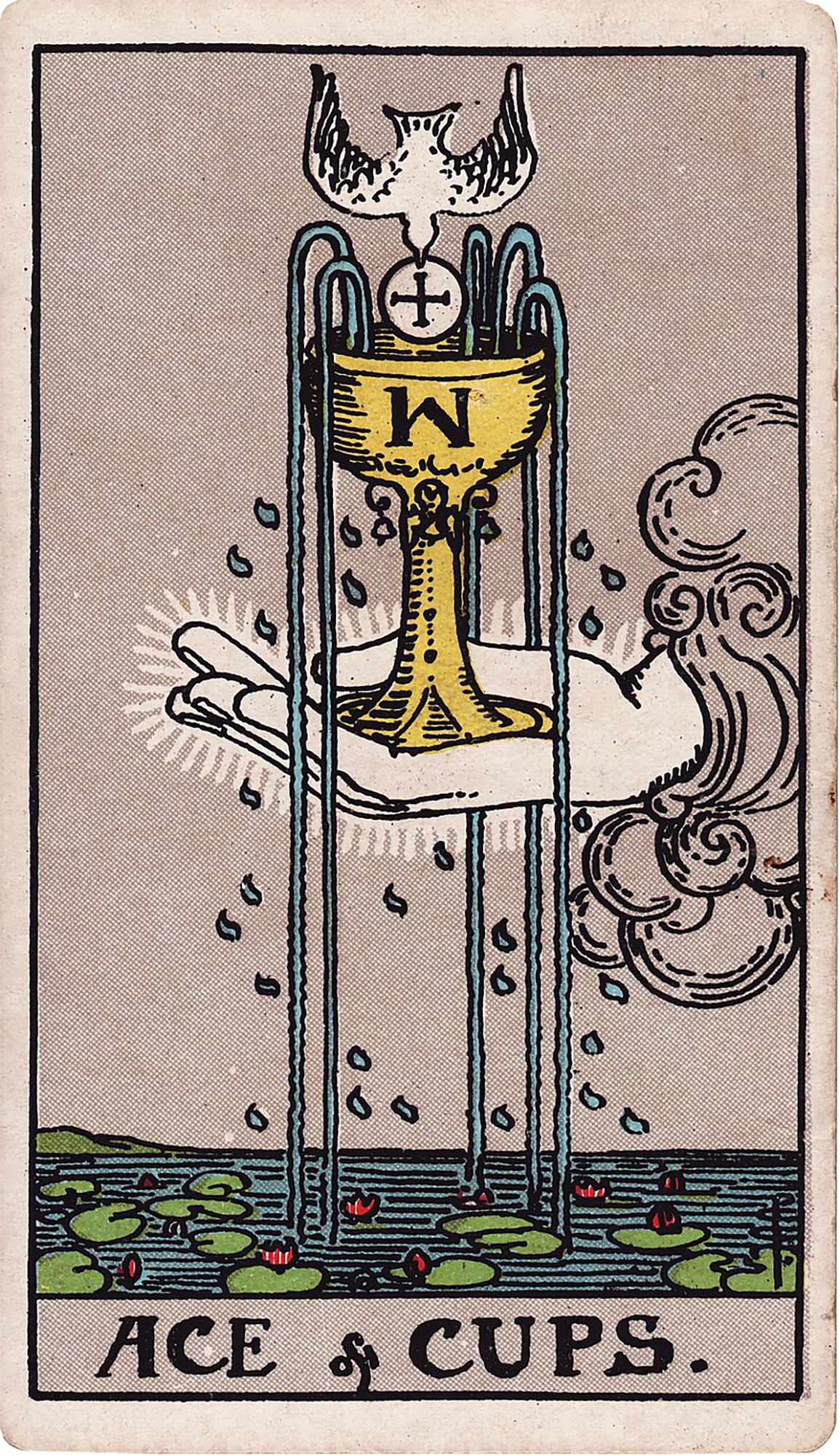 Ace of Cups
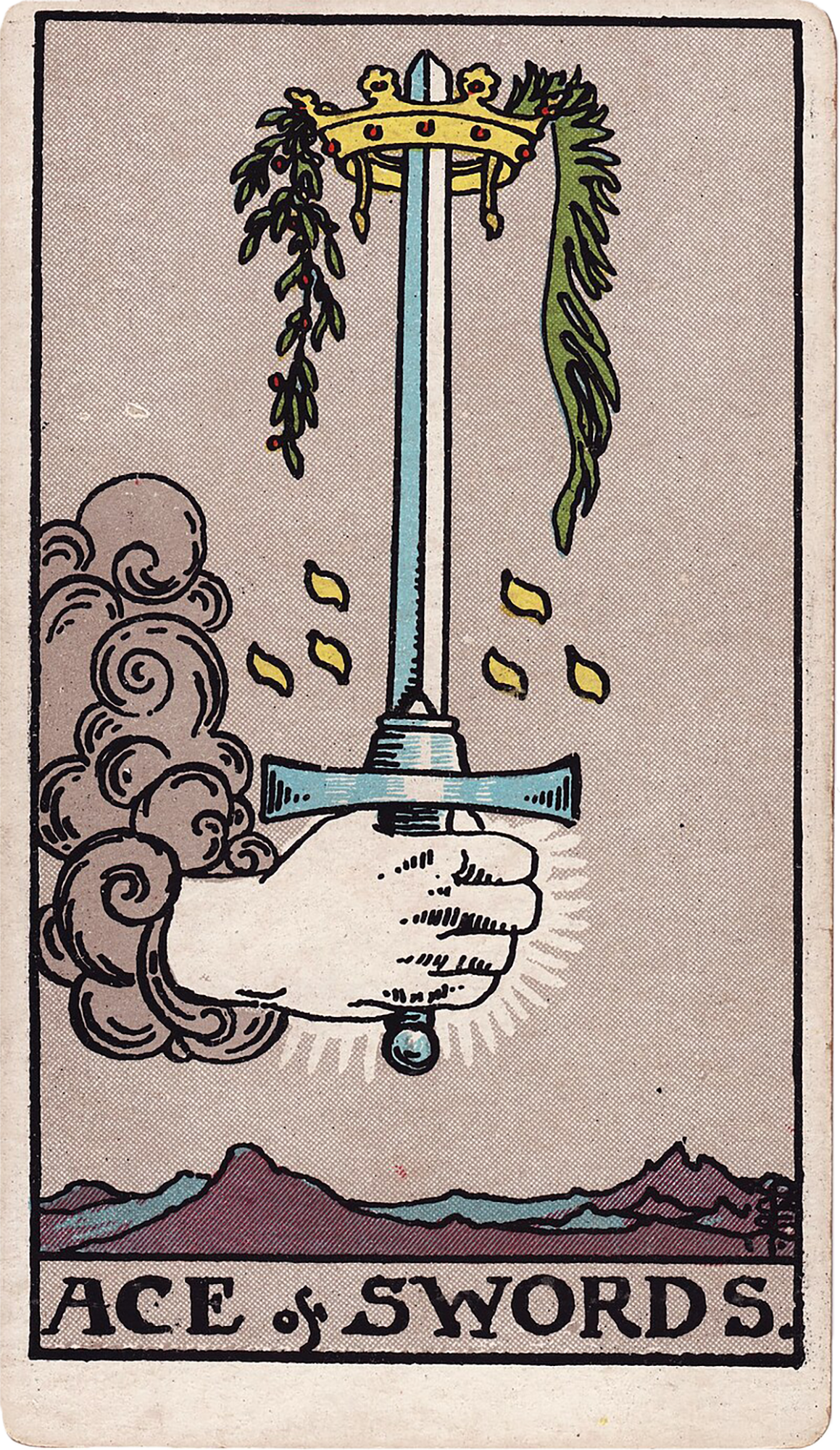 Ace of Swords
What elemental dignities are and why they matter
Elemental dignities are a simple, high-leverage tool: they map how the elemental qualities of suits (Fire, Water, Air) shape the way cards support or contest each other. Rather than treating every card in isolation, elemental dignity asks: do these cards share the same elemental language (they support each other), do they speak complementary languages (they help one another), or do they clash (they create friction that needs to be resolved)? In practice, elemental dignity helps you answer immediate reading questions: Which energy is primary? Where will the client meet resistance? Which cards point to internal experience versus outward action? Because the technique reduces many interactions to a few consistent rules, it is especially useful for beginners learning to synthesize, and for advanced readers who want a fast, reliable check on more complex interpretations.
Quick Rider–Waite–Smith refresh anchored to the supplied Aces
This article uses three supplied cards as visual anchors. Refer to these images throughout your reading work: - Ace of Wands: In the Rider–Waite–Smith imagery a hand emerges from a cloud holding a budding wand, leaves sprouting along its length. The upright description emphasizes a new impulse that wants expression — creativity, initiative, identity. Reversed, the Ace of Wands points to blocked inspiration, scattered excitement, or premature action. Visually, the budding life on the wand is a direct symbol of starting energy; when reversed, imagine that sprout stunted or turned away from light. - Ace of Cups: RWS shows a hand from a cloud holding an overflowing chalice, often with a dove and streams or a vesica shape. Upright it highlights emotional opening, receptivity, compassion and creative feeling. Reversed it points to emotional blockage, depletion, or fear of vulnerability. The overflowing cup is your visual cue for what wants to be received — when reversed, the flow is interrupted or inward. - Ace of Swords: The image is a raised upright sword held by a clouded hand, often crowned with laurel or a crown and wreath. Upright the Ace of Swords is a clear insight, decisive conversation or intellectual breakthrough. Reversed it can show harshness, misuse of logic, confusion or premature judgement. The vertical, crowned blade signals clarity that pierces confusion; reversed, that blade cuts in unhelpful ways. Keep these images in mind; the elemental dignity method is about how these pictured energies relate to one another as elemental forces.
Basic elemental map for this article
For our practical method we use a focused elemental map tied to the supplied suits: - Wands = Fire: active, initiating, identity, will, creative impulse (Ace of Wands). - Cups = Water: receptive, emotional, relational, interior processing (Ace of Cups). - Swords = Air: intellectual, communicative, discerning, conflict and clarity (Ace of Swords). Rules you will use repeatedly: same-element pairings generally dignify and strengthen each other; Fire + Air tend to be complementary and fuel forward movement; Water + Air create tension between feeling and analysis; Fire + Water tend to oppose one another when both demand expression. These rules are interpretive aids, not inviolable dogma. Always test with imagery and context.
Elemental relationships — how to read affinities and frictions
Use these practical reading gestures when you see two or more cards: - Same element (dignified): When two cards share element — for example, two Wands or, in our working set, an environment where another Wand appears with the Ace of Wands — they validate one another's processes. The Ace of Wands’ initiative becomes reinforced rather than contradicted. In paired readings, same-element cards answer the question "Can this energy proceed?" with a clear yes or a qualified yes. - Complementary element (constructive): Fire and Air are complementary in most occult and psychological frameworks. If the Ace of Wands appears with the Ace of Swords upright, the reading language is: an idea (Swords’ clarity) fuels action (Wands' initiative), and an act can be strategic rather than blind impulse. Conversely, if the Ace of Swords is reversed while the Ace of Wands is upright, the pairing suggests passionate action hampered by confused thinking — a high-energy drive without a reliable plan. - Conflicting element (friction): Water and Air tend to create tension between feeling and analysis; Water and Fire can oppose expression and receptivity. If the Ace of Cups is upright alongside the Ace of Wands upright, you must ask whether the impulse to act (Wands) is aligned with the emotional openness (Cups). Upright + upright does not guarantee harmony: it signals a strong presence of both impulses, and your job is to describe how they best cooperate or what choice must be made. If the Ace of Cups is reversed with the Ace of Wands upright, the reading often centers on blocked emotional channels producing anxious or premature action: the client is driven but not emotionally anchored. These relationships let you compress complex interactions into clean interpretive moves.
Upright and reversed interplay: practical rules of thumb
Reversals change the quality of elemental relationships. Here are useful heuristics: - Both upright: energies are available and relatively functional. If Ace of Wands and Ace of Cups are both upright, the chart often points to a project that needs both heartfelt motivation and initiative. Ask how to translate feeling into practice. - One reversed, one upright: the reversed card shows where the process is stuck or misdirected. Example: Ace of Cups reversed + Ace of Swords upright. The Air clarity is present, but the emotional receptivity is blocked. A practical interpretation: language and thought are available to describe the issue, but the client needs exercises in receptivity or grief work before communication will land. - Both reversed: both processes are stuck or misapplied. Two reversed Aces (for instance, Ace of Wands reversed and Ace of Swords reversed) indicate a situation where neither inspiration nor clarity is healthy — the reader looks for a third card/context to show the route toward repair. Remember the supplied upright/reversed texts: the Aces ask for a practical response that fits the present stage rather than an abstract ideal. Use that instruction when deciding what action to suggest.
Step-by-step practical reading method
This sequence converts elemental dignity into reliable practice. Use it for two- and three-card configurations and scale up as needed. 1) Identify dominant elements visually and verbally. Name the cards aloud: "Ace of Wands (Fire), Ace of Cups (Water), Ace of Swords (Air)." This anchors you in element before meaning biases set in. 2) Note orientation: mark which cards are upright and reversed. Recall the supplied descriptions for each orientation. For example, Ace of Wands upright asks for an initial action; Ace of Cups reversed asks you to look for emotional blockage. 3) Ask the elemental question: Do these cards support each other (same element), complement each other (Fire + Air), or create tension (Water + Air or Fire + Water)? 4) Translate elemental dynamics into reading language. Use verbs and simple metaphors. Fire + Air = "plan + launch"; Water + Air = "feeling vs. analysis"; Fire + Water = "drive vs. receptivity or collision of impulse and need." Anchor this translation to the card images: the sprouting wand, the overflowing cup, the crowned sword. 5) Check for practicality: the Aces insist on stage-appropriate responses. If the Ace of Wands is upright with an Ace of Swords reversed, advise a small, testable action paired with clarity work (draft a short note, rehearse a single-step plan) rather than a large launch. 6) Add imagery to ground interpretation. Point to the visual details on the card: "The wand is budding — start small and nurture it." "The cup overflows — practice receiving first." "The sword is crowned — seek to clarify intention before applying force." 7) Synthesize into advice or narrative: give 2–3 clear, non-fated options oriented to development. Avoid deterministic language — present tendencies and practical next steps.
Worked examples using the supplied Aces
Below are common combinations and how to read them using elemental dignity. Emphasize stage-appropriate suggestions based on the Aces' upright/reversed meanings. Example A — Ace of Wands upright + Ace of Swords upright (Fire + Air, both upright) Reading moves: These two dignify and complement. The sprouting wand (initiative) plus the crowned sword (clarity) suggests a moment when a clear idea can be acted on. Practical guidance: make a concise plan, pick one first action that fits current resources, state your intention in a single sentence. Imagery note: the crown on the sword legitimizes the impulse of the wand — treat the idea as a tool. Example B — Ace of Wands upright + Ace of Swords reversed (Fire upright + Air reversed) Reading moves: Energetic drive is present but thinking is misapplied or harsh. The client may rush into action without a clean plan or may justify action with poor reasoning. Practical guidance: slow the thinking down; test the impulse with a single small experiment, then evaluate with a short debrief. Image cue: imagine the sword's crown knocked loose — action needs re-aiming. Example C — Ace of Cups reversed + Ace of Swords upright (Water reversed + Air upright) Reading moves: Clarity of thought exists but emotional receptivity is blocked. The upright Ace of Swords can help name what is emotionally closed. Practical guidance: use clear language to identify the emotional block; recommend a concrete emotional practice (journaling prompts, naming the feeling aloud) before relationship-level actions. Image cue: the overflowing cup is inward or sealed — the sword can open a channel if used to name rather than to judge. Example D — All three Aces present: Ace of Wands upright, Ace of Cups reversed, Ace of Swords upright Reading moves: This triangle compresses to a narrative: a strong impulse to act meets emotional blockage; clarity is available to diagnose the block. Practical guidance: use the Ace of Swords' clarity to create a small, compassionate plan to unstick feelings (Swords = set a short script for a hard conversation; Cups reversed = practice small, private receptivity exercises) so that the Ace of Wands' energy can be channeled sustainably. Image cue: let the crowned sword pierce the sealed cup gently, enabling the wand to take root.
Common mistakes and how to avoid them
1) Treating elemental dignity as deterministic. Mistake: saying "element X will always win." Fix: use dignity as a probability and a lens, not as fate. It narrows attention; it does not close options. 2) Overlooking card images. Mistake: using only the element tag and ignoring visual details. Fix: always name a visible detail (leaf on the wand, overflow on the cup, crown on the sword) and make it part of the interpretation. 3) Forcing a single synthesis. Mistake: trying to create one neat sentence that collapses complexity. Fix: offer layered possibilities: "If you choose path A, expect X; if you choose path B, expect Y." Elemental dignity often clarifies trade-offs rather than dictating one outcome. 4) Equating reversed with purely negative. Mistake: assuming reversed = bad. Fix: read reversed as "stuck or misapplied" — it points you toward remediation. The supplied Ace descriptions explicitly recommend asking what needs to be simplified, practiced, or communicated. 5) Ignoring contextual questions. Mistake: reading elemental interplay without the question or spread position. Fix: tie every dignity judgment back to the client's question and the spread location (timing, internal/external, obstacle/opportunity).
Practice drills to build fluency
Do short, repeatable exercises to internalize elemental moves. Keep the three Aces visible as prompts and pick a timer. Drill 1 — Two-card pairing drills (10 minutes): Shuffle your deck while focusing on a simple question. Pull two cards. Identify elements and say aloud: "supportive," "complementary," or "friction." Then give a one-sentence practical next step tied to the images. Repeat for 20 pairs. Drill 2 — Orientation switching (15 minutes): Pull two cards and first interpret as if both upright, then swap one to reversed and reinterpret. Notice how reversals shift what you suggest in concrete terms. Drill 3 — Triad synthesis (30 minutes): Pull three cards and map them to the Aces' language: which card is "wand-like," which is "cup-like," which is "sword-like" in role even if not suit-matching. Practice giving a 2-step plan: immediate micro-action + emotional/mental preparatory step. After each drill, journal one line that ties imagery to advice: "The sprout suggests nurturing a small experiment — here's the experiment." Over time you will move from rule-of-thumb to intuitive synthesis.
Integrating elemental dignity into larger spreads
Elemental dignity scales. In a larger spread, identify clusters of elemental agreement and zones of tension. Use the supplied Ace language as a quick diagnostic: a predominance of Wands cards suggests the reading is about initiation and identity; Cups dominance points to relational work; Swords dominance points to clarity, decisions, or communication challenges. When you find mixed zones, pick one or two Aces (metaphorically) to act as focal points: choose the card that most clearly shows what must change next and treat the other cards as context. For example, if a spread has an Ace of Wands paired with a cluster of Swords, use the Air clarity rules to refine action. Always translate that guidance into a small, practical step and a brief maintenance practice (for Cups: naming; for Swords: reframing; for Wands: micro-action).
Advanced technique: weighted dignity and timing
Advanced readers can add weighting and temporal language to dignity readings. Weighting: assign strength scores to cards (1–5) based on imagery prominence, position in the spread, and whether the card is upright. A strong Ace of Swords upright in a central position might score 5 and thus lend more influence to Air dynamics over a weak Ace of Cups reversed in a peripheral position. Timing: interpret elemental interactions as sequences. A broken emotional process (Ace of Cups reversed) followed by an Ace of Wands upright in a future position might read: resolve the interior blockage before launching; an Ace of Swords between them may mark the necessary conversation or mental reframe. Use the Aces' practical instruction — they ask for stage-appropriate responses — to order steps. These techniques let you turn elemental relationships into process maps: diagnose — clarify — act, or feel — name — choose, depending on the dominant elements.
Putting it together: a short sample session script
Use this template in readings to keep dignity practical and client-centered: 1) "I'll describe the elemental picture first: Wands = Fire, Cups = Water, Swords = Air." 2) "Here are the cards: Ace of Wands, Ace of Cups, Ace of Swords. I’ll note which are upright or reversed and what that signals." 3) "The elemental map shows X (e.g., Fire drive + Air clarity but a blocked Cup). That suggests we have energy and clarity but something emotional is stopping full expression." 4) "Practical next steps: 1) One small action to test the impulse (Wands); 2) a short naming practice or boundary to address the cup reversal; 3) a line of language or plan to use the Ace of Swords constructively." End with a check: "Which of these steps feels doable right now?" This keeps interpretation grounded and collaborative, consistent with the Aces' practical emphasis.
Conclusion and how to continue practicing
Elemental dignities are a compact, powerful technique for making card-to-card interactions readable and actionable. Use the imagery of the Ace of Wands, Ace of Cups and Ace of Swords as mnemonic anchors: the sprouting wand for initiation, the overflowing cup for receptivity, the crowned sword for clarity. Practice the step-by-step method, run the drills, and apply the weighting/timing adjustments for advanced readings. Remember: dignity narrows possibilities so you can offer clearer advice, but it does not replace nuance. Always test your elemental reading against the images and the client’s experience. Over time you will find that elemental dignity speeds synthesis and yields grounded, stage-appropriate guidance — exactly what the three Aces ask of you.
Practice questions
• Look at the supplied images of the Ace of Wands, Ace of Cups and Ace of Swords. Which visual detail most changes your first impression when each card is reversed?
• Pull two random cards from your deck. Identify their elements and say aloud whether they dignify, complement, or clash. How did that shorthand change the advice you offered?
• When you see Fire + Air in a spread, do you tend to prioritize action or planning? How will you balance those tendencies next time?
• Describe a recent reading you gave. How would an elemental-dignity reading with these Aces have simplified or clarified your interpretation?
• Practice the triad drill: create one immediate micro-action and one maintenance practice when all three elements are present. How does that two-step structure change the client's sense of agency?
• Try the weighting exercise: assign scores 1–5 to three cards in a spread and reinterpret the elemental picture. What changed in your synthesis?
Comments
Sign in to comment.
Continue learning
Harnessing the Power of The Magician and Ace of Wands: Igniting Creativity and Manifestation in Tarot Readings
The combination of The Magician and the Ace of Wands in tarot readings offers a potent blend of creative energy and manifestation power. This article delves into the ways these car...
Unlocking the Creative Synergy of The Magician The Empress and Ace of Wands in Tarot Combinations
This article delves into the dynamic interplay of The Magician, The Empress, and Ace of Wands when they appear together in tarot readings. It explores how these cards collectively...
Unveiling Personal Power Through The Magician Strength and Ace of Wands
This article delves into the dynamic interplay of The Magician, Strength, and Ace of Wands tarot cards, exploring how their combined symbolism illuminates personal power across var...
Exploring the Symbolism and Elemental Correspondences of the Four Tarot Suits for Deeper Understanding
This article offers an in-depth exploration of the symbolism and elemental correspondences of the four tarot suits—Wands, Cups, Swords, and Pentacles—anchored by the imagery and me...
Using the Five Card Cross Spread to Overcome Career Burnout and Reignite Passion
This article guides learners through the Five Card Cross spread applied to overcoming career burnout and reigniting passion. Featuring a worked example using The Emperor, The Chari...
Mastering the Art of Combining The Magician The Empress and Ace of Wands for Creative Manifestation
This article explores the combined reading of The Magician, The Empress, and Ace of Wands Tarot cards, focusing on their synergy for creative manifestation. Through detailed analys...
Exploring the Symbolic Language and Elemental Meanings of the Suit of Wands in Tarot
The Suit of Wands in Tarot represents dynamic energy, creative force, and the drive for identity and ambition. Rooted in the elemental symbolism of fire, Wands cards articulate mot...
Unlocking Creative Synergy with The Magician The High Priestess and Ace of Wands
This article examines the powerful combination of The Magician, The High Priestess, and Ace of Wands within Tarot readings. By exploring their symbolic interplay, readers learn how...
Exploring the Symbolic Meanings and Elemental Correspondences of the Suit of Wands in Tarot
The Suit of Wands in Tarot embodies dynamic energy, creativity, and ambition, rooted in the elemental force of fire. This article delves deeply into the symbolism and elemental cor...
Mastering the Art of Combining The Magician The High Priestess and Ace of Wands for Advanced Tarot Readings
This article delves into the advanced skill of synthesizing The Magician, The High Priestess, and Ace of Wands within Tarot spreads. By grounding the discussion in the Rider-Waite-...