
Practical Guide to the King of Swords for Leadership Negotiation and Legal Advice
This article is a thorough single-card study of the King of Swords for learners who want to use one-card pulls or center a spread on a single archetype. Anchored to the supplied King of Swords image and its upright and reversed descriptions, the guide explains how to read the card’s symbolism (Rider–Waite–Smith), how interpretations change across contexts — leadership, negotiation, legal matters, love, career, money, challenge, person, outcome and spiritual reflection — and how to practice reliable technique. You will get step-by-step reading methods, concrete examples, common pitfalls to avoid, ethical questions to ask, and practical exercises to strengthen the card’s healthy expression.
Cards explored in this article
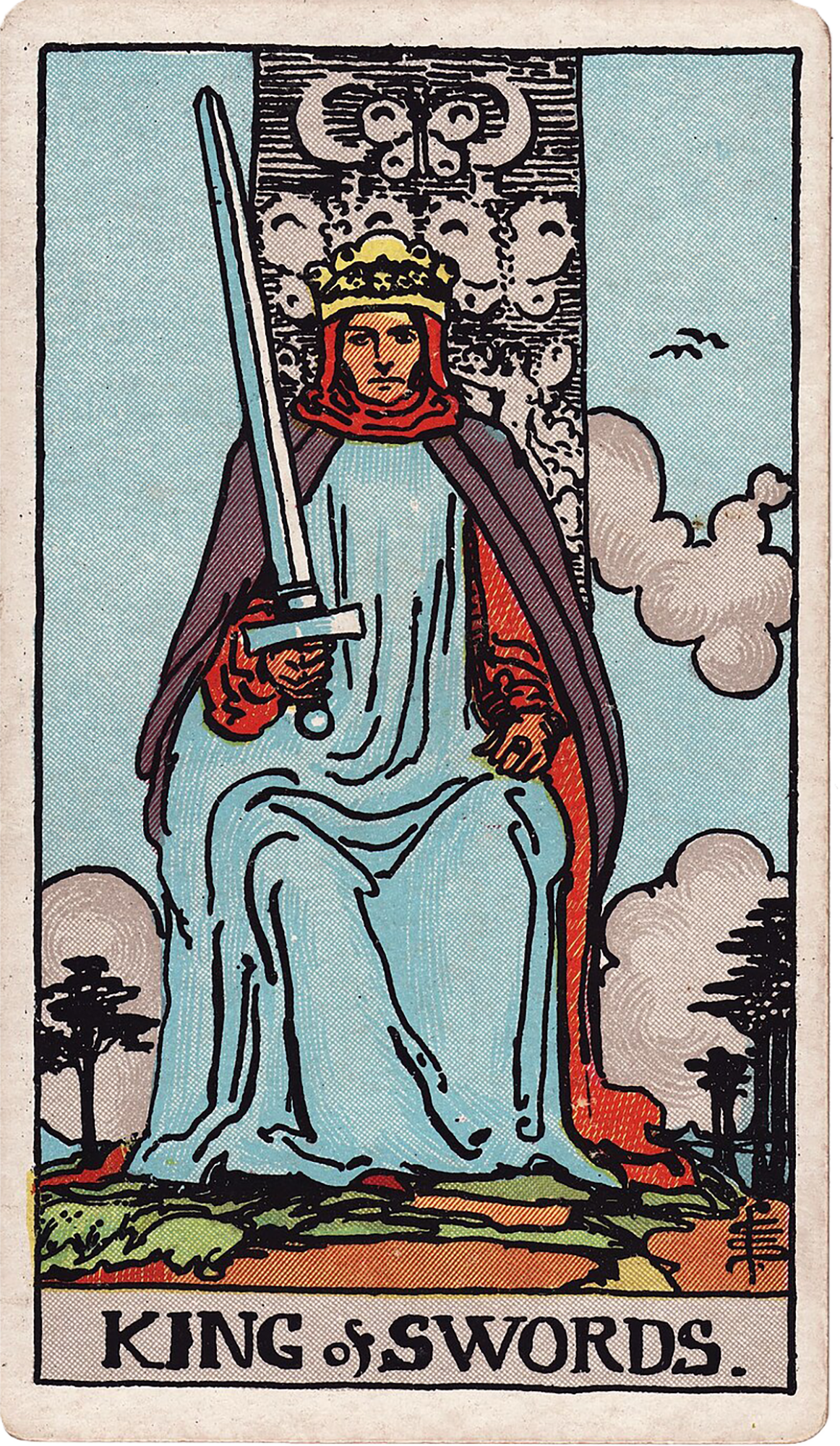 King of Swords
Introduction and how to use this lesson
This article is a single-card context lesson focused exclusively on the King of Swords. The supplied card image and the attached upright and reversed notes are our primary sources: Upright, King of Swords highlights mature intellectual authority, strategic judgment and decisions based on principle and evidence. The card is practical: it asks for a response that fits the present stage rather than an abstract ideal. Consider where this pattern is already visible and what action would strengthen its constructive side. Reversed, King of Swords draws attention toward coldness, intellectual arrogance, manipulation, abuse of authority or treating people as problems rather than participants. The reversal may show too much of the card's usual energy, too little of it, or a situation where the lesson is understood intellectually but not yet lived consistently. Use this article as a workbook: read the imagery closely, work through the step-by-step method, test with practice questions, and use the reflection exercises at the end.
Read the image first: Rider–Waite–Smith symbolism to anchor interpretation
Begin every single-card reading by looking at the card as an image before leaping to meanings. On the Rider–Waite–Smith King of Swords you will notice a seated royal figure holding his sword upright. He wears a crown and robes and sits on a throne detailed with symbolic carvings. Key visual signifiers to note and why they matter: - Sword held upright: literal emblem of clarity, truth, decisive judgment and moral principle. The vertical sword points to intellectual authority and a capacity to cut through confusion. - The seated posture and crown: authority, responsibility, visible leadership. The king is not on a battlefield; he is in a position to rule by thought and law rather than muscle. - Throne decorations and butterflies or cherubic faces (Rider–Waite–Smith motifs): the butterflies are traditional symbols of the soul and transformation of thought; they remind us the mind is alive, not merely mechanical. Cherubic faces or carvings are reminders of ethical oversight and higher counsel. - Landscape and sky: clear sky or clouds indicate the level of intellectual clarity or the presence of mental disturbance to be addressed. These details ground your reading. When you reference the upright and reversed descriptions, tie those words back to what you can actually see on the card image: the upright demands strategic judgment and practical thinking; the reversed calls attention to coldness or intellectual abuse. Keep your observations concrete: which details shout 'clarity' or 'rigidity'?
Interpretation logic: three lenses to hold together
To interpret the King of Swords reliably, hold three lenses in mind and move between them: 1) Archetype and function: The King of Swords is an archetype of mature intellect, lawful judgment, and ethical direction. Think of functions — decision-maker, arbiter, strategist — rather than only personality traits. 2) Orientation and intensity: Upright versus reversed describes direction and degree. The supplied upright text emphasizes strategic judgment and practical intellectual response; the reversed text points to excess or lack — coldness, arrogance, and manipulation. Ask whether the card is showing a healthy use of authority, an overused type, or a blocked lesson. 3) Contextual application: The same archetype plays different roles in love, work, money, negotiation, and spiritual inquiry. Use clear questions to move from archetype to applied meaning: What role does 'mature intellectual authority' play here? Are we being asked to act as the authority, to consult one, or to examine how authority is being misused? Combining these lenses keeps readings nuanced: you are not just naming 'leadership' — you are assessing how that leadership is functioning and what action will reinforce or correct it.
Upright King of Swords across contexts
Keep the supplied upright description in view: ‘Upright, King of Swords highlights mature intellectual authority, strategic judgment and decisions based on principle and evidence.’ Below are context-specific ways to translate that energy in a single-card pull. For each, I include the image cues that support the interpretation and practical questions or actions you can suggest. - Leadership: The King of Swords upright often points to a leadership style grounded in clear standards, logical strategy and impartial decision-making. Image cues: throne, crown, upright sword. Practical reading: Recommend transparent policies, structured communication, and decisions explained with reasoning. Ask: Where would applying consistent principle strengthen trust? - Negotiation: The card suggests negotiating from logic, evidence and principled boundaries rather than emotion. Image cues: the upright sword as a tool to cut to essentials. Practical reading: insist on clear facts, prepare outlines, set non-negotiables, and avoid rhetorical tricks. Suggested action: prepare a concise brief that frames your position in terms your counterpart can verify. - Legal advice and dispute resolution: Here, the King of Swords upright functions like counsel who values precedence, evidence and ethical rigour. Image cues: courtly posture and solemnity. Practical reading: collect documentation, clarify your desired legal standard, and seek counsel who will be direct and forthright. - Career and management: A promotion to a role requiring judgment, policy-making or oversight; or the need to adopt those skills. Image cues: authoritative posture. Practical reading: build decision frameworks (pros/cons tied to criteria) and communicate the rationale for choices. - Money and financial planning: Think disciplined analysis, long-term strategy and principled spending or investment. Image cues: the king’s composed demeanor implies fiscal steadiness. Practical reading: favor documented plans, transparent risk assessment and avoiding impulsive choices. - Love and relationships: The upright King of Swords can represent a partner who is honest, consistent and sometimes reserved. Image cues: the king’s seriousness. Practical reading: practice clear agreements and boundaries, honest conversation about expectations, and avoid conflating emotional support with intellectual problem-solving. - Challenge: When the card appears as a challenge it asks you to act with clear thinking and to avoid emotionally reactive decisions. Image cues: the verticality of the sword as corrective. Practical reading: slow down, list facts, identify principles at stake. - Person: As a person card, the King of Swords can indicate someone in your life who embodies authority, legal knowledge, or analytic insight: a judge, lawyer, manager or an older person who speaks plainly. Image cues: crown and robes. Practical reading: consider consulting this person or adopting their decision practices. - Outcome: Upright, this card predicts resolutions that are arrived at through reason, policy and fairness. Expect decisions that privilege clarity over sentimentality. Image cues: the king’s settled posture indicating arrived conclusions. - Spiritual reflection: The King of Swords upright invites a discipline of discernment: clean thinking that supports ethical action. Image cues: the butterflies remind you thought transforms the soul. Practical reading: develop contemplative practices that refine judgment (structured journaling, dialectical reflection). Always ask: does this clarity serve compassion or merely assert control?
Reversed King of Swords across contexts
Use the supplied reversed description as the primary guide: ‘Reversed, King of Swords draws attention toward coldness, intellectual arrogance, manipulation, abuse of authority or treating people as problems rather than participants.’ The reversed card is less about 'bad person' and more about where the King energy has become stuck or distorted. Below are context-specific translations and corrective actions. - Leadership: Reversed warns of authoritarian decisions made without listening. Image cues: the same throne and sword but tilted meaning. Practical reading: recommend feedback loops, accountability measures, and concrete steps to include stakeholders. Ask: where are voices being silenced? - Negotiation: Reversed energy signals manipulative tactics, rhetorical traps, or debates that prioritize winning over fair outcomes. Practical reading: refuse to be drawn into traps, document offers, insist on clear language, and record agreements. Seek mediators if needed. - Legal matters: In reverse the King can indicate counsel who is overly aggressive, uses legalism to bully, or someone who hides motives. Practical reading: seek second opinions, audit fees and motives, and insist on transparent counsel. - Career and management: Reversed suggests micromanagement, stifling of collaboration, or decisions made for optics. Practical reading: foster clarity about roles, institute protections against abuse of power, and push for concrete criteria for promotions. - Money: Reversed warns of rationalizations used to justify unethical financial decisions or cold, short-term cost-cutting that damages relationships. Practical reading: apply ethical filters and stress-test assumptions with peers. - Love and relationships: Reversed often signals emotional distancing, treating a partner as a problem to fix, or intellectualizing feelings instead of engaging. Practical reading: practice empathic listening, name emotions, and invite participation rather than diagnoses. - Challenge: As a challenge the reversed King points to rigid thinking or manipulative rhetoric that must be dismantled. Practical reading: ask where you or others are using 'facts' as armor. Simplify and humanize the dialogue. - Person: The reversed King may be someone who projects authority but lacks integrity, or who is trapped in their own head. Practical reading: protect yourself from coercion; set boundaries and verify claims. - Outcome: Expect outcomes shaped by strategic intellectual pressure; reversed warns the outcome may be technically ‘correct’ but ethically compromised or relationally destructive. Practical reading: weigh justice versus victory. - Spiritual reflection: Reversed invites you to examine how intellect has become a defense or a mask. Image cues: where the upright sword cut clarity, the reversed sword may slice compassion. Practical practice: cultivate humility in thinking, confess where intellect avoids accountability, and engage practices that integrate heart and mind (somatic work, confession, community input).
Practical one-card reading technique using the King of Swords
Here is a step-by-step technical method to use when this card is your single-card reading. Apply the same method for upright or reversed pulls. 1) Clarify the question: frame a precise, answerable question (e.g., 'How should I approach the upcoming contract negotiation?' rather than 'What will happen?'). 2) Orient to the image: spend one to two minutes looking at the supplied King of Swords image. Note three concrete visual details (sword, throne, crown, sky, butterflies). 3) Name the archetype aloud: say 'King of Swords — mature intellectual authority'. 4) Read the supplied orientation: state whether it came upright or reversed and recite the short supplied summary mentally: upright = strategic judgment based on principle and evidence; reversed = coldness, intellectual arrogance or misuse of authority. 5) Apply context lens: pick the context you need (leadership, negotiation, legal advice, etc.) and ask, 'How does mature intellectual authority show up here?' or 'Where is authority being misused?' 6) Evidence check: list concrete facts from the situation that correspond to the card’s advice (documents, behaviors, timelines). 7) Translate to action: make 1–3 concrete recommendations that would strengthen the upright expression or remediate the reversed distortions (e.g., 'Prepare a three-point evidence summary, name two non-negotiables, propose mediation clause'). 8) Test for ethical alignment: the King of Swords presumes principle; discard actions that achieve advantage by deception. 9) Follow-up questions: if the card raises uncertainty, pull clarifying cards or ask specific operational questions ('What is the first step?') 10) Record the reading: write down the visual notes, the upright/reversed summary, the facts you listed, and the actions recommended. This creates a verifiable trail to judge the card’s usefulness later.
Concrete examples and sample readings
Practice anchors understanding. Below are three concise example readings that show how to apply the King of Swords image and supplied meanings. Example 1 — Contract negotiation (upright): Situation: You must negotiate terms with a vendor who is late to deliver. Single-card pull: King of Swords upright. Image cues: sword upright — cut to essentials. Interpretation: Negotiate from documented facts and principled non-negotiables (delivery schedule, penalties). Actionable steps: prepare a two-page timeline of missed milestones, draft proposed remedies, and state the legal standard you expect. Example 2 — Workplace promotion (reversed): Situation: You fear your manager is blocking your promotion. Single-card pull: King of Swords reversed. Image cues: regal posture but rigid. Interpretation: Manager may be using opaque criteria, micromanaging, or applying standards inconsistently. Actionable steps: request written criteria, present evidence of accomplishments tied to the criteria, and get mentorship or HR advocacy to ensure accountability. Example 3 — Relationship conflict (upright): Situation: A partner insists on 'logical solutions' for emotional problems. Single-card pull: King of Swords upright. Image cues: composed, sincere. Interpretation: The card asks you to acknowledge the utility of clear boundaries and agreements but also to translate them into emotionally intelligible terms. Actionable steps: craft a statement of needs in clear terms and pair it with an empathic opening (e.g., 'I need X because I feel Y'). These examples show tying the image to plain evidence and then producing concrete next steps.
Common mistakes and how to avoid them
Students frequently make a small set of recurring errors with the King of Swords. Recognize them and apply the corrections below. - Mistake: Reading the card as an endorsement of coldness. Correction: The King’s intellectual clarity is a tool, not a moral stance; the upright asks for principle, not emotional distancing. - Mistake: Confusing authority with infallibility. Correction: Even 'good' authority can be wrong; always cross-check facts and demand accountability. - Mistake: Using the card as excuse to lecture others. Correction: Ask whether the situation calls for persuasion or collaboration; the King’s strength is clarity, not coercion. - Mistake: Treating reversed meaning as a label of permanent character defect. Correction: The reversal often shows process stuckness — what needs practice or acknowledgement? - Mistake: Ignoring the image and relying solely on keywords. Correction: Reconnect to the sword, crown and throne in the supplied image; these details guide nuance. Avoid one-word summaries and prefer actionable language.
Techniques to strengthen the healthy King of Swords energy
If you want to cultivate the card’s constructive qualities in yourself or a group, try these practices oriented to the imagery: - Structured deliberation: emulate the King’s throne by creating a decision ritual: state the problem, list facts, propose options with pros/cons tied to criteria, decide by pre-agreed rules. - Evidence journaling: keep a one-page evidence file for major decisions (dates, communications, metrics) to prevent rhetorical manipulation. - Communicative clarity drill: practice delivering short, calm summaries of complex topics (two-minute explanations). The upright sword favors concise truth. - Humility practice: pair rigorous thinking with a 'one dissenting view' ritual — invite a trusted colleague to argue the opposite position. - Legal and ethical literacy: read basic codes of practice relevant to your work so authority is anchored in knowledge rather than posture. These techniques map directly onto the throne, sword and crown imagery: the throne = structure, the sword = clarity, the crown = responsibility.
Integrating the King of Swords into broader practice and concluding notes
As a single-card study, the King of Swords gives you a focused lens. But remember: tarot is a tool for discernment, not deterministic prophecy. Use the card to illuminate decision structures, to ask better questions, and to design ethical actions. When you read the supplied King of Swords image be especially mindful of whether it appears upright (a practical call to apply reason and principle) or reversed (a signal that intellect needs softening, accountability, or reintegration). Anchor every interpretation in the visible cues of the card and then translate those cues into concrete, verifiable actions. Over time, keep notes of your readings and outcomes — that will train your sense of how this card functions in your life and your community.
Practice questions
• When you look at the supplied King of Swords image, which three visual details strike you first and why?
• In a current decision you face, where could clearer principles and evidence improve the outcome?
• Where in your life might you be using intellect as a defense rather than as a tool of service?
• If the King of Swords appeared reversed about a close relationship, what specific behaviors would you watch for?
• What practical step can you take this week to make a decision process more transparent and accountable?
Comments
Sign in to comment.
Continue learning
Understanding the Synergy Between The Empress and The Emperor in Tarot Card Combinations
This article delves into the intricate synergy between The Empress and The Emperor cards in Tarot, focusing on how their combined energies modify and enrich readings across various...
Exploring The High Priestess in Career Relationships and Personal Growth
The High Priestess card in the tarot deck invites readers to explore intuition, hidden knowledge, and inner wisdom across various life contexts. This article examines how The High...
Using the Five Card Cross Tarot Spread to Navigate Career Changes with Confidence
The Five Card Cross Tarot Spread is a versatile and insightful tool for navigating career changes. This article guides learners through the method step-by-step using a practical ex...
Exploring The Hierophant in Modern Spiritual Practices and Personal Development
The Hierophant tarot card symbolizes structured wisdom, tradition, and the pursuit of knowledge through established systems. This article explores how The Hierophant’s upright and...
Unlocking Personal Ambition and Emotional Balance with The Chariot and Queen of Cups
The Chariot and Queen of Cups together represent a compelling combination of disciplined ambition and emotional maturity. This article guides learners through understanding how the...
Understanding The Tower in Tarot for Navigating Sudden Change and Crisis
The Tower card in Tarot symbolizes sudden, often disruptive change that destroys false foundations and compels honest reassessment. This article provides a comprehensive exploratio...
Understanding The Hanged Man in Personal Sacrifice and Spiritual Growth
The Hanged Man tarot card embodies the themes of intentional pause, surrender, and gaining new perspectives that foster personal sacrifice and spiritual growth. In this article, we...
Discovering The Hermit in Meditation and Self Reflection Practices
The Hermit tarot card, a symbol of introspection and deliberate solitude, offers profound lessons for meditation and self-reflection practices. This article unpacks its upright and...
Unlocking Emotional Balance with The Lovers and Temperance in Tarot Combinations
This article explores the dynamic interplay between The Lovers and Temperance cards in Tarot readings, focusing on how their combination unlocks emotional balance and integration....
Understanding the Court Cards of Pentacles for Practical Wisdom and Grounded Ambition
The Court Cards of Pentacles—Page, Knight, Queen, and King—offer a rich framework for understanding practical wisdom, grounded ambition, and stewardship of material resources. Anch...