
Reading Architectural Symbols in Tarot Imagery
This article teaches how to read architectural features in Tarot imagery as coherent symbolic language. Using the supplied images of The Emperor, The Hierophant, The Tower, and 4 of Wands, it explains how elements such as thrones, temples, towers, gateways, materials, thresholds, scale, and damage shape meaning in practice. The piece offers techniques for noticing architecture, a step‑by‑step method for interpreting structural details in spreads, worked examples combining the supplied cards, common pitfalls, and exercises to build skill. Emphasis is on the Rider‑Waite‑Smith visual tradition and on using architectural clues to refine—not replace—contextual interpretation.
Cards explored in this article
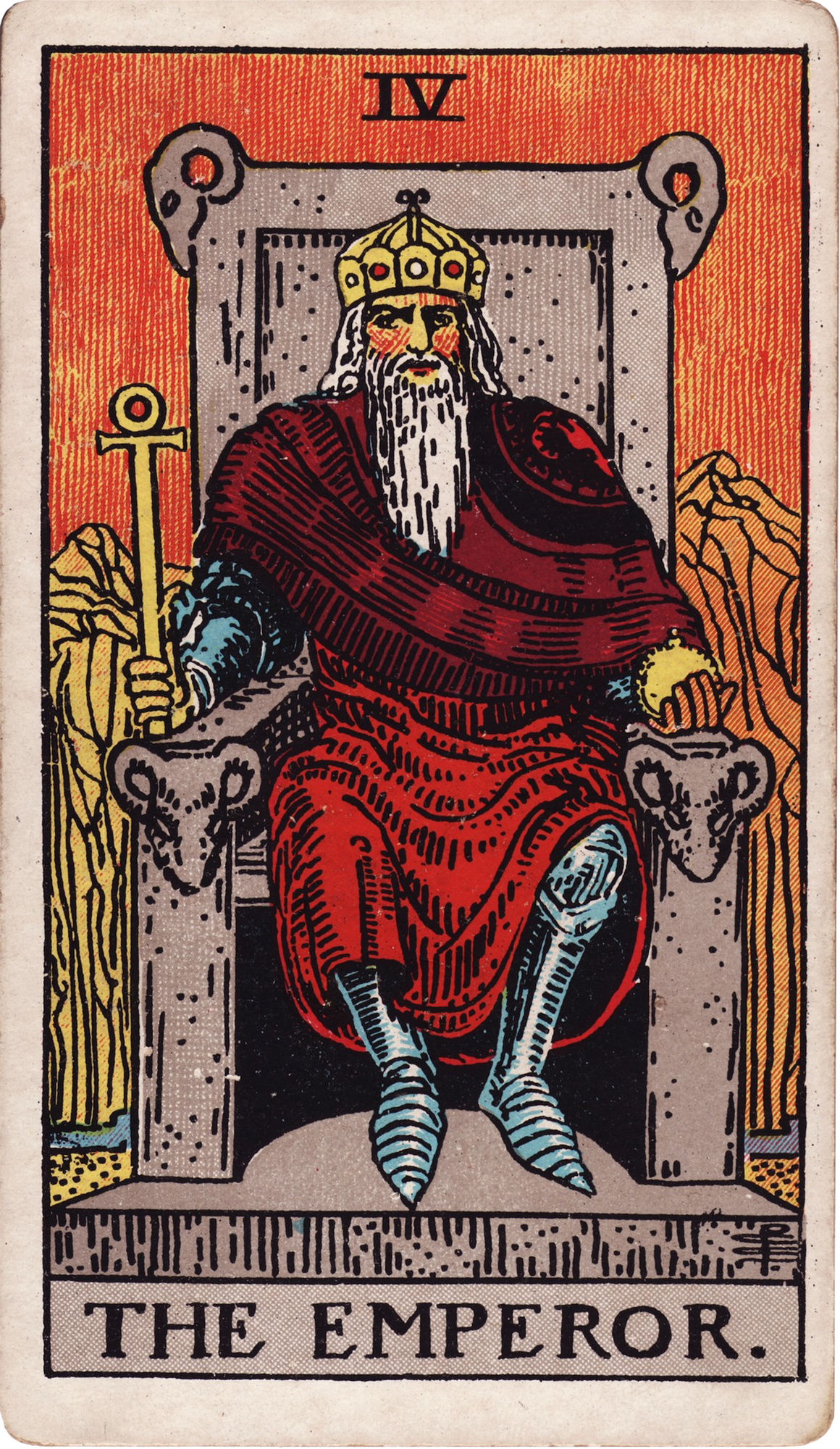 The Emperor
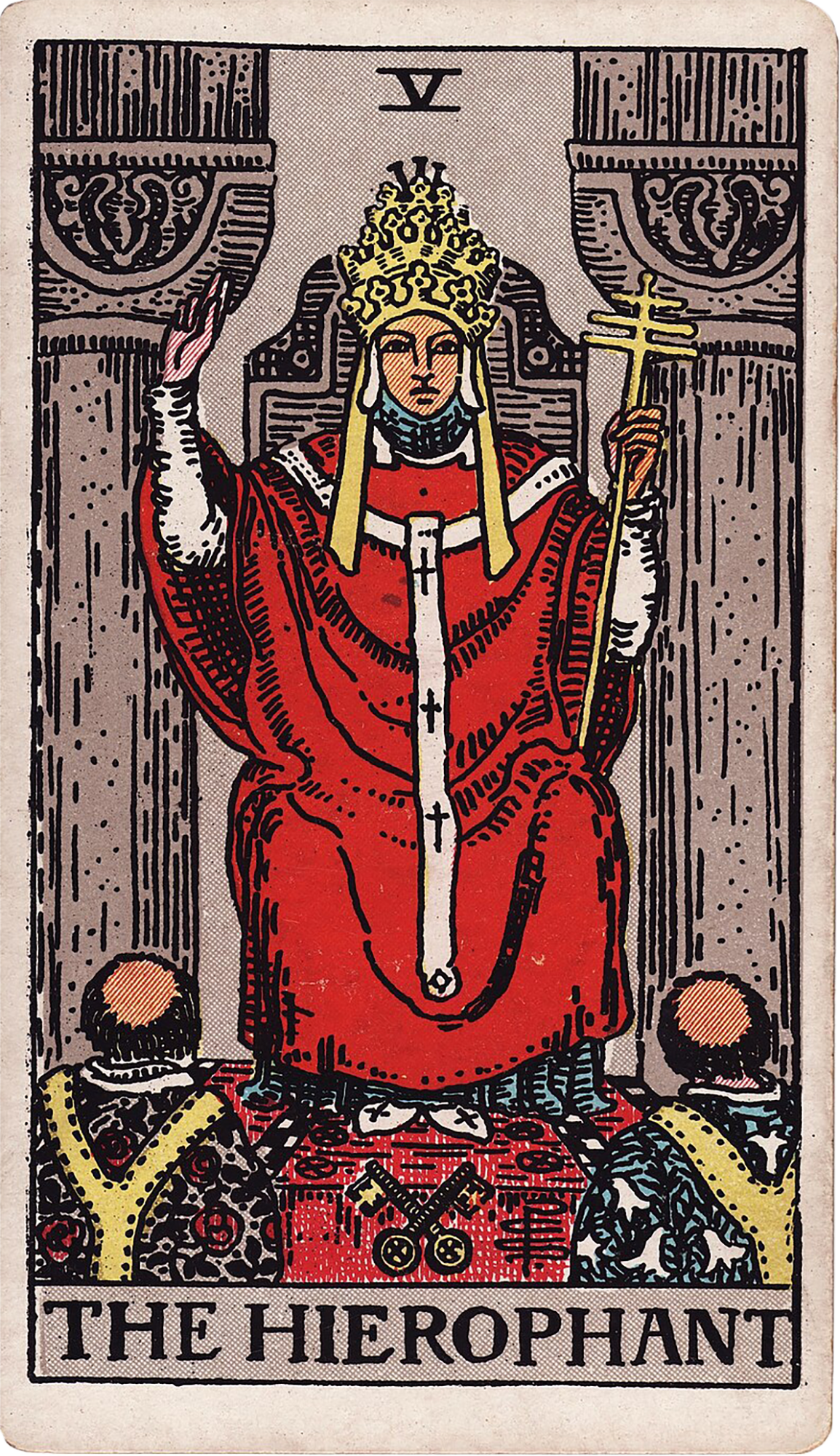 The Hierophant
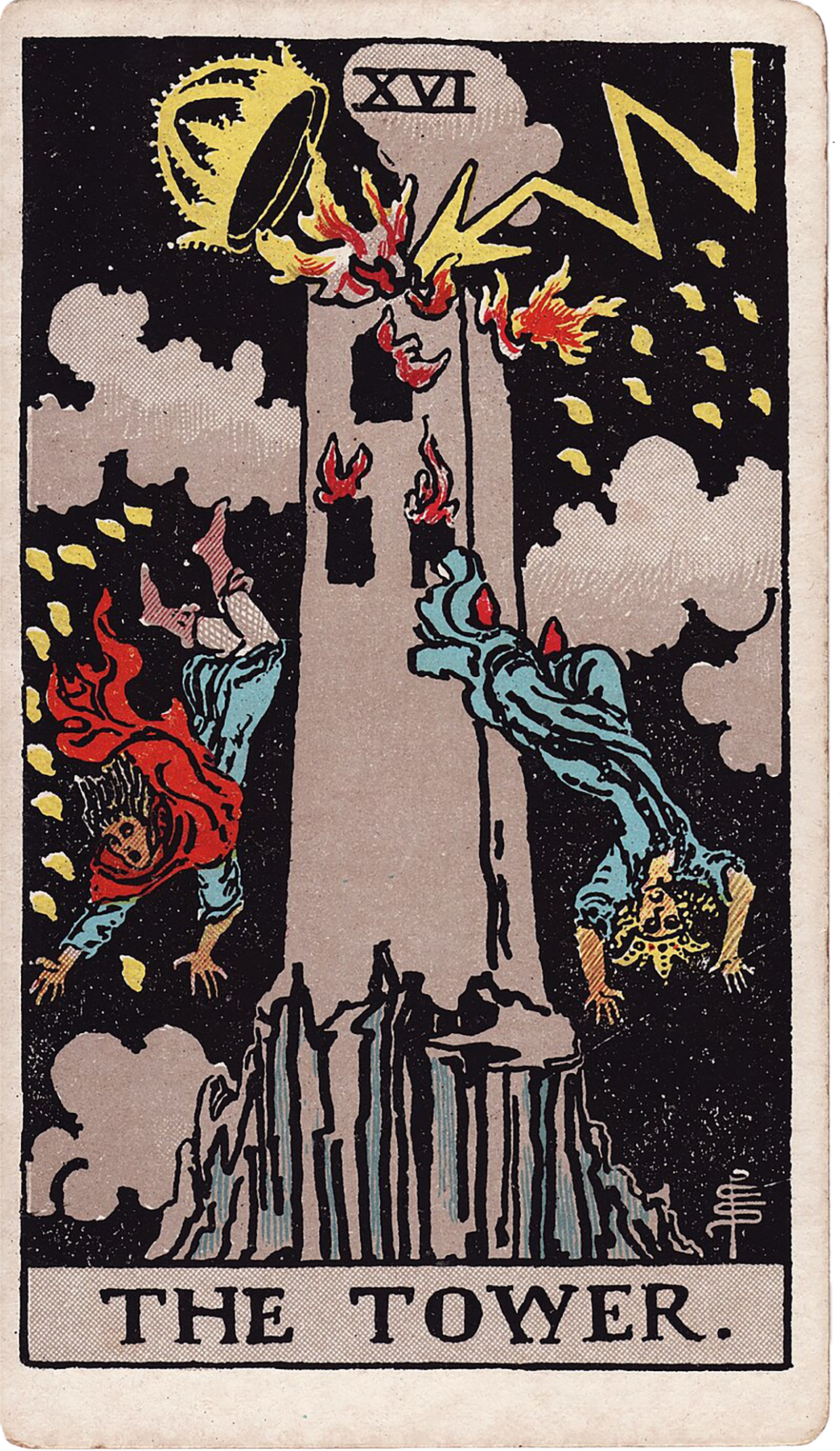 The Tower
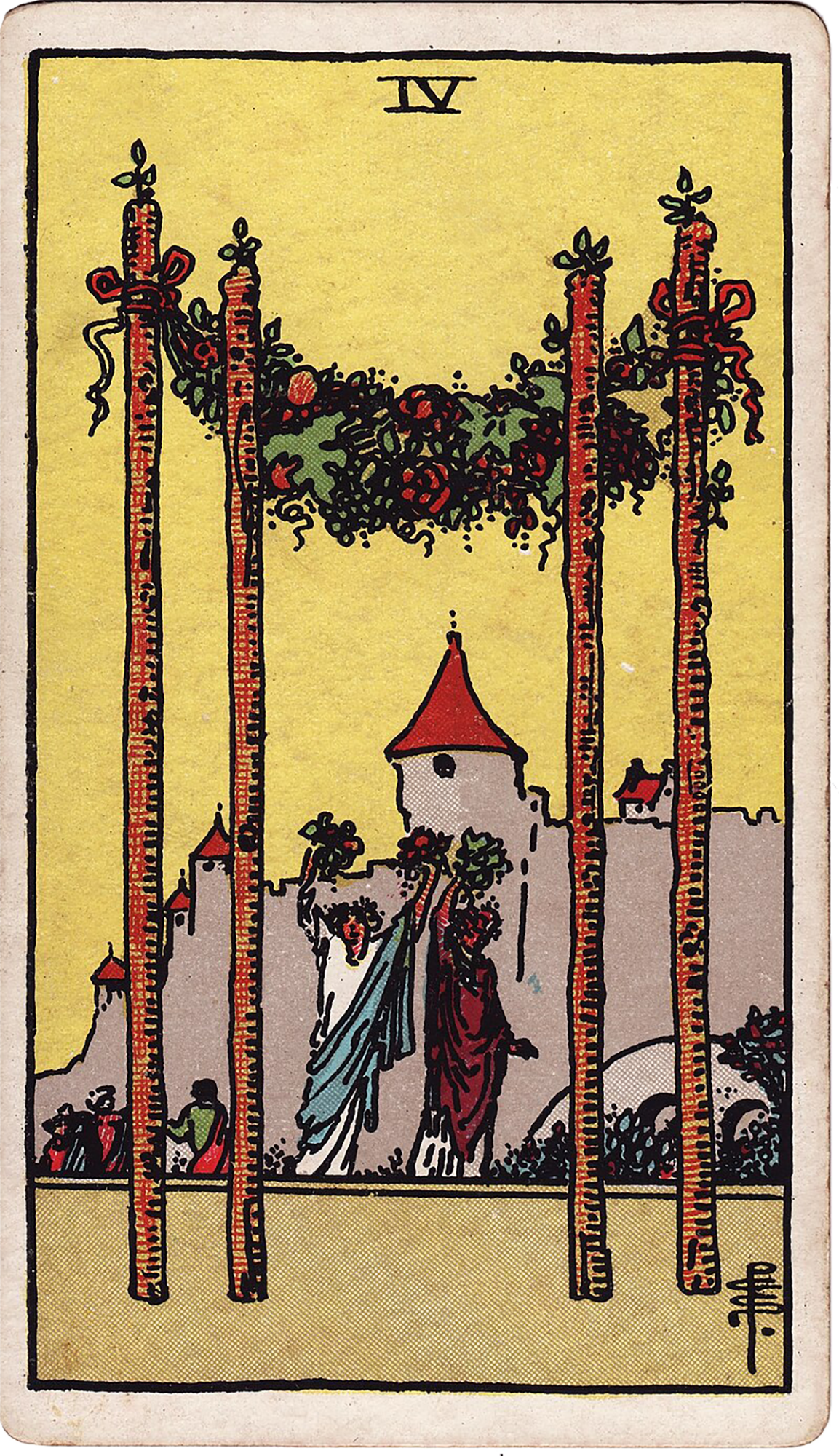 4 of Wands
Why architecture matters in Tarot imagery
Architecture in Tarot is not mere background. Thrones, temples, towers, gates, and domestic structures operate as a visual grammar that communicates authority, shelter, openness, confinement, transition, permanence, and collapse. When you learn to read these elements, you gain a second layer of language alongside figures, gestures, color, and numerology. The supplied cards—The Emperor, The Hierophant, The Tower, and 4 of Wands—are particularly rich with architectural cues. The Emperor’s stone throne and mountainous backdrop, the Hierophant’s temple‑like seat and keys at his feet, the Tower’s jagged architecture mid‑destruction, and the temporary garlanded structure of the 4 of Wands each model different kinds of human order and space. This article treats those images as case studies to show how architectural reading strengthens practical interpretation during a spread.
Basic vocabulary of architectural symbolism
Before reading complex scenes, internalize a few reliable associations: solidity and permanence (stone, thrones, mountains), authority and ritual space (pillars, altars, keys), threshold and celebration (archways, garlands, open gateways), vulnerability and sudden change (cracks, lightning, crumbling walls), scale and relationship (small figures against big buildings = subordination or protection; large architecture dwarfing figures = institutional force). Materials matter: stone and masonry suggest longevity and institutional power; wood implies craft and temporary construction; fabric and garlands indicate ephemeral celebration or communal marking. Damage—fire, cracks, falling crowns—signals structural truth, forced revelation, or the end of an arrangement. Light and height tell you about aspiration and enlightenment versus isolation and exposure. These cues are consistent with Rider‑Waite‑Smith (RWS) tradition and are useful across many decks, provided you respect deck‑specific choices.
Reading The Emperor as architectural authority
The Emperor’s throne is a concentrated lesson in architectural symbolism. In the RWS tradition the Emperor sits on a carved stone seat often decorated with ram heads; mountains rise behind him. The throne’s stone implies permanence and structure: this is ruled by law, boundary, system. The ram imagery connects to Aries and the principle of active, ordered leadership. When reading The Emperor, notice these architectural facts and their conversational role in the card. A throne placed high or built of heavy stone will emphasize institutional stability, structural rules, and explicit boundaries. The mountains behind the throne reinforce immovability—this is not something easily changed. In a spread, ask where a stable container, clearer boundaries, or ordered process is available or needed. Conversely, if surrounding cards show strain (for example, if The Tower appears nearby), the same throne can be read as brittle rigidity—a structure that will be tested. Practice detail prompts: identify if the throne integrates symbolic animals (as the rams do), whether the architecture faces outward (engagement) or is inward‑facing (insularity), and whether the throne’s base is solid or precarious in the image. These observations add nuance: a solid, uncracked throne strengthens the literal upright meanings (responsibility, disciplined leadership); a throne shown with cracks or isolation may hint at rigidity, fear of vulnerability, or the need to revise structures.
Reading The Hierophant as temple and transmitted order
The Hierophant is essentially an architectural figure: he sits within a ritualized space that echoes a temple or ecclesiastical interior. In RWS imagery you see a figure between two pillars, a staff with a triple cross, and keys often placed at his feet—these architectural and liturgical props identify him as guardian of tradition and ritual thresholds. When the Hierophant appears, examine how the image frames access and mediation. Pillars or columns indicate a threshold between inside and outside: who receives instruction and who is excluded? The keys at the Hierophant’s feet in RWS signal access to a coded system—ritual knowledge or institutional authority. Look at the relationship between the Hierophant and other figures in the card image: are they making an offering, receiving a blessing, or hidden from view? That relationship tells you about educational dynamics, apprenticeship, formalized rules, or dogma. Architecturally, a closed temple points to conformity and established doctrine; an open porch or visible community space suggests practical teaching and shared practice. Use that architectural reading to pose practical questions during a reading: Which system is being asked to be learned? Which gate of custom is either helpful or restricting? Is the querent standing before a closed door of institution or at a welcome threshold?
Reading The Tower as structural crisis and necessary revealing
The Tower’s architecture is one of sudden failure. In the RWS card a tall tower is struck by lightning; crown and occupants fall; flames erupt. The structure’s verticality, a crown perched on top, and a windowed form suggest a constructed achievement—pride, plans, or an illusory edifice—now exposed. Read towers as arrangements that promise height, protection, or prestige; when damaged they illustrate rapid exposure and the collapse of illusion. Pay attention to the cause of damage in the image: lightning implies sudden truth or external intervention, while fire or internal cracks could suggest internal corrosion. Also note what remains after the fall—the base, the ground, and whether any people survive nearby. In readings, The Tower’s architecture asks where a structure must be allowed to fall so that what is real can be rebuilt. If The Emperor’s stone throne appeared previously, The Tower can be read as destabilizing that throne; if the Hierophant’s temple shows up, The Tower may point to institutional failure or the exposure of dogma. Architectural nuance—how much of the tower remains standing, how close the flames are to other structures—helps gauge scope and timing of disruption.
Reading 4 of Wands as threshold festivities and temporary structures
The 4 of Wands shows a decorated gateway formed by four wands, often with a garland and celebrants, and a distant festal building. Architecturally this is a threshold that marks celebration—a temporary, constructed space that organizes communal joy. Read the garlanded archway as a liminal frame: it delineates a stage between everyday life and a marked event (a milestone, homecoming, or public recognition). The castle or houses in the background suggest the stability that lies beyond celebration—a community or domestic foundation being acknowledged. In upright readings emphasize acknowledgement, shared stability, and communal structures that support identity. Reversed or complicated positions may highlight instability beneath appearances or difficulty accessing that communal safety. Practically, ask: what doorway is being commemorated? Is the structure temporary (a ritual marker) or does it point to an underlying permanent space (the castle) that needs recognition? The architectural relationship between the garlanded foreground and the distant buildings gives clues about whether celebration is cosmetic or grounded.
Technique: step by step method for reading architectural elements in a spread
Use a reproducible procedure while reading so architecture becomes part of interpretive routine rather than an optional flourish. 1) Scan globally for major structures: what buildings, thrones, gates, or towers appear across the spread? Note the four supplied cards’ structures immediately. 2) Isolate materials and condition: are elements stone, wood, fabric; intact, ornamented, cracked, or burning? On The Emperor’s stone throne you should mark permanence; on The Tower note physical breach. 3) Identify thresholds and axes: doors, gates, and arches create lines of movement. In 4 of Wands the arch is a clear threshold; the Hierophant’s pillars form a vertical axis separating inner and outer. 4) Compare scale and figure placement: are people inside or outside the architecture, above or below it? The Hierophant’s pilgrims kneel below his elevated seat—indicating vertical hierarchy. 5) Assess relational dynamics between cards’ architectures: does one structure overshadow another, threaten it, or complement it? For instance, The Tower’s crumbling form can destabilize an Emperor throne in the same spread. 6) Translate architectural metaphors to practical questions: what structure is being proposed, maintained, challenged, or celebrated in the querent’s life? 7) Test with body language and numerology: confirm your architectural read with other symbols (gestures, numbers—Four in 4 of Wands suggests stability of stage). This procedure ensures architecture is systematically integrated into meaning.
Worked examples combining the supplied cards
Example 1: The Emperor (upright) + 4 of Wands (upright). The Emperor’s stone throne suggests a formal structure or leadership; the 4 of Wands’ garlanded gateway points to a public celebration or communal milestone. Together they could indicate a formal acknowledgment of leadership—a promotion, a public rite that strengthens the household, or the use of clear boundaries to allow communal joy. Architecturally read that a stable institution (throne) is creating or endorsing a celebratory threshold (garlanded arch). Practical question: what ritual or marking would make a new boundary feel acknowledged and secure? Example 2: The Hierophant + The Tower (upright). The Hierophant’s temple and keys symbolize transmitted doctrine and guarded thresholds; The Tower’s struck architecture signals sudden revelation or collapse. A likely reading is that a long‑standing doctrine or institution is being exposed or broken. Architecturally this reads as the temple’s enclosed order being breached. Use this to ask whether the querent’s allegiance to a system needs reassessment, or whether public truth requires reform. Example 3: The Tower followed by 4 of Wands. First a collapse (Tower) then garlanded threshold (4 of Wands) suggests a rebuild that turns newfound freedom into communal celebration; the architecture of catastrophe gives way to an emergent provisional order—a ritual that marks survival or commitment after upheaval. Always temper these readings with position, reversals, and the querent’s situation; architectural metaphors map best when tested against lived details.
Common mistakes and how to avoid them
Mistake 1: Treating architecture as mere backdrop. Avoid reading only figures and ignoring structures; a throne or gate changes whose voice is dominant in the scene. Mistake 2: Overliteralizing. A garlanded arch in a card doesn’t always predict a party; read it as a threshold or ritual marker and tie it to context. Mistake 3: Ignoring scale and relationship. If you read The Emperor only as 'authority' and miss how his throne’s scale dwarfs others, you lose nuances of intimidation or protection. Mistake 4: Using the same single metaphor for every deck. The RWS tradition has patterns (throne = rule, tower = collapse) but different decks might alter architecture intentionally—learn the deck. Mistake 5: Forcing chronological narratives. A towerfall image does not always mean an event will 'happen' next; often it signals an inner process of dismantling—interpret as possibility and question. To avoid these mistakes, always cross‑check architectural readings with surrounding visual cues, the querent’s question, and plain practical logic.
Practical exercises to build architectural reading skill
Exercise 1: Single card architectural inventory. Take each card image (use the supplied images) and list five architectural facts: material, scale, threshold, condition, and relation to figures. Then write two questions those facts suggest for a reading. Exercise 2: Comparative pairing. Place two supplied cards together and map how their architectures interact (e.g., Does one overshadow another? Does one threaten the other?). Turn the map into a sentence: 'The Tower’s collapse destabilizes the Emperor’s throne because…' Exercise 3: Contextual translation. Pick a life situation (job promotion, family celebration, institutional conflict) and map which card’s architecture most closely represents that situation and why. Exercise 4: Redescription. Write two short interpretations for each supplied card: one focusing on internal psychological structure and one focusing on external, social/institutional structure. These exercises train you to move between image observation and practical questions.
Interpretation logic and integrating architecture with other symbolic layers
Architecture interacts with color, numerology, gesture, and animal symbolism. The Emperor’s rams (Aries) combine with a stone throne to give active, assertive authority that is also grounded and institutional. The Hierophant’s keys and pillars add access/control layers to a ritual space. The Tower’s lightning is a nonarchitectural agent of change—its presence tells you how sudden and nonpersonal the upheaval might be. The 4 in 4 of Wands numerically signals a stage of established foundation—so its gateway is not a solo improvisation but a mark on a developmental path. Integrating these layers means asking: does the architecture confirm the card’s usual meaning, complicate it, or invert it? If it confirms, use architecture to ask concrete 'how' questions; if it complicates, let architectural tension generate interpretive hypotheses to be tested by clarifying questions to the querent. Always remember this is a qualitative logic: architecture supplies metaphors and constraints not literal deterministic predictions.
Closing practice reading with interpretation checklist
When a spread includes any of the supplied cards, run the following checklist before final synthesis: 1) Identify each architectural feature present and name its primary association (throne = order; temple = ritual; tower = breakdown; garlanded arch = threshold/celebration). 2) Note condition: intact, ornamented, damaged, or provisional. 3) Ask directional questions: Who is inside vs outside? Up vs down? Toward what is the architecture oriented? 4) Compare overlapping meanings across cards: does one card’s architecture enable or threaten another? 5) Translate to a practical intervention: what is a concrete next step the querent could take in response to the structural reading? 6) Frame the answer with probability and agency language: 'This suggests an area where structure might need adjustment' rather than 'this will happen.' This checklist helps you move from image analysis to useful guidance for learners and clients.
Further study and closing notes
Architectural reading is a skill that benefits from slow looking. Study deck variants and historical symbolism—pillars, crowns, and thrones have long iconographic histories in Western art—and annotate your observations across many readings. The supplied cards provide strong, contrasting examples: permanent thrones, ritual temples, collapsing towers, and liminal gateways. Keep a visual journal focusing on these four archetypes, track how they interact in different spreads, and always place architectural interpretation within the querent’s context. The goal is refining sensitivity so architecture becomes a reliable tool for nuance rather than a decorative afterthought.
Practice questions
• When you look at The Emperor’s throne in the supplied image, what three words describe its material, scale, and emotional tone?
• How does the Hierophant’s placement between pillars create a sense of inside/outside in the card? Who is being invited in and who is excluded?
• In the Tower image, what is the cause of the structural damage and what does that cause suggest about whether the disruption is internal or external?
• What doorway or threshold might the 4 of Wands arch be marking in your current life or in a client’s situation?
• Pick two of the supplied cards and describe a scenario where the architectures complement rather than conflict with one another.
• How would you phrase a practical, non‑fatalistic question for a querent when The Tower appears near the Hierophant?
• Which architectural detail in any of the supplied images is easiest for you to overlook, and how will you train yourself to notice it next time?
• Translate the architectural symbolism of The Emperor into a concrete short‑term action step and a longer‑term structural change.
Comments
Sign in to comment.
Continue learning
Harnessing the Power of The Magician and Ace of Wands: Igniting Creativity and Manifestation in Tarot Readings
The combination of The Magician and the Ace of Wands in tarot readings offers a potent blend of creative energy and manifestation power. This article delves into the ways these car...
Advanced Techniques for Combining The Moon and The Star to Enhance Intuition in Tarot Readings
This article explores advanced techniques to combine the symbolism and energy of The Moon and The Star Tarot cards to enhance intuition during Tarot readings. Drawing from traditio...
Enhancing Clarity in Complex Choices with the Five Card Cross Tarot Spread
The Five Card Cross Tarot Spread is a practical tool designed to clarify complex choices by breaking down the decision into manageable parts. This article explores each position in...
Tracing the Origins and Evolution of The Fool Card in Tarot History
The Fool card holds a foundational place in tarot tradition, symbolizing beginnings, openness, and the embrace of uncertainty. This article traces its origins from early European d...
Understanding The Hermit Card in Solitude Reflection and Guidance
This article offers an in-depth exploration of The Hermit tarot card as a single-card reading in different contexts such as love, career, money, advice, challenge, person, outcome,...
Unlocking the Creative Flow with The Magician and The Empress in Tarot Combinations
This article delves into the powerful synergy between The Magician and The Empress in Tarot combinations, focusing on how their combined symbolism unlocks creative flow across vari...
Using the Seven Card Horseshoe Spread to Uncover Career Growth and Opportunity
This article presents an in-depth guide to the Seven Card Horseshoe Tarot Spread with a focus on career growth and opportunity. Using the cards The Fool, The Magician, The Empress,...
Understanding the Many Facets of The Moon in Emotional and Intuitive Tarot Readings
The Moon card in the Tarot deck embodies themes of intuition, uncertainty, dreams, and emotional complexity. This article offers a comprehensive exploration of The Moon’s upright a...
Unlocking Advanced Intuition Techniques Using The High Priestess The Moon and The Hermit
This article examines advanced intuition development in tarot reading by focusing on The High Priestess, The Moon, and The Hermit cards. It offers practical techniques for beginner...
Mastering Intuition with The High Priestess The Hermit and The Moon in Tarot Readings
This article delves into mastering intuition through three powerful Tarot cards: The High Priestess, The Hermit, and The Moon. It guides readers from beginner to advanced reading t...