
Reading Feast and Food Imagery in Tarot for Abundance Community and Nourishment
This article teaches readers how to read feast and food imagery in tarot with a focus on family and community symbolism. Anchored to the cards 4 of Wands, 3 of Cups, and 10 of Cups, it provides technique, interpretation logic, practical spreads and sample readings, common pitfalls, and reflective questions to strengthen your symbolic literacy. Learn to move from noticing edible elements and celebratory visuals to grounded, responsible guidance about abundance and nourishment.
Cards explored in this article
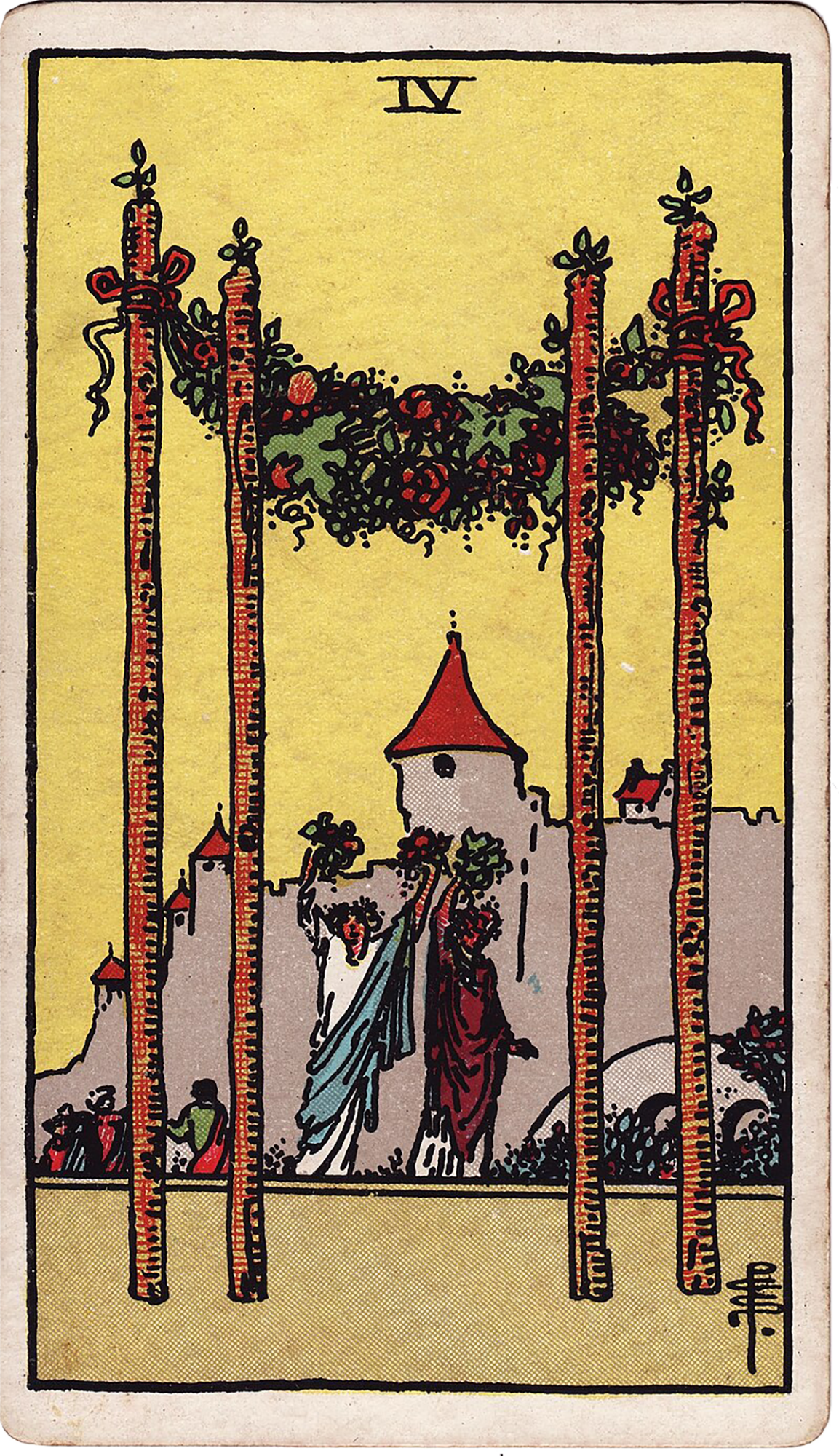 4 of Wands
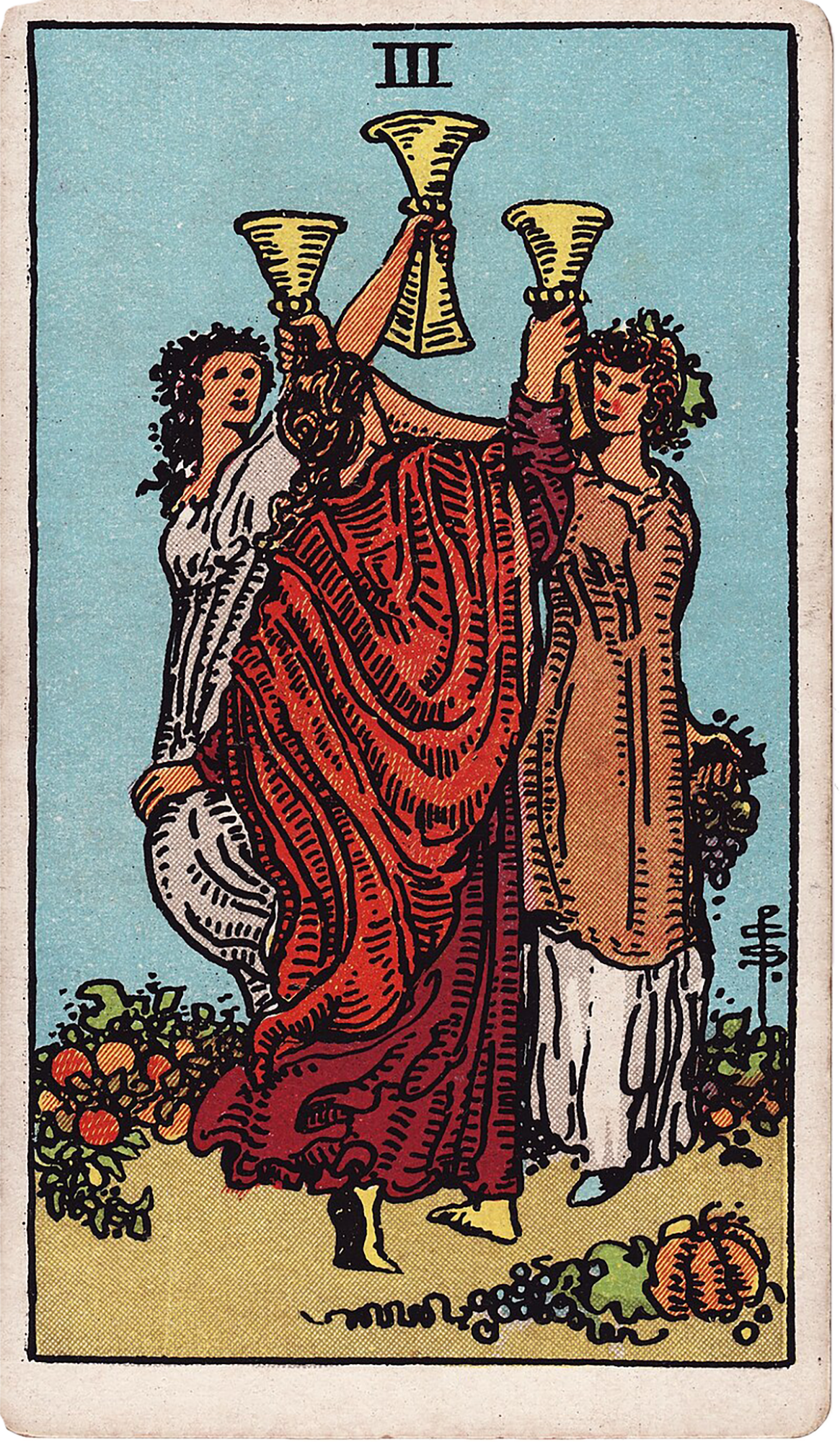 3 of Cups
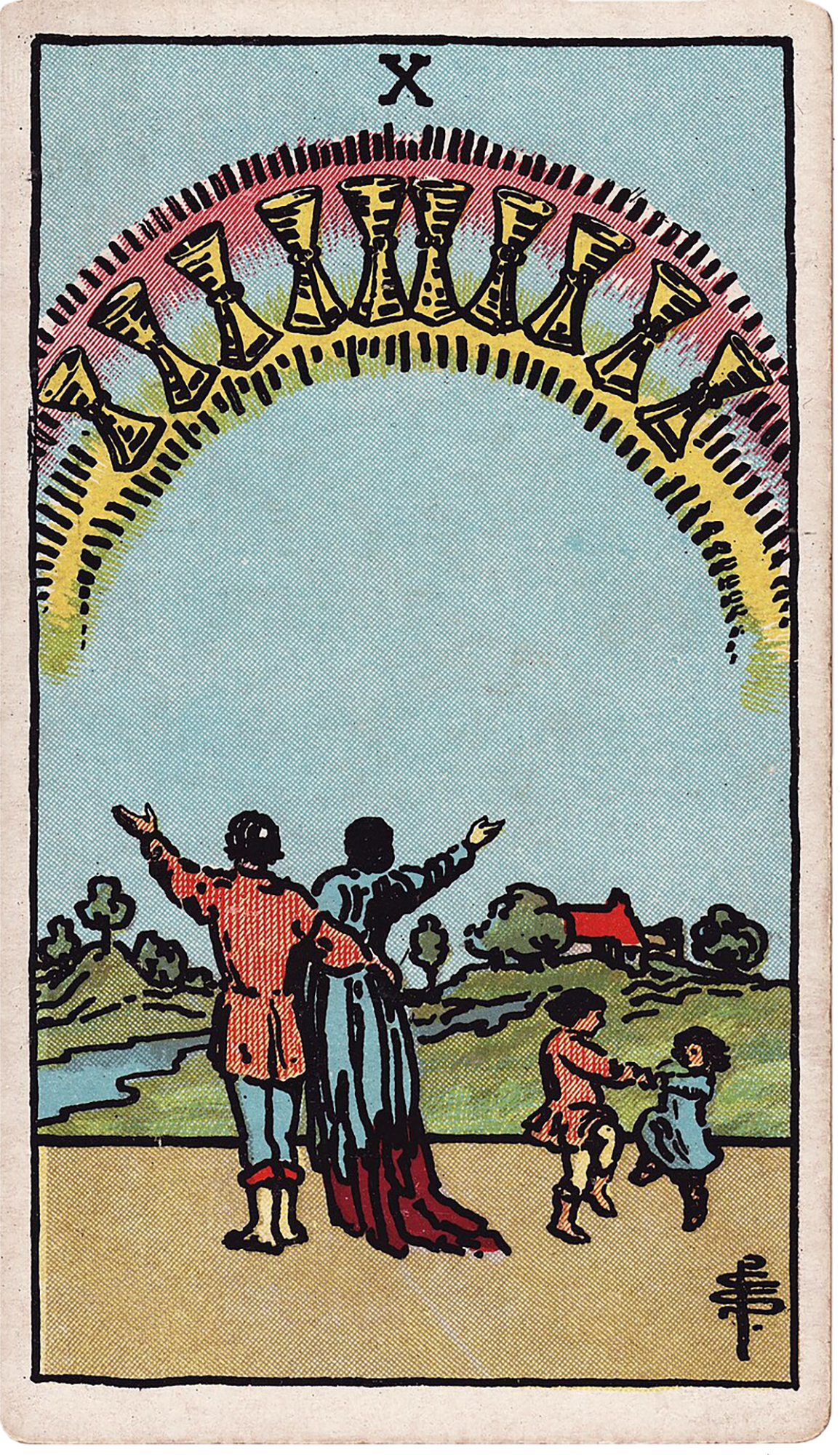 10 of Cups
Introduction: Why food and feast imagery deserves focused study
Food, feast, and household imagery in tarot are powerful shorthand for abundance, care, bonding, and the tensions that arise around provision and belonging. For readers working with family symbolism and communal themes, these images are not only decorative. They encode roles, resources, ritual, and values. This article concentrates on three cards that commonly act as feast signals in spreads: 4 of Wands, 3 of Cups, and 10 of Cups. Each of these cards appears in the Rider-Waite-Smith visual lineage as scenes of celebration, home, or shared satisfaction. We will use their imagery and conventional meanings to build a practical, repeatable approach to reading nourishment and abundance without falling into literalism or simplistic fortune-telling.
How these three cards function as feast and family markers
Begin by keeping two distinctions in mind. First, suit and number supply distinct layers: Cups in this set speak to emotion, relationship and inner life; Wands inject energy, initiative and the public, doing aspect of celebrations. Second, feast imagery tends to combine ritual, resource and social arrangement. 3 of Cups shows people raising cups in communal joy; it is a Cup scene about sharing and emotional reciprocity. 4 of Wands, although a Wands card, is a domestic milestone: garlands, a built structure and dancers indicate a staged celebration, often a household or community achievement. 10 of Cups is the archetypal domestic endpoint for Cups: the rainbow of cups above a family and home signals shared emotional fulfillment and long-term belonging. Read these cards as shorthand for stages of communal nourishment: the emergence of celebration (3), the stabilization of ceremony and space (4), and the promise or reality of sustained emotional abundance (10).
Visual elements to notice and what they mean
Train your eye to catalog concrete details before naming abstract interpretations. For each of these cards, notice the following elements and their likely symbolic valence: - Figures and posture: In 3 of Cups, three figures lift cups toward each other—look for connection, reciprocity, equal participation. Are they facing one another or looking outward? Outward gaze suggests social broadcasting; inward gaze suggests private bonding. - Objects that suggest food or harvest: Grapes, baskets, tables or cups themselves. Cups in RWS act as containers and as the visual stand-ins for emotional sustenance. Fruit suggests harvest, seasonal plenty, or the products of cooperative labor. - Architecture and domestic markers: 4 of Wands often shows a home, flags or garlands—these mark a stable space for gathering. In 10 of Cups, the house and children are foregrounded; this points to household continuity. - Group composition and scale: Three people versus a family signals different kinds of belonging. A tight trio often indicates chosen community or friendship; a nuclear family suggests intergenerational obligation and long-term domestic patterns. - Weather and sky: A clear sky or rainbow in 10 of Cups suggests emotional weather that supports meeting needs; turbulent skies or the absence of celebratory symbols can warn that abundance is fragile or aspirational. Noticing these specifics lets you translate image into a working hypothesis: is this card signaling a shared meal, the ritual of a neighborhood festival, the everyday nourishment of family life, or merely an idealized picture of what could be?
Reading each card in detail with feast and family in focus
4 of Wands: Visual shorthand in the Rider-Waite-Smith imagery includes four upright staves forming a decorated gateway, celebrants dancing beneath garlands, and often a domestic structure in the background. Upright, the supplied meaning emphasizes a stable milestone worth acknowledging, shared joy, and a celebration that feels appropriate to the present stage. Read food imagery in this card as the communal act of making a space for gathering: a table prepared, a garlanded doorway welcoming guests, a meal that marks an achieved stability. Reversed, the supplied description draws attention to instability beneath appearances and delayed celebration. If you see food or feast cues with the reversed 4 of Wands, ask whether the feast is being postponed, whether preparations are incomplete, or whether the public ceremony masks household insecurity. 3 of Cups: The RWS shows three women raising cups, dancing together. Upright, the card highlights shared joy, emotional support, and relationships strengthened by celebration and belonging. As a feast card, 3 of Cups often indicates convivial sharing—potluck dinners, group toasts, rituals that circulate hospitality. Reversed, watch for gossip, exclusion, or overindulgence. In food terms, reversed 3 of Cups can flag social eating that leaves someone out, compulsive consumption, or a party atmosphere masking unmet emotional needs. 10 of Cups: The iconic image is a couple and children beneath a rainbow formed of ten cups; a home sits in the distance. Upright, 10 of Cups signals shared emotional fulfillment, belonging and the possibility of a stable atmosphere of love and mutual support. As a feast image, it can describe the long-term culture of nourishment in a household—the everyday table where needs are reliably met and emotional bonds are affirmed. Reversed, the supplied text warns of family tension, unrealistic expectations, or a gap between public happiness and private reality. When food imagery combines with reversed 10 of Cups, read for performative family feasts, expectations of perfect hosting that pressure members, or scarcity that undermines the idealized tableau.
Numerology and suit logic for food readings
Numerology adds a reliable layer. The number three implies social expansion, community and the outgrowth of relationships—a potluck multiplies with three. The number four suggests foundation, domestic architecture and the structure that makes gatherings possible: a table, a hearth, a roof. Ten signifies completion and systems—the household that reliably reproduces emotional safety. Suit-wise, Cups name the quality of nourishment: emotional receptivity, memory, and relational fulfillment. Wands name the energy that organizes and stages celebrations: initiative, identity and the public-facing labor of hosting. Use this combined logic to parse food imagery: a Wands feast often emphasizes the performance and space of celebration, while a Cups feast emphasizes memory, intimacy, and feeling supported.
Technique: a step-by-step method for reading feast imagery
Use this sequence when a card with feast or family imagery appears in a spread. 1. Observe concretely: List three visible elements related to food, bodies, or dwelling. Example: cups raised, garland overhead, children running. 2. Ask context questions: Who is included or excluded? Is the scene private or public? What stage of a meal or ritual is implied—preparation, sharing, clearing up, or ritual afterglow? 3. Bring suit and number together: Translate the image through suits and numerology. Example: 3 of Cups upright = communal emotional sharing; 4 of Wands upright = a milestone that makes gatherings possible; 10 of Cups upright = sustained family nourishment. 4. Map role and resource: Is the card pointing to who provides nourishment (the host, the household), who receives it (children, friends), or to the cultural script around feeding and celebration? 5. Combine with spread position: Put the card into the specific question asked. If the 4 of Wands appears in a 'challenge' position, the issue might be that celebration is premature or that the structure for gathering is unstable. 6. Test alternative frames: Try material, emotional and ritual readings. Material: Are there enough resources? Emotional: Are needs being met? Ritual: Is there a meaningful ceremony to mark transitions? 7. Offer actionable guidance: Translate image-based insight into concrete steps the querent can take: arrange a small, honest meal to rebuild trust, delegate cooking duties, or invite one person to restore inclusion.
Combining the three cards: patterns and pairings
Because the supplied set contains 3 of Cups, 4 of Wands and 10 of Cups, practice reading them together as different points on the same arc. - 3 of Cups + 4 of Wands upright: This pair often signals a planned community celebration that has both warm feeling and a stable setting—think a neighborhood block party or a family reunion where preparation and emotion align. Advice: honor logistics as part of the celebration; communal labor secures the joy. - 4 of Wands upright + 10 of Cups upright: This combination suggests a milestone has created or will create a longer-term atmosphere of belonging. A housewarming that cements family routines, or a public recognition that allows private harmony to deepen. Advice: consolidate rather than expand too fast; tend to daily systems that sustain fulfillment. - 3 of Cups upright + 10 of Cups reversed: Watch for pleasurable social life that clashes with household reality. The trio may be enjoying public feasts while the home feels strained. Ask where energy is being spent and whether social rituals are compensating for private needs. - 4 of Wands reversed + 3 of Cups reversed: A party that reveals tension—either celebrations are postponing real work, or social circles are excluding or gossiping. Advice: simplify the event, set clearer boundaries, or postpone celebration until practical issues are resolved. When multiple feast cards appear, decide whether they are reinforcing the same theme (multiple affirmations of community) or highlighting discrepancy (surface celebration vs. private instability). Use placements and card orientation to judge whether the pattern is functional, aspirational, or performative.
Practical spread for abundance and nourishment: The Nourishment Triangle
A compact three-card spread works well with these cards. It maps naturally to the set you have. Positions: 1. What feeds the querent now? (Resource and active nourishment.) 2. What stabilizes gatherings and belonging? (Structure and ritual.) 3. What shows long-term emotional outcome? (Culture and continuity.) Apply the cards: - If 3 of Cups appears in position 1, read it as active social feeding—friends, shared meals, or mutual support. If reversed, name the risk of overindulgence or exclusion. - If 4 of Wands appears in position 2, interpret it as the structure that makes gatherings possible—a home, traditions, or community roles. If reversed, note instability in the structures. - If 10 of Cups appears in position 3, it points to a likely long-term culture of emotional abundance if supported. If reversed, be explicit about the gap between aspiration and reality. Sample micro-reading: Querent lays 3 of Cups in position 1, 4 of Wands reversed in position 2, 10 of Cups upright in position 3. Interpretation: Active social support exists and is providing immediate nourishment, but the structures for regular gathering are shaky—perhaps events are ad hoc and rely on a few hosts. The long-term promise of a stable household culture is present, but to reach it the group must formalize roles and manage resources so the burden doesn't fall unevenly.
Common mistakes readers make and how to avoid them
1. Over-literalism: Finding food on a card does not automatically predict meals or money. Treat edible imagery as symbol for care, ritual or exchange, then verify with context. 2. Projection of cultural norms: A festive table means different things across cultures. Avoid assuming a Western nuclear family ideal in every reading; ask clarifying questions about household norms. 3. Moralizing abundance: Don’t assume that abundance equals virtue and scarcity equals moral failure. Read the card's relational dynamics and systemic conditions rather than assigning moral weight. 4. Ignoring reversals and nuance: Reversed 3 of Cups is not merely 'no party'; it might be gossip, exclusion, or private overindulgence. Reversed 10 of Cups warns against the distance between image and practice. Use the reversal to locate the stuck process. 5. Treating feast imagery as purely positive: Meals can be sites of obligation, control, eating disorders or ritualized exclusion. Look for cues of pressure on hosts, children's body language in 10 of Cups, or the fragmented gestures in 3 of Cups to detect problems. Avoid these errors by pausing to describe the scene, asking for context, and offering actionable steps rather than judgments.
Interpretation logic and how to translate image into guidance
Your ultimate task as a reader is to move from image to practical guidance while honoring symbolic complexity. Follow this logic chain: 1. Observe concrete details (who, what, where, with what objects). 2. Translate through suit + number (emotional quality, energy, stage). 3. Place in spread position (role relative to question). 4. Check orientation (upright/reversed) and surrounding cards for modulation. 5. Generate at least two concrete, proportional actions: one small step and one boundary or system change. Examples of guidance derived from images: - 4 of Wands upright in a 'next steps' position might lead you to recommend organizing a small gratitude meal to mark progress and redistribute hosting labor. That is actionable and proportional. - 3 of Cups reversed in a 'challenge' position could prompt practical steps like clarifying guest lists, naming exclusive dynamics, or suggesting smaller, more intentional gatherings. - 10 of Cups reversed in a 'root cause' position would justify a deeper conversation about expectations, generational patterns, or resource distribution—recommendation: have one honest family meeting with a simple agenda and an agreed facilitator. Keep your language non-dogmatic and framed as hypothesis and invitation: "One way to test this is..." rather than "This will happen."
Sample readings that show the method in action
Reading 1: Client asks about rekindling family dinner rituals. Cards: 4 of Wands upright in position of resources, 3 of Cups reversed in position of obstacles, 10 of Cups upright in outcome. Interpretation: A stable space exists for gathering and a milestone has been reached that makes ritual feasible. The social life that should support these dinners is fragmented or prone to cliques. Advice: Start with one household-centered, low-pressure meal where roles are rotated. Protect it from gossip by setting a no-topic rule for sensitive matters. This converts the potential of 10 of Cups into daily practice. Reading 2: Client asks whether to accept an invitation to a large celebration. Cards: 3 of Cups upright in present, 4 of Wands reversed in challenge, 10 of Cups reversed in deeper issue. Interpretation: The event promises warm sharing, but the underlying structures for feeling safe at gatherings are not reliable; there may be family scripts or expectations that pressure guests. If attendance risks emotional cost, suggest attending for a portion, bringing a food contribution that centers you, or making a plan to leave if dynamics reproduce old patterns. Reading 3: Client asks about moving in with a partner. Cards: 4 of Wands upright in present, 10 of Cups upright in potential, 3 of Cups upright in advice. Interpretation: The move could create a household ritual and long-term culture of nourishment. To support success, invite friends to celebrate the transition: use 3 of Cups advice to co-create rituals and involve community in small, practical ways (shared meals, rotating help).
Reflective practices for strengthening your feast-literacy
1. Image journals: Spend five minutes with each card image and note one sensory detail you missed on first glance. Return later and compare notes. 2. Market walk: Visit a farmers market with a notebook and record how shared food spaces organize social roles. Compare those observations to the card scenes. 3. Micro-ritual experiments: Try hosting a small, scripted meal where roles are rotated and see which changes make the gathering feel more nourishing. Bring those findings back to readings. 4. Language drill: When describing feast cards, practice three levels of language: concrete image ("three cups raised"), symbolic frame ("communal emotional sharing") and practical step ("schedule a biweekly meal and rotate hosts"). This trains you to move from image to advice cleanly. These practices deepen your ability to make nuanced readings that respect both image and lived circumstances.
Conclusion: reading toward responsible nourishment
Feast and food imagery in tarot opens a doorway to conversations about care, ritual, power and sustainability in relationships. Working with 3 of Cups, 4 of Wands and 10 of Cups keeps your study focused on the arc from immediate conviviality to stabilized domestic systems and finally to durable emotional culture. The method above encourages you to read images carefully, translate them through suit and number, and offer grounded, proportional actions. Above all, honor the difference between symbolic abundance and material reality; use your reading to illuminate options rather than to claim authority over another person's family life.
Practice questions
• What specific visual details in 3 of Cups, 4 of Wands and 10 of Cups most reliably signal inclusion or exclusion when you read a family's dynamics?
• When you see feast imagery, do you default to material (food/money), emotional (support/belonging) or ritual (ceremony/tradition) readings? How can you balance these frames?
• How might cultural differences in communal meals change your interpretation of the three cards' imagery?
• What small, testable action could you recommend when a feast card indicates aspiration but the spread shows weak structure?
• Which of the three cards do you find yourself leaning on most when clients ask about 'abundance' and why?
Comments
Sign in to comment.
Continue learning
Harnessing the Power of The Magician and Ace of Wands: Igniting Creativity and Manifestation in Tarot Readings
The combination of The Magician and the Ace of Wands in tarot readings offers a potent blend of creative energy and manifestation power. This article delves into the ways these car...
Advanced Techniques for Combining The Moon and The Star to Enhance Intuition in Tarot Readings
This article explores advanced techniques to combine the symbolism and energy of The Moon and The Star Tarot cards to enhance intuition during Tarot readings. Drawing from traditio...
Enhancing Clarity in Complex Choices with the Five Card Cross Tarot Spread
The Five Card Cross Tarot Spread is a practical tool designed to clarify complex choices by breaking down the decision into manageable parts. This article explores each position in...
Tracing the Origins and Evolution of The Fool Card in Tarot History
The Fool card holds a foundational place in tarot tradition, symbolizing beginnings, openness, and the embrace of uncertainty. This article traces its origins from early European d...
Understanding The Hermit Card in Solitude Reflection and Guidance
This article offers an in-depth exploration of The Hermit tarot card as a single-card reading in different contexts such as love, career, money, advice, challenge, person, outcome,...
Unlocking the Creative Flow with The Magician and The Empress in Tarot Combinations
This article delves into the powerful synergy between The Magician and The Empress in Tarot combinations, focusing on how their combined symbolism unlocks creative flow across vari...
Using the Seven Card Horseshoe Spread to Uncover Career Growth and Opportunity
This article presents an in-depth guide to the Seven Card Horseshoe Tarot Spread with a focus on career growth and opportunity. Using the cards The Fool, The Magician, The Empress,...
Understanding the Many Facets of The Moon in Emotional and Intuitive Tarot Readings
The Moon card in the Tarot deck embodies themes of intuition, uncertainty, dreams, and emotional complexity. This article offers a comprehensive exploration of The Moon’s upright a...
Unlocking Advanced Intuition Techniques Using The High Priestess The Moon and The Hermit
This article examines advanced intuition development in tarot reading by focusing on The High Priestess, The Moon, and The Hermit cards. It offers practical techniques for beginner...
Mastering Intuition with The High Priestess The Hermit and The Moon in Tarot Readings
This article delves into mastering intuition through three powerful Tarot cards: The High Priestess, The Hermit, and The Moon. It guides readers from beginner to advanced reading t...