
Reading Gaze and Eye Direction in Tarot Imagery
This article explores how gaze and eye direction function as a symbolic language in tarot imagery. Using the supplied images of The High Priestess, The Hermit, and Queen of Swords, it explains the visual grammar of looking, offers a step-by-step reading method, gives practical examples for upright and reversed positions, and provides exercises to build visual fluency and interpretive confidence. The focus is learning to weigh gaze against other motifs and to integrate eye direction into nuanced, evidence-based readings rather than deterministic fortune-telling.
Cards explored in this article
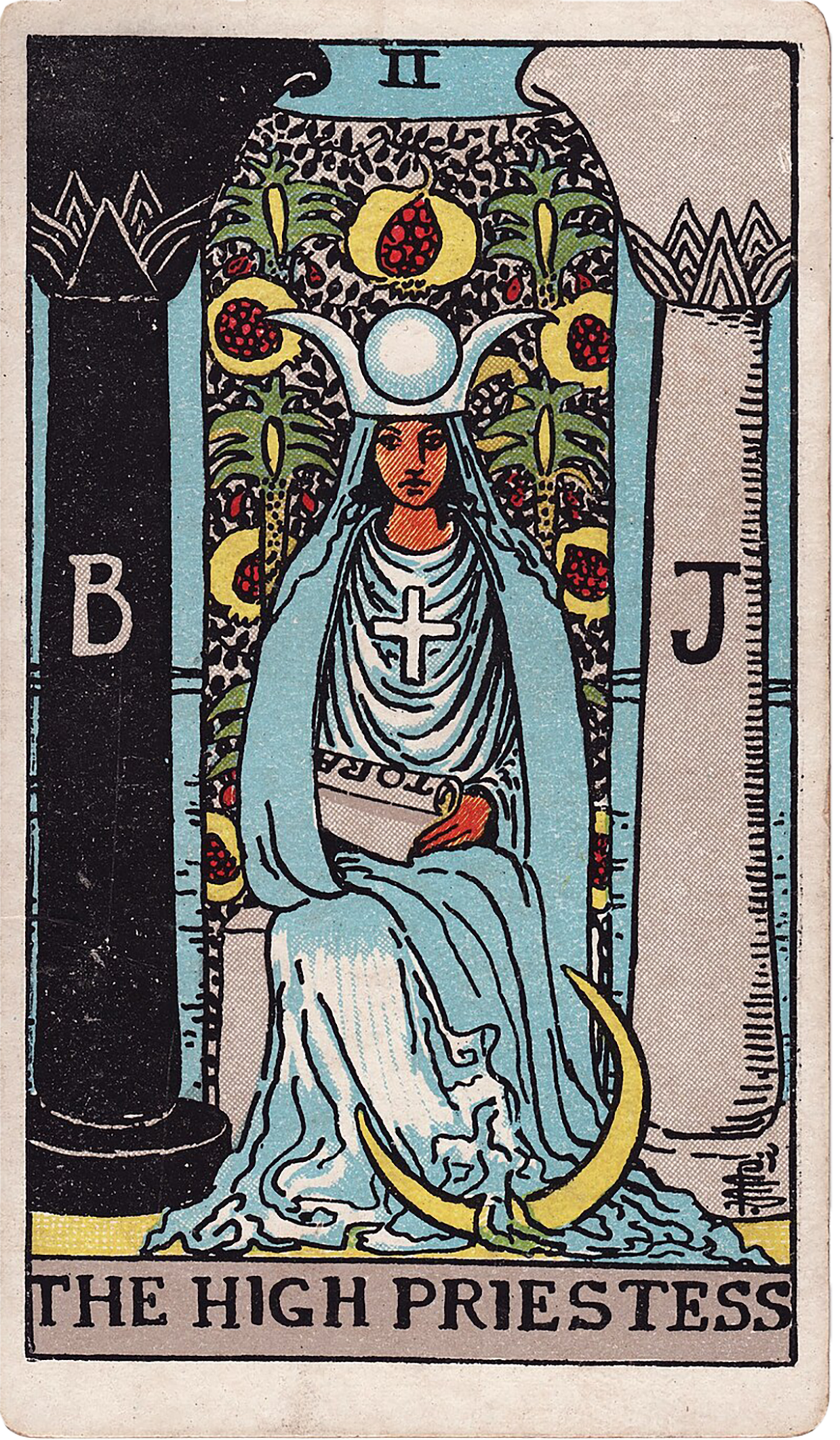 The High Priestess
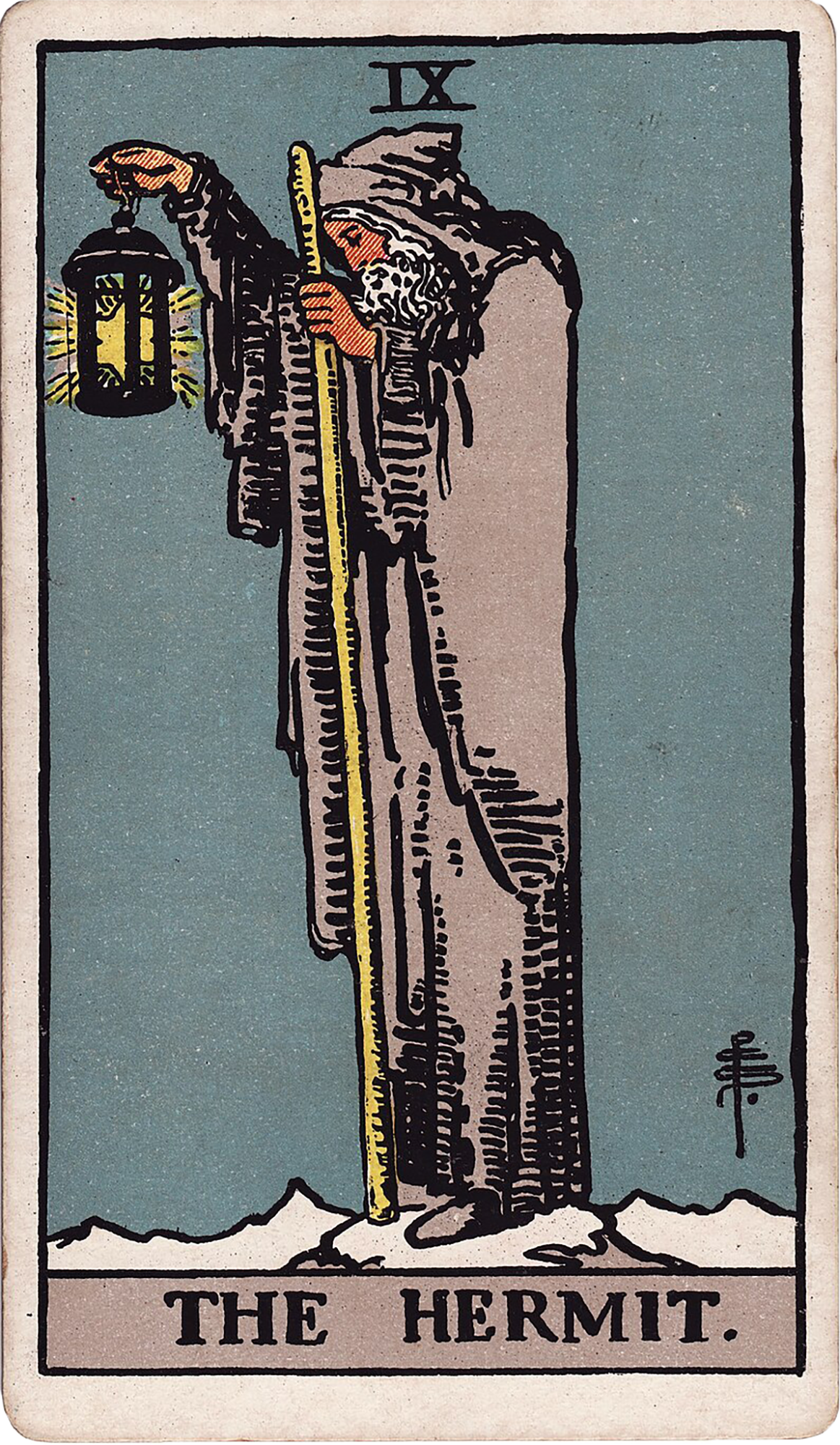 The Hermit
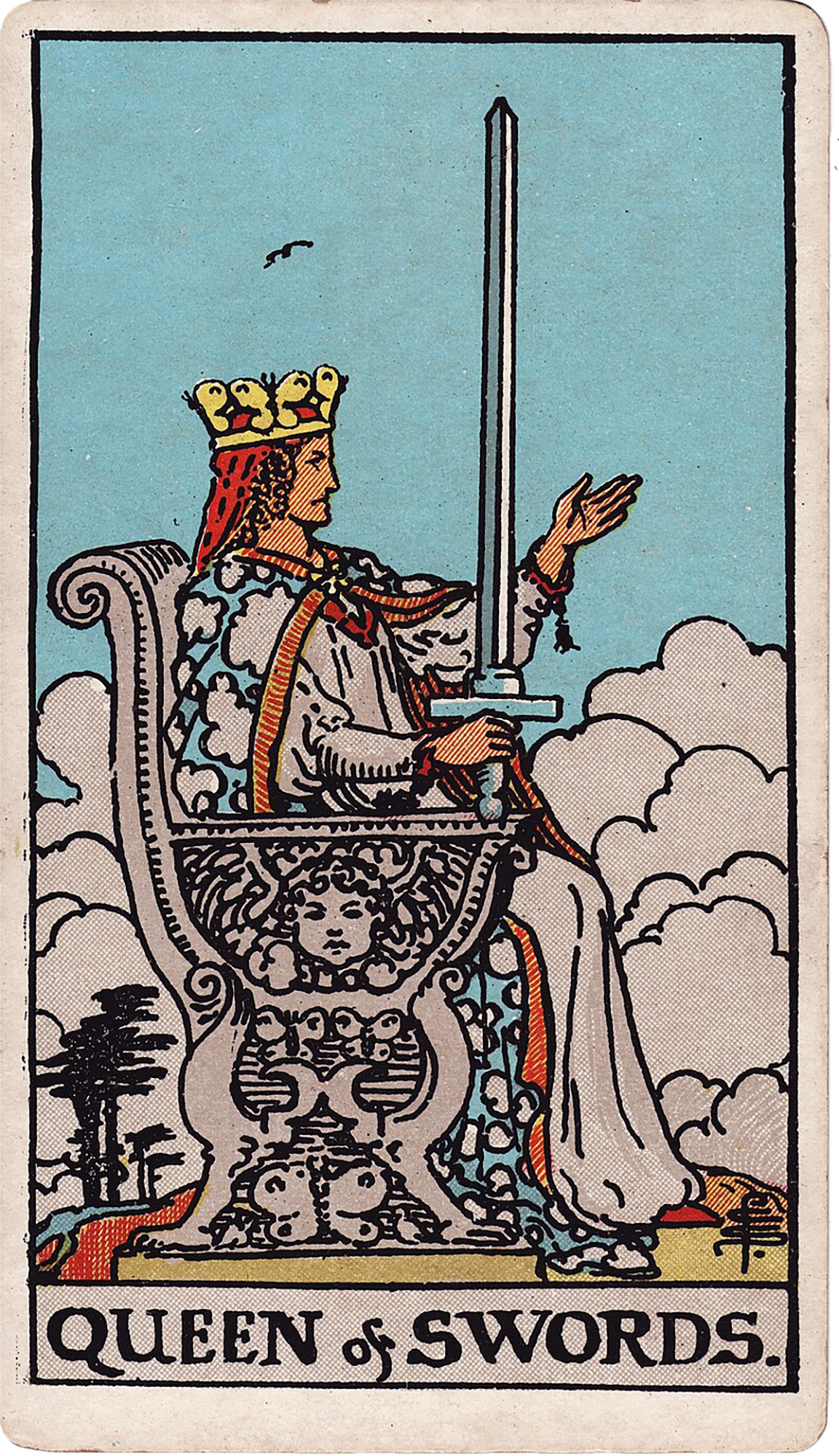 Queen of Swords
Introduction: Why gaze matters in tarot imagery
Tarot is a visual language. Beyond figures, colors, and objects, the direction people look and how they meet (or avoid) the viewer's eyes are powerful, often underused cues. Gaze informs relationship, intention, boundary, and focus. In traditional Rider-Waite-Smith (RWS) symbolism the posture and line of sight of a figure are deliberate choices: they shape where attention goes and what kind of knowledge the card offers. This article trains you to read gaze as part of a coherent symbolic argument rather than as an emotive guess. We will anchor every concrete example to the three supplied cards: The High Priestess, The Hermit, and Queen of Swords. These cards form an excellent trio for studying gaze because they present distinct but related attitudes toward seeing, knowing, and communicating: interior listening, solitary searching, and clear-eyed discernment. The public article will display the supplied Tarot card images as visual reference—use them while you read.
Basic visual grammar of gaze and eye direction
To read gaze reliably you need a small vocabulary of visual terms and what they typically signify in pictorial narrative. - Direct gaze: the figure looks toward the viewer or straight ahead. Effect: engagement, challenge, offer of communication, authority. In a tarot reading it can mean the card's energy is being expressed outwardly or is directly relevant to the querent. - Averted gaze: the figure looks away from the viewer or toward another element in the card. Effect: interior attention, distraction, secrecy, or focus on another object/idea. It can suggest the energy is inward, private, or pointed toward something specific in the scene. - Downward gaze: looking at one's hands, an object, or the ground. Effect: contemplation, humility, caution, or sorrow. Often indicates internal work, careful attention to detail, or quiet introspection. - Upward gaze: looking toward sky, heavens, or above the frame. Effect: aspiration, prayer, hope, inspiration, or seeking external guidance. - Eyes closed or veiled: signifies inwardness, inner sight, secrecy, or willful blindness. In RWS symbolism a veil is especially potent: it marks a barrier between visible and hidden knowledge. - Gaze vector and composition: where the figure looks creates an invisible line that points the reader's eye to another card element (object, person, landscape) or outside the image. This vector is a structural clue: it directs meaning. Follow it. - Mutual gaze between figures: if two figures look at each other, their relationship becomes a focal meaning—cooperation, conflict, intimacy, or mirroring. These elements are combined and weighted with other imagery: gestures, symbols, props, color, and posture. Gaze does not work alone; it shapes and is shaped by the rest of the card.
How gaze functions in Rider-Waite-Smith symbolism
RWS is a narrative deck where posture and gaze are narrative tools. Illustrator Pamela Colman Smith consistently used eye direction to mark a figure's relationship to the known world or hidden realities. Examples in the supplied cards help make this concrete. - The High Priestess: In RWS she is seated between the black and white pillars, with a veil and a partially hidden scroll. Her orientation is serene and inward by design: the card is about listening beneath surface appearances and trusting quiet discernment. Her gaze usually does not aggressively engage the viewer; it suggests inner receptivity and a guarded boundary. The combination of veil + scroll + non-confrontational gaze instructs the reader to shift attention from immediate facts to concealed processes and internal knowing. - The Hermit: The Hermit holds a lantern and typically inclines his head toward the light, often looking downward or at the lantern itself. This downward/inward gaze frames his role as a seeker who steps back to think clearly and to let solitude produce insight. The lantern is a visualized thought or guide; the Hermit's gaze toward it emphasizes that the light comes from contemplative effort rather than external spectacle. - Queen of Swords: The Queen of Swords presents a contrasting energy: clear-minded independence and discerning judgment. Her gaze is often more direct or coolly assessing, projecting an outward relationship with the world. In RWS, the Queen's look can feel like appraisal—an invitation to truth but not warmth. That directness aligns with the card's upright instruction about boundaries, honest communication, and clear decisions.
Reading gaze in context: The High Priestess
When you view The High Priestess image, let your eye settle on three things: her posture, the veil/scroll elements, and her gaze. The supplied upright description links the High Priestess to listening beneath surface appearances, trusting quiet discernment, and using available information now. The gaze connects to these ideas by discouraging immediate outward action and suggesting receptivity. Interpretive moves for The High Priestess gaze: - Upright: If her eyes are calm and not directly engaging the viewer, treat that as confirmation that the situation benefits from listening and restraint rather than speaking or pushing. The gaze points inward: ask where more quiet attention would be useful. In practical terms, the reader might advise patience, subtle inquiry, or gathering more background instead of immediate confrontation. - Reversed: The supplied reversed meaning points to secrecy, disconnection from intuition, or projection. If you also notice a change in apparent gaze (averted attention, closed eyes in some versions, or a more guarded expression), treat gaze as a diagnostic sign that inner knowing is blocked. Ask where anxiety is being mistaken for insight, or where secrecy is causing trouble. The eyes in reversal can feel shut to evidence or turned away from important facts—use that as a prompt to look for denial, omission, or withheld information in the spread. Practical example: In an upright High Priestess drawn with her gaze averted toward the veil, follow that vector: what is being hidden? If neighboring cards give clues, let the High Priestess' gaze point you to which card or theme contains the hidden matter. If she looks almost directly at the querent but remains expressionless, that directness could mean the 'listening' is being offered—encourage the querent to attend to dreams, subtle cues, or immediate but quiet impressions.
Reading gaze in context: The Hermit
The Hermit exemplifies a gaze that directs attention inward toward the lantern. In the upright supplied meaning The Hermit emphasizes stepping back to think clearly, seeking depth over noise, and letting solitude produce insight. The eye direction is a literal and metaphorical guide: he looks where the light is produced. Interpretive moves for The Hermit gaze: - Upright: A downward or focused gaze toward the lantern indicates methodical, patient search. In readings this suggests the querent benefits from stepping back, gathering facts, or cultivating solitude before deciding. The gaze helps confirm the strategy: the light may be small but reliable—encourage careful, incremental work rather than spectacle. - Reversed: The supplied reversal highlights isolation, avoidance, or excessive analysis. In visual terms, if the Hermit's gaze seems distracted, not fixed on the lantern, or his posture appears closed off, treat gaze as evidence that the search is unmoored. The lantern might be dim or mis-directed: the seeker is looking away from the real issue or using solitude to avoid necessary engagement. Practical example: If The Hermit looks not at the lantern but toward an edge of the card where another card sits, read that as the Hermit pointing to a different influence—solitude is either caused by or intended to address what the neighboring card shows. If reversed and the gaze is inward but strained, ask whether the querent is stuck in analysis that prevents action.
Reading gaze in context: Queen of Swords
Queen of Swords is a study in precise, often cool attention. Her upright meaning emphasizes honest boundaries, clear communication, and truth without unnecessary cruelty. Her gaze is typically direct or appraising—this is not a shy or evasive look. The way she meets the viewer is evidence of where intellectual clarity and boundary-drawing must be applied. Interpretive moves for Queen of Swords gaze: - Upright: A direct, steady gaze signals that clear communication and decisive thinking are appropriate. Use that as an instruction to be straightforward and to simplify. If she looks outwardly toward a specific symbol, read that as an imperative to bring truth into that area. - Reversed: The supplied reversal draws attention to bitterness, excessive criticism, or intellectual avoidance of feeling. If the Queen's gaze in the image appears hard, cold, or if her eyes are averted in versions that show that, treat it as evidence of emotional withdrawal or weaponized clarity. Ask where sharpness has become cutting rather than clarifying and whether the querent is using intellect to avoid vulnerability. Practical example: If Queen of Swords' gaze is sharply fixed on another card in the spread, interpret that fixation as a call to apply honest appraisal to whatever that card represents. If reversed and the face feels closed-off, consider that the querent may need practice delivering truth with empathy or to soften internal criticism.
Technique: a step-by-step practical reading method for gaze
This method teaches how to include gaze in a close reading without over-emphasizing it. 1) Initial scan: Look at the card as a whole for posture, objects, color, and overall composition. Note eye direction as one element among many. 2) Identify the gaze vector: Where does the figure look? Toward the viewer, another object, off-frame, down, or inward? Mentally draw the invisible line. Follow it. 3) Match gaze to the supplied upright/reversed context: For the three supplied cards use their provided meanings as your interpretive baseline. The High Priestess' inward gaze supports listening; The Hermit's gaze toward the lantern supports careful search; Queen of Swords' direct gaze supports honest communication. 4) Check interactions: Does the gaze intersect with another card or element? If a figure looks at another card or toward a certain area of a spread, let that guide relational interpretation. 5) Check congruence with other symbols: Does the gaze complement or contradict other imagery? For instance, a High Priestess whose gaze seems outward but who sits behind a veil creates a tension—are inner knowing and outward action in conflict? 6) Weight the evidence: Give gaze an evidentiary weight relative to stronger cues (suit, number, posture, nearby symbols). Gaze is often persuasive but rarely the sole determinant of meaning. 7) Formulate a practical question: Use the gaze to form a specific, actionable question for the querent (e.g., 'Where would quiet attention reveal what you need to know?' for High Priestess; 'What small light can you follow to clarify this?' for Hermit; 'Where do you need to state the truth now?' for Queen of Swords). 8) Report tentatively and teachably: When you explain your reading, describe what you see and how it supports your interpretation, rather than asserting inevitabilities. Example: 'Her calm, inward gaze, combined with the veil, suggests pausing to listen to what isn't being said.'
Common mistakes and how to avoid them
Gaze is tempting to over-read. Here are common pitfalls and corrective practices. - Mistake: Letting gaze trump contextual symbols. Corrective: Always read gaze in service of a card's overall symbolism. For example, if Queen of Swords' gaze looks soft in one artistic variant but her sword and other symbols are uncompromising, privilege the card's suit and posture along with gaze. - Mistake: Using gaze as a substitute for ethical verification. Corrective: Treat gaze as a prompt to ask practical questions or to check other cards for confirmation, especially when diagnosing secrecy or deception. - Mistake: Projecting the reader's emotions onto the figure's eyes. Corrective: Use objective descriptors first (direct, averted, downcast) before drawing subjective emotional labels. Then test those labels against the card's wider symbolism. - Mistake: Reading gaze without checking for artistic variation. Corrective: Decks vary. The supplied High Priestess, Hermit, and Queen of Swords images are your anchors. If you read other decks, recalibrate for how the artist used eyes and posture. - Mistake: Ignoring reversed positions. Corrective: When a card appears reversed, examine whether gaze changes in orientation or feels misaligned with the card's upright instruction. Use the supplied reversed meanings for each of the three cards to interpret distortion, blockage, or internalization of the upright energy.
Practice exercises and drills
Developing visual fluency requires focused practice. Work through these drills with the supplied images. Exercise 1: Single-card gaze statement Select one of the supplied cards. Spend 60 seconds observing only the eyes and head position. Write a one-sentence, observable statement (e.g., 'The High Priestess looks slightly down and does not directly meet the viewer'). Then write a one-sentence interpretive sentence that links that observation to the supplied card meaning (e.g., 'This supports listening beneath surface appearances and suggests patience'). Exercise 2: Gaze vector follow Place two cards (for practice use The High Priestess and The Hermit). Note whether either figure's gaze vector points toward the other. Write three possible relational interpretations: the gaze could be pointing to an influence, asking a question, or indicating a problem to be examined together. Exercise 3: Reversal check Place the supplied reversed meaning next to each image in your notes. For each card, imagine the reversal and write how the gaze would change. Then practice phrasing corrective questions a reversed gaze would prompt (e.g., 'What are you avoiding? Where is your inner voice blocked?'). Exercise 4: Timed synthesis Set a timer for three minutes. Pull one of the three supplied cards and make a concise reading that anchors to gaze, name two corroborating symbols, and propose one practical step for a querent. This trains quick, evidence-based synthesis.
Case studies: short readings using the three supplied cards
These examples show how gaze contributes to an integrated reading. They are illustrative, not predictive. Case study A: The High Priestess upright alone Observation: Her gaze is calm and inward; veil and scroll are visible. Interpretation: The querent is being advised to pause and listen. The gaze confirms that decisive external action is premature. Practical question: 'What quiet information are you currently overlooking?' Actionable step: Keep a short dream journal or slow down a decision for 72 hours to gather more data. Case study B: The Hermit upright paired with Queen of Swords upright Observation: The Hermit looks toward his lantern (inward search). The Queen of Swords looks outward with a clear, assessing gaze. Interpretation: Together they form a strategy: first private reflection (Hermit) to find clarity, then clear communication (Queen) to apply that clarity. The gaze interplay—Hermit toward inner light, Queen toward the world—suggests a sequence: internal preparation followed by honest boundary-setting. Case study C: The High Priestess reversed with Queen of Swords reversed Observation: High Priestess reversal indicates secrecy or mistrust of intuition; Queen reversal indicates criticism or emotional avoidance. If either figure's gaze appears closed or hard, the spread signals an internal blockage and sharpness used defensively. Interpretation: The querent may be mistaking anxiety for inner knowing and responding with cutting words. Practical approach: Pause confrontations, ask which facts are missing, and practice restating concerns in non-accusatory language before escalating. In each case, gaze provided a pivot for sequencing and prescription; it did not replace suit, number, or surrounding context.
Interpretation logic and weighting gaze relative to other cues
How much weight do you give gaze? Use this guideline: - Primary cues (highest weight): suit, major arcana identity, posture, major symbols (e.g., sword, lantern, veil), and positional meaning in the spread. These form the skeleton of the reading. - Secondary cues (moderate weight): gaze and gesture, facial expression, and color shifts. Gaze refines the skeleton and suggests relational focus and dynamics. - Tertiary cues (lower weight): fine stylistic details, minor background motifs, deck-specific flourishes. These enrich but rarely override primary meaning. When gaze conflicts with a card's primary cues, prefer the primary cues but name the tension to the querent. For example, if The High Priestess' posture and veil indicate secrecy but the gaze seems unusually direct, say: 'Although the card overall suggests inner listening, the direct gaze hints the guarded knowledge might be ready to be shared.' This balanced phrasing acknowledges both signals and offers a nuanced reading. Finally, interpretation logic depends on corroboration. If gaze points to secrecy and a neighboring card shows concealment or omission, the combined evidence strengthens the reading. Conversely, if gaze suggests openness but neighboring cards show conflict, explore whether the openness is naive or strategically chosen.
Conclusion and next steps for learners
Gaze and eye direction are powerful, precise tools when used as part of an evidence-based interpretive method. The supplied High Priestess, Hermit, and Queen of Swords provide clear, contrasting examples: inward listening, methodical searching, and outward clarity. Practice observing gaze objectively, follow gaze vectors through composition, and always check those observations against the card's broader symbolism and the spread's context. Next steps: practice the exercises with the displayed images, record brief readings emphasizing gaze, and compare notes over time. Build a habit of phrasing interpretations as observations plus tentative meaning and a practical question or step. This keeps readings teachable, useful, and tied to visual reality rather than projection.
Practice questions
• When you look at The High Priestess image as displayed, what is your first objective observation about her gaze (direction, focus, openness)?
• How does The Hermit's gaze toward the lantern change when you imagine that lantern dimmer or brighter? What practical advice shifts with that change?
• In a reading, how would you reconcile a Queen of Swords whose gaze appears unexpectedly soft with the card's upright meaning of clear boundaries?
• Which of the three supplied cards most often prompts you to focus on other sensory cues (sound, touch, memory) rather than visual gaze, and why?
• Describe a moment from your own experience when someone’s gaze changed the meaning of what they said—how might that real-world insight apply to tarot readings?
• When a figure's gaze points toward another card in a spread, what three questions do you ask to test whether that pointing is significant?
• How would you explain to a querent the difference between 'intuition' and 'projection' when their interpretation of a card's gaze conflicts with the card's other symbols?
• What practice schedule (times per week and durations) will you commit to for strengthening gaze-based reading skills over the next month?
Comments
Sign in to comment.
Continue learning
Harnessing the Power of The Magician and Ace of Wands: Igniting Creativity and Manifestation in Tarot Readings
The combination of The Magician and the Ace of Wands in tarot readings offers a potent blend of creative energy and manifestation power. This article delves into the ways these car...
Advanced Techniques for Combining The Moon and The Star to Enhance Intuition in Tarot Readings
This article explores advanced techniques to combine the symbolism and energy of The Moon and The Star Tarot cards to enhance intuition during Tarot readings. Drawing from traditio...
Enhancing Clarity in Complex Choices with the Five Card Cross Tarot Spread
The Five Card Cross Tarot Spread is a practical tool designed to clarify complex choices by breaking down the decision into manageable parts. This article explores each position in...
Tracing the Origins and Evolution of The Fool Card in Tarot History
The Fool card holds a foundational place in tarot tradition, symbolizing beginnings, openness, and the embrace of uncertainty. This article traces its origins from early European d...
Understanding The Hermit Card in Solitude Reflection and Guidance
This article offers an in-depth exploration of The Hermit tarot card as a single-card reading in different contexts such as love, career, money, advice, challenge, person, outcome,...
Unlocking the Creative Flow with The Magician and The Empress in Tarot Combinations
This article delves into the powerful synergy between The Magician and The Empress in Tarot combinations, focusing on how their combined symbolism unlocks creative flow across vari...
Using the Seven Card Horseshoe Spread to Uncover Career Growth and Opportunity
This article presents an in-depth guide to the Seven Card Horseshoe Tarot Spread with a focus on career growth and opportunity. Using the cards The Fool, The Magician, The Empress,...
Understanding the Many Facets of The Moon in Emotional and Intuitive Tarot Readings
The Moon card in the Tarot deck embodies themes of intuition, uncertainty, dreams, and emotional complexity. This article offers a comprehensive exploration of The Moon’s upright a...
Unlocking Advanced Intuition Techniques Using The High Priestess The Moon and The Hermit
This article examines advanced intuition development in tarot reading by focusing on The High Priestess, The Moon, and The Hermit cards. It offers practical techniques for beginner...
Mastering Intuition with The High Priestess The Hermit and The Moon in Tarot Readings
This article delves into mastering intuition through three powerful Tarot cards: The High Priestess, The Hermit, and The Moon. It guides readers from beginner to advanced reading t...