
Reading Keys Seals and Locks in Tarot for Barriers Secrets and Opportunity
This article teaches how to read imagery of keys, seals, locks, gates, and related barriers in tarot using four supplied cards: The High Priestess, The Hierophant, The World, and Ace of Pentacles. It explains the symbolic vocabulary drawn from Rider‑Waite‑Smith iconography, presents a stepwise reading method, offers practical spreads and examples anchored to the supplied cards, and lists common mistakes and how to correct them. The focus is on learning technique and interpretation logic rather than fortune telling — how to identify whether an image indicates a secret, an external rule, a completed seal, or a practical gateway, and how to translate that into useful guidance for query-driven readings.
Cards explored in this article
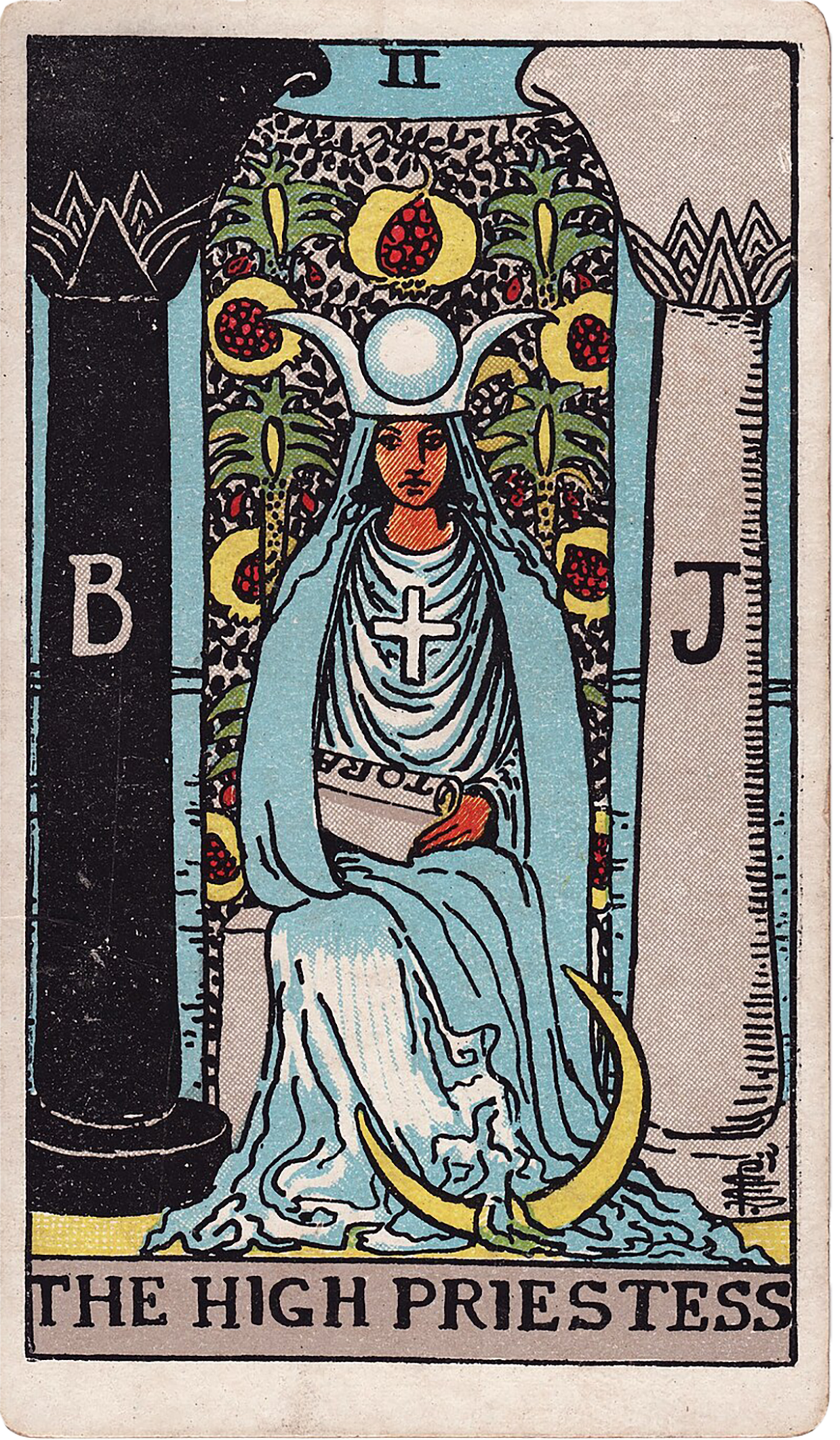 The High Priestess
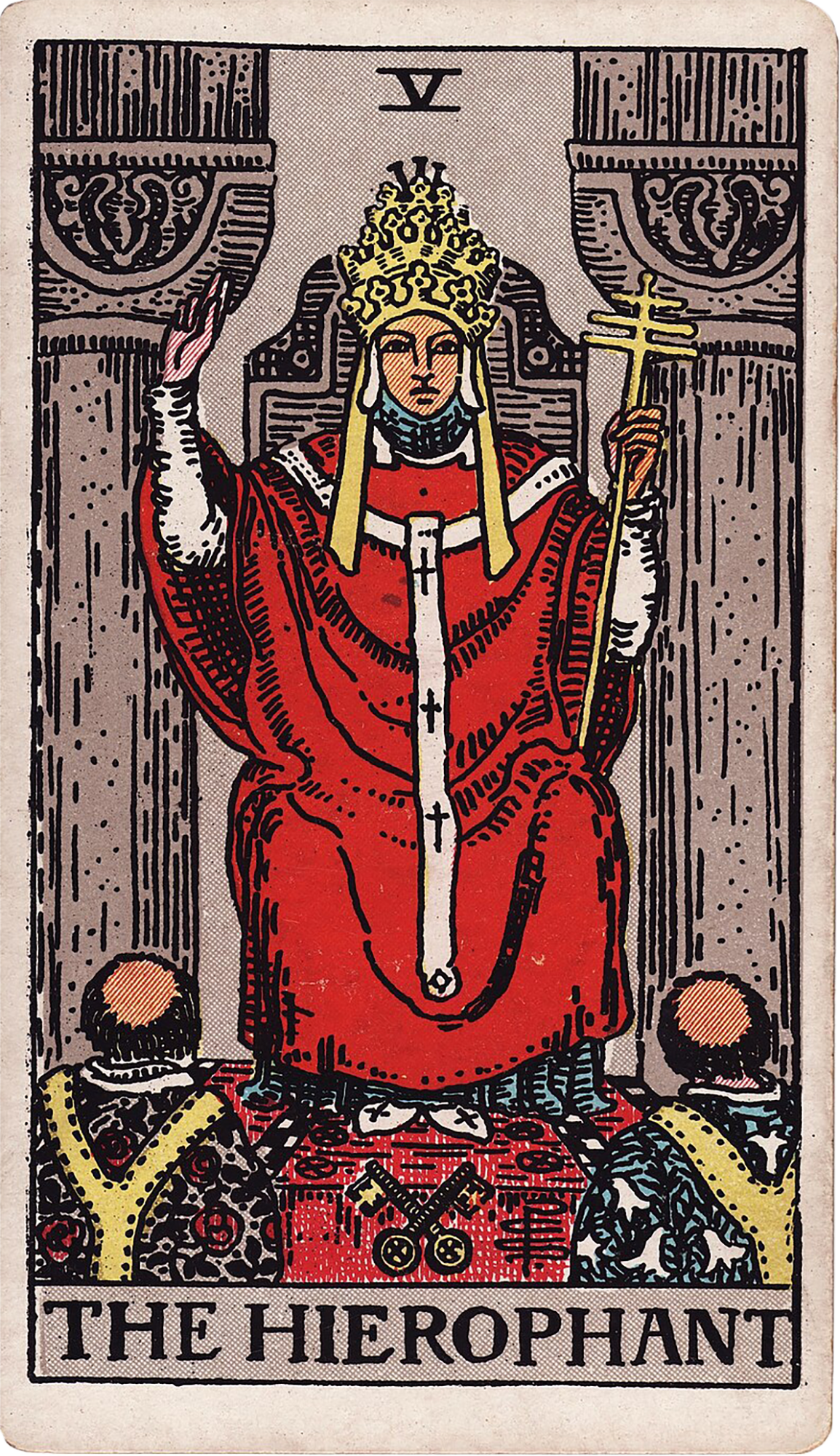 The Hierophant
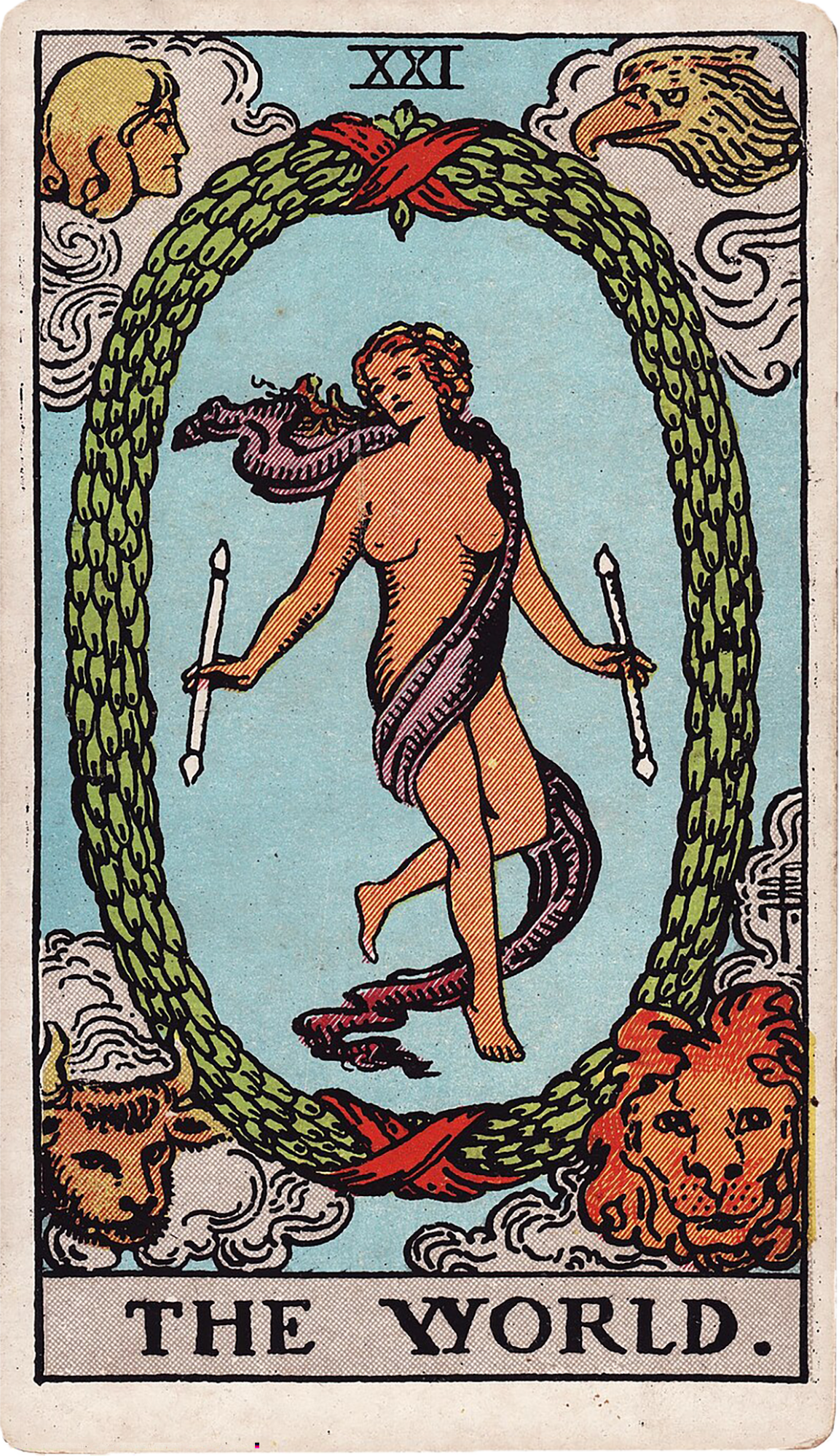 The World
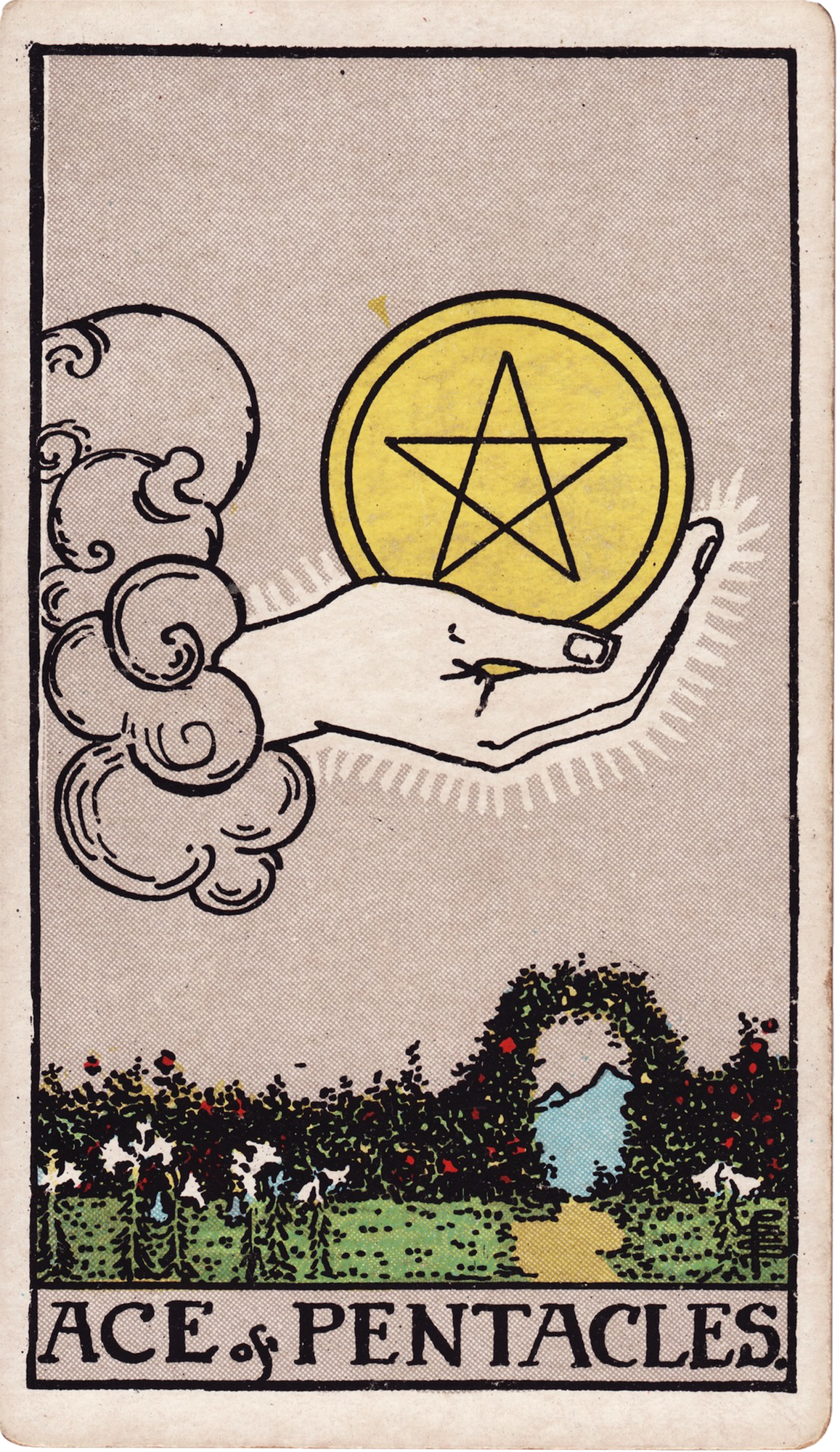 Ace of Pentacles
Introduction: Why keys, seals and locks matter in tarot symbolism
Tarot images are full of metaphors for access and denial: veils and doors, pillars and keys, circles and wands. Reading these motifs helps you distinguish three related but different themes in a spread: barriers (what blocks progress), secrets and sealed content (what is hidden or protected), and opportunities (what is available as an entrance or solution). This article uses four supplied cards — The High Priestess, The Hierophant, The World, and the Ace of Pentacles — to teach how to recognize and work with these themes. Each of these cards contains clear Rider‑Waite‑Smith visual cues relevant to locks and keys: the High Priestess sits behind a veil and between two pillars, the Hierophant carries institutional signs and implied keys of authority, the World is encircled and holds the wands that mark completion, and the Ace of Pentacles is a literal new tangible doorway to resources. By focusing on these exact cards you can practice translating visual detail into precise reading choices.
Symbolic vocabulary: what to look for on the card images
Before interpreting, build a small vocabulary of visual clues and their most common meanings in RWS iconography. Use this list as a checklist when a card appears. Anchor each item to the supplied cards. - Veils and seals: The High Priestess’s veil is the archetypal ‘seal’ — it marks knowledge as protected, private, and not freely given. In readings this motif points to hidden information, inner knowing, or boundaries that must be respected rather than forcibly breached. - Pillars, gates, walls: The High Priestess sits between two pillars (Boaz and Jachin). Pillars are structural barriers that also mark thresholds; they can represent choices or dualities that must be navigated. A pillar/gate motif usually indicates a threshold rather than an insurmountable wall. - Institutional insignia and keys: The Hierophant’s iconography (the triple cross, hand gesture of blessing, and the implication of crossed keys at his feet in RWS tradition) signals formal permission, established protocols, and authoritative keys. When Hierophant imagery appears, the ‘lock’ is likely social, ritual, or institutional. - Wreaths and encirclement: The World’s wreath and circular framing function like a seal of completion. A wreath can operate as both a boundary and a sign that the process inside is finished and integrated; it suggests that the door has closed behind a completed cycle and a new threshold awaits. - Hands, offers and gateways: The Ace of Pentacles shows a hand emerging with a pentacle — a clear invitation or tangible key. A hand or doorway in the image often signals an available opportunity or the practical means to enter a new domain. Note that motifs combine. A veil beside a hand might indicate a partial offering: access is being offered, but some privacy remains. Pay attention to posture, gaze, and relative scale to judge whether the card emphasizes secrecy, rule-bound access, completed seal, or practical opening.
Reading technique: A practical five‑step method for locks and keys
Use a disciplined method so symbolic readings remain rigorous and useful. The following five steps keep interpretation grounded in observation and client applicability. Anchor each step to the supplied cards to practice. 1) Observe: Start with pure observation of what is on the card image. For The High Priestess notice the veil, the scroll, the crescent moon and the pillars. For The Hierophant note the formal robes, the hand of blessing and implied keys of office. For The World look at the wreath and the figure’s containment; for the Ace of Pentacles observe the hand from the cloud and the garden gateway in older RWS variants. 2) Describe: Put your observation into neutral language. For example: “A female figure sits between two pillars behind a veil” (High Priestess), or “A robed teacher holds a blessing pose and represents institutional authority” (Hierophant). Keep this step factual — avoid leaping to narrative. 3) Contextualize: Ask whether the symbol points inward (psychological, private), outward (social, institutional), completed (seal/closure), or opening (opportunity). The High Priestess often points inward or toward the private; The Hierophant points outward to structures and rules; The World points to completion and integration; the Ace of Pentacles points to an outward, tangible opening. 4) Synthesize with the question: Match the image to the querent’s question. If the question is about relationship access, a High Priestess veil may mean intimacy remains private; if the question is about a job, Hierophant imagery may indicate institutional approval is the issue; if the question is about a project’s end, The World’s wreath suggests completion may seal something; Ace of Pentacles signals where a practical key or resource can be used. 5) Translate into action steps: Convert the synthesis into a small number of practical next steps. For example: “With The High Priestess as barrier, practice attentive listening and wait for further information rather than pressing for answers.” Or, “The Hierophant as a lock points to acquiring a credential or following established procedure to gain access.” Link suggestions to the card’s upright/reversed sense (see supplied descriptions) so the advice is proportional and realistic.
Interpreting barriers, secrets and opportunities using the supplied cards
Now apply the technique to the three categories using the four supplied cards as examples. For each category give indicators, upright and reversed readings, and what to ask in the session. Barriers (what blocks progress) - Visual indicators: veils, pillars, institutional insignia, encircling elements. The High Priestess’s pillars and veil are prototypical barriers: they do not always mean denial; they can mean a threshold that must be crossed correctly. The Hierophant’s institutional badges indicate external rules or required authorization. The World’s wreath can become a barrier when completion is incomplete or perfectionism keeps someone in place (see The World reversed). The Ace of Pentacles can act as a barrier when opportunity is present but not yet accessible because fundamental groundwork is missing (Ace of Pentacles reversed). - Upright: High Priestess upright suggests that the barrier is about timing and discernment — listen beneath surfaces and work with what is available. Hierophant upright suggests learning or following structure will unlock access. World upright likely signals that closure is near and completion will dissolve the barrier. Ace of Pentacles upright often is the practical key — a resource you can use to enter. - Reversed: High Priestess reversed points to secrecy, disconnection from intuition, or avoidance — the barrier is internal and psychological. Hierophant reversed implies dogma, rebellious posture or a broken system — the lock has been shifted or misapplied. World reversed flags incomplete business and perfectionism prolonging the blockade. Ace of Pentacles reversed signals missed opportunity or lack of foundational planning. - Questions to ask: Is this barrier internal or external? What credential, permission, or process does the Hierophant represent here? What hidden information does the High Priestess veil protect? Is the supposed closure of The World actually complete? What practical step (Ace of Pentacles) would function as a key?
Practical spread examples anchored to the four cards
Use simple, repeatable spreads that emphasize locks and keys. Each example uses only the supplied cards so you can practice with the exact imagery. Spread A — Three‑step lock, key, outcome Positions: 1 - Lock (what blocks), 2 - Key (what opens), 3 - Outcome (result of using the key) Example reading 1: Drawn cards: 1=The High Priestess (upright), 2=Ace of Pentacles (upright), 3=The World (upright). - Interpretation: Lock = High Priestess upright — the immediate barrier is privacy, timing, or hidden information; do not force answers. Key = Ace of Pentacles upright — a practical, tangible action or resource will create entry (an offer, paperwork, financial step). Outcome = The World upright — using the practical key in the right time frame leads to completion and integration. Action: prepare a concrete deliverable and wait for the right moment to present it; trust quiet discernment. Example reading 2: 1=Hierophant reversed, 2=High Priestess reversed, 3=Ace of Pentacles reversed. - Interpretation: Lock = Hierophant reversed — institutional rules are inconsistent or gatekeepers are rigid in unhelpful ways. Key = High Priestess reversed — the internal key is currently blocked; intuition is clouded or secrets are misunderstood. Outcome = Ace of Pentacles reversed — unless internal clarity or a route around institutional chaos is found, the opportunity may be missed. Action: clarify values, check assumptions about authority, practice grounding rituals to rebuild discernment; seek a practical plan even if the system seems broken. Spread B — Four‑corner investigation (internal/external / closing/opening) Positions: 1 - Internal barrier, 2 - External barrier, 3 - Internal key, 4 - External key Practice layout using the four supplied cards in any order. Example: 1=High Priestess reversed (internal barrier), 2=Hierophant upright (external barrier), 3=Ace of Pentacles upright (internal key), 4=The World upright (external key) - Interpretation: The internal barrier is confusion or secrecy; the external barrier is a need to respect or learn institutional rules; the internal key is a grounded plan or habit that restores trust in inner knowing; the external key is closure/integration that, when recognized and named, will open social doors. Action steps: practice concrete rituals to recover clarity (journaling to rebuild High Priestess functions), meet institutional requirements or find a mentor (Hierophant), prepare a tangible demonstration of competence (Ace of Pentacles), and mark completion publicly so The World’s seal can be acknowledged.
Interpretation logic: distinguishing types of closure and access
Interpreting locks involves deciding whether the image signals a seal that should be respected, a lock that needs opening, or a rite that grants passage. Use this decision tree anchored to the four cards. 1) Is the symbol protective or obstructive? Protective seals (High Priestess veil, World wreath) often indicate that the energy inside is not ready for exposure; obstructive locks (a gate guarded by Hierophant authority) usually require permission or procedure. 2) Is the barrier internal or external? High Priestess emphasizes internal/private; Hierophant external/social; World can be either depending on upright/reversed; Ace of Pentacles usually involves an external, practical resource. 3) Is there an offered key in the spread? Ace of Pentacles and The Hierophant upright are common signposts of offered keys — a resource or a known procedure. The High Priestess can be the key if the reading asks the querent to cultivate inner listening. The World may function as both a sealed completion and a key when it signals readiness to move on. 4) Does reversal change the dynamic? Yes — High Priestess reversed usually reflects blocked access to inner wisdom; Hierophant reversed indicates gatekeepers or rules are skewed; World reversed warns that the seal is stuck or closure stalled; Ace of Pentacles reversed shows missed practical steps or lack of planning. Apply this logic iteratively: observe, decide which of the four cards best represents the lock and which represents the key, test that interpretation against the querent’s context, and propose a small, measurable action aligned with the identified key.
Working with reversals, timing and neighboring card cues
Reversals are signals that something about the upright energy is blocked, exaggerated, or internalized — they are not simple 'bad' indicators. Use the supplied upright/reversed descriptions as practice examples. - The High Priestess reverse: This often shows secrecy, projection, or passive avoidance. In a locks-and‑keys reading this suggests the querent is mistaking anxiety for intuition; the key is to rebuild discernment through disciplined observation rather than forcing answers. - The Hierophant reverse: This points to dogma or rebellion without direction. Interpreting authority as a lock needs nuance: is the system actually inaccessible, or is the querent refusing legitimate procedures? The practical correction is education, negotiated compromise, or finding a different pathway that respects structure without blind obedience. - The World reverse: Use it to identify stalled completions and perfectionism. The 'seal' may be waiting for acceptance rather than more work. Ask: what small recognition allows closure? Consider rituals that symbolize completion. - Ace of Pentacles reverse: Treat this as a diagnostic flag: the opportunity exists but the groundwork is missing, or the timing is off. The practical remedy is to lay foundations: budgeting, documentation, a proposal, or consistent practice. Timing: Seals and locks often require waiting for a natural opening. The High Priestess frequently advises patience; the Ace of Pentacles invites action but in proportion to stage. Use reversals to judge whether timing or preparation is the primary issue.
Common mistakes and how to avoid them
When learning to read symbolic locks and keys, students often fall into a few common traps. Here are the traps paired with corrective habits, with examples tied to the supplied cards. 1) Mistake: Treating every veil or seal as a literal conspiracy. Correction: Use the High Priestess veil as an invitation to refine questions, not to assume secret plots. Ask what is purposefully private rather than inventing hidden enemies. 2) Mistake: Assuming institutional imagery always blocks access. Correction: With The Hierophant, test whether the institution actually provides a clear pathway (credentials, rules) or whether the querent perceives authority as monolithic. Look for whether following the process is realistic and desirable. 3) Mistake: Ignoring the practical details that unlock a card’s meaning. Correction: The Ace of Pentacles is concrete: what physical step can the querent take? Make a checklist of three small actions tied to it. 4) Mistake: Using reversals as purely negative omens. Correction: Reversals often show internal processes or temporary pauses. The World reversed can mean the querent hasn’t accepted completion; a ritual of recognition can be the simplest key. 5) Mistake: Reading cards in isolation. Correction: Always relate the card to the querent’s situation and to neighboring cards. A High Priestess next to an Ace of Pentacles changes the reading: the hidden is being offered a material opening.
Exercises and practice protocol
Practice is essential. Use the following exercises with the supplied card images to build fluency. Exercise 1 — Visual checklist drill: Shuffle and draw one of the supplied cards. Spend five minutes listing every lock/key motif you see. Write one line describing whether it feels protective, obstructive, completed, or opening. Exercise 2 — Two‑card lock/key pairing: Draw two cards from the four repeatedly. Assign the first as the lock and the second as the key. Write three concise readings that translate the images into practical steps. Exercise 3 — Role reversal: Take a hypothetical client issue (job application, relationship boundary, project completion). With the four supplied cards, lay out a four‑card sequence mapping internal barrier, external barrier, internal key, external key. Discuss or journal how each card’s imagery suggests specific tactics. Exercise 4 — Peer practice: Work with a partner. One person describes a real small obstacle; the other reads using only the four supplied cards. Compare the reading to the original issue and refine the phrasing to make steps actionable. These exercises train you to move from image to action, the essential skill when the question concerns access and closure.
Bringing it together: interpreting an integrated spread
A final example ties the approach together. Client question: “Why am I not moving forward with this application?” Layout: 1 Lock, 2 Key, 3 Hidden influence, 4 Outcome. Drawn cards: 1=Hierophant upright, 2=Ace of Pentacles upright, 3=High Priestess reversed, 4=The World upright. Stepwise interpretation: Observe — Hierophant upright shows institutional rules are at play; Ace of Pentacles upright is a practical offer or step; High Priestess reversed signals inner confusion or secrecy that is interfering; The World upright promises completion if correct steps are taken. Describe — The gate is the institution; the key is practical preparation; inner clarity is currently compromised; the likely result is completion if inner work and practical steps align. Synthesize — The querent must follow the institution’s process (forms, references) and also rebuild inner discernment (clear documentation of qualifications and honest answers). Actionable guidance — Create a checklist matching the institution’s requirements, practice answering questions aloud to replace foggy intuition with prepared responses, and schedule the submission to allow The World’s completion to register publicly. This integrated method shows how the supplied cards function in concert: Hierophant as the gatekeeper, Ace of Pentacles as the tangible key, High Priestess reversed as the internal glitch to address, and The World as the possible seal of completion.
Closing notes on ethics, humility and practice
Reading locks, keys and seals asks for particular responsibility. These images can refer to other people’s privacy, institutional authority, and legal or social limits. Always emphasize consent, respect for boundaries, and that cards describe tendencies and possible paths — not absolute futures. Use The High Priestess as your ethical reminder: listen beneath surface appearances and respect what is private. Use The Hierophant as a practical reminder to learn and work within systems where required. Use The World to remind clients that recognizing completion is itself a skill. Use the Ace of Pentacles to anchor advice in concrete, measured steps. With disciplined observation, careful synthesis, and prioritized action, your readings about barriers, secrets and opportunities will be useful, grounded, and empowering for learners and querents alike.
Practice questions
• When you look at The High Priestess image, which specific visual detail first suggests a boundary or a seal, and why?
• If The Hierophant appears in response to a career question, what institutional processes might be the 'lock' in your client’s situation?
• How would you convert an Ace of Pentacles upright card into three concrete tasks a querent can take within a week?
• Describe a situation where The World reversed would be a healthier signal to slow down rather than push for closure.
• Which of the four supplied cards most often functions as a 'key' for you, and how does that influence the types of guidance you give?
Comments
Sign in to comment.
Continue learning
Harnessing the Power of The Magician and Ace of Wands: Igniting Creativity and Manifestation in Tarot Readings
The combination of The Magician and the Ace of Wands in tarot readings offers a potent blend of creative energy and manifestation power. This article delves into the ways these car...
Advanced Techniques for Combining The Moon and The Star to Enhance Intuition in Tarot Readings
This article explores advanced techniques to combine the symbolism and energy of The Moon and The Star Tarot cards to enhance intuition during Tarot readings. Drawing from traditio...
Enhancing Clarity in Complex Choices with the Five Card Cross Tarot Spread
The Five Card Cross Tarot Spread is a practical tool designed to clarify complex choices by breaking down the decision into manageable parts. This article explores each position in...
Tracing the Origins and Evolution of The Fool Card in Tarot History
The Fool card holds a foundational place in tarot tradition, symbolizing beginnings, openness, and the embrace of uncertainty. This article traces its origins from early European d...
Understanding The Hermit Card in Solitude Reflection and Guidance
This article offers an in-depth exploration of The Hermit tarot card as a single-card reading in different contexts such as love, career, money, advice, challenge, person, outcome,...
Unlocking the Creative Flow with The Magician and The Empress in Tarot Combinations
This article delves into the powerful synergy between The Magician and The Empress in Tarot combinations, focusing on how their combined symbolism unlocks creative flow across vari...
Using the Seven Card Horseshoe Spread to Uncover Career Growth and Opportunity
This article presents an in-depth guide to the Seven Card Horseshoe Tarot Spread with a focus on career growth and opportunity. Using the cards The Fool, The Magician, The Empress,...
Understanding the Many Facets of The Moon in Emotional and Intuitive Tarot Readings
The Moon card in the Tarot deck embodies themes of intuition, uncertainty, dreams, and emotional complexity. This article offers a comprehensive exploration of The Moon’s upright a...
Unlocking Advanced Intuition Techniques Using The High Priestess The Moon and The Hermit
This article examines advanced intuition development in tarot reading by focusing on The High Priestess, The Moon, and The Hermit cards. It offers practical techniques for beginner...
Mastering Intuition with The High Priestess The Hermit and The Moon in Tarot Readings
This article delves into mastering intuition through three powerful Tarot cards: The High Priestess, The Hermit, and The Moon. It guides readers from beginner to advanced reading t...