
Reading Reflections Mirrors and Water Surfaces in Tarot Imagery
This article explores how mirrors and water surfaces function as symbolic devices in tarot imagery, using The High Priestess, The Moon, and Queen of Cups as primary examples. You will learn how to read reflections visually and conceptually, apply a step-by-step method in spreads, avoid common mistakes, and practice exercises that strengthen image-based intuition. The article grounds every point in Rider–Waite–Smith symbolism where relevant and ties upright and reversed meanings to reflective motifs so learners can make readings that are careful, evocative, and practical rather than deterministic.
Cards explored in this article
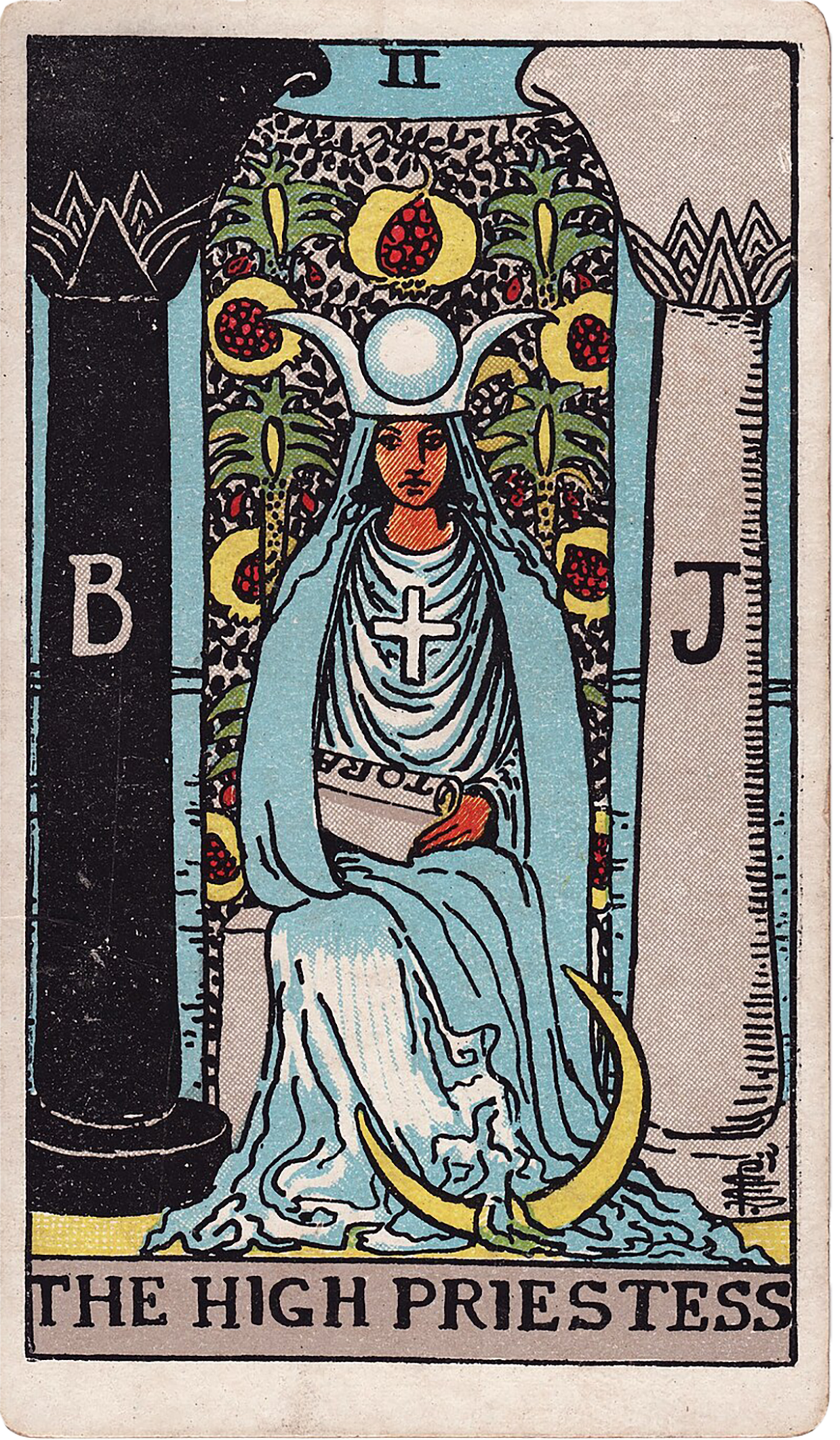 The High Priestess
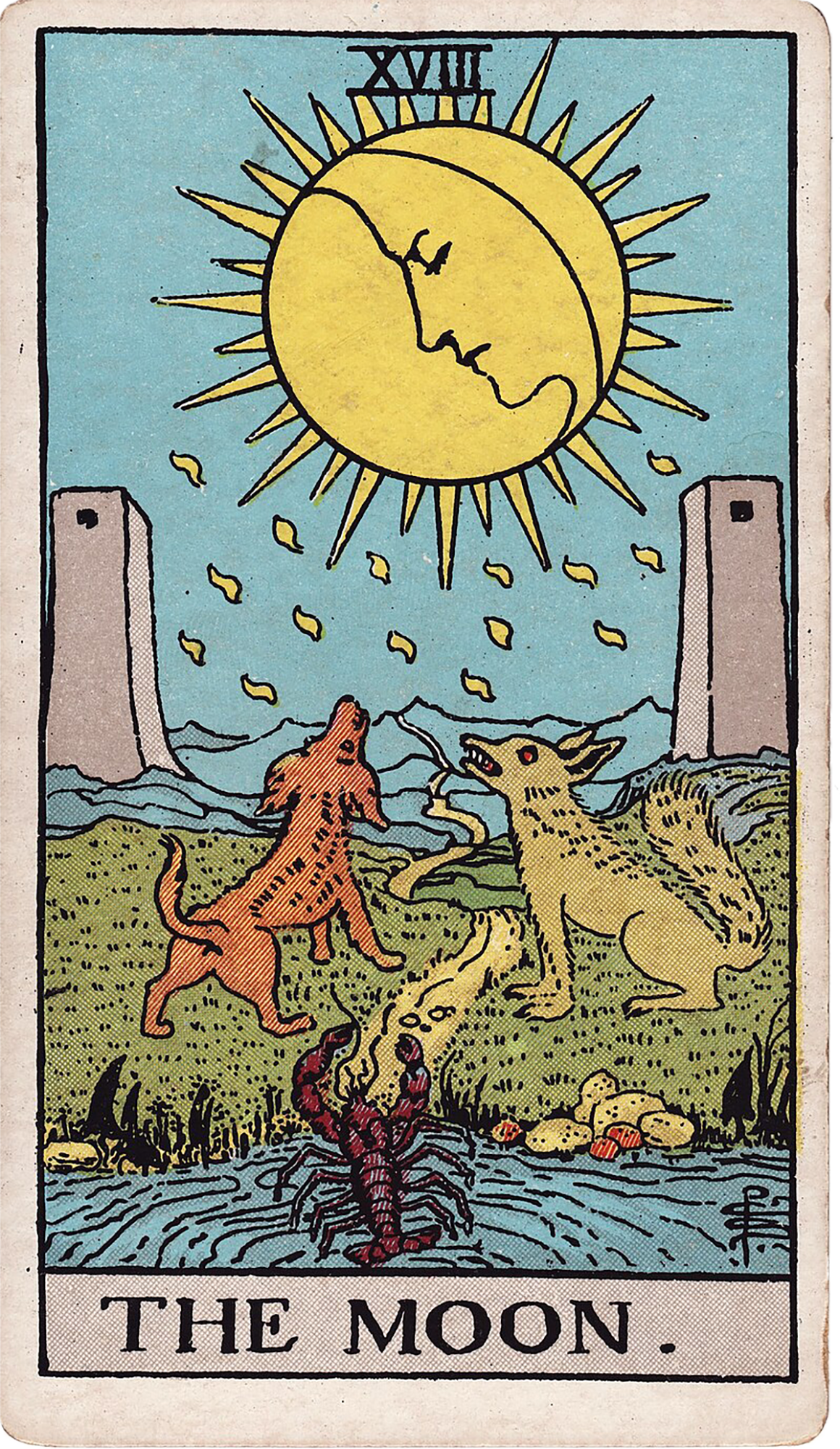 The Moon
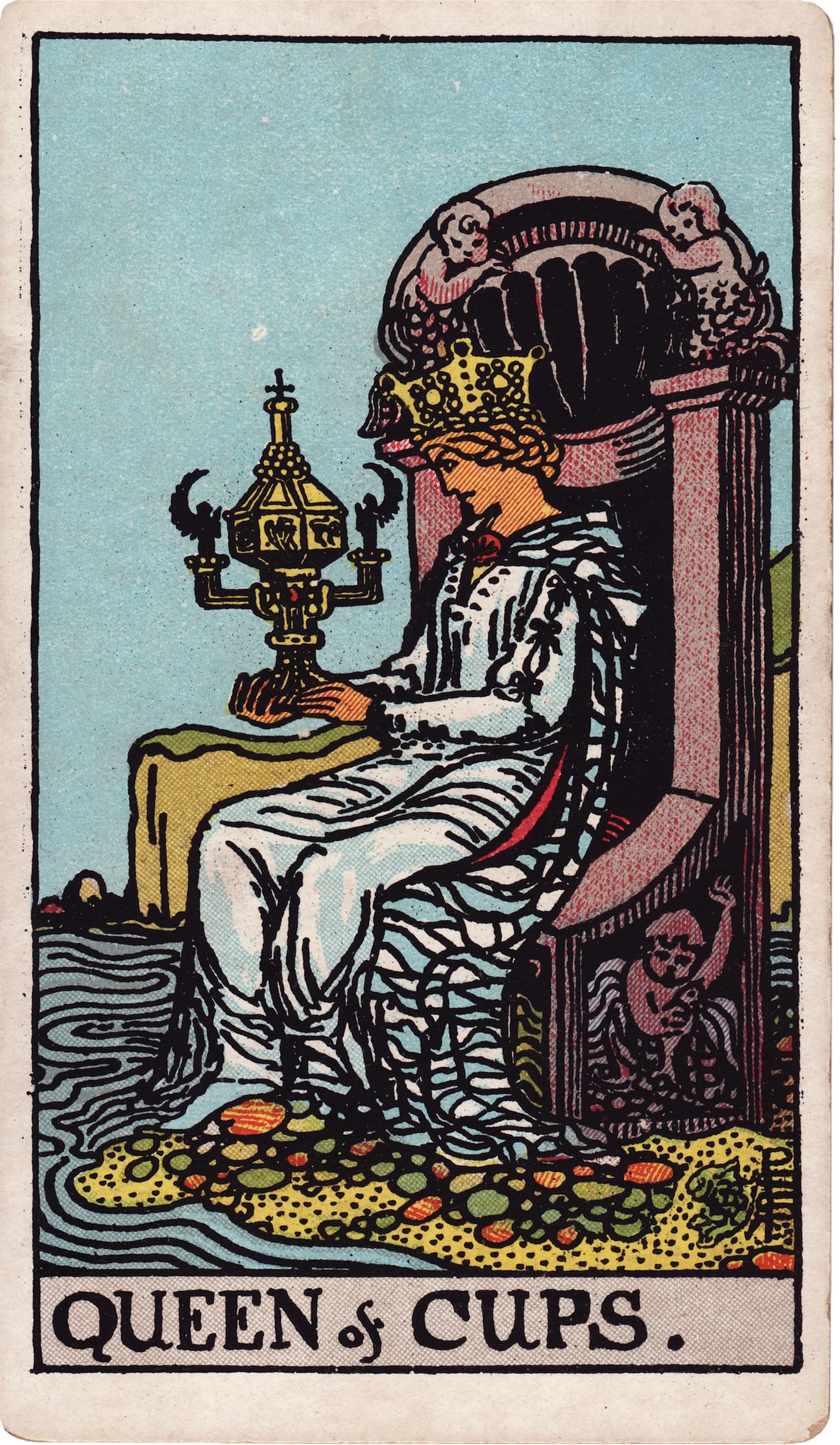 Queen of Cups
Introduction Why reflectivity matters in tarot imagery
Reflections and mirror-like surfaces are among the most potent visual cues in tarot art. Whether literal mirrors, still pools of water, the surface of a cup, or the pale sheen of moonlight, reflective imagery calls attention to two related processes: what shows on the surface and what lies beneath it. That duality maps naturally onto divinatory work. Readers are asked to notice what is immediately visible (the situation as described by the querent), and to consider hidden currents, projections, and unconscious influences. This article treats reflectivity both as an iconographic detail—what the picture actually shows—and as a symbolic method for reading. The three supplied cards (The High Priestess, The Moon, Queen of Cups) provide a compact visual vocabulary: inner knowing and veils (The High Priestess), the terrain of the unconscious and ambiguous illumination (The Moon), and mature emotional receptivity that holds and witnesses feelings (Queen of Cups). Across these images, surfaces and reflective phenomena tell different but related stories about truth, illusion, containment, and emergence.
Foundations Rider–Waite–Smith symbolism for surface and depth
When we speak of reflections in tarot we must work with accurate RWS associations. The Rider–Waite–Smith language uses water and lunar imagery to signify the unconscious, cycles, instinct, and interior perception. The High Priestess sits between two pillars and at her feet is a lunar crescent; behind her is a veil patterned with pomegranates. These elements signal liminality, hidden knowledge, and the fecund background from which understanding emerges. The image does not rely on a literal mirror, but the card functions like one: a prompt to look inward and receive what surfaces. The Moon card in RWS literally uses a nocturnal landscape with two towers, a long road, a water pool with a crayfish emerging, and two canines. The card's composition draws attention to reflected light, path, distance, and the pool as the origin of instinctual material. The Queen of Cups is seated at the edge of a calm sea, holding a covered cup; in the Rider–Waite–Smith image she often gazes into the cup, suggesting the act of looking into a reflective interior. Taken together, these images show a range of how reflections and water surfaces are used: as metaphorical mirrors for self-knowledge (High Priestess), as liminal terrain where images arrive in distorted form (The Moon), and as a contained field for compassionate witnessing (Queen of Cups).
What a reflection can mean A short taxonomy
Not every reflective surface in a tarot image means the same thing. Laying out a simple taxonomy helps organize interpretation in readings: - Clarity vs distortion: A calm, clear surface tends to indicate accessible intuition or a true perception; ripples, fog, moonlight shimmer, or skewed angles suggest distortion, projection, or partial truth. The Queen of Cups’ calm sea suggests a container that makes feeling intelligible; The Moon’s murky pool and wavering moonlight signal partial images and possible deception. - Surface content vs depth content: What appears on the surface might be a direct symbol (a face, a figure, a reflected light), while submerged elements (a crawfish in The Moon’s water) represent material that is just beginning to emerge into consciousness. The High Priestess invites attention to what is under the veil rather than just the surface. - Containment vs overflow: A covered or closed vessel (Queen of Cups’ lidded cup) suggests managed feeling and inner reflection; an open, moving body of water suggests emotion in motion or material that may spill into view. If the card includes a sealed container, the image invites practices of witnessing rather than automatic expression. - Mirror as self-recognition vs mirror as projection: A mirror or mirror-like surface can be read as literal self-knowledge (recognizing one’s patterns) or as projection (seeing one’s fears or wishes reflected back). The High Priestess often stands as a literal mirror figure—she does not reflect the querent but models inward attention; The Moon invites caution about projecting inner fears onto reality.
Reading technique A step-by-step method for working with reflective imagery
Here is a practical, repeatable method for readers who want to work deliberately with reflections and water surfaces. 1) Quiet observation: Give yourself 30–60 seconds to look at the card image before naming anything. Notice the presence and placement of water, cups, moonlight, veils, lids, and any figure’s gaze. The High Priestess, for example, sits calmly; begin by noting her posture, the crescent moon at her feet, and the hidden scroll. 2) Inventory reflective elements: List explicitly what functions as a reflective surface—still water, gloss on a cup, moonlight, a veil that doubles as a membrane. In The Moon, list the pool, the moon, and any wet pathway that could reflect light. In Queen of Cups, identify the cup, the sea, and the figure’s looking. 3) Ask surface questions: What message or image is the surface showing? Is there a clear image (a face, a light) or only suggestion and shimmer? For the Queen of Cups, the surface may show a contained scene within the cup and her contemplative glance; this suggests a mature witness. 4) Ask depth questions: What might be beneath the surface? Are there hints—submerged creatures, veils, hidden scrolls—that point to unconscious material? The Moon’s crayfish emerging from the water is a direct RWS motif for material moving from unconscious to conscious awareness. 5) Assess motion and stability: Are reflections static or moving? Still surfaces usually denote clarity or containment (Queen of Cups); disturbed surfaces often denote emotional turbulence or illusion (ripples under moonlight in The Moon). 6) Mind the gaze and relation: Who is looking at the reflection and why? The High Priestess is a figure of inner listening rather than outward spectacle; if a figure is looking into a cup or water, note whether they appear focused and calm or distracted and troubled. 7) Combine with card position and question: Use the card’s spread position (e.g., obstacle, advice, hidden influence) to decide whether to emphasize surface content (practical steps) or depth content (psychological work). The High Priestess in an advice position will usually counsel interior attention; The Moon in a challenge position suggests cautious navigation of illusions; Queen of Cups as an outcome might indicate emotional maturity or a need for containment. 8) Formulate balanced language: Avoid absolute statements ("this is true") and prefer probabilistic, invitational phrasing ("this image asks you to consider…"). Anchor interpretations to image detail: "The sea’s calmness and the covered cup suggest a capacity to hold feeling and look inward before responding."
Interpreting combinations How the three supplied cards converse
Readers will often see multiple cards that use the same symbolic register. When The High Priestess, The Moon, and Queen of Cups appear together they form a coherent narrative about inner work, emergence, and emotional skill. Here are a few consistent reading frames: - Internal navigation and emergent material: The High Priestess asks the querent to listen beneath surface appearances. The Moon shows the terrain where unconscious material emerges in forms that may be distorted or frightening. The Queen of Cups models how to hold that material with empathy and steady attention. In practice, this trio suggests a process: attend quietly (High Priestess), move cautiously through uncertainty (Moon), and respond with emotional containment (Queen of Cups). - Danger of projection vs possibility of compassion: The Moon often points to projections, fears, and confusing imagery. If The High Priestess is upright, she encourages testing inner knowing rather than acting on projection. The Queen of Cups as companion teaches how to respond compassionately to emotional content rather than reacting defensively. Reversed permutations change the nuance: a reversed High Priestess may indicate secrecy or projection that makes The Moon’s illusions more dangerous; a reversed Queen of Cups can show that the ability to hold feeling is compromised and therefore the querent might either drown in The Moon’s distortions or avoid them. - Practical reading examples: Imagine a three-card spread for "Where is my emotional energy heading?": Card 1 (present): The High Priestess. The querent is entering a period where direct action is less useful than listening. The image invites paying attention to dreams, slips of feeling, or small repeated signals. Card 2 (challenge): The Moon. Confusing information and fear-based projections threaten to make the querent misread reality. The presence of the crayfish suggests that some material is just beginning to surface and will look strange or alarming when it does. Card 3 (advice/outcome): Queen of Cups. The healthiest response is to practice containment and compassionate witnessing. Use the emotional skills of Cups to make sense of what is emerging rather than assuming worst-case scenarios. When reversed meanings apply, shift interpretive emphasis: a reversed High Priestess flags possible misuse of secrecy or mistaking anxiety for intuition; a reversed Moon may suggest confusion is clearing or a refusal to listen to intuition; a reversed Queen of Cups warns of emotional overwhelm or boundary issues. Always cross-check with image detail: note whether the sea is agitated, whether the Queen’s gaze is inward, whether the Moon’s path is clear or choked by shadow.
Common mistakes and how to avoid them
Working with reflective imagery invites particular pitfalls. Here are frequent mistakes and corrective strategies: - Mistake 1: Equating reflection with objective truth. A reflected image is not automatically factual; it can be distorted by angle, light, and movement. Corrective: Ask whether the image is mediated (coming through emotion, memory, projection) and look for corroborating details in neighboring cards or in the querent’s story. - Mistake 2: Ignoring the container. When readers see water they sometimes assume emotional flood. But a covered cup (Queen of Cups) or a seated, composed figure (High Priestess) suggests management and containment. Corrective: Note lids, seals, and posture; these indicate how feeling is being processed. - Mistake 3: Over-literalization. Treating every reflective object as a literal mirror moment leads to forced readings. Corrective: Allow a range of symbolic meanings and favor questions that test which meaning fits the querent’s situation. - Mistake 4: Projecting the reader’s own fears. Reflective imagery invites introspection, which makes it easy for readers to project their internal state onto the querent. Corrective: Use neutral, open-ended language and invite the querent to describe what imagery resonates for them. - Mistake 5: Confusing emergence with resolution. The Moon’s appearance often signals that material is surfacing, not that it has been resolved. Corrective: Distinguish between "appearing" and "resolved" in your language and recommendations. Avoid these errors by anchoring interpretations to specific image details, checking for containment cues, using humble language, and prioritizing the querent’s lived reality over an abstract symbol dictionary.
Practical exercises to strengthen visual interpretive skills
These practice tasks help you read reflective imagery with more nuance. Exercise 1: Three-layer journaling. Choose one of the supplied cards. Write three short entries: surface (describe exactly what you see), middle layer (what the image suggests emotionally), and depth (what might be unconscious or developing). Repeat weekly with the other cards and track shifts. Exercise 2: Reflective pairings. Shuffle the three cards and lay two side-by-side. For each pair, list 5 possible tensions between surface and depth. For example: The High Priestess + The Moon = "calm inner knowing vs emergent fear"; The Moon + Queen of Cups = "distorted images needing compassionate containment." Exercise 3: Mirror method in readings. For one week, when you do a reading, explicitly use the "mirror method": identify surface image, ask what is being reflected from the querent versus what the querent is reflecting onto the world, and ask what emotional container is present. Note how often the distinction changes your advice. Exercise 4: Image spotting in daily life. Spend one day noticing literal reflections—windows, puddles, cups—and note whether your instinctive interpretations align with the tarot imagery. Practice describing difference between clarity and distortion in plain language. These exercises train you to see not just that a surface exists but how it functions within the card as a meaning-bearing element.
Putting it together Example readings and interpretive language
Below are concise example readings that demonstrate how to anchor interpretations to imagery, upright/reversed meanings, and the reflective taxonomy. Example A: Single-card draw for immediate guidance: The High Priestess (upright). Language you might speak: "This image asks you to pause and listen beneath what seems obvious. The crescent at her feet and the hidden scroll behind the veil suggest that there is more information available if you allow quiet attention. Before you act, notice dreams, small repetitive feelings, or what you resist naming." Reflective angle: The High Priestess functions as an inner mirror—she is not a mirror of external facts but a prompt to reflect inward. Example B: Three-card process read — Present/Obstacle/Advice: The Moon (upright) / The High Priestess (reversed) / Queen of Cups (upright). Suggested reading: "Right now you face unclear signals and images that can look more frightening than they are (The Moon). The middle card reversed cautions that inner knowing is blocked—there may be secrecy or mistaking anxiety for intuition—so don’t assume your first inner narrative is the final one. The Queen of Cups asks you to develop a witnessing stance: hold your feelings with curiosity rather than being swept away. Practically: keep a dream log, seek a trusted reflector (a friend or therapist), and practice a short naming exercise before responding emotionally." Reflective angle: Use The Moon’s murky pool as the origin of material, the reversed High Priestess as a warning about mis-using internal signals, and the Queen as the model for containing and naming. Example C: Reversal nuance. The Moon reversed can sometimes mean that confusion is clearing. If it appears with an upright High Priestess, the reading could say: "Anxiety or illusion is beginning to stabilize; your ability to listen inwardly can now lead to clearer discernment. Use the Queen of Cups’ patience to let things clarify rather than forcing answers." Always check image detail: is the water in the Moon card calm or remains choppy? That will guide whether "clearing" is already occurring.
Conclusion Practical takeaways for readers
Reflections and water surfaces in tarot are not decorative; they are active signposts for how inner content relates to outward action. The High Priestess, The Moon, and Queen of Cups together give a robust set of tools for reading such imagery: attend to veils and hidden knowledge (High Priestess), treat lunar light and pools with caution and curiosity (Moon), and favor containment and compassionate witnessing when emotions surface (Queen of Cups). Technique matters: slow observation, inventorying reflective elements, asking surface/depth questions, and phrasing interpretations with humility will improve accuracy and usefulness. Remember common pitfalls—equating reflection with fact or projecting your own inner drama onto the querent—and use the practical exercises to strengthen interpretive clarity. In everyday practice, let the imagery guide the types of questions you ask clients: what is just surfacing, what needs containment, and what inner attention will move the situation forward. That approach will keep your readings both grounded in RWS symbolism and responsive to individual lived reality.
Practice questions
• When you look at The High Priestess image, what specific element feels like a veil or membrane between you and information? How might that change what you ask the querent?
• In The Moon card, what in the image looks like it is just beginning to surface? How does that affect the timing implied by the reading?
• Where in the Queen of Cups image do you see containment or a lid? How would your advice change if that container were missing or broken?
• Which of the three cards feels like a call to act and which to wait? How do you decide in a reading whether to emphasize action or reflection?
• When a reflection in a card is distorted, do you more often read it as projection or as necessary distortion that must be navigated? What image cues shift your judgment?
• Describe a recent reading where you might have projected your own worry. How would you reframe that reading using the mirror-method taught here?
• What daily-life exercises could you introduce to a querent who draws The Moon to help them track what is surfacing from the unconscious?
• How can you phrase emotional containment advice based on Queen of Cups language so it is practical (not abstract) for a querent?
Comments
Sign in to comment.
Continue learning
Harnessing the Power of The Magician and Ace of Wands: Igniting Creativity and Manifestation in Tarot Readings
The combination of The Magician and the Ace of Wands in tarot readings offers a potent blend of creative energy and manifestation power. This article delves into the ways these car...
Advanced Techniques for Combining The Moon and The Star to Enhance Intuition in Tarot Readings
This article explores advanced techniques to combine the symbolism and energy of The Moon and The Star Tarot cards to enhance intuition during Tarot readings. Drawing from traditio...
Enhancing Clarity in Complex Choices with the Five Card Cross Tarot Spread
The Five Card Cross Tarot Spread is a practical tool designed to clarify complex choices by breaking down the decision into manageable parts. This article explores each position in...
Tracing the Origins and Evolution of The Fool Card in Tarot History
The Fool card holds a foundational place in tarot tradition, symbolizing beginnings, openness, and the embrace of uncertainty. This article traces its origins from early European d...
Understanding The Hermit Card in Solitude Reflection and Guidance
This article offers an in-depth exploration of The Hermit tarot card as a single-card reading in different contexts such as love, career, money, advice, challenge, person, outcome,...
Unlocking the Creative Flow with The Magician and The Empress in Tarot Combinations
This article delves into the powerful synergy between The Magician and The Empress in Tarot combinations, focusing on how their combined symbolism unlocks creative flow across vari...
Using the Seven Card Horseshoe Spread to Uncover Career Growth and Opportunity
This article presents an in-depth guide to the Seven Card Horseshoe Tarot Spread with a focus on career growth and opportunity. Using the cards The Fool, The Magician, The Empress,...
Understanding the Many Facets of The Moon in Emotional and Intuitive Tarot Readings
The Moon card in the Tarot deck embodies themes of intuition, uncertainty, dreams, and emotional complexity. This article offers a comprehensive exploration of The Moon’s upright a...
Unlocking Advanced Intuition Techniques Using The High Priestess The Moon and The Hermit
This article examines advanced intuition development in tarot reading by focusing on The High Priestess, The Moon, and The Hermit cards. It offers practical techniques for beginner...
Mastering Intuition with The High Priestess The Hermit and The Moon in Tarot Readings
This article delves into mastering intuition through three powerful Tarot cards: The High Priestess, The Hermit, and The Moon. It guides readers from beginner to advanced reading t...