
Reading the Five of Pentacles for Loss Survival and Practical Support
This article teaches how to read the 5 of Pentacles (upright and reversed) as a single-card lesson about material hardship, exclusion, recovery and practical help. Using the card's Rider-Waite-Smith imagery and the supplied upright/reversed definitions, you will learn how meaning shifts by context, how to ask clarifying questions, how to avoid common errors, and how to turn reading logic into actionable advice for querents.
Cards explored in this article
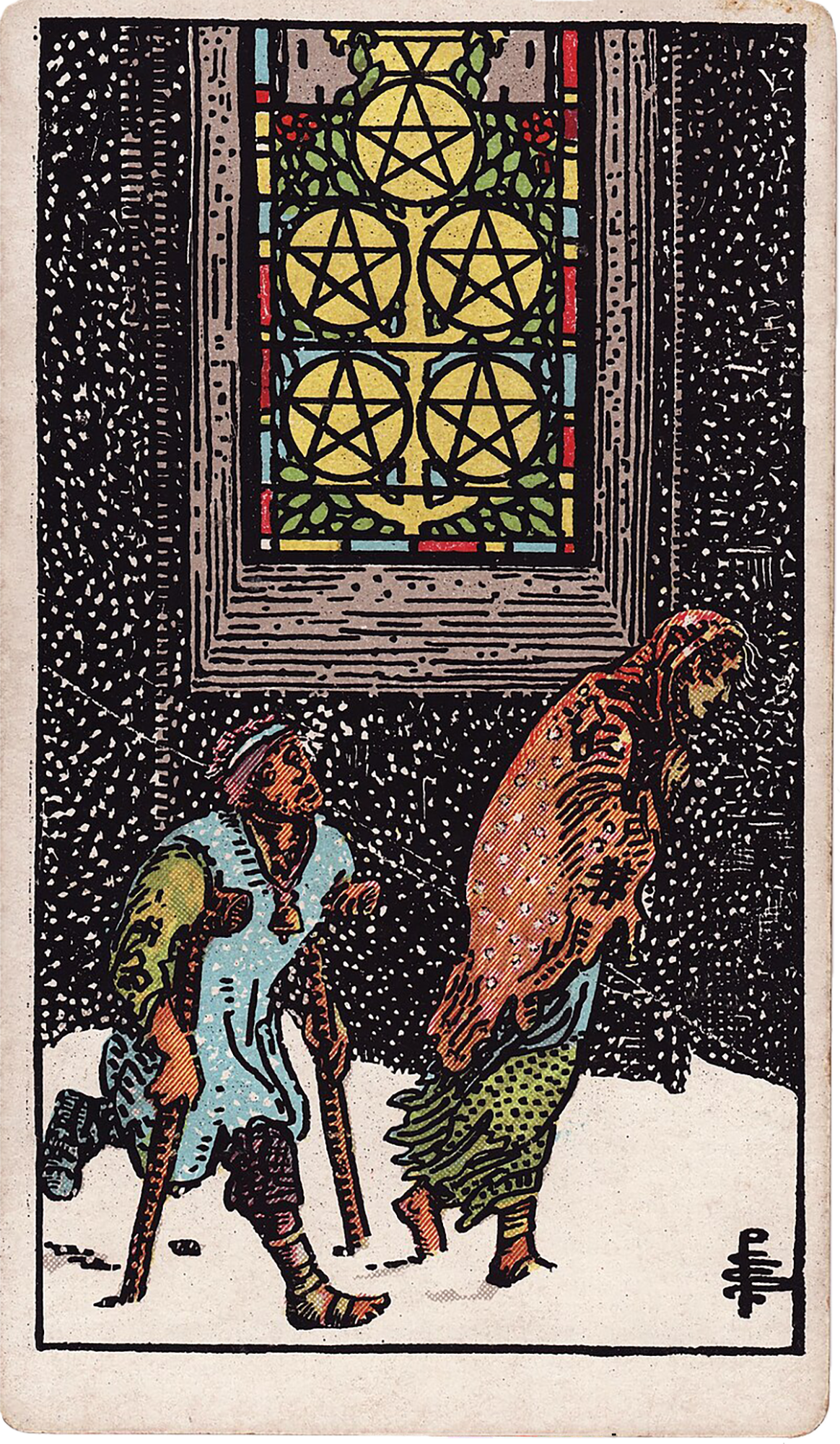 5 of Pentacles
Introduction to a single-card lesson with the supplied 5 of Pentacles
This lesson is centered on the supplied 5 of Pentacles and treats that single card as an entire reading. In many everyday and professional situations a solitary card can be enough to illuminate a direction, pattern, or immediate task. The supplied upright description emphasizes material or physical hardship combined with a sense of exclusion and a nearby light suggesting available support. The supplied reversed description draws attention to recovery, accepting help, lingering scarcity fear, or an internalized struggle. Read this article as training: you will learn how the same visual and symbolic content on the supplied 5 of Pentacles changes its practical advice depending on context.
Read the image first: Rider-Waite symbolism on the supplied card
Start every reading by describing the picture aloud or to the querent. The supplied 5 of Pentacles shows two figures outside a building with a glowing stained-glass window that bears pentacle symbols. One figure is on crutches and possibly injured; the other is stooped and wrapped against the cold. They look destitute, isolated, and left in the snow while light and warmth are visible but behind glass. The most important traditional symbols to note: the pentacles in the window (material stability and resource symbols), the crutches and bandages (bodily vulnerability and work/ability issues), the snow and darkness (hard conditions, cold exclusion), and the lit window (support that exists but is not being accessed). These visual cues map directly onto the supplied upright and reversed text: upright emphasizes material hardship with unseen or unused support, while reversed emphasizes recovery, accepting help, or internalized scarcity. Anchor every interpretation to these sensory image details before moving to context-specific meanings.
How to treat upright versus reversed meanings in a single-card context
The supplied upright meaning tells us the situation is practical: material or physical hardship with an element of exclusion, and a nearby light that suggests help may exist. The supplied reversed meaning asks you to look for recovery, acceptance of help, lingering scarcity fear, or a process stuck in translation from idea to practice. Rather than thinking upright is "bad" and reversed is "good," use this guideline: upright usually points to an actionable problem to manage (what is happening now and what task is required), while reversed pinpoints where the process has shifted into recovery, internal block, or incomplete return to stability. When you read the single supplied card decide whether you are being shown the external situation to address (upright) or the internal/post-crisis process and obstacles to recovery (reversed).
Context readings: Love and family
Upright in love or family: The supplied 5 of Pentacles frequently shows feelings of exclusion, loneliness, or being left out in relational settings. The image of two people struggling outside a warm space can indicate a couple or family member feeling cut off from emotional or practical household resources. Practically, the card asks you to notice which material or routine supports (money, caregiving, health care access, household roles) are failing and to propose concrete steps: re-budget, ask for temporary help, or create a rotating support plan. Keep the focus on repairable, measurable practices rather than abstract reassurances. Reversed in love or family: The supplied reversed description suggests recovery and accepting help. In a family spread this can mean a member finally accepting caregiving, a partner re-engaging with shared tasks, or the household moving from crisis to steadying routines. It can also signal lingering scarcity fear — someone may intellectually understand the solution but not act consistently. Ask: who is still outside the warm window mentally? Are there pride or shame barriers preventing a family member from receiving available support?
Context readings: Career and work
Upright in career: The image maps directly to job insecurity, workplace exclusion, layoffs, or being under-resourced. The supplied upright meaning points to the core task: find pragmatic work-related responses. That could include documenting needs, seeking temporary income sources, clarifying role expectations, or requesting reasonable accommodations. The lighted window suggests institutional help may exist (HR, union, emergency pay) even if it's not yet accessed. Ask clear questions: what skills or routines associated with Pentacles can be strengthened? Can the querent trade labor for immediate cash, access community job centers, or negotiate a phased return to work? Reversed in career: This is often a recovery story: returning from unemployment, gradually rebuilding savings, or learning to accept contractual work. It can also flag internal sticking points such as shame about asking for help or not updating practical skills. The reversed card compels you to identify small routines that rebuild trust and stability at work: reliable wake/work times, a budget plan, or short skill courses. Recovery may be slow; emphasize steps that are repeatable and measurable.
Context readings: Money and practical resources
Upright for money: The supplied 5 of Pentacles in its upright position is a clear sign of financial strain, unexpected expenses, or marginal living conditions. The card is practical, so the reading should move quickly to concrete actions: immediate triage (food banks, emergency funds, renegotiating debt payments), inventory of assets (what is still working and can be leveraged), and a short-term plan to stabilize cashflow. The lit window reminds you to scan for institutional or community resources that the querent might be overlooking. Reversed for money: Expect recovery, gradual rebuilding, or lingering fear. The reversed card often represents someone who is beginning to accept help (applying for assistance, using savings, allowing a friend to help) but still has scarcity patterns. In money readings, focus on creating simplified repeatable systems: automatic transfers to an emergency fund, prioritized debt lists, and review rituals. Ask whether the querent's behaviors match their stated financial plans; the reversed card often flags mismatches.
Context readings: Advice and challenge
As advice, the supplied 5 of Pentacles is unusually specific: it asks for pragmatic, immediate measures that protect material stability and bodily health. Upright advice is to identify the most urgent practical need (shelter, income, medical care), accept help if available, and set up short routines that reduce stress. The glowing window suggests looking outward to institutions or neighbors. As a challenge, upright warns that pride, shame, or social exclusion are blocking access to resources. Reversed advice shifts to accepting recovery tasks: integrate help into everyday life, practice consistent small habits that rebuild security, and address internal scarcity narratives by naming them and testing them against facts (bank balances, schedules). If reversed signals a challenge, it may show that recovery is being stalled by fear, inconsistent behavior, or withheld communication about needs. Use behavioral experiments: try one small act of acceptance (e.g., accept a meal, agree to a short paid job) and observe the result.
Context readings: The person shown by the card
When asked "who is this person?" the supplied 5 of Pentacles often points to someone in a precarious material or health state, or someone who feels excluded. Upright the person may be vulnerable, proud, and reluctant to seek help; they may appear battered by circumstance (injury, illness, job loss). Reversed the person may be someone in recovery, someone learning to accept help, or someone who appears stable externally but is still carrying scarcity fear internally. As a reader, describe the visual specifics on the supplied card and then match them to real-world signals: is the querent limping, exhausted, or socially isolated? Are they starting to accept invitations or assistance?
Context readings: Outcome and timing
Upright outcome: The supplied 5 of Pentacles as an outcome signals continued material pressure unless tangible steps are taken. Outcomes here are process-oriented: will the querent secure a temporary support, create a realistic budget, or relocate for better prospects? Use the image's light as a conditional sign — help exists but must be engaged. Timing in Pentacles tends to be slow and seasonal; expect recovery or resolution to require steady effort rather than instant change. Reversed outcome: The reversed supplied card usually points toward gradual improvement, acceptance of support, or lingering fear about scarcity even as external conditions improve. Treat reversed outcomes as processes that require maintenance: relapse into old scarcity behaviors is common unless stable practices are established. Because Pentacles govern long-term material stability, outcomes measured in months rather than days are a reasonable expectation.
Context readings: Spiritual reflection and meaning
Spiritually, the supplied 5 of Pentacles asks you to wrestle with themes of belonging, humility, and the boundary between self-reliance and community reliance. Upright it can be a spiritual call to practical compassion: be present to the needs you see rather than offering only platitudes. The warm window in the image can remind readers that spiritual support often appears as concrete offers: a meal, a place to stay, or an offered hand. Reversed, spiritual meaning emphasizes inner recovery: healing scarcity stories, reclaiming bodily or material dignity, and learning to receive. Both positions encourage a sober spiritual practice that respects material realities rather than escaping them.
Technique and practical reading method for one-card lessons
Use this step-by-step method when the supplied 5 of Pentacles is drawn as a single-card answer. 1) Describe the image: list 4–6 sensory details from the supplied card (snow, crutches, stained glass, light). 2) State upright or reversed and read the supplied text aloud or paraphrase to the querent (upright = material hardship + exclusion with possible support; reversed = recovery/accepting help/lingering fear). 3) Choose the context requested (love, career, money, advice, person, outcome, spiritual). 4) Translate image symbols into practical tasks for that context. For example, translate "lighted window" into "call HR, check local aid programs, accept a friend's offer". 5) Ask two clarifying questions that narrow the next steps (e.g., "What is the most urgent resource you lack right now?" "Who is already offering help that you are hesitating to accept?"). 6) Offer 1–3 concrete next steps that are measurable and repeatable. 7) Close with an exercise that tests the interpretation (e.g., accept one small act of help this week and journal the result). Keep your language grounded: the supplied 5 of Pentacles asks for realism and tangible assistance, not abstract solutions.
Examples and sample readings
Example 1 — Money query, upright: A querent asks "Will I make rent this month?" You describe the supplied image, note the upright definition of material hardship and nearby support, then ask clarifying questions: Do you have any short-term income sources or community assistance? The reading emphasizes immediate triage: contact the landlord to negotiate, access a local rent relief fund, list three items you could sell or pawn this week. The action is specific and measurable, and you point out the light in the window as institutions that may help if approached. Example 2 — Family care query, reversed: A querent asks "How will my parent manage after surgery?" The supplied reversed meaning suggests recovery and accepting help. You describe the image and say the reversed card points to a gradual return and to internal barriers to accepting help. Your advice: arrange a weekly aided schedule, offer to attend one appointment, and set up a temporary home-care service. You also note possible lingering scarcity fear in the parent; propose a conversation focused on dignity and small choices to restore agency. Example 3 — Career query, upright: "Should I ask for accommodations at work?" The supplied upright definition suggests practical tasks and available but unused support. You encourage documentation of needs, a clear accommodation plan, and a meeting with HR. The glowing window suggests there may be policies in place; your job as reader is to turn the visible into a procedural step.
Common mistakes and how to avoid them
Mistake 1: Treating the card as purely moral judgment. Avoid telling querents they "deserve" their hardship; instead locate actionable responses. Mistake 2: Over-spiritualizing the image. The supplied 5 of Pentacles is pragmatic; don't only give emotional comfort without practical steps. Mistake 3: Ignoring timing. Pentacles operate in slow, material rhythms; promising quick miracles risks false hope. Mistake 4: Reading reversed as automatically positive. The supplied reversed meaning often signals recovery but also lingering fear or stuck habits — test for behavior, not intention. Mistake 5: Forgetting to ask clarifying questions. The single-card reading must be narrowed with good questions to produce usable advice. Avoid abstraction: translate symbols into specific local resources, routines, or behaviors.
Interpretation logic and decision rules
When you read the supplied 5 of Pentacles, follow logical steps: 1) Identify whether the card is upright or reversed and use the supplied short definitions as your base premise. 2) Anchor each interpretation to at least two visual elements from the card (e.g., crutch = bodily vulnerability; window = resource/external institution). 3) Translate those symbols into concrete domain-specific actions: Pentacles imply finances, work, health, habits, and the body. 4) Use context to choose between immediate triage (upright) and recovery/maintenance (reversed). 5) Convert the outcome into a testable behavior: a phone call, an appointment, an automated payment, or a daily evidence-gathering step. These rules keep your reading grounded, repeatable, and useful for learners practicing single-card interpretation.
Closing guidance for learners
The supplied 5 of Pentacles is a practical teacher. It asks readers to meet material reality with clear small actions and to notice when pride or shame prevents asking for help. Practice: run three single-card readings using this method with consenting friends or classmates and record the clarifying questions you asked and the concrete steps you suggested. After a week follow up and see which recommendations were tried and what changed. Over time you'll build an intuition for when this card points to immediate triage, when it signals a slow recovery, and when it highlights internal scarcity patterns that need behavioral experiments rather than only counsel.
Practice questions
• When you look at the supplied 5 of Pentacles image, which two visual details stand out most to you and why?
• Is the querent being shown an external problem to solve (upright) or an internal recovery process to manage (reversed)?
• What concrete resource (local, institutional, or personal) corresponds to the lighted window for your querent?
• What one small, repeatable action could the querent take this week that maps to Pentacles skills (work, routine, budget, body care)?
• Where might pride or shame be preventing acceptance of help, and how can that barrier be tested gently?
• If this card appears as an outcome, what timeframe is realistic for change given Pentacles’ slow material timing?
• Which of the card’s symbols point to bodily needs versus financial or social needs, and how should those be prioritized?
• How can you turn the card’s insight into a measurable behavior to test within seven days?
• Does the querent have evidence that resources exist (the window is lit), or do they need help locating those supports?
• When reversed, what habits or narratives about scarcity need incremental practice to shift toward stability?
Comments
Sign in to comment.
Continue learning
Harnessing the Power of The Magician and Ace of Wands: Igniting Creativity and Manifestation in Tarot Readings
The combination of The Magician and the Ace of Wands in tarot readings offers a potent blend of creative energy and manifestation power. This article delves into the ways these car...
Advanced Techniques for Combining The Moon and The Star to Enhance Intuition in Tarot Readings
This article explores advanced techniques to combine the symbolism and energy of The Moon and The Star Tarot cards to enhance intuition during Tarot readings. Drawing from traditio...
Enhancing Clarity in Complex Choices with the Five Card Cross Tarot Spread
The Five Card Cross Tarot Spread is a practical tool designed to clarify complex choices by breaking down the decision into manageable parts. This article explores each position in...
Tracing the Origins and Evolution of The Fool Card in Tarot History
The Fool card holds a foundational place in tarot tradition, symbolizing beginnings, openness, and the embrace of uncertainty. This article traces its origins from early European d...
Understanding The Hermit Card in Solitude Reflection and Guidance
This article offers an in-depth exploration of The Hermit tarot card as a single-card reading in different contexts such as love, career, money, advice, challenge, person, outcome,...
Unlocking the Creative Flow with The Magician and The Empress in Tarot Combinations
This article delves into the powerful synergy between The Magician and The Empress in Tarot combinations, focusing on how their combined symbolism unlocks creative flow across vari...
Using the Seven Card Horseshoe Spread to Uncover Career Growth and Opportunity
This article presents an in-depth guide to the Seven Card Horseshoe Tarot Spread with a focus on career growth and opportunity. Using the cards The Fool, The Magician, The Empress,...
Understanding the Many Facets of The Moon in Emotional and Intuitive Tarot Readings
The Moon card in the Tarot deck embodies themes of intuition, uncertainty, dreams, and emotional complexity. This article offers a comprehensive exploration of The Moon’s upright a...
Unlocking Advanced Intuition Techniques Using The High Priestess The Moon and The Hermit
This article examines advanced intuition development in tarot reading by focusing on The High Priestess, The Moon, and The Hermit cards. It offers practical techniques for beginner...
Mastering Intuition with The High Priestess The Hermit and The Moon in Tarot Readings
This article delves into mastering intuition through three powerful Tarot cards: The High Priestess, The Hermit, and The Moon. It guides readers from beginner to advanced reading t...