
Reading The Hierophant for Institutions Rituals and Inner Authority
This article is a practical, learner-focused exploration of The Hierophant as a single-card lesson. Using the supplied Hierophant card image, it shows how to read the card visually and how its upright and reversed meanings shift across contexts such as love, career, money, advice, challenge, person, outcome, and spiritual reflection. The piece prioritizes technique: how to hold a single-card reading, how to anchor interpretation to the picture (Rider-Waite-Smith symbolism), questions to ask, sample short readings, common mistakes, and exercises that help build reliable skill without turning interpretation into fortune-telling.
Cards explored in this article
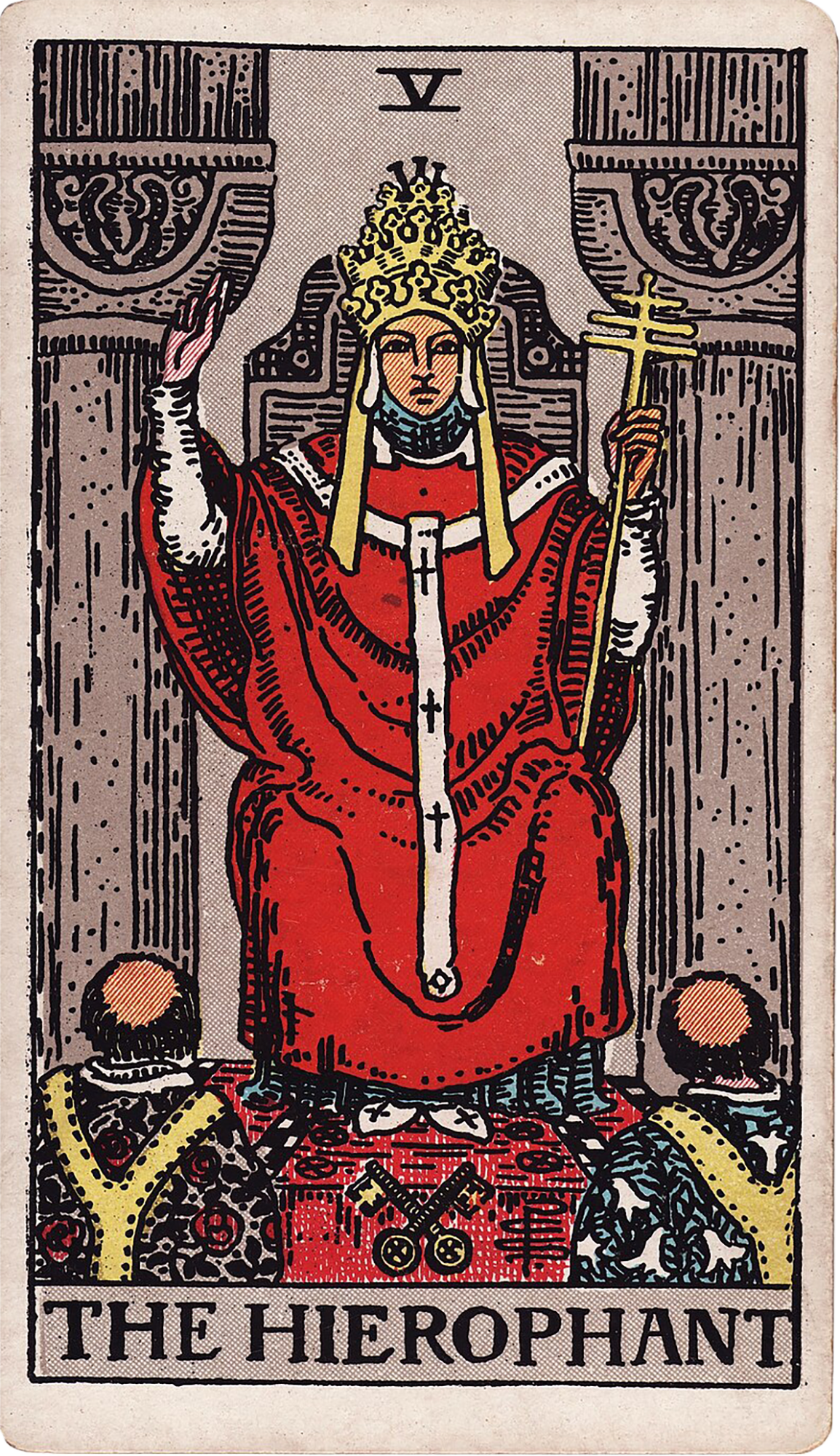 The Hierophant
Introduction and how to use this lesson
This article teaches a single-card approach to The Hierophant using the supplied Hierophant card image and the upright/reversed text provided. Designed for learners, not for definitive predictions, it emphasizes technique, visual anchoring, and contextual logic. When you perform a single-card reading with the supplied Hierophant card, treat the image as the primary data source. Ask a focused question, look at the picture, recall the upright/reversed summary below, and then translate those signals into the specific context you are reading (love, career, money, advice, challenge, person, outcome, spiritual reflection). This lesson will repeatedly point back to the supplied card's visual features and its conventional Rider-Waite-Smith symbolism so your interpretations stay grounded in the card itself.
Quick recap of the supplied Hierophant card meaning
Use the supplied upright/reversed text as your base definitions. Upright, The Hierophant emphasizes learning from established wisdom, seeking qualified guidance, and understanding the rules of a system before deciding whether to follow them. It encourages working with what is available, making the central issue visible enough to engage consciously, and taking a proportionate next step. Reversed, The Hierophant points toward dogma, conformity, empty ritual, rebellion without understanding, or institutions demanding obedience without wisdom. A reversal is not automatically bad; it can mean the upright energy is blocked, internalized, exaggerated, or becoming more psychological. Always ask where the energy is distorted and look to the card's neighbors in larger spreads to clarify whether reversal signals resistance, recovery, excess, or a pause.
Read the image first Technique
Begin every interpretation by describing what you actually see on the supplied Hierophant card image. With the Rider-Waite-Smith iconography in mind, list concrete visual details: the central figure seated on a throne in robes, the triple crown or papal tiara, the staff or triple-cross scepter (symbolizing authority and layers of teaching), the hand raised in a blessing or teaching gesture (two fingers extended, two down — signifying transmission), two acolytes or followers kneeling at his feet (representing apprenticeship and social instruction), the keys at his feet (symbolizing access to hidden knowledge and the opening/closing of tradition). Note the architectural elements and colours, which suggest formality, structure, and public ritual. Writing these specific visual cues down narrows your reading to evidence instead of stray associations. This concrete first step reduces projection and trains the reader to derive meaning from the card itself.
Why Rider Waite Smith symbolism matters here
The supplied Hierophant card draws directly on RWS symbolism. In that system the Hierophant is a religious or institutional teacher—often rendered as a pope—who mediates tradition. The keys at his feet represent the keys to the mysteries or access to established knowledge; the two acolytes show discipleship and the social transmission of rules; the triple crown and cross scepter point to layered authority (earthly, social, spiritual). When you interpret the card in any context, these motifs anchor your explanation: are you being asked to seek qualified guidance (acolytes), to examine what gate is being locked or opened (keys), to consider whether ritual or public form is helping or hindering (throne and architecture)? The RWS imagery gives you a vocabulary for translating the card across contexts without inventing unsupported meanings.
Single-card method: framing and practical steps
Single-card readings are compressed; they require a tight frame and a disciplined method. Use this stepwise approach when you pull the supplied Hierophant card: 1) Clarify the question. Make it specific and context-bound (for example: "How should I approach my team’s governance now?" rather than "What will happen?"). 2) Observe the image. List five neutral details from the Hierophant card (robe, keys, acolytes, scepter, raised hand). Avoid immediate judgment. 3) Recall the upright/reversed core. Decide whether the card sits upright or reversed in your layout and bring the supplied upright/reversed descriptions into your mind. 4) Translate symbol-to-context. For each visual detail, ask: how might this map onto the question? For instance, keys → access or permission; acolytes → someone learning or following; triple crown → layers of responsibility. 5) Synthesize. Build a short narrative that connects the image, the card’s upright/reversed summary, and the question. Keep it practical: recommend one or two next actions or questions the querent can apply. 6) Check balance. Ask whether your narrative leans too heavily on fear, wishful thinking, or personal bias. If so, re-anchor to the neutral visual details. This method compresses larger-spread logic into a single card without losing rigor.
Contextual interpretations: love and relationship readings
When the supplied Hierophant appears in a love context, follow the image logic. Upright: the card often points to tradition, commitment structures, or learning from an established model. The acolytes suggest formalizing a relationship (engagement, counseling with a respected professional, or adopting a shared ritual). The keys can indicate access granted—permission to enter a committed role—or the need to unlock patterned expectations. Suggested reading: "This relationship could benefit from an agreed framework—agreements, counseling, or learning together. Consider what formal or shared practices would make emotional expectations clearer." Practical advice may include enrolling in couple’s therapy with a credentialed therapist or discussing family traditions you both want to keep or change. Reversed: watch for ritual without meaning or rebellion for rebellion’s sake. The image still shows the same elements, but now those elements are distorted. A reversed Hierophant in love could signal that tradition is being followed because of habit, not affection, or that one partner is rebelling without understanding the costs. Ask: are we following rules that don't actually fit us? Is one partner imposing a template? The practical action is to inventory rituals and expectations and test whether they serve mutual growth.
Contextual interpretations: career and organizational dynamics
In career readings, anchor the Hierophant’s seat and scepter to authority structures. Upright: the card encourages learning within established systems—find a mentor, seek training, or work through existing procedures. The keys suggest gaining certification or permission that unlocks a next level (licenses, approvals, onboarding). The acolytes indicate mentorship and apprenticeship—look for experienced colleagues who can transmit institutional knowledge. Often the upright Hierophant points to working constructively with rules rather than bypassing them. Reversed: the image warns of rigid bureaucracy, empty compliance, or unexamined tradition that stifles innovation. It can also mark internal conflict: you may reject the company's formalities without having a constructive alternative. Practical steps include mapping which rules exist for safety versus convenience, finding allies to reform procedures, or seeking external counsel about best practices if the institution is failing ethically.
Contextual interpretations: money and material security
Financially, the Hierophant relates to structures that regulate access: banks, contracts, retirement systems, professional advisors. Upright: the keys and ritualized throne suggest using established instruments (savings plans, formal advice from a licensed financial professional, following tax rules) and learning the ‘grammar’ of the system so you can operate within it confidently. It may indicate that following conventional advice will help stabilize finances—a debt repayment plan or pension contributions. Reversed: there may be financial dogma or rituals that no longer fit your situation (blindly following investment tips, staying tied to a family asset for status, or conforming to expensive cultural expectations). The image points you to question what customs dictate your spending. Actionable advice: seek qualified financial guidance, but test conventional advice against your goals; identify rituals or social spending that drain resources.
Contextual interpretations: advice and practical counsel
Pulling the supplied Hierophant as advice is almost literal: look for qualified guidance and respect the learning curve. Upright advice says: find a teacher, follow the steps of a proven method, or formalize expectations before acting. Use the card's visual cues—especially the acolytes and keys—to encourage apprenticeship, credentialing, or a step-by-step approach. Reversed advice asks you to examine whether you are following rules mindlessly or rebelling against necessary structure. It can also mean that the best advice may be internal: you are the one who needs to re-author inherited rules. Practically, the Hierophant as advice often yields two options: follow a respected path to gain stability, or consciously revise a tradition after careful study.
Contextual interpretations: the card as challenge
When the Hierophant appears as a challenge, read the image as an obstacle of formality or internalized authority. Upright challenge: the issue might be that you feel constrained by rules or that the correct path requires patience and learning—access is possible but requires discipline. The keys tell you the obstacle may be procedural rather than impossible. Reversed challenge: the problem might be dogma, misapplied ritual, or a stubborn rejection of instruction that leaves you unskilled. In either position, the solution-oriented question is: what is the next learnable skill or protocol I can adopt to reduce friction? The Hierophant asks you to convert abstract resentment into a concrete practice: learn one rule; draft one policy; have one teachable conversation.
Contextual interpretations: the card as person
Using the supplied Hierophant as a personality archetype, observe the picture for social role cues. Upright person: someone who is a teacher, mentor, elder, clergy, or institutional authority—reliable, conventional, and often conservative in approach. They transmit rules and expect others to learn established ways. Reversed person: someone who may be rigidly doctrinaire, hypocritical, or alternatively, someone who rejects traditions without replacing them with a thoughtful alternative. When identifying the person, focus on roles rather than moral judgment: the card describes function—who stands for structure and teaching in the querent’s life—not whether the person is “good” or “bad.”
Contextual interpretations: outcome and spiritual reflection
As an outcome, the supplied Hierophant often indicates resolution through structure: outcomes that are formalized (contracts, ceremonies, certifications) or that involve a mentor’s intervention. Upright outcome: a situation reaches a stable conclusion through institutional or procedural means—think agreement, initiation, or a clarified institutional role. Reversed outcome: possible impasse due to conflict with tradition, or an internal reconfiguration where the querent begins to question old authorities. Spiritually, upright Hierophant points to organized belief, ritual practice, or joining a tradition as a path to meaning; the image’s keys suggest access to communal wisdom. Reversed spiritual reading highlights the need to examine inherited dogma and to find an authentic form of practice, not merely reject every tradition wholesale.
Sample single-card readings anchored to the image
Here are short example readings using the supplied Hierophant image. Each follows the read-observe-translate method. Example 1 — Love, upright: Question: "Will this relationship become long-term?" Observe: the acolytes kneel; the Hierophant sits between pillars; keys at feet. Translate: The relationship has the structure necessary for formal commitment; seek counsel with someone you both respect to clarify expectations. Example 2 — Career, reversed: Question: "Should I stay at my company?" Observe: same image but reversed meaning emphasizes dogma. Translate: Staying may mean enacting policies that feel hypocritical; investigate whether change is possible or whether leaving to build a different structure is safer. Example 3 — Money, upright: Question: "How do I secure my retirement?" Observe: keys; scepter; formal posture. Translate: Use established financial instruments and seek licensed advice—open the locks (keys) one at a time: emergency fund, retirement plan, pension advice. These concise readings model how to move from image to practical step.
Common mistakes and how to avoid them
1) Projecting generic authority: Avoid reading the Hierophant as "just authority" without specifying which authority the querent interacts with. Anchor to the image: which institution or teacher fits the picture? 2) Overvaluing upright and demonizing reversed: Reversed cards are not always catastrophe; they often mark a distortion or a private/internal process. Compare the supplied upright/reversed text and ask whether the reversal points to correction, delay, or internal change. 3) Ignoring the acolytes and keys: These are practical symbols—discipleship and access. Use them to find concrete actions (get a mentor; apply for permission). 4) Using the card as a moral judgment: The Hierophant describes structure and transmission, not virtue. Map function to situation. 5) Skipping the observer-check: After you build a narrative, say aloud the neutral image details again. If they don’t support your story, revise.
Practice exercises and suggested drills
Exercise 1 — Five-detail anchoring: Pull the supplied Hierophant and write five neutral image details. For each detail write one possible practical meaning for your chosen context. Exercise 2 — Upright/Reversed flip: Do two identical questions, one for upright and one for reversed. Compare how the same image shifts. Exercise 3 — Role-play the Hierophant: With a partner, have one person act as the "Hierophant" (mentor) and one as the querent seeking institutional advice. Role-play helps translate symbolic gestures into spoken sentences. Exercise 4 — Chain of three actions: From the supplied Hierophant image, create a three-step action plan relevant to your question (e.g., identify mentor, schedule consultation, sign up for course). These drills reinforce turning symbolic observation into concrete behavior.
Closing notes on ethics and interpretation logic
The Hierophant sits at the intersection of knowledge, structure, and social transmission. In single-card readings the interpretive logic should always run: image → symbol → functional mapping → practical action. Keep readers' autonomy central: the card's advice should empower choices, not prescribe fate. When you interpret the supplied Hierophant image, resist the temptation to universalize—ask which institution, which ritual, which teacher this card specifically points to for the querent. And remember that reversal often signals an opportunity for re-examination rather than an irrevocable downfall. Use the card to help readers learn and choose deliberately.
Practice questions
• Which element of the supplied Hierophant card image (keys, acolytes, scepter, throne, hand gesture) resonated most with you and why?
• Where in your life are you following established rules by habit rather than conscious choice?
• If the Hierophant in your reading represents an institution or mentor, what concrete next step could you take to engage with that authority constructively?
• When the Hierophant appears reversed, do you need to resist a tradition, or do you need to re-learn how to access it with skill?
• What ritual or formal practice could you adopt this month to stabilize a chaotic area of your life?
Comments
Sign in to comment.
Continue learning
Harnessing the Power of The Magician and Ace of Wands: Igniting Creativity and Manifestation in Tarot Readings
The combination of The Magician and the Ace of Wands in tarot readings offers a potent blend of creative energy and manifestation power. This article delves into the ways these car...
Advanced Techniques for Combining The Moon and The Star to Enhance Intuition in Tarot Readings
This article explores advanced techniques to combine the symbolism and energy of The Moon and The Star Tarot cards to enhance intuition during Tarot readings. Drawing from traditio...
Enhancing Clarity in Complex Choices with the Five Card Cross Tarot Spread
The Five Card Cross Tarot Spread is a practical tool designed to clarify complex choices by breaking down the decision into manageable parts. This article explores each position in...
Tracing the Origins and Evolution of The Fool Card in Tarot History
The Fool card holds a foundational place in tarot tradition, symbolizing beginnings, openness, and the embrace of uncertainty. This article traces its origins from early European d...
Understanding The Hermit Card in Solitude Reflection and Guidance
This article offers an in-depth exploration of The Hermit tarot card as a single-card reading in different contexts such as love, career, money, advice, challenge, person, outcome,...
Unlocking the Creative Flow with The Magician and The Empress in Tarot Combinations
This article delves into the powerful synergy between The Magician and The Empress in Tarot combinations, focusing on how their combined symbolism unlocks creative flow across vari...
Using the Seven Card Horseshoe Spread to Uncover Career Growth and Opportunity
This article presents an in-depth guide to the Seven Card Horseshoe Tarot Spread with a focus on career growth and opportunity. Using the cards The Fool, The Magician, The Empress,...
Understanding the Many Facets of The Moon in Emotional and Intuitive Tarot Readings
The Moon card in the Tarot deck embodies themes of intuition, uncertainty, dreams, and emotional complexity. This article offers a comprehensive exploration of The Moon’s upright a...
Unlocking Advanced Intuition Techniques Using The High Priestess The Moon and The Hermit
This article examines advanced intuition development in tarot reading by focusing on The High Priestess, The Moon, and The Hermit cards. It offers practical techniques for beginner...
Mastering Intuition with The High Priestess The Hermit and The Moon in Tarot Readings
This article delves into mastering intuition through three powerful Tarot cards: The High Priestess, The Hermit, and The Moon. It guides readers from beginner to advanced reading t...