
Six of Wands Meaning in Love Career and Reversed Positions
This article is a detailed single-card lesson on the 6 of Wands using the supplied 6 of Wands card image and the provided upright and reversed descriptions. It explains Rider‑Waite‑Smith symbolism, differentiates upright and reversed expressions, and demonstrates how the card's core message of visible progress and issues around validation changes across love, career, finances, advice, challenge, person and outcome contexts. The piece emphasizes method and practice for learners, provides examples and sample readings, outlines common mistakes, and offers reflection questions to deepen interpretive skill.
Cards explored in this article
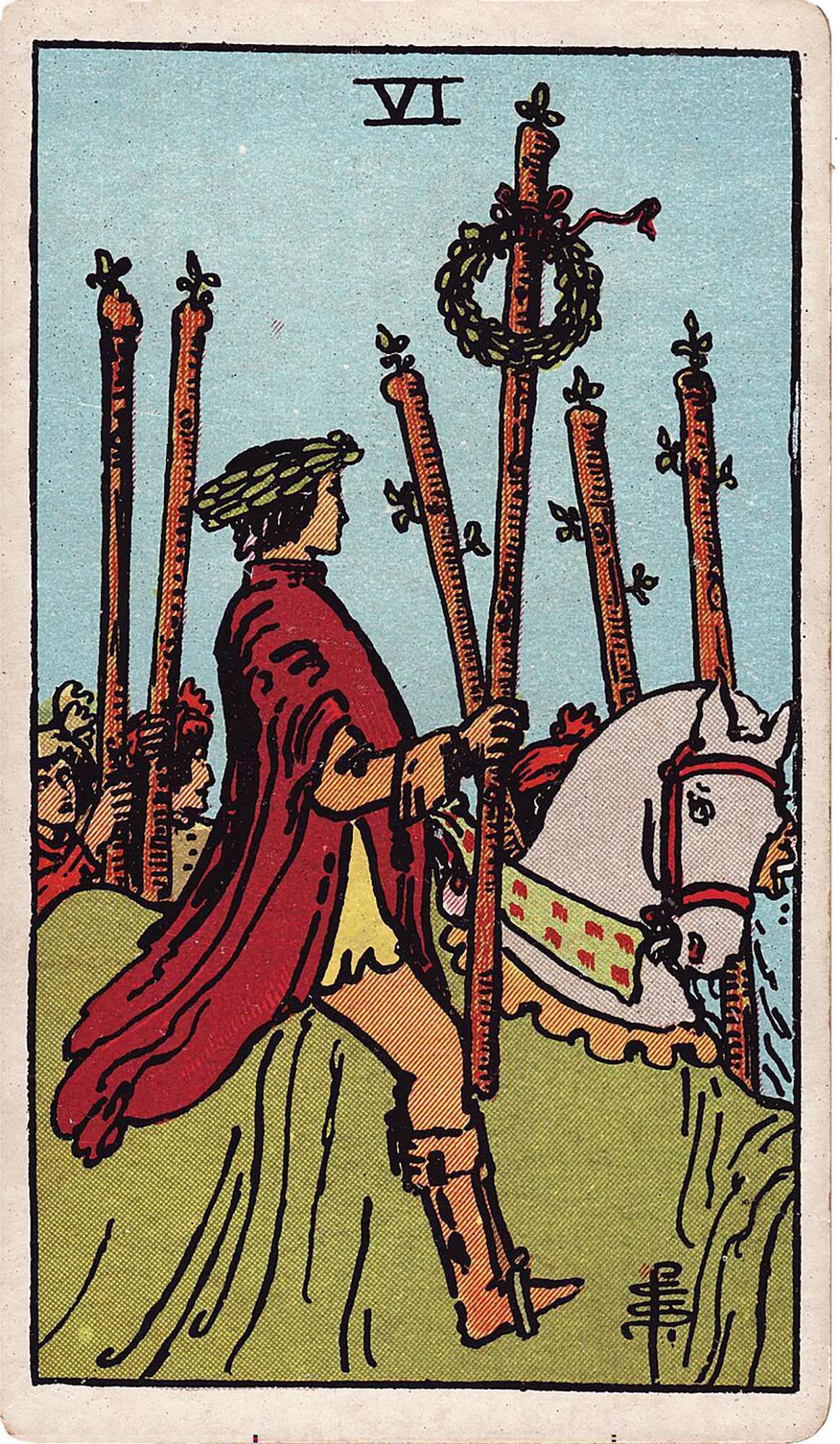 6 of Wands
Introduction to the supplied 6 of Wands
This lesson is built around the supplied 6 of Wands card image and its provided meanings. The context data names the card "6 of Wands" and supplies two condensed interpretations: Upright, 6 of Wands highlights earned recognition and visible progress; it asks how to receive success without depending entirely on applause. Reversed, 6 of Wands draws attention toward ego, hollow recognition, self-doubt despite achievement, or a public setback that exposes reliance on external validation. Because this is a single‑card lesson, every example and technique below uses only the supplied 6 of Wands and its upright and reversed descriptions. The aim is to train you to read this specific card across situations rather than to make fixed predictions.
Key Rider Waite Smith symbolism to look for on the supplied 6 of Wands
Look carefully at the imagery on the supplied 6 of Wands. The Rider‑Waite‑Smith composition shows a single rider astride a horse, wearing a laurel crown and carrying a wand topped with a laurel. The rider is clearly being cheered by figures walking alongside or behind. Notable symbolic elements: the laurel wreath (victory, honor), the horse (movement, public display), the wand (creative will and energy expressed), and the followers or crowd (external recognition, social context). The crowns and banners emphasize visibility. Wands as a suit signal motivation, ambition, creative force, identity and how energy is directed. When you anchor an interpretation to the supplied image, translate these visual cues into questions: Who is being acknowledged? What was the effort? Where does public opinion matter? Is success earned or merely staged? The supplied upright description already frames these cues: visible progress and earned recognition; the reversed text directs you to look for hollow recognition, self‑doubt, or a public setback exposing dependency on validation. Keep the image at the center of your reading.
Core upright meaning and how to translate it into practical readings
The supplied upright description: "Upright, 6 of Wands highlights earned recognition and visible progress; the card asks how to receive success without depending entirely on applause." When the supplied card appears upright in a spread position denoting the present or near future, treat it as a sign that visible results are arriving: promotions, public praise, completion of a creative project, or a milestone successfully reached. Practical translation steps: 1) Identify the achievement: ask what specific project, relationship phase, or decision the querent has been working toward. 2) Measure the visibility: is the success public, within a team, or private praise? 3) Clarify response options: the card asks how to receive success without relying entirely on external applause. Encourage the querent to accept recognition while grounding their identity in internal metrics (how they did the work, the values guiding it). Use the image: the laurel crown is real reward, but the cheering crowd points to external validation—balance the two. Remember the upright is not the absence of effort or discomfort; it often arrives after sustained energy. Use present-tense action language when describing possibilities and next steps.
Core reversed meaning and how to read it carefully
The supplied reversed description: "Reversed, 6 of Wands draws attention toward ego, hollow recognition, self‑doubt despite achievement, or a public setback that exposes reliance on external validation." Reversed does not automatically mean 'bad'; it highlights breakdowns in the process. The reversal can signal several patterns: 1) Overdependence on applause: the querent's sense of worth is tied to visible reward. 2) Hollow victory: recognition without substance or public praise when the achievement lacked integrity. 3) Internal struggle: the achievement exists but the querent doubts its value or fears exposure. 4) Public setback: a visible announcement, failure, or critique that undermines confidence. Technique: ask whether the problem is external (public humiliation, criticism) or internal (self‑doubt, need for external validation). The supplied reversed wording suggests probing for where the process is stuck and what needs practice, release, or communication to return to a healthier expression of Wands energy.
Love and relationships context
When the supplied 6 of Wands arrives in a love position, its upright and reversed messages differ in tone but share a theme of recognition and identity within the relationship. Upright: Visible progress—an engagement, a public commitment, or a joyful phase where partners feel proud of each other. The laurel and cheering figures imply social approval of the relationship or mutual pride in each other's accomplishments. Practical reading: ask whether the relationship has recently reached a milestone that is being celebrated. Encourage the querent to accept praise without making approval the foundation of intimacy. Questions you might ask: Who in the relationship needs recognition? Is one partner performing to secure affection? Reversed: Look for ego issues or shaky foundations. Perhaps one partner's need for admiration is creating imbalance, or a public comment or social comparison has sown insecurity. Alternatively, the reversal can show internal doubts—someone feels unappreciated despite giving a lot. Use the image to explore power dynamics: who is on the horse, who is in the crowd? That dynamic often maps onto who dominates or seeks attention in the relationship. Advice here is relational: practice authentic appreciation, state needs, and separate self‑worth from partner approval.
Career and professional life context
In career readings the supplied 6 of Wands centers on recognition, promotions, public projects, and the social consequences of professional success. Upright: Expect visible progress—promotion, public recognition, successful presentation, or project completion that colleagues notice. The card's runner or rider imagery suggests moving forward with momentum and receiving visible reward for initiative. Reading technique: link the wand in the figure's hand to the querent's project or leadership role. Ask which behaviors produced the recognition and how to sustain the constructive side (mentoring, clear communication, measured humility). Reversed: Career reversals contain several possibilities: a near miss for promotion, the feeling of being overlooked despite achievement, or arrogance and overreach that generate backlash. The reversal also highlights the danger of depending on titles or external praise as the only measure of success. Use the supplied reversed phrasing to probe for structural issues (team dynamics, public reputation) and inner blocks (impostor syndrome after a promotion). Practical advice: document achievements, build steady relationships, and prepare for reputation management if a public setback is indicated.
Money and resources context
Money questions with the supplied 6 of Wands translate the card's visibility theme into material reward patterns and perception of abundance. Upright: Financial progress or successful funding—receiving a bonus, winning a bid, or securing resources that others notice. The card indicates tangible results from energy and initiative. Practical interpretation: trace the source of the gain—was it effort, risk, or marketing? Emphasize sustainable practices rather than celebrating windfalls alone. Reversed: Financial hollow recognition can show up as flashy spending to maintain an image, or reliance on external signals (brand, status purchase) to feel wealthy. It can also warn of public exposure for mismanaged funds or overextension leading to a setback. Use the reversal to ask whether money decisions are being made for substance or show. Advice: prioritize transparency, reframe worth in terms of security and stewardship, and simplify budgets to reestablish grounded progress.
Advice, challenge and practical reading technique
Because this is a single‑card context, the supplied 6 of Wands must do double duty as indicator and advisor. Use the upright and reversed descriptions as diagnostic tools. Technique steps: 1) Establish position meaning: decide whether the card answers 'advice' or 'challenge' in your spread. 2) Anchor in the image: name the visible elements you see—laurel, horse, cheering crowd—and translate them into actions or obstacles. 3) Clarify internal vs external: ask whether the situation is about inner scores (self‑worth) or outer scores (public recognition). 4) Ask for time frame or next step: the mounted figure signals movement—what is the next gesture to take? For advice positions: Upright encourages receiving recognition while strengthening internal measures of success; actions include naming achievements, delegating credit, and practicing gratitude without depending solely on applause. Reversed advice focuses on simplifying, acknowledging insecurities, rehearsing authenticity, repairing reputational issues, or communicating more honestly. Challenge reading: Upright challenges include complacency or overreliance on praise; reversed challenges include ego entanglements and public setbacks. Because the supplied reversed description invites questions of what needs to be simplified or released, list concrete micro‑tasks for the querent: write down three accomplishments, ask for one feedback conversation, or step back from social comparison for a week.
Person and outcome contexts
When the supplied 6 of Wands represents a person, read the image as personality shorthand. Upright person: someone confident, visible in community, a leader or advocate who energizes others. This person celebrates wins and rallies support. They can be an ally in getting projects noticed. Reversed person: someone who craves recognition, is insecure behind a public front, or has recently experienced a reputation hit. They may perform achievements more for optics than substance. For outcomes, the upright 6 of Wands suggests a likely visible reward or social proof if current behaviors continue; it implies forward movement with applause. The reversal signals outcomes that may disappoint public expectations or require repair work before recognition can be trusted. Outcome reading technique: when the supplied card appears alone, ask whether the querent is positioned to receive the result they want and whether internal readiness matches external visibility. The reversed outcome often points to required inner work before external success lasts.
Spiritual reflection and inner work
Use the supplied 6 of Wands to explore ego, identity, and spiritual maturation. Upright spiritual prompts: celebrate spiritual milestones—new clarity, a breakthrough in practice, or public teaching that aligns with integrity. The laurel can represent inner victories such as overcoming a pattern of self‑neglect or aligning action with values. Reversed spiritual prompts: examine attachment to praise and the spiritual cost of seeking validation. Are rituals or practices being performed for show? Is the ego leveraging spiritual language for status? The supplied reversed description asks you to identify where the process is stuck and to consider practices that simplify and bring authenticity back into focus: silence, private discipline, or confession and accountability. Exercises: keep a humble gratitude list, practice a week of quiet service without acknowledgment, and journal moments when you feel most compelled to show off. These practices help move a reversed 6 of Wands toward healthier expression.
Common mistakes and how to avoid them
When learners interpret the supplied 6 of Wands they often make predictable errors. 1) Treat the image as uniformly positive: Upright is not unconditional good fortune. It asks about balance between internal and external validation. 2) Assume reversed equals failure: Reversed flags stuck process—explore nuance rather than assigning doom. 3) Ignore the crowd: Some readers focus only on the rider and miss the social context the cheering figures provide. That crowd often tells you whether recognition is communal, performative, or pressured. 4) Over‑generalize across contexts: The same card in love versus career requires different action steps even if the theme (recognition) is constant. 5) Skip clarifying questions: Because this single‑card teaching lacks additional cards to qualify, always ask whether issues are internal (self‑doubt) or external (public setback). Avoid these mistakes by tying every interpretive sentence back to an image detail or the supplied upright/reversed phrasing, and by offering concrete next steps rather than abstract pronouncements.
Practical sample readings using only the supplied 6 of Wands
Below are short single‑card sample readings showing how to phrase interpretations for clients or practice logs. Each uses only the supplied 6 of Wands and its upright or reversed wording. 1) Love upright (single card pulled for current relationship): "You have reached visible progress—a milestone that others can see. The laurel suggests your partnership is being celebrated; still the card asks how you will accept praise without making it the foundation of intimacy. Consider naming one way you need to be appreciated that isn't public applause." 2) Love reversed: "There is a pattern here of seeking approval. One partner may be performing to be loved, or you feel unappreciated despite effort. The reversal urges simplifying and communicating needs rather than doubling down on performance." 3) Career upright: "Your project is attracting attention and may lead to promotion or public recognition. The image recommends consolidating gains by crediting collaborators and documenting results to make progress sustainable." 4) Career reversed: "Either a public setback or internal doubt is undermining your professional stance. Revisit assumptions about why you seek recognition and repair any reputational damage through transparent action." 5) Money upright: "Funds or resources have arrived as a visible payoff for your initiative. Use this moment to create a plan that secures long‑term stability rather than a one‑time display." 6) Money reversed: "Watch for spending to maintain image or a financial situation that looks good superficially but is hollow. Simplify and audit expenses as a corrective." 7) Outcome upright: "If current efforts continue, visible success is likely; ready yourself to accept it without letting external applause become the only measure of worth." 8) Outcome reversed: "Success may be undermined by ego or a public critique; address the internal or external issue before relying on the outcome to validate you." These short readings demonstrate how to use the supplied image and text for precise client guidance.
Bringing it together with a step by step reading method
When you draw the supplied 6 of Wands as a single card, follow this measured process: 1) Observe: Describe what you see on the supplied card—laurel, rider, horse, crowd. 2) Connect to suit energy: Remind yourself that Wands relate to motivation, creativity, identity and direction of energy. 3) Read literal upright/reversed text: Use the supplied upright and reversed descriptions as starting frames—visible progress and earned recognition versus ego, hollow recognition, and stuck process. 4) Ask the key clarifying question: Is this primarily about external validation or internal held‑beliefs? 5) Contextualize: Apply the card to the querent's area of life (love, career, money, etc.) and translate the visual cues into concrete behavioral advice. 6) Offer a corrective or next step: three tangible micro‑actions (e.g., name achievements, ask for feedback, simplify spending, practice private service) based on whether the card is upright or reversed. 7) Confirm understanding: ask the querent which part of the reading resonates and refine. Repetition of this method trains you to anchor meaning in image detail while remaining sensitive to the card's supplied upright and reversed guidance.
Conclusion and final interpretive logic
The supplied 6 of Wands is a compact lesson in the social dimension of success. Upright it celebrates visible progress and asks how to receive success without depending entirely on applause; reversed it calls attention to ego, hollow recognition, self‑doubt, or public setbacks. Whether in love, career, finances, advice, or spiritual reflection, the interpretive logic is constant: match the Rider‑Waite imagery (laurel, horse, crowd) to the querent's lived situation and ask whether the issue is about external signal or internal readiness. The healthiest reading combines acceptance of external recognition with internal measures of worth and integrity. Use the practical techniques in this article to make the supplied 6 of Wands a workhorse card in your practice rather than an ambiguous symbol. Keep returning to the image and to the supplied upright and reversed text to maintain clarity and fidelity to the card's core teaching.
Practice questions
• When you imagine the rider on the supplied 6 of Wands, who are the people in the crowd for your life and what role does their approval play?
• Where in your life have you recently received visible recognition and how much of your self‑worth shifted as a result?
• If the 6 of Wands appears reversed for you right now, which is more present: a public setback, or internal doubt despite achievement?
• What small practice could help you accept praise gracefully without depending on it?
• How would you advise someone to repair a reputation issue suggested by the reversed 6 of Wands using concrete steps?
• In relationships, who tends to ride the horse and who joins the crowd, and what does that distribution tell you about balance?
• Which elements of the supplied card image (laurel, horse, wand, crowd) feel most alive for you and why?
• What evidence do you have that a recent win is sustainable rather than hollow, and what would you document to make it sustainable?
Comments
Sign in to comment.
Continue learning
Harnessing the Power of The Magician and Ace of Wands: Igniting Creativity and Manifestation in Tarot Readings
The combination of The Magician and the Ace of Wands in tarot readings offers a potent blend of creative energy and manifestation power. This article delves into the ways these car...
Advanced Techniques for Combining The Moon and The Star to Enhance Intuition in Tarot Readings
This article explores advanced techniques to combine the symbolism and energy of The Moon and The Star Tarot cards to enhance intuition during Tarot readings. Drawing from traditio...
Enhancing Clarity in Complex Choices with the Five Card Cross Tarot Spread
The Five Card Cross Tarot Spread is a practical tool designed to clarify complex choices by breaking down the decision into manageable parts. This article explores each position in...
Tracing the Origins and Evolution of The Fool Card in Tarot History
The Fool card holds a foundational place in tarot tradition, symbolizing beginnings, openness, and the embrace of uncertainty. This article traces its origins from early European d...
Understanding The Hermit Card in Solitude Reflection and Guidance
This article offers an in-depth exploration of The Hermit tarot card as a single-card reading in different contexts such as love, career, money, advice, challenge, person, outcome,...
Unlocking the Creative Flow with The Magician and The Empress in Tarot Combinations
This article delves into the powerful synergy between The Magician and The Empress in Tarot combinations, focusing on how their combined symbolism unlocks creative flow across vari...
Using the Seven Card Horseshoe Spread to Uncover Career Growth and Opportunity
This article presents an in-depth guide to the Seven Card Horseshoe Tarot Spread with a focus on career growth and opportunity. Using the cards The Fool, The Magician, The Empress,...
Understanding the Many Facets of The Moon in Emotional and Intuitive Tarot Readings
The Moon card in the Tarot deck embodies themes of intuition, uncertainty, dreams, and emotional complexity. This article offers a comprehensive exploration of The Moon’s upright a...
Unlocking Advanced Intuition Techniques Using The High Priestess The Moon and The Hermit
This article examines advanced intuition development in tarot reading by focusing on The High Priestess, The Moon, and The Hermit cards. It offers practical techniques for beginner...
Mastering Intuition with The High Priestess The Hermit and The Moon in Tarot Readings
This article delves into mastering intuition through three powerful Tarot cards: The High Priestess, The Hermit, and The Moon. It guides readers from beginner to advanced reading t...