
Spotting King of Wands Energy in Leadership Hiring and Personal Branding
This article teaches how to read the supplied King of Wands card as a single-card lesson applied to leadership hiring and personal branding. Using the Rider‑Waite‑Smith imagery and the supplied upright and reversed text, it explains how to interpret the card in contexts such as career, money, love, advice, challenge, person, outcome, and spiritual reflection. The lesson includes a step-by-step practical reading method, examples of interview and branding scenarios, common mistakes to avoid, and reflection prompts for refining your interpretive skill.
Cards explored in this article
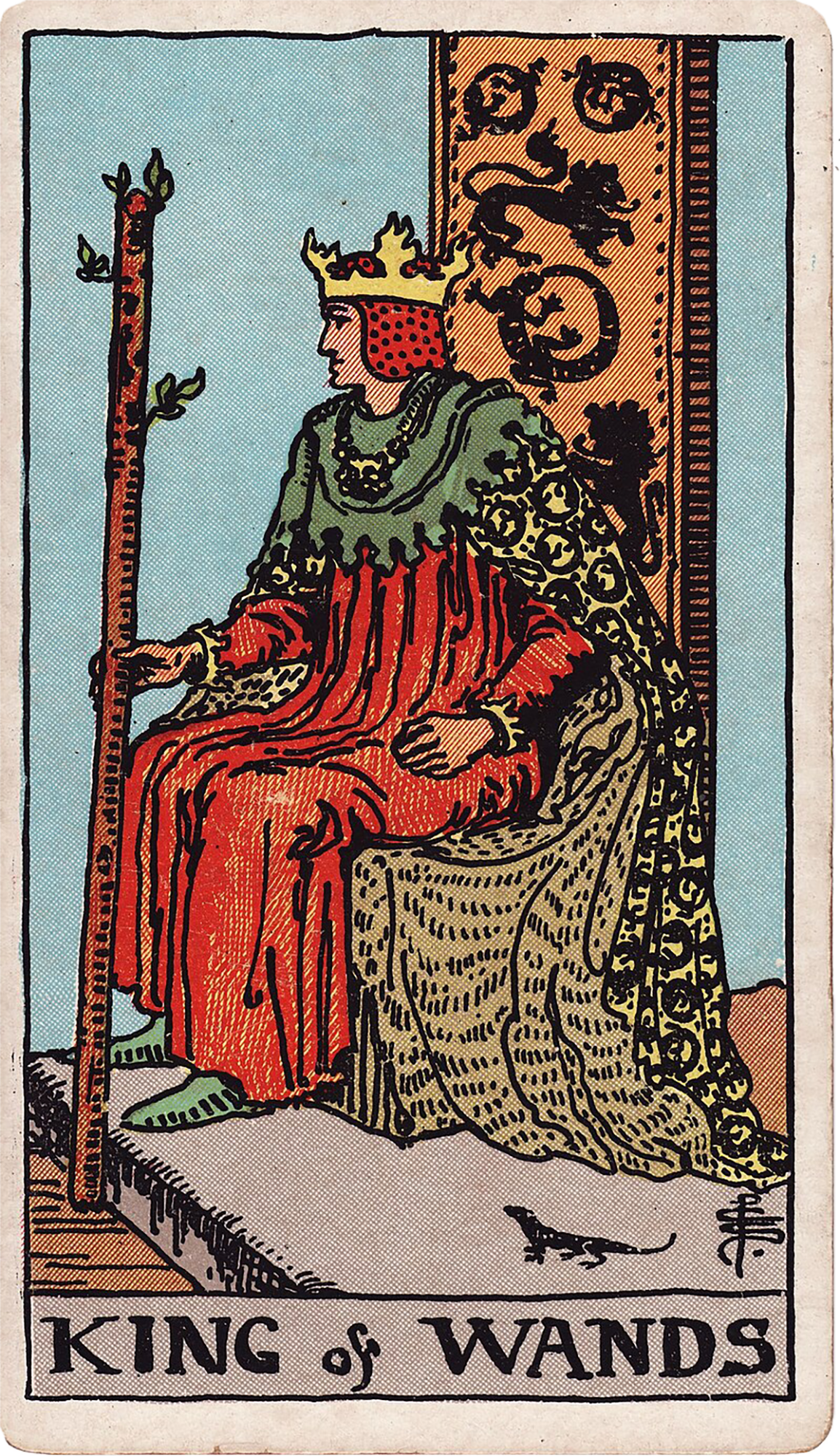 King of Wands
Introduction and scope
This lesson uses the supplied King of Wands card image(s) and the supplied upright and reversed descriptions to teach a single-card approach to leadership hiring and personal branding. Because this is a single-card lesson, we do not build meanings from other cards; instead we practice anchoring interpretation to the King of Wands' visual language and the supplied upright/reversed guidance. The supplied upright text emphasizes "mature direction of creative force: vision, courage, entrepreneurship and responsibility for the energy one sets in motion," and that the card is practical and asks for a present-stage response. The supplied reversed text points to "domination, impatience, grandiosity, temper, or expecting others to execute a vision that has not been communicated clearly," and recommends examining where a process has become stuck. Throughout this article I will explicitly reference the supplied King of Wands (upright and reversed) and the RWS visual symbols visible in the card to keep readings concrete, teachable, and useful for hiring and branding decisions.
Visual anchor and Rider‑Waite‑Smith symbolism
Begin every single-card King of Wands read by looking closely at the supplied King of Wands card image. Traditional Rider‑Waite‑Smith (RWS) imagery in this card shows a mature, seated figure holding a blossoming wand; his posture is confident but controlled. His robe and throne display fire symbols — salamanders and lions — which in RWS language stand for transformation, courage, charisma, and a sovereign relationship with energetic force. The wand itself is alive: buds or shoots indicate ongoing creative growth rather than finished empire. The landscape behind him is often open and sunlit, suggesting initiative and a forward view rather than closed introspection. When you read for leadership or branding contexts, translate visible details into behavioral questions. For example: a flowering wand = visible, generative ideas that can be executed; salamanders and lions = an ability to transform energy and lead boldly; an upright, centered posture = responsibility and steadiness; an intense gaze = charisma and clarity of purpose. The supplied upright and reversed descriptions should be read as two complementary diagnostic lenses: upright shows how the King of Wands' strengths can be employed constructively; reversed shows where that energy becomes excessive, internalized, or obstructive. Keep returning to the pictured details while interpreting one of the card's two orientations.
Interpretation logic: how one card changes with the question
Single-card interpretation requires pairing a stable set of symbol-meanings with a context-specific question. The logic looks like this: identify the card's core thematic field (in this case the King of Wands' association with leadership, vision, initiative, and responsibility), map visual elements to professional attributes (wand = creative initiative, throne/lions = authority, salamanders = transformative fire/energy), then answer the context-driven question by asking whether those attributes are being exercised adaptively (upright) or maladaptively (reversed) according to the supplied definitions. Because the supplied text explicitly frames the upright card as practical and stage-sensitive ("asks for a response that fits the present stage rather than an abstract ideal") and the reversed card as indicating domination, impatience, or internal stuckness, your interpretive logic should always test: Are we looking at a workable application of vision (hire, promote, or brand around this trait)? Or are we seeing a warning that the energy is unchecked, miscommunicated, or internalized? In hiring and branding, the critical follow-up is behavioral: what action or question will reveal whether the King of Wands energy is mature or distorted? That becomes the core of your reading method and the practical recommendations you give a client.
Practical reading method: step by step for hiring and branding
Use this reproducible technique when the King of Wands is the only card drawn. 1) Clarify the question. Are you asking "Should we hire this person?" "What role suits their leadership style?" "How should this person present themselves publicly?" Single-card clarity matters. Keep the question narrow. 2) Center on the supplied King of Wands image. Spend at least 60 seconds noting three visual details (e.g., posture, wand, throne decorations). Say them out loud or write them in shorthand. 3) Identify orientation. Is the card upright or reversed in the spread? Use the supplied upright description to see if the candidate/brand shows "vision, courage, entrepreneurship and responsibility" and if the card "asks for a response that fits the present stage." Use the supplied reversed description to look for signals of "domination, impatience, grandiosity, temper, or expecting others to execute a vision that has not been communicated clearly." 4) Translate the image to behaviors. Examples: - Wand budding = demonstrable projects or pilot programs rather than abstract plans. - Lions/salamanders = capacity to take responsibility for team energy and transformation. - Seated posture = steadiness under pressure; standing or forward posture in the imagery (if suggested) = action orientation. 5) Form two investigative prompts. One prompt tests the upright, constructive expression; the other tests the reversed, problematic expression. For example: "Describe a time you took a new idea from concept to measurable outcome" vs. "Tell me about a time a team resisted your vision—what did you do?" Ask these to clarify whether the King of Wands energy is being lived. 6) Make practical recommendations. For hiring: recommend hire/second-stage/interview/no-hire with concrete next steps (trial project, leadership assessment, clarification of roles). For branding: recommend messaging adjustments (amplify entrepreneurism with specific outcomes; downplay rhetoric if reversed and focus on collaborative examples). 7) Close with a staging test. The supplied upright King of Wands "asks for a response that fits the present stage"—so identify one small action suitable to the candidate's current context (pilot leadership role, short public speaking series, small cross-functional remit) rather than a sweeping promotion or brand overhaul.
King of Wands in career and hiring contexts
Upright: In a hiring context, the supplied upright King of Wands suggests a candidate with entrepreneurial initiative, clear vision, and someone likely to take responsibility for outcomes. Picture the RWS king: a leader holding a living wand (projects that are active and grow) and a throne decorated with lion and salamander motifs (courage and adaptive fire). For hiring, interpret this as: the person can create direction and motivate others, they are practical and stage-aware, and they're likely to accept responsibility for the energy they set in motion. Practical hiring actions: request a short case exercise where the candidate defines priority and next steps for a 60–90 day pilot; ask for concrete examples of managed initiatives and measurable results. Reversed: The supplied reversed King of Wands warns about domination, impatience, grandiosity, temper, or unclear communication of vision. In hiring this reads as someone who may demand others implement an unshared plan, or who rhetorically champions big ideas without operational follow-through. The reversal may also indicate internal confusion: the person believes they are leading but their behavior undermines team cohesion. Practical hiring actions: introduce behavioral interview questions that stress collaborative leadership, request references specifically about team dynamics, and consider a time-limited leadership trial with clearly defined feedback loops. The card asks you to examine where the process is stuck—are expectations unclear? Is the candidate over-promising? Are they resistant to delegated authority?
King of Wands and personal branding
Upright: When applied to personal branding, the supplied upright King of Wands encourages a brand narrative focused on visible initiative, clear mission, and responsible leadership. Use the RWS imagery: highlight the flowering wand (ongoing projects), the fire-symbology (transformative energy), and the king’s composed posture (reliability). Messaging examples: lead with a case study that shows how your vision delivered measurable change; use visuals or copy that convey warmth, decisiveness, and a readiness to take responsibility for outcomes. The practical guidance from the supplied upright text—"asks for a response that fits the present stage"—means tailor the narrative to achievable claims: if you’re early-stage, emphasize pilot wins; if mid-career, emphasize scaled outcomes. Reversed: The supplied reversed King of Wands as a branding warning flags signals of grandiosity or overstatement. A brand that leans too heavily on charisma without demonstrated structure can look reckless or domineering. The reversed card also suggests a misfit between internal self-image and outward messaging. Practical fixes: replace absolute claims with documented outcomes; incorporate team testimonials; soften authoritative language with examples of listening and collaboration. If branding decisions are being made by a single individual without feedback, the card asks you to examine and simplify the process so the healthier expression of Wands can return.
Money and financial decision contexts
Upright: The supplied upright King of Wands indicates financial moves driven by entrepreneurial vision and calculated risk-taking. Translate the wand's budding energy into investments in growth projects that have early-stage evidence. The king’s responsibility theme suggests a readiness to be accountable for capital deployment and to plan contingencies. For budgeting or investment decisions, favor small high-leverage pilots and clear KPIs rather than speculative, unfounded scaling. Reversed: The reversed King of Wands warns of impulsive spending to fuel an image, mis-investment driven by ego, or a leader who expects others to execute risky plans they haven't operationalized. Practically, require clear forecasting, staged funding tied to milestones, and independent review before commitment. The reversed card recommends simplifying and acknowledging what is missing—do you have the team and systems to execute this vision? If not, delay or scale back until fundamentals are in place.
As advice and as a challenge
Advice: Read upright King of Wands as practical counsel to claim a visible leadership role that suits the present stage—take initiative, communicate a concrete next step, and accept responsibility for team energy. Use the supplied upright wording to remind the querent that vision must match stage: a clear pilot beats a grandiose plan with no pathway. Challenge: Read the reversed King of Wands as an invitation to examine where the querent’s leadership energy is stuck or distorted. The supplied reversed text suggests looking for domination, impatience, or lack of clear communication. Ask: what must be simplified, acknowledged, practiced, released, or communicated before healthier Wands expression returns? Turn the card into a practice checklist: clarify expectations; practice delegation; solicit candid feedback on temper and communication style.
Reading the card as a person or archetype
When the supplied King of Wands represents an actual person in the querent’s life (a hiring manager, candidate, or brand owner), anchor the description to imagery: strong posture, wand, lions, salamanders. Upright: this person is charismatic, visionary, takes responsibility and can catalyze teams; they may be ideal for roles that need initiative and entrepreneurship. Reversed: this person might habitually expect others to carry their vision, may be impatient in collaboration, or may have charisma that masks inconsistent practice. Important nuance from the supplied reversed text: the distortion can be internal and not obvious to others—so encourage direct behavioral probes, concrete examples, and reference checks that ask about temper, delegation, and communication.
Outcome and spiritual reflection
Outcome: The supplied upright King of Wands as outcome suggests a successful, stage-appropriate activation of leadership—vision converted into responsible action. The reversed King of Wands as outcome warns that without recalibration, energy may lead to conflict, burnout, or failed implementation. Use the RWS imagery (wand growth vs. overstressed fiery symbols) to ask whether outcomes are sustainable. Spiritual reflection: The King of Wands invites reflection on authority over one’s own energy. Upright, it asks whether you are stewarding your creative fire responsibly; reversed, it asks whether ego, impatience, or a private internal narrative interferes with authentic leadership. The supplied upright/reversed descriptions frame this as a practical spiritual work: simplify, acknowledge, practice, or release specific behaviors until the healthier expression of Wands is lived consistently.
Examples and short case studies
Example 1 — Hiring (upright): A company draws the supplied King of Wands upright when asking about a founder candidate. Interpreting from the RWS image, the reader notes "flowering wand" and "lion/salamander" symbols and asks for a 60-day pilot plan. The candidate provides a concrete pilot, owns metrics, and assigns team roles—consistent with the upright card. Recommendation: hire on a fixed-term leadership trial to test scale. Example 2 — Hiring (reversed): The supplied King of Wands reversed appears for a product leader being considered for promotion. The interviewer hears grandiose roadmaps with vague resourcing and notices a pattern of steamrolling team input. The reader recommends a mandatory 360 review and a staged promotion contingent on demonstrated collaborative leadership. Example 3 — Personal branding (upright): An entrepreneur wishes to rebrand. The supplied upright King of Wands suggests emphasizing demonstrable outcomes, using storytelling that shows responsibility and initiative. Brand actions: publish a case study series on a recent project and launch a short public workshop to show practice. Example 4 — Personal branding (reversed): The supplied reversed King of Wands appears for a CEO whose public messaging is charismatic but lacks proof of impact. The recommendation: remove inflated claims, add client testimonials, and spotlight team contributions to lower perceived grandiosity.
Common mistakes and how to avoid them
1) Mistake: Reading charisma as automatic competence. The King of Wands is charismatic in imagery; do not equate charisma with reliable leadership. Fix: always request behavioral evidence and stage-appropriate examples. 2) Mistake: Assuming reversed equals "bad person." The supplied reversed text emphasizes process problems (domination, impatience, internal stuckness). Fix: look for practices that can be changed—communication, delegation, accountability—rather than labeling. 3) Mistake: Forgetting stage. The supplied upright text insists the card asks for a response that fits the present stage. Fix: scale recommendations to pilot or incremental steps when appropriate. 4) Mistake: Ignoring visual details. The RWS icons (wand, salamanders, lions, posture) are practical cues. Fix: always name at least three visual elements before making a judgment. 5) Mistake: Overreading a single card as a full profile. A single-card King of Wands is a strong signal but not a complete psychometric assessment. Fix: pair the reading with behavioral interviews, reference checks, and small live tests.
Practical rubrics and quick checks you can use
Use these quick rubrics after viewing the supplied King of Wands image to decide next steps: Upright quick-check (hire/brand move likely positive): - Candidate/brand provides at least one documented, measurable outcome. - Leadership language includes responsibility and staged plans (not only vision). - Team references mention follow-through and steady energy. Reversed quick-check (proceed with caution / require mitigation): - Candidate/brand emphasizes vision without a clear operational plan. - Reports of impatience, temper, or pressuring others to execute unclear plans. - Decision-makers are acting on personality alone without systems or feedback. Mitigations: time-limited trials, 360 feedback, staged funding, co-lead or deputy arrangements, explicit communication protocols. Each mitigation maps to the supplied reversed text’s recommendation to "simplify, acknowledge, practice, release, or communicate."
Conclusion and teaching takeaways
Reading the supplied King of Wands card in hiring and personal branding contexts is an exercise in translating visible, RWS-rooted symbolism into practical, stage-sensitive action. The upright King of Wands encourages visible, accountable initiative; the reversed King of Wands calls attention to domination, impatience, or unspoken internal blocks. For learning readers, the most important habits are: observe the card image carefully, map symbols to concrete behaviors, always ask for operational evidence, and design small tests or mitigations. Use the supplied upright and reversed descriptions as diagnostic lenses rather than as fixed verdicts—each reading should lead to a practical next step, not a final label.
Practice questions
• When you look at the supplied King of Wands image, which three visual details stand out first and why?
• If the King of Wands appears upright for a candidate, what concrete exercise could you ask them to do next to verify leadership claims?
• If the King of Wands appears reversed for a brand owner, which one public claim should be replaced with demonstrable evidence?
• How would you set a 30‑ to 90‑day trial to test whether King of Wands energy is being lived consistently?
• Which behaviors would you track to see whether a reversed King of Wands is moving toward a healthier expression?
• How does the King of Wands' RWS symbolism (wand, lions, salamanders, posture) map to actual organizational roles you hire for?
• What is one question you can add to an interview guide that distinguishes between charisma and responsibility?
Comments
Sign in to comment.
Continue learning
Harnessing the Power of The Magician and Ace of Wands: Igniting Creativity and Manifestation in Tarot Readings
The combination of The Magician and the Ace of Wands in tarot readings offers a potent blend of creative energy and manifestation power. This article delves into the ways these car...
Advanced Techniques for Combining The Moon and The Star to Enhance Intuition in Tarot Readings
This article explores advanced techniques to combine the symbolism and energy of The Moon and The Star Tarot cards to enhance intuition during Tarot readings. Drawing from traditio...
Enhancing Clarity in Complex Choices with the Five Card Cross Tarot Spread
The Five Card Cross Tarot Spread is a practical tool designed to clarify complex choices by breaking down the decision into manageable parts. This article explores each position in...
Tracing the Origins and Evolution of The Fool Card in Tarot History
The Fool card holds a foundational place in tarot tradition, symbolizing beginnings, openness, and the embrace of uncertainty. This article traces its origins from early European d...
Understanding The Hermit Card in Solitude Reflection and Guidance
This article offers an in-depth exploration of The Hermit tarot card as a single-card reading in different contexts such as love, career, money, advice, challenge, person, outcome,...
Unlocking the Creative Flow with The Magician and The Empress in Tarot Combinations
This article delves into the powerful synergy between The Magician and The Empress in Tarot combinations, focusing on how their combined symbolism unlocks creative flow across vari...
Using the Seven Card Horseshoe Spread to Uncover Career Growth and Opportunity
This article presents an in-depth guide to the Seven Card Horseshoe Tarot Spread with a focus on career growth and opportunity. Using the cards The Fool, The Magician, The Empress,...
Understanding the Many Facets of The Moon in Emotional and Intuitive Tarot Readings
The Moon card in the Tarot deck embodies themes of intuition, uncertainty, dreams, and emotional complexity. This article offers a comprehensive exploration of The Moon’s upright a...
Unlocking Advanced Intuition Techniques Using The High Priestess The Moon and The Hermit
This article examines advanced intuition development in tarot reading by focusing on The High Priestess, The Moon, and The Hermit cards. It offers practical techniques for beginner...
Mastering Intuition with The High Priestess The Hermit and The Moon in Tarot Readings
This article delves into mastering intuition through three powerful Tarot cards: The High Priestess, The Hermit, and The Moon. It guides readers from beginner to advanced reading t...