
Tarot Tempo Toolkit for Timing Projects and Momentum
This article teaches a systematic approach to reading timing and momentum with three cards: 2 of Wands, 8 of Wands, and 7 of Pentacles. Using Rider-Waite-Smith imagery and practical techniques, learners will gain methods for mapping stages of a project, estimating when movement or review will occur, spotting delays or rushes, and refining readings through practice. The Tarot Tempo Toolkit includes a simple spread, interpretation logic for upright and reversed cards, advanced sequencing and duration cues, and concrete examples and exercises.
Cards explored in this article
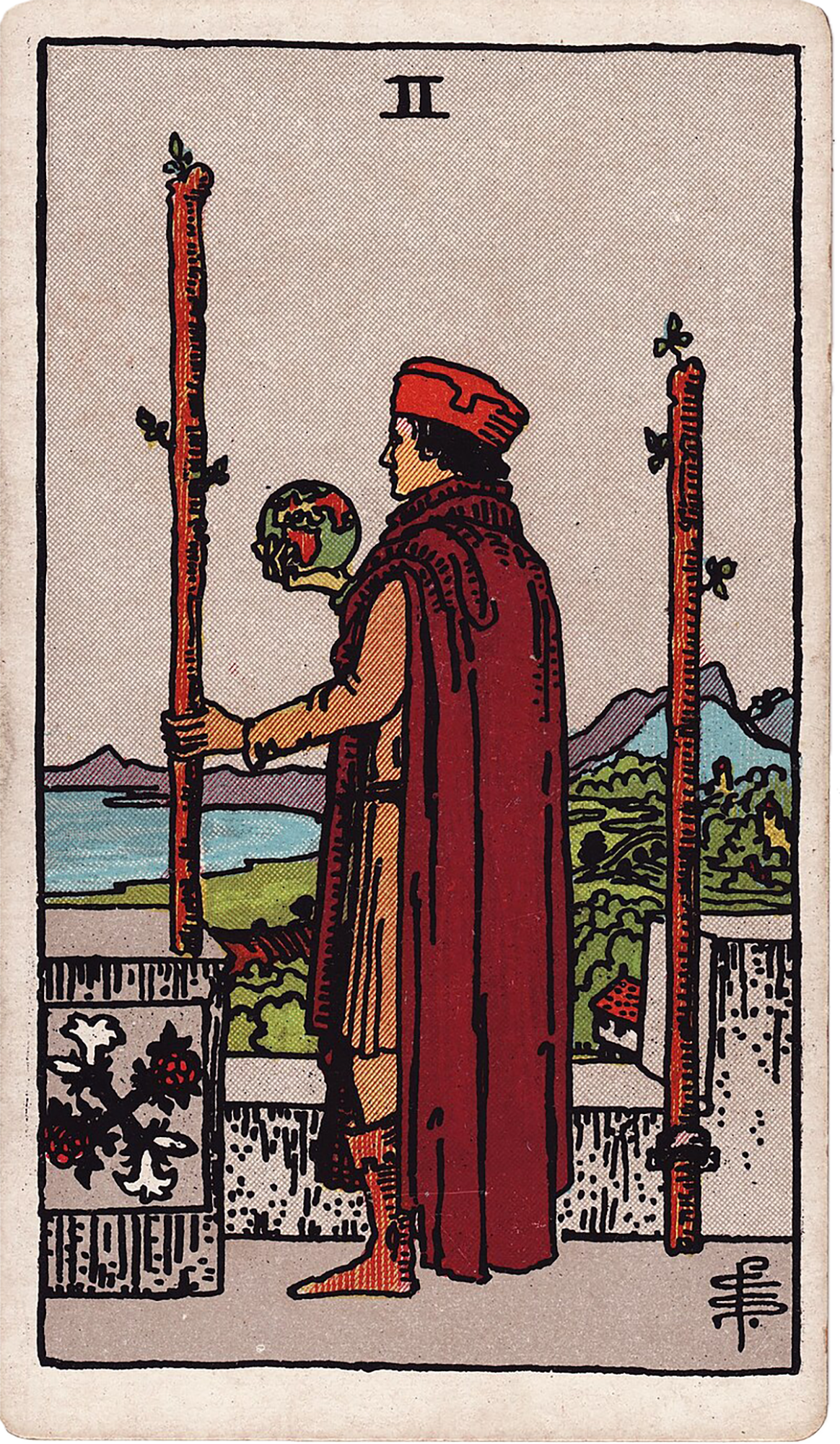 2 of Wands
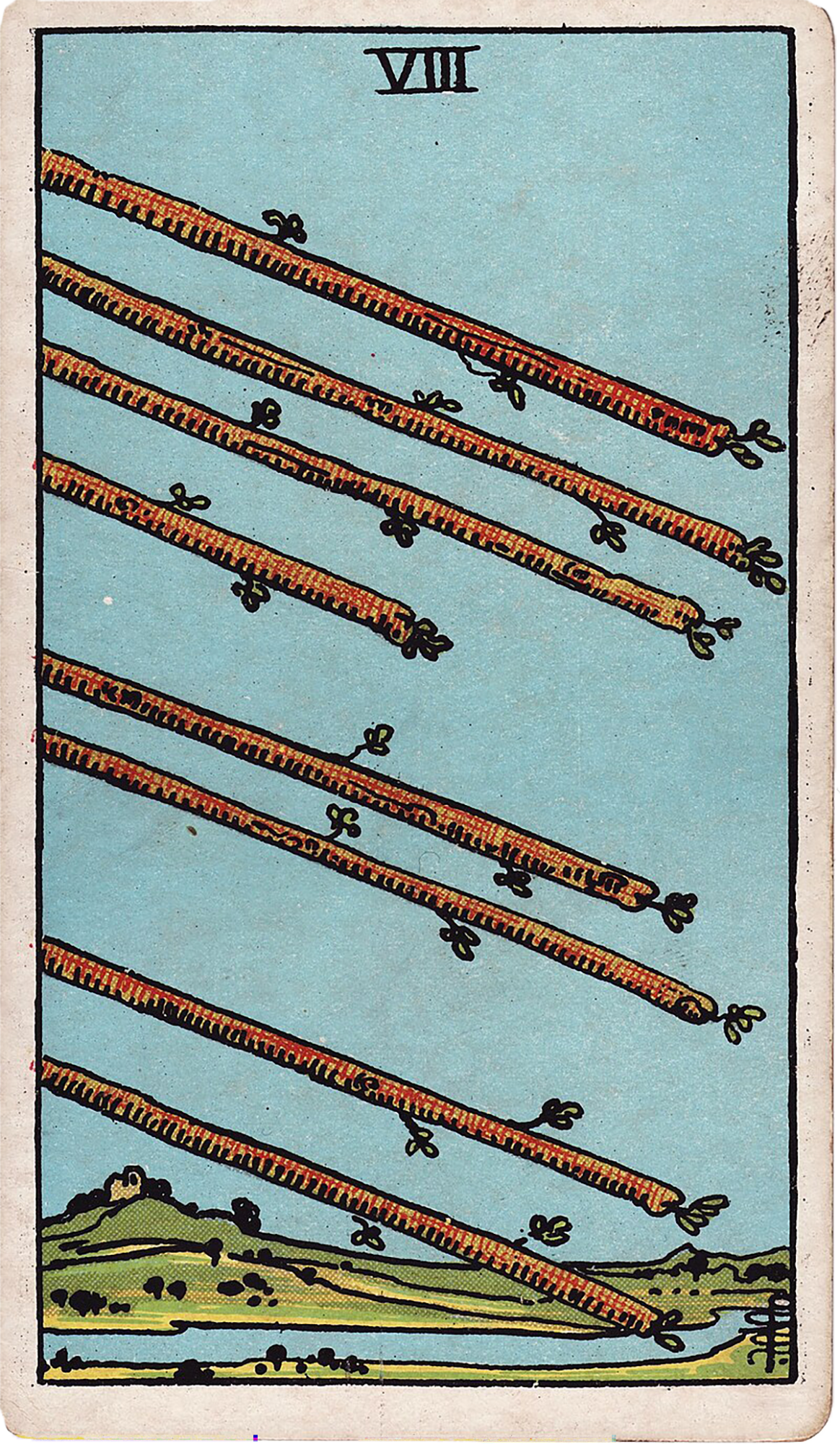 8 of Wands
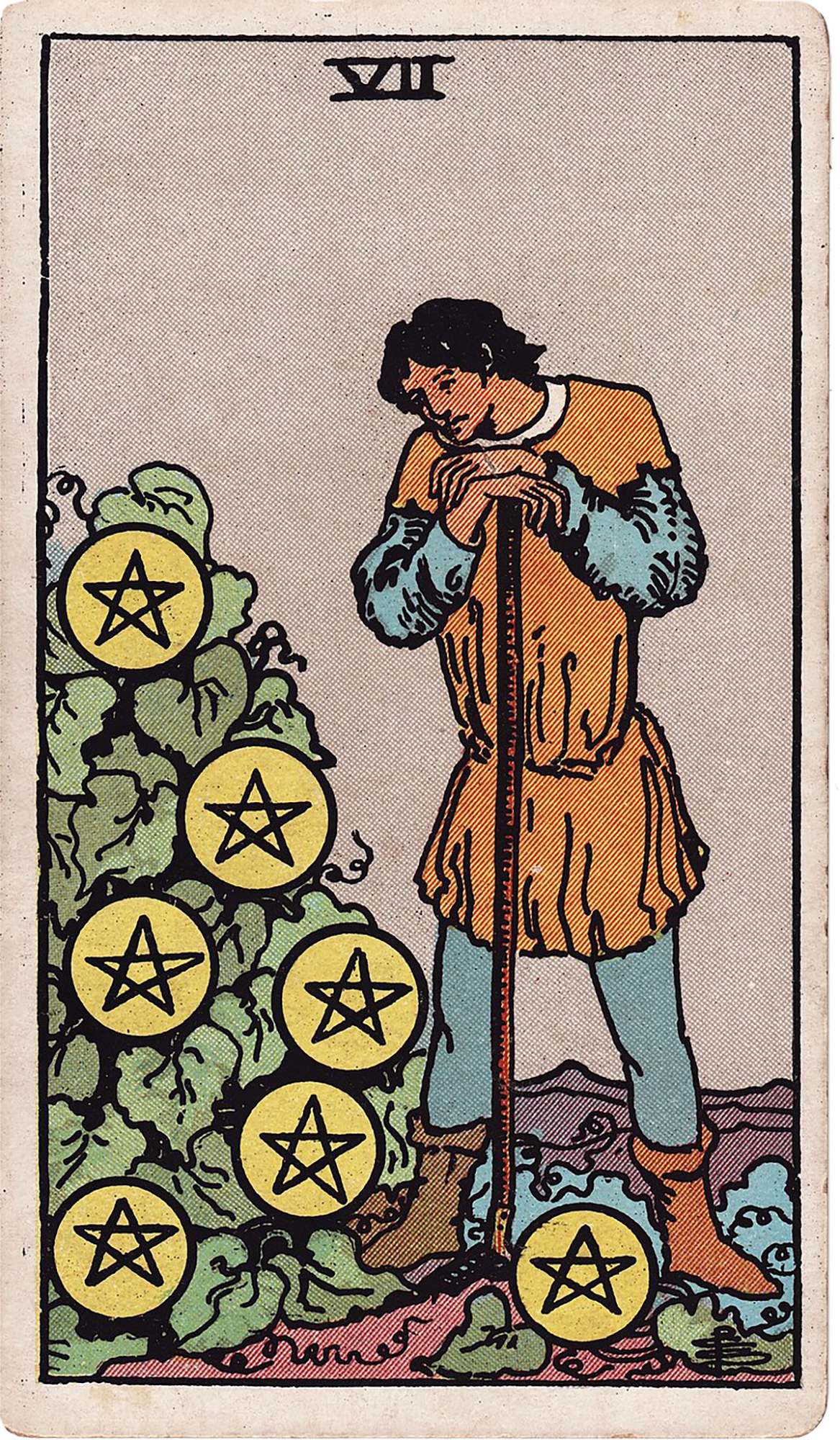 7 of Pentacles
Introduction: Why tempo belongs in your reading skills toolkit
Timing and momentum are common questions clients bring to readings: when will this launch move, is this the right moment to accelerate, and should I step back and reassess? Tempo is not prophecy; it is a situational skill that combines symbolism, sequence, and practical checks. The Tarot Tempo Toolkit uses three visually and thematically aligned cards—the 2 of Wands, the 8 of Wands, and the 7 of Pentacles—to give learners a repeatable method for reading stages of projects and the quality of movement between them. By anchoring interpretation to Rider-Waite-Smith details (the figure with a globe, the streaking wands, the gardener watching growth), you learn to read not only outcomes but process: planning, movement, and review.
Core concept: stages of project tempo
Think of many endeavors as cycling through three practical stages: deciding and plotting direction, accelerating or communicating to reach a goal, and pausing to evaluate results. These stages are visible in the supplied cards. The 2 of Wands, with its solitary figure holding a globe and looking outward from a battlement, embodies deliberation, strategy and the choice about how far to expand. The 8 of Wands, showing eight wands flying through the air, signals momentum, rapid events, and the need for clear direction as movement occurs. The 7 of Pentacles, with a worker leaning on a hoe and studying pentacles on a plant, represents the reflective checkpoint where you assess long-term investment and resources. Using this triad as a lens converts abstract timing questions into concrete, stage-based reading steps.
Reading the images: what details to watch and why they matter
Rider-Waite-Smith symbolism offers specific visual cues you can use as timing signals. For the 2 of Wands notice the figure's posture, the globe in hand, and the lookout stance. The globe suggests holding a small sample of the world—options in hand—and the battlement indicates a vantage point rather than the field itself. If the image feels inward, cautious, or fixed in your reading, expect planning time and choices to be the present work. For the 8 of Wands focus on directionality and speed. The wands are airborne, moving horizontally across the card; they look like letters or arrows in motion. This imagery favors rapid development and messages arriving, but it also warns about missing context if movement is too fast. For the 7 of Pentacles consider the planted pentacles and the worker’s pause. The card is about assessment of growth: how much time has been spent, what yield is visible, and whether to continue. In practical timing readings, these visual motifs become verbs: lookouts = decide, flying rods = accelerate/communicate, leaning worker = review/adjust.
A simple Tarot Tempo spread you can use now
This three-card spread maps directly onto the cards supplied. Position 1: Strategy and Commitment (2 of Wands). Position 2: Momentum and Signals (8 of Wands). Position 3: Review and Yield (7 of Pentacles). When you lay cards for a client or for yourself, treat the layout as a process timeline: what stage are you in, how will movement manifest, and what will prompt reassessment? Reading method: 1) Identify which card corresponds to the current phase. If the 2 of Wands appears in Position 1, you are squarely in planning; if it appears in Position 2 the project may be stalled in indecision at the moment of required action. 2) Anchor timing clues to the 8 of Wands: are there rapid messages, travel, or sudden alignment? 3) Let the 7 of Pentacles set expectations for when a natural pause should occur and what will be evaluated. Use surrounding cards (if you include them) to refine whether the pause is productive and what benchmarks to use.
Interpreting upright and reversed cards for tempo readings
Upright and reversed orientations are not mandatory, but they add a useful layer. Upright 2 of Wands suggests healthy planning: options are being weighed and a practical strategy can emerge. Reversed 2 of Wands signals fear of expansion, indecision, or incomplete planning—read this as a place to apply effort before expecting motion. Upright 8 of Wands indicates swift movement, communications arriving, and momentum toward a destination; timing is likely to compress and events can happen in quick succession. Reversed 8 of Wands points to delays, crossed communications, or momentum that is scattered; here, the timeline lengthens and you should expect interruptions or the need to clarify. Upright 7 of Pentacles shows patient assessment and reasonable returns; it suggests a natural checkpoint where you can honestly evaluate investment. Reversed 7 of Pentacles draws attention to impatience, poor return on effort, or the risk of abandoning growth prematurely. In tempo readings combine these orientations: for example, 2 of Wands upright leading into 8 of Wands reversed indicates decisive plans that meet confusing communications during execution. That signals you should firm up channels before relying on speed.
Estimating durations and practical timing cues
Tarot rarely gives exact dates; instead it gives rhythm and milestones. Use the following practical anchors tied to the cards and their imagery: - 2 of Wands: planning windows often span the next 2–6 weeks when the card is active as the present stage. The figure's vantage suggests time to choose direction rather than immediate movement. - 8 of Wands: when this card dominates movement, expect acceleration within days to a few weeks. The imagery of wands in flight implies swift events and communications, so plan operationally for quick turnovers (24 hours to several weeks, depending on project scale). - 7 of Pentacles: expect review at a natural growth checkpoint—monthly to seasonal cycles depending on project size. The planted pentacles in Rider-Waite-Smith suggest agricultural timing: think in harvest metaphors. To refine durations, cross-check with client context: how long have preparations already taken? If many weeks of work have passed, a 7 of Pentacles might refer to a near-term monthly review. Use the cards as tempo signals rather than calendars: they tell you whether to prepare for quick acceleration or a deliberate pause.
Combining cards: reading movement, stalls and recoveries
Beyond single-card placements, the interaction among the three cards reveals narrative of movement. Examples of combinations: - 2 of Wands upright -> 8 of Wands upright -> 7 of Pentacles upright: ideal sequence. Planning solidifies and rapid action follows; a thoughtful review soon after helps measure yield. Timeline: decide, accelerate, check within weeks to a month. - 2 of Wands upright -> 8 of Wands reversed -> 7 of Pentacles upright: good planning meets communication problems. The remedy is to shore up messaging and expectations; momentum will return if obstacles are removed. - 2 of Wands reversed -> 8 of Wands upright -> 7 of Pentacles reversed: indecision or poor planning precedes a rush; the outcome may feel unsatisfying or require rework. Slow down to re-establish clarity despite the external push. - 2 of Wands upright -> 8 of Wands upright -> 7 of Pentacles reversed: you get rapid movement but impatience at the review stage. This combination warns about expectations for immediate payoff; you may need to realign metrics for success. Always read the visual energy: does the 2's lookout face toward the path shown by the 8's direction? Does the 7's gardener look hopeful or frustrated? Those subtleties shift meaning.
Practical reading method: questions, checkpoints, and client language
Use clear, practical questions to turn tempo signals into actionable advice. Suggested questions to ask while reading with these cards: - What decision still needs to be made before momentum can be trusted? (look to 2 of Wands) - What signs will show that acceleration is genuine and not a false start? (look to 8 of Wands) - What constitutes meaningful progress worth pausing to evaluate? (look to 7 of Pentacles) Translate card messages into checkpoints: specify concrete indicators such as a signed contract, an answered email thread, a prototype completed, or a certain percentage of work finished. Phrase timing in ranges: "you may see meaningful movement in the next few days to a few weeks if these communications clear up" instead of a fixed date. This reduces pressure and improves client decision-making.
Common mistakes readers make and how to avoid them
1) Treating reversed meanings as simple opposites. The supplied reversals call attention to stuck processes; ask why the process is blocked instead of assuming a binary negative. 2) Ignoring visual directionality. Rider-Waite-Smith cards often show motion and gaze; forgetting these cues loses timing information. 3) Over-specific dating. Use ranges and contextual anchors. 4) Separating imagery and real-world mechanics. For example, an upright 8 of Wands suggests messages arriving; if a client has never set up a communication system, momentum will be unreliable. Offer practical steps aligned with the card: set clear channels, schedule check-ins, allocate buffers. 5) Letting hope bias influence tempo. If the 7 of Pentacles appears reversed, resist the inclination to reassure about imminent payoff without honest assessment of investment.
Advanced techniques: sequencing, magnifiers, and cross-checks
Once comfortable with the basic spread, add refinement layers. Sequencing: lay four to six cards where each position represents a weekly checkpoint. Place the triad (2 of Wands, 8 of Wands, 7 of Pentacles) as anchors within that sequence to show where planning, acceleration, and review fall. Magnifiers: use court cards or other suit cards (if included in readings) as magnifiers of speed or investment. For example, if you include additional Wands, they may amplify momentum; additional Pentacles amplify resource issues or review context. Cross-checks: pair the tempo spread with a short journal log. After a reading, note real events and compare one- and two-week outcomes to refine your sense of how these cards map to time for your client population. Numerology: the two, eight, and seven suggest choice, power/movement and assessment. In practice, an "8" image intensifies motion; a "7" image signals thoughtful pause. Combine numerology, visual direction, and context for an integrated read.
Practical examples you can practice with
Example 1: A small business owner asks when a product launch will gain traction. You draw 2 of Wands upright, 8 of Wands reversed, 7 of Pentacles upright. Interpretation: they have a clear plan but their communication channels or distribution are causing delays. Advice: improve messaging clarity and shipping/distribution checks now; momentum should follow once crossed signals are fixed. Expect measurable progress within a few weeks after fixes. Example 2: A writer asks whether to submit now. You draw 2 of Wands reversed, 8 of Wands upright, 7 of Pentacles reversed. Interpretation: the writer feels unsure about the project direction, yet external interest or opportunity is accelerating. This warns to pause and clarify the work before accepting rapid offers to avoid later dissatisfaction; if necessary, negotiate time for revision. Example 3: A home renovation timeline shows 2 of Wands upright, 8 of Wands upright, 7 of Pentacles upright. Interpretation: planning is solid, contractors will mobilize quickly, and a practical post-completion review should happen about a month after major milestones to evaluate budgets and finishes. These worked examples show how imagery and orientation give specific, actionable guidance rather than a single date.
Practice exercises and journaling prompts
1) Daily mini-read: Pull one card and note which of the three stages it suggests. Track real-life outcomes for one week to see how often each card aligns with movement or pause. 2) Three-card tempo reading with journal: Do the basic tempo spread for a current project. Write down specific checkpoints (emails, prototype, budget line) that correspond to each card. Revisit after two weeks and record what changed. 3) Orientation study: For each card, draw it upright and reversed ten times and note your immediate timing intuition. Compare your intuition with the supplied upright/reversed explanations to calibrate. Prompts: What would you need to see to feel confident that the 8 of Wands indicates genuine forward motion? What small decision listed under the 2 of Wands could move a project into the action phase? When the 7 of Pentacles asks for review, what metric would satisfy you that investment is worthwhile?
Conclusion: tempo as a practice, not a promise
Reading tempo with the 2 of Wands, 8 of Wands, and 7 of Pentacles turns abstract timing questions into actionable stages: decide, move, and review. Use Rider-Waite-Smith imagery as practical signals—the lookout's stance, the flying rods, and the leaning worker give verbs for your reading. Combine upright/reversed orientation, contextual anchors, and simple spreads to make timing readings useful to clients without overpromising precision. Like any skill, tempo reading improves with repeated practice, careful bookkeeping of outcomes, and attention to where the reading recommends a change in behavior. When you teach or practice this toolkit, emphasize checkpoints and client action steps: Tarot timing guides decision-making; it rarely replaces the need for a calendar and good communication.
Practice questions
• When you look at the image of the 2 of Wands, what practical decisions come to mind for your current project?
• Which signals in the 8 of Wands image would indicate true acceleration versus a false or chaotic rush?
• What measurable benchmarks could the 7 of Pentacles represent in one of your real projects?
• How would you rephrase a timing range from a reading to avoid promising exact dates but still be useful?
• After a reading using this toolkit, what two actions could you recommend to increase the likelihood that momentum is constructive?
Comments
Sign in to comment.
Continue learning
Mastering Decision Making with the Five Card Cross Tarot Spread
The Five Card Cross Tarot Spread is a powerful tool for deepening decision-making skills by examining the present situation, past influences, future possibilities, challenges, and...
Using the Five Card Cross Spread to Unlock Career Path Clarity
The Five Card Cross Spread is a versatile and insightful layout particularly useful for clarifying complex questions such as career direction. This article guides learners through...
Using the Five Card Cross Spread to Clarify Conflicting Priorities in Decision Making
The Five Card Cross is a versatile spread ideal for clarifying complex situations involving conflicting priorities. This article explores how to use it for decision making by inter...
Mastering the Celtic Cross Spread for Detailed Life and Decision Insights
The Celtic Cross is a foundational Tarot spread widely used for deep and nuanced readings about life situations and decisions. This article offers a comprehensive guide to masterin...
Using the Five Card Decision Spread to Navigate Conflicting Priorities with Confidence
The Five Card Decision Spread is a practical Tarot layout designed to help readers clarify and resolve conflicting priorities by examining options, hidden factors, and advice. This...
Mastering the Seven Card Horseshoe Spread for Effective Career and Life Decision Making
This article provides an in-depth exploration of the Seven Card Horseshoe Tarot Spread, a versatile layout ideal for career and life decision-making. Using supplied cards such as t...
Mastering the Seven Card Horseshoe Spread for Practical Life Decisions and Goal Setting
The Seven Card Horseshoe Spread is a versatile and practical Tarot layout ideal for navigating real-life decisions and clarifying goals. This article unpacks the spread's structure...
Mastering the Five Card Decision Spread for Confident Practical Life Choices
This article offers an in-depth exploration of the Five Card Decision Spread, a practical Tarot layout designed to help readers make grounded, confident choices in everyday life. U...
Career Five Card Spread for Networking Growth and Personal Branding
This article teaches the Career Five Card Spread, a focused layout for people working on networking growth and personal branding. Using the supplied cards in order—The Emperor (Cur...
Map Transferable Skills and Plan Career Pivots with the Career Five Card Spread
This article teaches a five-card vocational spread—the Career Five Card Spread—using the displayed cards in order: 2 of Wands (Current Position), 3 of Pentacles (Strength), 7 of Pe...