
Map Transferable Skills and Plan Career Pivots with the Career Five Card Spread
This article teaches a five-card vocational spread—the Career Five Card Spread—using the displayed cards in order: 2 of Wands (Current Position), 3 of Pentacles (Strength), 7 of Pentacles (Challenge), 8 of Pentacles (Opportunity), and Page of Pentacles (Next Step). It anchors interpretation to the Rider–Waite–Smith imagery visible on the supplied cards and translates symbolic meanings into concrete career work: inventorying transferable skills, designing practice strategies, and planning measurable next steps. The method is reproducible and geared to learners: step-by-step layout, reading technique, card-to-card relational logic, common mistakes, and example application are all provided so you can use the spread for actionable career pivots rather than deterministic predictions.
Career Five
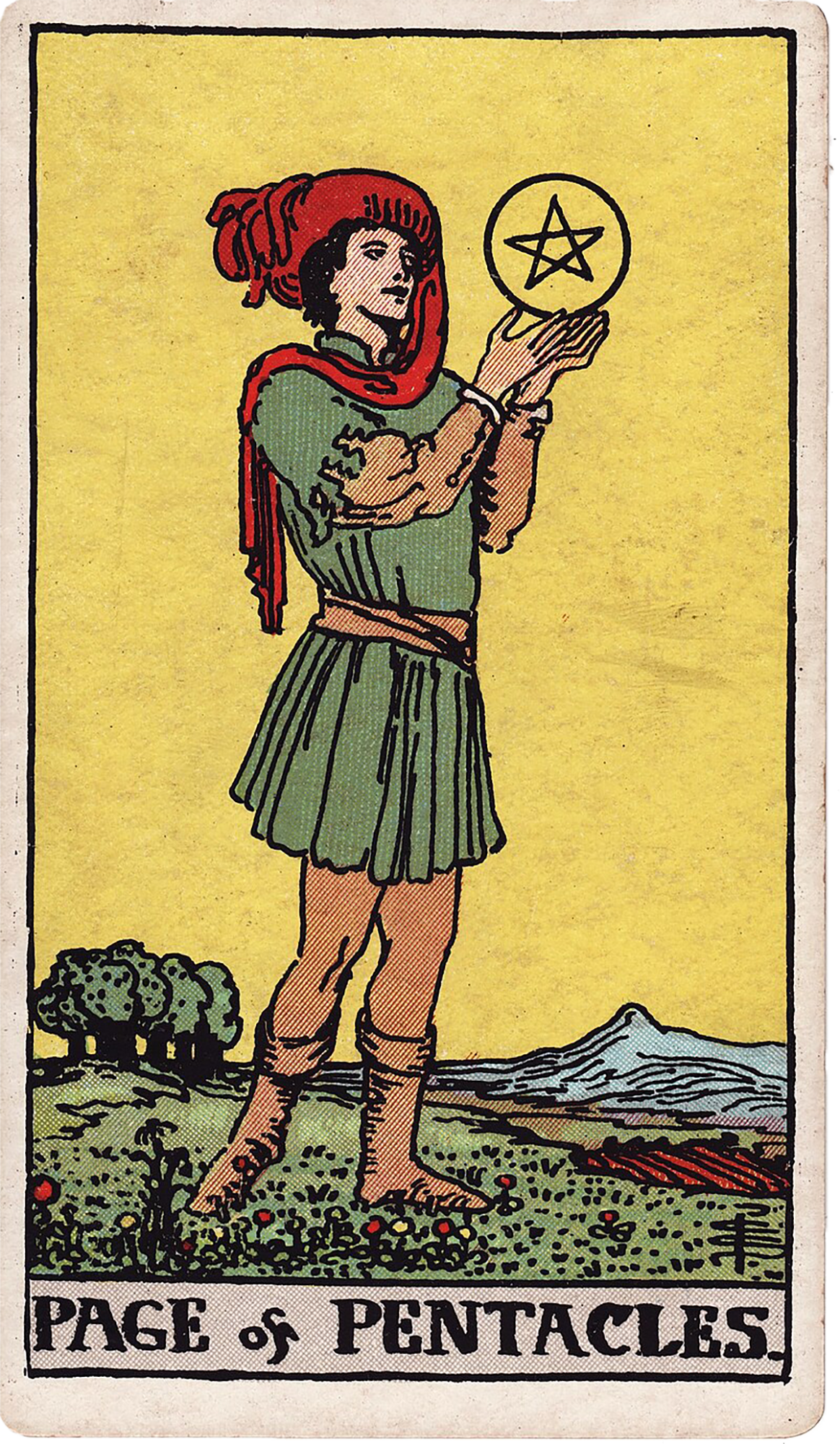 Current PositionPage of Pentacles
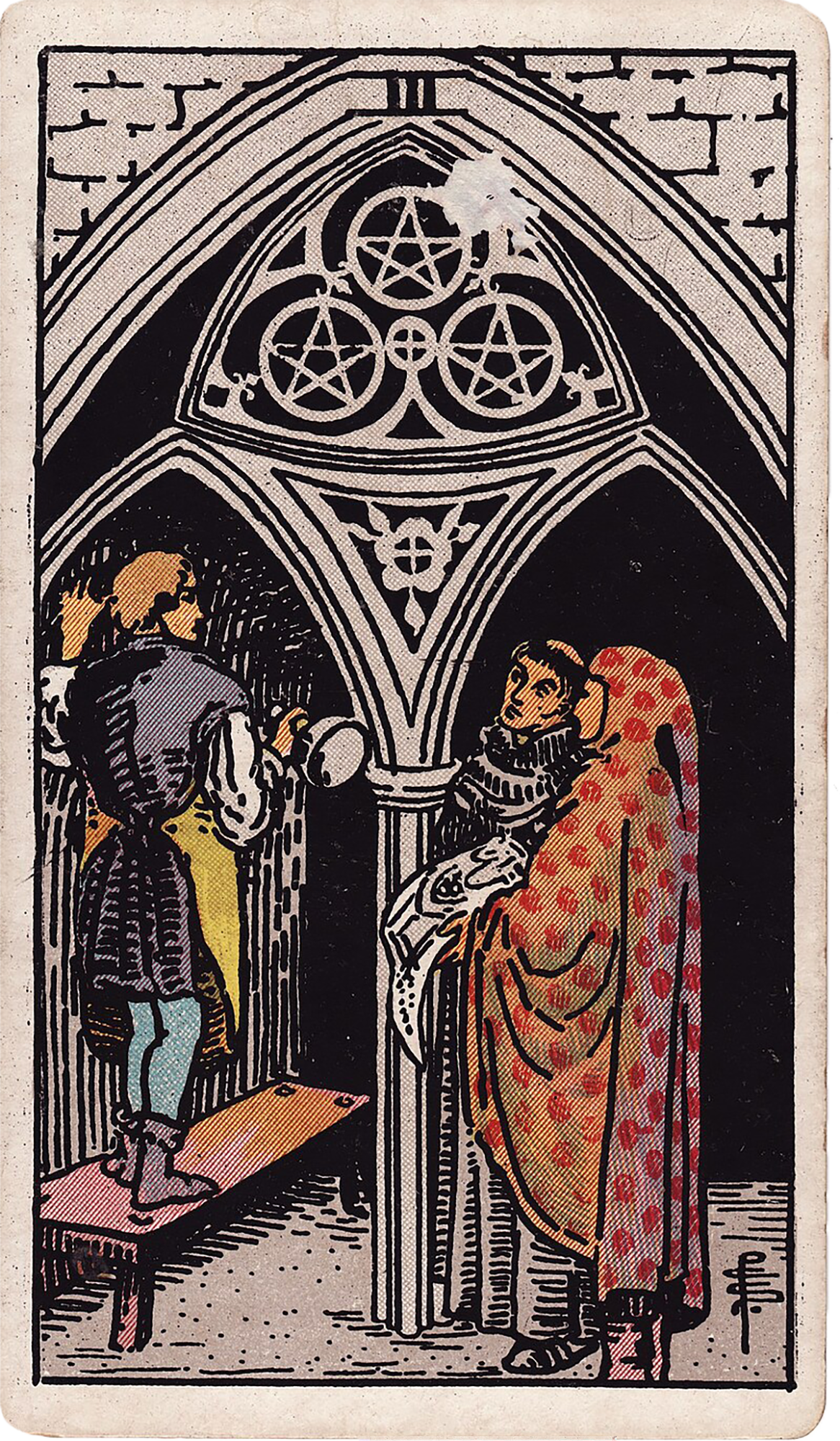 Strength3 of Pentacles
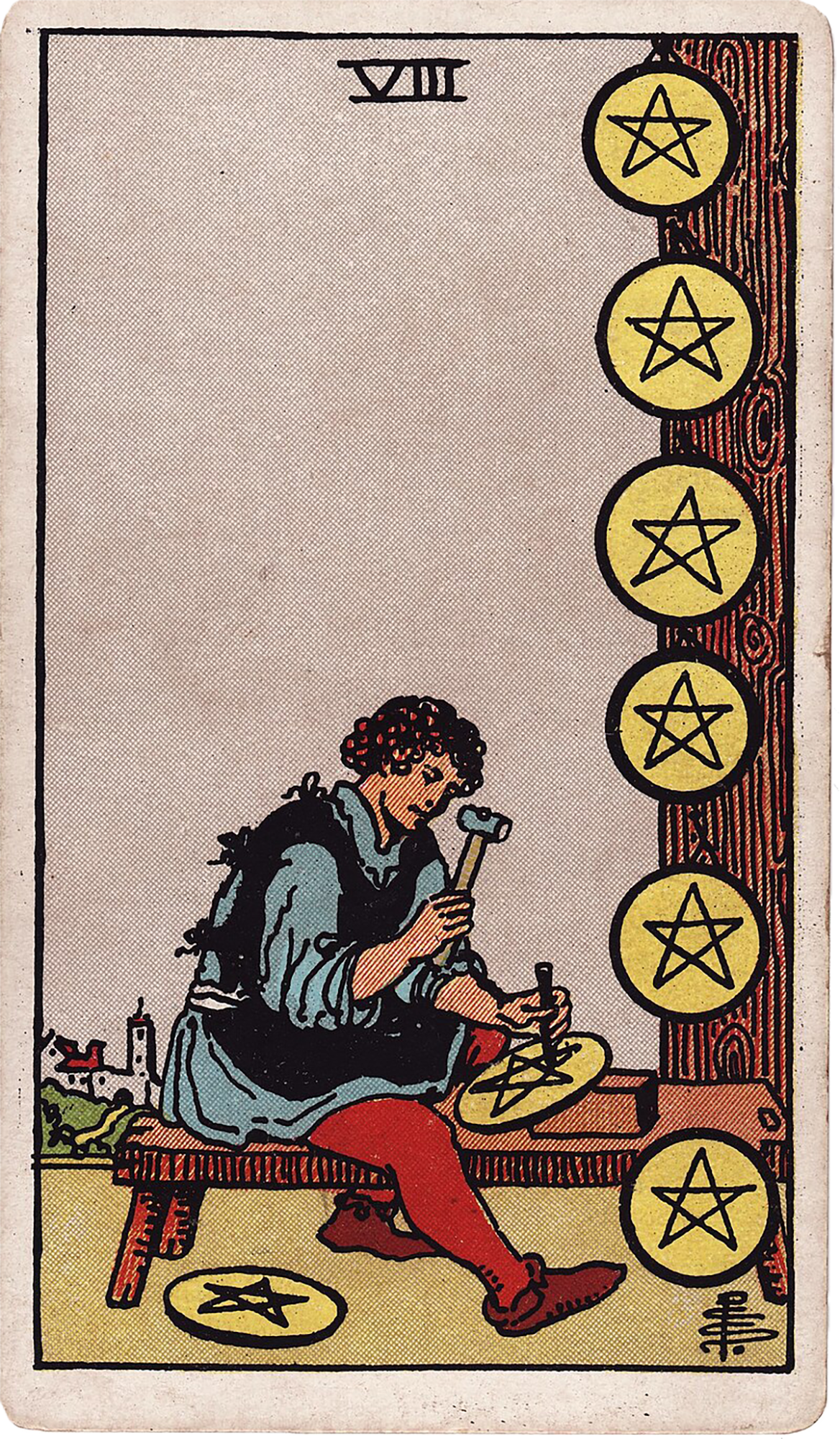 Challenge8 of Pentacles
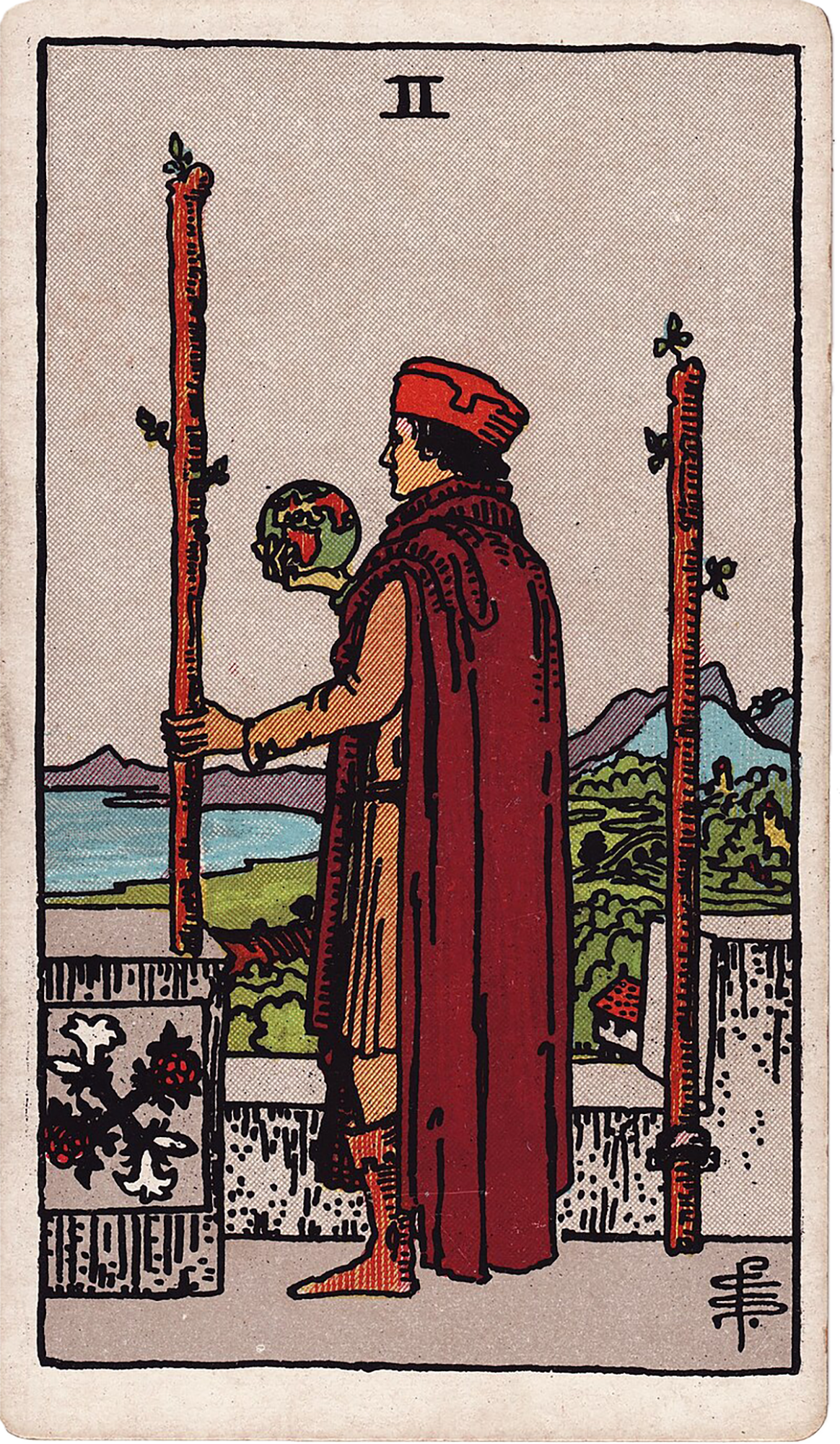 Opportunity2 of Wands
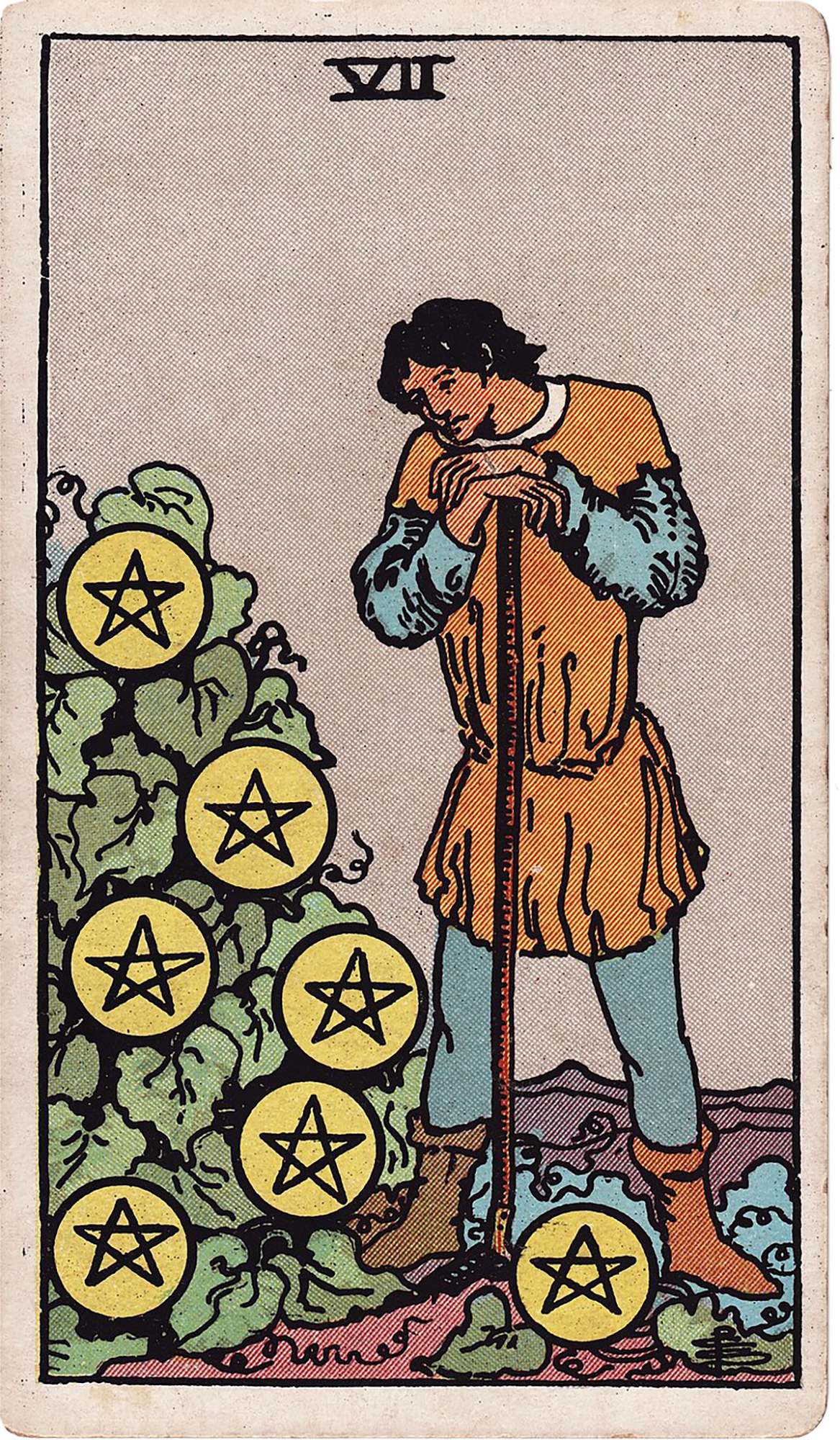 Next Step7 of Pentacles
Purpose and scope
This article teaches a practical five-card spread designed for career transitions, transferable-skill mapping and short-to-medium-range planning. It assumes you are working with the specific images supplied: 2 of Wands, 3 of Pentacles, 7 of Pentacles, 8 of Pentacles and Page of Pentacles. The goal is pedagogical: to show how to read these cards together as a cohesive career advisory tool and how to use their Rider–Waite–Smith visual cues—figures, tools, landscape and gestures—to generate realistic, skill-focused actions. This is educational guidance, not a guaranteed prediction; treat the cards as a prompt for practical work like CV building, skill practice, networking and project evidence creation.
The Career Five Card Spread layout and position labels
Use a simple left-to-right layout labelled in this exact order: Current Position, Strength, Challenge, Opportunity, Next Step. Place the cards face-up in a horizontal line or an arc so the imagery is easily visible. For this worked reading we use the supplied cards in order: 2 of Wands in Current Position, 3 of Pentacles in Strength, 7 of Pentacles in Challenge, 8 of Pentacles in Opportunity, Page of Pentacles in Next Step. Keep a notebook to record impressions, specific phrases from the card images, and practical actions that occur to you while looking at the cards.
How to frame the question and set an intention
Before you shuffle, craft a clear working question such as: "Which transferable skills should I highlight for a pivot into X field, and what practical next step should I take?" If you are undecided about a target field, frame the question more generally: "What tangible steps will help me pivot into a role that uses my current strengths?" The Rider–Waite imagery rewards concreteness: ask for actions, skills and time-bound steps rather than vague destiny. Set an intention to treat the reading as career coaching—translate symbols into measurable tasks.
Position 1 — Current Position: 2 of Wands
Card and imagery: The supplied 2 of Wands picture typically shows a figure standing on a battlement or balcony, holding a globe in one hand while the other hand rests on a wand; another wand is fixed behind them. Ships move across water in the distance. On the Rider–Waite–Smith card the globe and the view represent scope, options and an active decision point. Interpretation for career work: As Current Position, the 2 of Wands indicates you are between inspiration and strategy. You have identified possibilities (the globe, the ships on the horizon) and are weighing how far to expand. This card emphasises vision paired with the need to decide practical next steps rather than only dreaming. Concretely, it asks you to inventory what you already do that maps to future roles: leadership gestures, projects you've initiated, strategic thinking. Ask: where are you comfortable standing on the balcony of your life, and what horizons are you tempted to cross? Upright vs reversed teaching: Upright, the card encourages deliberate planning and mapping of transferable skills: communication, initiative, scope thinking. Reversed (see supplied reversed text), the 2 of Wands shows fear of expansion or indecision—if that describes you, your reading will push you toward simplifying next steps and acknowledging risk management. Practical prompts from the image: Write down the "globe" skills—what you can do anywhere (project design, stakeholder communication). Note the "ships"—external routes: industries or employers where those skills travel well.
Position 2 — Strength: 3 of Pentacles
Card and imagery: The 3 of Pentacles (Rider–Waite imagery) depicts a skilled artisan at work within a cathedral or similar structure while two figures—often thought of as patrons, clerics, or collaborators—observe and discuss the work. Three pentacles appear in the architecture. The scene highlights craft, respect, and collaborative assessment. Interpretation for career work: As Strength, 3 of Pentacles declares that your reliable asset is collaborative skill and craft competence. This card is about doing work that others can see and evaluate; it points to respect for process, the ability to take feedback, and the capacity to work with specialists. For mapping transferable skills, ask: which specific crafts have you completed that others have praised? Where have you shown competence, documentation, or reproducible output? The card suggests you have tangible evidence of skill and that peer or mentor feedback is a lever for transition. Relation to 2 of Wands: Together the 2 of Wands and 3 of Pentacles form a classic vision-plus-skill pairing: you have an expanding plan (2 of Wands) and real collaborative craft (3 of Pentacles) to bring to it. The practical reading is: your ambition is credible because you already produce work others can evaluate. Use the demonstrated skills to support expansion rather than relying solely on enthusiasm.
Position 3 — Challenge: 7 of Pentacles
Card and imagery: The 7 of Pentacles often shows a figure leaning on a tool, gazing at a bush or wall with pentacles growing on it—an image of mid-project review, harvest expectation and patient assessment. Interpretation for career work: As Challenge, 7 of Pentacles warns about the timing and evaluation phase of your pivot. You may be unsure whether your efforts are yielding the right return, or you could be stuck in sunk-cost thinking—continuing investment without proper reassessment. Practically this asks for measurement: are you investing time in high-impact learning or busywork? Are you impatient for results or too reluctant to cut losses? Relation to earlier cards: Placed after the 3 of Pentacles strength, the 7 of Pentacles suggests that while you have demonstrable skill and collaborative respect, you may be waiting too long for external recognition or promotions to validate a pivot. The 2 of Wands' horizon may be tempting, but 7 of Pentacles requires honest metrics and milestones. The combination advises building small experiments with measurable outcomes rather than indefinite waiting.
Position 4 — Opportunity: 8 of Pentacles
Card and imagery: The 8 of Pentacles traditionally shows an artisan bent over a bench, carving pentacles with care—apprenticeship, focused practice and the accumulation of craft through repetition. Interpretation for career work: As Opportunity, 8 of Pentacles is extremely practical: it invites deliberate skill cultivation. This is not a call to broad schooling; it's targeted practice to close the gap between current competence and the demands of your target role. Examples: build a small portfolio piece, complete a specific certification, practice a technical skill for a set number of hours per week. The card's focus on process means quality will follow deliberate repetition. Relation to 7 of Pentacles: The 7 of Pentacles asks you to review investments; the 8 of Pentacles offers the corrective action—redeploy effort into high-quality practice with measurable KPIs. Relation to 3 of Pentacles: where 3 of Pentacles was collaborative craftsmanship, 8 of Pentacles is solo mastery—practice until you can demonstrate competence in public or in a work sample.
Position 5 — Next Step: Page of Pentacles
Card and imagery: The Page of Pentacles often depicts a young figure holding a single pentacle, gazing down at it thoughtfully. The image evokes starting concrete learning and taking material opportunity seriously. Interpretation for career work: As Next Step, Page of Pentacles gives a clear instruction: adopt a beginner's, disciplined learning posture and take a small, realistic step now. This might be enrolling in a short course, drafting a one-page project summary for your portfolio, applying for an informational interview, or creating a measurable practice schedule. The Page is about practical beginnings: small, deliberate, and materially oriented. Relation to prior cards: After the 8 of Pentacles' call for focused practice, the Page of Pentacles is the immediate, actionable experiment you can launch today. In the spread's arc—from horizon (2 of Wands) to tangible learning (Page)—the reading maps inspiration into a concrete first assignment.
Card-to-card relationships and interpretation logic
Read the spread as a process rather than isolated meanings. The dominant suits here are Wands (vision) and Pentacles (skill, craft, material work). The logic runs: envision (2 of Wands) → you already have visible craft and collaborative credibility (3 of Pentacles) → be wary of complacent waiting or sunk-cost thinking (7 of Pentacles) → invest in deliberate practice (8 of Pentacles) → start with a concrete beginner's action (Page of Pentacles). Interpretation steps: 1. Anchor: Look at each card's image and record the literal details (e.g., globe in 2 of Wands, three figures in 3 of Pentacles). These visual anchors ground abstract translation into the vocational realm. 2. Translate suit language: Pentacles signal which skills are ‘‘transferable’’ in material terms—tangible outputs, competencies, processes. Wands show orientation—ambition and where to direct energy. 3. Sequence: Treat the spread as timeline and mechanism—Current Position gives where you are, Strength tells what you can use, Challenge warns what to watch for, Opportunity prescribes where to invest, Next Step prescribes the immediate experiment. 4. Action conversion: Convert each symbolic suggestion into a SMART action (specific, measurable, attainable, relevant, time-bound). Example: instead of "practice project management," create a 4-week micro-project and obtain two stakeholders' reviews—this follows 3 of Pentacles' emphasis on feedback and 8 of Pentacles' focus on practice.
How to reproduce this method—step-by-step
1) Prepare: Quiet space, your deck (or the displayed images if you're learning), notebook, and a clear question framed toward skill mapping and next steps. 2) Shuffle and cut while holding your question. Pull five cards and lay them left-to-right in the order: Current Position, Strength, Challenge, Opportunity, Next Step. 3) Observe images: Spend at least one minute per card naming what you literally see (tools, gestures, expression, posture, landscape). Jot those notes. 4) Read positions: Apply the position meanings—interpret each card in its positional frame using the imagery to create concrete career language (skills, evidence, blockers, practice and small experiments). 5) Card-to-card synthesis: Write 2–3 sentences connecting adjacent cards (Current Position → Strength, Strength → Challenge, Challenge → Opportunity, Opportunity → Next Step). Ask: how does this movement translate into a two-month plan? 6) Convert to tasks: For each card, list 1–3 SMART tasks. Example for the displayed reading: 2 of Wands → identify three target employers; 3 of Pentacles → gather three work samples or testimonials; 7 of Pentacles → set one metric to judge whether to continue; 8 of Pentacles → schedule 6 hours/week of targeted practice; Page of Pentacles → enroll in one course or reach out to one mentor this week. 7) Follow-up: Set a review date (two to eight weeks) to re-run the spread or a one-card check-in (e.g., draw a card to measure progress).
Common mistakes and how to avoid them
Mistake 1: Reading symbolically but not operationalizing. Remedy: Force every insight into an action—what exactly will you do and by when? Mistake 2: Ignoring imagery and relying on memorized keywords. Remedy: Use the card picture—describe the scene and ask what it suggests in your particular work life. Mistake 3: Overemphasizing fate. Remedy: Treat the cards as coaching prompts, not commands. Use them to design experiments you control. Mistake 4: Skipping measurement. Remedy: The 7 of Pentacles challenge is often a measurement failure—define clear indicators for progress (completed portfolio piece, interview scheduled, certification obtained). Mistake 5: Not distinguishing between collaborative evidence (3 of Pentacles) and individual mastery (8 of Pentacles). Remedy: Plan both public work and private practice: one project for visibility, one routine skill regimen for competence.
Using reversals, timing and follow-up
The supplied cards include upright and reversed notes—learners should record orientation when drawing. Reversals are not simply opposites: they point to blockages in the card's process. Example reversals from the supplied card set: a reversed 2 of Wands highlights indecision; a reversed 3 of Pentacles shows poor teamwork or low standards; a reversed 7 of Pentacles warns of impatience or sunk-cost thinking; a reversed 8 of Pentacles signals perfectionism or repetitive action without learning; a reversed Page of Pentacles indicates poor follow-through or unrealistic planning. Timing: This spread is pragmatic for a 1–6 month plan. Use the Next Step Page of Pentacles to define a one-week to one-month experiment. Re-run the spread at 4–8 week intervals or use one-card draws to check progress. Follow-up practice: Keep a short log: action taken, time invested, measurable result. Use a one-card draw for each major milestone to see whether the approach needs revision.
Practical worked example
Scenario: A mid-career educator wants to pivot toward educational project management. Reading with the supplied cards: - 2 of Wands (Current Position): The educator sees larger horizons—interest in designing programs (the globe and ships). They are motivated to expand beyond classroom work. - 3 of Pentacles (Strength): They already collaborate with colleagues and produce curricula that others value. This gives them visible evidence and references—they can point to collaborative projects and peer feedback. - 7 of Pentacles (Challenge): They are worried that awaiting promotion or recognition will take too long; they may be investing time into tasks that don't map to project management outcomes. They need metrics to decide whether to continue the current path or pivot. - 8 of Pentacles (Opportunity): Focused practice—learn specific project management tools (a week-by-week Gantt plan, basic budget templates) and build a portfolio mini-project that shows process, not just lesson plans. - Page of Pentacles (Next Step): Enroll in a short project management course, create one documented project timeline from an existing classroom initiative, and ask two colleagues for structured feedback within two weeks. Action plan derived from the reading: create a 6-week plan: weeks 1–2 document one project; week 3 take online course module; week 4–5 practice tools and seek feedback (3 of Pentacles); week 6 evaluate ROI (7 of Pentacles), then decide to scale or pivot. This demonstrates how the imagery and suit language translate into measurable steps.
Closing synthesis and learning practice
The Career Five Card Spread with these exact cards maps an arc: vision (2 of Wands), visible craft (3 of Pentacles), realistic evaluation (7 of Pentacles), disciplined practice (8 of Pentacles) and a beginner's measurable step (Page of Pentacles). For learners, the value is procedural: use imagery to name skills, convert into experiments, measure outcomes, and iterate. Repeat the spread at set intervals and keep a running list of tangible artifacts (work samples, testimonials, small projects) that translate your Tarot inquiry into career capital.
Practice questions
• Looking at the 2 of Wands image, what single "globe" skill could travel with you to a new industry?
• What work or artifact best demonstrates your 3 of Pentacles strength and can be used as evidence in applications?
• Where are you showing 7 of Pentacles behaviour—waiting for validation—and which metric would help you decide whether to continue?
• Which specific practice routine (hours/week, tasks) would satisfy the 8 of Pentacles opportunity for focused skill-building?
• What concrete Page of Pentacles next step can you complete within seven days that advances your pivot?
• If one card were reversed right now, what internal block would that represent and how could you begin to alleviate it?
• How will you measure success after four weeks so the 7 of Pentacles review becomes informative rather than discouraging?
Comments
Sign in to comment.
Continue learning
Mastering Decision Making with the Five Card Cross Tarot Spread
The Five Card Cross Tarot Spread is a powerful tool for deepening decision-making skills by examining the present situation, past influences, future possibilities, challenges, and...
Navigating Conflict Resolution and Inner Struggles with the Five Card Cross Tarot Spread
This article delves into the Five Card Cross Tarot Spread as a practical tool for navigating conflict resolution and inner struggles, especially within family contexts. Using the s...
Using the Career Five Card Spread to Identify Growth Opportunities and Challenges
This article explores the Career Five Card Spread, a practical tarot method designed to spotlight growth opportunities, strengths, and obstacles within a career context. By analyzi...
Unlocking Life Insights with the Celtic Cross Tarot Spread
This article offers a thorough exploration of the Celtic Cross Tarot Spread, focusing on its application within family and practical life contexts. Using a worked example featuring...
Deepening Connection and Communication Using the Relationship Five Card Spread
This article introduces the Relationship Five Card Spread as a practical tool to enhance family communication and connection. Using five specific card positions—You, The Other Pers...
Using the Five Card Cross Tarot Spread to Navigate Career Changes with Confidence
The Five Card Cross Tarot Spread is a versatile and insightful tool for navigating career changes. This article guides learners through the method step-by-step using a practical ex...
Unlocking Personal Insight with the Seven Card Horseshoe Spread
The Seven Card Horseshoe Spread is a practical and insightful Tarot layout ideal for exploring personal and family dynamics. This article breaks down each position—Past, Present, H...
Unlocking Career Clarity with the Seven Card Horseshoe Tarot Spread
This article explores the Seven Card Horseshoe Tarot Spread as a practical technique to gain clarity in career matters, focusing on detailed interpretations of Pentacles cards. Usi...
Using the Three Card Spread to Gain Clarity on Past Present and Future Influences
This article guides learners through the practical use of the Three Card Spread to gain clarity on past, present, and future influences. Using the specific cards The Emperor in the...
Using the Three Card Spread to Gain Insight on Past Present and Future Challenges
This article explores the practical three card tarot spread designed to provide insight into challenges across time: Past, Present, and Future. Using the Ace of Wands, 10 of Wands,...