
Three card spread to turn a creative idea into a sustainable project
This article teaches a three-card practical spread (Past, Present, Future) using the Ace of Wands, 3 of Wands, and 8 of Pentacles. It guides learners through visual symbolism, position meanings, card-to-card relationships, and step-by-step actions to move a creative idea into a sustainable project. The reading emphasizes concrete first steps, expansion planning, and disciplined craft-building, with exercises, pitfalls, and reproducible journaling prompts.
Three Card
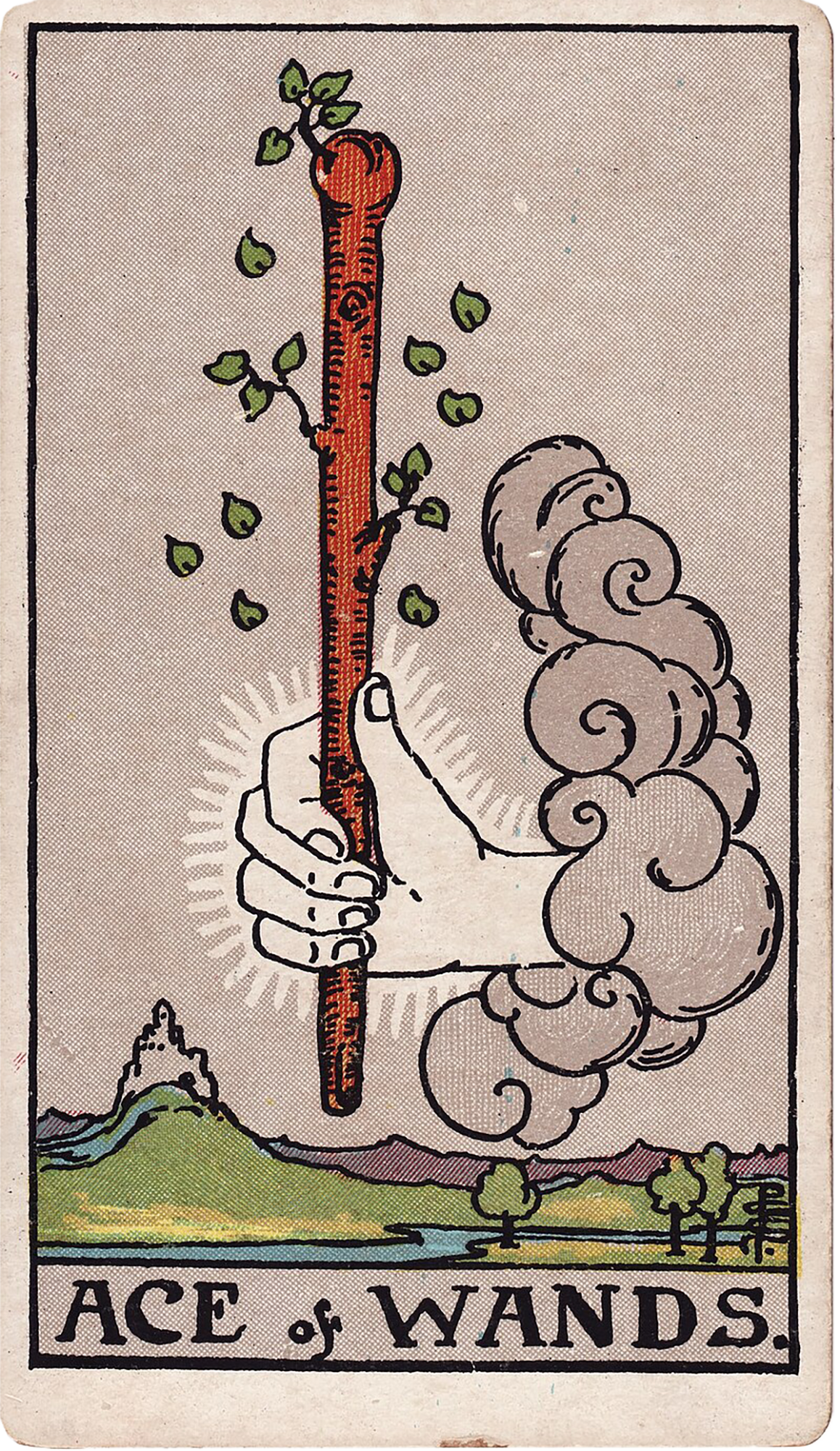 PastAce of Wands
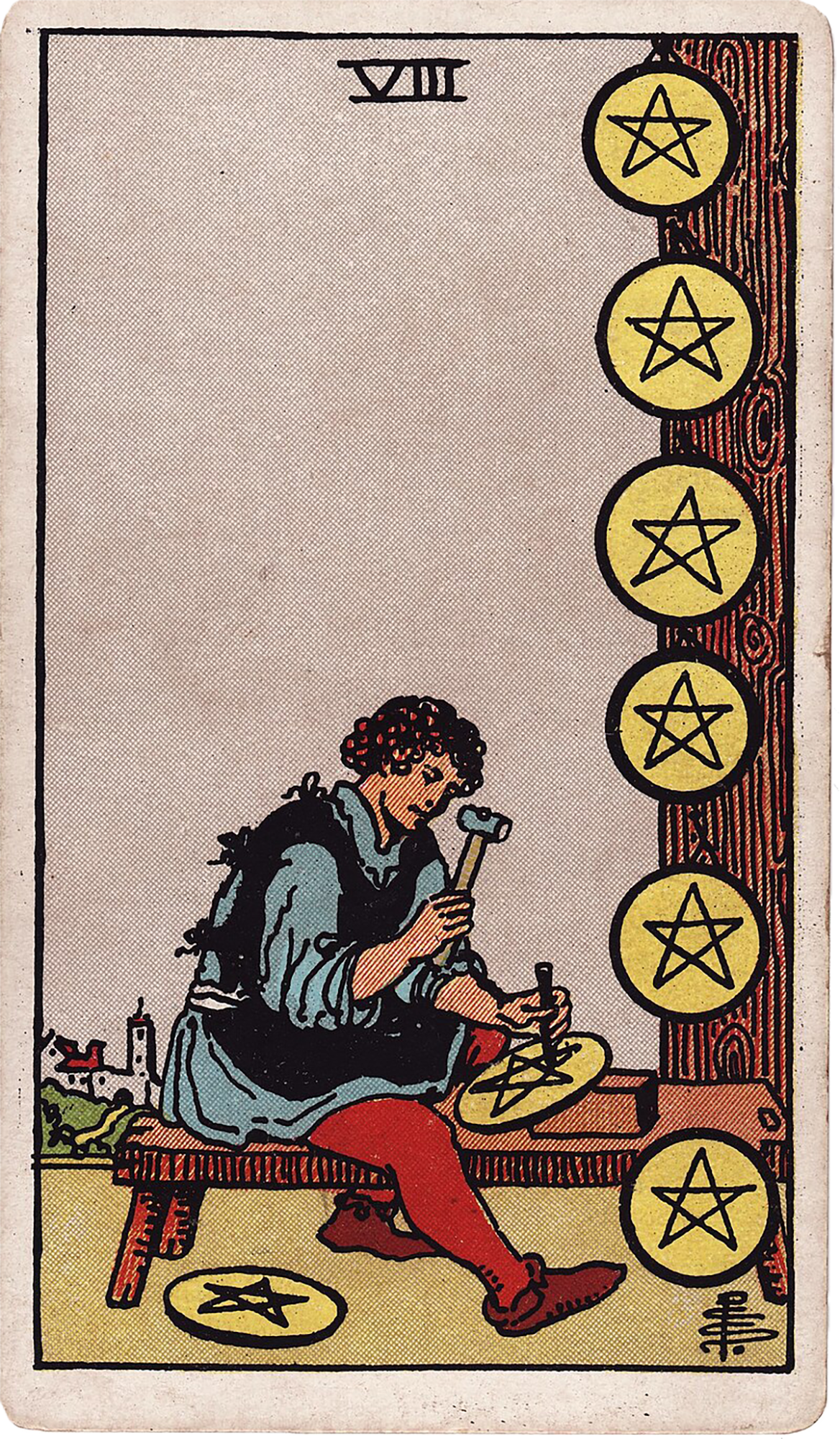 Present8 of Pentacles
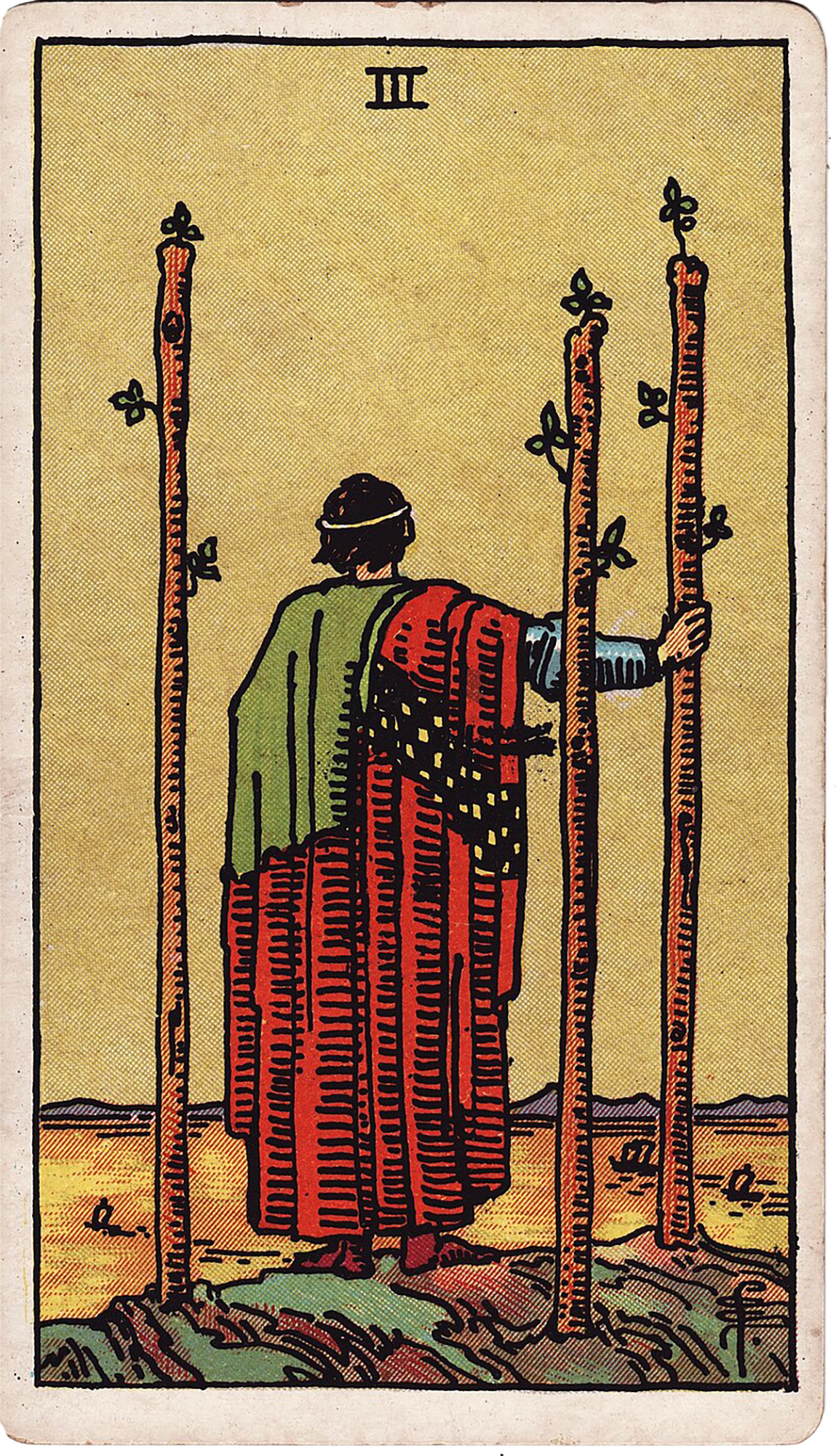 Future3 of Wands
Introduction and scope
This is a practical teaching article for readers who want to use a simple three-card spread to move a creative impulse toward something that lasts. The spread uses three positions—Past, Present, Future—and the three supplied cards in that order: Ace of Wands, 3 of Wands, and 8 of Pentacles. The intention is not to predict a fixed future but to provide a clear, reproducible method for diagnosing where a creative project actually is and what next actions will strengthen its odds of sustainability. I will anchor explanations repeatedly to the imagery you will see on the displayed cards and to conventional Rider-Waite-Smith symbolism so learners can practice reproducing the method with confidence.
When to use this spread
Use this spread when you have a creative idea that you want to test for long-term viability: a new product, a creative practice you want to monetize, a community project, a small business offering, a book or course. It's best suited to early-to-early-growth stages—when an impulse has been acted on in small ways but hasn't yet become routine or scalable. The spread is practical, not mystical: it maps where initiative lives (Wands energy) and where routine, skill and resources will be needed (Pentacles energy). Repeat the spread at regular intervals (monthly or quarterly) to track progress and adjustments.
Set-up and how to reproduce the spread
You will need your deck, a quiet workspace, and a notebook. Label three positions left-to-right as Past, Present, Future. Focus your question specifically: for example, "How can I turn my [idea] into a sustainable project in the next 12 months?" Shuffle and concentrate on that framing, then draw three cards in order and place them left to right. Use the supplied cards in the order given here: Ace of Wands for Past, 3 of Wands for Present, and 8 of Pentacles for Future. If you use your deck, note each card's orientation—upright or reversed—and journal both image impressions and keyword meanings. Take at least 20–30 minutes for your first reading: observe imagery, note bodily responses, write action items. The technique is intentionally simple so learners can reproduce it in different contexts and revisit the same question periodically.
Reading the Past position: Ace of Wands
Position label: Past. Card: Ace of Wands. Imagery and Rider-Waite-Smith reference: the Ace of Wands traditionally depicts a hand emerging from a cloud, offering a wooden wand that sprouts leaves. The hand is an offered opportunity; the clouds imply a sudden, possibly external spark; the sprout indicates life and potential. Upright meaning (as supplied): a new impulse that wants expression and asks for a first action before enthusiasm fades. In the Past position this card maps your origin story. It points to the initial spark—the idea, the burst of confidence, the prototype or the one-time event that proved the core concept. For learners, anchor the image to memory: where were you when the sprout first appeared? Maybe you sketched a mock-up, tested one workshop, or launched a single social post that got a response. The Ace in the past reminds you not to mythologize the moment: it asks what initial small action you did that concretely validated the idea. Practically, record the first three steps you took that fit the Ace of Wands energy (a prototype, a pitch, a first sale). This becomes the foundation to compare against the present and future positions.
Reading the Present position: 3 of Wands
Position label: Present. Card: 3 of Wands. Imagery and Rider-Waite-Smith reference: the 3 of Wands shows a figure standing on a promontory watching ships travel across a wide sea toward a distant horizon. The ships represent outreach, distribution, and the results of early actions moving outward. Upright meaning (as supplied): results beginning to move beyond the starting point, favoring perspective, patience, and preparation for wider reach. In the Present position this card asks: where are you in the expansion cycle? Is your prototype being taken to new audiences? Are you waiting for returns? The 3 of Wands is practical: it invites planning for scaling and recognizing where patience is required. Concretely, list where the idea has reached beyond your initial circle—email subscribers, venue partners, or early buyers—and identify one next resource (a venue, a collaborator, a channel) that would amplify reach. Use the figure’s stance in the image—hands resting, surveying the scene—as a reminder that the present stage is often management and strategic placement rather than frantic production. Measure where you are on a timeline: still waiting for responses or already receiving early confirmations that expansion can succeed.
Reading the Future position: 8 of Pentacles
Position label: Future. Card: 8 of Pentacles. Imagery and Rider-Waite-Smith reference: an apprentice bent over a bench, repeatedly crafting pentacles; the scene emphasizes repetitive practice, attention to detail, and mastery of craft. Upright meaning (as supplied): focused practice, skill-building, and improvement through repetition; quality grows through attention to process. In the Future position this card describes the work required to make the project sustainable. It emphasizes a shift from one-off inspiration and outward expansion to steady craft development and systems. Practically, this means building repeatable processes—curriculum, pricing, production schedules, customer onboarding, bookkeeping—and committing time to skill improvement (marketing, production efficiency, bookkeeping). Translate the bench imagery into specific habits: a weekly two-hour block for product refinement, a checklist for quality control, and a log for customer feedback. In short, the Future card names the discipline you will need to transform momentum into reliability.
Card-to-card relationships and narrative logic
Reading cards together tells a story: how an impulse becomes outreach and must then be disciplined into craft. Ace of Wands (Past) is the seed—the sparking hand offering a live shoot. It explains the origin and the initial gesture that brought the idea into the world. The 3 of Wands (Present) shows that the seed has been planted and now the project sits in a stage of looking outward: decisions about channels, partners, and timing. The 8 of Pentacles (Future) closes the narrative arc by naming what will convert expansion into sustainable practice—skill, repetition, and systems. On a symbolic level the three images also form a visual progression: the immediate, close-up offering of the hand (Ace) -> the wide horizon and ships departing (3 of Wands) -> the focused, close-up bench work (8 of Pentacles). The movement is from spark to reach to craft. Learners should look for tension points between cards: if the Ace was bright but the 3 suggests delays (for example, if you felt waiting while surveying the ships), you must diagnose missing infrastructure. If the 3 of Wands shows outward interest but the future 8 of Pentacles suggests boredom or rote work, that signals a need to design the craft phase so it remains engaging and aligned with the original inspiration.
Practical reading method: turning interpretation into action
Turn each card's insight into at least three concrete actions and a metric to measure progress. For Ace of Wands (Past): actions might include documenting the original prototype, cataloguing the first three wins, and listing assumptions that still need testing; measure by a number of validated user responses. For 3 of Wands (Present): actions include mapping distribution channels, contacting two potential partners, and scheduling a soft-launch timeline; measure by responses or booked opportunities. For 8 of Pentacles (Future): actions include creating a weekly production schedule, drafting a quality checklist, and setting aside time for deliberate skill work; measure by process adherence and product quality metrics (return rate, reviews). Use the images as anchor prompts: when you see the Ace's sprout, ask what first small action reignited your energy this month. When you see the figure at the cliff, ask what horizon you are watching for and who is on the horizon. When you see the apprentice at the bench, ask which skill you need to repeat this week. Convert answers into tasks with deadlines and a two-week follow-up to re-run parts of the spread.
Example worked reading: an artist turning classes into a sustainable income stream
Concrete example to illustrate the method. Imagine an artist who ran one community painting workshop that was well-received. The cards fall as Ace of Wands (Past), 3 of Wands (Present), 8 of Pentacles (Future). Interpretations and actions: Past—Ace of Wands: the initial workshop is the sprout. Action items: gather attendee feedback, catalogue materials used and costs, and note what moment in the workshop people most enjoyed. Present—3 of Wands: interest has begun to travel beyond the local group. Action items: reach out to two local venues to offer a repeat series, open a mailing list for interested participants, and estimate pricing and capacity. Future—8 of Pentacles: sustainability will depend on refining lessons and creating repeatable curriculum. Action items: design a four-week syllabus, test it with a small cohort, set up a simple invoice and record-keeping system, and block two hours twice a week for lesson prep and skill improvement. Metrics: conversion rate from mailing list to paid class, number of repeat students, and net profit per class after materials. By tying each card to three actions and a metric, the artist moves from a single event to a reproducible offering. The imagery helps focus choices: the Ace’s sprout reminds them where the audience was excited, the 3’s lookout prompts outreach, and the 8’s bench emphasizes the work needed to make each session excellent and repeatable.
Common mistakes and how to avoid them
1) Treating the spread as prophecy rather than a diagnostic tool. This method is meant to generate actionable tasks; avoid passive ‘waiting for fate’ interpretations. 2) Over-generalizing the Ace of Wands as permission for anything creative. The Ace asks for a first concrete action in the present context—identify that small, immediate step rather than chasing a grand plan. 3) Misreading the 3 of Wands as a guarantee of quick expansion. The ship imagery often implies a lag between action and return; allow for patience and plan for resource gaps. 4) Seeing the 8 of Pentacles only as drudgery. The apprentice image emphasizes pride in craft; design repetition that includes deliberate improvement and creative variation to avoid burnout. 5) Skipping measurement. Without metrics, you won't know whether the craft practices actually make the project sustainable. 6) Ignoring orientation. If a card appears reversed in your drawing, treat it as a signal of blockage or process stuckness (the supplied descriptions include how reversals emphasize where the energy is misapplied). For example, Ace reversed often means blocked inspiration; 3 reversed signals expansion before foundation; 8 reversed warns about perfectionism or stagnation. Address reversals by simplifying, communicating, or reordering tasks.
Practice exercises for learners
Exercise 1: Single spread and debrief. Do the three-card spread with the supplied cards or your deck. Spend 10 minutes on imagery (describe the hand and sprout, the ships and horizon, the apprentice and bench), then 20 minutes listing three actions and one metric per card. Schedule those actions for the coming week. Exercise 2: Weekly micro-check with the bench. For four weeks, commit to the 8 of Pentacles action schedule and log time spent on deliberate practice. At the end of four weeks, repeat the spread and note changes in the 3 of Wands position—are the ships arriving? Exercise 3: Reframing delays. If you feel stuck at the 3 of Wands stage, use a focused reversal check: identify one infrastructure gap (bookkeeping, a website, a partner) and create a minimal viable fix. Exercise 4: Imagery journaling. For each card, write a paragraph beginning, "The hand/figure/apprentice says…" This helps translate symbolic impressions into practical insights.
Practical tips and common variations
Tip 1: Be specific in your question. Replace vague frames like "Will this work?" with "What practical next steps will help this idea be sustainable over 12 months?" Tip 2: Use timers. Spend 5–10 minutes looking at each card purely for image detail before interpreting—this strengthens symbolic reading. Tip 3: Keep a rolling log: record every spread, the actions taken, and the outcomes. Over months you will see patterns. Tip 4: If the 3 of Wands shows waiting, identify low-cost experiments that preserve momentum (mini-offerings, content pieces). Tip 5: If the 8 of Pentacles feels monotonous, design cycles of craft improvement that include both quantity practice and one creative stretch per month. Variation: if you repeat the spread monthly, use the Ace of Wands position to re-evaluate new sparks—sometimes a new Ace in the Past shows a refreshed idea, other times it suggests distraction. Always compare to earlier spreads rather than reading in isolation.
Closing guidance for learners
This three-card spread is a compact, repeatable workshop in tarot-based project management. By anchoring to the Ace of Wands (origin impulse), 3 of Wands (present expansion), and 8 of Pentacles (future craft), you create a narrative that translates imagery into executable steps. The key practice for learners is to convert card meanings into measurable tasks and to return periodically to check the consequences. Use the Rider-Waite imagery as a practical memory aid: the offered wand asks for the first step, the lookout invites you to plan the route, and the bench requires you to sit down and build. Treat the cards as tools for diagnosis and planning rather than prophecy, and develop the habit of short post-reading rituals: write one action, schedule it, and follow up. Over time, this method helps turn creative wiring into reliable systems without losing the original spark.
Practice questions
• What was the concrete first action I took that matches the Ace of Wands energy for this idea?
• Which channels, partners, or audiences correspond to the ships in the 3 of Wands, and which one can I prioritize this month?
• What specific skill or process does the 8 of Pentacles ask me to develop or systematize, and how will I measure progress?
• Where might I be mistaking enthusiasm for readiness, and how can I create a minimal test to check it?
• How would I summarize the narrative from spark to outreach to craft in one sentence?
• If one of these cards appeared reversed, which part of the process would that most likely highlight as stuck and what small action could unblock it?
• Which three habits can I commit to for the next 30 days to move from the 3 of Wands moment into consistent 8 of Pentacles practice?
• After implementing one action from each card, what evidence will count as success in eight weeks?
Comments
Sign in to comment.
Continue learning
Harnessing the Power of The Magician and Ace of Wands: Igniting Creativity and Manifestation in Tarot Readings
The combination of The Magician and the Ace of Wands in tarot readings offers a potent blend of creative energy and manifestation power. This article delves into the ways these car...
Unlocking the Creative Synergy of The Magician The Empress and Ace of Wands in Tarot Combinations
This article delves into the dynamic interplay of The Magician, The Empress, and Ace of Wands when they appear together in tarot readings. It explores how these cards collectively...
Unveiling Personal Power Through The Magician Strength and Ace of Wands
This article delves into the dynamic interplay of The Magician, Strength, and Ace of Wands tarot cards, exploring how their combined symbolism illuminates personal power across var...
Exploring the Symbolism and Elemental Correspondences of the Four Tarot Suits for Deeper Understanding
This article offers an in-depth exploration of the symbolism and elemental correspondences of the four tarot suits—Wands, Cups, Swords, and Pentacles—anchored by the imagery and me...
Using the Five Card Cross Spread to Overcome Career Burnout and Reignite Passion
This article guides learners through the Five Card Cross spread applied to overcoming career burnout and reigniting passion. Featuring a worked example using The Emperor, The Chari...
Mastering the Art of Combining The Magician The Empress and Ace of Wands for Creative Manifestation
This article explores the combined reading of The Magician, The Empress, and Ace of Wands Tarot cards, focusing on their synergy for creative manifestation. Through detailed analys...
Exploring the Symbolic Language and Elemental Meanings of the Suit of Wands in Tarot
The Suit of Wands in Tarot represents dynamic energy, creative force, and the drive for identity and ambition. Rooted in the elemental symbolism of fire, Wands cards articulate mot...
Unlocking Creative Synergy with The Magician The High Priestess and Ace of Wands
This article examines the powerful combination of The Magician, The High Priestess, and Ace of Wands within Tarot readings. By exploring their symbolic interplay, readers learn how...
Exploring the Symbolic Meanings and Elemental Correspondences of the Suit of Wands in Tarot
The Suit of Wands in Tarot embodies dynamic energy, creativity, and ambition, rooted in the elemental force of fire. This article delves deeply into the symbolism and elemental cor...
Mastering the Art of Combining The Magician The High Priestess and Ace of Wands for Advanced Tarot Readings
This article delves into the advanced skill of synthesizing The Magician, The High Priestess, and Ace of Wands within Tarot spreads. By grounding the discussion in the Rider-Waite-...