
Translating a Five Card Decision Reading into Real World Experiments
This article teaches a reproducible method for turning a five-card Decision-Five tarot spread into concrete experiments you can run in the world. Using the supplied cards in order — Ace of Wands (Situation), 2 of Wands (Option A), Ace of Swords (Option B), 7 of Swords (Hidden Factor), and 3 of Pentacles (Advice) — we work through position meanings, Rider–Waite–Smith imagery, card-to-card relationships, experiment design, practical steps to run and measure tests, common mistakes, and how to refine choices based on evidence. The goal is to make tarot a practical decision-support tool for learners, not a promise of prediction.
Decision Five
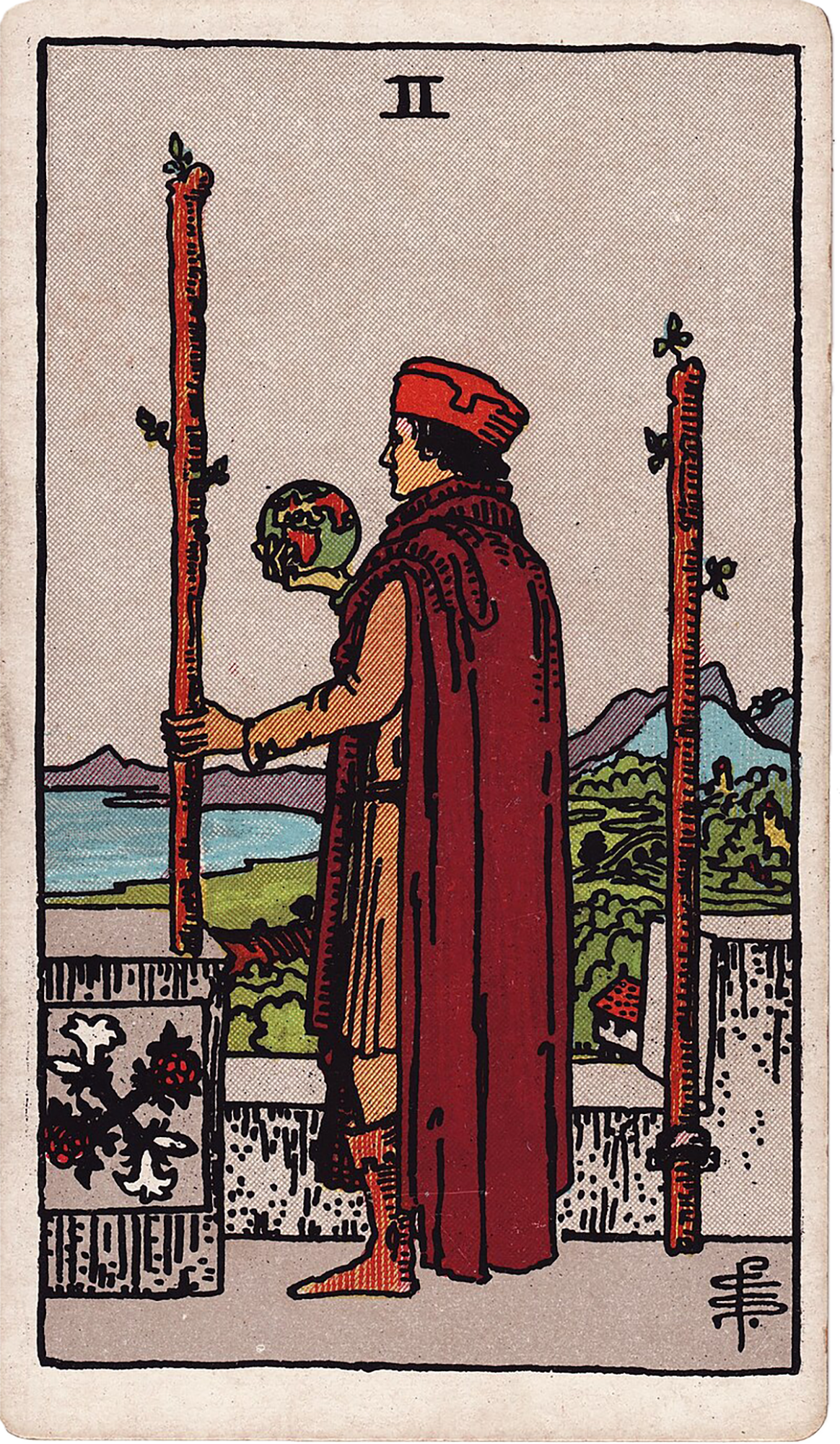 Situation2 of Wands
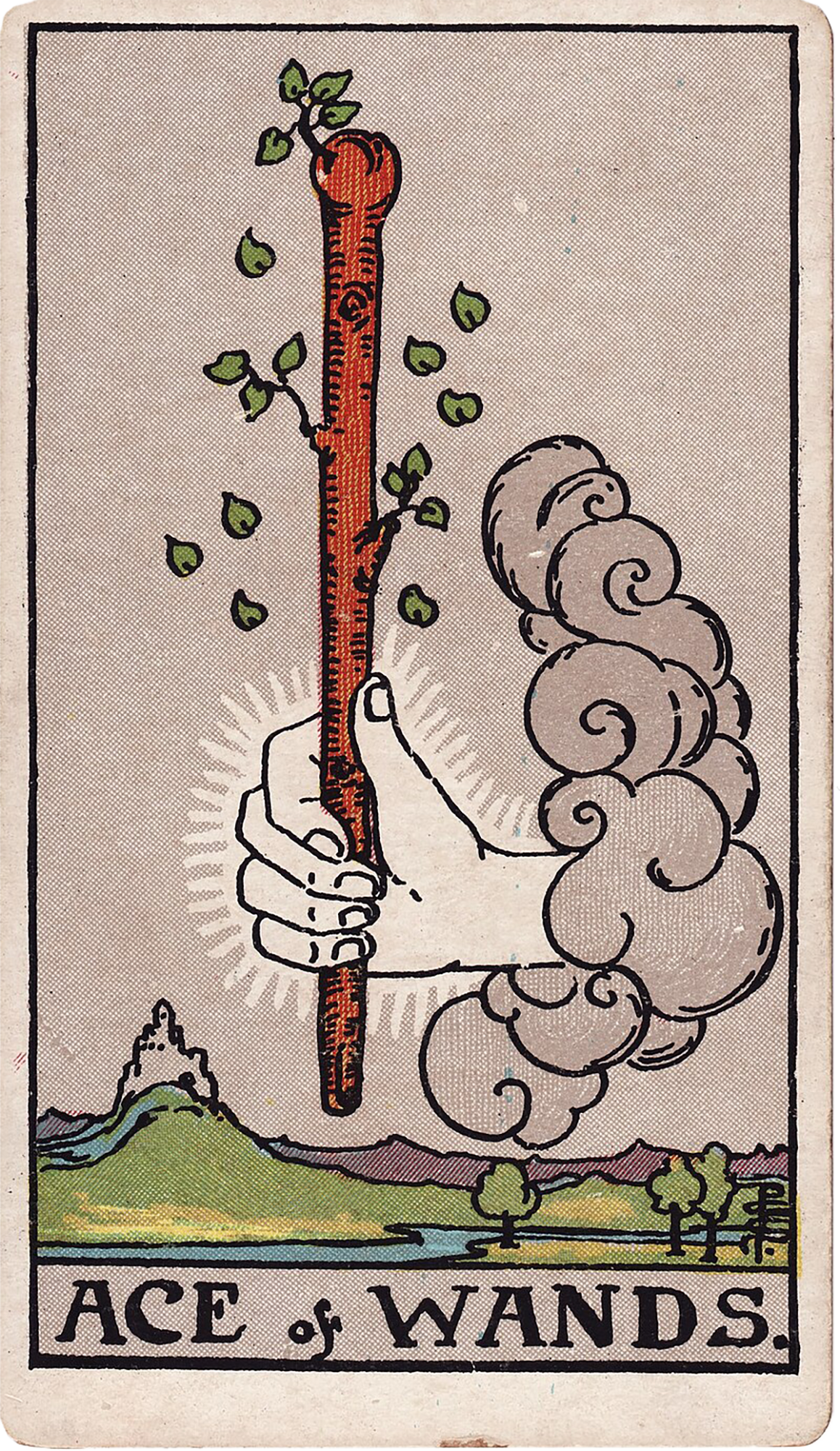 Option AAce of Wands
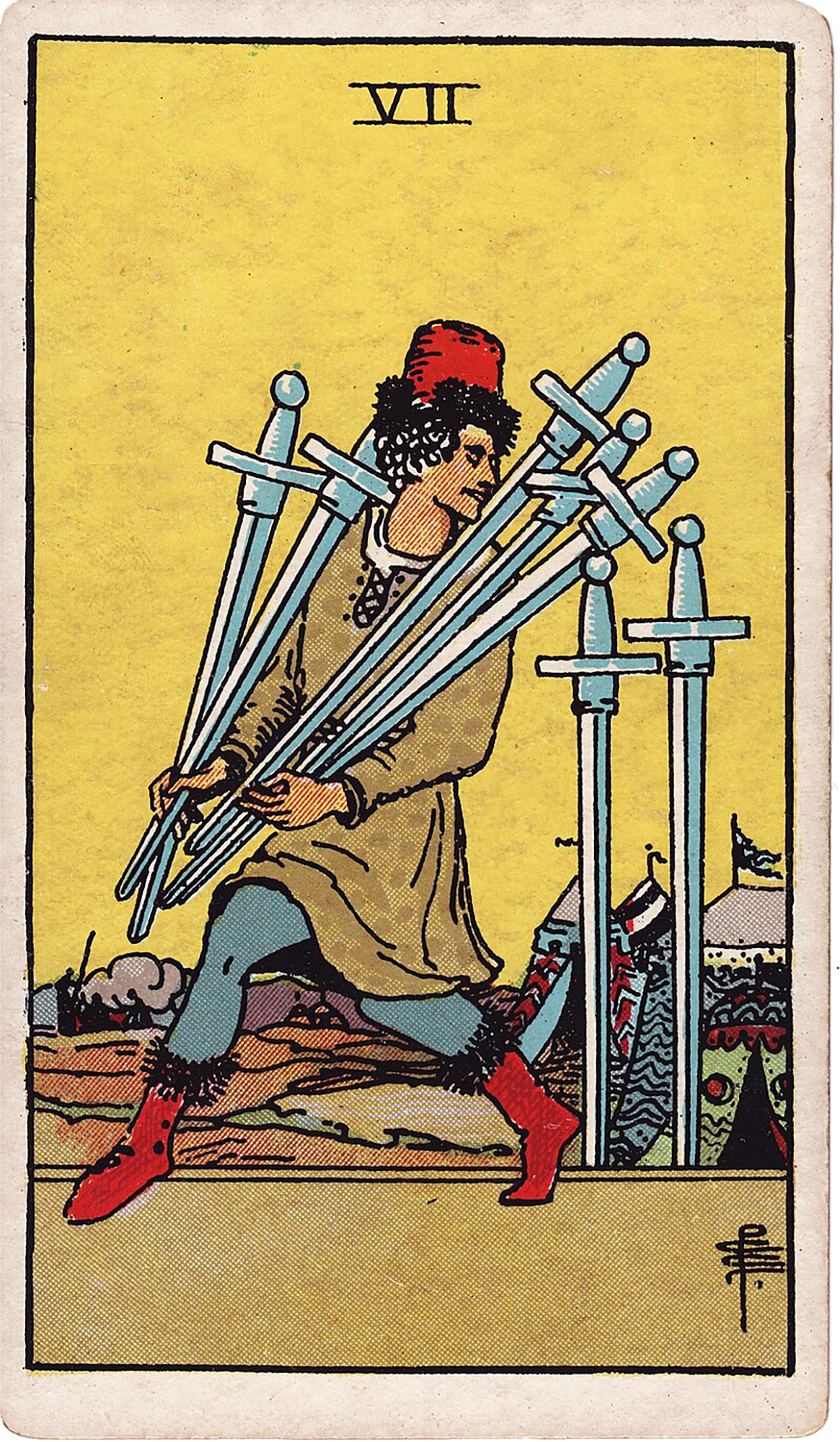 Option B7 of Swords
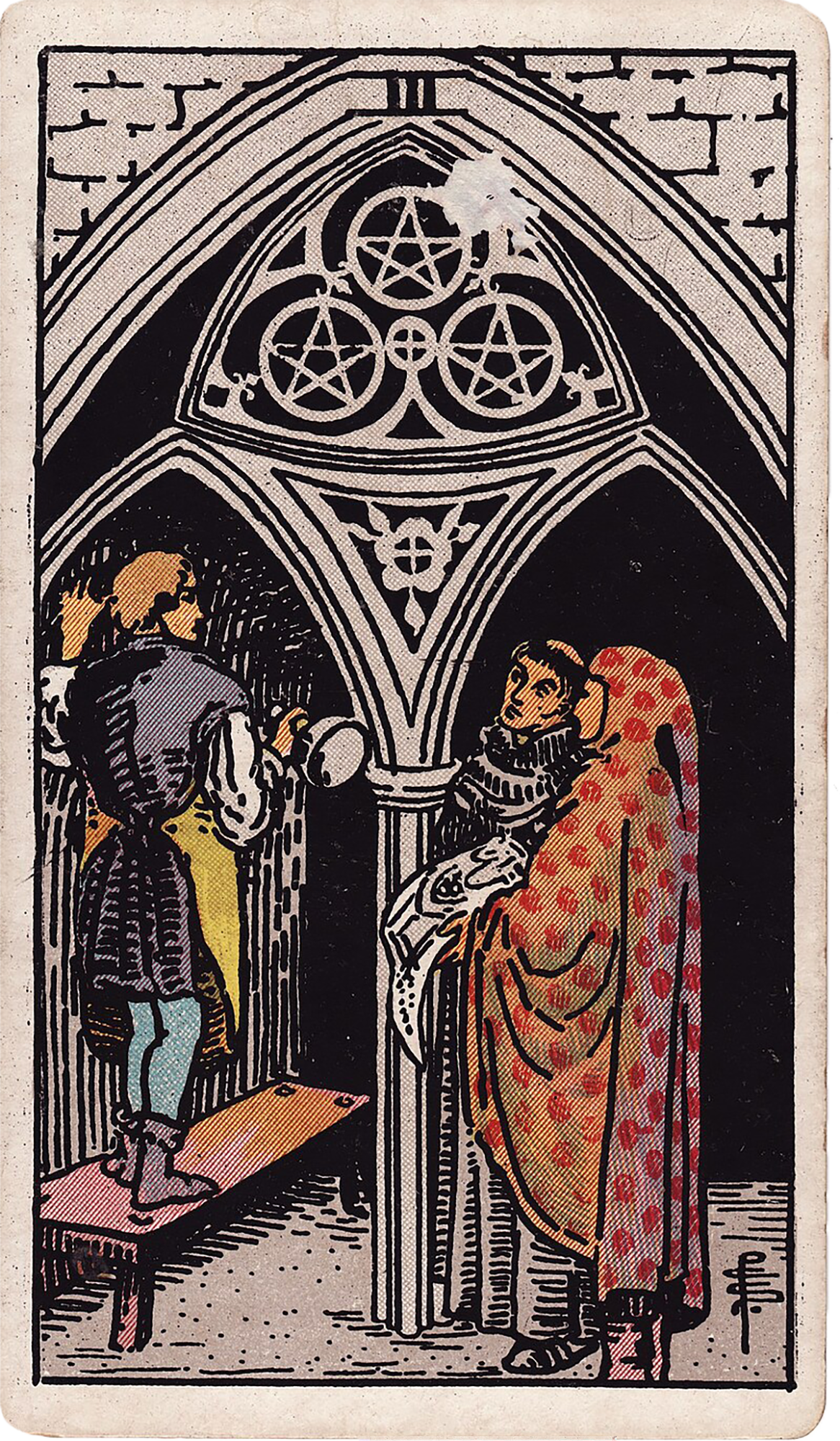 Hidden Factor3 of Pentacles
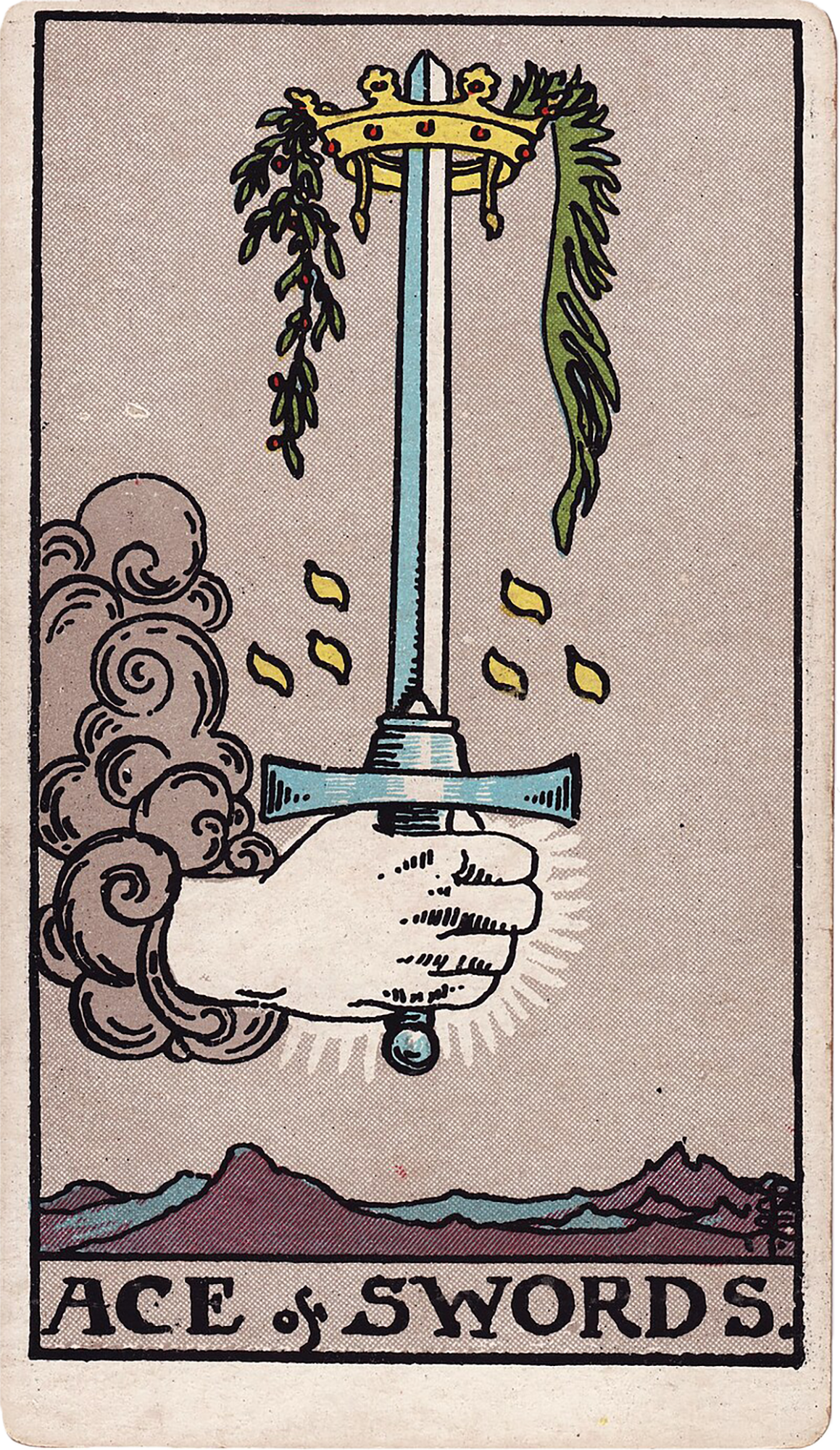 AdviceAce of Swords
Introduction and Purpose
Tarot can be used as a decision-support framework, not as an oracle that removes responsibility. The Decision-Five spread is intentionally compact: it clarifies the situation, places two concrete options for action, surfaces a hidden factor that will influence outcomes, and gives advice on how to proceed. This article transforms that reading into a set of real-world experiments you can design, run and measure. We anchor the work to the supplied cards in order: Ace of Wands (Situation), 2 of Wands (Option A), Ace of Swords (Option B), 7 of Swords (Hidden Factor), and 3 of Pentacles (Advice). The instructions explain symbolism (especially Rider–Waite–Smith imagery), how cards talk to each other, and how to translate each into practical tests with success criteria and timelines. This is a method for learners to practice evidence-based decision-making with tarot as a creative heuristic.
The Decision-Five Layout: Purpose and When to Use It
Layout labels and order (left to right): Situation, Option A, Option B, Hidden Factor, Advice. Use this spread when you have a clear decision between two actionable paths and you want to design small experiments that will produce information useful to choose between them. It works best for medium-term choices (days to months) where you can run short, repeatable tests. The Decision-Five emphasizes comparison and falsifiability: each option should be framed so you can test a hypothesis that will increase your confidence one way or the other. The Hidden Factor is not merely drama; it is a variable that could skew test results if ignored. The Advice card usually points to the method or mindset that will make experiments most effective.
Reading the Position: Situation — Ace of Wands
Position label: Situation. Card: Ace of Wands. Upright meaning emphasizes a new impulse that wants expression, an initial creative spark and the need for a first action before enthusiasm fades. Rider–Waite–Smith imagery: a hand emerging from a cloud holds a sprouting wand with leaves; the scene suggests fertile potential and a direct offer of generative energy. Translate into experiment terms: the core question is whether to act on this new impulse quickly and on a small scale to preserve momentum. Practical experiment ideas generated from the Ace of Wands: run a one-week ‘minimum viable action’ — a single, time-boxed action that expresses the idea. Example: publish a one-page landing note, prototype a simple mockup, jot a short social post and observe immediate engagement. Success criteria should be simple (e.g., three meaningful responses, or one usable sign-up) so the impulse gets tested without overcommitting. The Ace here asks for action aligned with current capacity rather than a distant ideal: make the first test small, direct, and energetic.
Reading the Position: Option A — 2 of Wands
Position label: Option A. Card: 2 of Wands. Upright meaning emphasizes moving from inspiration to strategy, comparing options, and deciding how far to expand beyond familiar territory. Rider–Waite–Smith imagery presents a figure holding a globe, standing beside two staves and gazing over a shoreline — a planning posture that balances ambition with scope assessment. As Option A, the 2 of Wands suggests a deliberate, outward-expanding path. Experiment translation: design experiments that test market expansion, prototype scaling, or feasibility of moving beyond your comfort zone. Examples: a small-scale pilot with a new audience segment; a pre-launch survey to gauge interest in an expanded offering; a revenue-sense test like pricing a small batch and measuring conversion. Make your hypothesis explicit ("If I offer X to audience Y at price Z, then A% will convert in T days") and pick measurable outcomes. Because the 2 of Wands carries planning energy, break this option into two micro-experiments: a discovery test (interest) and a commitment test (willingness to transact).
Reading the Position: Option B — Ace of Swords
Position label: Option B. Card: Ace of Swords. Upright meaning highlights a clear insight, decisive conversation or intellectual breakthrough that cuts through confusion. Rider–Waite–Smith imagery: a hand from the clouds presents a single sword crowned with a laurel and a crown suspended, and often small leaves or clouds surround it — the visual language suggests clarity bestowed, the power of a single right word or message. As Option B, the Ace of Swords indicates a path that depends on clarity of communication, a decisive conversation, or the restructuring of thinking. Experiment translation: create a test designed to produce or use decisive information. Examples: run a focused interview or stakeholder conversation framed to reveal a binary decision; publish a crisp landing page or pitch and measure response to the clarified proposition; do an A/B test of two messages to see which one produces a decisive increase in sign-ups or willingness to commit. The measurable outcome should be about information yield — does the conversation or message produce a clear yes/no signal?
Reading the Position: Hidden Factor — 7 of Swords
Position label: Hidden Factor. Card: 7 of Swords. Upright meaning focuses on strategy, acting independently, discretion versus deception; it tests the line between useful cunning and unethical avoidance. Rider–Waite–Smith imagery: a figure tiptoeing away carrying five swords, leaving two upright behind; the posture and setting imply stealth, selective appropriation, or clever maneuvering. As Hidden Factor, the 7 of Swords warns there is a variable you may not be accounting for: information quietly withheld, an unstable shortcut, a misaligned incentive or internal self-deception. Translating this into experimental design: include checks against biased data, leakage, and false positives. Practical steps: design blind tests when possible, include control groups, or add a verification layer (for example, an independent feedback channel). If the 7 of Swords is about someone else’s discretion, include integrity checks such as terms, contracts, or transparency prompts. If it is about your own tendency to cut corners, make a separate experiment that tests sustainability rather than immediate gain (e.g., run the test longer to see if outcomes persist).
Reading the Position: Advice — 3 of Pentacles
Position label: Advice. Card: 3 of Pentacles. Upright meaning highlights that skill improves through collaboration, feedback and respect for different expertise. Rider–Waite–Smith imagery shows a craftsman at work, often in a church or workshop, with two patrons or collaborators admiring plans — the card foregrounds effort, standards, and shared purpose. As advice for experiments, the 3 of Pentacles recommends designing tests that incorporate feedback loops, expert review, and formal standards. Practically: recruit one or two collaborators, set simple success criteria together, and schedule short review meetings. Use peer feedback to validate assumptions, refine measures, and catch the hidden factor suggested by the 7 of Swords. The 3 of Pentacles encourages iterative improvement and documentation: treat each experiment as a craft project with specifications, roles, and quality checks.
Card-to-Card Relationships: How These Five Cards Speak to Each Other
Interpreting a spread is primarily about relationships. Read the cards both in single-position meaning and as a network of influence. Key relationships in this spread: Ace of Wands (Situation) to 2 of Wands (Option A): the spark wants to be developed strategically. The imagery transition — from a single sprout to a globe-and-viewer — shows moving from immediate action to planning scope. Experiment implication: do a quick action (Ace of Wands) that feeds measurable inputs for the 2 of Wands pilot. Ace of Wands to Ace of Swords (Option B): action + clarity. The hands from clouds motif on both Aces suggests the same initial offer could be acted on either by rapid doing or by sharpening a message/decision. Experiment implication: run parallel micro-tests: one to sense traction and one to sharpen the proposition. 2 of Wands vs Ace of Swords: these two options are different approaches to the same impulse — outward expansion vs decisive communication — so design experiments that can be compared on the same metrics (e.g., sign-ups, clarity of feedback, conversion) so you can choose based on data. 7 of Swords modulates both options: its presence as Hidden Factor warns that either outward expansion or clear messaging could be undermined by stealthy influences (someone not being honest, shortcuts producing short-term wins). The 3 of Pentacles sits as advice to mitigate risks across options: collaboration and quality control will reduce the damage of surprises indicated by the 7 of Swords and make both 2 of Wands and Ace of Swords experiments more reliable. Read visually: the energetic, leafy wand and the globed planner can become impulsive without the disciplined craft of the 3 of Pentacles, and the sword’s clarity can be used harmfully without team accountability.
Translating Each Card into Specific Experiments: Templates and Examples
Below are concrete experiment templates tied to each position and imagery. Keep experiments small, time-boxed, and measurable. Situation — Ace of Wands experiment template: "Minimum Viable Expression (MVE)". Action: publish one clear expression of the idea (a short page, a prototype, a 3-minute demo). Duration: 3–7 days. Metric: three meaningful engagements (conversations, email replies, sign-ups). Rationale linked to imagery: the wand’s green growth asks for a first action that preserves early energy. Option A — 2 of Wands experiment template: "Scope Pilot". Action: run a small pilot targeting a new audience or expanded scope (e.g., 50 targeted invites, 10 trials). Duration: 2–4 weeks. Metric: conversion rate and qualitative interest indicators; collect answers to the question "Would you recommend this or want more?" Rationale: the globe and vantage point encourage assessing how far to expand. Option B — Ace of Swords experiment template: "Clarity Conversation or Message Test". Action: conduct focused interviews (5–10 stakeholders) with a script designed to elicit a decisive yes/no, or launch two crisp messaging variants and measure click-through or sign-up lift. Duration: 1–2 weeks. Metric: binary signal strength (e.g., % who say yes versus no; which message outperforms). Rationale: the sword’s crown represents insight that cuts confusion. Hidden Factor — 7 of Swords experiment template: "Integrity Check". Action: include a blind control, an independent verifier, or an extended test period; run a small duplicate test with anonymized data to check for leakage and bias. Duration: should align with the other tests but plan at least one extra cycle. Metric: discrepancy rates between verified and primary results. Rationale: the figure carrying swords warns you to test for stealthy distortions. Advice — 3 of Pentacles experiment template: "Collaborative Review Cycle". Action: recruit one peer or expert and run a weekly check-in to review data and adjust the experiment. Duration: synchronous with other experiments. Metric: number of improvements implemented and reduction in measurement error. Rationale: craft improves with collaboration and standards.
Designing Good Experiments: Method, Metrics and Timelines
Principles to follow when turning cards into real tests: 1) Hypothesis first: write a clear hypothesis for each option (e.g., "If I offer a low-cost trial (Option A), 10% of early adopters will convert to paid customers in 30 days"). 2) Keep tests comparable: choose at least one common metric so Option A and Option B can be compared (e.g., conversion, willingness to commit, qualitative satisfaction). 3) Time-box and budget: small experiments should have tight limits on time and resources so failure is informative rather than costly. 4) Falsifiable criteria: define what would make you accept or reject an option. 5) Controls and verification: incorporate the Hidden Factor’s warning by including control groups, anonymized checks, or third-party validators. 6) Collaborative checkpoints: schedule short reviews to apply the 3 of Pentacles’ advice. 7) Iterate: treat these as experiments, not final campaigns; run at least two cycles unless an experiment produces a decisive signal. 8) Record deeply: keep simple logs of actions, contextual factors, and raw responses so you can diagnose why a result occurred. These methods reflect tarot’s practical orientation in the supplied card texts: respond to the present stage, use skills of each suit, and favor concrete practice over abstract ideals.
Practical Reading Method: Steps to Reproduce the Spread and Run Experiments
Step-by-step reproducible method: 1) Clarify the decision: formulate a question that contrasts two real options (Option A vs Option B) and is testable. 2) Prepare the deck and context: shuffle until you feel ready. Optionally set a timer for 5 minutes of focused breathing and state your intention aloud. 3) Lay the cards left to right in the Decision-Five order and reveal them in sequence: Situation (leftmost), Option A, Option B, Hidden Factor, Advice. 4) Record raw impressions: note the imagery you see on each supplied card (Ace of Wands’ sap and hand; 2 of Wands’ globe and waterfront; Ace of Swords’ crowned blade; 7 of Swords’ stealthy carrier; 3 of Pentacles’ workshop scene). 5) Translate each card into an experiment using the templates above. Write a one-sentence hypothesis and the primary metric for each experiment. 6) Design matching time-boxes and budgets: typical micro-tests are 3–14 days for initial runs; the 2 of Wands pilot may need longer. 7) Add a Hidden Factor verification: include a control or independent check to guard against stealth influences. 8) Recruit collaborators (3 of Pentacles): even one trusted reviewer improves data quality. 9) Run the experiments concurrently if possible, making sure each is isolated enough to avoid contamination. 10) Debrief: after the time-frame, compare the primary metrics, qualitative signals, and any unexpected observations. Use the pre-defined acceptance criteria to decide next steps.
Common Mistakes and How to Avoid Them
Learners often make predictable errors when converting tarot readings into experiments. Common mistakes and remedies: 1) Vague hypotheses — fix by writing one-line hypotheses and measurable outcomes. 2) Over-ambitious tests — fix by time-boxing and limiting scope (the Ace of Wands asks for starter actions). 3) Ignoring the Hidden Factor — fix by including verification steps and controls (7 of Swords warns about stealth). 4) Cherry-picking results — fix by predefining success/failure rules before running tests. 5) Not documenting context — fix by keeping a short experiment log including date, audience, and unusual events. 6) Treating tarot as determinant — remember this method treats tarot as a heuristic to generate testable ideas, not as a guarantee. 7) Running only one cycle — small tests should be repeated to check for reliability; use the 3 of Pentacles’ collaborative loop to refine each cycle.
Example Walkthrough: Applying the Spread to a Side Project Decision
Concrete, short example to show the method (hypothetical decision: whether to expand a side project vs refining messaging to current followers). Situation — Ace of Wands: you have an energetic new feature idea and feel motivated to act now. Experiment: publish a one-page demo and gather first impressions over 5 days. Option A — 2 of Wands: test expansion by inviting 50 new users from a related community to try the feature over 3 weeks and measure retention. Option B — Ace of Swords: run five structured interviews with current followers, asking clear, decisive questions about willingness to use and pay for the feature; or launch two distinct pitch messages and measure conversion. Hidden Factor — 7 of Swords: include an integrity check by anonymizing feedback or using a third-party survey to ensure social-desirability bias isn’t inflating positive answers. Advice — 3 of Pentacles: recruit one peer developer and one user-researcher to review test plans and meet weekly. After the time-box, compare defined success metrics (e.g., retention >15% in pilot vs message conversion >5% in pitch test). Use results to choose the path or iterate further.
Interpreting Results, Learning and Iterating
When experiments conclude, interpret them with curiosity: 1) Did the results match your hypothesis? If yes, consider scaling or running a verification cycle. If no, analyze whether the test design was the cause (sample size, contamination, poor metric) or whether the option itself is weaker. 2) Use the Hidden Factor check to explain anomalies: if your integrity check shows high discrepancy, pause before scaling. 3) Apply the 3 of Pentacles advice: hold a review with collaborators, transparently share raw data, and co-create the next experiment. 4) Iterate quickly: small changes (message tweaks, audience refinement, longer test length) informed by the data will refine your options. 5) Record decisions: log why you chose a path so that later readers can learn. Over time, this practice builds a small evidence archive that makes future decisions more reliable and less dependent on momentary intuition.
Final Notes on Ethics and Practical Use
Two practical cautions. First, the 7 of Swords can point to ethical grey areas; use integrity checks not just for measurement accuracy but to ensure your plan aligns with your values and obligations to others. Second, tarot should be treated as a tool to generate testable options and craft methodologies, not as a substitute for research, legal, or financial advice. Use the Decision-Five as a disciplined ideation-to-experiment pipeline: tarot supplies heuristics and framing, you supply hypotheses, and evidence directs action.
Practice questions
• What small, time-boxed action can you take in the next 72 hours that expresses your current impulse (Ace of Wands)?
• How would you convert Option A (2 of Wands) into two micro-experiments that separate interest from willingness to commit?
• Which single metric will let you compare Option A and Option B directly?
• What could the 7 of Swords represent in your context: an external actor, a measurement bias, or your own temptation to shortcut?
• Who would you invite as a collaborator to follow the 3 of Pentacles advice, and what role would they play in your experiment?
• What pre-defined acceptance criteria will cause you to choose one option or continue iterating?
Comments
Sign in to comment.
Continue learning
Harnessing the Power of The Magician and Ace of Wands: Igniting Creativity and Manifestation in Tarot Readings
The combination of The Magician and the Ace of Wands in tarot readings offers a potent blend of creative energy and manifestation power. This article delves into the ways these car...
Advanced Techniques for Combining The Moon and The Star to Enhance Intuition in Tarot Readings
This article explores advanced techniques to combine the symbolism and energy of The Moon and The Star Tarot cards to enhance intuition during Tarot readings. Drawing from traditio...
Enhancing Clarity in Complex Choices with the Five Card Cross Tarot Spread
The Five Card Cross Tarot Spread is a practical tool designed to clarify complex choices by breaking down the decision into manageable parts. This article explores each position in...
Tracing the Origins and Evolution of The Fool Card in Tarot History
The Fool card holds a foundational place in tarot tradition, symbolizing beginnings, openness, and the embrace of uncertainty. This article traces its origins from early European d...
Understanding The Hermit Card in Solitude Reflection and Guidance
This article offers an in-depth exploration of The Hermit tarot card as a single-card reading in different contexts such as love, career, money, advice, challenge, person, outcome,...
Unlocking the Creative Flow with The Magician and The Empress in Tarot Combinations
This article delves into the powerful synergy between The Magician and The Empress in Tarot combinations, focusing on how their combined symbolism unlocks creative flow across vari...
Using the Seven Card Horseshoe Spread to Uncover Career Growth and Opportunity
This article presents an in-depth guide to the Seven Card Horseshoe Tarot Spread with a focus on career growth and opportunity. Using the cards The Fool, The Magician, The Empress,...
Understanding the Many Facets of The Moon in Emotional and Intuitive Tarot Readings
The Moon card in the Tarot deck embodies themes of intuition, uncertainty, dreams, and emotional complexity. This article offers a comprehensive exploration of The Moon’s upright a...
Unlocking Advanced Intuition Techniques Using The High Priestess The Moon and The Hermit
This article examines advanced intuition development in tarot reading by focusing on The High Priestess, The Moon, and The Hermit cards. It offers practical techniques for beginner...
Mastering Intuition with The High Priestess The Hermit and The Moon in Tarot Readings
This article delves into mastering intuition through three powerful Tarot cards: The High Priestess, The Hermit, and The Moon. It guides readers from beginner to advanced reading t...