
Uncovering the Origins and Enduring Mysteries of the Wheel of Fortune Card in Tarot History
The Wheel of Fortune is one of the most enigmatic and symbolically rich cards in the tarot deck, embodying the cyclical nature of life, fate, and change. This article explores the card's origins, traditional symbolism—especially as seen in the Rider-Waite-Smith deck—and the nuances of its upright and reversed meanings. By grounding interpretations in the card’s detailed imagery, learners gain tools to navigate its lessons on timing, adaptation, and responsibility. The article also addresses common reading mistakes and offers practical methods for integrating the Wheel of Fortune into tarot spreads, enriching understanding for both novice and seasoned readers.
Cards explored in this article
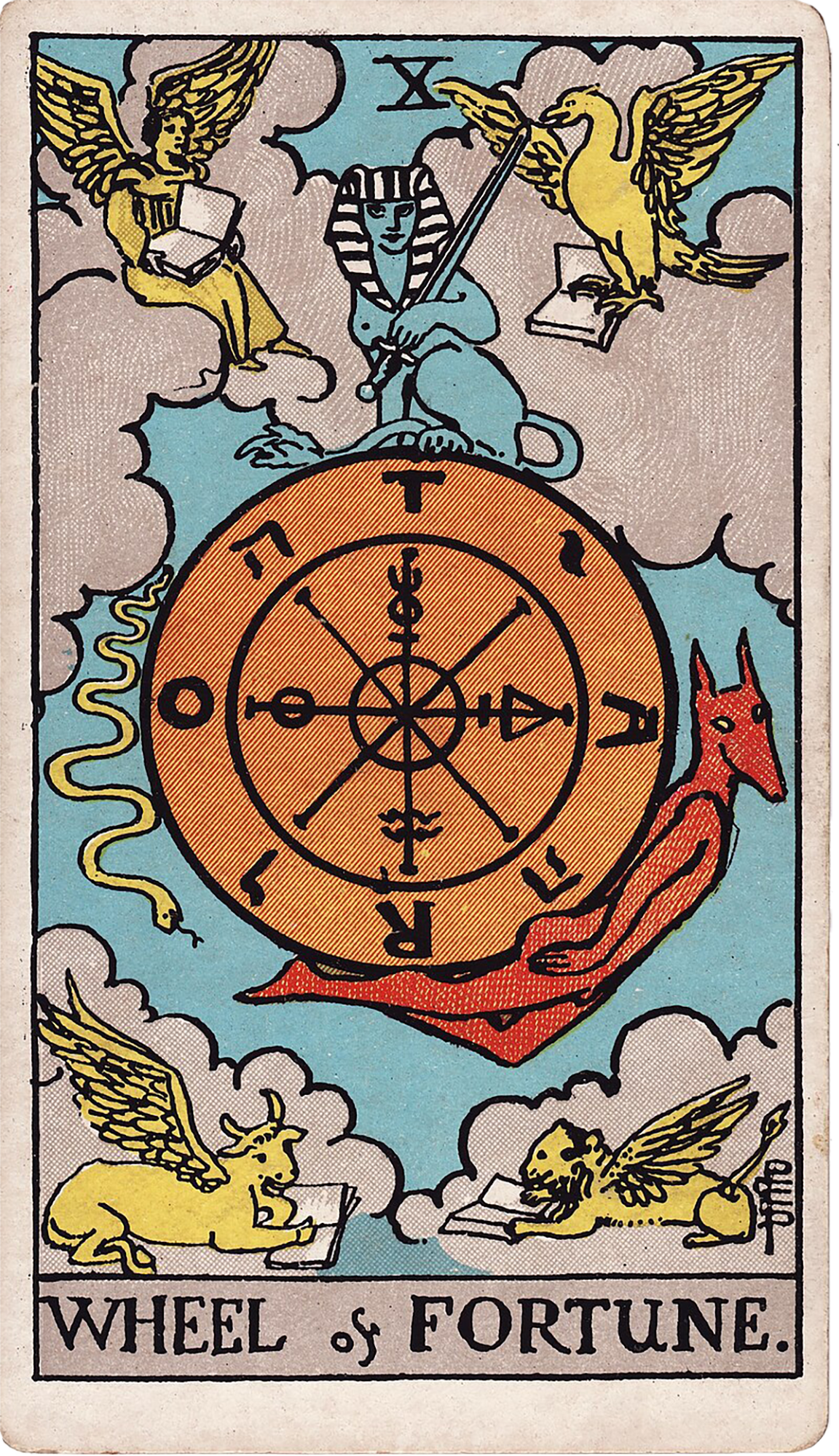 Wheel of Fortune
Historical Origins of the Wheel of Fortune Card
The Wheel of Fortune card has roots extending far beyond the tarot itself, drawing from medieval and classical philosophies about fate and the cyclical nature of existence. The concept of the "Wheel of Fortune" emerged from Roman and medieval European traditions, where a spinning wheel symbolized the unpredictable shifts of fortune—rising and falling without warning. Early tarot decks, such as the Visconti-Sforza, incorporated this archetype to represent change and destiny, reflecting a worldview where human life is subject to forces beyond control. The Rider-Waite-Smith (RWS) deck, created in the early 20th century by Arthur Edward Waite and artist Pamela Colman Smith, codified many symbolic elements that continue to influence modern interpretations. This deck's Wheel of Fortune card is laden with imagery drawn from various esoteric traditions, linking the concept of fate to spiritual laws, cycles of time, and the interplay of universal forces. Understanding these historical layers helps readers appreciate the card not merely as a fortune-telling symbol but as a complex emblem of life's dynamics.
Symbolism and Imagery in the Rider-Waite-Smith Wheel of Fortune
The RWS Wheel of Fortune card is rich with symbolic elements, each contributing to its layered meaning. Central to the card is the large wheel, segmented and decorated with alchemical symbols representing mercury, sulfur, water, and salt—elements signifying transformation and the building blocks of reality. The wheel’s motion implies constant change, reminding readers that life’s circumstances revolve in cycles. Surrounding the wheel are four winged creatures holding books: a man (or angel), an eagle, a lion, and a bull. These figures correspond to the four fixed signs of the zodiac—Aquarius, Scorpio, Leo, and Taurus—and echo imagery from the biblical vision of Ezekiel. They symbolize wisdom, stability, and the integration of cosmic forces, suggesting that amidst change, there are constants to guide and ground us. Atop the wheel sits the sphinx, emblematic of mystery and balance, holding a sword that represents discernment and justice. A snake descends on the left side of the wheel, symbolizing the fall into materiality or the cycle of life and death, while Anubis, the Egyptian god associated with the afterlife, rises on the right side, symbolizing rebirth and transformation. By focusing on these visual cues, readers can deepen their connection to the card’s messages about cycles, turning points, and the balance between fate and free will.
Understanding the Upright Wheel of Fortune Meaning
When the Wheel of Fortune appears upright in a reading, it signals a significant turning point or shift in circumstances. The card encourages recognizing that change is both inevitable and often beyond full control. Rather than expecting a smooth path, the upright card advises adaptability, urging readers to work with current realities and timing. The upright Wheel of Fortune highlights the importance of conscious engagement: asking where a direct response, clearer boundary, or deliberate choice can positively influence the situation. For example, if someone faces uncertainty in career or relationships, this card suggests identifying which actions align with the emerging pattern rather than resisting change. Practically, this means focusing on the aspects of the situation that are visible and accessible now, without waiting for perfect conditions. It also reminds readers to notice which parts of the card’s lessons—such as acceptance of cycles or timing—are already present in their behavior. This approach reduces anxiety about outcomes and fosters strategic, proportionate action.
Interpreting the Reversed Wheel of Fortune
The reversed Wheel of Fortune often points to resistance against change or difficulty in adapting to new circumstances. It may reveal repeated patterns, poor timing, or tendencies to blame external forces rather than taking responsibility for choices. While reversals in tarot are not inherently 'negative,' this position indicates that the usual flow of fortune is blocked, delayed, or distorted. In some cases, the reversed card suggests an internal or psychological struggle—acknowledging an old pattern but not yet fully transforming it. For instance, a querent might recognize recurring setbacks but feel stuck in familiar responses. To interpret the reversed Wheel effectively, ask where energy is becoming difficult to access or where balance is missing. Look to surrounding cards for clues about whether the card suggests resistance, a necessary correction, or a temporary pause. This nuanced view transforms the reversal from a fatalistic omen into an invitation for self-awareness and gradual recovery.
Common Mistakes When Reading the Wheel of Fortune
One frequent mistake is to treat the Wheel of Fortune as a guarantee that 'luck' will immediately improve or worsen. The card’s deeper message is about cycles and timing, not simple fortune-telling. Overlooking the card’s call for adaptability or failing to recognize underlying patterns reduces the reading’s usefulness. Another error is ignoring the card’s rich symbolism. Focusing solely on keywords like "change" or "fate" without reference to the imagery—such as the sphinx’s balance or the alchemical signs—misses opportunities to access deeper insights. Additionally, some readers view the reversed position as purely negative. Instead, it should be considered a prompt to explore blocks or imbalances in the querent’s experience. Avoid fatalistic interpretations and emphasize active reflection and responsibility. Finally, neglecting to connect the Wheel to other cards in the spread can isolate its meaning. The Wheel’s influence is often contextual, showing how patterns interact with the broader narrative of the reading.
Practical Techniques for Reading the Wheel of Fortune Card
To integrate the Wheel of Fortune effectively in readings, begin by carefully observing the card’s imagery. Identify the four winged creatures and their symbolic roles, the sphinx’s position, and the presence of Anubis and the descending snake. Use these to frame questions about stability amidst change, mystery, and transformation. When the card appears upright, encourage querents to pinpoint what is newly visible or shifting in their situation. Ask them to consider where conscious choice can engage with unfolding events and how they might align their actions with the natural timing indicated by the card. In reversed positions, explore where change feels blocked or where old patterns repeat. Reflect on psychological or emotional barriers and consider what might be needed to restore balance. Practice pairing the Wheel with cards that clarify the nature of the change or the forces involved. For example, cards indicating personal agency can highlight responsibility, while those related to external influence might illuminate fate's role. Using journaling prompts about cycles in personal life or history can help deepen understanding. Over time, readers develop intuition for how the Wheel’s lessons manifest uniquely in each querent’s narrative.
Connecting the Wheel of Fortune to Family History and Tradition
The Wheel of Fortune’s themes resonate strongly with family history and tradition, where cycles of luck, challenge, and change often appear across generations. This card invites reflection on inherited patterns and how they influence present circumstances. In readings focused on family or ancestral matters, the Wheel can highlight turning points or transitions within the lineage. It suggests that just as the wheel turns, family dynamics are subject to change, and conscious choices today can alter future trajectories. Consider how traditions embody wisdom about timing and adaptation—values the Wheel calls to mind. The card encourages honoring these traditions while recognizing the possibility of breaking old cycles through awareness and deliberate action. Using the card in family history readings may involve asking where long-standing patterns persist and how balance between fate and free will plays out within family stories. This perspective enriches the reading by linking personal experience to broader temporal and cultural cycles.
Practice questions
• How do I personally experience cycles of change in my life, and where might I be resisting them?
• In what areas could I apply the Wheel of Fortune’s lesson of timing and adaptability?
• What patterns from my family history might be influencing my current situation?
• How can I distinguish between fate’s influence and my own responsibility when interpreting this card?
• When I see the Wheel of Fortune reversed, how might I explore internal blocks rather than external blame?
Comments
Sign in to comment.
Continue learning
Harnessing the Power of The Magician and Ace of Wands: Igniting Creativity and Manifestation in Tarot Readings
The combination of The Magician and the Ace of Wands in tarot readings offers a potent blend of creative energy and manifestation power. This article delves into the ways these car...
Advanced Techniques for Combining The Moon and The Star to Enhance Intuition in Tarot Readings
This article explores advanced techniques to combine the symbolism and energy of The Moon and The Star Tarot cards to enhance intuition during Tarot readings. Drawing from traditio...
Enhancing Clarity in Complex Choices with the Five Card Cross Tarot Spread
The Five Card Cross Tarot Spread is a practical tool designed to clarify complex choices by breaking down the decision into manageable parts. This article explores each position in...
Tracing the Origins and Evolution of The Fool Card in Tarot History
The Fool card holds a foundational place in tarot tradition, symbolizing beginnings, openness, and the embrace of uncertainty. This article traces its origins from early European d...
Understanding The Hermit Card in Solitude Reflection and Guidance
This article offers an in-depth exploration of The Hermit tarot card as a single-card reading in different contexts such as love, career, money, advice, challenge, person, outcome,...
Unlocking the Creative Flow with The Magician and The Empress in Tarot Combinations
This article delves into the powerful synergy between The Magician and The Empress in Tarot combinations, focusing on how their combined symbolism unlocks creative flow across vari...
Using the Seven Card Horseshoe Spread to Uncover Career Growth and Opportunity
This article presents an in-depth guide to the Seven Card Horseshoe Tarot Spread with a focus on career growth and opportunity. Using the cards The Fool, The Magician, The Empress,...
Understanding the Many Facets of The Moon in Emotional and Intuitive Tarot Readings
The Moon card in the Tarot deck embodies themes of intuition, uncertainty, dreams, and emotional complexity. This article offers a comprehensive exploration of The Moon’s upright a...
Unlocking Advanced Intuition Techniques Using The High Priestess The Moon and The Hermit
This article examines advanced intuition development in tarot reading by focusing on The High Priestess, The Moon, and The Hermit cards. It offers practical techniques for beginner...
Mastering Intuition with The High Priestess The Hermit and The Moon in Tarot Readings
This article delves into mastering intuition through three powerful Tarot cards: The High Priestess, The Hermit, and The Moon. It guides readers from beginner to advanced reading t...