
Uncovering the Origins and Evolution of the Hierophant Card in Tarot Tradition
The Hierophant card holds a significant place in tarot tradition, symbolizing established wisdom, guidance, and the structure of belief systems. This article traces its origins, explores its evolving symbolism, and offers practical insight into its upright and reversed meanings. By anchoring the discussion in the specific imagery and symbolism of the provided Hierophant card, learners will gain a deep understanding of its role in readings, common interpretative challenges, and methods for applying its lessons in practical divination. The exploration also considers the card’s relationship with family traditions, social institutions, and questions that commonly arise in tarot consultations.
Cards explored in this article
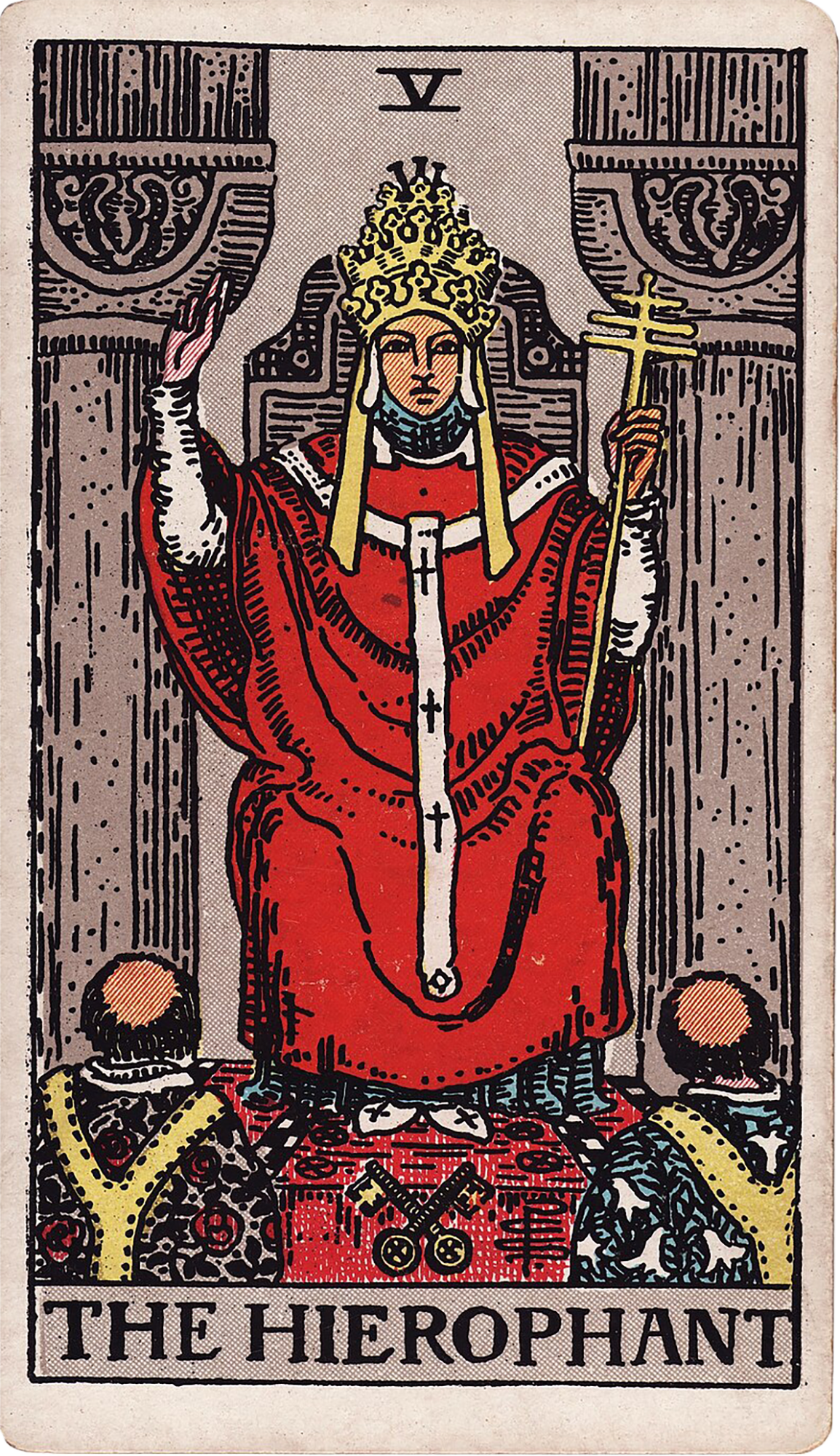 The Hierophant
Historical Origins of the Hierophant Card
The Hierophant card, traditionally numbered V in the Major Arcana, draws heavily from historical and religious imagery. The term 'Hierophant' originates from ancient Greek, meaning 'chief priest,' particularly one who revealed sacred mysteries. This card’s roots are deeply embedded in religious authority and the transmission of spiritual knowledge within an institutional framework. In early tarot decks, including the influential Rider-Waite-Smith deck, the Hierophant was depicted as a pope-like figure seated between two pillars, symbolizing stability, tradition, and structured knowledge. The Rider-Waite-Smith Hierophant embodies the role of a traditional teacher or spiritual authority who mediates between divine wisdom and the community. Historically, this reflected societal respect for organized religion and established customs. The card also represents the societal institutions that maintain order through codified rules and rituals—whether religious, cultural, or social.
Symbolism and Imagery in the Hierophant Card
Examining the supplied Hierophant card image reveals key symbols that inform its interpretation. The figure’s triple crown represents spiritual authority over the three realms of heaven, earth, and humanity. The crossed keys at his feet symbolize access to higher knowledge and the unlocking of mysteries but also denote duality—between the material and spiritual worlds. The two acolytes or followers kneeling at the Hierophant’s side illustrate the transmission of tradition and accepted wisdom. Their presence emphasizes learning through established systems rather than independent or rebellious exploration. The hierarchical positioning suggests mentorship, formal education, and the importance of institutionalized knowledge. The staff the Hierophant holds, often a triple cross, reinforces his role as a mediator and guardian of sacred laws. Understanding these images helps readers engage deeply with the card’s upright meaning, which encourages working within existing structures and acknowledging the lessons encoded in tradition before making deliberate choices.
Upright Hierophant Meaning in Practical Reading
When the Hierophant appears upright, it often signals a time to seek guidance from qualified sources or respect established protocols. This card advises the querent to learn from the wisdom passed down through tradition—whether in family, education, religion, or other societal systems. It suggests that clarity and progress come from acknowledging the rules and boundaries surrounding a situation. In practice, the upright Hierophant asks: Are you consulting a mentor or authority figure? Are you aligning with shared values and conventional knowledge? It can indicate formal education or spiritual teaching as a path forward. The card also encourages deliberate choice-making, urging the querent to recognize the lessons already present and use them constructively rather than resisting. A common practical technique is to identify which aspect of the Hierophant’s lesson—clarity, boundaries, honesty, or direct response—is most relevant. Readers should ask where a clearer boundary or deeper honesty might advance the situation, emphasizing conscious engagement over passive acceptance.
Reversed Hierophant Interpretation and Challenges
When reversed, the Hierophant highlights potential distortions or challenges related to authority and tradition. This may involve blind conformity, rigid dogma, or empty rituals that no longer hold meaningful value. Alternatively, it can signal rebellion without understanding or institutions demanding obedience without true wisdom. Reversal does not automatically imply a negative outcome but rather a blockage or imbalance in the card’s upright qualities. It may point to internalized resistance or a psychological phase where the querent begins to recognize outdated patterns but has not yet fully integrated change. The reversed card often asks the reader to explore where tradition feels constraining or where authority is being questioned. For practical readings, observe surrounding cards to assess whether the reversal represents resistance, recovery, excess, or a temporary pause. The reversed Hierophant invites reflection on personal belief systems, encouraging questions about when to follow established paths and when to innovate or break from convention.
The Hierophant in Family, History, and Tradition
The Hierophant naturally connects with family history and tradition, representing inherited wisdom and collective cultural values. It often surfaces in readings addressing legacy, ancestral influences, or the transmission of values across generations. The card’s emphasis on structure and learned behavior highlights how families serve as foundational institutions for imparting knowledge and social norms. In historical context, the Hierophant reminds us that traditions are living systems that evolve. While it endorses respect for established wisdom, it also invites conscious engagement to decide which aspects to maintain and which to question. Reading the Hierophant in these contexts encourages deeper inquiry into how family customs influence identity and decision-making. Common questions featuring the Hierophant might include: How do family traditions shape current challenges? Where is institutional guidance needed or missing? What role does mentorship play in resolving conflicts or fostering growth?
Common Mistakes When Interpreting the Hierophant
A frequent misunderstanding is to view the Hierophant solely as a positive or restrictive symbol. Instead, it functions dynamically, emphasizing learning, choice, and balance between conformity and individual understanding. Readers often misinterpret its upright form as passive acceptance or its reversal as outright rebellion. Another mistake is ignoring the card’s context within the spread. The Hierophant’s meaning can shift depending on neighboring cards—for example, whether it is paired with cards indicating institutional support or personal liberation. To avoid error, always anchor interpretation in the card’s rich symbolism and consult the specific imagery—such as the keys, acolytes, and triple crown—to guide nuanced readings. Focus on questions the card raises about boundaries, honesty, and deliberate choices rather than rigid predictions.
Techniques for Integrating the Hierophant Into Readings
When the Hierophant appears, consider asking the querent about their relationship to authority figures, tradition, or formal learning. Encourage them to reflect on where established wisdom can be a resource and where it might feel limiting. Use the card imagery as visualization prompts: invite the querent to imagine sitting with a wise mentor or entering a space of structured learning. This can clarify whether the current situation calls for adherence to tradition or thoughtful challenge of it. For reversed readings, inquire about areas of personal belief that are in flux or where the querent feels constrained by expectations. Combining the Hierophant with questions about psychological patterns or family dynamics can deepen the insight. Practical exercises include journaling about inherited values and their impact on present choices or role-playing conversations with an imaginary mentor figure embodied by the card’s symbolism.
Conclusion Reflecting on the Hierophant’s Enduring Role
The Hierophant card remains a powerful symbol in tarot tradition, bridging ancient religious archetypes with modern questions about learning, authority, and tradition. Its imagery encapsulates the complex dance between conformity and personal growth, institutional wisdom and individual insight. By understanding its historical origins, symbolic depth, and practical meanings—both upright and reversed—learners can approach the Hierophant with nuanced respect and flexibility. Its lessons about boundaries, honesty, and deliberate choice resonate across personal, familial, and societal dimensions. Ultimately, the Hierophant encourages conscious engagement with tradition, inviting each querent to decide how to honor, question, or transform the inherited wisdom shaping their path.
Practice questions
• In what areas of your life are you currently guided by established traditions or authority figures?
• How might embracing the Hierophant’s lessons of deliberate choice and honesty help you navigate a current challenge?
• Where might you be experiencing resistance or imbalance related to conformity or rebellion?
• How do family values and historical legacies influence your decision-making processes?
• What role does mentorship or formal education play in your personal or spiritual growth?
Comments
Sign in to comment.
Continue learning
Understanding the Synergy Between The Empress and The Emperor in Tarot Card Combinations
This article delves into the intricate synergy between The Empress and The Emperor cards in Tarot, focusing on how their combined energies modify and enrich readings across various...
Exploring The High Priestess in Career Relationships and Personal Growth
The High Priestess card in the tarot deck invites readers to explore intuition, hidden knowledge, and inner wisdom across various life contexts. This article examines how The High...
Using the Five Card Cross Tarot Spread to Navigate Career Changes with Confidence
The Five Card Cross Tarot Spread is a versatile and insightful tool for navigating career changes. This article guides learners through the method step-by-step using a practical ex...
Exploring The Hierophant in Modern Spiritual Practices and Personal Development
The Hierophant tarot card symbolizes structured wisdom, tradition, and the pursuit of knowledge through established systems. This article explores how The Hierophant’s upright and...
Unlocking Personal Ambition and Emotional Balance with The Chariot and Queen of Cups
The Chariot and Queen of Cups together represent a compelling combination of disciplined ambition and emotional maturity. This article guides learners through understanding how the...
Understanding The Tower in Tarot for Navigating Sudden Change and Crisis
The Tower card in Tarot symbolizes sudden, often disruptive change that destroys false foundations and compels honest reassessment. This article provides a comprehensive exploratio...
Understanding The Hanged Man in Personal Sacrifice and Spiritual Growth
The Hanged Man tarot card embodies the themes of intentional pause, surrender, and gaining new perspectives that foster personal sacrifice and spiritual growth. In this article, we...
Discovering The Hermit in Meditation and Self Reflection Practices
The Hermit tarot card, a symbol of introspection and deliberate solitude, offers profound lessons for meditation and self-reflection practices. This article unpacks its upright and...
Unlocking Emotional Balance with The Lovers and Temperance in Tarot Combinations
This article explores the dynamic interplay between The Lovers and Temperance cards in Tarot readings, focusing on how their combination unlocks emotional balance and integration....
Understanding the Court Cards of Pentacles for Practical Wisdom and Grounded Ambition
The Court Cards of Pentacles—Page, Knight, Queen, and King—offer a rich framework for understanding practical wisdom, grounded ambition, and stewardship of material resources. Anch...