
Understanding the 2 of Swords in Decision Making and Emotional Balance
The 2 of Swords is a powerful tarot card that focuses on decision making and emotional balance. Upright, it highlights a decision held in suspension due to incomplete information or emotional readiness, encouraging practical responses suited to the present moment. Reversed, it points toward avoidance, decision fatigue, or breakthrough from stalemate. This article breaks down the card's symbolism and interpretation across contexts such as love, career, money, advice, challenge, person, outcome, and spiritual reflection. It offers learners a practical method to engage with the card's imagery and meanings to improve clarity in readings and avoid common pitfalls.
Cards explored in this article
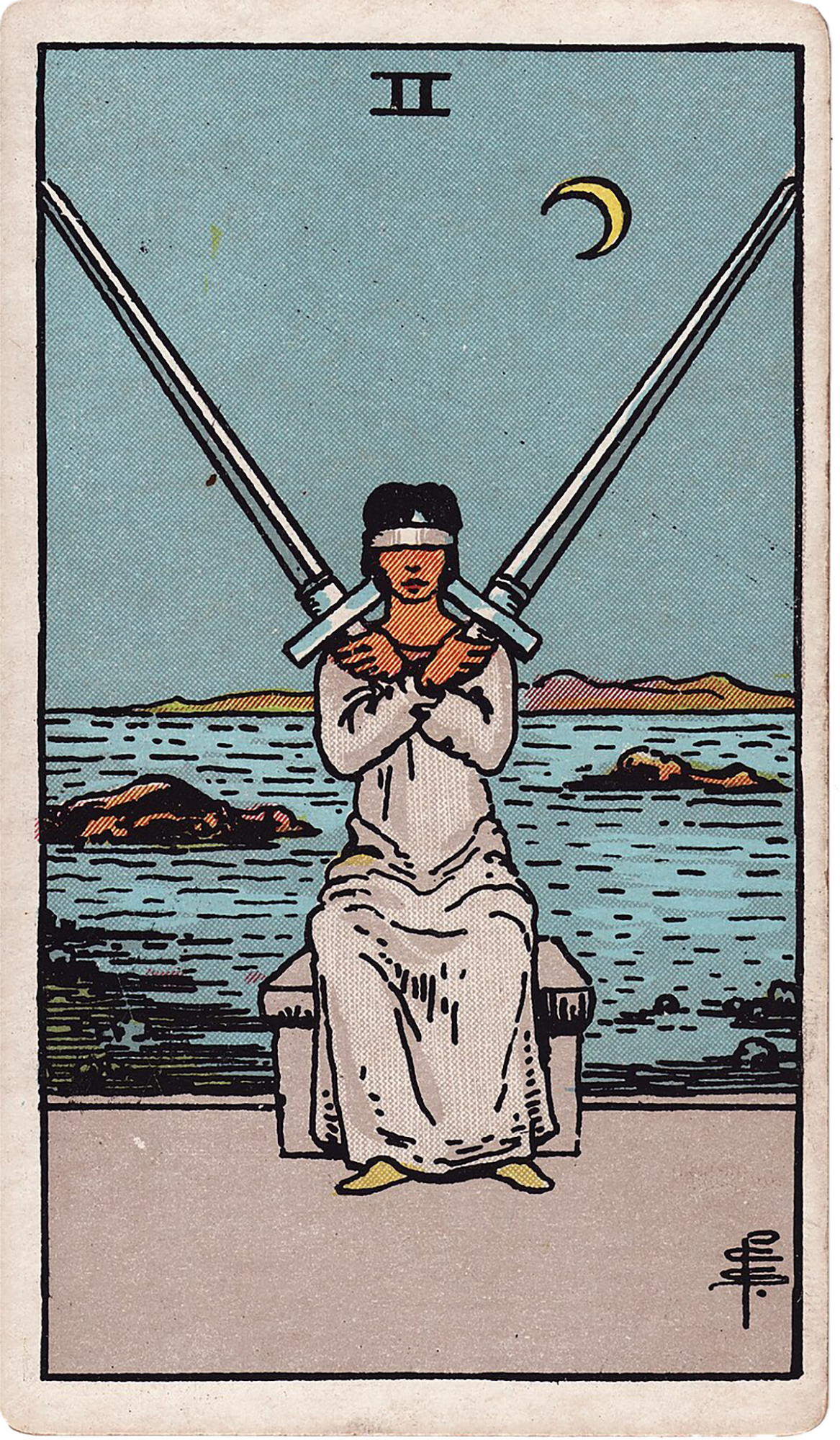 2 of Swords
Introduction to the 2 of Swords and Its Core Symbolism
The 2 of Swords belongs to the suit of Swords, a suit traditionally linked to thought, communication, conflict, and decision-making. The card typically depicts a figure blindfolded, holding two crossed swords, often seated by water—symbolizing emotional undercurrents. This imagery embodies the tension between intellect and emotion, representing a state where a decision is pending but unresolved. Upright, the card signals that a choice is held in suspension because available information or emotional readiness feels incomplete. It is practical rather than idealistic and invites the querent to respond appropriately to their present reality. The figure’s blindfold suggests a need to trust intuition or to acknowledge what is not yet visible. Water behind the figure reflects underlying emotions that affect mental clarity. Understanding this foundational symbolism is essential before exploring how the card’s meaning shifts across different life contexts.
Upright 2 of Swords Meaning and Practical Application
When the 2 of Swords appears upright, it emphasizes a moment of pause and contemplation. Decision-making is in limbo, often because the querent lacks all the facts or emotional readiness to proceed. This is not a call for rash action but for careful weighing of options and acknowledgment of inner conflict. The card’s association with the Swords suit highlights cognitive skills—thinking, communication, and mental strategy—as tools to move forward. The crossed swords can represent a stalemate or a protective barrier, signaling defense mechanisms that may need softening. Practically, this card advises observing where indecision manifests in one’s life and considering what additional information or emotional processing is needed. It can indicate that while discomfort is present, the core issue can be named and addressed through honest dialogue or mental clarity.
Reversed 2 of Swords Meaning and Identifying Stuck Points
The reversed 2 of Swords draws attention to avoidance, denial, or decision fatigue. Unlike simply being the opposite of the upright meaning, the reversal often signals that the decision-making process has become stuck or dysfunctional. The querent may be overwhelmed by choices, unwilling to face uncomfortable truths, or caught in a stalemate breaking with difficulty. The reversal invites the reader to ask what needs to be simplified, acknowledged, or communicated to regain balance. It may also indicate internal conflicts hidden from others, emphasizing self-honesty and emotional integration. Recognizing these stuck points can help the querent release mental blocks and move toward healthier decision-making patterns.
Interpreting the 2 of Swords in Love and Relationships
In a love context, the upright 2 of Swords often reveals a moment where a relationship decision is pending. The blindfolded figure suggests that one or both partners lack full clarity or are emotionally guarded. This card encourages recognizing where emotions may be influencing the ability to make clear decisions. It might indicate a need to pause and gather more information before committing or ending a relationship. Communication skills and honest reflection are paramount here. Reversed, this card highlights avoidance of difficult conversations, denial of feelings, or decision fatigue within the relationship. It warns against forced choices made out of pressure rather than readiness. The card encourages breaking stalemates by fostering open, compassionate dialogue and emotional vulnerability.
Career and Work Life Insights from the 2 of Swords
In career readings, the upright 2 of Swords suggests a crossroads where a crucial decision or strategic choice is being held back, often due to incomplete facts or uncertainty about next steps. It advises the querent to carefully weigh options, avoid rushing, but remain aware of the mental blocks causing hesitation. The crossed swords symbolize balancing competing priorities or conflicting goals. The card’s practical energy encourages using mental skills and communication to clarify ambiguity. Reversed, the card can indicate burnout, decision fatigue, or avoidance of necessary changes in the professional sphere. It may show that the querent is overwhelmed by choices or fears the consequences of action, causing stagnation. This calls for prioritizing clarity, seeking external advice, or simplifying options to regain momentum.
Financial Decision Making Through the Lens of the 2 of Swords
When drawn in financial contexts, the upright 2 of Swords highlights indecision around money matters. Whether it is investment, budgeting, or spending, the card suggests a pause because the querent may feel unprepared or lack all necessary facts. It encourages practical assessment and avoiding impulsive decisions driven by fear or emotion. The card’s imagery suggests the need to lift the blindfold metaphorically—gaining clearer insight into financial realities. Reversed, the card warns of denial about financial troubles, decision fatigue caused by competing demands, or forced financial choices under pressure. It advocates for confronting financial realities honestly, seeking expert advice if needed, and simplifying complex money issues to restore balance.
Advice and Challenge Contexts Using the 2 of Swords
As advice, the upright 2 of Swords counsels patience and gathering more information before making a decision. It encourages the querent to balance head and heart, respect the present moment, and resist pressure to act prematurely. The card also advises confronting any emotional blind spots and being willing to communicate honestly with oneself and others. As a challenge, the card exposes the difficulty of overcoming indecision or mental stalemate. It may highlight fear of conflict or discomfort with uncertainty. Recognizing these challenges allows the querent to take constructive steps toward clarity, such as journaling, seeking counsel, or creating lists of pros and cons.
Person and Outcome Interpretations of the 2 of Swords
When the 2 of Swords represents a person, it often points to someone who is emotionally guarded, indecisive, or caught between conflicting thoughts or feelings. This person might appear balanced externally but internally holds tension and uncertainty. Upright, they may be in the process of thoughtful reflection before action; reversed, they might be avoiding decisions or overwhelmed by mental conflict. As an outcome card, the 2 of Swords suggests a situation where resolution will come through careful, balanced decision-making rather than impulsive moves. It often indicates that the querent will need to face difficult truths and balance logic with emotion to reach a satisfactory conclusion.
Spiritual Reflection and Inner Balance with the 2 of Swords
Spiritually, the 2 of Swords invites reflection on inner balance between mind and heart. The blindfold signals the need to trust intuition, acknowledge unseen emotional currents, and avoid intellectualizing spiritual growth prematurely. Upright, it encourages embracing the pause in spiritual evolution as a necessary step to integrate lessons fully. The card asks readers to notice where mental habits may block spiritual insight and to cultivate clear communication with the self. Reversed, it challenges the querent to face denial or avoidance of spiritual truths, highlighting areas where inner conflict prevents growth. It calls for simplification of spiritual practice, honest self-examination, and release of mental resistance.
Common Reading Mistakes and How to Avoid Them
A frequent mistake when interpreting the 2 of Swords is viewing it purely as a negative card signaling indecision or weakness. Instead, this card often represents a healthy pause or necessary balance. Another error is treating the reversed card as simply the opposite meaning rather than examining where the decision process is stuck. Readers should avoid pushing for immediate answers and instead encourage querents to explore what information or emotional readiness is lacking. It is important not to overlook the card’s positive connection to mental skills such as strategy and communication. Anchoring interpretations repeatedly in the card’s visual elements—the blindfold, crossed swords, water—helps maintain accuracy and depth.
Practical Method for Reading the 2 of Swords Effectively
To read the 2 of Swords effectively, first observe the card’s imagery closely: consider the significance of the blindfold, the posture of the figure, the crossing swords, and the surrounding water. Determine whether the card is upright or reversed and apply the corresponding themes. Then place the card in the context of the question or spread position—love, career, advice, etc. Ask what decision is being held and why it’s in suspension. Identify what mental or emotional information is missing or blocked. Use the card’s association with communication and thought to explore internal conflicts or external dialogues that need attention. Encourage querents to consider both intellectual and emotional readiness, and to view discomfort as a signpost rather than a barrier. Integrate insight from surrounding cards to gauge whether the decision process is beginning, developing, or nearing resolution.
Practice questions
• Where in my life am I currently holding a decision in suspension due to incomplete information or emotions?
• What fears or mental habits might be causing avoidance or denial around a difficult choice?
• How can I balance intellectual analysis with emotional intuition when facing conflicts?
• In what ways might I be guarding myself with crossed swords instead of opening to communication?
• What practical steps can I take to simplify a complex decision and move toward clarity?
Comments
Sign in to comment.
Continue learning
Understanding the Synergy Between The Empress and The Emperor in Tarot Card Combinations
This article delves into the intricate synergy between The Empress and The Emperor cards in Tarot, focusing on how their combined energies modify and enrich readings across various...
Exploring The High Priestess in Career Relationships and Personal Growth
The High Priestess card in the tarot deck invites readers to explore intuition, hidden knowledge, and inner wisdom across various life contexts. This article examines how The High...
Using the Five Card Cross Tarot Spread to Navigate Career Changes with Confidence
The Five Card Cross Tarot Spread is a versatile and insightful tool for navigating career changes. This article guides learners through the method step-by-step using a practical ex...
Exploring The Hierophant in Modern Spiritual Practices and Personal Development
The Hierophant tarot card symbolizes structured wisdom, tradition, and the pursuit of knowledge through established systems. This article explores how The Hierophant’s upright and...
Unlocking Personal Ambition and Emotional Balance with The Chariot and Queen of Cups
The Chariot and Queen of Cups together represent a compelling combination of disciplined ambition and emotional maturity. This article guides learners through understanding how the...
Understanding The Tower in Tarot for Navigating Sudden Change and Crisis
The Tower card in Tarot symbolizes sudden, often disruptive change that destroys false foundations and compels honest reassessment. This article provides a comprehensive exploratio...
Understanding The Hanged Man in Personal Sacrifice and Spiritual Growth
The Hanged Man tarot card embodies the themes of intentional pause, surrender, and gaining new perspectives that foster personal sacrifice and spiritual growth. In this article, we...
Discovering The Hermit in Meditation and Self Reflection Practices
The Hermit tarot card, a symbol of introspection and deliberate solitude, offers profound lessons for meditation and self-reflection practices. This article unpacks its upright and...
Unlocking Emotional Balance with The Lovers and Temperance in Tarot Combinations
This article explores the dynamic interplay between The Lovers and Temperance cards in Tarot readings, focusing on how their combination unlocks emotional balance and integration....
Understanding the Court Cards of Pentacles for Practical Wisdom and Grounded Ambition
The Court Cards of Pentacles—Page, Knight, Queen, and King—offer a rich framework for understanding practical wisdom, grounded ambition, and stewardship of material resources. Anch...