
Understanding the Death Card for Personal Transformation and New Beginnings
This article provides a comprehensive exploration of the Death card in the Tarot, focusing on its role in personal transformation and new beginnings. Using the upright and reversed meanings supplied by the VoxFati Tarot Library, readers will learn how to interpret this powerful card across different contexts such as love, career, money, advice, challenge, person, outcome, and spiritual reflection. The article emphasizes practical methods for working with the card’s symbolism, common interpretative pitfalls, and how the traditional Rider-Waite-Smith imagery grounds these lessons in vivid, accessible understanding.
Cards explored in this article
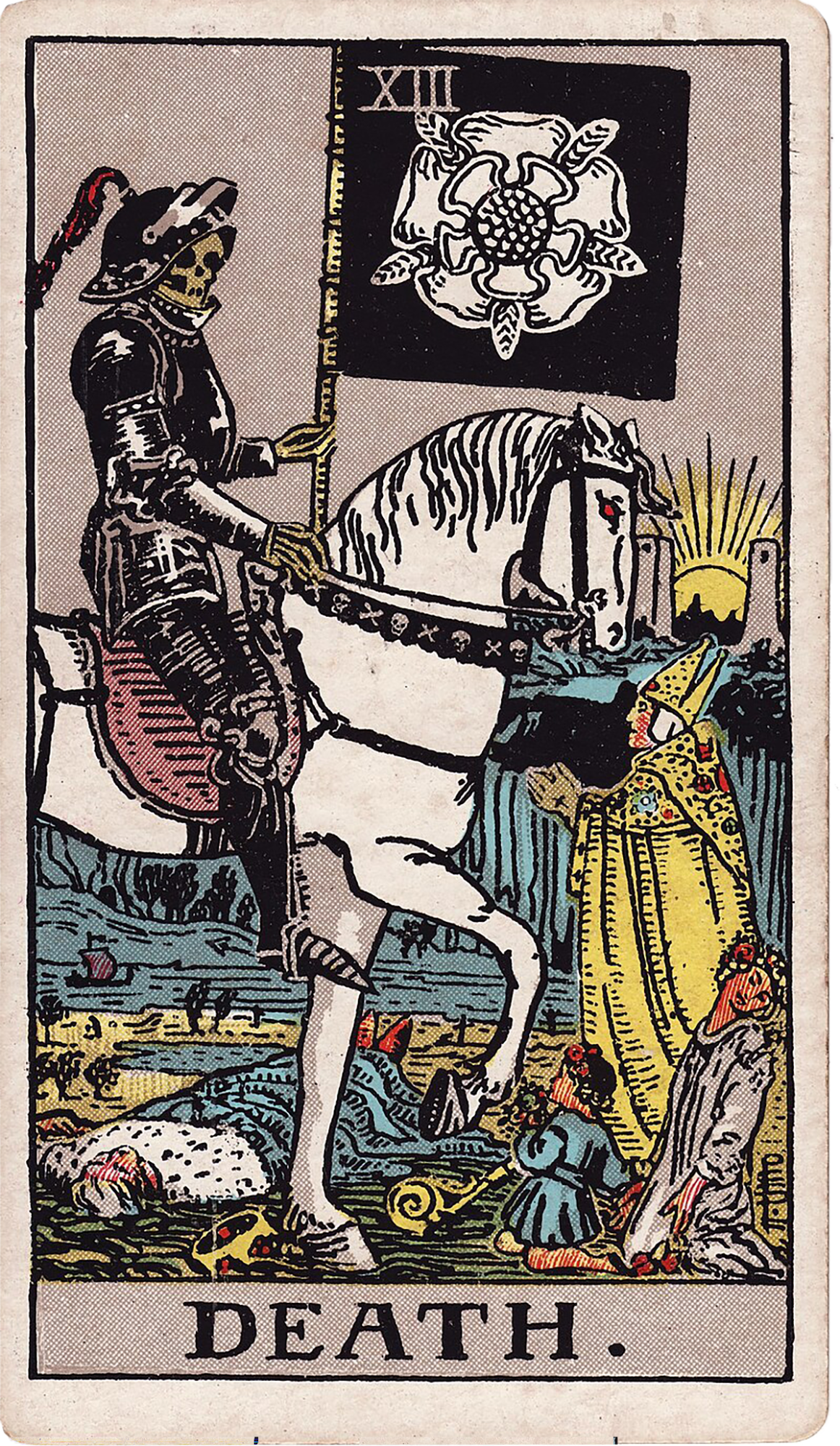 Death
Introduction to the Death Card and Its Symbolism
The Death card, traditionally numbered XIII in the Major Arcana, is one of the most misunderstood cards in the Tarot deck. Its imagery, notably from the Rider-Waite-Smith deck, features a skeletal figure in black armor riding a white horse, carrying a black banner emblazoned with a white rose. This striking visual is rich in symbolism: the skeletal figure represents the inevitability of change and the stripping away of the old, while the white horse symbolizes purity and the unstoppable energy of transformation. The black banner’s white rose signifies life and beauty emerging from endings. Contrary to popular fear, Death rarely signifies physical death. Instead, it emphasizes the necessity of allowing endings to be fully acknowledged and accepted, which clears the way for transformation and new beginnings. The provided VoxFati Tarot Library context perfectly aligns with this interpretation, highlighting the card’s call to engage consciously with change rather than resist it.
Technique for Reading the Death Card in Single-Card Contexts
When reading the Death card as a single-card draw, the focus is on understanding the quality of transformation and endings that the card encourages. Start by noting whether the card appears upright or reversed, as each position nuances the message. Upright, Death encourages releasing what has run its course and making space for new growth. Reversed, it signals resistance, clinging to the past, or a delayed transition. The reader should ask: Where is the querent at in their process of letting go or embracing change? What boundaries, choices, or honest reflections are needed to move forward? Because this card deals with profound inner and outer transitions, it is important to connect the symbolism with the querent’s current life context. Use the imagery to evoke the necessary psychological or situational shift—notice the white rose as a symbol of hope amid endings, or the horse’s movement as a metaphor for forward momentum even when it feels difficult.
Interpreting the Death Card in Love and Relationships
In the context of love and relationships, the Death card signals a pivotal change. Upright, it suggests that an old phase or pattern in the relationship is ending—this could be letting go of unhealthy attachments, outdated roles, or emotional baggage. It invites the querent to acknowledge that this ending is necessary to make room for new dynamics or personal growth. For example, if someone is struggling to move on from a past partner, the card encourages conscious release rather than denial. The imagery of the black armor and white horse can symbolize the strength and purity needed to face emotional truth. Reversed, Death may indicate clinging to a relationship that no longer serves, fear of breakup, or an inability to transition emotionally. It asks the reader to explore where fear or denial might be blocking progress. This could manifest as repeating old patterns or resisting necessary conversations about change.
Career and Work Contexts with the Death Card
When Death appears in a career reading, it often points to the end of a job, project, or professional phase. Upright, it encourages embracing this ending as an opportunity for transformation—perhaps by upskilling, changing fields, or re-evaluating goals. The card suggests that clarity about the current situation has emerged, making it possible to take a deliberate next step. The horse’s forward movement in the card’s imagery reflects momentum through change, even if the path ahead is uncertain. A common mistake is to read this card as simply bad news; instead, think of it as a call to consciously engage with endings and proactively shape what comes next. Reversed, Death may signal resistance to leaving a job, fear of uncertainty, or stubbornness in holding onto outdated career ideas. This blockage can cause stagnation and emotional distress, suggesting the need for psychological reflection or boundary-setting to move forward.
Money and Financial Readings Involving the Death Card
In financial readings, the Death card highlights transitions in money matters. Upright, it can indicate the end of a financial cycle—such as paying off debt, concluding a financial partnership, or divesting from an investment. The card encourages releasing old habits around money that no longer serve, such as impulsive spending or fear-driven saving. The white rose in the card’s banner reminds us that endings in finance can lead to healthier, more balanced new beginnings. Pay attention to the advice embedded in the card: engaging consciously with what is available now, rather than waiting for ideal conditions. Reversed, Death warns of clinging to unsustainable financial patterns or denial about financial realities. It may also reflect internalized anxiety about money, which obstructs practical steps toward change.
Advice and Challenge When Drawing the Death Card
As advice, the Death card urges the querent to accept endings fully and to create deliberate space for transformation. This might mean setting clearer boundaries, practicing deeper honesty with oneself and others, or making a conscious choice rather than waiting passively for change. The card’s imagery supports this by emphasizing that transformation is an active, not a passive, process. The skeletal figure does not negotiate but moves forward regardless. As a challenge, Death asks the querent to identify where they might be resisting necessary change or holding onto outdated beliefs or situations. Reversed, the card challenges us to examine internal blocks, fear, or denial that make letting go difficult. Practically, this might involve journaling, therapy, or ritual work to confront and release stuck energy.
Person and Outcome Interpretations of the Death Card
When the Death card represents a person, it often characterizes someone who embodies transformative energy—someone who brings change, endings, or new beginnings into the querent’s life. Upright, this person may be a catalyst for growth, encouraging honest confrontation with what no longer serves. The horse and armor imagery suggest resilience and clarity of purpose. Reversed, the person might be resistant to change or stuck in old patterns, potentially creating tension or delays in transformation. As an outcome card, Death promises that a significant ending or transformation is imminent or necessary. Upright, it guides the querent toward conscious engagement with this process and highlights the inevitability of change. Reversed, it may denote delays or emotional resistance, signaling the need for further inner work before the transition can complete.
Spiritual Reflection and the Death Card
Spiritually, the Death card calls attention to profound inner transformation—death of ego identities, old belief systems, or attachments that inhibit spiritual growth. Upright, it invites the reader to embrace the process of spiritual renewal, trusting that endings foster rebirth and deeper authenticity. The Rider-Waite-Smith’s stark imagery reminds us that spiritual death is a clearing away, a necessary shedding of illusions and attachments. Reversed, the card may point to spiritual stagnation, fear of surrender, or clinging to outdated spiritual beliefs or practices. It asks the querent to reflect on where resistance limits their spiritual evolution and to consider what intentional practice or honesty is needed to move forward.
Common Mistakes and How to Avoid Them
A frequent mistake when interpreting the Death card is to assume literal physical death or to panic when it appears. Instead, focus on the card’s thematic core—transformation through endings. Another error is neglecting the card’s upright or reversed position, which significantly alters the message. Ignoring the card’s context within the querent’s life can also lead to shallow readings; always anchor the interpretation to the specific question or area of life. Also, avoid reading the card as a guarantee but rather as a prompt to deeper inquiry—ask how endings or transitions might be unfolding or resisted. Practically, always engage the querent in exploring what they are ready to release and how they can consciously choose their next step.
Practical Methods for Working with the Death Card
To work effectively with the Death card, start by meditating on the card’s imagery—notice the stark contrasts, the symbols of purity and inevitability, the horse’s forward momentum. Journaling prompts can include: What endings am I avoiding? What parts of my life need transformation? What am I ready to release? In readings, encourage querents to identify concrete actions or mindset shifts that align with the card’s call for conscious engagement with change. Use the card as a tool to mark phases—knowing when it is time to let go and when to prepare for new growth. If reversed, explore what resistance or fear is present and how it might be addressed compassionately. Rituals that honor endings—such as writing goodbye letters or symbolic burning of old attachments—can complement intellectual understanding with embodied experience.
Practice questions
• What endings in my life am I currently resisting or avoiding?
• How can I create space for transformation and new opportunities?
• Where do I need clearer boundaries or deeper honesty to move forward?
• In what ways might fear of change be blocking my personal growth?
• How can I consciously engage with transitions instead of waiting passively?
• What old patterns or beliefs no longer serve me and need release?
• How does the imagery of the Death card resonate with my current situation?
• What practical next steps align with the lessons of transformation the card suggests?
Comments
Sign in to comment.
Continue learning
Understanding the Synergy Between The Empress and The Emperor in Tarot Card Combinations
This article delves into the intricate synergy between The Empress and The Emperor cards in Tarot, focusing on how their combined energies modify and enrich readings across various...
Exploring The High Priestess in Career Relationships and Personal Growth
The High Priestess card in the tarot deck invites readers to explore intuition, hidden knowledge, and inner wisdom across various life contexts. This article examines how The High...
Using the Five Card Cross Tarot Spread to Navigate Career Changes with Confidence
The Five Card Cross Tarot Spread is a versatile and insightful tool for navigating career changes. This article guides learners through the method step-by-step using a practical ex...
Exploring The Hierophant in Modern Spiritual Practices and Personal Development
The Hierophant tarot card symbolizes structured wisdom, tradition, and the pursuit of knowledge through established systems. This article explores how The Hierophant’s upright and...
Unlocking Personal Ambition and Emotional Balance with The Chariot and Queen of Cups
The Chariot and Queen of Cups together represent a compelling combination of disciplined ambition and emotional maturity. This article guides learners through understanding how the...
Understanding The Tower in Tarot for Navigating Sudden Change and Crisis
The Tower card in Tarot symbolizes sudden, often disruptive change that destroys false foundations and compels honest reassessment. This article provides a comprehensive exploratio...
Understanding The Hanged Man in Personal Sacrifice and Spiritual Growth
The Hanged Man tarot card embodies the themes of intentional pause, surrender, and gaining new perspectives that foster personal sacrifice and spiritual growth. In this article, we...
Discovering The Hermit in Meditation and Self Reflection Practices
The Hermit tarot card, a symbol of introspection and deliberate solitude, offers profound lessons for meditation and self-reflection practices. This article unpacks its upright and...
Unlocking Emotional Balance with The Lovers and Temperance in Tarot Combinations
This article explores the dynamic interplay between The Lovers and Temperance cards in Tarot readings, focusing on how their combination unlocks emotional balance and integration....
Understanding the Court Cards of Pentacles for Practical Wisdom and Grounded Ambition
The Court Cards of Pentacles—Page, Knight, Queen, and King—offer a rich framework for understanding practical wisdom, grounded ambition, and stewardship of material resources. Anch...