
Understanding The Hermit Card for Inner Reflection Solitude and Spiritual Clarity in Diverse Life Contexts
This article provides an in-depth exploration of The Hermit card from the Rider-Waite-Smith tarot deck, emphasizing its core themes of inner reflection, solitude, and spiritual clarity. It explores how the card’s upright and reversed meanings shift across different life contexts including love, career, money, advice, challenges, person description, outcome, and spiritual reflection. Through detailed examination of the card’s symbolism and practical reading techniques, learners will gain clarity on how to use The Hermit constructively in their tarot practice and personal insight.
Cards explored in this article
 The Hermit
Introduction to The Hermit Card and Its Symbolism
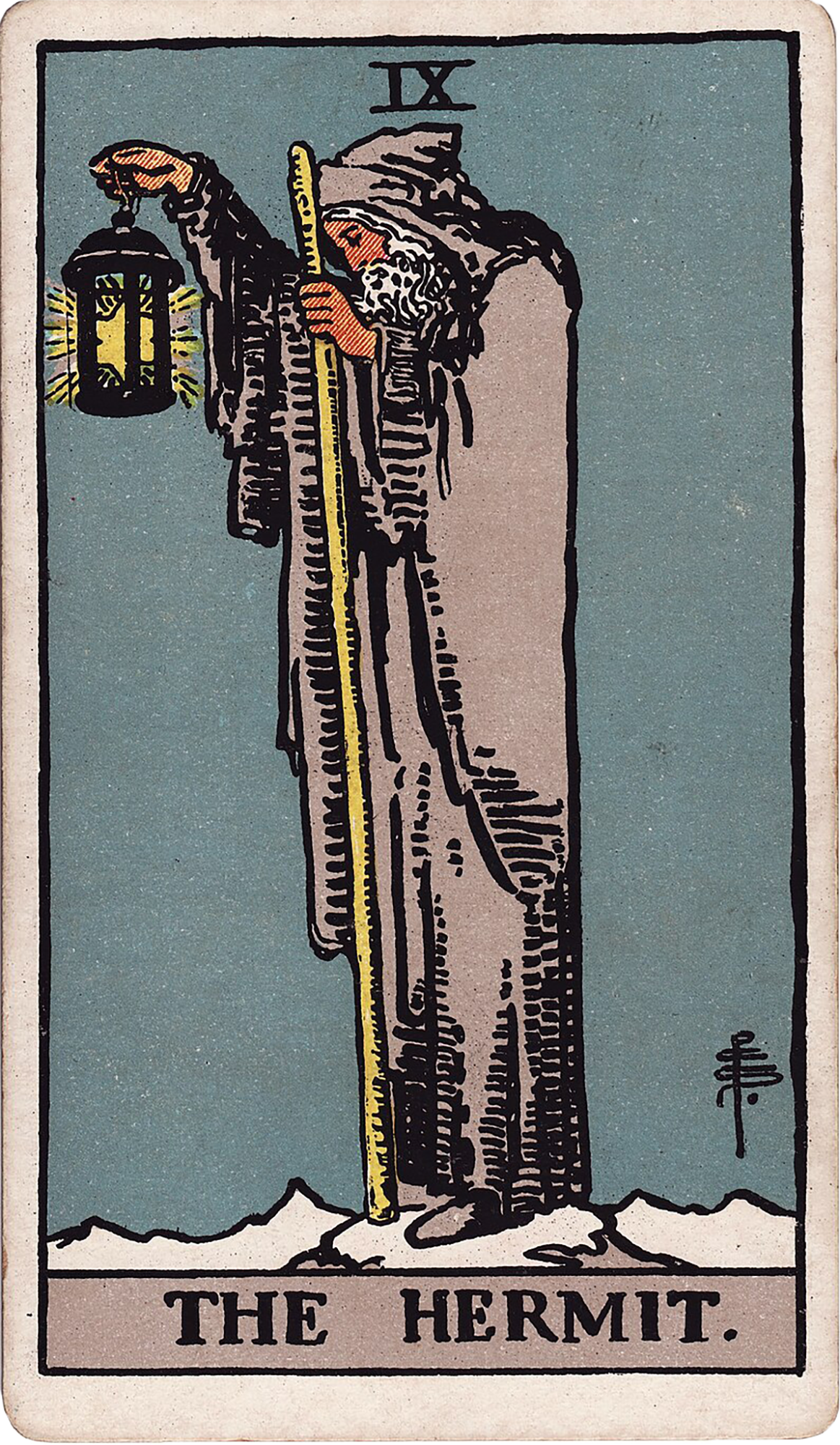
The Hermit card, numbered IX in the Major Arcana of the Rider-Waite-Smith deck, is rich in symbolism representing introspection, solitude, and spiritual search. Traditionally depicted as an elderly figure cloaked in a gray robe, standing alone on a mountain peak, The Hermit holds a lit lantern in one hand and a staff in the other. The lantern symbolizes inner wisdom and enlightenment, lighting the way through darkness, while the staff supports the figure on their solitary journey. The gray cloak indicates neutrality and detachment, essential for unbiased inner reflection. The mountain setting reflects spiritual heights and challenges. Together, these elements emphasize the Hermit's role as a guide who has withdrawn from the noise of the world to seek clarity and insight. Understanding these visual cues is the first step to interpreting The Hermit’s message in any reading.
Core Meanings Upright and Reversed
In its upright position, The Hermit calls for stepping back from external distractions to engage in deliberate contemplation and self-examination. It stresses the value of solitude as a constructive space for gaining clarity. This quiet reflection is not about passivity or escape but about consciously engaging with the inner self to reveal truths that can inform deliberate choices. The card encourages working with what is present now rather than waiting for perfect conditions, highlighting the emergence of awareness about the core issue. Reversed, The Hermit often signals problematic withdrawal, isolation that leads to loneliness or avoidance, and excessive introspection that can block action. The reversed card can reveal where the healthy qualities of the upright card are distorted, exaggerated, or inaccessible. It may mark a phase of resistance to necessary participation or the beginning of recognizing an old but unresolved internal pattern. Reading reversal effectively means looking carefully at surrounding cards and the querent's context to decide if this is a temporary pause, a deepening internal process, or a sign of imbalance.
Techniques for Reading The Hermit in Single Card Contexts
When The Hermit appears alone in a reading, the reader’s goal is to extract the card’s full meaning based on the querent’s question and life context. Begin by observing the card’s upright or reversed position, then anchor the interpretation in the card’s essential symbolism: the lantern’s light, the staff’s support, the solitude, and the mountain’s height. Ask what areas of the querent’s life require stepping back or deeper honesty. Evaluate which aspect of solitude or inner wisdom the card invites the querent to embrace or reconsider. Avoid common mistakes such as assuming The Hermit means isolation in a negative sense regardless of position, or interpreting the card as a sign that the querent should simply 'wait it out' without action. The Hermit encourages intentional action based on insight, not passivity. Practical steps include identifying the 'next proportionate step' to move forward and noticing which Hermit qualities are already present in the querent’s approach. This technique allows layered, nuanced readings even with a single card.
Interpreting The Hermit in Love Contexts
In matters of love, The Hermit upright suggests a period where reflection and solitude can clarify feelings and relationship dynamics. It may indicate a need to withdraw temporarily to evaluate what is truly needed from a partner or oneself. This reflection can lead to deeper honesty and clearer boundaries, helping the querent move beyond superficial noise. The Hermit advises focusing on authentic connection rather than external expectations or distractions. Reversed, The Hermit may warn of unhealthy emotional withdrawal—such as shutting down communication or isolating oneself to avoid vulnerability. It can signal loneliness even in relationships or reluctance to confront difficult emotional truths. The key question is where avoidance might be impeding growth or where more balanced engagement is necessary. For single querents, The Hermit often encourages inner work before pursuing new connections. It’s not a definitive statement about love’s presence or absence but about the readiness for authentic relational openness.
The Hermit’s Role in Career and Money Readings
Upright, The Hermit in career contexts urges stepping back to assess professional goals, values, and available resources before rushing forward. The card suggests using current knowledge and what is accessible now to make deliberate, well-thought-out choices. The Hermit’s lantern symbolizes insight that illuminates hidden opportunities or issues that might otherwise be overlooked amid busy work life. It encourages the querent to seek mentorship, study, or quiet planning rather than impulsive moves. In financial readings, The Hermit can represent a cautious approach: saving, analyzing spending patterns, or re-evaluating financial priorities in solitude. It is a reminder to trust internal wisdom and avoid external pressures or get-rich-quick schemes. Reversed, The Hermit warns against overthinking to the point of paralysis or isolating oneself from helpful collaboration. It may highlight avoidance of necessary financial decisions or denial of career realities. The reversal asks where the querent might be ignoring useful feedback or stuck in unproductive solitary routines.
Advice and Challenge Interpretations
As advice, The Hermit encourages the querent to embrace intentional solitude and reflection as tools for gaining clarity and making better decisions. It advises conscious disengagement from external noise to deepen understanding of the core issue. Practically, this might mean scheduling quiet time, journaling, meditation, or retreating from social media and distractions. When The Hermit appears as a challenge, it often signals difficulty in balancing solitude and connection. The querent might be struggling with loneliness, avoidance, or excessive analysis that prevents action. The challenge lies in transforming solitary reflection into constructive insight without descending into isolation or escapism. Recognizing when reflection has become rumination is critical here. In both scenarios, the card asks readers to discern which Hermit energy is present and how it can be cultivated or corrected.
Describing a Person Through The Hermit
When The Hermit describes a person, it represents someone introspective, wise, and possibly older or mature beyond years. This individual values solitude and may prefer working behind the scenes or in quiet roles. They often serve as a counselor, guide, or mentor, offering insight through experience and thoughtful observation. The staff and lantern symbolize their support and illumination for others. If reversed, the person may be reclusive to a fault, possibly withdrawn, socially isolated, or stuck in old mental patterns. They might resist engaging with others or sharing their wisdom. Understanding the nature of this person's solitude—whether healthy or problematic—is key to interpreting their role in the querent’s life.
Outcome and Spiritual Reflection
As an outcome card, The Hermit suggests that the resolution of the query will come through introspection and conscious disengagement from distractions. Success or clarity depends not on external circumstances alone but on the querent’s willingness to engage with inner wisdom and deliberate choice. The outcome may require patience and acceptance that insight evolves over time. Spiritually, The Hermit is a powerful symbol of the seeker’s journey toward enlightenment and self-knowledge. The mountain peak signifies elevated consciousness, while the lantern represents the light of inner truth guiding the path. Whether upright or reversed, the card invites the querent to reflect on their spiritual solitude: Are they using it to grow or to avoid? Are they open to the hard work of honest self-examination? The Hermit calls for embracing solitude as a sacred space for transformation.
Practice questions
• In which areas of my life might I benefit from stepping back and reflecting more deeply?
• Am I using solitude as a constructive tool for insight or as a way to avoid engagement?
• What truths might I be avoiding that require clearer boundaries or more honesty?
• How can I balance inner reflection with practical action in my current situation?
• What does the lantern’s light reveal about my path forward amid uncertainty?
• Who in my life reflects the qualities of The Hermit, and what can I learn from them?
• Am I open to spiritual growth through solitude, or am I resisting uncomfortable inner work?
Comments
Sign in to comment.
Continue learning
Understanding the Synergy Between The Empress and The Emperor in Tarot Card Combinations
This article delves into the intricate synergy between The Empress and The Emperor cards in Tarot, focusing on how their combined energies modify and enrich readings across various...
Exploring The High Priestess in Career Relationships and Personal Growth
The High Priestess card in the tarot deck invites readers to explore intuition, hidden knowledge, and inner wisdom across various life contexts. This article examines how The High...
Using the Five Card Cross Tarot Spread to Navigate Career Changes with Confidence
The Five Card Cross Tarot Spread is a versatile and insightful tool for navigating career changes. This article guides learners through the method step-by-step using a practical ex...
Exploring The Hierophant in Modern Spiritual Practices and Personal Development
The Hierophant tarot card symbolizes structured wisdom, tradition, and the pursuit of knowledge through established systems. This article explores how The Hierophant’s upright and...
Unlocking Personal Ambition and Emotional Balance with The Chariot and Queen of Cups
The Chariot and Queen of Cups together represent a compelling combination of disciplined ambition and emotional maturity. This article guides learners through understanding how the...
Understanding The Tower in Tarot for Navigating Sudden Change and Crisis
The Tower card in Tarot symbolizes sudden, often disruptive change that destroys false foundations and compels honest reassessment. This article provides a comprehensive exploratio...
Understanding The Hanged Man in Personal Sacrifice and Spiritual Growth
The Hanged Man tarot card embodies the themes of intentional pause, surrender, and gaining new perspectives that foster personal sacrifice and spiritual growth. In this article, we...
Discovering The Hermit in Meditation and Self Reflection Practices
The Hermit tarot card, a symbol of introspection and deliberate solitude, offers profound lessons for meditation and self-reflection practices. This article unpacks its upright and...
Unlocking Emotional Balance with The Lovers and Temperance in Tarot Combinations
This article explores the dynamic interplay between The Lovers and Temperance cards in Tarot readings, focusing on how their combination unlocks emotional balance and integration....
Understanding the Court Cards of Pentacles for Practical Wisdom and Grounded Ambition
The Court Cards of Pentacles—Page, Knight, Queen, and King—offer a rich framework for understanding practical wisdom, grounded ambition, and stewardship of material resources. Anch...