
Understanding The Hierophant in Tradition Spirituality and Modern Decision Making
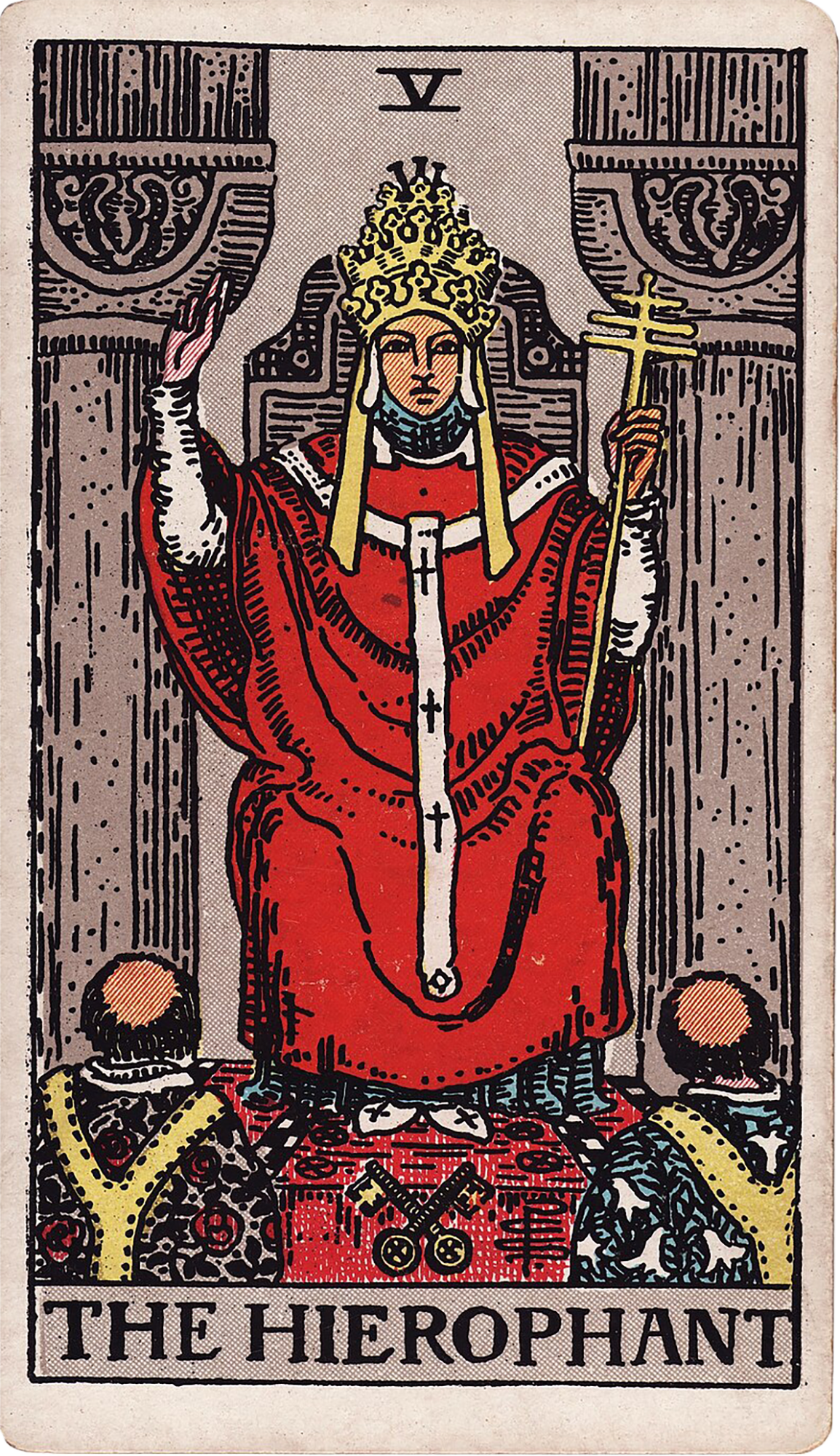
The Hierophant card stands as a powerful symbol of tradition, spiritual authority, and structured learning within the Rider-Waite-Smith tarot deck. This article delves deeply into The Hierophant’s upright and reversed meanings, exploring how its themes manifest differently across various life contexts such as love, career, financial matters, advice, challenges, personal archetypes, outcomes, and spiritual reflections. By focusing on the supplied depiction of The Hierophant card, readers are introduced to practical techniques for interpreting its symbolism, common pitfalls, and how to use this card as a tool for conscious decision making and inner growth rather than deterministic fortune telling.
Cards explored in this article
 The Hierophant
 in Tradition and Symbolism
The Hierophant is traditionally portrayed seated between two pillars, wearing ceremonial robes and a triple crown, holding a staff with three crossbars, and blessing with two fingers raised. This imagery encapsulates themes of spiritual authority, formalized knowledge, and mediation between the sacred and the mundane. The card’s connection to religious hierarchies, organized institutions, and societal norms is clear. The two columns flank the figure, symbolizing duality balanced by wisdom passed through tradition. At its core, The Hierophant represents learning from established wisdom and applying structured systems to guide ethical and practical decisions. In the Rider-Waite-Smith deck, the five fingers raised on the hand also symbolize the five senses, hinting at the importance of experience within tradition. Thus, the card invites the querent to consider the value and limits of inherited knowledge.
Upright Meaning and Constructive Qualities
When The Hierophant appears upright, it encourages engagement with what is established and known. It asks us to seek qualified guidance rather than reinventing the wheel. This might mean consulting a mentor, adhering to ethical codes, or understanding a system’s rules before acting. The upright Hierophant does not guarantee ease; instead, it highlights the quality of disciplined learning and conscious choice-making within existing frameworks. Practically, the card signals that the core issue is now visible and invites a proportionate response. For example, in a career context, it may suggest formal training or compliance with professional standards. The imagery of the key-bearing figure reminds us that unlocking progress often requires respect for structure and tradition rather than impulsive rebellion.
Reversed Meaning and Energy Distortions
The reversed Hierophant shifts focus to the shadow side of tradition and conformity. Here, dogma, empty rituals, or blind obedience might block growth. The reversal may also indicate rebellion without understanding or a refusal to engage with established wisdom. However, the reversed card is not inherently negative; it often points to where the upright qualities are delayed or unbalanced. For instance, the querent might privately wrestle with internalized rules or be in the process of questioning old patterns without fully breaking free. The card thus acts as a signpost for psychological correction or resistance. Observing the card’s reversal alongside surrounding cards can clarify whether the energy is destructive, recuperative, or a temporary pause in adherence to tradition.
Interpreting The Hierophant in Love and Relationships
In love readings, The Hierophant upright represents commitment, shared values, and the importance of tradition within a relationship. It may highlight formal unions like marriage or indicate a relationship grounded in mutual respect for cultural or family norms. The imagery suggests a relationship built on shared spiritual or moral frameworks, encouraging honesty and deliberate choices that honor these structures. Conversely, reversed, the card may warn of rigid expectations, pressure to conform, or rebellion against traditional romantic roles. It could also suggest a private struggle with internalized beliefs about love and partnership. When reading The Hierophant in love, ask where clarity, deliberate choice, or clear boundaries might improve the relationship dynamic.
Career Contexts and The Hierophant’s Guidance
In career contexts, the upright Hierophant guides querents toward formal education, mentorship, or adherence to professional ethics and rules. It encourages learning established methods and respect for hierarchical structures. The card’s imagery of the staff and crossed keys underscores the unlocking of opportunity through discipline and respect for institutional wisdom. Reversed, the card may indicate conflict with rigid workplace norms, dissatisfaction with bureaucratic structures, or feeling stifled by dogmatic leadership. It might also signal a need to question whether institutional conformity aligns with personal values. Practical reading involves discerning whether embracing tradition will aid progress or if challenging outdated systems is necessary for growth.
Financial Readings with The Hierophant
Financially, The Hierophant upright suggests conservative, well-considered money management built on tested principles. It favors investments aligned with long-term security and established institutions. The card’s symbolism promotes seeking professional advice or following conventional wisdom rather than speculative risks. Reversed, it warns against blindly following financial advice without critical thinking or becoming trapped in outdated money habits. It may also point to rebellion against financial orthodoxy or hidden psychological blocks related to money. The visual cues of keys and pillars remind us that financial wisdom often requires unlocking knowledge and balancing caution with conscious choice.
Advice and Challenges Embodied by The Hierophant
As advice, The Hierophant urges respect for tradition, clear boundaries, and seeking sound guidance. It asks the querent to identify which part of the lesson—direct response, honesty, or deliberate choice—can move the situation forward. The card encourages working consciously with available resources and established knowledge. As a challenge, especially reversed, it highlights resistance to authority, dogma, or the difficulty in balancing personal beliefs with external systems. It can also mark moments when the querent must confront where inherited patterns no longer serve growth. The challenge lies in discerning when to adapt tradition and when to question it.
The Hierophant as a Person Archetype
When The Hierophant represents a person, it often signifies a mentor, teacher, or authority figure embodying wisdom and tradition. This individual might be someone who offers structured guidance or helps the querent navigate complex systems. Upright, the person is balanced, ethical, and knowledgeable. Reversed, the archetype may be rigid, dogmatic, or out of touch with deeper understanding, or it may indicate someone struggling privately with their own beliefs. Recognizing this archetype in readings helps the querent identify influences in their life related to learning, conformity, or spiritual mentorship.
Outcome and Spiritual Reflection with The Hierophant
As an outcome, The Hierophant upright suggests resolution through conscious engagement with tradition or systems. It signals that the querent will benefit from following a measured, ethical path. Spiritually, the card invites reflection on one’s relationship to inherited beliefs and practices—whether religion, culture, or personal ethics. It encourages seeking authentic wisdom rather than superficial conformity. Reversed, the outcome or reflection may involve questioning old paradigms, breaking free from dogma, or embarking on a more personal, less institutionalized spiritual journey. The Hierophant’s imagery reminds us that wisdom often requires balancing respect for the past with openness to transformation.
Techniques for Reading The Hierophant Accurately
To read The Hierophant effectively, first observe whether the card is upright or reversed and note the context of the question. Anchor interpretations in the card’s visual symbols: the triple crown indicates layered authority, the crossed keys signify unlocking knowledge, and the pillars represent balance and duality. Consider what traditions or institutional frameworks are relevant to the querent’s question. Ask constructive questions such as: Where is guidance needed? What systems or rules apply? How might adherence or rebellion affect the outcome? Avoid common mistakes like assuming the card predicts rigid conformity or unquestioned authority—it instead highlights the quality of conscious choice within or about tradition. Use neighboring cards for nuance and always frame The Hierophant’s message as an invitation to reflect on learning, guidance, and ethical structure rather than fatalism.
Practice questions
• In what areas of my life do I rely on established traditions or systems, and how do they serve me?
• Where might I be resisting necessary guidance or structure, and what are the consequences?
• How can I balance respect for inherited wisdom with personal growth and authenticity?
• Are there boundaries or ethical codes I need to clarify to move forward consciously?
• What does the image of The Hierophant suggest about the sources of authority in my decisions?
Comments
Sign in to comment.
Continue learning
Understanding the Synergy Between The Empress and The Emperor in Tarot Card Combinations
This article delves into the intricate synergy between The Empress and The Emperor cards in Tarot, focusing on how their combined energies modify and enrich readings across various...
Exploring The High Priestess in Career Relationships and Personal Growth
The High Priestess card in the tarot deck invites readers to explore intuition, hidden knowledge, and inner wisdom across various life contexts. This article examines how The High...
Using the Five Card Cross Tarot Spread to Navigate Career Changes with Confidence
The Five Card Cross Tarot Spread is a versatile and insightful tool for navigating career changes. This article guides learners through the method step-by-step using a practical ex...
Exploring The Hierophant in Modern Spiritual Practices and Personal Development
The Hierophant tarot card symbolizes structured wisdom, tradition, and the pursuit of knowledge through established systems. This article explores how The Hierophant’s upright and...
Unlocking Personal Ambition and Emotional Balance with The Chariot and Queen of Cups
The Chariot and Queen of Cups together represent a compelling combination of disciplined ambition and emotional maturity. This article guides learners through understanding how the...
Understanding The Tower in Tarot for Navigating Sudden Change and Crisis
The Tower card in Tarot symbolizes sudden, often disruptive change that destroys false foundations and compels honest reassessment. This article provides a comprehensive exploratio...
Understanding The Hanged Man in Personal Sacrifice and Spiritual Growth
The Hanged Man tarot card embodies the themes of intentional pause, surrender, and gaining new perspectives that foster personal sacrifice and spiritual growth. In this article, we...
Discovering The Hermit in Meditation and Self Reflection Practices
The Hermit tarot card, a symbol of introspection and deliberate solitude, offers profound lessons for meditation and self-reflection practices. This article unpacks its upright and...
Unlocking Emotional Balance with The Lovers and Temperance in Tarot Combinations
This article explores the dynamic interplay between The Lovers and Temperance cards in Tarot readings, focusing on how their combination unlocks emotional balance and integration....
Understanding the Court Cards of Pentacles for Practical Wisdom and Grounded Ambition
The Court Cards of Pentacles—Page, Knight, Queen, and King—offer a rich framework for understanding practical wisdom, grounded ambition, and stewardship of material resources. Anch...