
Understanding The King of Cups in Emotional Leadership Relationships and Personal Growth
The King of Cups tarot card embodies steady emotional leadership, blending deep feeling with calm composure. This article explores how the card's upright and reversed meanings manifest in different life areas such as love, career, advice, and personal development. By grounding interpretation in the Rider-Waite-Smith imagery and practical reading techniques, learners gain clarity on how to apply the King of Cups energy thoughtfully in diverse contexts. The article also addresses common pitfalls and guides reflection for deeper engagement.
Cards explored in this article
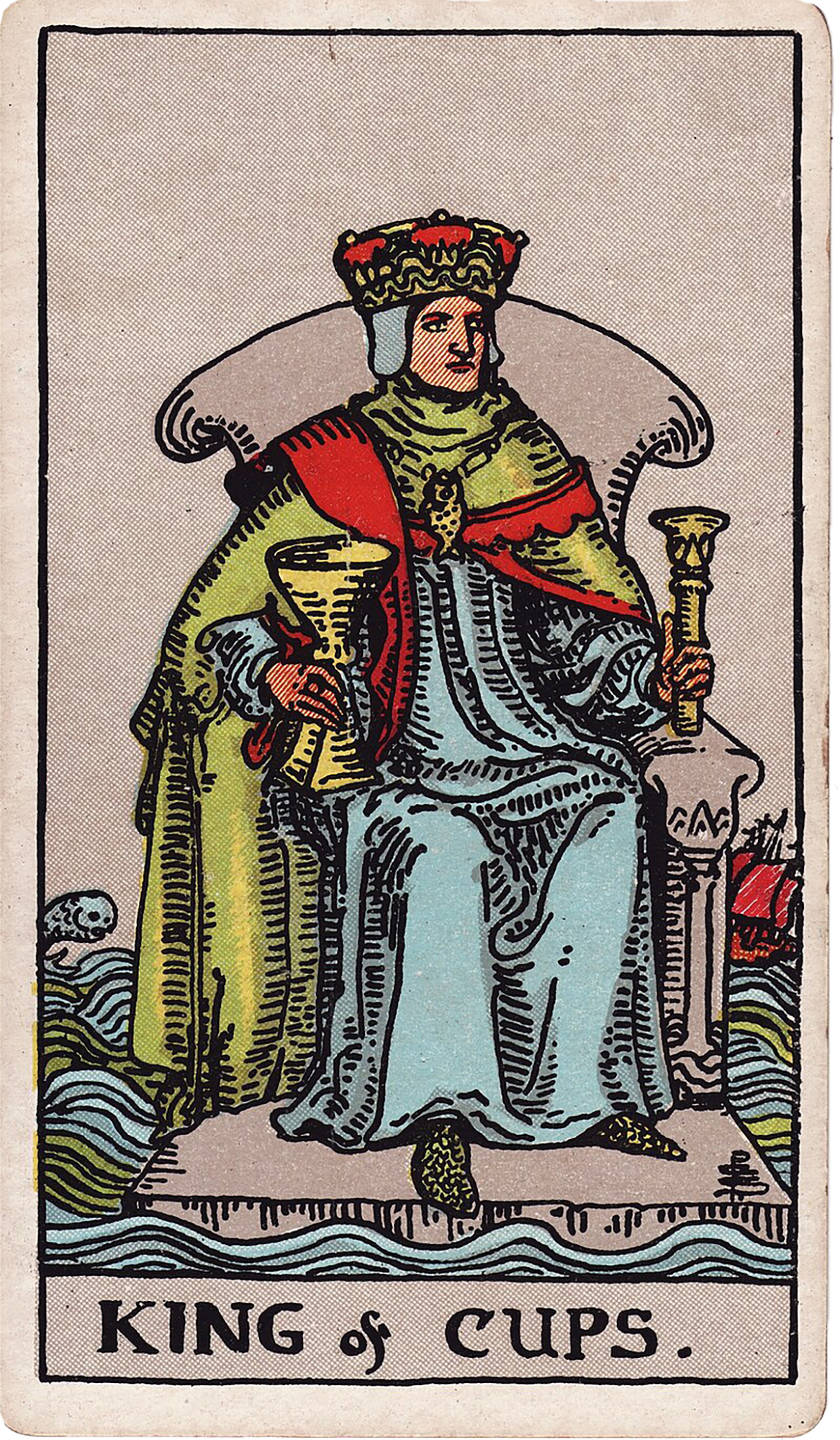 King of Cups
Introduction to the King of Cups and Its Core Symbolism
The King of Cups is a court card in the suit of Cups, traditionally associated with emotions, relationships, intuition, and the inner world of feelings. In Rider-Waite-Smith imagery, the King sits on a throne surrounded by water, symbolizing his mastery over the emotional realm. The calm water and his steady hand holding a cup and scepter represent control and balance — the ability to feel deeply without being overwhelmed. Upright, the King of Cups reflects emotional maturity, compassion, and wise leadership rooted in empathy. Reversed, this card can point to emotional repression, manipulation, or inner turmoil masked by a calm exterior. Understanding these core themes is key before applying the card’s meanings to specific contexts.
Technique for Reading the King of Cups in Single-Card Contexts
When the King of Cups appears as a single card in a spread, the interpreter’s task is to connect its energy to the question or area of focus using its core symbolism. Begin by identifying if the card is upright or reversed, as this dramatically affects tone. Consider the card’s emphasis on emotional leadership — balancing feeling with reason and maintaining composure amid emotional currents. Reflect on how this balance relates to the querent’s situation. Next, apply the card’s qualities to the specific context requested. For example, in a love reading, emphasize emotional maturity and compassionate communication. In career, think about leadership styles and managing workplace relationships constructively. Avoid jumping to deterministic predictions; instead, explain how the King of Cups energy suggests potential strategies or attitudes the querent might adopt. Always invite reflection on the card's imagery to deepen insight.
Interpreting the King of Cups in Love and Relationships
In love contexts, the upright King of Cups represents a partner or attitude characterized by emotional stability, kindness, and integrity. The figure’s calm water and controlled pose suggest someone who listens deeply, offers empathy, and responds to conflict without letting emotions run wild. This card encourages fostering trust through vulnerability balanced with self-control. If reversed, the King of Cups warns of emotional manipulation, moodiness, or difficulty expressing true feelings. This can appear as a partner who withholds affection or controls through emotional withdrawal. The tarot reader should explore whether emotional authenticity is being blocked and advise practices for clearer, gentler communication. Practical example: If a querent asks about their relationship, the King of Cups may advise embracing patience and compassion, focusing on steady support rather than reactive emotion. It can also suggest that emotional leadership is needed to navigate current challenges.
The King of Cups in Career and Professional Life
In career readings, the King of Cups upright signals leadership through emotional intelligence. This might describe a manager or coworker who balances authority with empathy, making decisions that consider team morale and individual needs. The calm sea around the King encourages maintaining composure under work stress and managing interpersonal dynamics gracefully. Reversed, the card can indicate emotional burnout, manipulation, or difficulties handling workplace pressures. It might also reflect someone who suppresses feelings to appear competent but ends up disconnected or indecisive. Readers should focus on how the querent can harness emotional maturity to improve workplace relationships or leadership effectiveness. For example, encouraging transparent communication or recognizing emotional cues in others can be key actions.
Money and Financial Decision-Making with the King of Cups
Though the Cups suit primarily deals with emotions, the King of Cups can still provide guidance around money by highlighting the emotional attitudes behind financial choices. Upright, the card suggests a balanced approach — handling financial matters with calm reflection rather than impulsivity driven by fear or desire. It encourages emotional detachment from money’s highs and lows to make practical decisions. If reversed, expect emotional manipulation around finances, such as using money to control others or repressing financial anxieties. The reversal invites acknowledging underlying feelings connected to money and working to express them constructively. Interpreters should ask how the querent’s emotional state impacts financial decisions and recommend techniques like budgeting with mindfulness or seeking advice when overwhelmed.
Advice and Challenges Revealed by the King of Cups
As advice, the King of Cups calls for emotional leadership: managing feelings consciously and responding to present circumstances with empathy and steadiness. It advises cultivating self-awareness about emotional reactions and practicing patience, especially in difficult conversations or conflict resolution. When the King of Cups appears as a challenge, it often signifies blocked emotional expression, mood control issues, or difficulty balancing head and heart. The reversed card warns against emotional manipulation or withdrawing from vulnerability. The challenge is to identify where emotional processes are stuck and to take practical steps toward healthier communication, such as journaling or seeking trusted support. Readers should emphasize that emotional mastery is a skill developed over time rather than an innate trait.
Person and Outcome Interpretations of the King of Cups
When representing a person, the King of Cups upright usually describes someone emotionally mature, compassionate, and wise. This person may be a supportive mentor, a nurturing parent, or a calm leader in the querent’s life. Reversed, this figure might be emotionally unavailable, manipulative, or struggling with internal conflicts. As an outcome, the King of Cups suggests resolution through emotional intelligence. It indicates a situation where empathy and calmness will lead to an effective solution, although effort and discomfort may still be involved. Reversed, the outcome warns that emotional issues may be unresolved, requiring honesty and practice before harmony can be restored. Interpreters should stress the fluid nature of outcomes and encourage querents to engage actively with the emotional lessons presented.
Spiritual Reflection and Personal Growth through the King of Cups
Spiritually, the King of Cups invites reflection on the integration of heart and mind, urging the seeker to develop emotional resilience without losing sensitivity. The card’s steadiness amidst water represents inner peace reached through emotional awareness and acceptance. In reversed form, it points toward blocked emotional energy that hinders spiritual growth—such as fear of vulnerability or denial of true feelings. The lesson is to simplify emotional patterns, acknowledge hidden wounds, and practice compassion toward oneself and others. Practices such as meditation on the cup’s imagery, journaling about emotional patterns, or mindful breathing can support embodying the King’s energy. This card encourages the journey toward becoming a balanced emotional leader within oneself.
Common Mistakes When Interpreting the King of Cups and How to Avoid Them
One common mistake is treating the King of Cups as merely a card about kindness or softness, missing its strong leadership and composure themes. Another is interpreting the reversed meaning as simply 'bad' or 'negative' without exploring the nuanced emotional blockages or excesses it signifies. Readers sometimes overlook the card’s practical aspect, forgetting it calls for responses fitting the present stage rather than abstract ideals. Ignoring surrounding cards can also cause misinterpretation of whether the King’s energy is emerging or resolving. To avoid these pitfalls, always anchor your interpretation in the card’s Rider-Waite-Smith imagery: the calm waters, the poised King, the cup and scepter. Consider the querent’s question and encourage reflection rather than prediction. Use the card to highlight emotional skills for growth rather than fixed outcomes.
Practical Method for Applying the King of Cups in Readings
Begin by observing the card’s position (upright or reversed) and noting key symbols: the King’s calm expression, the cup held carefully, the scepter signifying control, and the watery background. Ask yourself: How does emotional leadership apply here? Is the querent being called to greater emotional maturity, or are they currently stuck in manipulation or repression? Next, tailor your message to the context—whether love, career, or spiritual growth—using the explanations above. Invite the querent to identify where they already exhibit King of Cups qualities and where they might practice them more. Encourage journaling or discussion about emotional patterns and responses. Suggest small, concrete actions such as practicing calm listening, expressing feelings honestly, or setting healthy emotional boundaries. Finally, remind learners that the King of Cups is a living, dynamic energy to engage with over time rather than a fixed state or prediction.
Practice questions
• Where in my life do I currently show steady emotional leadership similar to the King of Cups?
• Are there areas where I am repressing or controlling my emotions instead of expressing them authentically?
• How can I balance compassion with practical action in my personal relationships?
• In what ways might emotional maturity improve my performance and connections at work?
• What emotional patterns do I need to simplify or release to support my spiritual growth?
Comments
Sign in to comment.
Continue learning
Exploring The High Priestess in Career Relationships and Personal Growth
The High Priestess card in the tarot deck invites readers to explore intuition, hidden knowledge, and inner wisdom across various life contexts. This article examines how The High...
The Fool in Life Transitions and New Beginnings
The Fool card embodies the spirit of beginnings, curiosity, and the leap of faith required during life transitions. This article explores The Fool’s meanings across various reading...
Understanding The Chariot Card in Personal Ambition and Overcoming Obstacles
The Chariot card represents the power of focused will, disciplined action, and choosing a clear direction amid competing impulses. Upright, it encourages decisive steps forward usi...
Understanding The Hermit in Self Discovery and Spiritual Enlightenment
The Hermit card in the Rider-Waite-Smith deck embodies themes of introspection, solitude, and spiritual wisdom. This article examines how The Hermit's upright and reversed position...
Exploring The Hierophant in Modern Spiritual Practices and Personal Development
The Hierophant tarot card symbolizes structured wisdom, tradition, and the pursuit of knowledge through established systems. This article explores how The Hierophant’s upright and...
Applying The Star Card to Foster Hope and Renewal in Personal Growth
The Star card in Tarot symbolizes hope, authenticity, and the process of steady renewal. In a single-card reading, The Star encourages embracing what is present, cultivating openne...
Understanding The Wheel of Fortune in Tarot Readings for Life Cycles and Change
The Wheel of Fortune card in Tarot is a powerful symbol of cycles, change, and the dynamics of fate and free will. This article explores the card’s upright and reversed meanings, a...
Understanding The Hermit Card in Solitude Reflection and Guidance
This article offers an in-depth exploration of The Hermit tarot card as a single-card reading in different contexts such as love, career, money, advice, challenge, person, outcome,...
Understanding The Tower in Tarot for Navigating Sudden Change and Crisis
The Tower card in Tarot symbolizes sudden, often disruptive change that destroys false foundations and compels honest reassessment. This article provides a comprehensive exploratio...
Understanding The Hanged Man in Personal Sacrifice and Spiritual Growth
The Hanged Man tarot card embodies the themes of intentional pause, surrender, and gaining new perspectives that foster personal sacrifice and spiritual growth. In this article, we...