
Understanding The Knight of Swords in Communication Conflict and Career Challenges
The Knight of Swords represents swift, decisive action, intellectual courage, and the power of clear communication in Tarot reading. This article examines how this card operates in various contexts such as communication, conflict, and career challenges. By anchoring interpretations in Rider-Waite-Smith imagery and traditional symbolism, readers will learn to discern nuances of the Knight of Swords’ energy when upright or reversed, apply practical reading techniques, avoid common mistakes, and gain insight into mental habits influencing outcomes.
Cards explored in this article
 Knight of Swords
Introduction to the Knight of Swords
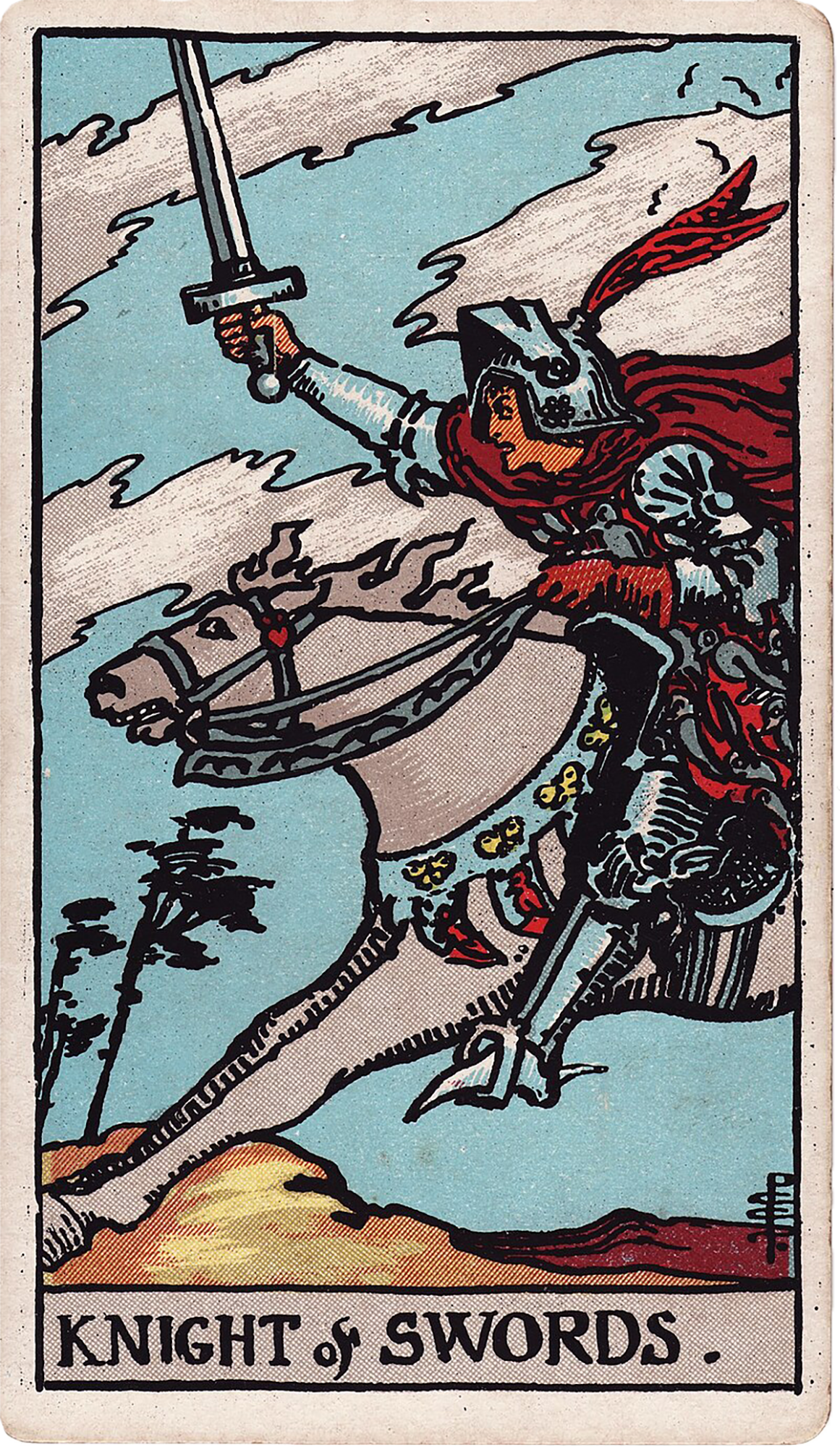
The Knight of Swords is a dynamic figure within the suit of Swords, traditionally associated with the intellect, communication, and conflict. Depicted in Rider-Waite-Smith imagery as a knight charging forward with sword raised high, the card symbolizes swift, decisive action and courage in debate or challenge. The knight’s forward momentum and determined expression suggest a readiness to confront obstacles through mental agility and assertive communication. Upright, this card encourages directness, strategic thinking, and prompt decisions. In contrast, when reversed, it warns of recklessness, impulsiveness, or aggressive communication that overlooks nuance and consequence. The Knight of Swords asks the querent to consider where speed and clarity of thought serve the situation, but also where impatience or tunnel vision might cause problems.
Core Symbolism and Practical Interpretation
The Rider-Waite-Smith Knight of Swords rides a powerful white horse, a symbol of purity and clarity of purpose, charging through clouds that suggest mental activity and turbulent thought. His armor represents protection of the mind and the readiness to engage in intellectual battle. The raised sword is a symbol of cutting through confusion and delay, emphasizing truth and clarity. When reading this card, consider how these symbols reflect the querent's current mental or communicative state. Is the querent prepared to take swift action? Are they fighting for truth or rushing heedlessly? The practical nature of this card asks for responses that fit the present moment rather than idealized or abstract solutions.
Applying the Knight of Swords in Communication Contexts
In communication, the Knight of Swords signifies decisiveness and assertiveness. Upright, it often points to a situation where clear, confident expression and courage in debate are necessary. The card may indicate that the querent or someone involved is prepared to cut through confusion or delay with direct speech or strategic argument. However, its energy can also bring tension; the knight’s charge suggests potential conflict if communication becomes too forceful. In the reversed position, communication may become reckless or aggressive, with tunnel vision preventing understanding. The lesson here is to slow down and acknowledge nuance, avoiding verbal force that damages relationships. Effective readers look for supporting cards to assess whether the energy represents a healthy debate or destructive conflict.
Understanding Conflict Through the Knight of Swords
When the Knight of Swords appears in conflicts, it highlights the mental or verbal nature of the challenge, rather than physical or emotional confrontation. Upright, it encourages swift, strategic engagement—facing issues head-on with courage and clarity. This card warns against procrastination or avoidance and suggests that the conflict can be resolved through honest communication and thoughtful decisions. Reversed, it points toward recklessness, aggression, or impulsive reactions that worsen conflict. It may also reveal internal struggles with anger or rigid beliefs that the querent has yet to integrate. In these cases, simplifying the situation and practicing patience helps restore balance and constructive dialogue.
Career Challenges and the Knight of Swords
In career contexts, the Knight of Swords signals a period of rapid progress, challenge, or decisiveness. It suggests that the querent may need to act quickly, make tough decisions, or advocate strongly for their ideas. The knight’s readiness to charge forward embodies ambition and intellectual confidence, valuable for tackling workplace challenges or pursuing opportunities. However, the card also cautions against impulsiveness or ignoring consequences in professional settings. Reversed, it may indicate reckless decisions, burnout from haste, or conflicts born from poor communication. When interpreting, readers should consider the stage of the querent’s career and surrounding cards to determine if the knight’s energy is accelerating success or creating pressure that needs management.
Exploring the Knight of Swords in Love and Relationships
Though primarily associated with mental energy, the Knight of Swords also influences romantic and interpersonal dynamics. Upright, it can represent a partner or situation marked by directness, intellectual stimulation, and candid communication. This can be positive when clarity and honesty deepen connection but might risk argument or impatience if emotions are overlooked. The reversed Knight of Swords may reveal misunderstandings, harsh words, or impulsiveness in relational communication. Its lesson encourages slowing down to listen carefully and avoid rushing to conclusions. Readers should use this card as an invitation to balance intellect and empathy, ensuring communication supports rather than disrupts the relationship.
Advice and Outcome Perspectives with the Knight of Swords
As advice, the Knight of Swords recommends decisive action and clear communication. It encourages the querent to harness mental strength, speak the truth boldly, and confront challenges without delay. However, readers should emphasize the importance of awareness—avoiding haste or aggression that undermines effectiveness. For outcomes, the upright card suggests resolution through strategic thought and clear expression, often leading to progress in difficult situations. The reversed outcome cautions potential setbacks from impulsiveness or failure to consider consequences, highlighting the need for reflection and adjustment before moving forward.
Practical Reading Techniques with the Knight of Swords
When encountering the Knight of Swords in a reading, begin by observing the querent’s question and the card’s position. Note whether it appears upright or reversed, as this changes the emphasis between constructive decisiveness and problematic recklessness. Examine surrounding cards to contextualize the mental and communicative energy—are they supportive of clarity or signaling conflict? Use the card’s imagery—the knight, horse, sword, and stormy clouds—to anchor interpretations in themes of courage, action, and mental turbulence. Ask the querent about areas where they might be rushing or where clarity is needed. Encourage them to balance speed with reflection. Avoid assuming the card predicts uncontrollable events; instead, focus on the querent’s role in managing thoughts, words, and decisions.
Common Mistakes and Misinterpretations
A frequent mistake with the Knight of Swords is reading it as purely aggressive or negative without considering its upright decisiveness and courage. Another error is using the reversed card as simply the opposite of the upright meaning rather than a nuanced state where energy is stuck, excessive, or misdirected. Readers sometimes overlook the card’s practical demand for timely response and instead impose abstract ideals. Additionally, ignoring context—such as the querent’s situation or complementary cards—can lead to misreading the knight’s energy as reckless when it is actually constructive. To avoid these pitfalls, always situate the Knight of Swords within the spread’s overall narrative and the querent’s lived reality.
Reflection and Integration for Learners
Understanding the Knight of Swords requires appreciating its dual nature as a card of swift action and potential recklessness. As you study this card, reflect on your own mental habits: where do you exhibit courage in communication, and where might you rush or speak too forcefully? Practice mindful reading by engaging with the card’s imagery and traditional symbolism to guide nuanced interpretations. Use the Knight of Swords as a tool to explore how timing, clarity, and courage operate in your readings and in the querent’s life. By balancing the card’s powerful energy with awareness, you can help yourself and others navigate challenges in communication, conflict, and career with greater skill and insight.
Practice questions
• In what areas of your life do you tend to rush decisions or communication, and how does this affect outcomes?
• How can you differentiate between healthy assertiveness and reckless aggression when interpreting the Knight of Swords?
• What symbols in the Knight of Swords’ imagery resonate most with your current situation or reading practice?
• How might surrounding cards alter or deepen your understanding of this card’s energy in a reading?
• When have you experienced the balance of courage and caution in dealing with conflict or career challenges?
Comments
Sign in to comment.
Continue learning
Understanding the Synergy Between The Empress and The Emperor in Tarot Card Combinations
This article delves into the intricate synergy between The Empress and The Emperor cards in Tarot, focusing on how their combined energies modify and enrich readings across various...
Exploring The High Priestess in Career Relationships and Personal Growth
The High Priestess card in the tarot deck invites readers to explore intuition, hidden knowledge, and inner wisdom across various life contexts. This article examines how The High...
Using the Five Card Cross Tarot Spread to Navigate Career Changes with Confidence
The Five Card Cross Tarot Spread is a versatile and insightful tool for navigating career changes. This article guides learners through the method step-by-step using a practical ex...
Exploring The Hierophant in Modern Spiritual Practices and Personal Development
The Hierophant tarot card symbolizes structured wisdom, tradition, and the pursuit of knowledge through established systems. This article explores how The Hierophant’s upright and...
Unlocking Personal Ambition and Emotional Balance with The Chariot and Queen of Cups
The Chariot and Queen of Cups together represent a compelling combination of disciplined ambition and emotional maturity. This article guides learners through understanding how the...
Understanding The Tower in Tarot for Navigating Sudden Change and Crisis
The Tower card in Tarot symbolizes sudden, often disruptive change that destroys false foundations and compels honest reassessment. This article provides a comprehensive exploratio...
Understanding The Hanged Man in Personal Sacrifice and Spiritual Growth
The Hanged Man tarot card embodies the themes of intentional pause, surrender, and gaining new perspectives that foster personal sacrifice and spiritual growth. In this article, we...
Discovering The Hermit in Meditation and Self Reflection Practices
The Hermit tarot card, a symbol of introspection and deliberate solitude, offers profound lessons for meditation and self-reflection practices. This article unpacks its upright and...
Unlocking Emotional Balance with The Lovers and Temperance in Tarot Combinations
This article explores the dynamic interplay between The Lovers and Temperance cards in Tarot readings, focusing on how their combination unlocks emotional balance and integration....
Understanding the Court Cards of Pentacles for Practical Wisdom and Grounded Ambition
The Court Cards of Pentacles—Page, Knight, Queen, and King—offer a rich framework for understanding practical wisdom, grounded ambition, and stewardship of material resources. Anch...