
Understanding the Many Dimensions of The Hierophant in Personal Growth and Spiritual Practice
This article offers an in-depth exploration of The Hierophant tarot card within personal growth and spiritual practice, focusing on how its meanings shift across various reading contexts. By anchoring interpretations in the supplied upright and reversed Hierophant imagery and traditional Rider-Waite-Smith symbolism, readers will gain practical tools and thoughtful insights to navigate this card’s lessons in love, career, money, advice, challenges, and spiritual dimensions. The guidance emphasizes learning from established wisdom, discerning authentic authority, and balancing conformity with individual spiritual evolution. Practical techniques, common interpretive pitfalls, and reflective questions help readers deepen their Tarot practice with this powerful archetype.
Cards explored in this article
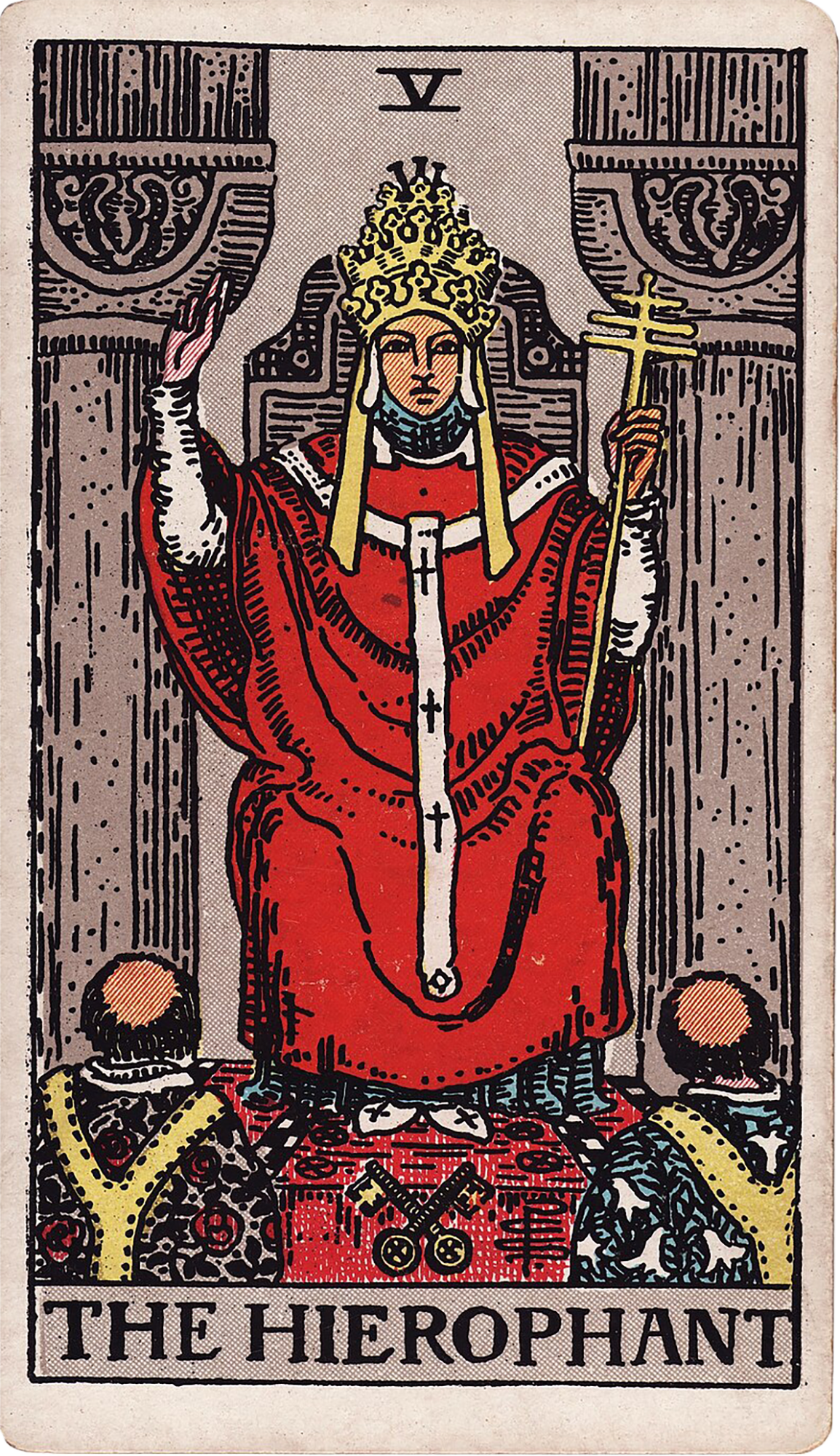 The Hierophant
Introduction to The Hierophant in Tarot
The Hierophant card, deeply rooted in Rider-Waite-Smith symbolism, traditionally represents structured wisdom, spiritual authority, and communal learning. In the supplied upright image, the card shows a robed figure seated between two pillars, holding a triple-cross scepter and blessing two supplicants, embodying formal teaching and established ritual. The reversed version shifts this dynamic, suggesting distorted or blocked access to traditional knowledge or an internal struggle with imposed doctrines. Understanding The Hierophant requires recognizing it as a symbol of both external institutions and internalized belief systems. This duality makes it a powerful tool for exploring personal growth and spiritual practice across varied contexts.
Technique for Reading The Hierophant in Different Contexts
When interpreting The Hierophant, readers should first note whether the card appears upright or reversed, as this orientation significantly shapes its message. The technique involves anchoring interpretations to the card’s core themes: learning from established wisdom, seeking qualified guidance, understanding systems, and evaluating conformity versus personal truth. Observing the depicted imagery—such as the pillars representing duality and structure, the triple cross symbolizing spiritual authority, and the supplicants indicating communal learning—helps readers connect abstract meanings to tangible symbols. The next step is contextualizing these meanings according to the reading’s focus, be it love, career, money, or spiritual reflection. This method ensures that the interpretation remains nuanced and relevant.
The Hierophant in Love and Relationships
In love readings, the upright Hierophant encourages learning about relationship dynamics through established values, open communication, or even formalizing commitments such as marriage. The card suggests turning to trusted sources or traditions to understand or stabilize the relationship. For example, the presence of the two supplicants on the card reminds us that relationships involve mutual respect for shared beliefs or boundaries. The upright card can also signify seeking counseling or adhering to agreed-upon rules to nurture the connection. Conversely, the reversed Hierophant may highlight issues with rigid expectations, dogmatic attitudes, or rebellion against social conventions affecting the relationship. It warns against empty rituals or superficial roles that mask deeper disconnects. In this case, the card challenges the querent to question whether conformity is serving genuine emotional growth or merely avoiding necessary personal honesty.
The Hierophant in Career and Work
Career readings with The Hierophant upright emphasize learning from mentors, following established protocols, and respecting organizational structures. The card suggests that success may come through apprenticeship, certification, or embracing a traditional career path. Visually, the formal posture and regalia of The Hierophant reinforce respect for hierarchy and discipline. This card advises leveraging existing systems rather than attempting radical innovation at this stage. In contrast, the reversed Hierophant may signal friction with authority figures, dissatisfaction with corporate culture, or a desire to break away from limiting conventions. Such a reversal asks the querent to examine whether rebellion is thoughtful or impulsive and to identify where institutional demands lack wisdom or fairness. It can also indicate internal conflicts about conforming to professional expectations versus following one's authentic calling.
The Hierophant and Financial Matters
Financially, the upright Hierophant suggests prudent management by adhering to tested principles: budgeting, consulting experts, or investing conservatively within familiar frameworks. The symbolism of order and discipline seen in the card’s imagery encourages the querent to work with what they have and recognize visible resources or constraints. It may also point to financial advice from trusted institutions or advisors. When reversed, The Hierophant warns against blindly following financial dogma or falling into ritualistic spending without reflection. It may also highlight the risk of financial decisions driven by rebellion or impatience rather than thoughtful planning. This reversal invites a critical review of inherited money habits or institutional influences that no longer serve the querent’s financial well-being.
The Hierophant as Advice and Challenge
As advice, The Hierophant upright encourages seeking guidance from established wisdom—mentors, teachers, or spiritual traditions—and being deliberate about boundaries and ethical choices. The card invites the querent to consciously choose the next proportionate step rather than waiting for complete certainty. The challenge is to balance respect for tradition with personal authenticity and to understand the rules before deciding whether or how to follow them. The reversed Hierophant as advice cautions against dogmatism, empty rituals, or rebellion without comprehension. It challenges the querent to identify where their relationship with institutional or internalized authority may be distorted, exaggerated, or unbalanced. The focus shifts to psychological or private resistance and recovery, urging honest self-examination rather than external opposition.
The Hierophant Representing a Person
When The Hierophant represents a person in a reading, it often describes someone embodying wisdom, traditional values, or a role as a teacher or spiritual guide. This individual may be a mentor, counselor, religious figure, or someone who upholds conventions and provides structure. The upright card highlights their role in offering guidance based on established knowledge, while the reversed Hierophant may represent a person who is dogmatic, rigid, or challenging authority—possibly someone who encourages questioning or breaking from tradition but may do so without full understanding. In any case, this figure influences the querent’s engagement with systems of belief, learning, or moral frameworks.
The Hierophant as an Outcome
As an outcome card, the upright Hierophant suggests resolution through conscious acceptance of known frameworks, learning, or mentorship. It indicates that the querent will engage with the visible aspects of their situation and take measured, wise steps based on established knowledge. The result is likely to involve clarity gained through structure and deliberate choice rather than impulsive action. The reversed Hierophant as an outcome points to ongoing internal or external resistance to traditional solutions. It may indicate a period of questioning, psychological adjustment, or a temporary pause before fully integrating lessons. This outcome invites patience and self-awareness rather than expecting immediate resolutions.
The Hierophant in Spiritual Reflection and Personal Growth
Spiritually, The Hierophant embodies the transmission of sacred knowledge and the importance of communal rites or shared beliefs in personal development. The upright card encourages seekers to learn from qualified teachers, respect the wisdom embedded in traditions, and explore the ‘rules’ of spiritual practice before adapting or transcending them. The imagery of the triple cross scepter and pillars symbolizes the connection between earthly and divine realms, reinforcing that spiritual growth often involves navigating structured paths. The reversed Hierophant reflects a phase where inherited beliefs are questioned, dogma is challenged, or spiritual rebellion occurs without yet settling into a new balance. This stage is crucial for authentic personal growth, inviting deep psychological work and honest reassessment of spiritual authority.
Common Mistakes and How to Avoid Them
A frequent error in interpreting The Hierophant is to assume that upright means unquestioned conformity and reversed means simply ‘bad’ or ‘wrong.’ Instead, both orientations invite nuanced inquiry into how traditional wisdom and authority are functioning for the querent. Another mistake is ignoring the card’s visual cues—such as the pillars, the blessing gesture, and the supplicants—which ground its meanings in structure, learning, and relationship to authority. Overlooking context is also common; The Hierophant’s message can shift dramatically depending on whether the question concerns love, career, or spirituality. To avoid these pitfalls, always integrate the card’s symbolism, orientation, and reading context, and ask constructive questions about how authority, rules, and wisdom are influencing the situation.
Practical Methods for Deepening Interpretation
To deepen your understanding of The Hierophant, engage in reflective journaling focused on questions such as: Where in my life am I working with or against established systems? What traditions or teachings do I respect or question? How do I relate to authority figures or spiritual guides? When reading the card, compare upright and reversed meanings side by side, noting which aspects resonate most with the querent’s situation. Use the card’s imagery as prompts: consider the significance of the pillars, the triple cross, and the gestures shown. Combining these techniques with contextual focus—such as love or career—provides a layered interpretation that supports insightful and compassionate readings.
Practice questions
• Where do I currently seek guidance from established wisdom or authority in my life?
• How do I balance respect for tradition with my personal beliefs and growth?
• In what areas am I following rules or systems consciously, and where might I be conforming unconsciously?
• What patterns of rebellion or resistance toward institutions or teachings have I experienced, and what have I learned from them?
• How can I use the symbolism of The Hierophant—pillars, the triple cross, supplicants—to better understand my spiritual or personal journey?
Comments
Sign in to comment.
Continue learning
Harnessing the Power of The Magician and Ace of Wands: Igniting Creativity and Manifestation in Tarot Readings
The combination of The Magician and the Ace of Wands in tarot readings offers a potent blend of creative energy and manifestation power. This article delves into the ways these car...
Advanced Techniques for Combining The Moon and The Star to Enhance Intuition in Tarot Readings
This article explores advanced techniques to combine the symbolism and energy of The Moon and The Star Tarot cards to enhance intuition during Tarot readings. Drawing from traditio...
Enhancing Clarity in Complex Choices with the Five Card Cross Tarot Spread
The Five Card Cross Tarot Spread is a practical tool designed to clarify complex choices by breaking down the decision into manageable parts. This article explores each position in...
Tracing the Origins and Evolution of The Fool Card in Tarot History
The Fool card holds a foundational place in tarot tradition, symbolizing beginnings, openness, and the embrace of uncertainty. This article traces its origins from early European d...
Understanding The Hermit Card in Solitude Reflection and Guidance
This article offers an in-depth exploration of The Hermit tarot card as a single-card reading in different contexts such as love, career, money, advice, challenge, person, outcome,...
Unlocking the Creative Flow with The Magician and The Empress in Tarot Combinations
This article delves into the powerful synergy between The Magician and The Empress in Tarot combinations, focusing on how their combined symbolism unlocks creative flow across vari...
Using the Seven Card Horseshoe Spread to Uncover Career Growth and Opportunity
This article presents an in-depth guide to the Seven Card Horseshoe Tarot Spread with a focus on career growth and opportunity. Using the cards The Fool, The Magician, The Empress,...
Understanding the Many Facets of The Moon in Emotional and Intuitive Tarot Readings
The Moon card in the Tarot deck embodies themes of intuition, uncertainty, dreams, and emotional complexity. This article offers a comprehensive exploration of The Moon’s upright a...
Unlocking Advanced Intuition Techniques Using The High Priestess The Moon and The Hermit
This article examines advanced intuition development in tarot reading by focusing on The High Priestess, The Moon, and The Hermit cards. It offers practical techniques for beginner...
Mastering Intuition with The High Priestess The Hermit and The Moon in Tarot Readings
This article delves into mastering intuition through three powerful Tarot cards: The High Priestess, The Hermit, and The Moon. It guides readers from beginner to advanced reading t...