
Understanding the Many Facets of the Ace of Pentacles in New Beginnings Prosperity and Spiritual Growth
The Ace of Pentacles offers a powerful symbol of tangible new beginnings, rooted in practical opportunity, resourcefulness, and potential for material and spiritual growth. This article dives deeply into the upright and reversed meanings of the Ace of Pentacles, grounded in its Rider-Waite-Smith imagery, and illustrates how its interpretation shifts across different reading contexts including love, career, money, advice, challenges, personality, outcomes, and spiritual reflections. By understanding the card’s core themes of grounded effort, manifestation, and resource management, tarot students can refine their reading techniques and avoid common interpretative errors. Practical approaches to single-card readings help readers discern nuanced messages that align with querents’ real-life situations and internal states.
Cards explored in this article
 Ace of Pentacles
Introduction to the Ace of Pentacles and Its Symbolism
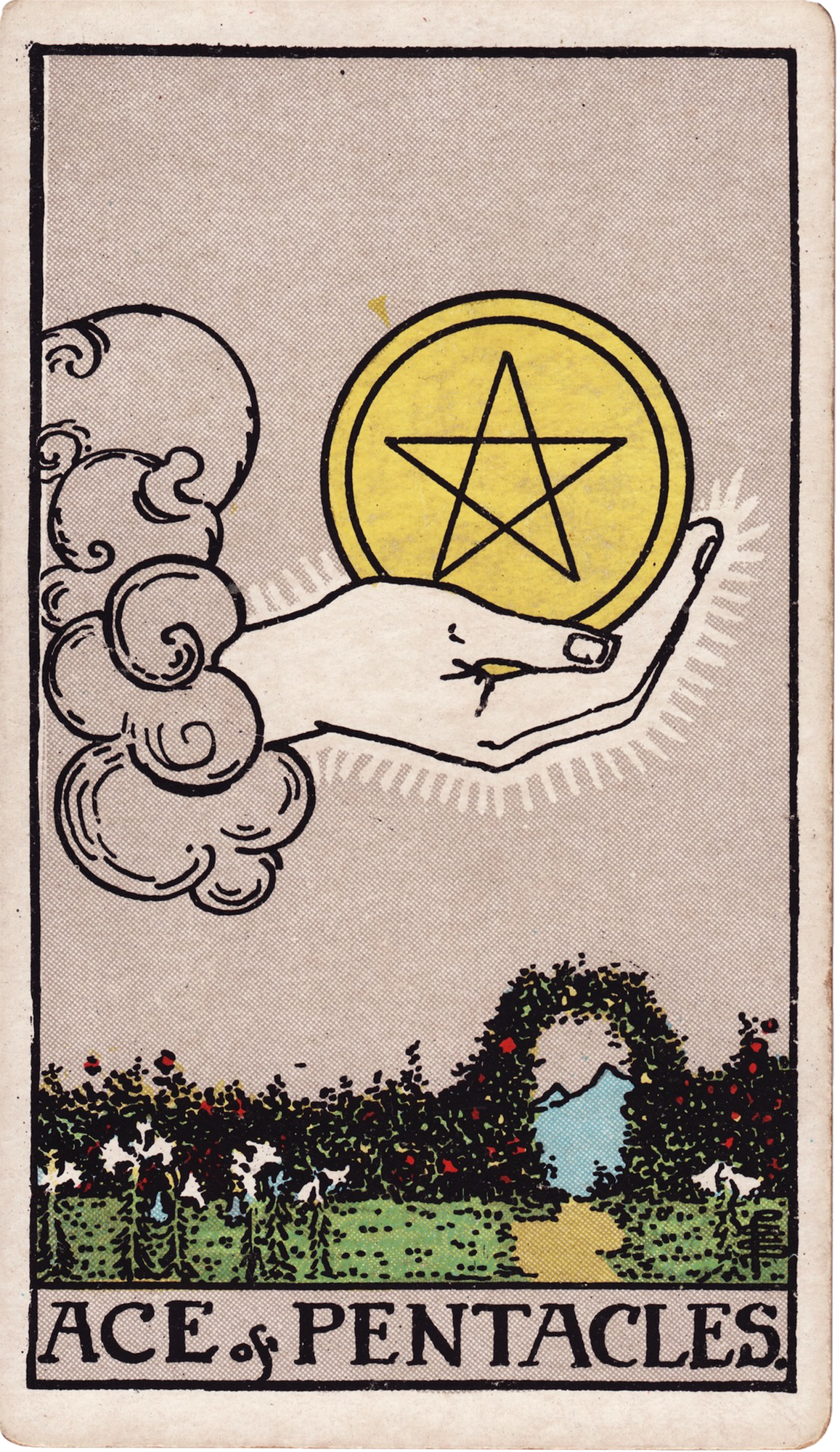
The Ace of Pentacles is a card rich in symbolism representing the seed of material and practical opportunity. In the Rider-Waite-Smith deck, it depicts a large pentacle held by a hand emerging from a cloud, which conveys a gift or offering from the universe. The lush garden and pathway in the background suggest fertile ground and the potential for long-term growth and prosperity. The card’s visual emphasis on earth tones and solid forms reflects the Pentacles suit’s association with the physical realm, including work, money, health, and tangible resources. When upright, the Ace of Pentacles is a clear invitation to embrace a new chance that can lead to material success or stability through consistent effort and realistic planning. In reversal, the card challenges readers to examine where opportunities have been missed or where the foundation for success is weak or unstable. This foundational understanding helps readers approach different interpretive contexts with clarity and depth.
Interpreting the Ace of Pentacles in Love and Relationships
In love contexts, the Ace of Pentacles often signals the beginning of a stable, grounded phase in a relationship or the potential to build a secure emotional foundation. Upright, it can indicate a fresh opportunity for commitment, such as moving in together, financial security as a couple, or the growth of shared goals. The card invites practical steps to nurture the relationship, like honest communication and shared responsibilities. The imagery of the hand offering the pentacle shows the importance of tangible acts of care rather than abstract promises. When reversed, the card may highlight missed chances to solidify a relationship or a lack of practical effort that undermines emotional growth. It warns against expecting results without investing the necessary work or failing to align values around stability and security. For single querents, the card encourages seeking partnerships that offer mutual support and groundedness rather than fleeting romance.
Decoding the Ace of Pentacles in Career and Work
Career readings featuring the Ace of Pentacles focus on new professional opportunities or projects that have strong potential to yield concrete benefits. The card’s upright position suggests the start of ventures grounded in practical skills, resources, or networks that can grow with dedicated effort. The imagery reminds readers to consider what tangible resources—such as knowledge, tools, or contacts—are available to nurture success. The card encourages clear goals, planning, and disciplined action rather than distractions or overly idealistic ambitions. Reversed, it signals blocked opportunities, poor preparation, or unrealistic expectations about career growth. It invites reflection on where planning needs refinement or where the querent might be attempting to shortcut necessary steps. In single-card career readings, the Ace of Pentacles highlights the importance of building a solid foundation rather than rushing toward outcomes.
Understanding the Ace of Pentacles in Financial Contexts
Financially, the Ace of Pentacles is a welcome sign of incoming abundance, investments, or opportunities to improve material security. Upright, it represents fresh financial beginnings that require careful stewardship and patience to mature. The hand holding the pentacle is a reminder that resources may be offered but must be managed wisely. This card suggests possibilities such as a new job, a profitable idea, or a financial gift that can be nurtured into lasting prosperity. When reversed, it warns of scarcity thinking, missed financial chances, or impulsive decisions that undermine stability. It asks readers to examine whether financial plans lack grounding or if there is a tendency to want rapid gains without steady effort. Teaching students to identify these nuances helps prevent simplistic 'good vs. bad' interpretations and encourages practical advice tailored to the querent’s actual financial stage.
The Ace of Pentacles as Advice and Guidance
As an advisory card, the Ace of Pentacles calls for practical, realistic engagement with the present situation. It encourages querents to identify concrete opportunities in their environment and to commit to consistent, patient action rather than wishful thinking. The card’s imagery underscores the importance of recognizing resources being offered—whether time, money, skills, or relationships—and making deliberate choices to cultivate them. This guidance is especially relevant when facing uncertainty or feeling overwhelmed by abstract ideals. Reversed, the Ace advises simplifying approaches, acknowledging limitations, and communicating clearly about needs or intentions. It cautions against overcomplicating situations or ignoring necessary groundwork. Educators can teach readers to frame this card’s advice around actionable steps and resource management, emphasizing responsiveness to current realities.
Exploring the Ace of Pentacles in Challenging Situations
When the Ace of Pentacles appears in a challenging context, it highlights where foundational issues affect progress. Upright, challenges may stem from the pressure to act on a new opportunity or from initial discomfort in setting routines or budgets. The card helps pinpoint the core task—often involving practical care, resource allocation, or health—that, once addressed, can shift the situation toward resolution. The imagery's groundedness can be used to remind querents that steady effort ultimately leads to growth. Reversed, the card draws attention to blockages such as poor planning, unrealistic expectations, or internal doubts about worthiness. It suggests revisiting the basics, simplifying goals, or releasing scarcity mindsets. In educative practice, readers are encouraged to explore these nuances to avoid seeing reversed cards as purely negative and instead as indicators of areas needing attention.
Personality and Character Represented by the Ace of Pentacles
As a personality card, the Ace of Pentacles represents someone practical, resourceful, and grounded. This individual values security and takes a measured approach to new endeavors, preferring to build solid foundations before advancing. The card’s imagery of the emerging hand holding the pentacle symbolizes generosity and readiness to offer help or resources. Such a person is often patient, disciplined, and attentive to physical well-being and material needs. Reversed, this personality may manifest as someone who struggles to commit, who has difficulty translating ideas into action, or who experiences internal conflicts about abundance and self-worth. Teaching readers to connect these traits with the card’s imagery deepens character insights and improves empathic understanding within readings.
Outcome and Future Directions with the Ace of Pentacles
When the Ace of Pentacles appears as an outcome card, it signals a promising beginning or the materialization of goals into reality. The card suggests that with ongoing effort and practical attention, stability and prosperity are achievable. The lush garden and pathway in the illustration remind readers that the journey toward fruition takes time and care. If reversed, the outcome may involve delays, missed opportunities, or the need to reestablish foundational work before progress continues. Teaching learners to interpret outcome cards with a view toward process rather than fixed destiny encourages a dynamic approach to tarot, where future directions are shaped by actions taken in the present.
Spiritual Reflection and Growth Through the Ace of Pentacles
Spiritually, the Ace of Pentacles invites reflection on the relationship between material abundance and inner growth. The card encourages grounding spiritual insights in physical reality and recognizing the sacredness of the body and earthly resources. Upright, it can signify a new stage where spiritual practice becomes more embodied, integrating health, routine, and practical skills as part of holistic growth. The hand emerging from the clouds suggests divine support in manifesting spiritual gifts into everyday life. Reversed, it may indicate a disconnect between spiritual ideals and practical living or an internal blockage preventing the full embodiment of lessons. Students can use the card to explore themes of manifestation, stewardship, and alignment between values and actions in their spiritual journeys.
Common Mistakes and Practical Reading Techniques
A frequent mistake in interpreting the Ace of Pentacles is reducing it to a simple 'good luck' or 'money card' without appreciating its nuanced call for deliberate action and grounded effort. Another error is treating reversed meanings as purely negative rather than as signals for reflection and adjustment. Effective reading techniques include anchoring interpretations in the card’s imagery—such as the hand presenting a pentacle, the fertile garden, and the clear path—which emphasize opportunity, nurturing, and growth. Reflecting on the current stage of the querent’s situation helps determine whether the energy is just beginning, developing, or needing reassessment. When reading single-card contexts, encourage clients to consider how the card’s core message of tangible beginnings resonates with their life and what practical steps they can take. Avoid overly abstract or vague readings by linking card meanings to real-world actions and challenges.
Practice questions
• Where in your life might a new tangible opportunity be emerging that requires practical care?
• How do you currently manage resources and what might need more consistent attention?
• In what ways could scarcity thinking be limiting your progress or growth?
• What practical steps can you take to build a stronger foundation in relationships or work?
• How can you embody your spiritual values through everyday routines and material actions?
• Where might you be expecting results without establishing a solid groundwork?
• How do the images on the Ace of Pentacles resonate with your present situation?
Comments
Sign in to comment.
Continue learning
Exploring The High Priestess in Career Relationships and Personal Growth
The High Priestess card in the tarot deck invites readers to explore intuition, hidden knowledge, and inner wisdom across various life contexts. This article examines how The High...
The Fool in Life Transitions and New Beginnings
The Fool card embodies the spirit of beginnings, curiosity, and the leap of faith required during life transitions. This article explores The Fool’s meanings across various reading...
Understanding The Chariot Card in Personal Ambition and Overcoming Obstacles
The Chariot card represents the power of focused will, disciplined action, and choosing a clear direction amid competing impulses. Upright, it encourages decisive steps forward usi...
Understanding The Hermit in Self Discovery and Spiritual Enlightenment
The Hermit card in the Rider-Waite-Smith deck embodies themes of introspection, solitude, and spiritual wisdom. This article examines how The Hermit's upright and reversed position...
Exploring The Hierophant in Modern Spiritual Practices and Personal Development
The Hierophant tarot card symbolizes structured wisdom, tradition, and the pursuit of knowledge through established systems. This article explores how The Hierophant’s upright and...
Applying The Star Card to Foster Hope and Renewal in Personal Growth
The Star card in Tarot symbolizes hope, authenticity, and the process of steady renewal. In a single-card reading, The Star encourages embracing what is present, cultivating openne...
Understanding The Wheel of Fortune in Tarot Readings for Life Cycles and Change
The Wheel of Fortune card in Tarot is a powerful symbol of cycles, change, and the dynamics of fate and free will. This article explores the card’s upright and reversed meanings, a...
Understanding The Hermit Card in Solitude Reflection and Guidance
This article offers an in-depth exploration of The Hermit tarot card as a single-card reading in different contexts such as love, career, money, advice, challenge, person, outcome,...
Understanding The Tower in Tarot for Navigating Sudden Change and Crisis
The Tower card in Tarot symbolizes sudden, often disruptive change that destroys false foundations and compels honest reassessment. This article provides a comprehensive exploratio...
Understanding The Hanged Man in Personal Sacrifice and Spiritual Growth
The Hanged Man tarot card embodies the themes of intentional pause, surrender, and gaining new perspectives that foster personal sacrifice and spiritual growth. In this article, we...