
Understanding the Meaning of The King of Swords in Leadership and Communication
The King of Swords in the upright position represents mature intellectual authority, strategic judgment, and decisions grounded in principle and evidence. This article explores the card’s symbolism and its application in leadership and communication across various personal and professional contexts. By examining the card’s imagery and conventional meanings, learners will gain insight into interpreting this card thoughtfully within tarot readings. The reversed King of Swords highlights challenges such as intellectual arrogance, manipulation, or misuse of authority, offering a nuanced perspective on internal blocks and external conflicts. This comprehensive guide equips readers with practical techniques for applying the King of Swords’ lessons in complex situations, emphasizing clarity, fairness, and strategic thinking.
Cards explored in this article
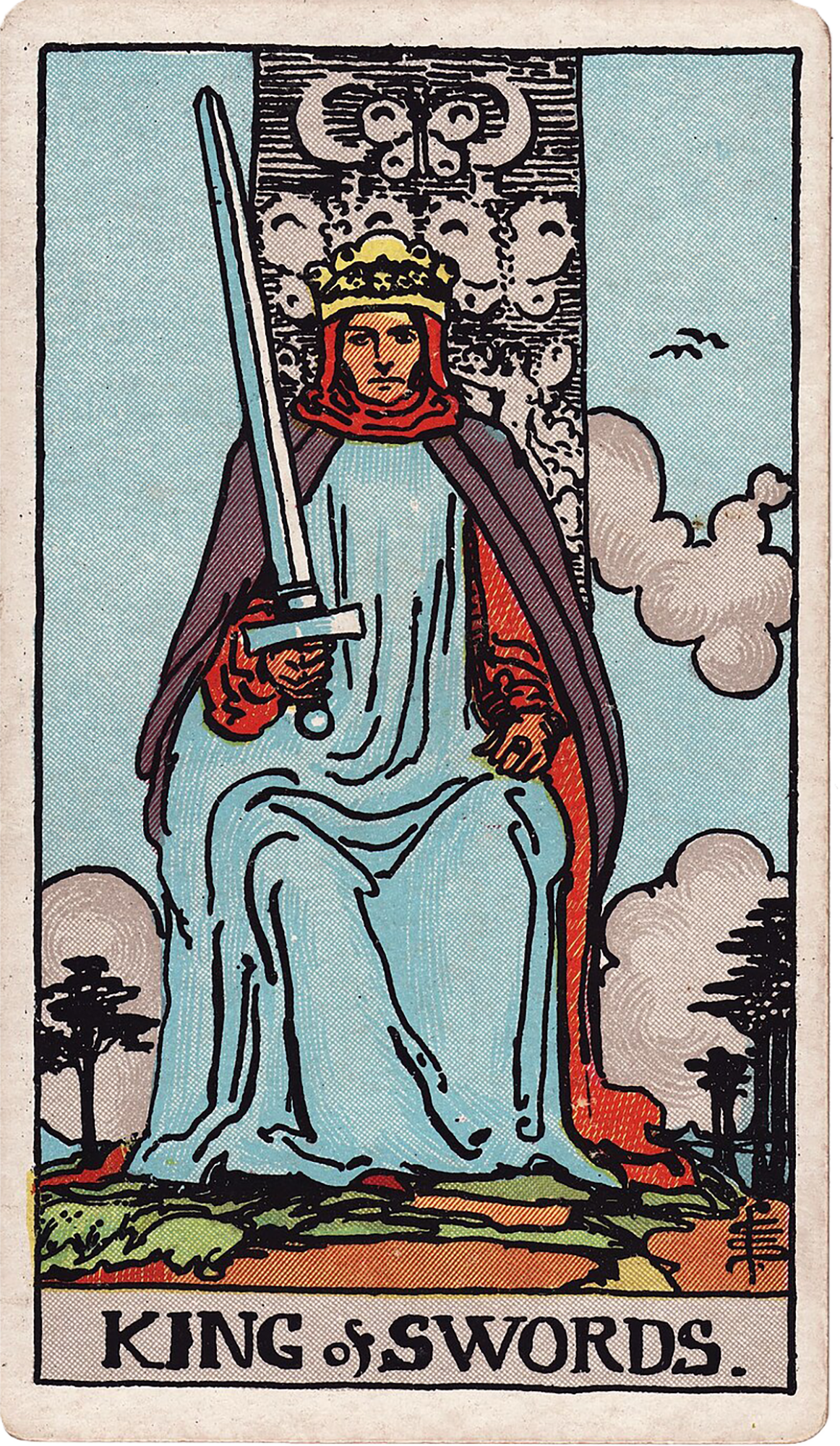 King of Swords
Introduction to the King of Swords in Tarot
The King of Swords is a mature figure embodying intellectual authority, clarity of thought, and principled decision-making. Traditionally aligned with the element of Air, associated with the suit of Swords, this card symbolizes mental clarity, strategic communication, and justice. In the Rider-Waite-Smith deck, the King is depicted seated on a throne adorned with butterflies and crescent moons, symbols of transformation and intuition balanced with logic. His sword is held upright, signifying truth and decisive action. VoxFati’s upright King of Swords emphasizes practical, evidence-based leadership rather than abstract ideals. When this card appears in a reading, it calls for an approach that is both thoughtful and grounded, urging the querent to act with integrity and clear judgment.
Understanding Upright King of Swords in Different Contexts
When the King of Swords is upright, it suggests that the querent or situation requires mature intellectual authority and strategic judgment. This card highlights skills associated with the suit of Swords: thought, communication, conflict resolution, decision-making, truth, and facing consequences of mental habits. In leadership, the King of Swords represents a leader who governs with fairness, logic, and principle, using clear communication to direct teams effectively. In communication, it signals the importance of honesty and clarity, avoiding emotional manipulation and emphasizing rational discourse. In love, upright King of Swords may indicate a partner or dynamic where communication is direct and honest, emphasizing intellectual connection and mutual respect. It can also point to the need for clear boundaries and truthful conversations to resolve misunderstandings. Career contexts see this card as a call for strategic planning, ethical leadership, and careful decision-making. It encourages the use of knowledge and data to guide professional actions rather than impulse or emotion. Financially, the King of Swords advises a rational and principle-based approach to money management, highlighting the need to analyze situations carefully before making decisions. As advice, this card encourages using intellect, honesty, and fairness to navigate challenges. It reminds readers to detach from emotional bias and to base choices on solid evidence and ethical standards. Challenges signaled by this card often involve needing to overcome mental rigidity or harsh judgment. It suggests using strategic thinking to solve problems rather than reactionary responses. Spiritually, the King of Swords points to the integration of mental clarity with ethical living. It invites reflection on how one’s thoughts and communications align with higher principles.
Interpreting the Reversed King of Swords in Various Situations
The reversed King of Swords in the VoxFati Tarot Library highlights the shadow aspects of intellectual authority: coldness, intellectual arrogance, manipulation, and abuse of power. Unlike a simple opposite of the upright meaning, reversal indicates that the energy is either excessive, deficient, or inconsistently applied. In leadership, this reversal warns of authoritarianism or misuse of power where people are treated as problems rather than collaborators. Communication may become cutting or dismissive, creating conflict rather than resolution. In relationships, the reversed King of Swords can indicate emotional coldness, communication breakdowns, or manipulation. It suggests the need to identify where intellectual understanding is not matched by empathy or consistent behavior. Career-wise, this card reversed might signal unethical decisions, misuse of professional authority, or mental fog blocking clarity. It invites reflection on where the querent’s approach has become overly rigid or disconnected from others. Financially, it can indicate poor judgment, impulsiveness, or manipulative behavior around money matters. It calls for reassessment and simplification of financial strategies. As advice, the reversal asks the querent to examine internal blocks, such as intellectual arrogance or fear of vulnerability, that hinder authentic communication and leadership. It suggests releasing control or ego-based thinking to restore balance. Challenges highlighted include stuck mental patterns, failure to communicate important truths, or an internal struggle with ethical principles. Spiritually, this reversal invites deep reflection on aligning thoughts and communication with compassion and humility rather than cold logic or dominance.
Practical Techniques for Reading the King of Swords Card
When the King of Swords card appears in a reading, it is crucial to ground the interpretation in the card’s imagery and traditional symbolism. Focus on the king’s posture, the upright sword, and the throne’s symbols of transformation and intuition balanced with intellect. Begin by assessing the card’s orientation—upright or reversed—and then consider the question or context of the reading. Use the card as a lens for intellectual clarity, ethical leadership, and truthful communication. Next, analyze surrounding cards to determine whether the King of Swords energy is emerging, developing, or resolving a situation. For example, nearby Swords cards may emphasize mental challenges, while Cups could highlight emotional dynamics that need balancing. Avoid common mistakes such as interpreting the King of Swords as a purely emotional or empathic figure; this card prioritizes reason and principle over feeling. Also, do not treat the reversed card simply as bad luck or negativity but as a signal to examine where the mental process is stuck or imbalanced. In readings involving complex decision-making, invite the querent to consider what principles or facts they may have overlooked and how to communicate more effectively and ethically. Use examples such as a career spread where the King of Swords may advise a manager to lead with fairness and clarity or a relationship reading where honest dialogue is necessary to move forward.
Common Mistakes and How to Avoid Them with the King of Swords
A frequent error is to confuse the King of Swords with coldness or cruelty in the upright position. While the card does emphasize intellectual authority, it demands fairness and ethical judgment, not harshness. Another mistake is oversimplifying the reversed King of Swords as simply negative or abusive without exploring the nuances of where the querent’s thinking or communication may be misaligned or rigid. Failing to connect the card’s symbolism—such as the butterflies representing transformation and the crescent moons symbolizing intuition—with the reading context can lead to superficial interpretations. Avoid reading the card as a fixed personality type; instead, treat it as an energy or process relevant to the question at hand. Lastly, ignoring the influence of surrounding cards often limits the depth of the interpretation. Always contextualize the King of Swords within the full narrative of the spread.
Applying the King of Swords Meaning in Real-Life Scenarios
Imagine a leadership scenario where a manager draws the upright King of Swords. The card suggests adopting an approach of strategic communication, fairness, and principled decision-making. The manager might focus on transparency with the team and data-driven planning to navigate challenges. In a relationship context, a querent drawing the reversed King of Swords might recognize a pattern of cold communication or intellectual arrogance creating barriers. This realization can prompt efforts to foster empathy alongside honesty. Financially, the King of Swords encourages a rational review of budgets and investments, advising against impulsive decisions driven by fears or assumptions. Spiritually, drawing this card invites reflection on how one’s thoughts and words align with personal integrity and ethical principles, encouraging mindfulness in communication and leadership roles. Practically, always pair the King of Swords with clarifying questions: What truth needs to be spoken? Where is strategic thinking required? What principles must guide the current action?
Practice questions
• In what areas of your life can you apply more strategic thinking and clear communication?
• Are there moments where intellectual arrogance or rigidity might be blocking your progress?
• How does your current approach to leadership or decision-making align with fairness and ethical principles?
• Where might you need to balance logic with empathy in your relationships?
• What truths do you need to communicate honestly and with integrity at this time?
Comments
Sign in to comment.
Continue learning
Interpreting the Dance of Justice and The Devil: Balancing Morality and Temptation in Tarot Readings
The combination of Justice and The Devil in tarot presents a profound exploration of morality, temptation, and personal accountability. This article unpacks how these cards influen...
Exploring The King of Swords in Leadership Communication and Ethical Decision Making
The King of Swords embodies mature intellectual authority, strategic judgment, and decisions grounded in principle and evidence. This article explores how this card’s symbolism and...
Unlocking the Dynamic Balance of The Emperor The Empress and Justice in Tarot Combinations
This deep educational article delves into the tarot card combination of The Emperor, The Empress, and Justice, focusing on their dynamic interplay within family and related life co...
Understanding The Justice Card in Ethical Decision Making and Everyday Life
This article offers a comprehensive exploration of the Justice card from the Tarot deck, focusing on its significance in ethical decision making and everyday life situations. Using...
Mastering Decision Making with the Five Card Cross Tarot Spread
The Five Card Cross Tarot Spread is a powerful tool for deepening decision-making skills by examining the present situation, past influences, future possibilities, challenges, and...
Using the Career Five Card Spread to Identify Growth Opportunities and Challenges
This article explores the Career Five Card Spread, a practical tarot method designed to spotlight growth opportunities, strengths, and obstacles within a career context. By analyzi...
Unlocking Life Insights with the Celtic Cross Tarot Spread
This article offers a thorough exploration of the Celtic Cross Tarot Spread, focusing on its application within family and practical life contexts. Using a worked example featuring...
Deepening Connection and Communication Using the Relationship Five Card Spread
This article introduces the Relationship Five Card Spread as a practical tool to enhance family communication and connection. Using five specific card positions—You, The Other Pers...
Unlocking Personal Insight with the Seven Card Horseshoe Spread
The Seven Card Horseshoe Spread is a practical and insightful Tarot layout ideal for exploring personal and family dynamics. This article breaks down each position—Past, Present, H...
Mastering the Court Cards of Wands for Unlocking Personal Drive and Leadership
The Court Cards of Wands represent a dynamic spectrum of personal energy, ambition, and leadership potential within the Minor Arcana. This article offers a comprehensive exploratio...