
Understanding the Multifaceted Roles of The Hierophant in Tradition Spirituality and Modern Guidance
The Hierophant card embodies the intersection of tradition, spiritual wisdom, and structured guidance. This article examines the card's upright and reversed meanings, illustrating how it manifests in diverse contexts such as relationships, career, finances, and spiritual growth. By focusing solely on the provided Hierophant card, readers will learn how to apply its symbolism with precision, avoid common pitfalls, and engage thoughtfully with its themes in a single-card tarot reading.
Cards explored in this article
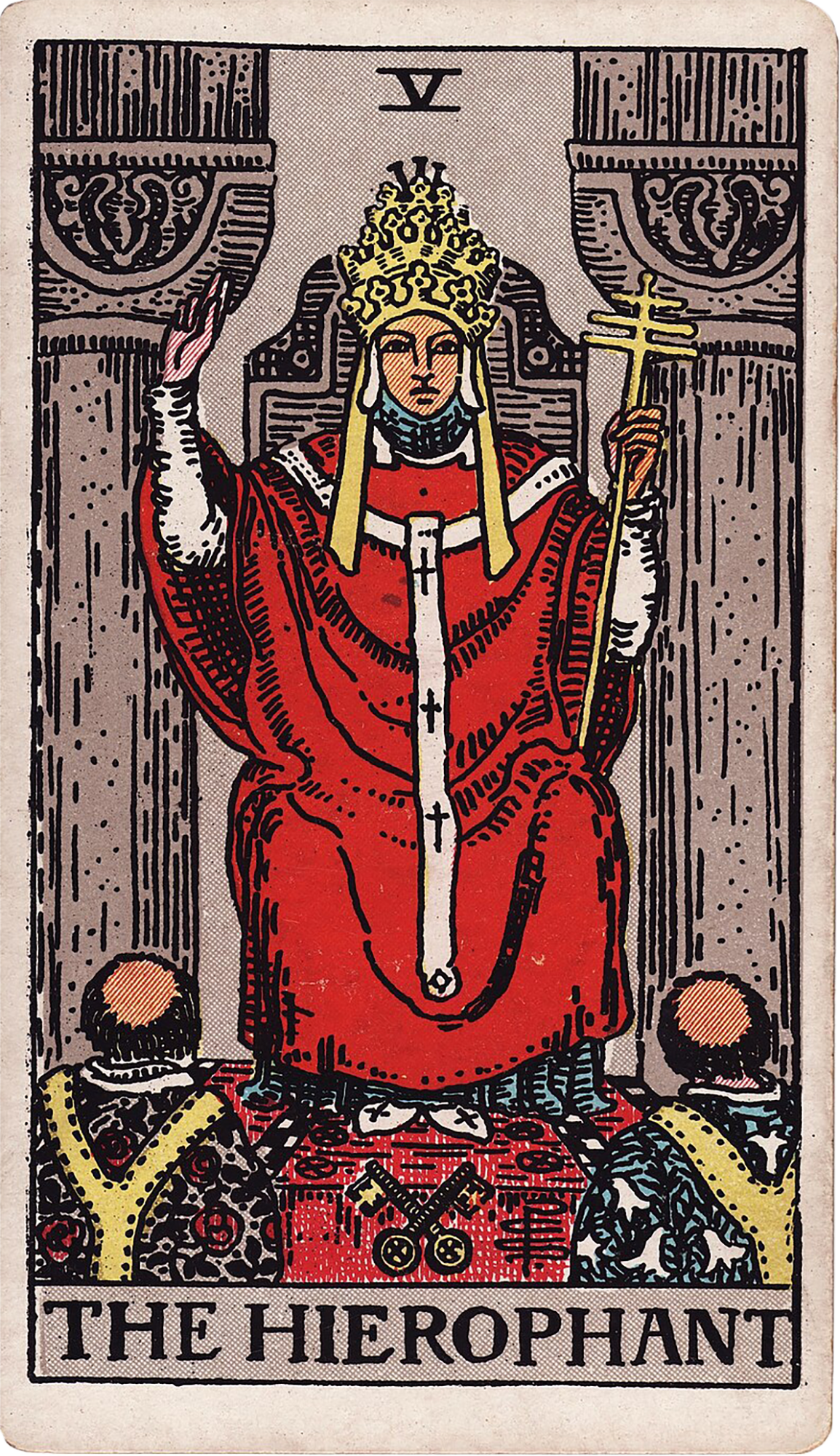 The Hierophant
Introduction to The Hierophant and Its Symbolism
The Hierophant is a major arcana tarot card traditionally associated with institutional wisdom, spiritual authority, and established systems of knowledge. Visually, the card often depicts a religious figure—a pope or high priest—seated between two pillars and holding a triple cross staff, symbolizing orthodox belief and teaching. The imagery aligns with themes of structured learning, ritual, and the transmission of moral or spiritual laws. In readings, The Hierophant invites engagement with traditions, established rules, or mentorship, but also challenges the querent to discern what to accept or question within these frameworks. Understanding these core symbols is vital for interpreting the card's nuanced meanings across different contexts.
Upright The Hierophant in Practical Contexts
When The Hierophant appears upright, it emphasizes learning from established wisdom and seeking qualified guidance. This suggests a moment to respect conventions or trusted systems, whether in personal life or broader societal structures. The card encourages conscious engagement with what is present, rather than waiting for perfect clarity. For instance, in a career context, this might mean following proven procedures, working with mentors, or aligning with company policies to progress. In love, it can indicate a relationship grounded in shared values or traditional commitments like marriage. Financially, it advises prudent adherence to sound principles or consulting experts with experience. The upright Hierophant calls for deliberate choices that harmonize with tested knowledge, signaling that the querent is ready to take the next appropriate step within an established framework.
Reversed The Hierophant and Its Complex Challenges
The reversed Hierophant marks a shift from external authority to internal conflict or resistance regarding tradition and conformity. It can signal dogma turning rigid or empty rituals losing meaning. Rebellion without understanding or institutions that demand blind obedience may also be highlighted. The reversal is not inherently negative but points to blocked or distorted energy related to the card's upright qualities. In a single-card reading, noticing the reversal invites questions about where balance has been lost. For example, in relationships, it might indicate questioning traditional roles or feeling restricted by societal expectations. In career or money, it may warn against unexamined conformity or urge breaking free from limiting orthodoxies. Spiritually, it could denote a private struggle with inherited beliefs or the beginning of a transformative reassessment. The reversed Hierophant encourages introspection on the validity and flexibility of established systems in the querent’s life.
The Hierophant in Love and Relationships
In love readings, The Hierophant upright often suggests relationships built on shared values, cultural or spiritual traditions, or formal commitments like marriage. The card’s imagery of structure and authority reminds the querent to respect established emotional or social codes. It can also signal seeking guidance from a counselor or trusted elder regarding relationship dynamics. Conversely, reversed, The Hierophant challenges these norms—questioning whether societal pressures are stifling authentic connection or if rebellion against traditional roles is causing tension. The visual cues of the card—such as the pillars representing stability—remind readers to consider whether the relationship relies too heavily on external approval or if it needs more personalized, honest communication.
Career and Professional Development with The Hierophant
The Hierophant upright in a career context underscores the importance of mentorship, formal education, and adherence to ethical standards or organizational policies. It suggests that success comes from respecting the rules of the professional system and learning from those with experience. The card’s symbolism, like the triple cross staff, reflects authority and responsibility, thus encouraging readers to embrace roles that require integrity and structured leadership. When reversed, this card may indicate dissatisfaction with rigid workplace hierarchies or outdated methods. It invites consideration of whether conformity is limiting growth or if the querent is resisting necessary guidance. Understanding where the card’s energy is blocked helps avoid missteps such as reckless rebellion or blind obedience.
Money Matters and The Hierophant’s Guidance
Financially, an upright Hierophant suggests prudence through conventional wisdom: budgeting, investing according to established practices, or consulting financial advisors. The card's imagery emphasizes rules and moral codes, reminding readers to respect legal and ethical standards in monetary decisions. In reversal, it may reveal imprudent disregard for sound advice or impulsive actions driven by dissatisfaction with traditional financial systems. It can also highlight inner tension around material values, encouraging deeper reflection on how money aligns with personal principles. By analyzing the card’s upright and reversed symbolism, readers learn to balance respect for financial order with openness to necessary change.
The Hierophant as Advice and Challenge
When The Hierophant appears as advice, it encourages the querent to seek knowledge from established sources, approach situations with integrity, and respect the rules while choosing consciously what to embrace or question. This card invites deliberate steps informed by tradition rather than impulsive action. As a challenge, especially reversed, it points to difficulties with dogma, resistance to learning, or conflicts with institutions. The card’s symbolism urges the reader to identify where wisdom is being blocked—whether through excessive rigidity or rebellious disregard—and to find a balanced path forward. Successful interpretation relies on contextualizing these energies relative to the querent’s unique situation.
The Hierophant Representing a Person or Outcome
As a person, The Hierophant embodies a mentor, teacher, or authority figure—someone who provides guidance grounded in experience and tradition. This individual values structure and morality and can be a stabilizing force. The card’s imagery, including the gesture of blessing and religious regalia, conveys spiritual authority and wisdom. When reversed, the person may be rigid, dogmatic, or resistant to change, possibly embodying the limitations or distortions of established systems. As an outcome card, upright Hierophant suggests successful integration of tradition and learning leading to stability or formalization, like marriage or certification. Reversed, the outcome may involve breaking free from convention or facing challenges related to inflexibility or rebellion.
Spiritual Reflection and The Hierophant
Spiritually, The Hierophant upright invites the seeker to engage with collective traditions, rituals, and ethical teachings that connect the individual to a larger community or lineage. It encourages disciplined practice and openness to learning from established wisdom. The card’s visual emphasis on sacred authority—such as the triple cross and the two pillars—reflects the bridge between the earthly and divine. Reversed, the Hierophant challenges the seeker to question inherited beliefs and explore a personal spirituality beyond dogma. This can be a necessary phase of growth, prompting honest self-examination and release from unexamined conformity. Recognizing these spiritual dimensions adds depth to the card’s meaning in a single-card reading.
Practical Techniques for Reading The Hierophant
To effectively read The Hierophant, start by carefully observing the card’s imagery: the figure’s posture, the triple cross staff, the two pillars, and the subtle hand gesture. These symbols ground interpretation in authority, structure, and blessing. Determine whether the card appears upright or reversed, noting how this alters its energy. Next, apply the card’s core themes—tradition, guidance, learning, conformity, or rebellion—to the specific context of the reading (love, career, etc.). Ask focused questions such as, 'Where does the querent need to engage with established wisdom?' or 'What traditions might be restricting growth?' Avoid reducing the card to simple 'good' or 'bad' labels; instead, explore how the qualities manifest constructively or become distorted. Reflect on neighboring cards (when present) to clarify nuances, but in single-card readings, emphasize the hierarchy between openness to guidance and the necessity of critical discernment. This balanced approach leads to more nuanced and insightful readings.
Common Mistakes and How to Avoid Them
A frequent mistake with The Hierophant is to interpret it as purely positive or negative without considering context or reversal nuances. Some readers overemphasize conformity as blindly good or rebellion as inherently disruptive. Others neglect the card’s call for conscious choice and internalization of wisdom. Avoid assuming that the presence of The Hierophant guarantees ease—its lesson is often about discipline and complexity rather than simplicity. Another error is ignoring the card’s subtle invitation to examine where tradition may no longer serve the querent or where rebellion lacks understanding. To avoid these pitfalls, always anchor interpretations in the card’s detailed symbolism and ask open-ended questions to explore its energy dynamically.
Practice questions
• In what areas of my life am I relying too heavily on external authority or tradition without personal reflection?
• Where might I be resisting necessary guidance or structure that could support my growth?
• How do the symbols of The Hierophant—such as the pillars and triple cross staff—relate to my current situation?
• What traditions or systems do I need to honor, and which might I need to question or reform?
• How can I balance respect for collective wisdom with my individual path in love, career, or spirituality?
Comments
Sign in to comment.
Continue learning
Harnessing the Power of The Magician and Ace of Wands: Igniting Creativity and Manifestation in Tarot Readings
The combination of The Magician and the Ace of Wands in tarot readings offers a potent blend of creative energy and manifestation power. This article delves into the ways these car...
Advanced Techniques for Combining The Moon and The Star to Enhance Intuition in Tarot Readings
This article explores advanced techniques to combine the symbolism and energy of The Moon and The Star Tarot cards to enhance intuition during Tarot readings. Drawing from traditio...
Enhancing Clarity in Complex Choices with the Five Card Cross Tarot Spread
The Five Card Cross Tarot Spread is a practical tool designed to clarify complex choices by breaking down the decision into manageable parts. This article explores each position in...
Tracing the Origins and Evolution of The Fool Card in Tarot History
The Fool card holds a foundational place in tarot tradition, symbolizing beginnings, openness, and the embrace of uncertainty. This article traces its origins from early European d...
Understanding The Hermit Card in Solitude Reflection and Guidance
This article offers an in-depth exploration of The Hermit tarot card as a single-card reading in different contexts such as love, career, money, advice, challenge, person, outcome,...
Unlocking the Creative Flow with The Magician and The Empress in Tarot Combinations
This article delves into the powerful synergy between The Magician and The Empress in Tarot combinations, focusing on how their combined symbolism unlocks creative flow across vari...
Using the Seven Card Horseshoe Spread to Uncover Career Growth and Opportunity
This article presents an in-depth guide to the Seven Card Horseshoe Tarot Spread with a focus on career growth and opportunity. Using the cards The Fool, The Magician, The Empress,...
Understanding the Many Facets of The Moon in Emotional and Intuitive Tarot Readings
The Moon card in the Tarot deck embodies themes of intuition, uncertainty, dreams, and emotional complexity. This article offers a comprehensive exploration of The Moon’s upright a...
Unlocking Advanced Intuition Techniques Using The High Priestess The Moon and The Hermit
This article examines advanced intuition development in tarot reading by focusing on The High Priestess, The Moon, and The Hermit cards. It offers practical techniques for beginner...
Mastering Intuition with The High Priestess The Hermit and The Moon in Tarot Readings
This article delves into mastering intuition through three powerful Tarot cards: The High Priestess, The Hermit, and The Moon. It guides readers from beginner to advanced reading t...