
Understanding the Transformative Power of Death in Personal and Spiritual Growth
The Death card in the Rider-Waite-Smith Tarot embodies the essential process of ending and transformation, urging conscious release to make way for new beginnings. This article unpacks how Death’s imagery and symbolism provide nuanced insights in various single-card reading contexts including love, career, money, advice, challenges, personal identity, outcomes, and spiritual growth. By understanding both its upright and reversed meanings, learners can navigate resistance to change and embrace the card’s transformative power practically and constructively.
Cards explored in this article
 Death
Introduction to the Death Card Symbolism and Meaning
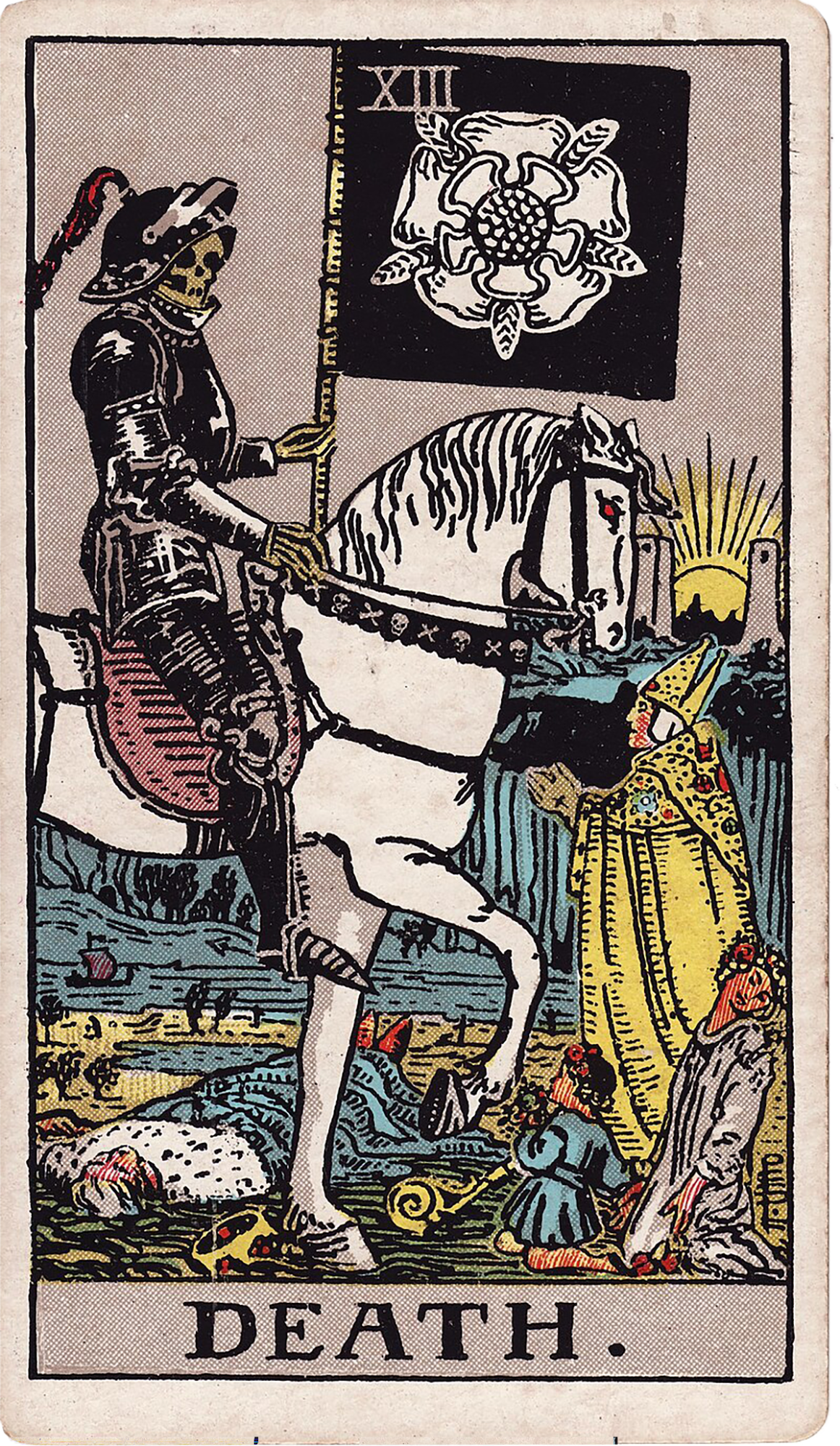
The Death card, numbered XIII in the Major Arcana, is often misunderstood as a literal omen of physical death, but within the Rider-Waite-Smith tradition, it represents much deeper themes of endings, transformation, and renewal. Visually, it features a skeletal figure in black armor astride a white horse, symbolizing inevitability and purity through change. The rising sun in the background signals the promise of rebirth following the end of a cycle. Upright, Death emphasizes allowing endings to be real, releasing what is complete, and making space for transformation. Reversed, it can point to resistance to change or internalized struggle with closure. Understanding this duality is key to reading the card effectively in different contexts.
Technique for Reading Death in Single-Card Contexts
When Death appears alone in a reading, the reader must first identify if it is upright or reversed to gauge whether transformation is actively unfolding or being resisted. The next step is to consider the question asked and how the themes of ending and renewal relate specifically to that area of life. It is critical to avoid deterministic or fear-based interpretations; instead, readers are encouraged to explore what is ready to be released and what new forms can emerge. Noticing direct responses, clearer boundaries, or deliberate choices becomes a practical way to apply the card’s advice. Reflecting on the card’s imagery—the skeletal figure’s impartiality, the black armor’s protection, the white horse’s strength, and the dawn’s hopeful light—can help center the interpretation in the symbolism rather than assumptions.
Death Card in Love and Relationships
In the context of love, upright Death highlights the need to let go of outdated dynamics, emotional patterns, or relationships that no longer serve growth. It encourages embracing honest endings to make way for renewal and healthier connections. For example, a person may need to release attachment to a partner or to certain expectations to allow transformation in intimacy. The card asks where clearer boundaries or deeper honesty would benefit the relationship. Reversed, Death warns of clinging to past relationships or emotional wounds, signaling potential stagnation or fear of moving forward. Here, the imagery of the skeletal rider reminds us that holding on too tightly may prevent the natural cycle of growth and healing.
Death Card in Career and Work
In career readings, the Death card suggests that a phase at work is ending, such as a job, role, or project, and that embracing this ending is essential for professional transformation. The card advises conscious engagement with current realities rather than waiting for perfect certainty. The imagery of the armored skeleton moving forward on horseback can inspire courage and acceptance of change despite uncertainty. Upright, the card points to deliberate choices about career direction and boundaries around work-life balance. Reversed, it can indicate resistance to career change or difficulty letting go of outdated professional identities. Being mindful of where energy is blocked or distorted allows for constructive adjustment.
Death Card and Financial Matters
When Death appears in financial queries, it signals an ending of a financial cycle, habits, or investments. The upright card encourages releasing old financial patterns that no longer yield stability, such as overspending or clinging to unproductive assets, to create space for new economic growth or security. The card’s symbolism suggests the necessity of a clean break and conscious next steps rather than denial of change. Reversed, Death points to fear around financial loss or clinging to unsustainable financial situations. It invites reflection on where attachment is causing stress or preventing recovery. The key is to focus on practical, proportionate actions aligned with current realities.
Death Card as Advice in Readings
When Death is drawn as advice, it functions as a powerful prompt to acknowledge and accept endings fully, rather than resisting or delaying closure. It urges the reader to identify what must be consciously released and to cultivate deliberate choices that open the path to transformation. The card suggests practicing clearer boundaries, deeper honesty, and direct responses to current circumstances. The Rider-Waite-Smith imagery reinforces the message to face endings with courage and equanimity, recognizing that transformation is a natural, necessary process. Advice from Death is never about passivity; it emphasizes active engagement with change.
Death Card Representing Challenge or Obstacle
As a challenge, Death often reveals where resistance to necessary endings or change is causing stagnation or distress. This may manifest as fear of loss, denial, or clinging to the past—symbolized by the reversed state of the card. The skeletal figure’s inevitability contrasts with human reluctance to let go, highlighting the emotional difficulty of transformation. The challenge lies in shifting perspective to see endings not as failures but as gateways to new growth. Understanding this helps the querent work through psychological blocks, approaching change incrementally and with self-compassion.
Death Card Describing a Person
When Death represents a person in a reading, it typically signifies someone who embodies transformation, endings, or transition. This person may act as a catalyst for change, encouraging others to release old patterns or helping to close chapters. The imagery of the armored skeletal rider suggests resilience, impartiality, and the ability to face uncomfortable truths. They might be seen as stern but necessary, facilitating growth through disruption. In reversed form, this person could be someone resistant to change or stuck in old behaviors, reflecting a blocked expression of the Death card’s energy.
Death Card as Outcome
As an outcome card, Death indicates that a significant transformation or ending is on the horizon, which will lead to a new beginning. It signals the completion of a cycle and the clearing away of what no longer works. The card encourages preparing for this transition by consciously engaging with the process rather than resisting it. Its presence reassures that while the situation may not become easy immediately, transformation is a constructive and necessary path forward. Reversed, the outcome may involve prolonged difficulty in letting go or delayed resolution, underscoring the need for patience and introspection.
Death Card in Spiritual Reflection
Spiritually, the Death card calls for profound inner transformation, symbolizing the death of ego, old identities, and limiting beliefs. The skeletal figure embodies the stripping away of superficial layers, inviting a rebirth into deeper authenticity and wisdom. The rising sun behind the figure is a key Rider-Waite-Smith symbol of hope and new spiritual dawn. Upright, Death encourages embracing spiritual renewal and cultivating acceptance of life’s cyclical nature. Reversed, it may highlight inner resistance or fear of surrendering attachments. Spiritual reflection with this card asks where transformation is emerging and how conscious release can deepen growth.
Common Mistakes and Practical Reading Tips
A frequent mistake with the Death card is to interpret it as a literal death or purely negative omen. Instead, learners should emphasize the card’s symbolic themes of endings and transformation. Another error is ignoring the card’s orientation; upright and reversed positions offer distinct but complementary insights. Practical reading tips include focusing on the question’s context, asking where release and renewal are possible, and connecting the card’s imagery to current circumstances. Using the card as a prompt for action—such as setting boundaries, practicing honesty, or making deliberate choices—helps ground the reading in constructive steps rather than abstract fear.
Practice questions
• Where in my life am I resisting necessary endings or transformations?
• What old patterns or attachments could I consciously release to make space for growth?
• How can I apply clearer boundaries or deeper honesty in my current situation?
• What personal fears around change does the Death card bring to my awareness?
• In what ways can I embrace the natural cycle of closure and renewal in my spiritual practice?
• How does the imagery of the Death card inspire courage and acceptance for me?
• What practical next steps can I take to engage constructively with endings I face?
Comments
Sign in to comment.
Continue learning
Exploring The High Priestess in Career Relationships and Personal Growth
The High Priestess card in the tarot deck invites readers to explore intuition, hidden knowledge, and inner wisdom across various life contexts. This article examines how The High...
The Fool in Life Transitions and New Beginnings
The Fool card embodies the spirit of beginnings, curiosity, and the leap of faith required during life transitions. This article explores The Fool’s meanings across various reading...
Understanding The Chariot Card in Personal Ambition and Overcoming Obstacles
The Chariot card represents the power of focused will, disciplined action, and choosing a clear direction amid competing impulses. Upright, it encourages decisive steps forward usi...
Understanding The Hermit in Self Discovery and Spiritual Enlightenment
The Hermit card in the Rider-Waite-Smith deck embodies themes of introspection, solitude, and spiritual wisdom. This article examines how The Hermit's upright and reversed position...
Exploring The Hierophant in Modern Spiritual Practices and Personal Development
The Hierophant tarot card symbolizes structured wisdom, tradition, and the pursuit of knowledge through established systems. This article explores how The Hierophant’s upright and...
Applying The Star Card to Foster Hope and Renewal in Personal Growth
The Star card in Tarot symbolizes hope, authenticity, and the process of steady renewal. In a single-card reading, The Star encourages embracing what is present, cultivating openne...
Understanding The Wheel of Fortune in Tarot Readings for Life Cycles and Change
The Wheel of Fortune card in Tarot is a powerful symbol of cycles, change, and the dynamics of fate and free will. This article explores the card’s upright and reversed meanings, a...
Understanding The Hermit Card in Solitude Reflection and Guidance
This article offers an in-depth exploration of The Hermit tarot card as a single-card reading in different contexts such as love, career, money, advice, challenge, person, outcome,...
Understanding The Tower in Tarot for Navigating Sudden Change and Crisis
The Tower card in Tarot symbolizes sudden, often disruptive change that destroys false foundations and compels honest reassessment. This article provides a comprehensive exploratio...
Understanding The Hanged Man in Personal Sacrifice and Spiritual Growth
The Hanged Man tarot card embodies the themes of intentional pause, surrender, and gaining new perspectives that foster personal sacrifice and spiritual growth. In this article, we...