
Understanding The Wheel of Fortune in Career Financial and Relationship Contexts
The Wheel of Fortune Tarot card embodies cycles of change, fate, and timing. Its upright position encourages adaptability and awareness of shifting circumstances, while reversed signals resistance or imbalance in these dynamics. This article unpacks the card’s rich symbolism as depicted in the classic Rider-Waite-Smith deck and explores how the card’s meanings transform across various contexts such as career, finances, and relationships. Emphasizing a single-card reading approach, it provides practical guidance to recognize turning points, interpret timing, balance personal responsibility with fate, and avoid common misconceptions. Learners will discover how to anchor interpretations in the card’s imagery and refine their technique to access deeper insights when this powerful card appears.
Cards explored in this article
 Wheel of Fortune
Introduction to the Wheel of Fortune Card
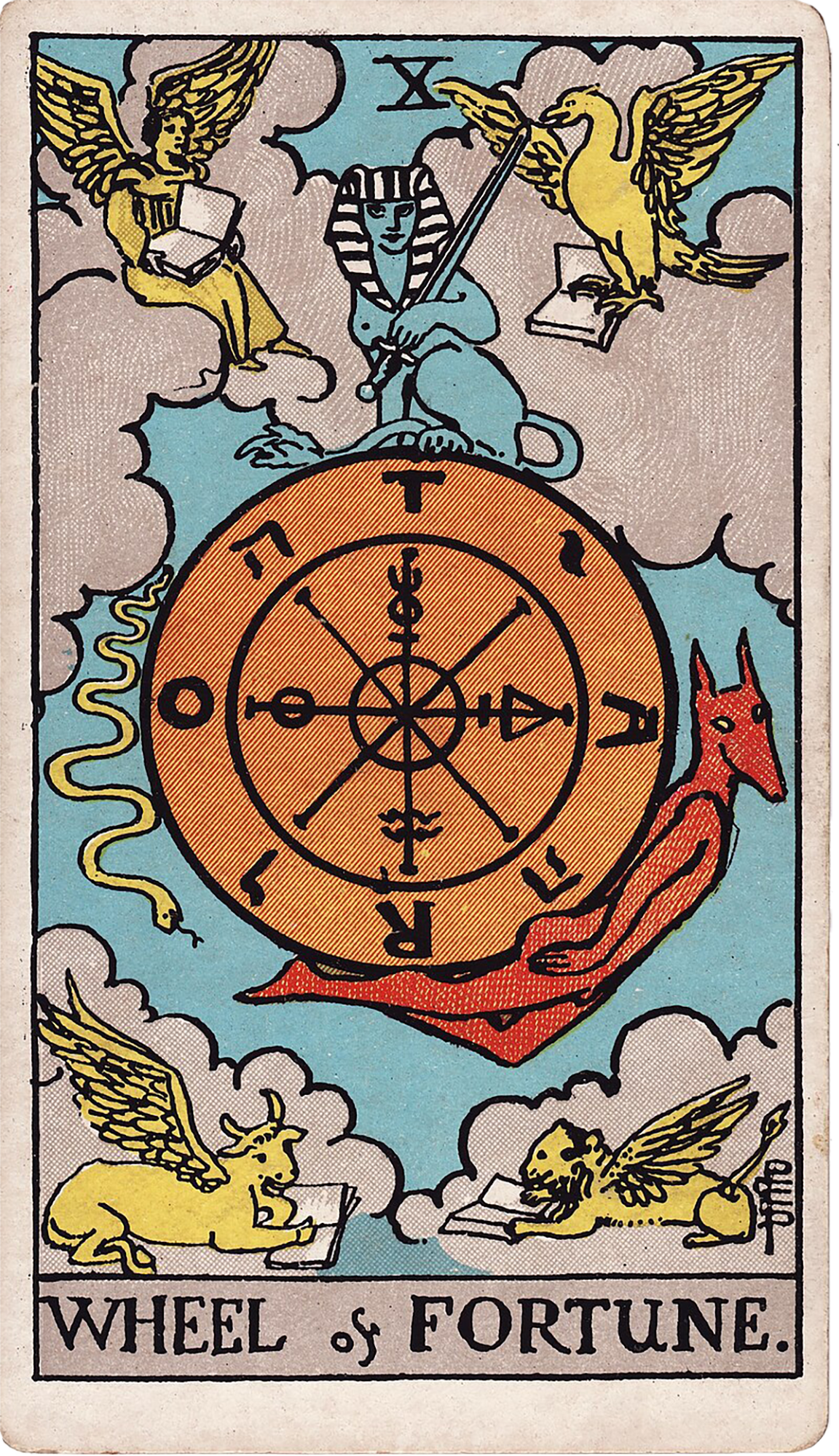
The Wheel of Fortune is one of the most visually and symbolically rich cards in the Tarot, traditionally numbered 10 in the Major Arcana. The Rider-Waite-Smith version shows a large wheel surrounded by sphinx, snake, and creatures representing the four fixed signs of the zodiac, symbolizing stability within constant change. Upright, it signals a pivotal turning point where timing and adaptability are key, rather than exerting total control. Reversed, it often reveals resistance to change or recurring cycles that impede progress. Understanding this card requires grasping that it reflects the natural ebb and flow of life’s fortunes—sometimes favorable, sometimes challenging—but always part of a larger pattern. This article focuses on single-card contexts to deepen awareness of how the Wheel’s themes apply differently depending on the question and situation.
Symbolism and Core Meaning in the Upright Position
In the upright position, the Wheel of Fortune suggests a moment when external or internal forces shift. The wheel itself represents cycles: birth, death, renewal, and the inevitability of change. The figures on the card—such as the sphinx holding a sword—highlight wisdom and the need for clear judgment amid flux. The presence of the four creatures (angel, eagle, lion, and bull) relates to the fixed signs of the zodiac (Aquarius, Scorpio, Leo, Taurus), emphasizing that even amidst change, some principles remain stable. When this card appears upright in a reading, it encourages the querent to recognize this turning point and act with awareness and skillful timing. It is not a promise of easy success but an invitation to work constructively with what is present, identifying where clearer boundaries or honesty can move the situation forward.
Symbolism and Core Meaning in the Reversed Position
When reversed, the Wheel of Fortune points to blocks or distortions in the natural flow. Resistance to inevitable change often causes stagnation or repeated negative patterns. The card may indicate poor timing or blaming external fate without taking personal responsibility. The reversal can also suggest a more internal or psychological focus—perhaps the querent is beginning to notice an old cycle but is not yet ready to fully release it. It is important not to assume the reversed card is purely negative; rather, it highlights where the upright energy of adaptability and timing is difficult to access or out of balance. Careful attention to surrounding cards in a multi-card spread can help clarify if the reversal indicates a challenge, correction, or temporary pause.
Interpreting the Wheel of Fortune in Career Contexts
In career readings, upright Wheel of Fortune often marks a significant turning point such as a promotion, change of job, or new opportunities arising from shifting circumstances. The card advises staying alert to timing and adapting to new realities rather than resisting change. For example, a person might be facing a company restructure—rather than viewing it as a threat, the card suggests looking for how to reposition oneself advantageously. The reversed Wheel warns against clinging to outdated roles or reacting impulsively out of fear. It may also signal a cycle of job instability or repeating mistakes that need addressing. Therefore, the key question is: How can the querent consciously engage with career changes to move forward rather than resist the wheel’s motion?
Interpreting the Wheel of Fortune in Financial Contexts
Financially, the Wheel of Fortune upright points to fluctuations and the importance of timing. Money may flow in unexpected ways—some gains, some losses—but the card encourages working with current resources thoughtfully. It is a reminder that financial ups and downs are natural parts of life’s cycles. Prudence and timing are more important than trying to exert absolute control. The reversed position can indicate poor financial timing, repeated bad decisions, or denial about money habits. It may also reflect a need to take responsibility for finances rather than blaming ‘bad luck.’ Readers should look for where the querent might be stuck in a loop of scarcity mindset or risky behaviors that impede financial growth. The card’s lesson is to become aware of the cycle and find practical steps to break it.
Interpreting the Wheel of Fortune in Relationship Contexts
In love or personal relationships, the upright Wheel of Fortune suggests a turning point or shift in dynamics. This can mean a new phase in the relationship, a fresh start, or an opportunity to adapt and grow together. The card advises openness to change and awareness of timing rather than trying to control outcomes forcefully. It might indicate that past patterns are becoming visible and the next step requires honesty or clearer boundaries. Conversely, reversed, it can signify resistance to needed changes, relapse into unhealthy cycles, or blaming fate for relationship troubles. It highlights where one partner or both may be stuck repeating old dynamics or avoiding necessary conversations. The Wheel encourages reflection on how consciously engaging with change can improve relational health.
Practical Advice for Single-Card Readings with the Wheel of Fortune
When drawing the Wheel of Fortune as a single card, context and the question asked become crucial. Because the card deals with timing and cycles, ask yourself: - What phase of my life or situation does this card correspond to? - Where might I be resisting natural changes? - How can I work constructively with what is present now? Using the imagery helps: notice the figures on the wheel and their symbolism about balance between stability and flux. If upright, identify which next deliberate step aligns with the card’s lesson—perhaps setting clearer boundaries, making a timely choice, or embracing a new opportunity. If reversed, focus on identifying internal blocks or repeated patterns and consider what honest reflection or boundary-setting could begin to shift the cycle. Avoid treating the Wheel as a deterministic prediction; rather, use it as a mirror reflecting the current energetic flow and your relationship to change.
Common Mistakes and How to Avoid Them
A frequent error in interpreting the Wheel of Fortune is to assume it guarantees immediate success or external ‘luck’ when upright or disaster when reversed. This card is about complex cycles and timing, not fixed outcomes. Another mistake is neglecting personal responsibility—both positions remind us that fate interacts with our choices. Additionally, ignoring the card’s rich Rider-Waite-Smith imagery can lead to superficial interpretations; for instance, overlooking the sphinx’s sword alerts us to the need for wisdom and clear judgment. Finally, reading the card without considering its relation to the querent’s question or current life context often dilutes its relevance. Instead, ground interpretations in the imagery and reflect on how the card’s meaning fits the specific situation.
Summary of Interpretation Logic Across Contexts
The Wheel of Fortune centers on change, cycles, timing, and the interplay between fate and free will. Upright, it invites awareness of turning points and skillful adaptation. Reversed, it highlights blocks and repeated patterns. Across career, financial, and relationship contexts, the card’s core message remains: identify where change is occurring or needed, recognize your part in the cycle, and take conscious, proportionate action. By anchoring interpretation in the card’s symbols—the spinning wheel, the sphinx, the four zodiac signs—you connect deeply with its themes and avoid overly simplistic or fatalistic readings. Always relate the message to the querent’s lived experience and encourage reflection on how they can engage with the wheel’s movement productively.
Practice questions
• In what areas of my life am I currently experiencing cycles of change or uncertainty?
• How do I typically respond to unexpected shifts—is there resistance or acceptance?
• Where might I be repeating old patterns instead of moving forward consciously?
• What deliberate step can I take now to work with changing circumstances effectively?
• How does the symbolism of the Wheel’s figures inspire me to balance stability and change?
Comments
Sign in to comment.
Continue learning
Understanding the Synergy Between The Empress and The Emperor in Tarot Card Combinations
This article delves into the intricate synergy between The Empress and The Emperor cards in Tarot, focusing on how their combined energies modify and enrich readings across various...
Exploring The High Priestess in Career Relationships and Personal Growth
The High Priestess card in the tarot deck invites readers to explore intuition, hidden knowledge, and inner wisdom across various life contexts. This article examines how The High...
Using the Five Card Cross Tarot Spread to Navigate Career Changes with Confidence
The Five Card Cross Tarot Spread is a versatile and insightful tool for navigating career changes. This article guides learners through the method step-by-step using a practical ex...
Exploring The Hierophant in Modern Spiritual Practices and Personal Development
The Hierophant tarot card symbolizes structured wisdom, tradition, and the pursuit of knowledge through established systems. This article explores how The Hierophant’s upright and...
Unlocking Personal Ambition and Emotional Balance with The Chariot and Queen of Cups
The Chariot and Queen of Cups together represent a compelling combination of disciplined ambition and emotional maturity. This article guides learners through understanding how the...
Understanding The Tower in Tarot for Navigating Sudden Change and Crisis
The Tower card in Tarot symbolizes sudden, often disruptive change that destroys false foundations and compels honest reassessment. This article provides a comprehensive exploratio...
Understanding The Hanged Man in Personal Sacrifice and Spiritual Growth
The Hanged Man tarot card embodies the themes of intentional pause, surrender, and gaining new perspectives that foster personal sacrifice and spiritual growth. In this article, we...
Discovering The Hermit in Meditation and Self Reflection Practices
The Hermit tarot card, a symbol of introspection and deliberate solitude, offers profound lessons for meditation and self-reflection practices. This article unpacks its upright and...
Unlocking Emotional Balance with The Lovers and Temperance in Tarot Combinations
This article explores the dynamic interplay between The Lovers and Temperance cards in Tarot readings, focusing on how their combination unlocks emotional balance and integration....
Understanding the Court Cards of Pentacles for Practical Wisdom and Grounded Ambition
The Court Cards of Pentacles—Page, Knight, Queen, and King—offer a rich framework for understanding practical wisdom, grounded ambition, and stewardship of material resources. Anch...